Category: Blogroll

  • Oasis Has Arrogance, A Pile Of Attitude And The Best Album Of 1994

    Oasis Has Arrogance, A Pile Of Attitude And The Best Album Of 1994

    “You Can’t Have A Bird If You Want To Be The Biggest Band In The World”

    By David South

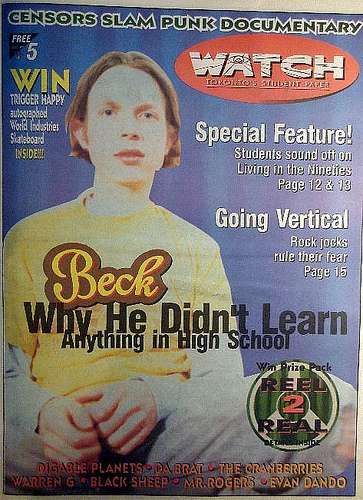
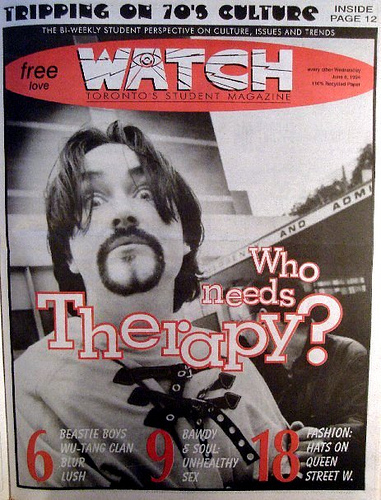
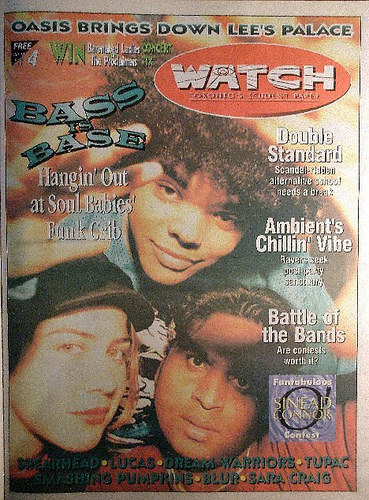
    Watch Magazine (Toronto, Canada), October 12, 1994

    Preparing to invade Lee’s Palace October 19, supersonically hyped English pop fivesome Oasis have a lot to live up to. The Manchester-based band have experienced a tsunami of media hype reminiscent of The Sex Pistols or The Beatles.

    A triple slam of three hit singles in three months – Supersonic, Shakermaker, Live Forevever – and four sold out UK tours preceded their first album, Definitely Maybe. But this clever English pop formula faces its biggest challenge: North America.

    The band has developed in less than a year, a reputation for being a ferry-disturbing, hotel-trashing, media-slagging, earth-shattering, shit-disturbing, ego-boosting, self-absorbed, tune-churning, attention-grabbing machine.

    And what does an Oasis album sound like?

    After you’ve heard all the hype and b.s., approaching 11-track Definitely Maybe should be a disappointing experience. It’s not. The album is craftily tight, with every song great. These guys left the crap at home – a lesson for other bands.

    Singer Liam Gallagher’s voice isn’t polished, posh or slick. He drags words out, lets his voice crack, he whines. But this is the charm. Brother Noel Gallagher’s lyrics are cheeky, deliberately oblique at times, pragmatic and just simply entertaining. Gone are the 12-point manifestos of other bands, into the trash goes the primary-school poetry.

    Noel writes songs that deliberately pay homage to their influences: The Stone Roses, The Jam, The Beatles, The Rolling Stones, The Sex Pistols. But listen closely. Each one is manipulative – you can’t help feeling the rhythm flow. There’s straight chord-bashing, multi-layered jangle guitar, and a lager-laden freight train ripping through the entire album.

    Though it is worth mentioning there are five in Oasis – 22-year-old Liam, 27-year-old songwriter and guitarist Noel, guitarist Paul Arthurs, bassist Paul McGuigan, drummer Tony McCarroll – the band has deliberately served up brothers Liam and Noel as willing fodder for the press.

    Hailing from the much-maligned north of England – Burnage, South Manchester to be exact – has meant the band has taken buckets of regional bigotry over their Mancunian accents. It seems the London style gestapo will still let good old fashioned English class and regional prejudices get in the way of a solid analysis of Oasis.

    Calling up from Austin, Texas, lead singer Liam’s thick Mancunian accent rips through the telephone line in a firestorm of profanity – it’s refreshing.

    The band is on a mission to devour all the “crap bands.” And through a little of Liam and Noel’s own version of the power of positive thinking, or to some, bold-faced arrogance, Oasis are going to give the music business an enema like they’ve never seen before.

    “Crap bands. That motivates us to be big,” says Liam confidently. “We were pissed off listening to all the daft bands – blagging the kids that this is what it is all about when it’s not. We are there to prove them all wrong. No bullshit, no strings attached – just simple rock n’ roll.”

    Are they the vanguard of a new English invasion, or just another crew of hyped-up, trainer traipsing tossers? North America represents a walled fortress that has buffeted repeated attempts to resurrect the Brit-pack musical and cultural invasion of the 60s. The times have changed in the land where hip-hop, country music and heavy metal rule.

    The classic British art-school pop formula of acquiring a very cool one-word name, a pile of trendy clothes, some mega-cool posters – and these days a video – falls flat amongst a population more comfortable in sweatpants and a baseball cap.

    But Liam disagrees, and points to their appearance at the New Music Conference in New York.

    “Packed-out – the crowd was havin’ it. The gigs have been like at home. Because we’re from England they don’t know much about us – they just come and listen to the music, go home and have a good night.

    “We are fucking slick, a big machine! But we’ve not been trained. We know our songs are fucking good. We know we’ve got the best songs on the fucking planet. It ain’t just England – we know our kid (Noel) write the best songs in a long, long time. Since the days of Lennon and McCartney. And he’s doing it on his own.”

    Liam’s antics, much to the disappointment of Noel, have gotten some major print in England’s tabloid music press, and has lead to a sleazy prose slug-fest between rivals the New Musicial Express and Melody Maker.

    There was the ferry fracas, with Liam san Noel being tossed off for fighting and public drunkenness. Or how about being arrested for some serious hotel trashing with Primal Scream and the Verve while on tour in Sweden.

    With the media hyping the scrapper reputation, an ugly element has been attracted to their concerts. During an August 9 concert, a fan punched Noel in the eye during Bring it Down, resulting in a mob of 300 stoning the tour bus.

    But the band has never been sedate. They got their first record contract by storming a concert and demanding to be allowed to play or they will tear the place down.

    “We’re not hype – I laugh at the English press. They’re stupid. They don’t even understand our music. They like it, that’s about it. Then they’ve got to write about me and our kid fighting, bits about trashing the hotel.”

    Talking to Oasis, forget about the nice-boys-next-door routine. In fact, forget about every false face pop musicians had to put on in the puritanical 80s, and the politically correct 90s. Oasis not only admit to using drugs, shock of shock, they like it.

    “Our mums know about it. I was doing drugs since I was 13. Sniffing gas, sniffing glue, drinking cider, getting off my face.”

    They don’t labour themselves with the soul-consuming indie band angst of worry that if they get big they have somehow sold out.

    Depending on the day of the week and who you talk to, the brothers either enjoy a healthy creative conflict, or bloody well hate each other. Certainly, the evidence points to the latter, while Liam says otherwise.

    There was the time at a South England gig where Noel punched Liam in the face and chased him off stage. But there is the Noel who returned from being a roadie for the Inspiral Carpets and approached the band in 1992 telling them their songs are “shite” and they should let him write the songs and take over.

    “Our kid, he’s a bit of a singer, but he knows he can’t sing. He says I can’t write a song. We are both kind of jealous of each other. That’s how I see it anyway. I don’t know. He thinks he’s the only one who really loves music, and his own brother don’t understand it. And I ant to prove to him I mean it a little more than he does – and it freaks him out. He sings totally different – then I get a grip of it and I bite the head off of it.”

    It has been Noel’s discipline and raw talent, Liam admits, that pulled Oasis together.

    They believe in total commitment to the cause of being the best band in the world.

    “There’s a day when you turn around and say, right “Do you want this to be every Tuesday, Thursday night, like a fucking scout club meeting, or do you want it to be real?” If you want it to be real, you’ve got to be here every Monday, Tuesday, Wednesday, Thursday, Friday, Saturday, Sunday – you can’t go out drinkingwith your mates or doing this with your bird. You can’t have a bird if you want to be the biggest band in the world – this is what it’s about. If you don’t like it, piss off, tell us now.”

    They gotten a reputation for being a juicy interview for jaded journalists tired of earnest musicians telling of their next charity album, or wanking on about how their music is deep.

    The British press have gorged themselves on a love-hate feast of large portions of Oasis.

    For Oasis watchers, the landmark article was the April 23 issue this year of NME. Titled The Bruise Brothers, this was the true beginning of the hype machine. The article immediately focuses in on the duelling brothers, barely touching the fact they are a band.

    The stage was set for a punch and judy comedy involving the nasty yet lovable Gallagher brothers. Shakespeare couldn’t have written a better play for the press gang to report.

    While Liam denies it, there has been talk of a full-blown conspiracy involving Oasis record label Creation and their buddies within the press – an Oasis hype mafia some have called it.

    “If someone likes you and your on their label, they are going to talk about you. We’ve done all the shit gigs man. The reason why we are bigis because we are fucking crafty. We’ve done four sell-out tours within the space of four months. What other band does that? – none. We’ve had a single out every month. People are just tripping. There’s no big mafia working us up. If there is, I don’t fucking know it. No one’s told me.

    “They just want to build us up as hype and then see if they can knock us down. But they won’t be able to – ’cause we are writing the best songs – we can rip their papers up and wipe our bums with it and throw it in the fucking bin, they can’t do it with us. They can do it with Suede, ’cause Suede let em. If someone stitches me in the paper and I meet them in London or wherever, they get it, I tell them.

    “A couple weeks ago we were on the front cover of the NME, Melody Maker – we didn’t even do an interview with the NME. They just sneaked over and got a picture, the picture that was on the cover of the NME was going to be for VOX.

    “They got (freelance photographer) Keving Cummings to sell the VOX picture to the NME. Now Kevin Cummings don’t come near us, if he does I’ll slap him, and I’ve told him. He says this is for VOX, and the next fucking day it’s on the front cover of the NME without even an interview with us.

    “They can try and have a backlash – we will release Whatever at xmas with proper Beatles styling, which will sell thousands and thousands of fucking copies and put us in the charts.”

    When former Jam powerhouse and English pop icon Paul Weller dropped by an Oasis gig, the meeting was blown into the clash of titan egos by the press.

    “He comes to the gig because he likes the music. We chilled out with him. You know how the press works, they just build it up. They made out as if Paul Weller walked in our dressing room and our kid fucking snaps at him. He loves Paul Weller. This is bullshit, I’m not having the NME or the Melody Maker deciding what we are. No way, I’m not having it.”

    In fact Liam sees Weller on holy ground. “The other two guys in the band were dicks, I don’t care for them at all. Paul Weller was a diamond. He wrote some mega songs. They are bloody selling groceries, trying to get it together.

    “Everyone is going they should form the Jam again – no way man. They look like 50-year-old men, them two now. Paul Weller looks like a young lad now. He’s kept it together, why should he go back, go jamming with them again. He’s still young.”

    It took just one tour with Primal Scream for Oasis to determine who is the greatest rock n’ roll band alive. Lead singer Bobby Gillespie’s degenerate 70s roadshow follies didn’t impress Liam.

    “They ain’t the rock n’ roll band everybody makes them out to be. There’s only three in Primal Scream – the rest are all hiding. A rock n’ roll band to me is about five people who know each other very well, they are all friends. They ain’t the last rock n’ roll band, we are! Fucking idiots, we are! Well we aren’t the last, but we are the rock n’ roll band to date if there is one about – not Primal Scream.

    “Plus he (Gillespie) smells and they don’t wash their clothes. They are too rock n’ roll cliche, you know what I mean. I know for a fact lot of these rock n’ roll types look at us and say we aren’t rock n’ roll because we have trainers. So fucking what! It’s not all about winkle pickers, skin-tight pants and long greasy hair. That’s Guns n’ Roses material!”

    Note: This was the first article about Oasis in North America. In October, 2007 Liam Gallagher was named one of the ten wittiest Englishmen in history.

    Watch Magazine: Sloan Cover
    Sloan’s 1994 release, Twice Removed, was called by Chart magazine one of the “Top 50 Canadian Albums of All Time”.
    Mongolian Rock Pop Front Cover
    In 1999 I published the first book on Mongolia’s contemporary music scene. Freshly opened up to the wider world, Mongolia’s musicians were leading the way for this youthful, new Asian democracy. By 2020, Mongolian musicians had become a global Internet sensation.
    Creative Commons License

    This work is licensed under a
    Creative Commons Attribution-Noncommercial-No Derivative Works 3.0 License.

    ORCID iD: https://orcid.org/0000-0001-5311-1052.

    © David South Consulting 2021

  • Frugal Innovation Trend Meets Global South’s Innovation Culture

    Frugal Innovation Trend Meets Global South’s Innovation Culture

    By David SouthDevelopment Challenges, South-South Solutions

    SOUTH-SOUTH CASE STUDY

    There is a trend occurring across the global South that some are calling the next great wave of innovation. It has different names but many are dubbing it ‘frugal innovation’. Frugal innovation is basically innovation done with limited resources and investment. In short, innovation on the cheap but packing a big punch.

    The phenomenon has several strands. One involves innovators and companies from the developed world setting up in the developing world and beta testing their inventions and innovations there. Another strand involves innovators in companies and governments in the global South increasingly targeting the so-called ‘BOP’ – bottom of the pyramid – market of the poor.

    Another strand is focused on capitalizing on innovations for tackling the problems of the poor that are coming from the poor. Many of these innovations are improvised solutions. They may not be slick but they solve a problem.

    And finally, there are companies and entrepreneurs in the global South taking their innovations to the markets of the wealthy, developed countries and finding a welcome reception from price-savvy consumers.

    In the global South, frugal innovation is transforming lives – and it is finding its way into developed, wealthy countries too. It has been celebrated in the new book Jugaad Innovation: A Frugal and Flexible Approach to Innovation for the 21st Century (http://jugaadinnovation.com/) by Navi Radjou, Jaideep Prabhu and Simone Ahuja. The authors are innovation experts with a wide mix of backgrounds, from an academic to a Silicon Valley “thought leader and strategic consultant” to the founder of a marketing and strategy consultancy specialising in emerging markets innovation.

    The authors propose “jugaad innovation” as a solution to the urgent need to innovate quickly and efficiently in a fast-changing world where little can be taken for granted. This breed of frugal innovation comes from India. Jugaad is a Hindi word (http://en.wikipedia.org/wiki/Jugaad) and basically means a work-around, improvised solution to a problem because it is cheaper. This is commonly used to describe makeshift vehicles people construct in India (http://wheels.blogs.nytimes.com/2011/03/25/jugaad-cheaper-than-a-nanobut-watch-for-splinters/).

    As champions of the jugaad philosophy, the authors proclaim the old innovation paradigm is obsolete. The idea that throwing more capital and more resources at a problem will boost innovation, no longer works, they contend. Better results can come from being frugal and flexible. Being more creative allows for a fluid and improvised innovation culture to develop.

    “In today’s interconnected world powered by social media, top-down R&D (research and development) systems struggle to open up and integrate the bottom-up input from employees and customers,” the authors say on their website.

    “Jugaad on the other hand is flexible, frugal and democratic: it is often bottomup rather than top-down and involves a much larger number of people beyond those who are typically tasked with doing innovation in corporations. The strength of jugaad innovators lies in their ability to get more from less,experiment continually, and creatively engage people who are typically left out of the innovation process.”

    And they have a message for the Western, developed nations. They must look to “places like India, China, and Africa for a new, bottom-up approach to frugal and flexible innovation,” if they want to experience continuing prosperity in the 21st century.

    For global South inventors, entrepreneurs and manufacturers, this will prove a great opportunity. As debt-laden Western consumers deal with their lower spending power and incomes, they will be looking for products that cost less and yet tackle problems and improve their standard of living with minimal expenditure.

    The Indian company Mahindra and Mahindra (http://www.mahindra.com/What-We-Do/automotive) sells its small tractors to American hobby farmers. The Chinese company Haier (http://www.haier.net/en/about_haier/haier_global/china/) has a range of frugal products that have become popular sellers. They include air conditioners, washing machines and wine coolers. Haier is so successful with these products it has been able to capture 60 per cent of the market in these categories in the United States.

    Some of the hallmarks of frugal products are their efficient production, rapid development cycle, lower price point, and appeal to poorer customers.

    The book argues that adopting a “jugaad” mindset will enable people and companies to innovate “faster, better and cheaper,” “generate breakthrough growth” and “outperform competition.”

    “Jugaad innovation has three major benefits. First, it is frugal: it enables innovators to get more with less. Second, it is flexible: it enables innovators to keep experimenting and rapidly change course when needed. Third: it is democratic: it can therefore tap into the wisdom of otherwise marginalized customers and employees.”

    “In contrast to the traditional structured approach to innovation, jugaad is inherently more customer-centric rather than technology or product centric.

    Because jugaad innovators seek to solve a customer problem first and then develop a suitable solution, jugaad is more market-based than more structured approaches (that may be driven by the motivation to develop technology for technology’s sake) are.”

    There are so many of these innovations and inventions happening, a culture has emerged to gather and document them and share them with others.

    A good advocate of jugaad innovators in India is the Honey Bee Network (http://www.sristi.org/hbnew/). It has been building a database of grassroots innovation and knowledge (http://www.sristi.org/hbnew/augment_innovation.php).

    But this dynamic innovators culture is not limited to India. Across Africa,information technology hubs and start-ups have been sprouting up. One of the more well-known is the iHub in Nairobi, Kenya (http://ihub.co.ke/pages/home.php) but there are centres of information technology innovation in Ghana, South Africa, Uganda and Nigeria.

    One of the more outstanding and pioneering chroniclers of this frugal innovation culture in Africa has been the Afrigadget website (afrigadget.com).

    It is packed with home-grown inventions. These include a young Kenyan boy using a rigged network of light bulbs to ward of lions from the cattle herd, a mobile phone security system for cars, and a home-made remote control toy car for children. Another great way to see this movement in action is at the Maker Faire Africa (http://makerfaireafrica.com/) which has been bringing together every year “handcrafters from Africa’s tiniest villages to her most expansive urban burgs”.

    Published: May 2012

    https://davidsouthconsulting.org/2022/10/05/african-innovation-eco-system-taking-shape/

    https://davidsouthconsulting.org/2022/10/24/flurry-of-anti-poverty-innovations/

    https://davidsouthconsulting.org/2022/11/16/housing-innovation-in-souths-urban-areas/

    https://davidsouthconsulting.org/2022/11/11/innovation-cairos-green-technology-pioneers/

    https://davidsouthconsulting.org/2020/04/27/innovation-from-the-global-south/

    https://davidsouthconsulting.org/2022/04/28/innovation-in-the-slums-can-bring-peace-and-prosperity/

    https://davidsouthconsulting.org/2021/10/22/innovations-in-green-economy-top-three-agenda/

    https://davidsouthconsulting.org/2022/10/27/kenyan-mobile-phone-innovations/

    https://davidsouthconsulting.org/2022/10/09/next-generation-of-innovation-for-the-grassroots/

    https://davidsouthconsulting.org/2021/03/05/southern-innovator-issue-1/

    https://davidsouthconsulting.org/2021/03/05/southern-innovator-issue-2/

    https://davidsouthconsulting.org/2021/03/05/southern-innovator-issue-3/

    https://davidsouthconsulting.org/2021/03/05/southern-innovator-issue-4/

    https://davidsouthconsulting.org/2021/03/05/southern-innovator-issue-5/

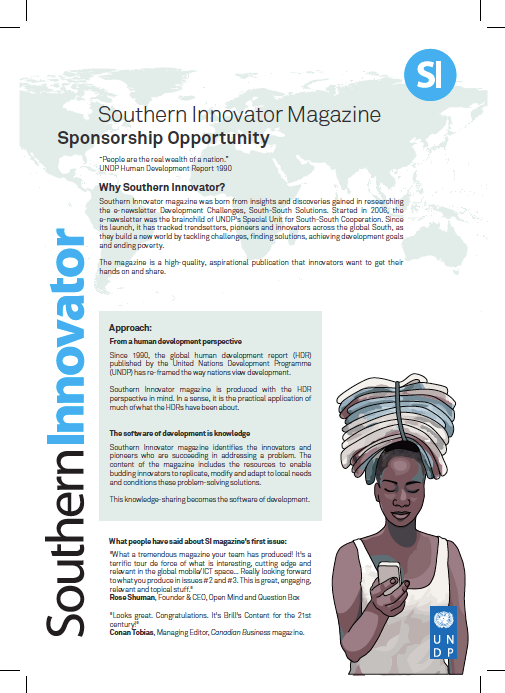
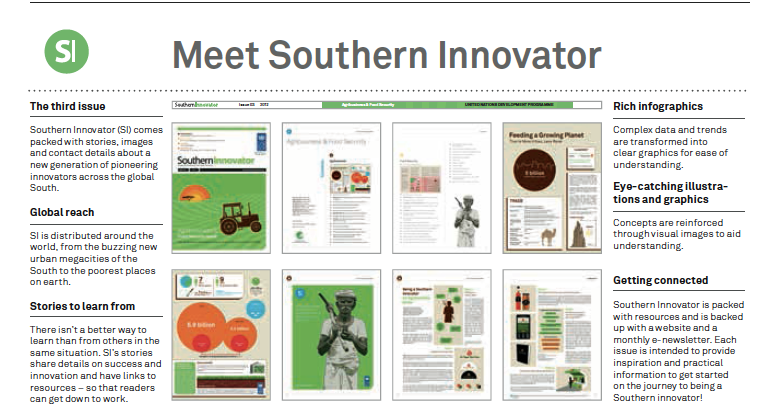
    Development Challenges, South-South Solutions was launched as an e-newsletter in 2006 by UNDP’s South-South Cooperation Unit (now the United Nations Office for South-South Cooperation) based in New York, USA. It led on profiling the rise of the global South as an economic powerhouse and was one of the first regular publications to champion the global South’s innovators, entrepreneurs, and pioneers. It tracked the key trends that are now so profoundly reshaping how development is seen and done. This includes the rapid take-up of mobile phones and information technology in the global South (as profiled in the first issue of magazine Southern Innovator), the move to becoming a majority urban world, a growing global innovator culture, and the plethora of solutions being developed in the global South to tackle its problems and improve living conditions and boost human development. The success of the e-newsletter led to the launch of the magazine Southern Innovator.  

    Follow @SouthSouth1

    Google Books: https://books.google.co.uk/books?id=m5GYBgAAQBAJ&dq=development+challenges+may+2012&source=gbs_navlinks_s

    Slideshare: http://www.slideshare.net/DavidSouth1/development-challengessouthsouthsolutionsmay2012issue

    Southern Innovator Issue 1: https://books.google.co.uk/books?id=Q1O54YSE2BgC&dq=southern+innovator&source=gbs_navlinks_s

    Southern Innovator Issue 2: https://books.google.co.uk/books?id=Ty0N969dcssC&dq=southern+innovator&source=gbs_navlinks_s

    Southern Innovator Issue 3: https://books.google.co.uk/books?id=AQNt4YmhZagC&dq=southern+innovator&source=gbs_navlinks_s

    Southern Innovator Issue 4: https://books.google.co.uk/books?id=9T_n2tA7l4EC&dq=southern+innovator&source=gbs_navlinks_s

    Southern Innovator Issue 5: https://books.google.co.uk/books?id=6ILdAgAAQBAJ&dq=southern+innovator&source=gbs_navlinks_s

    Creative Commons License
    This work is licensed under a
    Creative Commons Attribution-Noncommercial-No Derivative Works 3.0 License.

    ORCID iD: https://orcid.org/0000-0001-5311-1052.

    © David South Consulting 2023

  • Solar-Powered Mobile Clinics to Boost Rural Healthcare in Africa

    Solar-Powered Mobile Clinics to Boost Rural Healthcare in Africa

    By David SouthDevelopment Challenges, South-South Solutions

    SOUTH-SOUTH CASE STUDY

    Around the world, innovative thinking is finding new ways of using solar power technology to bring electricity to underserved areas of the global South. Innovators are experimenting with new technologies, new business models and new ways to finance getting solar power into the hands of the poor.

    One recently launched new solution is a solar-powered mobile health clinic that is bringing 21st-century medical diagnostic services to rural areas.

    The US $250,000 Solar Powered Health Centre has been built by the Korean technology company Samsung (http://www.samsung.com/africa_en/news/localnews/2013/samsung-launches-solar-powered-health-centre-model-to-bring-quality-healthcare-to-rural-areas).

    A truck packed with medical equipment that draws electricity from solar panels, it is traveling to rural, underserved parts of sub-Saharan Africa.

    The truck is seven metres in length and comes packed with medical goodies, including a fully equipped eye and blood clinic and a dental surgery. It hopes to make it easier to reach the six in 10 residents of sub-Saharan Africa who live in rural areas, and who are often very far from affordable medical services. There is a blood analyzer, spectacle repair kit, and a non-contact tonometry test to measure the inside of a person’s eye. People can also be tested for HIV, malaria and many other conditions.

    Samsung (samsung.com) developed the truck as part of its efforts to create “Built for Africa” technologies. The truck was built in Johannesburg, South Africa, helping create local jobs and skills.

    Samsung hopes to scale the initiative to a million people in Africa by 2015.

    The clinics were launched in Cape Town at the 2013 Samsung Africa Forum and are being rolled out by Samsung Electronics Africa (http://www.samsung.com/africa_en/#latest-home) as part of what the company calls a “large-scale medical initiative on the continent”.

    The roaming trucks will be staffed by qualified medical professionals and will educate people about the importance of preventive medical screening.

    Targeted conditions include diabetes, high blood pressure, tooth decay and cataracts. The clinics will also conduct public health education campaigns about the importance of preventive medicine (http://en.wikipedia.org/wiki/Preventive_medicine).

    “What many see as minor health issues will not only get worse over time, but will affect other aspects of quality of life. The child that cannot see properly cannot learn properly,” said Dr. Mandlalele Mhinga, a member of the Nelson Mandela Children’s Hospital (http://nelsonmandelachildrenshospital.org/). “Mobile solutions help address this issue by making medical services accessible to more people in rural areas, and educating them about health care at the same time.”

    The mobile clinics hope to reduce the vast difference between the quality of health care available to rural residents and people in urban areas.

    Even in countries such as South Africa with the highest level of development in the region, medical care coverage is patchy and unreliable. For those who can afford it, 20 per cent of the population, there are private medical schemes. But everyone else must rely on an over-stretched and under-funded public health sector.

    Samsung has based this innovation on its first-hand experience with providing medical services to rural areas in Africa.

    “This experience has shown us how desperately medical treatment is needed across the continent, and inspired us to develop a sustainable and innovative solution to reach the people who need it most,” said Ntutule Tshenye, Business-to-Government and Corporate Citizenship Lead for Samsung Africa. “While our CSR (corporate social responsibility) strategy in Africa is largely focused on education, our efforts to enrich lives will not be felt if people’s basic needs, such as access to healthcare, are not met.”

    Samsung’s “Built for Africa” product range (http://www.samsung.com/africa_en/africancitizenship/home4.html) also has a wide range of other projects and initiatives to boost health and living standards on the continent. These include education programmes, such as the Samsung Electronics Engineering Academy, Samsung Solar Powered Internet Schools, the Samsung Power Generator, and the Samsung eLearning Centres.

    Samsung Electronics Co., Ltd. is a consumer electronics multinational and employs 227,000 people worldwide.

    Published: August 2013

    Development Challenges, South-South Solutions was launched as an e-newsletter in 2006 by UNDP’s South-South Cooperation Unit (now the United Nations Office for South-South Cooperation) based in New York, USA. It led on profiling the rise of the global South as an economic powerhouse and was one of the first regular publications to champion the global South’s innovators, entrepreneurs, and pioneers. It tracked the key trends that are now so profoundly reshaping how development is seen and done. This includes the rapid take-up of mobile phones and information technology in the global South (as profiled in the first issue of magazine Southern Innovator), the move to becoming a majority urban world, a growing global innovator culture, and the plethora of solutions being developed in the global South to tackle its problems and improve living conditions and boost human development. The success of the e-newsletter led to the launch of the magazine Southern Innovator.  

    Follow @SouthSouth1

    Google Books: https://books.google.co.uk/books?id=YfRcAwAAQBAJ&dq=development+challenges+august+2013&source=gbs_navlinks_s

    Slideshare: http://www.slideshare.net/DavidSouth1/development-challenges-august-2013-issue

    Southern Innovator Issue 1: https://books.google.co.uk/books?id=Q1O54YSE2BgC&dq=southern+innovator&source=gbs_navlinks_s

    Southern Innovator Issue 2: https://books.google.co.uk/books?id=Ty0N969dcssC&dq=southern+innovator&source=gbs_navlinks_s

    Southern Innovator Issue 3: https://books.google.co.uk/books?id=AQNt4YmhZagC&dq=southern+innovator&source=gbs_navlinks_s

    Southern Innovator Issue 4: https://books.google.co.uk/books?id=9T_n2tA7l4EC&dq=southern+innovator&source=gbs_navlinks_s

    Southern Innovator Issue 5: https://books.google.co.uk/books?id=6ILdAgAAQBAJ&dq=southern+innovator&source=gbs_navlinks_s

    Creative Commons License

    This work is licensed under a
    Creative Commons Attribution-Noncommercial-No Derivative Works 3.0 License.

    ORCID iD: https://orcid.org/0000-0001-5311-1052.

    © David South Consulting 2023

  • Camel Ice Cream Delivering Desert Dessert

    Camel Ice Cream Delivering Desert Dessert

    By David South, Development Challenges, South-South Solutions

    SOUTH-SOUTH CASE STUDY

    The global food crisis is forcing people around the world to think differently about how food is produced and what new products can boost the incomes of farmers. U.N. Secretary General Ban Ki-moon has called for food production to increase 50 percent by 2030 just to meet rising demand – and right now there are 862 million people worldwide who are undernourished (FAO).

    The world’s over 19.4 million camels (FAO, 2003) are now being tapped for their highly nutritious, healing and tasty milk. Camel milk is three times as rich in Vitamin C as cow’s milk. And it has several unique properties that differ from other milks, like cow and buffalo. It contains enzymes with anti-bacterial and anti-viral properties to fight diseases. The milk also contains insulin (http://en.wikipedia.org/wiki/Insulin), a hormone that regulates blood sugar levels, something that is critical to the survival of diabetics.

    With more and more areas of the world suffering from severe drought or desertification, camels’ renowned ability to go without a drink of water for up to three weeks makes them ideal animals. Camels continue to lactate milk even in a dehydrated state.

    The current 5.4 million tonnes of camel milk produced every year isn’t enough to meet demand. The Food and Agriculture Organization (FAO) is confident, that with the right investment and innovation, camel milk has a potential market of a minimum 200 million people in the Arab world, and many millions more in Africa, Europe and the Americas.

    Fresh camel milk fetches roughly US $1 dollar a litre on African markets. A world market worth US $10 billion is entirely within the realm of possibility, the FAO says.

    “The potential is massive,” said FAO dairy and meat expert Anthony Bennett. “Milk is money.”

    “No one is suggesting intensive camel dairy farming,” said Bennett. “But just with improved feed, husbandry and veterinary care, daily yields could rise to 20 litres (per camel).”

    An Indian NGO – the Lokhit Pashu-Pala Sansthan (LPPS), which supports landless livestock owners and means “welfare organization for livestock keepers” in Hindi – is re-inventing the business model for camel herding in India (http://www.lpps.org/). The LPPS is a canny user of publicity and has created products that are eye-catching and instant conversation starters: camel ice cream and camel-dung paper.

    Produced in the Indian state of Rajasthan (http://en.wikipedia.org/wiki/Rajasthan), the camel milk ice cream is being sold in shops and hotels. It comes in two flavours: kesar (saffron) (http://en.wikipedia.org/wiki/Saffron) and strawberry vanilla.

    The camel is integral to the traditional way of life in Rajasthan and is the state’s signature animal. India once boasted the third-largest population of camels in the world: over 1 million.

    But that number has fallen to just 400,000. Grazing areas once just for camels are now being used by agriculture and wildlife sanctuaries. The camel breeders, the Raika people, have experienced a serious decline in income from camel herding, and many have sold their camels for slaughter.

    If there was to be a future for camel herding in Rajasthan, new products had to be developed and the whole business of camel herding re-branded.

    The ice cream is part of a two-year project to help camel breeders develop new products using camel milk. Camels are seen as ideal animals to raise in the drought-afflicted climate of Rajasthan, and can produce four to six litres of milk a day.

    ‘With groundwater levels dropping rapidly, it spells the end of water-intensive agriculture. In this scenario, camel husbandry represents a perfect solution to the chronic water woes of the state,’ said Bagdi Ram Raika, president of the Rajasthan Pastoralist Development Association.

    ‘We would like to see the camel breeders of Rajasthan make use of their traditional assets and avail themselves of the new marketing opportunities. Our role is to support them in this,’ said Hanwant Singh, director of LPPS.

    The highly inventive people at LPPS have also come up with paper made from camel dung. Handmade, the notebooks, diaries and greeting cards are all made from the dung paper. The camel’s dung contains undigested fibre, which makes an excellent material for making paper.

    Published: April 2009

    Resources

    Creative Commons License

    This work is licensed under a
    Creative Commons Attribution-Noncommercial-No Derivative Works 3.0 License.

    ORCID iD: https://orcid.org/0000-0001-5311-1052.

    © David South Consulting 2021