Southern Innovator made its way to the annual Global South-South Development Expo (GSSD Expo), which was held this year in Rome, Italy and was hosted by the Food and Agriculture Organization (FAO) of the United Nations. It was great to meet many of the people presenting their work at the Expo and to catch up with the team at the Special Unit for South-South Cooperation.
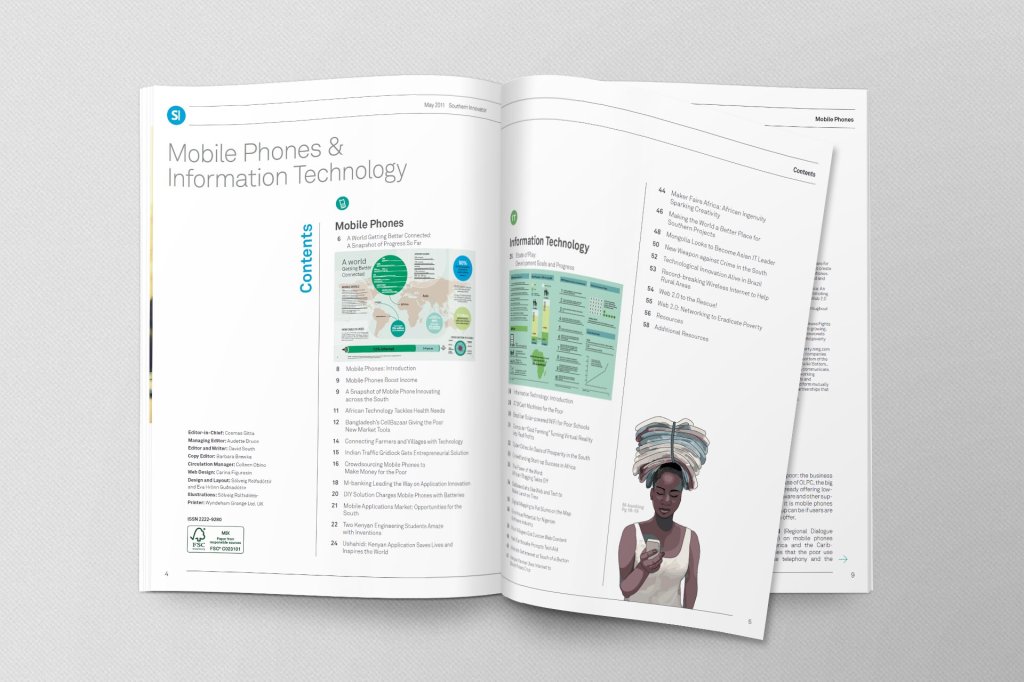
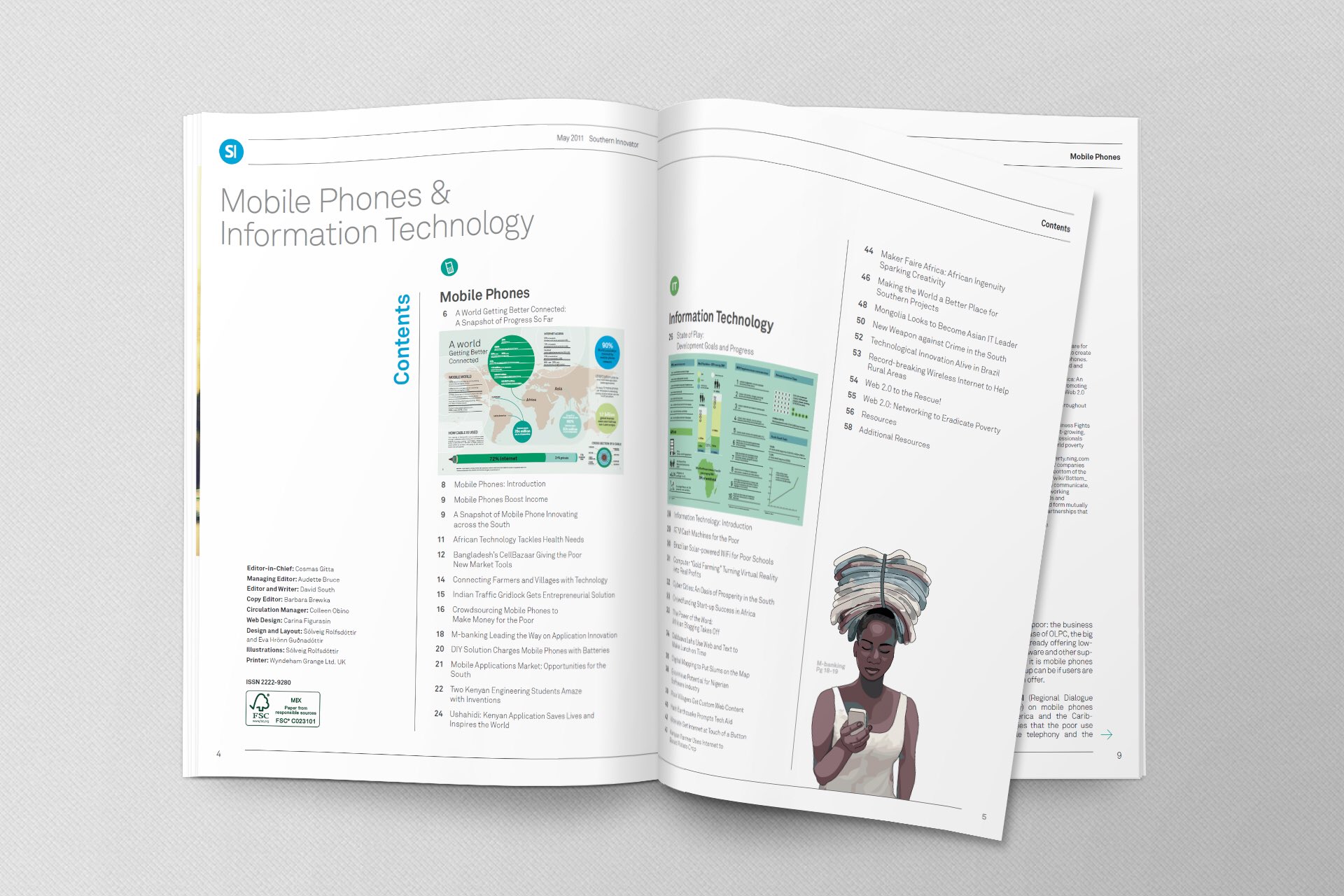
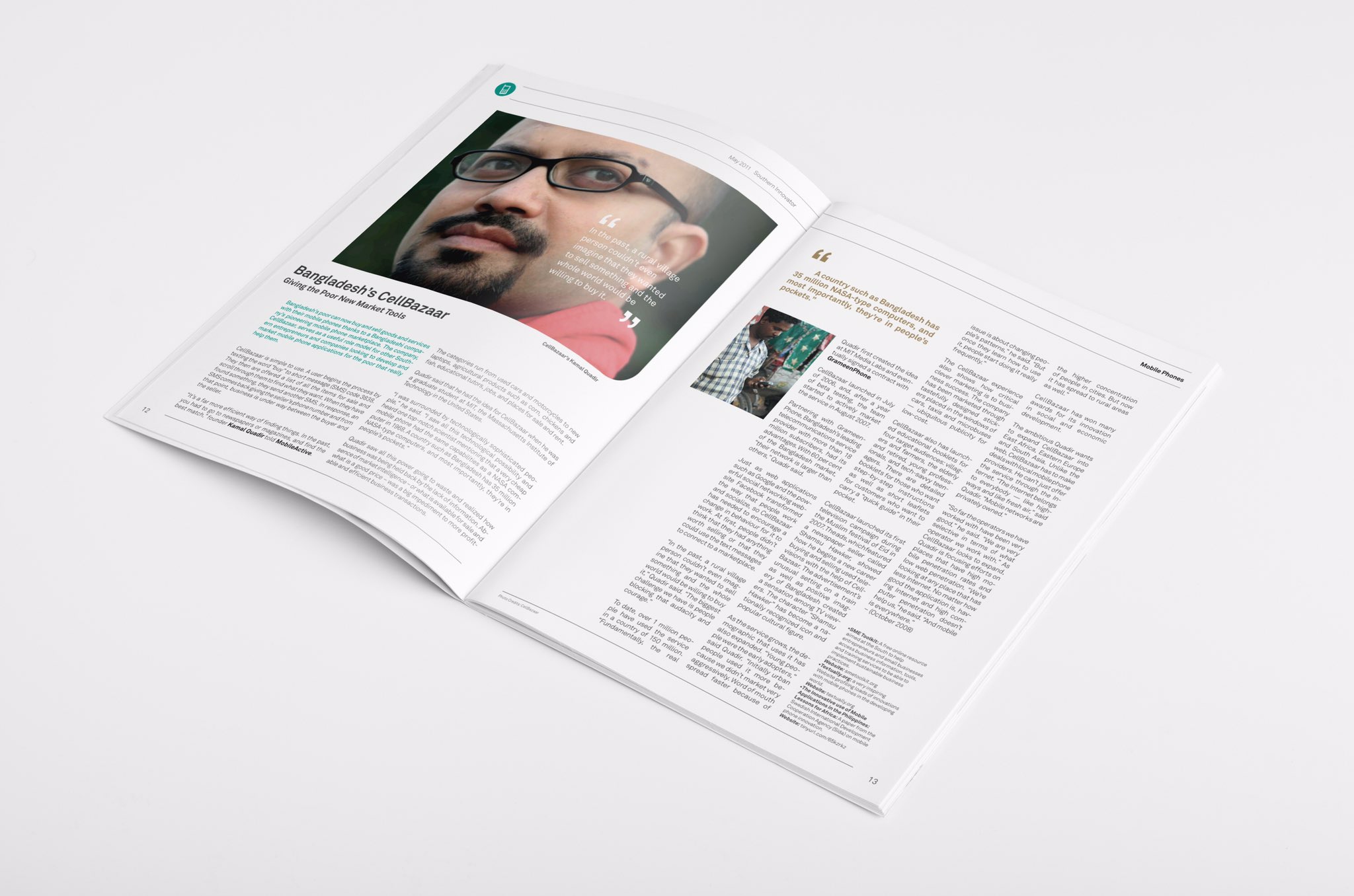
Southern Innovator Issue 1 called a “tour de force of what is interesting, cutting edge and relevant in the global mobile/ICT space…”
I am an international development consultant with over 25 years’ experience. I specialise in media, health communications, development strategies, project management and publishing. I have led high-profile projects in Asia, Canada and the UK. This work has included a number of groundbreaking, award-winning new media projects.
United Nations Global Marketplace (ungm.org) Vendor.
Economy Reports for APEC Economies on demographics, policies & ICT applications for people with Special Needs (Seniors and People with Disabilities), Asia-Pacific Economic Cooperation, APEC Telecommunications and Information Working Group, January 2013
Financing Renewable Energy in Developing Countries: Analysis of Business Models and Best Practices, Resources Future Publication, Pakistan Office, July 2018
Impact of Digital Strategy in Business for Small and Medium Enterprises in Developing Countries by Malik Mustafa, International Journal for Modern Trends in Science and Technology, 7 (09): 205-210, 2021
Mobilising Finance for Infrastructure: A Study for the UK Department for International Development (DFID), Cambridge Economic Policy Associates Ltd., August 2015
Propagating Gender Struggles Through Nollywood: Towards a Transformative Approach by Nita Byack George Iruobe, Geonita Initiative for Women and Child Development, 17 July 2015
The rise of social networking websites (http://en.wikipedia.org/wiki/List_of_social_networking_websites) during the past few years has swept across the internet. The popular Facebook (www.facebook.com) site alone has over 350 million users worldwide. In Africa, there are more than 67 million people with access to the internet – just over 6 percent of the population (http://www.internetworldstats.com/stats1.htm). And this phenomenon has even begun to penetrate and influence life in poor places with weak internet infrastructure. A farmer in Kenya, Zack Matere, has boosted his potato crop by turning to Facebook for help.
On his farm in Seregeya near Eldoret, Kenya, Matere used the internet to find a cure for his ailing potato crop.
“I cycled 10 kilometres to the local cyber café, Googled (www.google.com) ‘potato disease,’ he told the BBC, “and discovered that ants were eating the potato stems.
“I checked again and found that one of the solutions was to sprinkle wood ash on the crop.”
Matere also used the internet to find a buyer for his rescued crop, and has been able to triple the price he gets for tree seedlings he sells.
Zack believes he is a bit of pioneer: “I think I am the only farmer in the area who uses the internet.”
He uses his mobile phone to access the internet and it costs him about US 0.66cents a day to do it.
This is a lot of money for small-scale farmers so Zack has a plan to tackle the cost. He will share the information he uncovers on the internet with other farmers in the community by posting it on local community notice boards.
He has noticed some important realities about how people he knows interact with the mobile web. He has found most people do much more with the Net than surfing the mobile web alone at home.
“The internet is quite an individual pursuit. But a notice board is more of a group thing.
“So if I post an item on a notice board on potato disease, for example, the community can read it, talk together and come to a decision.”
One example of the kind of intelligence Matere is able to glean from the internet is reports of cartels deceiving farmers by buying potatoes in over-large 130 kg bags instead of 110 kg bags. Matere takes this information and translates it into Swahili and posts it on community notice boards.
Matere also has to fend off other people looking to use his community’s water supply, which he has done by photographing interlopers with his mobile phone and then posting the photographs on Facebook.
“When they came before, I took photos of what they were doing, posted them on my Facebook page and was able to get assistance,” he said.
“I got in touch with Forest Action Network (http://www.fankenya.org/) and they came back to me quickly saying they would help me protect the catchment area.”
He has also discovered there are more profitable ways to make money for farmers.
“There is a lot of money in tree seedlings or bee hives. So if we can get these young people to use the land in an environmentally (friendly) way, they can get even more money than through farming.”
“I have 400 Facebook friends and I think some of them can buy the honey.”
Matere is philosophical about the future: “I am now seeing the practicality of the internet here in rural Kenya. The problem is I am the only one. That is why the notice board is important. All we need is a bit of relevant information to help us.”
“Once it is made simpler and is more in the local language with more local content, people are going to access the internet here,” he predicts.
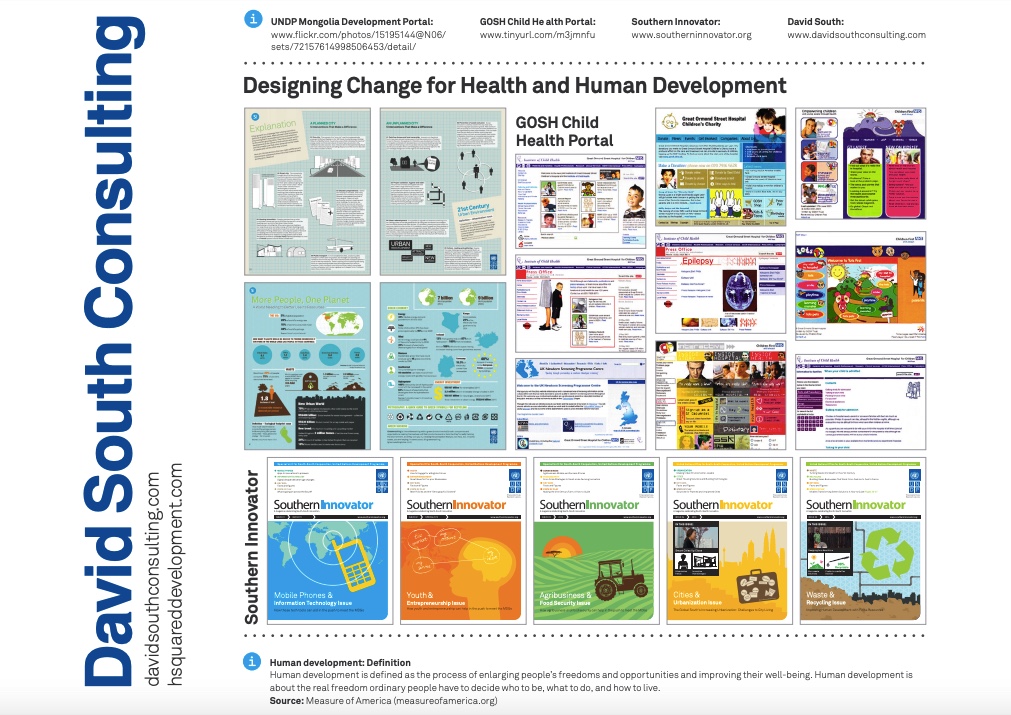
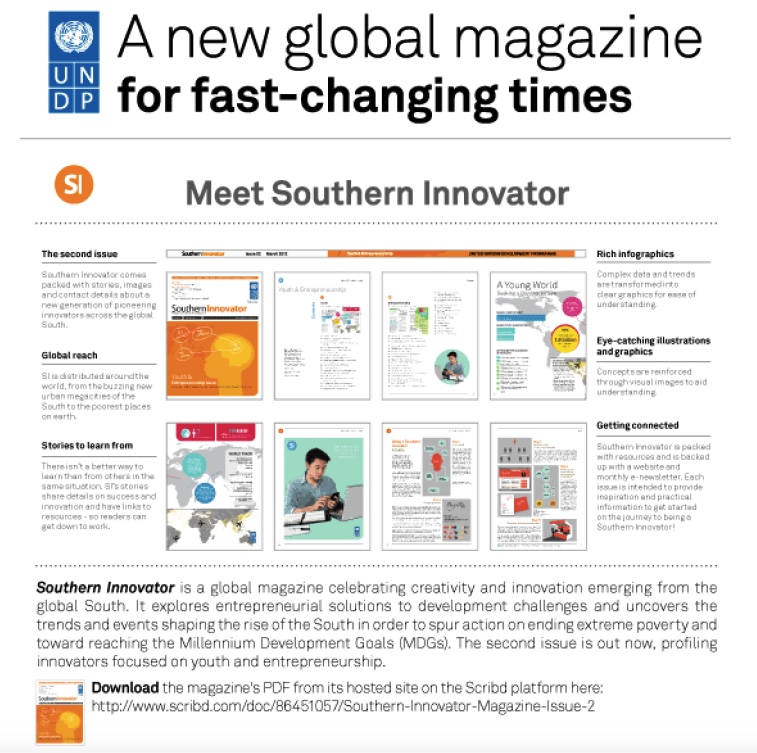
Development Challenges, South-South Solutions was launched as an e-newsletter in 2006 by UNDP’s South-South Cooperation Unit (now the United Nations Office for South-South Cooperation) based in New York, USA. It led on profiling the rise of the global South as an economic powerhouse and was one of the first regular publications to champion the global South’s innovators, entrepreneurs, and pioneers. It tracked the key trends that are now so profoundly reshaping how development is seen and done. This includes the rapid take-up of mobile phones and information technology in the global South (as profiled in the first issue of magazine Southern Innovator), the move to becoming a majority urban world, a growing global innovator culture, and the plethora of solutions being developed in the global South to tackle its problems and improve living conditions and boost human development. The success of the e-newsletter led to the launch of the magazine Southern Innovator.
The popular cartoon characters from the long-running series The Simpsons are breathing new life into traditional African stone carvings.
A traditional craft in many cultures, carving adds value to local resources and provides an excellent source of income for local artisans and entrepreneurs. While wood or stone carvings are a popular tourist souvenir throughout Africa, Asia and Latin America, most carvers stick to traditional subjects.
However, a group of villagers in western Kenya have transformed their economy by swapping carvings of elephants and Cleopatra for Homer, Marge and Sideshow Bob.
According to the book Carving out a Future by the Centre for International Forestry Research (CIFOR), carving exports from the island of Bali in Indonesia total US $100 million per year. India’s industry is worth US $65 million. In Oaxaca, Mexico, carvings earn US $2,500 per household, increasing access to education and health. In Kenya, carving involves more than 60,000 people and provides household income for more than 300,000. In some communities in South Africa, households can earn between US $500 and US $2,000 per year from carvings – 80 per cent of a household income.
Research into carving has identified several factors that are critical to maximising profits: quality is critical, and the best woods and stone must be used. Diversity is an important element: too much of the same thing being made available damages the market. And sustainability: the wood and stone resources must not be used up.
It is this novelty and diversity that The Simpsons carvings address. By tapping into the global market for official licensed merchandise, the Tabaka carvers of the Abagusi tribe – well-known carvers in western Kenya – have significantly increased their income. And they are cashing in on the global popularity of the first Simpsons movie released this year.
Tabaka is a village three hours by bus from Kenya’s capital, Nairobi. In Nairobi, the carvers would sell their soap stone carvings to middlemen, often for a pittance compared to what they would in turn charge tourists. Negotiations with these vendors could take days and waste the precious income of the carvers as they waited around for the deal to come through.
Craft Village UK has organised the carvers to produce Simpsons statuettes for the worldwide market. The carvers were able to win the official merchandise license from The Simpsons’ owners, Twentieth Century Fox, after its vice-president saw a video of the carvers. They were initially awarded the license to craft 12 of the show’s characters for the US and UK markets, but last month they gained the worldwide license.
Craft Village’s founder, UK-based Paul Young, had the idea three years ago when his sister returned from living in Uganda with soap stone carvings. Impressed by the quality of the workmanship, he thought they would sell better in a western market if they reproduced popular images from films and TV. In 2005, he made contact with the carvers through a crafts company in Nairobi. He sent initial plastic figurine models and photos to help the carvers get the statues right. He flew to Kenya in 2005 to meet the carvers for the first time and video the carving process.
Initial prototypes were too heavy and some would break. And it took 12 months of trial and error to get the quality high enough to approach Twentieth Century Fox.
“Familiarizing the carvers with The Simpsons was difficult,” said Young. “Making the carvers understand the importance of quality control and the need for benchmark standards and uniform carvings was – and still is – a challenge.”
“I don’t know who they are,” said Pauline Kemunto, who helps her husband with the carvings. “But I like them because I earn from them.”
In a community known for growing bananas, David Atang’a, master carver and former soldier, supports five children. “If this Simpsons project succeeds, I hope to educate my children in university,” he said.
Two groups of 15 members each are divided between Tabaka Master Carvers and Tabaka Classic Carvers. Women take over and wash, polish and shine the pieces. Each piece is numbered and signed (Craft Village UK products).
The carvers now make 450 Kenyan shillings per statue (UK £3) – between four and six times what they would have got for a traditional carving. Where work before was sporadic, it is now regular and employs 80 people. The extra income means the carvers can now send their children to secondary school.
Enosh Onsombi grew up with no electricity and no television. But since the community started carving the Simpsons characters, “Life has changed so much,” he told The Independent newspaper. “The Simpsons has changed everything.”
Published: October 2007
Resources
Nonprofit Enterprise and Self-sustainability Team (NESsT):works in emerging markets by “developing and supporting social enterprises that strengthen civil society organizations’ financial sustainability and maximize their social impact.”
Development Challenges, South-South Solutions was launched as an e-newsletter in 2006 by UNDP’s South-South Cooperation Unit (now the United Nations Office for South-South Cooperation) based in New York, USA. It led on profiling the rise of the global South as an economic powerhouse and was one of the first regular publications to champion the global South’s innovators, entrepreneurs, and pioneers. It tracked the key trends that are now so profoundly reshaping how development is seen and done. This includes the rapid take-up of mobile phones and information technology in the global South (as profiled in the first issue of magazine Southern Innovator), the move to becoming a majority urban world, a growing global innovator culture, and the plethora of solutions being developed in the global South to tackle its problems and improve living conditions and boost human development. The success of the e-newsletter led to the launch of the magazine Southern Innovator.
















You must be logged in to post a comment.