In the Mongolian language, the book explores how Mongolia’s vibrant rock and pop music scene led on business innovation and entrepreneurship in the country during the transition years (post-1989). Written by an ethnomusicologist, it details the key moments and events in this story, while splicing the narrative with first-person interviews with the major players.
MTV is available on cable television, bootleg CDs blare from kiosks and the latest news on the Spice Girls is available in one of dozens of entertainment newspapers. Despite the flood of foreign music it is local musicians who the youth turn to to voice their new-found freedoms, dreams and angst. Pop music researcherPeter Marsh swings to the new beat of the steppe…
It is something that would have horrified the old socialist leaders. Pop singer T. Ariunaa – Mongolia’s answer to Madonna – is doing what she does best: pushing the barriers of what a performer can and can’t do. Notorious in the local press as “Mongolia’s Queen of the Erotic,” she struts onto the stage of the Non-Stop – one of the newest and trendiest disco clubs in the Mongolian capital, Ulaanbaatar – wearing a black silk robe over black lingerie bikini underwear. Jumping into her hit song, “Telephone Number”, she sings the lines,
When you begin to take off your shirt, I am happy you’re staying;
When your hot breath is near me, the lights go out,
Cheekily writhing her torso, seductively opening and closing her robe, she teases her audience. And her audience, mostly Mongolian youth from the late teens to early thirties, take it all in with good humour, smiling and giggling. Whether they like her music or not, they appreciate what she’s doing and are having fun. The message of free expression is reflective of the enormous changes in attitudes over this decade.
“I like Ariunaa very much,” says 30-year-old Sukhbaatar, a graphic designer. Wearing a dress shirt, slacks and noticebly shiny shoes, he’s sitting with his two friends, glasses of beer in hand, watching the show. “She has a powerful voice,” he says gesticulating towards the stage. “She has a peculiar style, and this kind of style should be developed in Mongolia.
“But we don’t admire her as a singer,” he says with a wry laugh.
Not long ago, when this landlocked Northeast Asian nation was still subject to Soviet-backed socialist rule, pop-rock musicians like Ariunaa would never have been allowed to bring such explicit expressions of ‘the erotic’ anywhere near the public stage. Ariunaa’s boldness and charisma, which have made her one of Mongolia’s most well-known and controversial young pop stars, show something of the new openness and growing diversity that characterizes the emerging popular music industry in capitalist Mongolia. There are girl bands like Spike, boy bands like Nomiin Talst and Camerton and pop divas like Saraa.
A typical concert in Ulaanbaatar, like this one at the Non-Stop – a converted public gymnasium which opened earlier this year – consists of a succession of live Mongolian bands interspersed with breaks for dancing to Western pop, disco and techno music. The styles of music in these concerts fall into what the Mongolians call pop-rock, which ranges from rock ‘n’ roll, soft rock, and heavy metal rock to techno, hip-hop and rap. Mongolian music fans today now have a wide choice of styles to choose from.
Someone who would know about this well is the ‘elder statesman’ of rock, D. Jargalsaikhan. Wearing leather cowboy boots, sequined leather pants and a leather jacket, and with his black hair streaming down over his shoulders, Jargalsaikhan sees the new diversity of groups as a positive sign of the times, as he said in a recent newspaper interview.
“In the stores today there are maybe 10 different varieties of sausage: salted, unsalted, spiced and so on. You can then look at them all and then choose the one you want, like spiced sausage. It’s the same thing with the music business in Mongolia today. In the era of the market economy many different bands and singers have come out, and the listeners can choose the recordings of those bands and music styles that they like. … The most important thing is that the other bands or styles of singers should not be ignored. All of them have a wish to do something. Usually, those who criticize different styles or forms of music are people with too much time on their hands.”
Although turning 40 this year, Jargalsaikhan is not a man with too much time on his hands. As head of the Mongolian Singer’s Association, his many responsibilities keep him on the run. In between numerous breaks to answer calls on his cell phone, Jargalsaikhan tells me about being a rocker in the 1970s and ’80s, which he terms the “Golden Era” of rock in Mongolia, and the difficulties they faced. “Because Mongolia was ruled by one party, the Revolutionary [Socialist] Party [from 1921 to 1990], there was little foreign influence allowed into the country. Rock and pop were not to be found on the [state-controlled] radio or TV, and aside from records and cassettes brought into the country by individuals coming from Europe and Russia, people here had very little experience with the music. … It was easier for the early rock-pop musicians to take examples from folk music, which was close to them, which they had been listening to since their childhood.” Much of the early music included settings of popular folk songs and melodies in the rock genre. And the youth, eager for alternatives to the state-sponsored cultural offerings, found the music to their liking.
The popularity of this early rock-pop, or so-called folk-pop groups soon drew the attention of the socialist party, which saw opportunities to use the music for the purpose of advancing its mission in Mongolia. In exchange for the state government’s granting of musical instruments, rehearsal and performance spaces, and concert and touring opportunities, the early bands were closely watched, their actions restricted by suspicious government officials. “Everything was planned by the government, and we had to do what it had planned,” says Jargalsaikhan. “For example, when we were abroad, we couldn’t go to the discos nor arrive at the hotel late. We couldn’t go where we wanted. There were conflicts between the singers and musicians and the government representatives [sent to oversee the tour]. If I spoke to foreigners, I would be considered a spy. Who I spoke with was also controlled. At that time, the social condition in Mongolia was like that of North Korea today.”
Considered by the government to be a “capitalist art,” the direct imitation of Western rock was not allowed. Mongolian bands instead had to create a unique Mongolian style of the music that drew from traditional folk or classical musical and literary traditions. Band members were often compelled to compose songs to lyrics written by members of the powerful Mongolian Union of Writers. “It was difficult for musicians to play their own compositions, and they were often forbidden to do so,” recalls Jargalsaikhan. “For the concert programmes, our songs had to include the topics of Mongolia and the Soviet Union, as well as the Mongolian love for Nature or for Father and Mother. … The topic of love between a man and woman was considered to be too personal for the public stage, and was almost forbidden.”
But rock and pop musicians gained more and more freedoms of expression as political and social reforms were introduced in Mongolia throughout the 1980s. “The rock-pop musicians of the 1970s became more skilled and their abilities improved,” says Jargalsaikahn. “They began to compose at the level of professional composers. Also, the older generations wanted to give more artistic freedoms to the youth at the same time as the Party controls were being lifted.” And the youth, in turn, were more intent on creating traditions of music of their own generation. “The young rock-pop musicians wanted to hand-down their own music to the next generation-their own pop-rock art.
Jargalsaikhan gained fame throughout Mongolia for his 1988 song “Chinggis Khan,” when he was lead singer of the band by the same name. Making use of traditional folk music instruments alongside of the group’s electric guitars, synthesizers and drums, the song praises the 13th century Mongolian leader as a great, if historically misunderstood, man who always had in mind the good of the Mongolian nation–and this at a time when expressing such sentiments could have landed him in prison. “I had to show my civil courage to sing this song. But many of my friends and fellow composers encouraged me to write and perform it.”
His was the voice of a new generation, one seeking more freedoms to express Mongolian identity in new ways. The efforts of many musicians of his generation contributed to the popular political movements and protests that eventually led, in 1990, to the downfall of the socialist government and the introduction of democratic and market economic reforms throughout the nation.
In the new social and cultural climate of the late-1980s and early ’90s, musicians saw it as their responsibility to introduce Western rock music and popular culture to Mongolia. Besides Jargalsaikhan’s Chinggis Khan (“soft rock”), other groups came onto the popular music scene, including bands like Haranga (“heavy-metal/grunge”) and Hurd (“metal rock”).
The leader and percussionist of the group Hurd (“Speed”), D. Ganbayar, saw it as a national service to his people to introduce his group’s unique form of Western-style rock. “The Mongolian people, and especially the youth, don’t want [their bands] to imitate Western rock art. They want a pop-rock with its own specific character, music that’s different from other types of Western rock-pop, music with its own national character.” Wearing a leather jacket and black hair down to his chest, Ganbayar, moves to the edge of his chair. “No one but us will introduce this kind of music to the Mongolian people. We serve our people. It’s our duty to introduce Western music to the Mongolian people through the Mongolian language and Mongolian melodies. We want to show that Mongolian rock-pop has its own unique character.”
Nearing a decade of life, Hurd continues to experiment with new sounds and performance styles. They recently softened their driving, heavy metal style in two “Unplugged” concerts given at another new disco club in Ulaanbaatar, Top Ten, a cavernous warehouse located in a former cultural centre. This was the first time any rock group had tried such a concert idea in Mongolia. Even on acoustic guitars, however, the group, consisting of a bass, two guitars, drums, percussion and keyboards, managed to fill the club with their sound and fury. Their fans packed the house, and the lead singer, Tumurtsog, needed little effort to get them to sing along with him on many songs.
Hurd and Haranga are still very popular groups in Mongolia, but in the past years few new heavy metal or hard rock groups have come onto the pop-rock scene here. Instead, a new generation of popular singers and music groups have been working their way up and into the limelight of the concert stages. These are youths that mostly eschew the long hair and leather jackets of the older groups in favor of short, styled hair and suits and ties. The music would be recognized in the West as techno, hip-hop, and pop along the lines of the Backstreet Boys, Celene Dion and the Spice Girls, and is almost always electronically produced in recording studios and then backgrounded to the singers and dancers themselves on stage with the use of a tape player.
Mostly in their late teens and early 20s, these performers appeal to Mongolian audiences with their singing, dancing and stage presence. One of the most popular of the current crop of bands is Har Sarnai (“Black Rose”), a “hip-hop techno” male duo, famous for their dancing, nationalistic song lyrics and sometimes outrageous clothes and hair styles.
In their concerts they often come out on stage wearing specially designed silken dels (traditional Mongolian robes worn by both men and women), with sunglasses and big bushy black and gray colored wigs on their heads. As the heavy techno beat of one of their most famous songs, “Alarm,” begins, they launch into their synchronized dance routines and lyrics, which exhort Mongolians to wake up from their dreaming and set to work producing a new society. Their audiences watch from their tables-as Mongolians hardly ever dance while the bands are performing-clearly enjoying the show.
“Har Sarnai is my favorite band,” says 19-year-old Buyanbaatar, a student at the Mongolian State University. “I like how different they are. Their clothes, their behavior on stage is different. And the songs that they sing, their dances and their clothes and style are all well suited together.”
Even older youth, like Sukhbaatar, age 30, mirror these sentiments. “I like Har Sarnai because I like their style and their dancing very much. I also like their unique styles of hair.” His friend Tsooj, age 31, adds, “In America you have rap bands, like New Kids [on the Block], and they dance really well. We like dancing very much. We are not too old for this!”
To both of them, the infectiousness of the new music pop scene transcends traditional age definitions. “I started to listen to music from the Beatles and other foreign bands. But now it’s become very nice in Mongolia. It’s just impossible not to be a fan because we are young people. We don’t think we are old. We are young enough, and we are here to support our favorite bands, and we will scream and whistle with everyone else!”
How audience members of different age groups can mix together at concerts and share such similar tastes in musical genres is perhaps unique to Mongolia. “One of the reasons why even the older generations like the new bands of the younger generations,” says Norov-Aragcha, a professional artist, aged 38, “is that in their youth, when they were 18 or 20, such bands didn’t exist here. We like new things like the younger people, and this music is new to Mongolia.”
But while he appreciates the new opportunities that the new bands have to perform their music in Mongolia, Norov-Aragcha adds that something is certainly missing from their music. “I like Ariunaa, and appreciate what she does. But all these bands and singers [of the young generation], although they have their own styles, they are generally on one level. None of them stands out from the rest. Maybe because of my profession, I prefer something new, something very different from the others. Haranga and Jargalsaikhan, they are our generation. They have feelings, they are making efforts with their music, and they are honest to their music. In their time [late-1980s and early 1990s] it was very difficult, but they did it. They have real talent, real feeling in their music.”
“Now I’m looking at all these new bands and singers, but still the one that I want hasn’t appeared. … That is, something which suits today’s conditions and atmosphere. … Something very powerful, very hard. Something like a Kurt Cobain.”
While not new to Mongolia, pop-rock’s growing diversity certainly is. The general feeling these days seems to be one of celebration of its freedoms and appreciation of its diversity, without the isolation of audiences into genres that is typical in the West. Given the difficulties Mongolia’s youth now face as they struggle to adapt to a society undergoing enormous change, a Mongolian “Kurt Cobain” may be just around the corner.
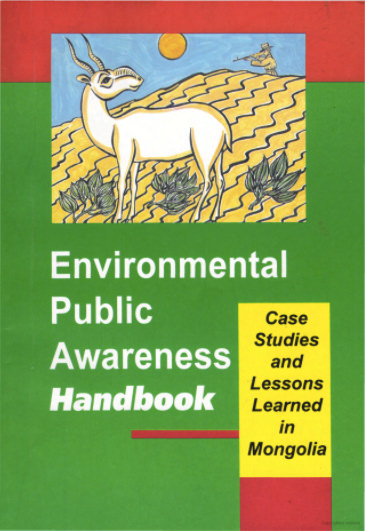
The Environmental Public Awareness Handbook: Case Studies and Lessons Learned in Mongolia was published in 1999 by the UNDP Mongolia Communications Office. The EPAP Handbook and the Mongolian Green Book were funded by the European Union’s TACIS programme.
Ferguson and his Mongolian colleagues had spent two years mobilizing Mongolians across the country to take practical steps to address the country’s environmental problems as part of the Environmental Public Awareness Programme (EPAP). Few people had as much first-hand knowledge of the country and its environmental challenges as they did.
In its 2007 Needs Assessment, the Government of Mongolia found the EPAP projects “had a wide impact on limiting many environmental problems. Successful projects such as the Dutch/UNDP funded Environmental Awareness Project (EPAP), which was actually a multitude of small pilot projects (most costing less than [US] $5,000 each) which taught local populations easily and efficiently different ways of living and working that are low-impact on the environment.”
Robert Ferguson’s The Devil and the Disappearing Sea: Or, How I Tried to Stop the World’s Worst Ecological Catastrophe (Publisher: Raincoast Books, 2004).
It could be said the world and the global order both stand at a crossroads. Countries have never been so connected as they are today because of the communications revolution that began in the 1990s. The trade linkages brought about by the most recent phase of globalization (post-1980s) have dramatically increased prosperity for some regions and countries, China being the most obvious example. But, as we are reminded on a daily basis, the environment is stressed, with species depletion and pollution being the most extreme signs of this stress. And war and civil strife are still with us.
In 2015, the United Nations launched the Sustainable Development Goals (SDGs), 15 years after it had launched the Millennium Development Goals (MDGs) in 2000. Both sets of goals attempt to benchmark progress on improvements to human well-being and to give countries and the international community a road-map to what is most important. The eight MDGs have been followed up with 17 SDGs (and many views on how effective such a strategy really is). It seemed as good a time as ever to reflect on what role I have played in this period, as well as to look forward to what will happen over the next 12 years (2030).
The Quotes
“The United Nations is designed to make possible lasting freedom and independence for all its members.”
“We must build a new world – a far better world – one in which the eternal dignity of man is respected.”
US President Harry S. Truman
“It has been said that the United Nations was not created in order to bring us to heaven, but in order to save us from hell.”
UN Secretary-General Dag Hammarskjold at University of California Convocation, 13 May 1954.
“Today continuing poverty and distress are a deeper and more important cause of international tensions, of the conditions that can produce war, than previously.”
“The stark and inescapable fact is that today we cannot defend our society by war since total war is total destruction, and if war is used as an instrument of policy, eventually we will have total war.”
“The grim fact is that we prepare for war like precocious giants, and for peace like retarded pygmies.”
Canadian Prime Minister Lester B. Pearson
“A shift is necessary toward lifestyles less geared to environmentally-damaging consumption patterns.”
“We may get to the point where the only way of saving the world will be for industrial civilization to collapse.”
Maurice F. Strong, Former Under-Secretary General of the United Nations; Founder of the United Nations Environment Programme (UNEP)
From its founding, the United Nations was constructed around the highest human aspirations after two devastating World Wars, while also drawing fire from its critics and skeptics (American architect Frank Lloyd Wright being one of the more biting).
In January 1949, US President Harry Truman set forth a challenge for the remainder of the 20th Century. The wealthy nations must aid the poorer ones to become wealthier and more democratic: in short, to become like the United States (Starke 2001: 143). The means of accomplishing this was to be international development, and its tool, foreign aid.
Development as defined by President Truman at the start of the first international development period of the 20th century meant “nothing less than freeing a people from want, war, and tyranny, a definition it is hard to improve on even today (Starke 2000: 153).”
I grew up in the Canada of the 1970s and 1980s. For most of that time, the charismatic and internationally-minded Liberal Prime Minister Pierre Trudeau was in power. Canada’s profile and role in the United Nations and international development was high at this time, in particular in ‘peacekeeping’ missions.
Peacekeeping holds a special place for Canadians. An innovative initiative from then-Ambassador to the United Nations and later Prime Minister Lester B. Pearson in the 1950s (he received the Nobel Peace Prize for it), Canada has since had a long history with peacekeeping missions.
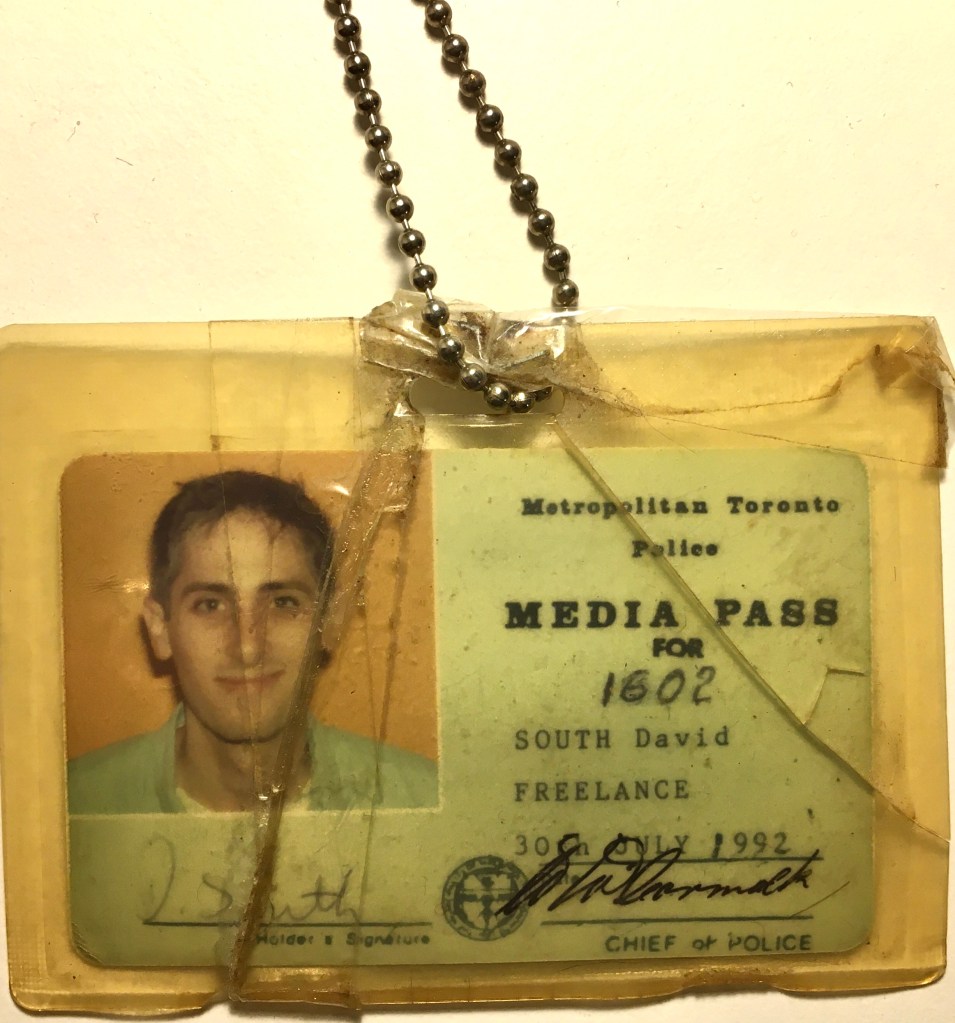
When I served with the Canadian Armed Forces Reserve in the early 1980s, we trained not only for war with our Cold War foe the Soviet Union, but also for peacekeeping missions. In fact I nearly went on one if not for my acceptance to study at the University of Toronto in 1985. Otherwise, I would have been off on a peacekeeping mission that year.
This phase of international development and the United Nations was framed by the Cold War and its tensions and limits: the world divided between opposing ideologies and economic systems and travel between these two worlds (Communism versus free markets and democracy) was severely restricted.
And when I graduated in 1989 from the University of Toronto, all this fell apart very quickly. The First Phase of International Development had come to a swift end.
The Second Development Phase
In 1997, I was hired to head the communications office for the UN/UNDP Mongolia mission. It was a pivotal time in international development. With the forces of ‘globalization’ unleashed (and China’s rapid rise already well underway), the UN was clearly also in a period of great change and stress. The collapse of the Soviet Union in 1991 and its trading system (Comecon), pitched former Communist countries into severe crisis. Comecon locked-in Soviet Union satellite allied nations (including Mongolia) into a reciprocal arrangement of trade links and subsidies. The Mongolia I arrived in in 1997 was a country in turmoil. Poverty was widespread, food was difficult to get, unemployment was very high, families were falling apart under the stress of the crisis, and people’s health was poor, with very high rates of alcoholism and STDs.
This second phase of international development can be characterized by the international response to the collapse of the Soviet Union and the adjustment to the rapid changes brought about by the forces of globalization. The communications revolution was getting underway at this time as the Internet began to arrive, even in Mongolia, which had been cut-off from full relations with the Western world during the period of Communism. Mobile (cell) phones were around but still a luxury item used by wealthy businessmen or senior government officials. International aid and development was primarily in the domain of large international institutions and bilateral donors.
UN/UNDP Mongolia played an important role in helping to stabilize Mongolia during the late 1990s and to put in place the foundations for recovery from crisis (called “one of the biggest peacetime economic collapses ever” at the time). Mongolia eventually, briefly, became the fastest growing economy in the world by the second decade of the 21st century.
In the 1990s, the UN was being challenged to think and do things differently and to respond to the communications revolution. This presented a great opportunity to use the Internet and computing to communicate in new ways; to innovate and experiment. Despite its crisis, Mongolia was able to embrace these new ways and was called a “role model” for the wider United Nations by 1999 (the end of my assignment in Mongolia).
United Nations identity card circa 1997.UN head of communications for Mongolia, David South (seated front row centre), 1997-1999.As the UN’s head of communications in Mongolia (1997-1999), I founded the UNDP Mongolia Communications Office and oversaw a two-year communications programme to respond to the biggest post-WWII peacetime economic collapse. Award-winning and influential, the Office pioneered the use of the Internet in international development crisis response and was called a “role model” for the rest of the United Nations.
The Third Development Phase
With the adoption of the Millennium Development Goals (MDGs) in 2000, it could be argued, a third development phase had begun. The turn of the century was also during the so-called ‘Dotcom Bubble’ when investment in the Internet economy was peaking, and China was on the cusp of being accepted into the WTO (World Trade Organization) and getting set for another period of rapid expansion and growth. Both phenomenon were fueling greater trade and connectivity, especially between the countries of the so-called “global South”.
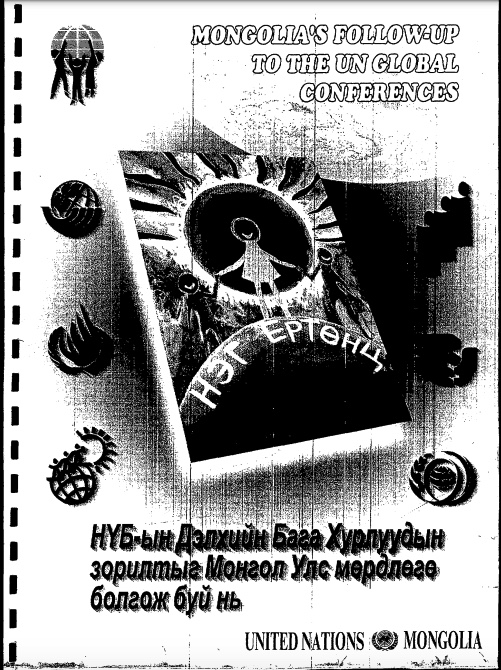
The report we prepared, Mongolia’s Follow-Up to the UN Global Conferences, helped inform what became the Millennium Development Goals (MDGs) (launched in 2000). The e-newsletter Development Challenges, South-South Solutions (published from 2006 to 2014) and the magazine Southern Innovator (published from 2011 to 2015) both informed the debates that led to the Sustainable Development Goals (SDGs), launched in 2015. The report was used as a resource by the UN-funded OneWorld Youth Conference in 1999. As UN Secretary-General Kofi Annan said in a press release on 11 June 1999, “‘Never Should Young- People Have To Be Protected from Government’, Kofi Annan Adds in Message to Final UN OneWorld Youth Conference, in Mongolia.” The report was cited in Women in Mongolia: Mapping Progress under Transition (United Nations Development Fund for Women, 304 East 45th Street, New York, NY 10017, USA).
The MDGs were an attempt to guide and focus development at the international and national level by setting forth eight goals as a challenge. But, just as these internationally agreed goals were being rolled out, something was quietly happening away from New York. In China, it was clear the country had done something truly remarkable: following its own development goals and plans, China lifted the largest number of people in human history out of poverty in the shortest space of time. Those who are students of history will know how stunning an accomplishment this is: China was once a country held up as a poster child for poverty, political instability, frequent famines, human misery and global isolation. China had been the country featured in the charity and famine appeals pleading for relief and aid, just as the countries in Africa and Southeast Asia were to become.
China’s growing export power was also powering globalization. And liberalized trade was powering growth for many countries in Asia and Latin America. This increasing export trade and global connectivity was creating new wealth for many countries and growing the middle classes of the so-called ‘global South’. At the same time, the Internet revolution was being joined by the mobile technologies revolution. These communications tools were making it possible to connect with people who had been frozen out of global markets, while simultaneously creating whole new digital economies employing people and creating new wealth.
Beginning in late 2006 after working around the world in various UN missions on assignments related to the MDGs, I began an exciting new opportunity with the then-Special Unit for South-South Cooperation (SSC) (now the United Nations Office for South-South Cooperation – UNOSSC).
From 9-11 December 2017, I participated in the Workshop on Innovations in Service Delivery: The Scope for South-South and Triangular Cooperation held in Dhaka, Bangladesh. Hosted by the a2i (access to information) division of the Bangladesh Prime Minister’s Office, the implementing unit for Digital Bangladesh, it was convened by the Government of Bangladesh and the United Nations Office for South-South Cooperation (UNOSSC). Senior Partner David South is third from the left on the panel. Photo: Yoko Shimura
21 Years of Creating International Change | 1997 – 2018
1999: Publish many books on Mongolia’s development, includingIn Their Own Words: Selected Writings by Journalists on Mongolia, 1997-1999 (ISBN 99929-5-043-9) and the Mongolian rock and pop book (ISBN 99929-5-018-8). Whilst working for a UK-based international development consultancy, I prepared papers for the American Foundation for AIDS Research, the Global Fund to Fight AIDS, Tuberculosis and Malaria, the Harvard Institute for International Development (HIID), for various UN agencies including UNCTAD and UNAIDS, and coordinated the preparation of the report and launch strategy for the World Bank’s Task Force on Higher Education.
Following on from the success of the UNDP Mongolia Communications Office, I worked with the head of the UN Ukraine mission to strategically relaunch the mission web portal, incorporating the newly launched UN Millennium Development Goals (MDGs).
2001: Begin work on the development of the award-winning GOSH Child Health Portal for the National Health Service (NHS). As part of the NHS’ Modernisation Plan, it was called a “role model” for the NHS and one of the “three most admired websites in the UK public and voluntary sectors,” and was developed and launched under heavy public and media scrutiny. Each stage of the Portal’s development would coincide with a high-profile media launch. For example, the Hospital’s 150th birthday celebrations included Her Majesty Queen Elizabeth II and pop star Madonna.
2002/2003: Win the Childnet Award in 2003 for the Children First website.
2004:South Africa. Work at the University of Pretoria for UN South Africa on a digital communications and marketing strategy for a youth volunteer organization.
2005: Turkmenistan and Mongolia.Work for UN missions on an MDGs communications strategy and on the country programme review.
2006:Turkmenistan. Work for UNICEF. Begin working for the Special Unit for South-South Cooperation (SSC) in New York.
Reader response experiment begins with crowd-powered news website NowPublic. Initial proposal for the development of book or magazine on innovation. Awarded grant for Cuba study tour by BSHF.
Adjust e-newsletter content based on reader responses. Begin posting content on Twitter platform.
2010: Begin development of the new global magazine Southern Innovator with the UN’s Special Unit for South-South Cooperation (SSC) and a design team in Iceland led by Solveig Rolfsdottir. The magazine was produced to the UN’s design standards, as well as abiding by the UN’s Global Compact. With production in Iceland, the magazine could be designed and laid out using 100 percent renewable energy sources.
Develop and launch the new branding for David South Consulting and its website, davidsouthconsulting.com, all designed by one of Iceland’s top graphic designers and illustrators, Solveig Rolfsdottir.
It is called “a terrific tour de force of what is interesting, cutting edge and relevant in the global mobile/ICT space…”. Launch www.southerninnovator.org website (now www.southerninnovator.com) and social media including Twitter account @SouthSouth1.
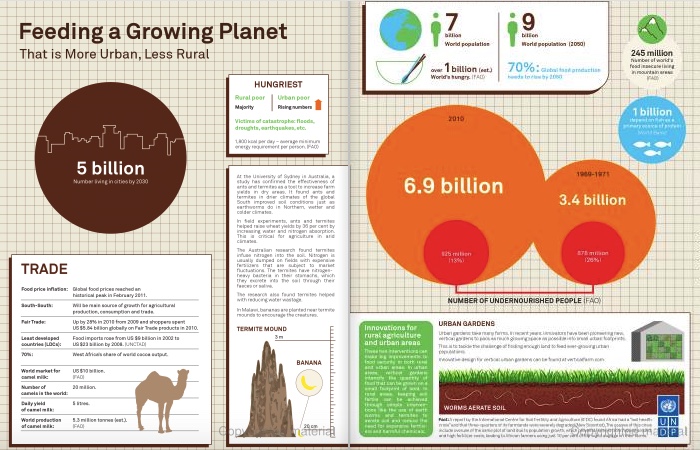
To avoid censorship and interference, Southern Innovator‘s editorial operations were based in London, UK and its design studio was based in Reykjavik, Iceland (a high-ranking country in the World Press Freedom rankings and a former top place holder in the UNDP Human Development Index). Using a women-led design studio, it developed a design vision that could communicate across borders using clear graphic design and high-quality images. For example, when it launched in 2011, infographics were rare in development publications and at the UN; now they are commonplace. It also tried to be as ‘green’ as possible. The studio was powered on 100 per cent renewable energy (in particular, geothermal energy); the hard copy of the magazine is printed on paper from renewable forests.
Called a “Beautiful, inspiring magazine from UNDP on South-South innovation.”
With 201 Development Challenges, South-South Solutions stories posted on the NowPublic platform, a total of 336,289 views by 2012 had occurred, according to the NowPublic counter.
Called “fantastic, great content and a beautiful design!” and “Always inspiring.”.
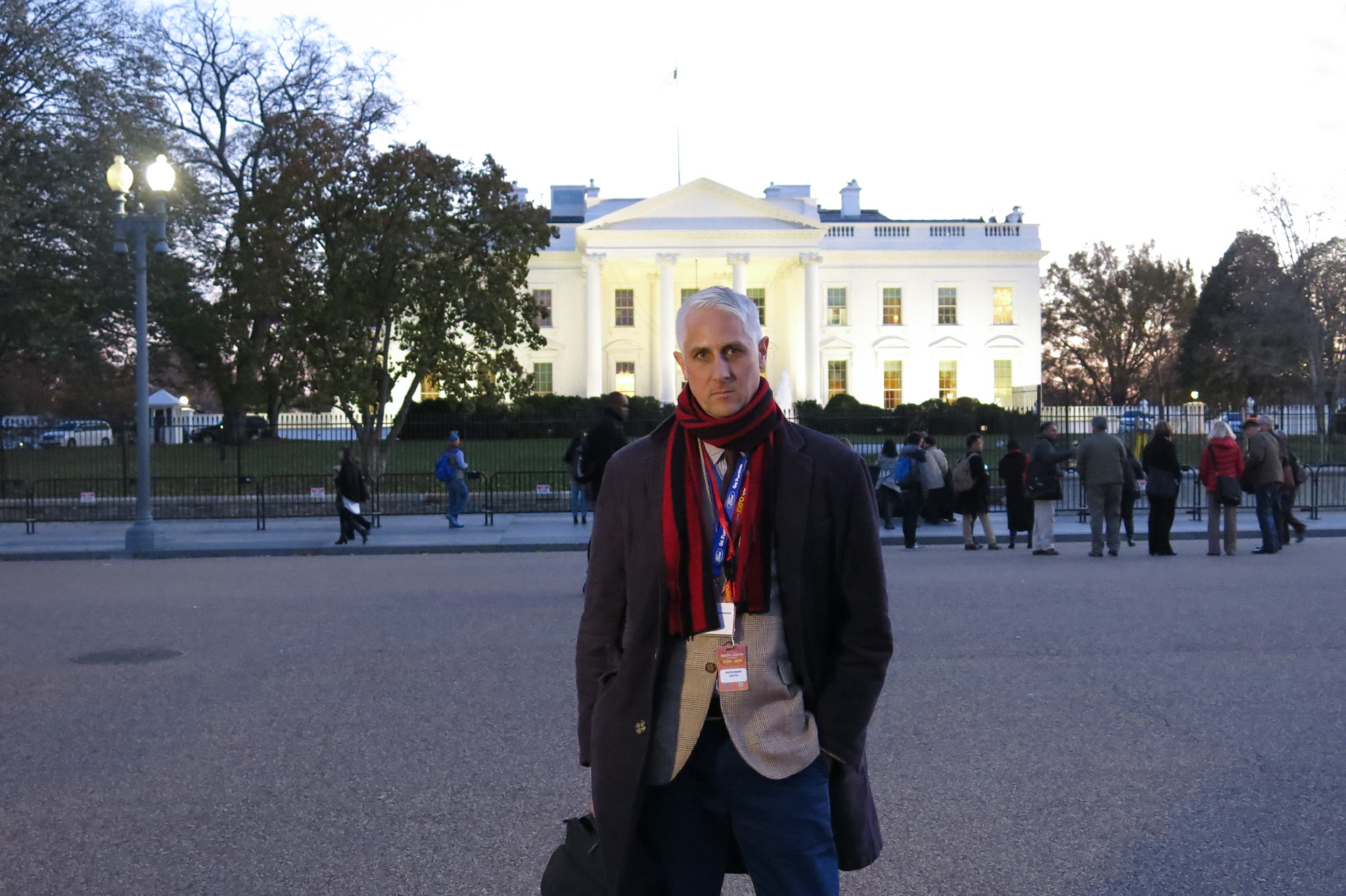
2014: Launch fifth issue of Southern Innovator Magazine at the GSSD Expo in Washington, D.C. U.S.A. The Twitter account @SouthSouth1 called “ one of the best sources out there for news and info on #solutions to #SouthSouth challenges.” Final issues of e-newsletter Development Challenges, South-South Solutions published.
The two publications proved influential on a number of fronts, being early to draw attention to the following: the rising use of mobile phones and information technology in development, the world becoming an urban place, innovative food solutions including the nascent insect food sector (now a big thing), altering perspectives on what is possible in Africa, the use of data science to innovate development, and tracking the growing number of technology hubs and the fast-growing start-up culture in the global South. The publications were cited for shaping the new strategic direction adopted by the United Nations Development Programme (UNDP) (the UN’s leading development organisation) and its first youth strategy, and the development of the Sustainable Development Goals (SDGs). As the world’s first global innovator magazine, Southern Innovator’s design had to be appropriate for a diverse audience. It has drawn praise for being both “beautiful” and “inspiring”, while its use of sharp, modern graphic design and infographics inspired others in the UN to up their game when it comes to design.
2015: Develop scale-up plan for Southern Innovator Magazine.
South-South cooperation and innovation have now become the key methodology for the UN’s delivery of its programmes and projects. In 2015, China pledged US $2 billion to “support South-South cooperation” and called for the international community to “deepen South-South and tripartite cooperation”. In development parlance, they have been “Mainstreaming South-South and Triangular Cooperation” in their plans.
The current policy vogue for innovation in developing and developed countries can trace its roots back to some of the early work done by these two publications (and which was further amplified by the annual Global South-South Development Expo (GSSD Expo), which often would feature innovators from the two publications, spreading the innovation message around the world). Both publications had set out to inspire and “champion a global 21st century innovator culture”. And they have done this, as can be seen from concrete evidence and anecdotal responses from individuals and organizations alike.
UNDP (the United Nations Development Programme) had the following to say about the UNOSSC’s senior management up to 2015 under the Directorship of United Nations Envoy for South-South Cooperation, Yiping Zhou, calling it “unsatisfactory”:
“The United Nations Office for South-South Cooperation (UNOSSC) is an independent entity created by the General Assembly in 1974, General Assembly resolution 3251(XXIX), to support cooperation among developing countries.
UNOSSC receives its mandate and policy framework from General Assembly decisions and resolutions. UNOSSC also serves as the Secretariat of the High-level Committee (HLC) on South-South Cooperation, a subsidiary body of the General Assembly.
UNOSSC is hosted by UNDP and, as is the case with similar entities, is expected to follow UNDP rules and regulations, including those pertaining to financial and HR management. UNOSSC is likewise subject to UNDP’s oversight and due diligence instruments.
The Audit makes 16 recommendations with the objective of improving UNOSSC’s effectiveness in the areas of: governance; programme and project activities; and operations.” Excerpt from Statement (5 May 2016)
The retirement in 2016 of Southern Innovator‘s Editor-in-Chief, Cosmas Gitta, meant the magazine lost its strongest advocate within the UNOSSC and thus was not included in the next budget post-audits.
The US investigations by the F.B.I. (Federal Bureau of Investigation) leading to arrests and subsequent court trials from 2015 onwards, were joined by Australian authorities in 2018. These revelations and confessions paint a picture of a high-level, multinational criminal conspiracy to launder money and pay bribes at the United Nations that also included the collusion and aid of various senior UN officials at the time. Not only do these revelations offer new context to Southern Innovator‘s attempts to gain future support from the UNOSSC, they explain why Southern Innovator faced extensive obstruction, deception and unethical and unprofessional behaviour during this time, despite the documented success of the magazine and its associated e-newsletter to reach and inspire readers, while shaping UN strategic policy on innovation (Strategic framework of the United Nations Office for South-South Cooperatio, 2014-2017).
“The e-newsletter Development Challenges, South-South Solutions proved to be a timely and prescient resource on the fast-changing global South, tracking the rise of an innovator culture driven by the rapid adoption of mobile phones and information technology …
“In 2010, work began on the development of the world’s first magazine dedicated to the 21st-century innovator culture of the global South. My goal was to create a magazine that would reach across countries and cultures, meet the UN’s standards, and inspire action. Southern Innovator was the result. Mr. [David] South played a vital role in the magazine’s development from its early conception, through its various design prototypes, to its final global launch and distribution.
“Both the e-newsletter and magazine raised the profile of South-South cooperation and have been cited by readers for inspiring innovators, academics, policy makers and development practitioners in the United Nations and beyond.
“I highly recommend Mr. [David] South as a thoughtful, insightful, analytical, creative and very amicable person who has the unique ability to not only grasp complex problems but also to formulate a vision and strategy that gets things done. … ” Cosmas Gitta, Former Assistant Director, Policy and United Nations Affairs at United Nations Office for South-South Cooperation (UNOSSC) in UNDP
“I think you [David South] and the designer [Solveig Rolfsdottir] do great work and I enjoy Southern Innovator very much!” Ines Tofalo, Programme Specialist, United Nations Office for South-South Cooperation (UNOSSC)
Finding ways to increase agricultural productivity is key to expanding food supplies and making farming pay. With the world’s population continuing to rise and becoming more urban, there is a pressing need to improve both the quantity and quality of food supplies.
The many small-scale farmers across the global South – and their high levels of poverty – demonstrates the urgent need to change the way farming is done.
Based on Food and Agricultural Organization (FAO) census data, it has been estimated that some 525 million farms exist worldwide, providing a livelihood for about 40 per cent of the world’s population. Nearly 90 per cent of these are small farms with less than 2 hectares of land (Nagayets, 2005). Average farm sizes around the world run from 1.6 hectares in Africa to 121 hectares in North America.
Small farms occupy about 60 per cent of the arable land worldwide and contribute substantially to global farm production. In Africa, 90 per cent of agricultural production is derived from small farms (Spencer, 2002).
One social enterprise is pioneering the development and selling of innovative farming tools for these small-scale farmers to increase their efficiency and make their lives better and more profitable. The MoneyMaker Hip Pump is a lightweight irrigation tool designed to be used by anyone, but aimed especially at women farmers. It helps to increase the amount of water that can be pumped into a field during the dry season. To date, the makers of the pump, Kickstart (kickstart.org), claim to have sold 190,000 pumps. It can irrigate up to 0.40 hectare of land.
Kickstart, which calls itself a non-profit promoting technology and entrepreneurism in Africa, develops and markets simple agricultural tools for Africa’s rural poor so they can improve their businesses. The company estimates it has helped 600,000 people since it was founded in 1991.
The MoneyMaker Hip Pump was launched in stores in 2006 and received a sales and marketing push in 2008. It sells for US $30 and weighs 4.5 kilograms. Kickstart says the pump’s most effective attribute is its simple pivot hinge. This pivot hinge allows the user to combine their body weight and strength from their legs with sheer momentum to power the pump rather than straining upper back and shoulder muscles – something that is very hard on farmers’ bodies and leads to repetitive strain injuries that shorten a farmer’s effective working life.
The pump can pull water from 7 metres and push water up a field for 14 metres.
Kickstart says that by early 2012, it had sold 32,037 pumps.
Reporting in a paper for the World Bank, Vincent Nnamdi Ozowa found smallscale farmers needed five things that will make a big difference to their productivity: better access to information on new methods, scientific advances and timely market updates; better education and improved literacy rates;access to credit; better marketing; and better technology that minimizes drudgery and improves efficiency.
In 2011, Worldwatch Institute’s State of the World report found small-scale agriculture could be key to tackling world hunger and poverty. It urged a move away from industrial agriculture and towards small-scale farming in sub-Saharan Africa, believing it could make big gains by being more efficient and reducing waste.
Kickstart has found communities are receptive to the idea of using the pumps and building agro businesses.
“These are people who are already entrepreneurs, so it is not like we are sensitizing them; they are people who are trying to find ways to make money,” Kickstart Tanzania’s Anne Atieno Otieno told AllAfrica.com.
“When we meet them in the communities we talk to them about the value of irrigation versus relying on rainfall. Most of them are used to having to wait for the rain. At the time we were working with the Super MoneyMaker pump, which is a bigger, more expensive pump. They asked if we could make a low entry pump, which we passed on to our tech deputy and that is how we came up with the MoneyMaker Hip Pump.”
It is part of a range of products Kickstart makes to aid small farmers become more productive (kickstart.org/products).
KickStart believes that self-motivated private entrepreneurs managing smallscale enterprises can play a dynamic role in the economies of developing countries.
These entrepreneurs can raise small amounts of capital (US $100 to US $1,000) to start a new enterprise. KickStart then helps them to identify viable business opportunities and access the technologies required to launch the new enterprises.
Kickstart also uses something called a Mobile Layaway service to make it easier for farmers to afford a pump. This service lets farmers pay off the cost of the pump in small instalments by mobile phone. The farmer can choose how large or small the instalment is according to their means.
“Speaking to the women, and going out into the field and speaking with farmers, we identified a major obstacle – purchasing power, the ability to buy the pump. In Africa, in the field, the pump is a capital item,” Otieno said.
“They really have to organize themselves to be able to save for it. And so when we were speaking to the farmers, many were asking us, ‘Can you come up with a credit facility?’ or some system whereby they could purchase the pumps, because many of them wanted the pump but they were not able to afford it.
“The program works through a mobile phone service, MPesa (http://www.safaricom.co.ke/index.php?id=250) … so the farmers are able to save money, and send money through that program.”
Kickstart recently received an award from the US State Department and the Rockefeller Foundation for “transforming agriculture for women by harnessing technology and spurring entrepreneurship.”
2) The New Harvest, Agricultural Innovation in Africa by Calestous Juma. The book outlines strategies for making Africa self-sufficient and argues Africa is
Development Challenges, South-South Solutions was launched as an e-newsletter in 2006 by UNDP’s South-South Cooperation Unit (now the United Nations Office for South-South Cooperation) based in New York, USA. It led on profiling the rise of the global South as an economic powerhouse and was one of the first regular publications to champion the global South’s innovators, entrepreneurs, and pioneers. It tracked the key trends that are now so profoundly reshaping how development is seen and done. This includes the rapid take-up of mobile phones and information technology in the global South (as profiled in the first issue of magazine Southern Innovator), the move to becoming a majority urban world, a growing global innovator culture, and the plethora of solutions being developed in the global South to tackle its problems and improve living conditions and boost human development. The success of the e-newsletter led to the launch of the magazine Southern Innovator.
















 David South Consulting
You must be logged in to post a comment.