Categories
Archive Development Challenges, South-South Solutions Newsletters Southern Innovator magazine

Recycling Waste to Boost Incomes and Opportunities

By David SouthDevelopment Challenges, South-South Solutions

SOUTH-SOUTH CASE STUDY

We all know that green is good, but often the best way to encourage recycling and other environment-improving activities is to put in place economic incentives. It is one thing to admonish people and tell them something is the right thing to do; it is another to make keeping a clean environment pay.

Many initiatives across the global South have proven it is possible to develop an economy of recycling and garbage collection in poor neighbourhoods. These economies take many forms and models.

At the most basic end of the scale are the desperate, survival-driven examples of recycling. In countries likeIndia, recycling can be purely a question of survival – people are so poor they can’t allow anything that might have income potential go to waste. Other countries are very familiar with large numbers of desperately poor people picking through garbage dumps and waste to eke out a living. Or, for example in Brazil, as in many other countries, it’s common to see poor and homeless people picking through garbage on the streets.

These are examples of degrading ‘green’ economies. But there other ways to encourage waste recycling that offer real income benefits and life improvements.

Brazil, a world leader in waste recycling and green technologies, has pioneered the recycling of plastic bottles, aluminum, steel cans, solid plastic waste and glass. And now energy companies inBrazilhave created credit schemes that encourage waste recycling while giving people real economic benefits in return for doing the right thing for the environment. The first scheme went so well, it quickly inspired others to replicate its programme in other poor communities.

Coelce (http://www.coelce.com.br/default.aspx) is a power company in the Ceará State in northeastern Brazil. The company is primarily engaged in the distribution of electrical power for industrial, rural, commercial and residential consumption. In 2007 it set up Ecoelce (http://www.coelce.com.br/coelcesociedade/programas-e-projetos/ecoelce.aspx), a programme allowing people to recycle waste in return for credits towards their electricity bills. The success of the programme led to an award from the United Nations.

The programme works like this: people bring the waste to a central collection place, a blue and red building with clear and bright branding to make it easy to find. In turn they receive credits on a blue electronic card – looking like a credit card – carrying a picture of a child and arrows in the familiar international recycling circle.

These credits are then used to calculate the amount of discount they should receive on their energy bill. The scheme is flexible, and people can also use the credits for food or to pay rent. In 2008, after its first yearthe scheme had expanded to 59 communities collecting 4,522 tons of recyclable waste and earning 622,000 reais (US $349,438) in credits for 102,000 people. People were receiving an average of 5 to 6 reais (US $2.80 to US $3.37) every month towards their energy bills.  A clear success leading to an expansion of the scheme.

Now in Ceará’s state capital, Fortaleza (http://en.wikipedia.org/wiki/Fortaleza), – population 3.5 million – there are more than 300,000 people recycling a wide range of materials, from paper, glass, plastics, and metals to cooking oil to get electricity discounts, according to the Financial Times.

In Brazil’s second largest city, Rio de Janeiro, a favela clean-up programme is being run by electricity firm Light S.A. (http://www.light.com.br/web/tehome.asp), which took its inspiration from the success of the Ecoelce experience.

The number of favelas, or informal slum neighbourhoods (http://en.wikipedia.org/wiki/Favela), in Rio is debated: according to the federal government, there are 1,020 favelas, while Rio’s housing department lists 582. The government has been trying to tackle the law and order problems in these neighbourhoods – many are plagued with violent drug gangs – and endemic poverty. It calls this programme “pacification” (http://brazilportal.wordpress.com/2011/10/20/rios-top-cop-talks-public-safety-policy-favela-pacification-program/) as it tries to bring law and order and boost economic development and social gains.

Recycling programmes are helping to bring improvements to life in the favelas by simultaneously cleaning up neighbourhoods and boosting household wealth.

Light S.A. is a Brazilian energy company working in the generation, transmission, distribution and marketing of electricity. It distributes to 31 municipalities inRio de Janeiroand has around 3.8 million customers.

According to the Financial Times, the Light project pays residents 0.10 reais per kilogram of paper and plastic (US .5 cents). It also pays 2.50 reais per kilogram of aluminum and lead (US $ 1.40).

Importantly for community relations, the scheme is open not just to favela residents but to nearby middle class neighbourhoods.

“The idea is to unite the community and the people living around it,” Fernanda Mayrink, Light’s community outreach officer, told the Financial Times.

The project has helped improve theSanta Martafavela ofRio, where police have been working since 2008 to take back the neighbourhood from the control of violent drug gangs. Community police officers can now do their job of taking care of safety for the 6,000 residents.

“You don’t see drugs and guns any more but you do see lots of rubbish,” Mayrink said.

“This project encourages recycling within the company’s concession area and at the same time contributes to sustainable development and the consumer’s pocket. Light wins, the customer wins (and) the environment wins.”

In Vietnam, the NGO Anh Duong (http://www.anhduonghg.org/en/) or “Sun Ray” shows schoolchildren how to collect plastic waste to sell for recycling. In return, their schools receive improvements and the students can win scholarships. It is estimated ruralVietnam is littered with 100 million tons of waste every year. Much of it is not picked up.

The project is operating in 17 communities in Long My and Phung Hiep districts in southernVietnam, mobilising children from primary and secondary schools. School children wearing their uniforms fan out in groups and collect the plastic waste. The money made from selling the plastic waste is being used to improve school facilities and fund scholarships for poor children.

In 2010, the project reported that 10,484 kilograms of plastic waste was collected by 26,015 pupils. This provided for 16 scholarships for school children.

The Anh Duong NGO was set up by a group of social workers with the goal of community development. They target the poorest, bringing together the entire community and seek out “low cost and sustainable actions”. The NGO has a mix of specialties, from agriculture to aquaculture, health, microfinance and social work.

“Close, but no cigar” some might say, but we were genuinely flattered to be shortlisted in 2014 for inclusion in the book Visual Storytelling: Infographic Design in News published by Images Publishing in Shanghai, China. It is a lovely book to look at and the quality of infographics chosen for the book is high so it must have been a tough call. It was further proof Southern Innovator was getting known around the world and gaining respect for its content and design. The excellent work done by our graphic designer and illustrator Solveig Rolfsdottir speaks for itself.
Graphic Designer and Illustrator: Sólveig Rolfsdóttir.

Published: November 2011

Resources

1) A travelling exhibit, In The Bag: The Art and Politics of the Reusable Bag Movement, showcases bags and art produced by communities throughout the world and by individual artists. Website:http://www.unrisd.org/80256B3C005BE6B5/%28httpNews%29/D1AB353A91EC2466C125793600519C7B?OpenDocument

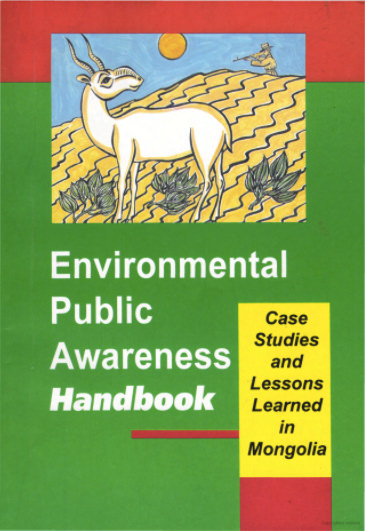
2) EPAP guide: Based on extensive research throughout Mongolia by UNDP, this guide includes the application of the Blue Bag project to Mongolia’s sprawling slum districts surrounding the capital Ulaanbaatar. Website:http://tinyurl.com/yfkn2dp
Development Challenges, South-South Solutions was launched as an e-newsletter in 2006 by UNDP’s South-South Cooperation Unit (now the United Nations Office for South-South Cooperation) based in New York, USA. It led on profiling the rise of the global South as an economic powerhouse and was one of the first regular publications to champion the global South’s innovators, entrepreneurs, and pioneers. It tracked the key trends that are now so profoundly reshaping how development is seen and done. This includes the rapid take-up of mobile phones and information technology in the global South (as profiled in the first issue of magazine Southern Innovator), the move to becoming a majority urban world, a growing global innovator culture, and the plethora of solutions being developed in the global South to tackle its problems and improve living conditions and boost human development. The success of the e-newsletter led to the launch of the magazine Southern Innovator.  

Follow @SouthSouth1

Google Books: https://books.google.co.uk/books?id=waeXBgAAQBAJ&dq=Development+Challenges+February+2008&source=gbs_navlinks_s

Slideshare: http://www.slideshare.net/DavidSouth1/development-challengessouthsouthsolutionsfebruary2008issue

Southern Innovator Issue 1: https://books.google.co.uk/books?id=Q1O54YSE2BgC&dq=southern+innovator&source=gbs_navlinks_s

Southern Innovator Issue 2: https://books.google.co.uk/books?id=Ty0N969dcssC&dq=southern+innovator&source=gbs_navlinks_s

Southern Innovator Issue 3: https://books.google.co.uk/books?id=AQNt4YmhZagC&dq=southern+innovator&source=gbs_navlinks_s

Southern Innovator Issue 4: https://books.google.co.uk/books?id=9T_n2tA7l4EC&dq=southern+innovator&source=gbs_navlinks_s

Southern Innovator Issue 5: https://books.google.co.uk/books?id=6ILdAgAAQBAJ&dq=southern+innovator&source=gbs_navlinks_s

Creative Commons License

This work is licensed under a
Creative Commons Attribution-Noncommercial-No Derivative Works 3.0 License.

ORCID iD: https://orcid.org/0000-0001-5311-1052.

© David South Consulting 2023
Categories
Archive Development Challenges, South-South Solutions Newsletters Southern Innovator magazine

Solar Bottle Bulbs Light Up Dark Homes

By David SouthDevelopment Challenges, South-South Solutions

SOUTH-SOUTH CASE STUDY

Finding ways to generate low-cost or free light has captured the imagination of innovators across the global South. The desire for light is strong: Light gives an immediate boost to income-making opportunities and quality of life when the sun goes down or in dark homes with few windows.

More than 1.7 billion people around the world have no domestic electricity supply, of whom more than 500 million live in sub-Saharan Africa (World Bank). Without a source of electricity, it is difficult to use conventional technology to switch the lights on.

While it is possible to run lights using batteries or diesel generators, these are expensive options that are not possible for many poor people. The more of a slim income that is spent on light, heat or cooking fuel, the less there is left for better-quality food, clothing, transport or education and skills development.

Low-cost light is great, but free light is even better – and one Brazilian solution is offering this.

Brazilian innovator and mechanic Alfredo Moser has taken the common plastic water bottle and created a low-cost lighting solution for dark spaces. Often makeshift homes lack decent lighting or a good design that lets the light in during the day. This means it may be a bright, sunny day outside, but inside the home or workplace, it is very dark and reading or working is difficult.

Moser came upon the idea during regular blackouts in his home city of Uberaba (http://www.uberaba.mg.gov.br/portal/principal) in southern Brazil during 2002. During the blackouts, only factories were able to get electricity, leaving the rest of the population in the dark.

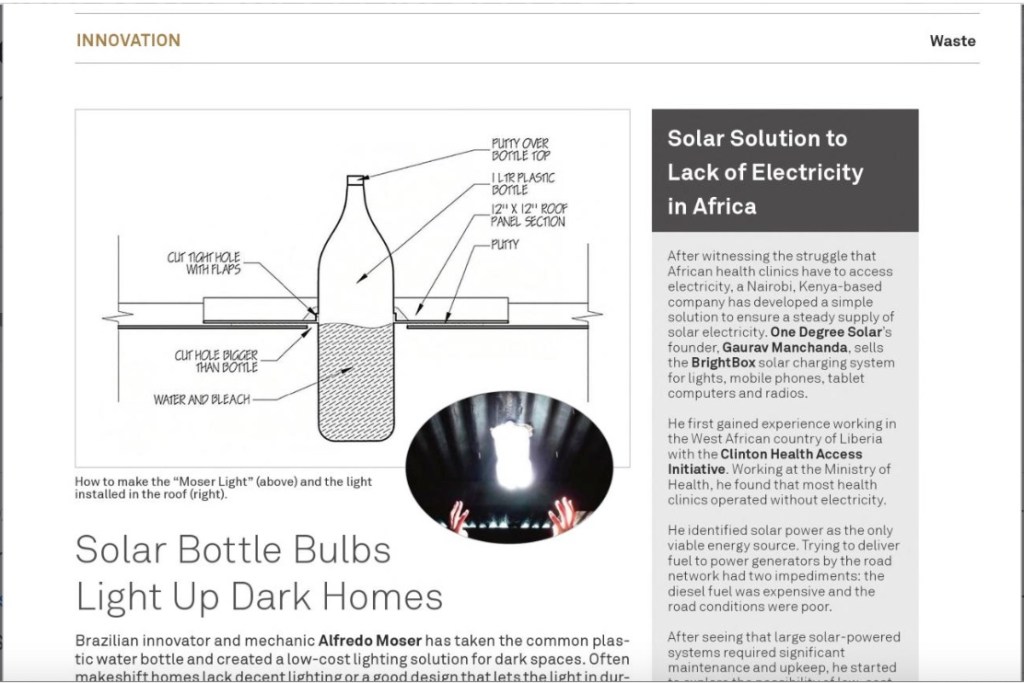
The “Moser Light” involves taking plastic bottles, which are usually just thrown away or recycled, and filling them with water and bleach to draw on a basic physical phenomenon: the refraction of sunlight when it passes through a water-based medium.

It is a simple idea: Holes are drilled in the ceiling of a room and the bottles placed in the holes. The liquid-filled bottle amplifies the existing sunlight (or even moonlight) and projects it into the dark room. This turns the plastic bottle into a very bright lightbulb that does not require any electricity.

Moser uses a solution of two capfuls of bleach added to the water to prevent anything growing in the water such as algae because of the exposure to sunlight.

“The cleaner the bottle, the better,” he said.

Polyester resin is used to seal the hole around the plastic bottle and make it watertight from rain.

Moser claims his bottle innovation can produce between 40 and 60 watts of light.

Moser uses recycled plastic bottles, so the carbon footprint is minimal compared to the manufacture of one incandescent bulb, which takes 0.45 kilograms of CO2 (UN). Running a 50 Watt incandescent light bulb for 14 hours a day for a year, around the same light as produced by the bottle bulb, produces a carbon footprint of nearly 200 kilograms of CO2.

“There was one man who installed the lights and within a month he had saved enough to pay for the essential things for his child, who was about to be born. Can you imagine?” Moser told the BBC.

The plan is to try and get as many as a million homes fitted with the lighting system by the end of 2013.

In many poor areas, it is common to live in makeshift or rudimentary dwellings. These are often built to crude designs and, in order to keep costs down and boost security, will have few or no windows. These dwellings will consequently be very dark inside, even on the brightest days. This leaves people having to turn to a source of artificial light if they want to do something indoors like read or work. And this costs money. Be it electricity from a mains, or battery-powered lamps or gas-powered lanterns, the cost will eat into a person’s tight income. This is where Moser’s simple solution saves the day and saves pennies: it is free light once the bottle lamp system is installed.

Placing the bottle lights in the ceiling transforms the ceiling into something akin to the night sky, with many points of light shining down into the room like stars. It also means the occupant of the room does not just have to strain to see with the use of a single light but now has many lights illuminating the room from all angles.

“It’s a divine light,” Moser told the BBC World Service. “God gave the sun to everyone, and light is for everyone. Whoever wants it saves money. You can’t get an electric shock from it, and it doesn’t cost a penny.”

It has not been a road to riches for Moser. He has made some money installing the system in a local supermarket and nearby homes, and he has inspired a charity to install the lighting system and to train people to do the installation and make an income from it.

The MyShelter Foundation in the Philippines was inspired by Moser’s invention and has installed the system in some 140,000 homes there, the BBC reported.

“We want him to know that there are a great number of people who admire what he is doing,” MyShelter Executive Director Illac Angelo Diaz said of Moser.

Using bottle bulbs instead of electricity or generators means families can save US $6 per month, according to Diaz (CNN). The Philippines is reported to have the most expensive electricity in Asia and slum homes usually do not have electricity.

It is estimated 15 other countries also have homes using the Moser system. The MyShelter Foundation believes 1 million homes worldwide have used the Moser system as of 2013.

Liter of Light (http://aliteroflight.org), run by the MyShelter Foundation, offers instructions on how to install the lighting system on its website.

Published: September 2013

Resources

1) D-Lab: MIT: Development through Dialogue, Design and Dissemination: D-Lab is building a global network of innovators to design and disseminate technologies that meaningfully improve the lives of people living in poverty. The program’s mission is pursued through interdisciplinary courses, technology development, and community initiatives, all of which emphasize experiential learning, real-world projects, community-led development, and scalability. Website: http://d-lab.mit.edu/

2) d.light Solar: d.light is a for-profit social enterprise whose purpose is to create new freedoms for customers without access to reliable power so they can enjoy a brighter future. d.light design manufacture and distribute solar light and power products throughout the developing world. Website: http://www.dlightdesign.com/

3) Liter of Light:  It brings the eco-friendly bottle light to communities living without electricity. Website: http://aliteroflight.org

4) Solar Sister: Solar Sister eradicates energy poverty by empowering women with economic opportunity.  They combine the breakthrough potential of solar technology with a deliberately woman-centered direct sales network to bring light, hope and opportunity to even the most remote communities in rural Africa. Website: http://www.solarsister.org/

Creative Commons License

This work is licensed under a
Creative Commons Attribution-Noncommercial-No Derivative Works 3.0 License.

ORCID iD: https://orcid.org/0000-0001-5311-1052.

© David South Consulting 2023

Categories
Archive Development Challenges, South-South Solutions Newsletters Southern Innovator magazine

Social Franchising Models Proving Poor Bring Profits

By David SouthDevelopment Challenges, South-South Solutions

SOUTH-SOUTH CASE STUDY

The four billion people in the world who live on less than US $2 a day have been described as the bottom of the economic pyramid, or BOP for short. In his book The Fortune at the Bottom of the Pyramid, Indian business consultant and professor CK Prahalad argues that this attitude must be turned on its head: rather than seeing the world’s poor as a burden, only worthy of charity, Prahalad sees nothing but opportunity and unmet needs that business can address. In short, he argues, profits can be married with the goal of eradicating poverty.

Prahalad has gone so far as to claim this is a market potentially worth US $13 trillion, while the World Resources Institute puts it at US $5 trillion in its latest report, The Next 4 Billion.

One of the tools business is turning to reach the world’s poor is known as social franchising. The concept borrows from the business world and the highly successful franchise models that are more commonly associated with fast-food restaurants and computer and clothing retailers – wherever rapid expansion and scale are required to reach the biggest market possible. And there is no bigger market, social franchising advocates claim, than the world’s four billion poorest people.

In the past, most formal business in developing countries chased the small middle class or the even smaller elite or foreign expatriate communities. Traditional poverty eradication strategies have also been criticized for being too narrow, focused on a very small group, or for wasting time and resources replicating what has already been achieved elsewhere, and for ballooning and shrinking depending on aid grants or success at fundraising. Social franchising aims to bypass these weaknesses by finding models that work, making sure they are self-financing, and then quickly scaling them up to reach as many people as possible. It’s a model that is gaining more followers and the serious interest of big and small businesses.

One example is the Scojo Foundation in India, established to tackle the common problem of blurry vision as people age (presbyopia). Not a disease, the first symptoms occur between the ages of 40 and 50. Low vision affects 124 million people in the world according to the World Health Organization’s Vision 2020 campaign, organizers of World Sight Day 2007 on October 11.

Blurry vision is a serious disability for weavers, mechanics, goldsmiths and others whose livelihoods depend on near vision. As vision deteriorates, these people are unable to provide for their families. Yet it is easily treatable with a pair of eyeglasses.

Since, 2002, the Scojo Foundation (the social franchising wing of eyeglasses manufacturer Scojo New York, has launched operations in Bangladesh, Mexico, Guatemala, El Salvador and Ghana. Its largest and fastest growing operation is in India, where it employs more than 560 entrepreneurs in rural villages, and selling more than 50,000 pairs of glasses since 2001.

It has grown quickly because the business model has been replicated by local staff who work as franchisees. It has followed the franchise model by building a network of “vision entrepreneurs” – low-income men and women, who in turn sell reading glasses directly to rural villagers throughout India. The franchise model enables the “vision entrepreneurs” to earn a good income, and gain respect from other community members.

Nico Clemminck, co-author of a case study on Scojo, found the price was very competitive with other options in India, and that the higher quality of the glasses made them attractive to villagers.

“The franchisees, or Vision Entrepreneurs as Scojo calls them, that we met were very involved with Scojo – some of them shifting away their focus from previous occupations to spend the majority of their time on conducting vision screenings and selling glasses. The main reason is that the business is quite profitable to them – they make a US $1 margin per glasses sold, which is very high compared to other retail products. A trend we did notice is that commitment decreases over time, as the entrepreneurs exhaust their immediate circle of relatives or target village populations, and the incremental sale becomes tougher to make.”

According to Clemminck, Scojo has been able to quickly and successfully expand to other countries by forming partnerships with existing networks that reach into villages.

The profit hierarchy works like this: the manufacturer charges US $1 for the reading glasses, Scojo charges another US $1, the franchisee a further US $1, and the customer pays US $3 for the glasses. By creating profit at each stage, the model ensures the financial incentives are there to keep the distribution network active.

Prior to Scojo, it was believed developing infrastructure in rural Indian communities is too high to sustain a franchising model for low-cost products. Scojo found it was possible to succeed with this model, by focusing on profitability and sustainability right from the start, pursuing aggressive growth through partnerships to build economies of scale, blocking competitors by having a strong brand and first-mover advantage, constantly refining the model across regions, and delivering a tangible social benefit, both economic and health.

On average, franchisees work 20-30 hours per month and earn US $15 to US $20 per month. Considering most franchisees were living on US $1 a day, the extra income is very welcome, Clemminck said.

“This project gave me insight into the large, untapped market opportunity that exists,” says case study co-author Sachin Kadakia, “and how the concept of ‘Bottom of the Pyramid’ provides a tangible and significant improvement to the quality of life of people in these communities.”

Another social franchise gaining ground in India is Medicine Shoppe. As a chain of pharmacies, Medicine Shoppe targets underserved communities by offering entrepreneurs franchises. It is an offshoot of the largest franchiser of independent community pharmacies in the US, Medicine Shoppe International Inc.. It can draw on its strong brand and identity to appeal to potential franchises.

Acumen Fund fellow Nadaa Taiyab, who is working with Medicine Shoppe’s expansion to help the rural and urban poor, found it was important to learn lessons and adapt the model.

“When I arrived in December (2006),” she said, “we opened the first Sehat Clinic. Last weekend we opened the seventh, with an eighth shortly underway. The model has undergone a tremendous evolution in the past six months. We shifted our site selection strategy from relatively affluent areas with a slum nearby, to locating the clinics right inside slums. We redesigned the process through which we recruit doctors and created an employment package that allows us to hire experienced doctors at a salary we can afford.

“We also implemented an entirely new concept for Medicine Shoppe called community marketing outreach. Through this program, we hire local women in each area to make daily home visits, refer patients to the clinic, spread health education and awareness, and promote our free health camps and health clinics. In the past four months we have held over 35 health-plus-vision-testing camps, serving over 4,000 people.

“We have also made some changes to the look and feel of the clinics and shops and put all our marketing materials in the local language, to make our services more appealing to low-income markets.”

There are critics of the BOP approach, however. Aneel Karnani from the Ross School of Business at the University of Michigan, argues from a for-profit perspective, business would be much better off targeting the needs of the growing middle classes, especially in countries like India and China. He, however, does acknowledge that social franchising businesses like above, where social responsibility is key, are relevant to meeting the needs of the poor.

Published: August 2007

Resources

  • A detailed and thorough case study of how the Scojo Foundation model works is found here
  • An excellent set of decision matrices to help budding social entrepreneurs and existing businesses to decide if social franchising is the right solution: www.createproject.org
  • The Social Enterprise Alliance has built a knowledge network and extensive range of resources (including 160 case studies) on social enterprise.

Creative Commons License

This work is licensed under a
Creative Commons Attribution-Noncommercial-No Derivative Works 3.0 License.

ORCID iD: https://orcid.org/0000-0001-5311-1052.

© David South Consulting 2023
Categories
Archive Development Challenges, South-South Solutions Newsletters Southern Innovator magazine

Global South Eco-cities Show How the Future Can Be

By David SouthDevelopment Challenges, South-South Solutions

SOUTH-SOUTH CASE STUDY

The world is currently undergoing a high-stress transition on a scale not seen since the great industrial revolution that swept Europe in the 19th and 20th centuries. Today’s urban and industrial transition involves many more people and is taking place on a greater proportion of the planet. With rapid urbanization comes a demand for middle class lifestyles, with their high-energy usage and high consumption of raw materials.

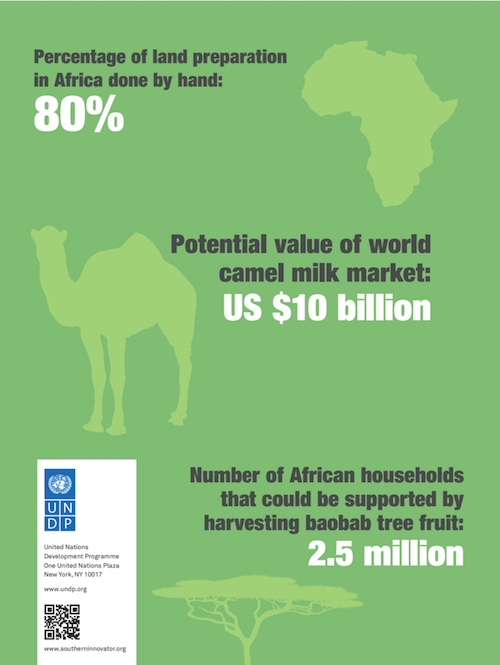
This is stretching the planet’s resources to breaking point. And as many have pointed out, if the world’s population is to continue past today’s 7 billion to reach 9 billion and beyond, new ways of living are urgently required. Radical thinking will be necessary to match the contradictory goals of raising global living standards for the world’s poor with pressured resources and environmental conditions.

But there are innovative projects already under development to build a new generation of 21st-century cities that use less energy while offering their inhabitants a modern, high quality of life. Two examples are in China and the Middle East.

Both projects are seen as a way to earn income and establish viable business models to build the eco-cities of the future. Each project is seeking to develop the expertise and intellectual capacity to build functioning eco-cities elsewhere. In the case of the Masdar City project in the United Arab Emirates, international businesses are being encouraged to set up in Masdar City and to develop technologies that can be sold to other countries and cities – in short, to create a green technology hub akin to California’s hi-technology hub ‘Silicon Valley’. Masdar City is also being built in stages as investors are found to help with funding. Both projects hope to prove there is money to be made in being green and sustainable.

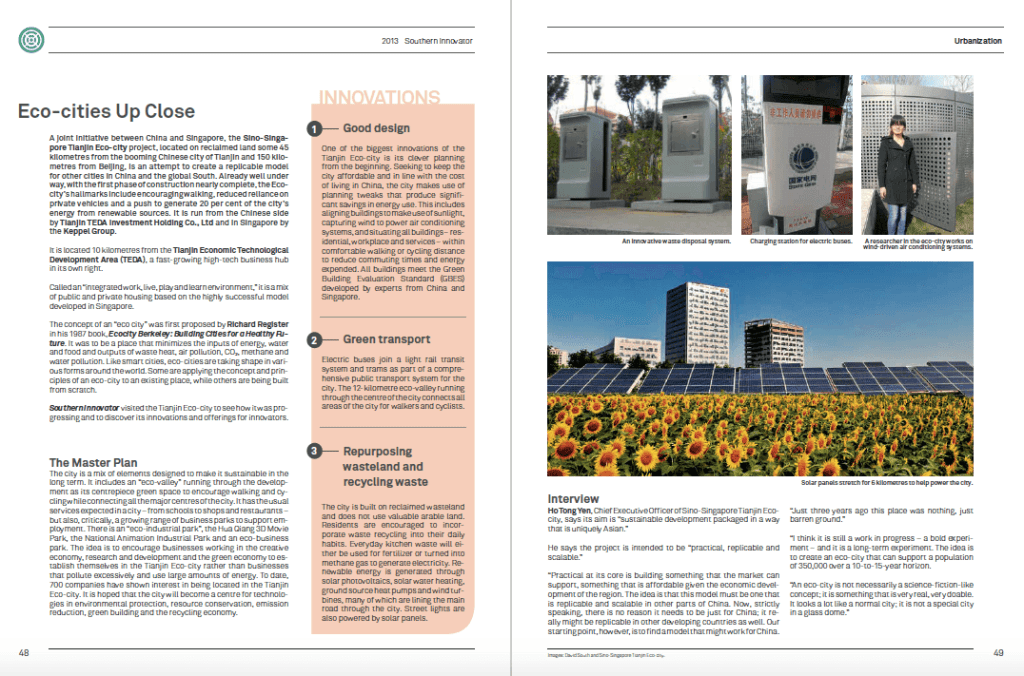
The Tianjin Eco-city (tianjinecocity.gov.sg) project is a joint venture between China and Singapore to build a 30 square kilometre city to house 350,000 residents.

Tianjin (http://en.wikipedia.org/wiki/Tianjin) is a large industrial city southeast of China’s capital, Beijing. It is a place that wears the effects of its industrial expansion on the outside. Air pollution is significant and the city has a grimy layer of soot on most outdoor infrastructure.

China has received a fair bit of criticism for its polluted cities as the country has rapidly modernized in the past two decades. This sprint to be one of the world’s top economic powers has come at a cost to the environment. In this respect, China is not unusual or alone. Industrialization can be brutal and polluting, as Europe found out during its earlier industrial revolution.

But China is recognizing this can’t go on forever and is already piloting many initiatives to forge a more sustainable future and bring development and high living standards back in line with what the environment can handle.

Sino-Singapore Tianjin Eco-city is the second large-scale collaboration between the Chinese government and Singapore. The first was the Suzhou Industrial Park (http://www.sipac.gov.cn/english/).The Tianjin project came up in 2007 as both countries contemplated the challenges of rapid urbanization and sustainable development.

The project’s vision, according to its website, is to be “a thriving city which is socially harmonious, environmentally-friendly and resource-efficient – a model for sustainable development.”

The philosophy behind the project is to find a way of living that is in harmony, with the environment, society and the economy. It is also about creating something that could be replicated elsewhere and be scaled up to a larger size.

The city is being built 40 kilometres from Tianjin centre and 150 kilometres from Beijing. It is located in the Tianjin Binhai New Area, considered one of the fastest growing places in China.

Construction is well underway and can be followed on the project’s website (http://www.tianjinecocity.gov.sg/gal.htm). It will be completed in 2020.

This year, the commercial street was completed and is ready for residents to move in.

Residents will be encouraged to avoid motorized transport and to either use public transport or people-powered transport such as bicycles and walking.

An eco-valley runs down the centre of the city and is meant to be a place for pedestrians and cyclists to enjoy.

The basic building block of the Eco-city – its version of a city block – is called the Eco Cell. Each Eco Cell measures 400 metres by 400 metres, a comfortable walking distance. Four Eco Cells make a neighbourhood. Several Eco Neighbourhoods make an Eco District and there are four Eco Districts in the Eco-city. It is a structure with two ideas in mind: to keep development always on a walkable, human scale and also to provide a formula for scaling up the size of the Eco-city as the number of residents increases.

It is a logical approach and seeks to address one of the most common problems with conventional cities: sprawling and unmanageable growth that quickly loses sight of human need.

Agreement was also reached on the standards that should be achieved for a wide variety of criteria, from air and water quality to vegetation, green building standards, and how much public space there should be per person.

An ambitious project in the United Arab Emirates is trying to become both the world’s top centre for eco cities and a living research centre for renewable energy. Masdar City (http://www.masdarcity.ae/en/)is planned to be a city for 40,000 people. It is billed as a high-density, pedestrian-friendly development where current and future renewable energy and clean technologies will be “marketed, researched, developed, tested and implemented.”

The city hopes to become home to hundreds of businesses, a research university and technology clusters.

This version of an eco-city is being built in three layers in the desert, 17 kilometres from the Emirati capital Abu Dhabi. The goal is to make a city with zero carbon emissions, powered entirely by renewable energy. It is an ambitious goal but there are examples in the world of cities that use significant renewable energy for their power, such as Reykjavik, Iceland in Northern Europe, which draws much of its energy from renewables and geothermal sources.

Masdar City is designed by world-famous British architect Norman Foster (fosterandpartners.com) and will be 6.5 square kilometres in size.

The design is highly innovative. The city will be erected on 6 metre high stilts to increase air circulation and reduce the heat coming from the desert floor. The city will be built on three levels or decks, to make a complete separation between transport and residential and public spaces.

The lowest deck will have a transportation system based on Personal Rapid Transport Pods. These look like insect eyes and are automated, controlled by touch screens, using magnetic sensors for propulsion. On top of this transport network will be the pedestrian streets, with businesses, shops and homes. No vehicles will be allowed there, and people will only be able to use bicycles or Segway (segway.com) people movers to get around. An overhead light railway system will run through the city centre, all the way to Abu Dhabi City.

“By layering the city, we can make the transport system super-efficient and the street level a much better experience,” Gerard Evenden, senior partner at Foster + Partners, told The Sunday Times. “There will be no car pollution, it will be safer and have more open spaces. Nobody has attempted anything like this.”

Masdar City is being built in stages as funding comes, with the goal of completion by 2016. It hopes to achieve its aspiration to be the most technologically advanced and environmentally friendly city in the world. As for water supplies in the desert, there is a plan: dew collected in the night and morning and a solar-powered desalination plant turning salt water into drinking water.

Electricity will come from a variety of sources. Solar panels will be on every roof and double as shade on alleyways. Non-organic waste will be recycled, while organic waste will be turned into fuel for power plants. Dirty water will be cleaned and then used to irrigate green spaces. Because of the design, the planners hope the city will just use a quarter of the energy of a conventional city.

To keep the city smart and the project on top of developments in renewable energy, the Masdar Institute of Science and Technology (http://www.masdar.ac.ae/) will specialize in renewable energy technology.

The cost for the city was pegged at US $22 billion in 2009.

The chief executive of Masdar – Abu Dhabi’s renewable-energy company – is Sultan Al Jaber. He sees the city as a beacon to show the way for the rest of the Emirate to convert from a highly inefficient consumer of energy to a pioneer in green technology.

“The problem with the renewable-energy industry is that it is too fragmented,” he told The Sunday Times. “This is where the idea for Masdar City came from. We said, ‘Let’s bring it all together within the same boundaries, like the Silicon Valley model (in California, USA).’”

The project needs to gather much of its funding as it progresses. The United Nations’ Clean Development Mechanism (http://cdm.unfccc.int/) is helping with financing. Companies can earn carbon credits if they help fund a low-carbon scheme in the global South. The sultan is ambitious and sees this as a “blueprint for the cities of the future.” It has been able to bring on board General Electric (GE) and the Massachusetts Institute of Technology (MIT) to sponsor the university.

It is possible to visit Masdar City and take a tour (http://www.masdarcity.ae/en/105/visit-masdar-city/) and it is also possible to view online what has been built so far (http://www.masdarcity.ae/en/32/built-environment/).

Published: June 2012

Resources

1) Center for Innovation, Testing and Evaluation (CITE): Located in Texas, USA, CITE is a fully functioning city with no residents to test new technologies before they are rolled out in real cities. Website: http://www.pegasusglobalholdings.com/test-center.html

2) Digital Cities of the Future: In Digital Cities, people will arrive just in time for their public transportation as exact information is provided to their device. The Citizen-Centric Cities (CCC) is a new paradigm, allowing governments and municipalities to introduce new policies. Website: http://eit.ictlabs.eu/action-lines/digital-cities-of-the-future/

3) Eco-city Administrative Committee: Website: http://www.eco-city.gov.cn/

4) Sino-Singapore Tianjin Eco-city, Investment and Development Co., Ltd. Website: tianjineco-city.com

5) ‘The Future Build’ initiative, a new green building materials portal from Masdar City. Website: thefuturebuild.com

6) UNHABITAT: The United Nations Human Settlements Programme is the UN agency mandated to promote socially and environmentally sustainable towns and cities with the goal of providing adequate shelter for all. Website: http://www.unhabitat.org

Creative Commons License

This work is licensed under a
Creative Commons Attribution-Noncommercial-No Derivative Works 3.0 License.

ORCID iD: https://orcid.org/0000-0001-5311-1052.

© David South Consulting 2022