Categories
Archive Development Challenges, South-South Solutions Newsletters Southern Innovator magazine

Solar Sisters Doing it for Themselves: Tackling African Light Famine

By David SouthDevelopment Challenges, South-South Solutions

SOUTH-SOUTH CASE STUDY

A social enterprise is seeking to capture the power of the sun to bring light and economic opportunity to women in Africa. Using a direct-marketing distribution system, it sells solar lamps and lanterns to some of Africa’s remotest communities. Solar Sister (www.solarsister.org), launched in Uganda in 2010, is hoping to do for power generation what mobile phones have done for communication in Africa: make a technological leap to a model of grassroots power generation, rather than waiting for large-scale power schemes to eventually reach the poor and rural.

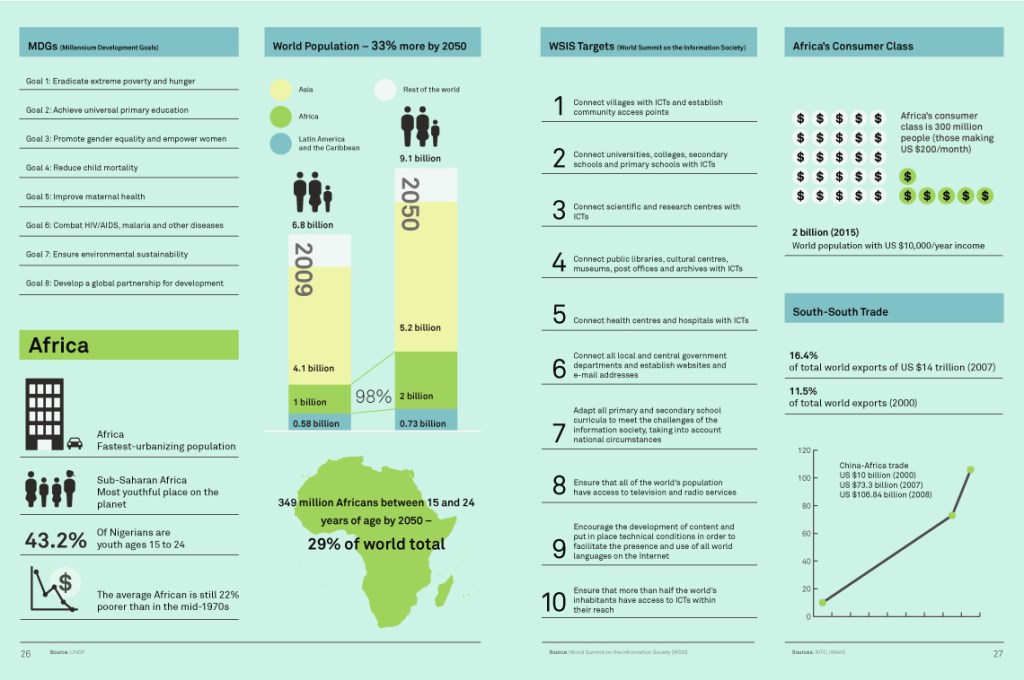
More than 1.7 billion people around the world have no domestic electricity supply, of which more than 500 million live in sub-Saharan Africa (World Bank).

Solar power is being creatively used in many countries to tackle energy poverty and give women, in particular, viable sources of income. In India, whole villages are already using solar energy and improving their standard of living. Various companies and projects are selling inexpensive solar appliances – from cooking stoves to lanterns and power generators – across the country.

A billion Africans use just four percent of the world’s electricity (The Economist). Energy poverty is already harming further economic growth and development gains. With Africa’s population expected to double to 2 billion by 2050, the gap between people’s needs and the power available is stark: in Nigeria, out of 79 power stations, only 17 are working (The Economist).

A report by the International Finance Corporation called the sub-Saharan solar market the largest in the world – a market of 65 million would-be customers, who could access off-grid lighting over the next five years (IFC). The report anticipated high growth rates of 40 to 50 percent for anyone entering the market, with less than one percent of the market currently being served.

Being able to see at night unleashes a vast range of possibilities, such as being able to work or study later. But for the very poor, lighting is often the most expensive household expense.

As Solar Sister founder Katherine Lucey points out, households “rely on kerosene lanterns and candles for light. They spend up to 40 percent of their family income on energy that is inefficient, insufficient and hazardous. Widespread use of kerosene has an adverse impact on local air quality as well as on global climate change.

“Poor lighting, smoke and rudimentary lanterns are responsible for a large number of infections and burn injuries. Within the household, women are responsible for kerosene purchases and use – in order for new clean energy technology to be adopted at the household level, women have to ‘buy in’ to the technology.”

And this is the challenge: to find an affordable – and sustainable – way to bring electricity and energy to people living in remote and rural areas. These are places that face stark options: to remain off-grid and energy poor, or to abandon their communities and join the many millions across the global South on the march to urban and semi-urban areas in search of income and opportunity.

Lucey says that could be “a recipe for disaster”.

“In a country like Uganda, with a population of 32 million people, it is not possible to have them all move to Kampala to access electricity,” she said. “It would overburden already stretched infrastructure and services and disrupt the social and economic structures of an entire population. In the end, it can challenge the stability of entire nations.”

The Solar Sister direct-marketing model works like this: micro-investment capital of US $500 is invested in one Solar Sister Entrepreneur and she receives a ‘business in a bag’: a start-up kit of inventory, training and marketing resources. As her own boss, she has a strong incentive to succeed. She uses the money to purchase a consignment of lamps or lanterns, which she then sells, encouraging people to replace kerosene lamps with solar lamps: healthier, safer and better for the environment. She is encouraged to use her existing networks of family, friends and neighbours to reach rural and hard-to-reach customers.

The Solar Sister, after succeeding in selling the first consignment of lamps, then receives training in marketing and inventory and business skills. She can then move on to be a team leader and recruit other Solar Sisters. She earns a commission from the lamp sales, which help to improve her ability to pay for healthcare, education and food for her family. She then repays the cash for the lamps and the cycle starts all over again with a new consignment.

The model will sound familiar to many: it is what has built successful marketing machines like the famous all-women’s make-up and beauty products seller Avon (www.avon.com). Or the other famous direct marketing behemoth, Amway (www.amway.co.uk).

The Solar Sister model is heavily dependent on the success of word-of-mouth to grow:

“What we have found is that the women are the best distribution system for bringing new technology to rural households since they sell through their trusted networks of family, friends and neighbours,” Lucey said. “They use the lamps themselves, and then talk passionately about the benefits: the better light, the money they save by not having to buy kerosene, the amount of time their children are able to study, the cleaner air and safer environment for their kids.”

According to Lucey, the business model “brings solar technology right to the women’s doorstep. The Solar Sister business model developed as a grass-roots solution to the gender-based technology gap. Women make up 70 percent of the rural poor, but are often left out ‘in the dark’ when it comes to technology solutions.”

It is still early days for Solar Sister, which has been in operation for just over a year and now has 107 Solar Sister Entrepreneurs working in 10 teams reaching 34 communities in three countries – Uganda, Rwanda and Sudan. Lucey says the goal is to build a network of 1,500 female entrepreneurs in Africa over the next two years, benefiting over 1 million people.

Apart from the business model and the new technology, there is a radical concept at the heart of Solar Sister: to replicate for electricity generation the distributed and rapid growth that has been seen with mobile phones. In just five years, the availability of mobile phones in Africa increased by 550 percent.

“Distributed energy, such as solar, puts the investment in energy generation rather than transmission, and breaks the problem into smaller, achievable, components that do not have to wait for political processes for implementation,” explains Lucey. “It allows for the possibility that people can solve their own problems rather than wait for government or NGOs to come solve their energy problems for them. Distributed solar has the potential to leap-frog the 20th century grid-based solution, much like mobile phones have done in the telecom industry.”

One of the solar lanterns for sale is manufactured by D.Light Design. Their newest lantern model is called Kiran (http://www.dlightdesign.com/products_kiran_global.php). It sells for US $10 and provides up to eight hours of light on a full battery, its manufacturers say. D.Light Design calls it the “$10 Kerosene Killer” because it believes it has the right mix of price and technology to trump the need to use kerosene lanterns. The lantern gives off a white light powerful enough so people can read, study or do domestic tasks. A solar panel sits on top of the lantern, which is shaped like a drinking thermos with a large carry handle on top.

Other solar lamps/lanterns have been burdened by cost, ranging in price from US $15 to US $30: a prohibitive price for many poor people.

The ubiquity of mobile phone payments in Africa has made it much easier to transfer funds back and forth between the entrepreneurs and Solar Sister. And since its launch, Solar Sister has learned how to change and adapt to local conditions.

“These women are the experts in their local communities of what works and what doesn’t,” Lucey said. “Solar Sister Voila (http://www.solarsister.org/voila-uganda) decided to visit the roadside market stalls at night when shopkeepers were burning kerosene lamps for light. She got their instant attention with the high brightness of her solar powered lamps.

“Solar Sister’s mission is to bring more and more women from the veils of smoke, darkness and anonymity to the forefront of a clean energy revolution.”

Published: April 2011

Resources

1) D.light Design: Their lights use LEDs (light emitting diodes) (http://en.wikipedia.org/wiki/LED_lamp) and are four times brighter than a kerosene lantern according to D.Light Design. Website: www.dlightdesign.com

2) Lighting Africa: Lighting Africa, a joint IFC and World Bank program, is helping develop commercial off-grid lighting markets in Sub-Saharan Africa as part of the World Bank Group’s wider efforts to improve access to energy. Lighting Africa is mobilizing the private sector to build sustainable markets to provide safe, affordable, and modern off-grid lighting to 2.5 million people in Africa by 2012 and to 250 million people by 2030. Website: www.lightingafrica.org

3) Solar Lighting for the Base of the Pyramid – Overview of an Emerging Market, a report by the International Finance Corporation finding Africa will be the world’s largest market for solar portable lights by 2015. The report addresses market trends and statistics at a global level with more detailed analysis for the African market. Website: www.lightingafrica.org/market-intelligence/market-trends-assessment.html

4) How We Made It Africa: A website detailing success stories on businesses investing in Africa and how people are making the most of opportunities on the continent. Website: www.howwemadeitinafrica.com

5) Barefoot College: The College is training women to be solar engineers, developing both useful skills and a new income source. So far, Barefoot College itself has solar electrified some 350 villages across India and dozens more in sub-Saharan Africa and even war-torn Afghanistan. Website: www.barefootcollege.org

6) Solar Power Answers is a one-stop-shop for everything to do with solar power. It has a design manual and guides to the complex world of solar power equipment. Website: www.solar-power-answers.co.uk/index.php

7) Sun King solar lantern: The lantern provides 16 hours of light for a day’s charge. Website: www.greenlightplanet.com/ourusers.html

8) ToughStuff has developed a modular range of affordable solar powered energy solutions to the three main power needs of poor consumers in the developing world – lighting, mobile phones and radios. Website: www.toughstuffonline.com

Development Challenges, South-South Solutions was launched as an e-newsletter in 2006 by UNDP’s South-South Cooperation Unit (now the United Nations Office for South-South Cooperation) based in New York, USA. It led on profiling the rise of the global South as an economic powerhouse and was one of the first regular publications to champion the global South’s innovators, entrepreneurs, and pioneers. It tracked the key trends that are now so profoundly reshaping how development is seen and done. This includes the rapid take-up of mobile phones and information technology in the global South (as profiled in the first issue of magazine Southern Innovator), the move to becoming a majority urban world, a growing global innovator culture, and the plethora of solutions being developed in the global South to tackle its problems and improve living conditions and boost human development. The success of the e-newsletter led to the launch of the magazine Southern Innovator.  

Creative Commons License

This work is licensed under a
Creative Commons Attribution-Noncommercial-No Derivative Works 3.0 License.

ORCID iD: https://orcid.org/0000-0001-5311-1052.

© David South Consulting 2023

Categories
Archive Development Challenges, South-South Solutions Newsletters

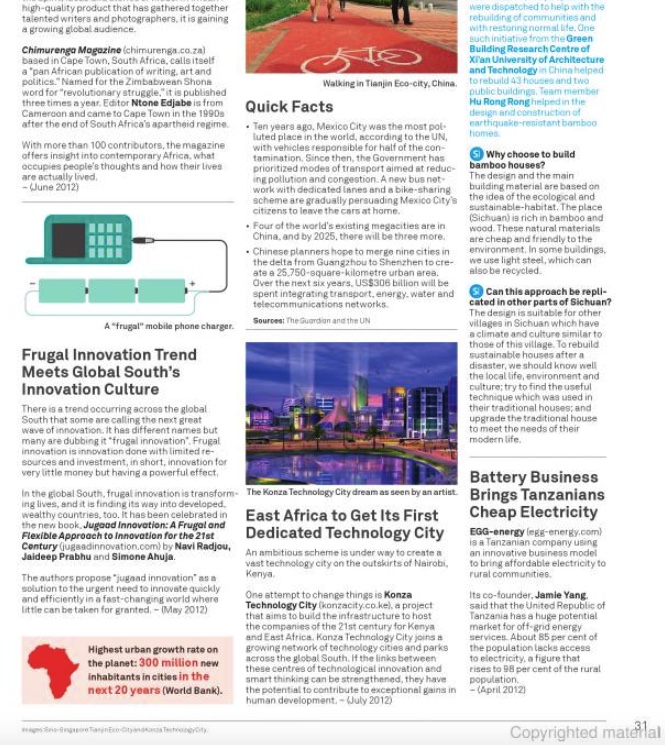
Battery Business Brings Tanzanians Cheap Electricity

By David SouthDevelopment Challenges, South-South Solutions

SOUTH-SOUTH CASE STUDY

Access to electricity is critical for making substantial development gains. With steady supplies of electricity, it is possible to read and study at night, to run modern appliances, to better use the latest information technologies and to work using time- and labour-saving devices. A home with electricity literally switches the light on modern life and gives a family huge advantages compared to those without electricity.

But there are two potential obstacles to providing electricity for the poor: one is just getting access to a steady supply; the other is paying for it.

In Africa, much of the population suffers from an electricity famine. The situation is worse than on any other continent: the proportion of people in Africa still without electricity is higher – and the rate of urban electrification is lower – than anywhere else. Four out of five rural residents in Africa live without electricity. The rate of rural electrification is also lower than on any other continent and the proportion of Africans who depend on inefficient traditional energy sources is higher than elsewhere (Desertec-Africa).

EGG-energy (http://egg-energy.com) is a Tanzanian company using an innovative business model to bring affordable electricity to rural communities.

Its co-founder, Jamie Yang, said Tanzania has a huge potential market for offgrid energy services. About 85 per cent of the population lacks access to electricity, a figure that rises to 98 per cent of the rural population.

EGG-energy says it is “dedicated to helping low-income consumers in sub-Saharan Africa gain access to clean, affordable energy, using a unique strategy based around portable rechargeable batteries.” The company has eight full-time staff based in their Makumbusho office, 6 kilometres north of Dar es Salaam, the capital.

It calls its system the “portable grid,” and it works like this: customers have a power system installed in their home that runs on brick-sized, re-chargeable batteries. The batteries are re-charged at a central charging station using power from the Tanzanian power grid, and sent to local distribution centres where customers can pick them up. Customers rent the batteries for a subscription fee, and they last about five nights in a home. When the battery is empty, the customer returns it, swaps for a fresh battery and pays a small swapping fee.

It is a brilliant solution to the problem of getting power from the main Tanzanian power grid to people’s homes. According to EGG-energy, most Tanzanians live within 5 kilometres from a power grid line. Yet the majority of the population lack access to electricity.

“After researching the energy situation in Tanzania and other countries with similar electricity access problems, it became clear that one of the primary problems was a lack of last-mile distribution,” explained Yang. “The only way to get power from the source into homes and businesses were power lines, and for the vast majority of rural Tanzanians, this was very much out of reach.

We saw situations in which power lines would pass right over large populations that were still using kerosene for lighting. We also saw that distributed generation like solar was finding only very limited markets because there was no share or sell power from that source without an affordable way to distribute the electricity.”

While EGG-energy is based in Tanzania, it hopes hope to expand across the developing world.

In order to develop an effective distribution network, EGG-energy partners with local store owners and delivery businesses to help with distributing the batteries. The batteries are based on those used in the airline industry and are light enough to be held in one hand.

Yang believes marketing is critical to the success of the technology.

“Don’t underestimate the cost of sales, marketing, and distribution,” he said.

“Many companies focus on the technology and in lowering the cost of the technology, while not paying enough attention to the gaps in the distribution channels.

“We have a sales team that communicates what we do through a variety of methods, including door-to-door sales, road shows and village meetings. We also make contact with the local political leaders and offer referral awards to our existing customers. Potential customers come to our charging stations to purchase the system and to connect to EGG.”

When a customer signs up with EGG-energy, a technician is dispatched to their home to make sure the electricity system is sound and effective. The company also sells energy-efficient lights, radios and mobile phone chargers to complement the electricity system. It’s a wise business model, since having a steady and reliable supply of electricity is a great motivator for customers to purchase other electric-powered appliances.

“We have technicians that have received vocational training through the Tanzanian system and technicians that we train ourselves,” Yang said. “We have very standardized electricity installations that are easy to teach, and have more experienced technicians that we rely on for troubleshooting and support.”

EGG-energy also makes the claim it can reduce a household’s energy expenses by 50 per cent as they make the switch from traditional batteries for radios and kerosene lamps for light.

EGG-energy calls itself a “for-profit company with a social mission.” It sees the provision of affordable electricity and energy as a spur for small entrepreneurs to build their businesses, boost educational opportunities through longer study time, and help with connecting families with the outside world.

It uses regular feedback with customers to make sure their service is actually cheaper than other options – a good habit for any business looking to build a lasting customer relationship.

“One of the key deficiencies in the energy supply chain is customer support,” said Yang. “We have seen multiple solar installations given by NGOs to community organizations that are no longer functioning because the user doesn’t have someone reliable to call or hasn’t allotted a budget to maintain the system.

“Customer support is a key component of last mile distribution, and something that EGG-energy is focusing on as an energy services company with a local, physical presence.”

Published: April 2012

Resources

1) ANSOLE (the African Network for Solar Energy) is a research-oriented network of 200 scientists from 22 African and 10 non-African countries. It believes, according to Mammo Muchie, founding editor of the African Journal of Science, Technology, Innovation, and Development, “solar power will become the major renewable energy source on the continent only by organized research, training, design, and engineering.” Website: ansole.org

2) The Kenya-based non-governmental organization (NGO) Access: energy is tackling the problem of 84 per cent of Kenyans – 32 million people – lacking access to electricity at home. It is doing this by teaching people how to make and assemble wind turbines out of scrap metal and car parts and other materials found within communities. Their turbine design is called the Night Heron Turbine. Website: http://access-collective.com/energy/

4) TANESCO: Tanzania Electric Supply Company: Website: http://www.tanesco.co.tz

https://davidsouthconsulting.org/2022/10/24/brazilian-solar-powered-wifi-for-poor-schools/

https://davidsouthconsulting.org/2022/10/06/indian-solar-power-pack-powers-villages/

https://davidsouthconsulting.org/2022/11/20/new-battery-back-up-technology-targeting-developing-countries-and-remote-regions/

https://davidsouthconsulting.org/2022/10/02/powerful-solar-light-spurring-income-making-opportunities/

https://davidsouthconsulting.org/2022/10/24/solar-power-bringing-light-and-opportunity-to-the-poor/

https://davidsouthconsulting.org/2021/03/24/solar-powered-mobile-clinics-to-boost-rural-healthcare-in-africa/

https://davidsouthconsulting.org/2021/03/30/solar-powered-village-kick-starts-development-goals/

https://davidsouthconsulting.org/2022/10/06/solar-sisters-doing-it-for-themselves-tackling-african-light-famine/

Development Challenges, South-South Solutions was launched as an e-newsletter in 2006 by UNDP’s South-South Cooperation Unit (now the United Nations Office for South-South Cooperation) based in New York, USA. It led on profiling the rise of the global South as an economic powerhouse and was one of the first regular publications to champion the global South’s innovators, entrepreneurs, and pioneers. It tracked the key trends that are now so profoundly reshaping how development is seen and done. This includes the rapid take-up of mobile phones and information technology in the global South (as profiled in the first issue of magazine Southern Innovator), the move to becoming a majority urban world, a growing global innovator culture, and the plethora of solutions being developed in the global South to tackle its problems and improve living conditions and boost human development. The success of the e-newsletter led to the launch of the magazine Southern Innovator.  

https://davidsouthconsulting.org/2021/03/05/southern-innovator-issue-4/

Creative Commons License

This work is licensed under a
Creative Commons Attribution-Noncommercial-No Derivative Works 3.0 License.

ORCID iD: https://orcid.org/0000-0001-5311-1052.

© David South Consulting 2023

Categories
Archive

Powerful Solar Light Spurring Income-Making Opportunities

By David SouthDevelopment Challenges, South-South Solutions

SOUTH-SOUTH CASE STUDY

A clever innovator from India has built a highly durable solar lantern that also doubles as a mobile phone charger.

The Sunlite lantern – the JS 30 MOB Sunlite – made by Sunlite Solar (sunlite-solar.com) is an LED (http://en.wikipedia.org/wiki/Light-emitting_diode) light packed with clever innovations. It is completely self-contained and does not require any extra parts, cables or separate solar panel to charge it. The clever design includes a pop-up, fold-down handle, a powerful solar PV (photovoltaic) panel on its top that – with a day out in the sun – charges the lantern’s battery enough to provide around 8 hours of 360-degree light when the sun goes down. It is also highly durable and moisture and heat resistant and can withstand a drop on a hard floor.

The manufacturer of the Sunlite lantern is India Impex, which focuses on making and exporting high quality off-grid solar lighting products and sees itself as a “socially driven company.” Founded in 2009, it has built up its reputation as a global vendor to humanitarian and relief agencies.

To date, the Sunlite lantern has been distributed to people following Japan’s 2011 earthquake and tsunami, after Thailand’s 2011 floods and to refugees caught up in the ongoing crisis in Syria.

“For the size of the lamp, for the number of hours, for the features we give, including the mobile (phone) charging – we are 100 per cent portable – it is all integrated,” said Sunlite representative Divyesh Thakkar, while demonstrating the lantern at the 2012 Global South-South Development Expo, held recently in Vienna, Austria (southsouthexpo.org).

The mobile phone charging capability has been seized as a great way to turn the lantern into an income-generating opportunity. Already, people are forming co-ops and charging rent time on the lantern for recharging mobile phones. And there are a few clever tweaks to the lantern to help control this.

“I don’t want this to be abused – I want it to be smart,” said Thakkar. “When someone comes in and charges the mobile phone and forgets, it is going to cut off after 20 minutes.”

Sunlite lanterns have many uses, according to the product’s maker. One aspect the manufacturer is emphasizing is the importance of light to the security of women and children. There is overwhelming evidence that better lighting makes for a more secure environment, and allows people to do more things safely at night. Children can look out for environmental threats such as poisonous snakes and spiders, and women and girls can feel safe doing things like going to the toilet without worrying that somebody might attack them in the dark.

Solar power is being seen as a way to get electricity to people in areas bypassed by conventional electricity grid networks. It also helps move people away from expensive, polluting and dangerous alternatives such as diesel generators, paraffin lamps, gas stoves and coal or dung fires.

“We compare our solar lantern to the kerosene lantern,” Sunlite representative Sagar Mehta explained. “On a payback basis, you use an approximate of 30 to 40 cents of a US dollar of kerosene every day for a four-hour light. First of all, it is very harmful – smoke inhalation, illnesses, burns, all sorts of things, security issues.

“That will cost a family one third or half of its income on a daily basis. If we can change this around where if we can make a solar lantern, where the sun is free, that can pay back in three months and you start earning rather than paying, (they are) making a living.”

Solar-powered devices have many advantages. They can power up their batteries during the day while sitting in the sunshine and then be a source of light and electricity at night. This free energy source reduces the cost of running lights at night and means people can do a wide range of activities, from reading and studying to running a business or socializing. Some have even used Sunlite lanterns as landing lights for aircraft runways in Africa.

Sunlite lanterns are currently being distributed to people in disaster situations and also in refugee camps and displaced persons communities.

“The lamp was developed as a basic light for refugees who don’t have anything and have been displaced from homes,” said Mehta. “We supply in excess of 50,000 lamps every year to aid agencies, in particular the (UN’s) refugee agency.”

In order to keep tight control on quality and be able to have an inventory of lanterns ready to go on a moment’s notice, the company has invested in and set up its own in-house manufacturing facilities in India.

Sunlite Solar sees itself as a social enterprise. It is not focused on quick profits, and developing the lantern has taken time.

“It requires a huge amount of investment and time,” said Thakkar. “We spent two years without selling a single piece. What we did was our R&D and went out in the field, some of the most dangerous places – Rwanda, Uganda – actually training people to use it and getting the awareness.

“When you work with the UN, when you work through other government channels, it is just a long process which you have to be willing to go through.”

Published: December 2012

LINKS:

1) More information on how renewable solar technologies work. Website:http://www.energysavingtrust.org.uk/Generating-energy/Choosing-a-renewable-technology/Solar-panels-PV 


2) Solar Sister: Solar Sister eradicates energy poverty by empowering women with economic opportunity. Website:http://www.solarsister.org/

3) D.Light Design: D.light is a for-profit social enterprise whose purpose is to create new freedoms for customers without access to reliable power so they can enjoy a brighter future. Website: http://www.dlightdesign.com/

Development Challenges, South-South Solutions was launched as an e-newsletter in 2006 by UNDP’s South-South Cooperation Unit (now the United Nations Office for South-South Cooperation) based in New York, USA. It led on profiling the rise of the global South as an economic powerhouse and was one of the first regular publications to champion the global South’s innovators, entrepreneurs, and pioneers. It tracked the key trends that are now so profoundly reshaping how development is seen and done. This includes the rapid take-up of mobile phones and information technology in the global South (as profiled in the first issue of magazine Southern Innovator), the move to becoming a majority urban world, a growing global innovator culture, and the plethora of solutions being developed in the global South to tackle its problems and improve living conditions and boost human development. The success of the e-newsletter led to the launch of the magazine Southern Innovator.  

Creative Commons License

This work is licensed under a
Creative Commons Attribution-Noncommercial-No Derivative Works 3.0 License.

ORCID iD: https://orcid.org/0000-0001-5311-1052.

© David South Consulting 2022

Categories
Archive Development Challenges, South-South Solutions Newsletters Southern Innovator magazine

Solar Solution to Lack of Electricity in Africa

By David SouthDevelopment Challenges, South-South Solutions

SOUTH-SOUTH CASE STUDY

Electricity is critical to improving human development and living standards. Yet, for many in the global South, electricity is either non-existent or its provision is patchy, erratic, unreliable or expensive.

Just as Africa has been able to jump a generation ahead when it comes to communications through the mass adoption of mobile phones – a much cheaper option than trying to provide telephone wires and cables across the continent – so it could also bypass the burdensome costs of providing electricity mains to everyone by turning to smaller electricity generation technologies such as solar power. This is called “off-grid” electricity.

The UN has set the goal of universal access to modern energy services by 2030. A report issued in April 2010 by United Nations Secretary-General Ban Ki-moon’s Advisory Group on Energy and Climate Change (AGECC) calls for expanding energy access to more than 2 billion people (http://www.unido.org/fileadmin/user_media/Publications/download/AGECCsummaryreport.pdf).

The report found that a lack of access to modern energy services represents a significant barrier to development. Some 1.6 billion people still lack access to electricity.

A reliable, affordable energy supply, the report says, is the key to economic growth and the achievement of the anti-poverty targets contained in the Millennium Development Goals.

When a person has electricity and the lighting it powers, it is possible to do business and study late into the night. Electric lighting also makes streets and living areas safer. Electricity can power a plethora of labour-saving and life-enhancing consumer goods: televisions, refrigerators, vacuum cleaners, air conditioners and fans, washing machines, clothes dryers, computers. And electricity recharges that most essential item, the mobile phone, on which millions rely to do their daily business.

After witnessing the struggle African health clinics have to access electricity, a Nairobi, Kenya-based company has developed a simple solution to ensure a steady supply of solar electricity. One Degree Solar’s (http://onedegreesolar.com/) founder, Gaurav Manchanda, developed and sells the BrightBox solar-charging system for lights, mobile phones, tablet computers and radios.

He first gained experience working in the West African nation of Liberia with the Clinton Health Access Initiative (http://www.clintonfoundation.org/main/our-work/by-initiative/clinton-health-access-initiative/about.html). Working at the country’s Ministry of Health, he found most health clinics operated without electricity.

He identified solar power as the only viable energy source. Trying to deliver fuel to power generators by the road network had two impediments: the diesel fuel was expensive and the road conditions were poor.

After seeing that large solar-power systems required significant maintenance and upkeep, he started to explore the possibility of low-cost, and simple-to-use solar electricity products that would be useful to community healthcare workers.

This became the beginning of One Degree Solar and its mission.

The company’s main product is the BrightBox, a cleverly designed solar charger. A bright orange box with a folding, aluminum handle at the top for easy carrying, it switches on and off simply with a bright red button. It has a waterproof solar panel. The BrightBox has USB (universal service bus) (http://en.wikipedia.org/wiki/Universal_Serial_Bus) ports so that mobile phones and radios can be plugged in. It is also possible to plug in four lights at once with the four outports on the side of the box.

It meets the standards set by the Lighting Africa initiative (http://lightingafrica.org/specs/one-degree-brightbox-2-.html) of the International Finance Corporation and the World Bank.

One Degree Solar claim it is possible to set up a BrightBox in 10 minutes. When the indicator light has turned green, the box is fully charged and capable of providing 40 hours of light.

A full charge can power two light bulbs for 20 hours. Manchanda told How We Made It In Africa (http://www.howwemadeitinafrica.com/) that he has sold 4,000 units of the BrightBox since its launch in October 2012.

According to The Nation, the BrightBox is currently retailing in Kenya for Kenyan shillings 7,000 (US $82).

One Degree Solar’s product range is sold to local resellers and distributors. The products are designed to be repaired using locally sourced parts and can be fixed by local electricians.

Most of the sales so far have been in Kenya but the firm has also sold units to other countries.

Testimonials on the BrightBox website tell of the transformation to people’s lives the clean energy source makes: “BrightBox has helped us in so many ways! We used to spend 800 Shillings (US $9.50) a month for two paraffin lanterns. The fumes smelled and always made us feel sick.”

Manchanda is a strong believer in Africa’s potential and its future and dismisses those who are negative about the continent.

“That was not a holistic assessment, but rather, an unnecessary and damaging generalization,” he told How We Made It In Africa. “Fortunately, most news outlets in Africa are now available online and offer a wider range of perspectives. The middle class is booming in certain countries. We have seen the success of mobile phones in enabling people to access other services. I think hope and progress come with innovation. Technology access has helped create entirely new markets and reach populations that otherwise could have taken decades to service with traditional approaches.

“India was in a similar space 15 years ago before the Internet boom, and today parts of Nairobi (Kenya) are just like Delhi (India): people have a cell phone or two, there are large shopping malls, a booming middle class, and new construction everywhere.”

Published: June 2013

Resources

Global Off-Grid Lighting Association: Global Off-Grid Lighting Association (GOGLA) has been established to act as the industry advocate with a focus on small and medium enterprises. It is a neutral, independent, not-for-profit association created to promote lighting solutions that benefit society and businesses in developing and emerging markets. GOGLA will support industry in the market penetration of clean, quality alternative lighting systems. Website: http://globaloff-gridlightingassociation.org/

Solar Sister: Solar Sister eradicates energy poverty by empowering women with economic opportunity. Website: http://www.solarsister.org/

Solarpod: Sunbird Solar/Thousand Suns manufactures, sources and distributes the portable solar generator range. Website: http://www.thousandsuns.com/

4) Little Sun: An attractive, high-quality solar-powered lamp in the shape of a hand-sized sun developed by artist Olafur Eliasson and engineer Frederik Ottesen. Website: http://www.littlesun.com/

Southern Innovator logo

London Edit

31 July 2013

Development Challenges, South-South Solutions was launched as an e-newsletter in 2006 by UNDP’s South-South Cooperation Unit (now the United Nations Office for South-South Cooperation) based in New York, USA. It led on profiling the rise of the global South as an economic powerhouse and was one of the first regular publications to champion the global South’s innovators, entrepreneurs, and pioneers. It tracked the key trends that are now so profoundly reshaping how development is seen and done. This includes the rapid take-up of mobile phones and information technology in the global South (as profiled in the first issue of magazine Southern Innovator), the move to becoming a majority urban world, a growing global innovator culture, and the plethora of solutions being developed in the global South to tackle its problems and improve living conditions and boost human development. The success of the e-newsletter led to the launch of the magazine Southern Innovator.
Creative Commons License

This work is licensed under a
Creative Commons Attribution-Noncommercial-No Derivative Works 3.0 License.

ORCID iD: https://orcid.org/0000-0001-5311-1052.

© David South Consulting 2023