Category: Blogroll

  • Cashing in on Old Wisdom

    Cashing in on Old Wisdom

    By David SouthDevelopment Challenges, South-South Solutions

    SOUTH-SOUTH CASE STUDY

    India’s traditional weavers, heirs to a 2,000-year-old textile industry, are turning to the ancient practice of ayurvedic medicine to make their products more appealing and boost sales. Drawing on recipes once used by weavers to the Indian royal courts, clothes are woven and infused with ayurvedic, herb-and-spice medicinal recipes to address various health problems. Strange as it may sound, the health-giving properties of the clothes have been backed up by clinical trials at the Government Ayurveda College in Thiruvanathapuram, southern India.

    The college claims the trials were successful for 40 patients with rheumatism, allergies, hypertension, diabetes, psoriasis and other skin ailments. It is believed the healing properties of the herb-and-spice-infused clothes enter the skin and contribute to healing.

    Modern India’s founding father, Mahatma Gandhi, championed hand-spun cloth and weaving. But India’s weavers have been hit hard by the rise in the rupee against the dollar and an inability to compete internationally. They are facing stiff competition from a flood of machine-made cheap clothing. According to Siddique Hassan of the Weaver and Artisans Rights Front (WARF), 1 million of India’s 5 million weavers have lost their jobs because of competition (Deutsche Presse-Agentur).

    But rising interest in sustainability and natural healing is creating a growing global market for organic clothes – sales are set to triple to US $2.6 billion in 2008 (Organic Exchange).

    Against this backdrop, local governments have turned to traditional ayurvedic medicine to help save the livelihoods of handloom weavers and develop a market niche for their eco-friendly fabrics.

    In the technique called Ayurvastra, the clothes are dyed with herbal essences, infusing the cotton with the medicine. More than 200 herbs are used, mostly taken from roots, flowers, leaves, seeds and bark. Most of the clothes are made with cotton and silk, and some with wool and jute. A dress is marketed to people who suffer from hypertension. There are bedcovers, pillow covers, nightgowns, and even suits. It is believed the healing effect is best when the patient is sleeping.

    The clothes are made in Balaramapuram, home to traditional weaving in Kerala, southern India, and sell for between 1,000 and 1,800 rupees (US $25 to US $45). Ayurvastra clothing is currently being exported to the Middle East, the US, Italy, Germany, Britain, Singapore, Malaysia and Jordan.

    Acknowledging traditional medicine as a useful development tool goes back to the World Health Organisation’s Alma-Ata Declaration in 1978, which urged governments for the first time to include traditional medicine in their primary health systems and recognise traditional medicine practitioners as health workers. During the last 30 years there has been a considerable expansion in the use of traditional medicine across the world. Despite their ancient origins, it is still critical these medicines do meet efficacy and health standards and are proven to work.

    Ayurvastra is a branch of the 5,000-years-old Indian ayurveda health system. Ayur means health in Sanskrit, veda means wisdom, and vastra is cloth or clothing. There are no synthetic chemicals and toxic irritants and the technique uses organic cotton that has been hand loomed.

    “The entire process is organic,” said K. Rajan, chief technician at the Handloom Weavers Development Society in India, to Zee News. “The cloth is bleached with cow’s urine, which has high medicinal value. The dyeing gum too is herbal. It does not pollute like synthetic dye. And the waste is used as bio manure and to generate bio gas.”

    Chaitanya Arora of Penchant Traders, an Indian company promoting and exporting ayurvastra cloth and clothing, tells how it works: “usage of the cloth is based on the principle of touch. By coming in contact with ayurvastra, the body loses toxins and its metabolism is enhanced.”

    One clothes buyer, T D Kriplani, told Zee News, “Basically, I have read about the concept in newspapers… I was inquisitive and have also heard that it is in direct touch with body pores. I have come here after reading about it and hope it will benefit people.” It is even claimed the clothes can keep people cool.

    Another seller of ayurvastra, Hitesh, is enthusiastic about its impact: “The medicinal clothes that we have launched is a new revolution in the textile industry. In there, we dye the clothes with ayurvedic dyes and the clothes have medicinal qualities, which hopefully are good for diseases.”

    Published: February 2008

    Resources

    • Think! Clothing: A stylish UK-based designer using fair-trade, hand woven clothes from Indian women from the ‘untouchable’ caste.
    • An online shopping site based in Kerala, India offers a wide range of the ayurvastra clothing: http://www.ayurvastraonline.com/
    • Fibre2Fashion: An excellent web portal can be found here to connect weavers with the wider fashion industry – basically an online marketplace for making deals.
    • Asia-Pacific Traditional Medicine and Herbal Technology Network: an excellent first stop for any entrepreneur, where they can find out standards and regulations and connect with education and training opportunities: www.apctt-tm.net

    Creative Commons License

    This work is licensed under a
    Creative Commons Attribution-Noncommercial-No Derivative Works 3.0 License.

    Southern Innovator was initially launched in 2011 with the goal of inspiring others (just as we had been so inspired by the innovators we contacted and met). The magazine seeks to profile stories, trends, ideas, innovations and innovators overlooked by other media. The magazine grew from the monthly e-newsletter Development Challenges, South-South Solutions published by the United Nations Office for South-South Cooperation (UNOSSC) since 2006.

    Issue 6’s theme has been decided on: it will focus on Science, Technology and Innovation. For this issue, Southern Innovator is seeking invitations from cutting-edge knowledge and science innovators in the global South to view their work. Time is tight, so don’t miss this opportunity to let the whole global South know about your work. In the past, Southern Innovator has visited green pioneers in Cuba, a smart city in South Korea and an eco-city in China.

    Contact me if you wish to receive a copy/copies of the magazine for distribution. Follow @SouthSouth1.

    Southern Innovator Issue 1

    Southern Innovator Issue 2

    Southern Innovator Issue 3

    Southern Innovator Issue 4

    Southern Innovator Issue 5

    Southern Innovator Issue 6

    Innovator Stories and Profiles

    Citing Southern Innovator

    Finding Southern Innovator

    Press Release 1

    Press Release 2

    Press Release 3

    Southern Innovator Impact Summaries | 2012 – 2014

    ORCID iD: https://orcid.org/0000-0001-5311-1052.

    © David South Consulting 2021

  • Province For Sale: Step Right Up For An Opportunity To Buy What You Already Paid For

    Province For Sale: Step Right Up For An Opportunity To Buy What You Already Paid For

    “This is not being driven by fiscal or ideological motivation, though that may seem funny.” Conservative advisor James Small

    By David South

    Id Magazine (Canada), December 12 to December 26, 1996

    It is looking more and more like the Conservative government will launch a massive privatization campaign by the middle of next year. And it is becoming clear how key government assets such as Ontario Hydro, liquor stores and public broadcaster TVO will end up in private hands. The prevailing ideology of key advisors to the Harris government, including influential financial heavyweights at Canada’s top underwriters, is leaning towards a free-for-all where the highest bidder will win. 

    To date, the government has been coy about its plans, occassionally making vague threats that certain services need to be “looked at.” Assets that could go on the block include road maintenance, jails and the Ontario Clean Water Agency. In August, the government appointed former banker Rob Sampson as the minister for privatization. His days as vice-president of corporate finance at Chase Manhattan make him a popular candidate with the suit, tie and blouse crowd on Toronto’s Bay Street. 

    While Sampson is so far surrounded by only a handful of advisors, the plan is to create a privatization agency that will supervise each sell-off after getting the go-ahead from Cabinet. 

    Sampson’s policy advisor James Small, sums up the government’s attitude: “This is not being driven by fiscal or ideological motivation, though that may seem funny. We can do better for less, even though that may sound trite.”

    The government’s taxpayer-is-always-right attitude means it believes the best option is to float the newly privatized companies on the stock market, letting the highest bidder win. 

    “We have sophisticated investors in Ontario,” continues Small. “[Privatization] is not driving us to expand shareholders in Ontario. Can we, as taxpayers, benefit? What will give the best results. It is not ideological. In Canada we have a consumer culture and a very mature social structure. The market will determine what people will pay for things. We didn’t get elected to sell the family silver.

    “There has been 16 years of this happening. But is Margaret Thatcher the way to go? One of the advantages for Ontarians is that we can pick and choose the best approach. It’s difficult to point to one part of the world, one way we could provide better service.”

    Shareholder Democracy

    A concept popularized by British prime minsiter Margaret Thatcher in the 1980s, shareholder democracy actually saw the light of day in British Columbia back in 1979. Then, premier Bill Bennett embarked on an ambitious scheme to give every citizen of the province, including children, five shares in the British Columbia Resources Investment Corporation, a mining and logging company. Out of a population of 2.4 million, 2.07 million applied for the shares. While that idealistic experiment eventually failed as a series of bad deals pushed the share price down and arrogant executives pissed people off, it was a bold initiative. 

    Similar schemes have been used in Eastern Europe to increase private ownership in the economy. 

    But it is looking more and more like the government is going to try and avoid even a semblance of giving Ontarians a fair shake, by selling shares on the stock market to whoever can afford them. While the NDP and unions are opposed to privatization for some very good reasons, they are missing out on an opportunity to push the government to divide the shares up amongst all Ontarians (not necessarily a big stretch for the NDP, who brought us toll highways). 

    Shareholder democracy has developed two broad – and opposing – interpretations. For the left, a shareholder democracy in its truest sense is public ownership. For right-wing idealists, it means a nation of share owners playing the stock market with all the aggressiveness and greed of free-market capitalists. 

    Like any ideal, the reality is far more disappointing. Any small-time stock holder will tell you about arrogant CEOs and board members not listening to them. Ask any Ontarian on the street, and they will tell you about arrogant and incompetent civil servants who aren’t listening to them. 

    There is a more radical and fairer approach to privatization that would suit the populist rhetoric of the Conservatives. It involves selling shares along the lines of WWII war bonds. This solution would satisfy left-wing concerns the rich would run away with all the loot, while massively increasing share ownership in Ontario and raising funds to improve services and infrastructure. By selling millions of shares cheaply, and forbidding the trading of those shares, millions of Ontarians could reap the benefits of profit-making assets. This scheme would be contingent on reorganizing those agencies to become profitable, but could avoid a fire sale of taxpayer-funded agencies to wealthy corporations and investors. If critics of the government took the opportunity to guide the Conservatives, when a privatization is announced, towards mass share ownership, some good would come of it. 

    With all its scandals, bad publicity, grotesque executive salaries and inconsistent service that has turned privatization into a dirty word in the UK, the fact is share ownership did go up. In 1979 when Conservative prime minister Margaret Thatcher was elected, shares were owned by 2.5 million people; by 1992, 11 million people had shares or a quarter of the population. Narrowly defined, that is a success. 

    But the mainstream financial community loathes the idea for obvious reasons. At consultants KPMG, corporate evaluater John Kingston symbolizes the opposition to anything other than a straight sell-off at the stock exchange. “Issuance of shares to employees doesn’t put any new money into the coffers, like in the Eastern European example of gifting shares,” he says. “But selling shares to the public does provide some compensation. They must satisfy taxpayers by getting the right amount.”

    “I think if government is going to privatize then it is a good time to do it,” says Deloitte and Touche’s Jim Horvath, a veteran of privatizations in Argentina, Hungary and Brazil, who supports a quick sell. “The stock market is up. There are a lot of deep pockets looking for investments.”

    The mantra for an open sale will get louder as each privatization approaches. But such a sale does have its disadvantages. 

    Advantages of an open sale: 

    Can get the highest price. Use the funds to pay down debt or a one-time only increase in funds for something like health care. Argue protecting taxpayers’ interests by selling for the best price. The asset could raise funds on the stock market to improve infrastructure/services. Once in private hands, future governments will have a hard time trying to buy assets back. 

    Disadvantages of an open sale: 

    Taxpayers are also consumers; they could get screwed by any increase in rates. There is no guarantee the government will use funds for public good (maybe they will build another casino?). Any pay-off is once only, whereas the LCBO for example, makes money every year. Government could make a mistake and sell for too low a price. 

    Government Agenda

    Two factors could significantly slow down the government’s ability to launch privatizations. The Conservatives have relished making cuts to government services despite labour unrest, but it has shown little skill at the more intellectual task of implementing a new philosophy. Major planks of their Common Sense Revolution, such as workfare, are bogged down and in chaos. Privatization will need a sophisticated sales job to counter-attack the slick television and newspaper ads unions have been running for the past year attacking privatization. Encouraging mass share ownership would show that leadership the government sorely needs. 

    The second liability is its own ambitious agenda. Already the Legislature has had to extend its term to try and deal with a backlog in reforms, including chopping another $3 billion, rearranging how government services are delivered and fighting the province’s doctors. But if it must privatize, then the honourable thing to do is to offer mass ownership. To do otherwise will show Ontario isn’t even capable of the heights of imagination some of Eastern Europe’s new democracies have shown. 

    Note: I debated this topic on CBC TV’s Face Off after this was published. 

    Cover headline: “The Harris Tories have an opportunity to turn Ontario into a shareholder democracy. Will they take it?”

    This work is licensed under a Creative Commons Attribution 4.0 International License.

    ORCID iD: https://orcid.org/0000-0001-5311-1052.

    © David South Consulting 2025

  • Afro Coffee: Blending Good Design and Coffee

    Afro Coffee: Blending Good Design and Coffee

    By David SouthDevelopment Challenges, South-South Solutions

    SOUTH-SOUTH CASE STUDY

    The importance of good design and a strong brand in the success of a business cannot be emphasised enough. That extra effort and thought can take a business from local success to regional and even global success. As consultants KPMG make clear, “For many businesses, the strength of their brands is a key driver of profitability and cash flow “. Yet the majority of small businesses fail to think about their brand values or how design will improve their product or service.

    The case of Afro Coffee from Cape Town, South Africa shows how a small and humble café can raise its ambitions and its profits. It re-vamped its modestly successful café into a brand with global ambitions. By undertaking a thorough and comprehensive brand development inspired by the colourful vibe of Africa, Afro Coffee has built a consistent image from the design of its café and shop to its wide range of branded teas, coffees and fashion wear – all sold in the café, on the web and through distribution deals with other shops.

    “It started out as a café in downtown Cape Town,” said founder Grant Rushmere. “Our concept was to harness a Pan African view of contemporary urban Africa. The pop art nature of African design inspired us to create our own brand of coffee instead of the usual Italian coffee that most cafes use. Our goal was to refocus people to the origins of coffee – that it in fact originated in Africa before being discovered by the Arabs and from Yemen, exported around the world. Many people don’t know this, so we attempt to capture and celebrate this African spirit in our packaging and all we do.”

    Afro Coffee had started out as a simple café. But after a major re-design and adoption of a new concept, the café has become a global brand and expanded into a branch in Europe. By infusing the spirit of Africa and its design aesthetics into all aspects of the café and its products – coffee, tea, fabrics, fashion – Afro Coffee has been able to develop a seamless image that is unforgettable.

    Rushmere was joined by two Austrian partners to help with building the new brand and facilitating its global launch. “Design and branding have been a passion of mine,” said Rushmere. “and these are realized through the Afro Coffee brand and the fun merchandising we develop. One of my partners has an international network of advertising agencies and the other has developed and owns a world-leading brand. With their experience, I will continue to guide the development of Afro Coffee.”

    Afro Coffee’s website includes a video tour of the café and introduction to the ‘Afro dude’ character and a short cartoon video adventure. To help develop customer loyalty, the café has live bands three times a week from across Africa.

    “Our mission is to communicate the joys of Africa through our Afro Cafes and our Afro-branded products. The fact that the African people are so wonderfully not self-conscious at all, with their humour and freedom and their style and design. Hopefully we can convey this spirit and enhance the lives of people who consume our product and sip coffee listening to Afro Tunes at our cafes. For South Africa, we try to show just how cool Afro culture actually is and instil a sense of confidence into people to make them realize what they already are – lofty ideals but we’ll have a go!”

    As the brand developed, a range of teas were produced using only African teas like Rooibos, a non-caffeine root. The next to come was fabrics based on West African religious clothing. They became table cloths and were so popular, they moved into combining them with leather to make Afro Bags – all part of expressing the lifestyle that inspires the brand.

    Distribution deals have been done to distribute the teas and coffees throughout South Africa and in Europe. The clothing range is now available on their online store (www.afrocoffee.com).

    Its African-infused design for its coffee stand won the Design Indaba 2007 Award, South Africa’s design magazine and exhibition. Also designed by Peet Pienaar, it is inspired by Ghanaian woodwork and Kenyan coffee. The stand is a giant stiletto shoe stacked with tins of teas and coffees and an over-sized radio that doubles as a counter top.

    Afro Coffee is proof a small business can grasp a bigger concept and in turn become a bigger success. It has been so successful, it has opened a new branch in Austria, begging the question: maybe this once-humble café is on the road to being an African Starbucks?

    Published: July 2007

    Resources

    • Afro Coffee’s award-winning display stand can be viewed at http://www.designindaba.com/
    • Brandchannel: The world’s only online exchange about branding, packed with resources, debates and contacts to help businesses intelligently build their brand.
    • Small businesses looking to develop their brand can find plenty of free advice and resources here: www.brandingstrategyinsider.com
    • Dutch Design in Development: Dutch designers are able to offer free support to new and small businesses in developing countries looking to export products to Europe.

    Each issue of Southern Innovator shows the role design has played in the success of the innovators profiled.

    Baker Cookstoves – Designing for the African Customer

    Contact me if you wish to receive a copy/copies of the magazine for distribution. Follow @SouthSouth1.

    Southern Innovator Issue 1

    Southern Innovator Issue 2

    Southern Innovator Issue 3

    Southern Innovator Issue 4

    Southern Innovator Issue 5

    Southern Innovator Issue 6

    Innovator Stories and Profiles

    Citing Southern Innovator

    Finding Southern Innovator

    Press Release 1

    Press Release 2

    Press Release 3

    Southern Innovator Impact Summaries | 2012 – 2014

    “The e-newsletter Development Challenges, South-South Solutions proved to be a timely and prescient resource on the fast-changing global South, tracking the rise of an innovator culture driven by the rapid adoption of mobile phones and information technology …

    “In 2010, work began on the development of the world’s first magazine dedicated to the 21st-century innovator culture of the global South. My goal was to create a magazine that would reach across countries and cultures, meet the UN’s standards, and inspire action. Southern Innovator was the result. Mr. [David] South played a vital role in the magazine’s development from its early conception, through its various design prototypes, to its final global launch and distribution.

    “Both the e-newsletter and magazine raised the profile of South-South cooperation and have been cited by readers for inspiring innovators, academics, policy makers and development practitioners in the United Nations and beyond.

    “I highly recommend Mr. [David] South as a thoughtful, insightful, analytical, creative and very amicable person who has the unique ability to not only grasp complex problems but also to formulate a vision and strategy that gets things done. … ” Cosmas Gitta, Former Assistant Director, Policy and United Nations Affairs at United Nations Office for South-South Cooperation (UNOSSC) in UNDP

    “I think you [David South] and the designer [Solveig Rolfsdottir] do great work and I enjoy Southern Innovator very much!” Ines Tofalo, Programme Specialist, United Nations Office for South-South Cooperation

    Team | Southern Innovator Phase 1 Development (2010 – 2015)

    https://davidsouthconsulting.org/2021/03/20/accessing-global-markets-via-design-solutions/

    https://davidsouthconsulting.org/2022/09/29/the-battle-for-indias-coffee-drinkers-in-buzzing-economy/

    https://davidsouthconsulting.org/2021/10/03/civet-cat-coffee-brews-filipino-opportunity/

    https://davidsouthconsulting.org/2021/01/08/haitian-coffee-becoming-a-hit-with-american-connoisseurs/

    https://davidsouthconsulting.org/2022/10/24/kenyan-products-a-global-success-story/

    https://davidsouthconsulting.org/2022/10/24/made-in-africa-fashion-brand-pioneers-aim-for-global-success/

    https://davidsouthconsulting.org/2022/10/14/rwandan-coffee-brand-boost/

    https://davidsouthconsulting.org/2022/11/11/woman-restaurant-entrepreneur-embraces-brand-driven-growth/

    https://davidsouthconsulting.org/2021/03/05/southern-innovator-issue-2/

    Creative Commons License

    This work is licensed under a
    Creative Commons Attribution-Noncommercial-No Derivative Works 3.0 License.

    ORCID iD: https://orcid.org/0000-0001-5311-1052.

    © David South Consulting 2023

  • Southern Innovator Magazine

    Southern Innovator Magazine

    Estimated Reading Time: 2 mins

    “What a tremendous magazine your team has produced! It’s a terrific tour de force of what is interesting, cutting edge and relevant in the global mobile/ICT space… Really looking forward to what you produce in issues #2 and #3. This is great, engaging, relevant and topical stuff.”

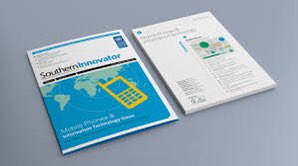
    Southern Innovator was initially launched in 2011 with the goal of inspiring others (just as we had been so inspired by the innovators we contacted and met). The magazine seeks to profile stories, trends, ideas, innovations and innovators overlooked by other media. The magazine grew from the monthly e-newsletter Development Challenges, South-South Solutions published by the United Nations Office for South-South Cooperation (UNOSSC) since 2006.

    https://sites.google.com/davidsouthconsulting.org/southern-innovators/home

    Issue 6’s theme has been decided on: it will focus on Science, Technology and Innovation. For this issue, Southern Innovator is seeking invitations from cutting-edge knowledge and science innovators in the global South to view their work. Time is tight, so don’t miss this opportunity to let the whole global South know about your work. In the past, Southern Innovator has visited green pioneers in Cuba, a smart city in South Korea and an eco-city in China.

    Contact me if you wish to receive a copy/copies of the magazine for distribution. Follow @SouthSouth1.

    Southern Innovator Issue 1

    Southern Innovator Issue 2

    Southern Innovator Issue 3

    Southern Innovator Issue 4

    Southern Innovator Issue 5

    “Beautiful, inspiring magazine from UNDP on South-South innovation. Heart is pumping adrenaline and admiration just reading it”

    Southern Innovator Issue 6

    Innovator Stories and Profiles

    Citing Southern Innovator

    Finding Southern Innovator

    Press Release 1

    Press Release 2

    Press Release 3

    Southern Innovator Impact Summaries | 2012 – 2014

    “The e-newsletter Development Challenges, South-South Solutions proved to be a timely and prescient resource on the fast-changing global South, tracking the rise of an innovator culture driven by the rapid adoption of mobile phones and information technology …

    “In 2010, work began on the development of the world’s first magazine dedicated to the 21st-century innovator culture of the global South. My goal was to create a magazine that would reach across countries and cultures, meet the UN’s standards, and inspire action. Southern Innovator was the result. Mr. [David] South played a vital role in the magazine’s development from its early conception, through its various design prototypes, to its final global launch and distribution.

    “Both the e-newsletter and magazine raised the profile of South-South cooperation and have been cited by readers for inspiring innovators, academics, policy makers and development practitioners in the United Nations and beyond.

    “I highly recommend Mr. [David] South as a thoughtful, insightful, analytical, creative and very amicable person who has the unique ability to not only grasp complex problems but also to formulate a vision and strategy that gets things done. … ” Cosmas Gitta, Former Assistant Director, Policy and United Nations Affairs at United Nations Office for South-South Cooperation (UNOSSC) in UNDP

    “I think you [David South] and the designer [Solveig Rolfsdottir] do great work and I enjoy Southern Innovator very much!” Ines Tofalo, Programme Specialist, United Nations Office for South-South Cooperation

    Team | Southern Innovator Phase 1 Development (2010 – 2015)

    According to zoominfo in 2023, Southern Innovator is one of the Popular Searches online for the United Nations Office for South-South Cooperation (UNOSSC).

    Like our content? Help contribute to the costs of keeping it online. 

    Scan code with your phone and help us out.

    https://davidsouthconsulting.org/southern-innovator-scale-up-fundraiser/

    ORCID iD: https://orcid.org/0000-0001-5311-1052.

    © David South Consulting 2021