Category: Blogroll

  • Making the World a Better Place for Southern Projects

    Making the World a Better Place for Southern Projects

    By David SouthDevelopment Challenges, South-South Solutions

    SOUTH-SOUTH CASE STUDY

    Good ideas are plentiful, but how to fund life-improving projects has always been a thorny issue. Judging how effective a project is can also be fraught with debate and contention. Over the past two decades, the number of NGOs in the global South has exploded (http://lboro.ac.uk/gawc/rb/rb144.html). The best of them offer the local knowledge and understanding required to make development gains. But unlike NGOs in the North, many lack the powerful fundraising capabilities of the big global NGO brands.

    An exciting new initiative based in Germany, but already featuring hundreds of projects from across the South, is using the power of the internet to directly connect projects and donors.

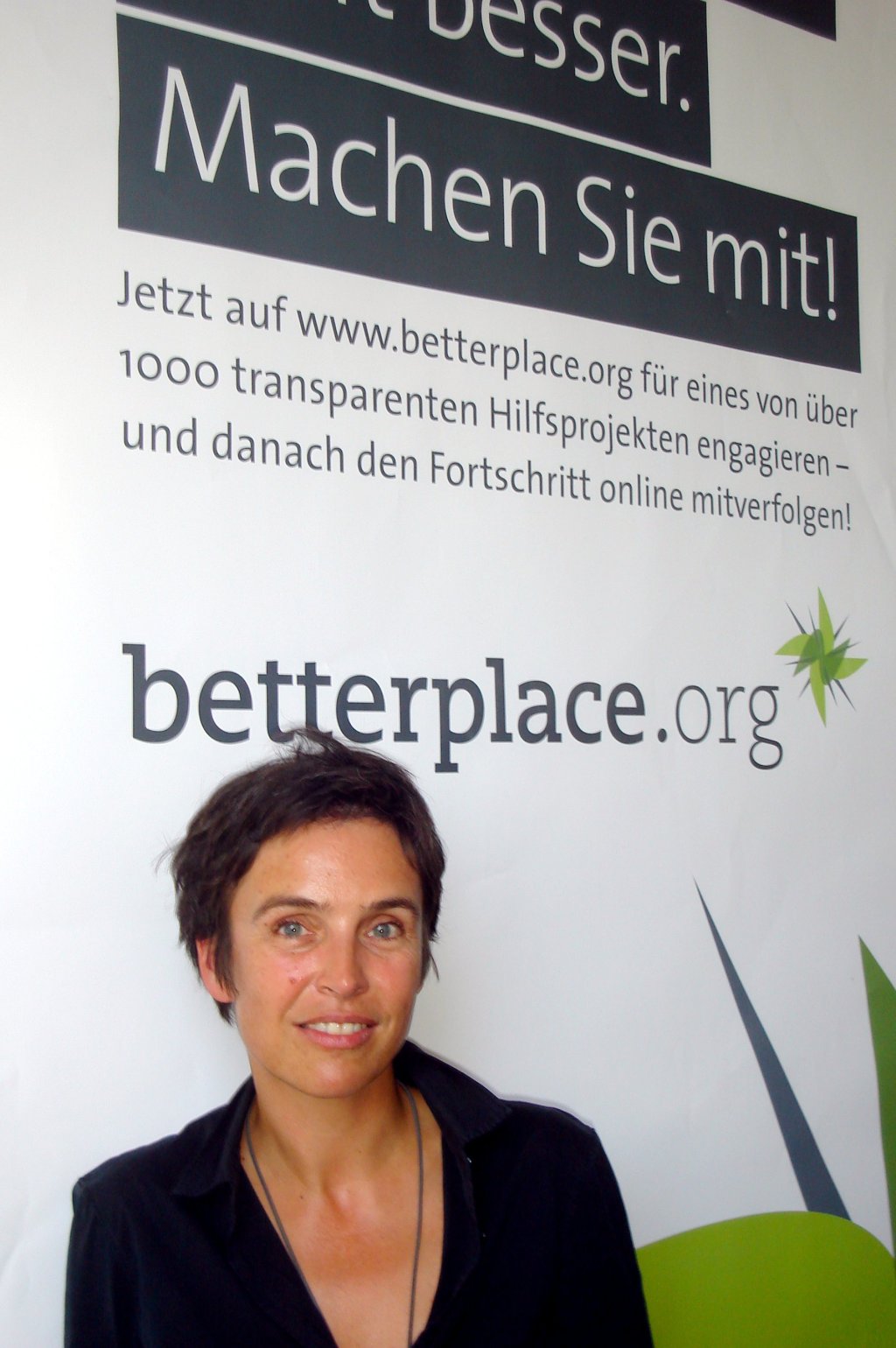
    Joana Breidenbach, an anthropologist, author and co-founder of betterplace.org (www.betterplace.org), says NGOs are emerging in India and other countries of the South to challenge the big Northern global NGOs.

    “Why wouldn’t you want to donate to these Southern NGOs? There are more entrepreneurs and local approaches which are better.

    “Betterplace gives local institutions a platform to express themselves.”

    Started in 2007, betterplace is an online marketplace for projects to raise funds. It is free, and it passes on 100 percent of the money raised on the platform to the projects. The foundation that runs betterplace supports its overheads by offering additional services that people can pay for if they wish. It works in a way similar to the online marketplace eBay (http://www.ebay.com): NGOs post their project, set up an account, blog about their achievements and successes and needs, and receive donations direct to their bank account when they come in.

    Breidenbach points out up to a third of any NGO’s income is spent on fundraising. In Germany, that represents more than Euro 1.3 billion out of over Euro 4 billion in private donations – money that could have gone directly into the hands of the people needing help.

    With betterplace, donators can surf through the projects and pick the one they want. Already, more than 100 large corporations trawl through betterplace seeking projects to fund to meet their corporate social responsibility (CSR) obligations (http://en.wikipedia.org/wiki/Corporate_social_responsibility).

    “I find it very exciting to introduce a good and innovative NGO to a corporate sponsor,” Breidenbach said.

    Breidenbach says betterplace’s ultimate goal is “to transfer the donation market online.” It hopes to change the rules in donation and charity in the same way blogs and the search engine Google changed the way people publish and search for information.

    “This provides better transparency, feedback,” Breidenbach said. “Now (with betterplace) donors and organizations can cut out the middlemen. A lot of established organizations do not like this too much.”

    Over the past decade, new concepts like social entrepreneurs and venture philanthropy have emerged to straddle the delicate line between social good and private profit. Betterplace joins this wave of new thinking about how to do development better.

    In the 20 months since betterplace went online more than 1,500 projects have joined. They are now averaging between 20 to 35 new projects joining every week.

    Betterplace is a simple open-plan office on the top floor of a Berlin warehouse beside the city’s Spree river. The small team (http://www.betterplace.org/about_us/team) work on laptop computers. A blackboard on the wall details in bright colours a running tally of the projects that have joined.

    Breidenbach gives the example of a mother in Cameroon who is using betterplace to raise the school fees for her children. The mother blogs about the children’s progress and has been able to raise the fees for a year and a half.

    “People are now directly connected to somebody in need.”

    “Right now the functionality (of the website) does not allow people getting in contact publicly and we want to enable this knowledge transfer in 2010. If you want to build a well in Cameroon then you could search for the best technology and to contact other people who are doing similar projects to learn from them.”

    Success on betterplace is by no means certain. “The experience of the project managers has been as varied as development work is – some have done really well, raising thousands of Euros over the website – others have received no funding at all,” Breidenbach said.

    But betterplace provides tools to give the projects the best chance possible. “Projects can present their work, breaking it down in a transparent way (in order to let supporters know exactly what is needed for their realization), there are sound payment processes in place and project managers can give feedback through their project blog, supporters can download project widgets etc., all supplied free of charge.”

    Breidenbach has other tips for making betterplace work for a project: post details in English when creating a profile, break down the project into much smaller, low-cost goals (few people are willing to make large donations) – this also has the advantage of receiving payments straight away when they are small. Tell a good story about the project, and try and use actual testimonials from the people affected. Blog and update regularly with photos and videos to keep people engaged. Also avoid copying and pasting text from a previous grant application.

    “We have the numbers to show that projects which give regular feedback and have a lively web of trust receive more donations than others, which are not very active.”

    “Don’t think you can just go on to betterplace and the money starts rolling in,” said Breidenbach.

    The betterplace platform places all projects seeking funds on the same level, allowing individuals and small NGOs to compete equally with the big, branded global NGOs with their websites and sophisticated fundraising operations.

    “All the big NGOs have their own websites,” continues Breidenbach. “But it is the small initiatives that often don’t have a website or know how to use Pay Pal etc. (http://www.paypal.com). We are very useful for smaller NGOs.”

    “Another big advantage is that we are a real marketplace: whatever your interests (as a potential donor), you will find a project tackling this issue on the platform.”

    But what about fraud and people seeing betterplace as a coin-making machine rather than a way to make the world a better place?

    “We have a feeling for dodgy projects. We check the IP address. We have a number of trust mechanisms in place (and are currently working on enlarging them). Thus projects on betterplace can create trust through their good name … But we also include something which I would call network-trust: In our web of trust different kinds of stakeholders of an organization or a project have a voice and can publicly state what they think of it. Thus beneficiaries of a project can say if the project has done them good or has been counterproductive, people who have visited the project on the ground can describe what they have seen etc. … we hope to give a much denser and more varied impression of social work and give donors (a terribly badly informed group of people), the basis for a much more informed choice.

    “If a contributor to a project is dissatisfied with the project’s outcome … she can either directly contact the project manager via betterplace, or openly voice her concern on the project page for other potential donors to see her views.”

    For now, betterplace is still only useful to people who have access to the internet and have a bank account (necessary for the money transfers). But in the future betterplace hopes to have mobile phone interactivity and more features to expand who they can reach.

    “We are also re-working our site to make it more intuitive and easier to use for people without computer skills,” Breidenbach said. “In the pipeline is also a knowledge backbone, enabling people to access knowhow about development and social innovation issues and exchange views and experiences. This will be very useful for projects in the South as so many people are working on the same issues without knowing about it. They could learn a lot from each other, without the “help” of the north.”

    With internet broadband in Africa set to take off, according to the report Africa Connect: Undersea Cables to Drive an African Broadband Boom (http://www.pyr.com/downloads.htm?id=5&sc=PR090309_INSAME1.6), even more people will soon be able to make the most of initiatives like betterplace.

    Published: September 2009

    Resources

    1) CSR Wire: This is a news service with all the latest news, reports and events and where companies announce their CSR (corporate social responsibility) programmes and how much they are contributing. A great resource for any NGO looking to make a targeted appeal for funds. Website:http://www.csrwire.com/

    2) Alibaba: Alibaba.com is an online marketplace started in China but is now global. It allows businesses from all over the world to trade with each other, make deals and find funding. Website: http://www.alibaba.com/

    3) More photos from the Betterplace HQ in Berlin, Germany. Website: http://www.flickr.com/photos/15195144@N06/sets/72157622386871044/ and here https://davidsouthconsulting.org/betterplace-photos/

    https://davidsouthconsulting.org/2022/11/23/betterplace-org-hq-photos/

    Development Challenges, South-South Solutions was launched as an e-newsletter in 2006 by UNDP’s South-South Cooperation Unit (now the United Nations Office for South-South Cooperation) based in New York, USA. It led on profiling the rise of the global South as an economic powerhouse and was one of the first regular publications to champion the global South’s innovators, entrepreneurs, and pioneers. It tracked the key trends that are now so profoundly reshaping how development is seen and done. This includes the rapid take-up of mobile phones and information technology in the global South (as profiled in the first issue of magazine Southern Innovator), the move to becoming a majority urban world, a growing global innovator culture, and the plethora of solutions being developed in the global South to tackle its problems and improve living conditions and boost human development. The success of the e-newsletter led to the launch of the magazine Southern Innovator.  

    Follow @SouthSouth1

    Google Books: https://books.google.co.uk/books?id=uXWUyfb4MacC&dq=development+challenges+september+2009&source=gbs_navlinks_s

    Slideshare: http://www.slideshare.net/DavidSouth1/development-challengessouthsouthsolutionsseptember2009issue

    Southern Innovator Issue 1: https://books.google.co.uk/books?id=Q1O54YSE2BgC&dq=southern+innovator&source=gbs_navlinks_s

    Southern Innovator Issue 2: https://books.google.co.uk/books?id=Ty0N969dcssC&dq=southern+innovator&source=gbs_navlinks_s

    Southern Innovator Issue 3: https://books.google.co.uk/books?id=AQNt4YmhZagC&dq=southern+innovator&source=gbs_navlinks_s

    Southern Innovator Issue 4: https://books.google.co.uk/books?id=9T_n2tA7l4EC&dq=southern+innovator&source=gbs_navlinks_s

    Southern Innovator Issue 5: https://books.google.co.uk/books?id=6ILdAgAAQBAJ&dq=southern+innovator&source=gbs_navlinks_s

    “A few weeks ago, David South, Development consultant and author of UNDP’s Development Challenges, South-South Solutions Newsletter, came by the betterplace office to take a look at our work. When I asked him how he had come about betterplace.org, he answered: he found me on twitter! So much for the twitter-scepticts. Read the article about how we can Make the World a Better Place for Southern Projects. (As the UNDP always publishes the newsletter on its South to South Website only months later, here is the link via David South’s blog).”

    Photos from inside the Betterplace.org Berlin HQ: Betterplace.org HQ Photos

    Joana Breidenbach
    Creative Commons License

    This work is licensed under a
    Creative Commons Attribution-Noncommercial-No Derivative Works 3.0 License.

    ORCID iD: https://orcid.org/0000-0001-5311-1052.

    © David South Consulting 2024

  • Gobi Desert Wine to Tackle Poverty and Boost Incomes

    Gobi Desert Wine to Tackle Poverty and Boost Incomes

    By David South, Development Challenges, South-South Solutions

    SOUTH-SOUTH CASE STUDY

    In the arid Gobi Desert spanning the two Asian nations of China and Mongolia is a bold attempt to make wine and reduce poverty. The environment is harsh, with temperatures swinging from sub-zero winter cold to sweltering summer heat. The desert is also home to high winds and notorious dust storms that plague China’s capital Beijing every year.

    China’s wine industry is booming as people have embraced the drink’s perceived health-giving qualities and are using it to celebrate new-found wealth as the economy has flourished. Current wine consumption in China is half a litre per person per year, low compared to the French average of 55 litres a year. But this is growing quickly.

    Well-known brands include Great Wall, Dynasty and Changyu (http://www.changyu.com.cn/english/index.html), which is considered the world’s 10th largest wine producer.

    One innovative winery is using this wine boom to tackle poverty and increase local wealth.

    Chateau Hansen (hansenwine.com) in Inner Mongolia has been operating since the 1980s, but recent expansion and modernization have significantly increased its earning power and the number of people it employs. Located in an area with high levels of poverty, it has developed a successful wine business in the desert by tapping the plentiful water supplies from the Yellow River. The area is now considered one of the best for growing wine grapes in China.

    Located near Wuhai city (http://en.wikipedia.org/wiki/Wuhai), 670 kilometres west of Beijing, Chateau Hansen has 250 hectares of Merlot, Cabernet Sauvignon and Cabernet Gernischt grapevines.

    The vines are buried under the sand to protect them from the harsh weather in the winter.

    “The lowest temperature gets down to is below -20 degrees C (Celsius), but in summer, it can reach 38 or 40 degrees C (102 or 104 F),” Li Aixin, Chateau Hansen’s head of viticulture, told MSNBC. “Here the four seasons are good for the growth of the grapes, but in the winter we need to bury them in the earth” to keep them from freezing. Hansen has been ambitious in its approach. It has a European-style chateau, hotel and even a French wine expert, Bruno Paumard, on site to help with the wine making. The chateau’s cellar now stores 1,000 barrels of wine.

    Paumard arrived in China in 2005. He has thrown himself into Chinese culture and tasted and tested the country’s wines. Hansen has produced 400,000 bottles of wine, mostly sold in China, where red wine drinking has become a big part of the culture of celebration.

    Hansen sells the majority of its wine to government organizations and regional enterprises. It has seen its profits double to 100 million yuan (US $18 million) in 2011 and hopes sales will double again in 2012.

    “Eighty per cent of the market in China is really the local governments who encourage the enterprises in their cities to consume red wine, of a certain brand, at their banquets in the place of Chinese ‘baijiu’ for their incessant and never-ending toasts,” said Paumard, referring to China’s home-grown rice wine. “So it’s actually a market that’s totally unique.”

    Hansen’s Cotes du Fleuve Jaune du Desert de Gobi has become one of the biggest award-winning wines in China. It received a bronze medal from the International Wine Challenge of Blaye, near Bordeaux, France.

    China now stands as the world’s fifth-largest consumer of wine (International Wine and Spirit Research study) (http://www.iwsr.co.uk/). The market in China is forecast to grow by 54 per cent from 2011 to 2015, adding up to a billion bottles.

    A map of China’s vineyards and their terroir or soil conditions shows a diverse wine-making sector (http://www.hansenwine.com/english/vineyardlink.html).

    In this busy marketplace, Hansen prides itself on being organic. It also has the goal of turning the arid desert into green vineyards using irrigation from the Yellow River and groundwater. It wants to create employment and raise living standards in the region and is fitting into a national strategy to raise living standards for poor regions.

    There is a training programme for the around 400 workers employed by the winery. No pesticides are used and only sheep dung is used as a fertilizer provided by 3,000 sheep on site. Trees also play a role in providing humus (http://en.wikipedia.org/wiki/Humus) for the vines. There is also accommodation in a nearby village for the employees.

    There are 250 hectares of vineyards and the grapes are harvested by hand. Expansion began in 2001 when the chateau and winery were built. It is strategically located just 500 metres from an airport and the chateau has a luxury hotel. Around 20,000 people visit a year, according to Hansen’s website, bringing in further income for the winery. The winery also uses Mongolian culture and cuisine as a selling point to attract tourists.

    The chief executive of Hansen is Han Jianping, who made his first fortune in real estate development.

    Han believes that “the momentum of growth in the wine industry is huge.”

    “With a great foundation of more than 1 billion people as we have in China, and (the industry) growing at 20 or 30 per cent a year, there is a huge potential for more growth,” he said.

    Republished in 2021 in cnwinenews.com.

    Resources

    1) China Wine Online: An information service that also produces the China Wine Business magazine and runs the China Wine Study Tour. Website: http://www.winechina.com/en/index.asp

    2) The 10th Shanghai International Wine and Spirits Expo 2013: Website: http://www.winefair.com.cn/sugar/en/index.asp

    Creative Commons License

    This work is licensed under a
    Creative Commons Attribution-Noncommercial-No Derivative Works 3.0 License.

    We accept payments and donations. We use any funds received to keep content online, or to create new content. Thank you! https://www.paypal.me/davidsouthconsulting.

    Scan code with your phone and help us out.

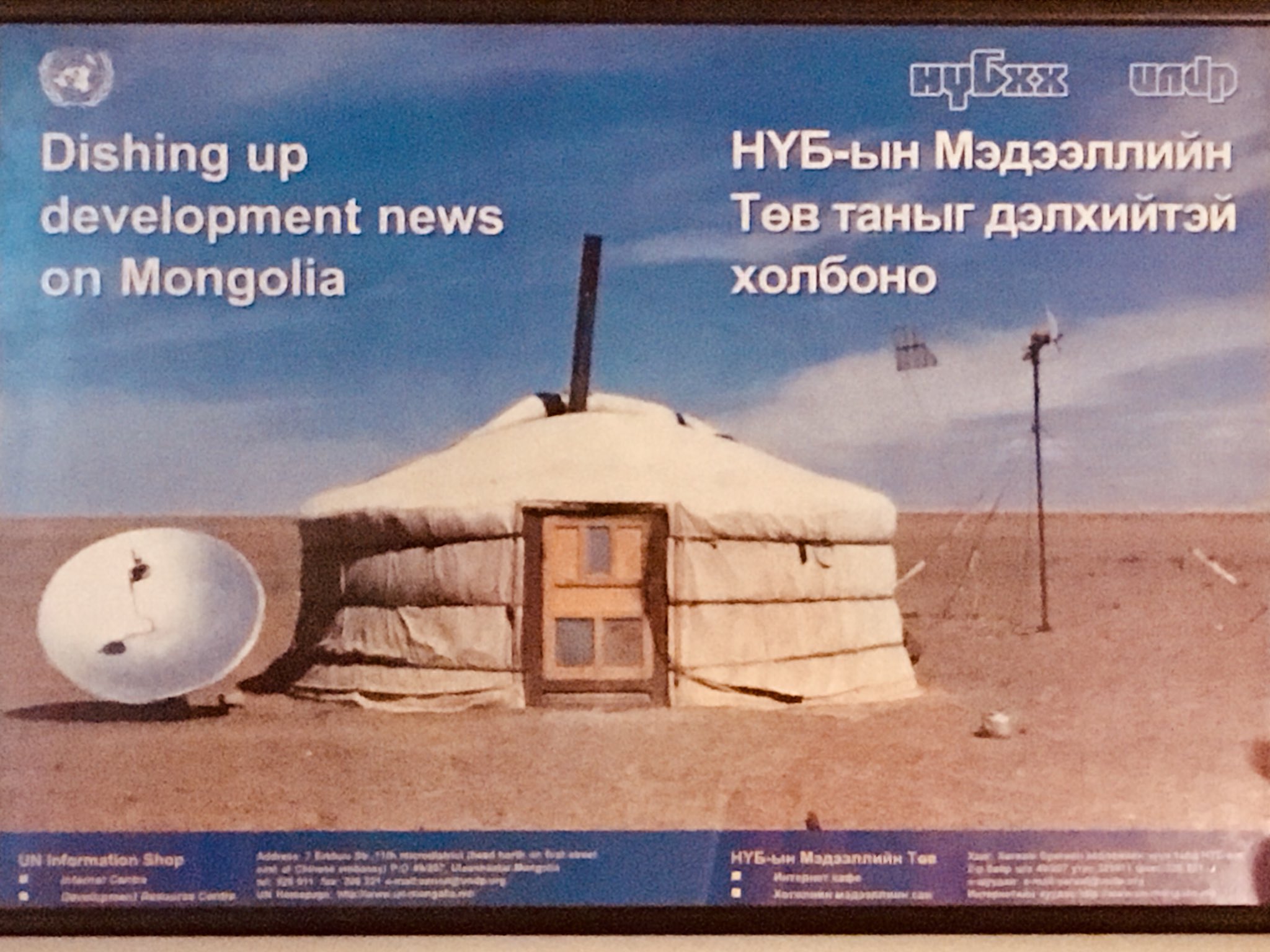
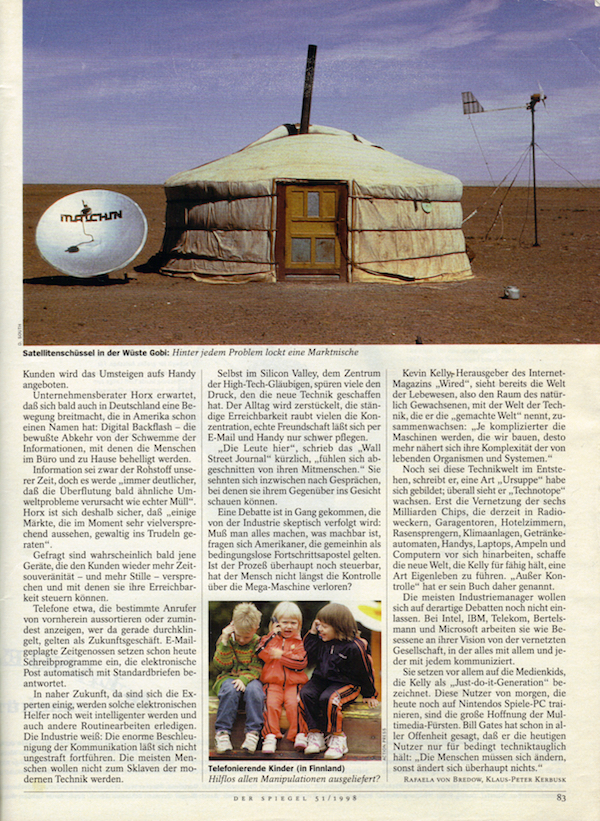
    More on the Gobi Desert here:

    Development Profile: UNDP In The Southern Gobi Desert | May-June 1998

    Kommunikation total: Der siebte Kontinent

    Wild East 17 Years Later | 2000 – 2017

    ORCID iD: https://orcid.org/0000-0001-5311-1052.

    © David South Consulting 202421

  • New Weapon Against Crime in the South

    New Weapon Against Crime in the South

    By David SouthDevelopment Challenges, South-South Solutions

    SOUTH-SOUTH CASE STUDY

    Crime in the South’s fast-growing cities has a negative affect on economic development and social and community harmony. In Africa, with one fifth of the world’s population, for example, data is very poor on crime and its victims. The absence of good data means prevention and detection of crime is poor, and resources to fight it can’t be allocated effectively.

    Over 900 million people – almost a sixth of the world’s population – now live in urban slums (UN) – high-tension places that offer a fertile environment for crime to flourish. In developing countries 43 per cent of urban dwellers live in slums – and in the least-developed countries the figure is 78 per cent. Keeping these areas safe is a serious challenge, especially when trust in police and local authorities is low. People are often afraid of how police will react to reporting of crime. Many rightly believe they will be asked for a bribe, or that reporting a crime somehow singles them out as a troublemaker.

    Harnessing the power of people organizing together offers one way of fighting back against crime, and combating the paralysis of feeling there is nothing that can be done. An initiative in Brazil is turning to the powerful collaborative potential of Web 2.0 to track crime and help to solve it. And for the first time in history, Brazilians can now see in more or less real time what crime there is and where it is happening in their country.

    Wikicrimes, the brainchild of Professor Vasco Furtado of the University of Fortaleza’s Knowledge Engineering Research Group, is inspired by the very popular user-contributed encyclopaedia Wikipedia, and germinated in his mind while on an academic sabbatical at Stanford University in California in 2006.

    Victims of crime can simply map and report crimes using the website, which uses brightly coloured drawing pins to indicate where a cluster of crimes has taken place. Site users answer a series of questions on suspects and witnesses. Anyone planning a journey can then easily zoom in on the places where they will go, and see the crime profile of that area – and perhaps be more cautious and aware to avoid becoming victims themselves.

    Brazil’s crime problem is huge: Films like City of God – where gangs fight deadly battles in the slums or favelas – shows how vicious it is.

    Wikicrimes, whose motto is “Share crime information, Keep safe!”, began development in April 2006, and went ‘live’ with a launch at the end of 2007. Starting with just two employees, it has now grown to a team of 10.

    Furtado was frustrated with police hoarding crime statistics in Brazil, and not letting people know where crimes were taking place: he also believes the police, as in many other countries, manipulate statistics for various political purposes. “The traditional mechanism of data-gathering for which police are responsible ends up giving them a monopoly over the handling of information on criminal occurrences,” Furtado said. And that “is not always in keeping with the precept of transparency and public availability of information required by a democratic system.”

    Furtado believes transparent crime statistics are vital to a well-functioning democracy.

    “We are still facing very big challenges,” he said. “Cultural change is one of them. We don’t have in Brazil the culture of sharing information for benefiting others. People need to realize that when they register a crime they are helping others, and that should be the reason others will act in the same fashion.”

    He tried to get the police involved in the project, by contributing data, but with no luck. Brazil’s police argue their monopoly over crime statistics exists for some very serious reasons. “We are very worried about revealing police data which may restrict the work of the police,” Antenor Martins of Rio’s Civil Police Department told the BBC. “Also we don’t want a feeling of insecurity for the people – they don’t deserve that here or anywhere else in the world.”

    Many also worry about a crime profile of an area dragging that area down, scaring people away. The police also worry about inaccurate information. “When people walk into a police station, you sign an incident report. If you give information which isn’t true, you have to respond to charges of giving false evidence,” said Martins.

    But Furtado believes trust between citizens and the police is so low, it is hurting the fight against crime.

    “The police suffer a lack of credibility among the populace which, in turn, contributes toward the low rate of reporting such occurrences: the so-called underreporting effect,” he said. “Research conducted with victims of crime in several Brazilian states has shown that underreporting may, in densely-populated areas, reach up to 50 per cent for certain types of crimes.”

    Furtado believes a better picture of crime will lead to better public policies and policing: “The result of this can be disastrous in terms of formulation of public policies and especially in the planning of police actions, in view of the fact that the official criminal mapping may reflect a trend that is quite unlike what is actually occurring in real life.

    “WikiCrimes intends to change the traditional logic of handling information on crimes that have already occurred, and considers that such a change is up to the citizens themselves. It is based on the principle that with adequate support, citizens will be capable of deciding how and when historical information on criminal occurrences can be publicized as well as for what purpose.”

    Sao-Paulo-based NGO Sou de Paz works to reduce violence in Brazil, and is a big supporter of Wikicrimes. “If we develop Wikicrimes, we can look at things like domestic violence or information on drug trafficking – things that affect communities but that people don’t report either because of shame or fear,” the group’s Denis Mizne told the BBC. “If you can get access to this information or publicise it together with Wikicrimes, it could help in areas that suffer most from violent crime.”

    Wisely, Wikicrimes is acting to address police concerns over accurate reporting of crimes.

    “Technically the big challenge is to define mechanisms to identify false registering,” Furtado said. “We are creating fields in WikiCrimes for the user to provide further information that brings more reliability to the crime information registered — links to newspapers, for instance. We are also defining algorithms to compute the reputation of the informants.”

    And Wikicrimes is not just for Brazil: they want people from around the world to add to the site and help build up the crime profile of all countries.

    Furtado said responses from the general public have largely been positive. “The best I could ever hope,” he said. “The project is for the citizen and I feel that they realize this. Every day, I receive messages from people offering support and giving congratulations.”

    “I had no idea of similar projects before doing Wikicrimes, but, recently, I have received some messages of similar initiatives even though with a local scope in Brazil, Argentina and USA,” he added.

    “In terms of crime it would be nice if this would show that it’s necessary to publish the crime data that we have in law authorities and institutions,” he said. “If this is a success, I am sure that all the crime data will be available for people, because they will realize there is no way that the authorities can keep it all to themselves.”

    Furtado keeps a rolling report on progress with Wikicrimes on his blog.

    Published: May 2008

    Resources

    https://davidsouthconsulting.org/2020/12/04/big-data-can-transform-the-global-souths-growing-cities/

    https://davidsouthconsulting.org/2020/12/11/cyber-cities-an-oasis-of-prosperity-in-the-south/

    https://davidsouthconsulting.org/2020/12/04/data-surge-across-global-south-promises-to-re-shape-the-internet/

    https://davidsouthconsulting.org/2021/03/04/indian-id-project-is-foundation-for-future-economic-progress/

    Development Challenges, South-South Solutions was launched as an e-newsletter in 2006 by UNDP’s South-South Cooperation Unit (now the United Nations Office for South-South Cooperation) based in New York, USA. It led on profiling the rise of the global South as an economic powerhouse and was one of the first regular publications to champion the global South’s innovators, entrepreneurs, and pioneers. It tracked the key trends that are now so profoundly reshaping how development is seen and done. This includes the rapid take-up of mobile phones and information technology in the global South (as profiled in the first issue of magazine Southern Innovator), the move to becoming a majority urban world, a growing global innovator culture, and the plethora of solutions being developed in the global South to tackle its problems and improve living conditions and boost human development. The success of the e-newsletter led to the launch of the magazine Southern Innovator.  

    Follow @SouthSouth1

    Google Books: https://books.google.co.uk/books?id=p03–n51i44C&dq=development+challenges+april+2008&source=gbs_navlinks_s

    Slideshare: http://www.slideshare.net/DavidSouth1/development-challengessouthsouthsolutionsapril2008issue

    Southern Innovator Issue 1: https://books.google.co.uk/books?id=Q1O54YSE2BgC&dq=southern+innovator&source=gbs_navlinks_s

    Southern Innovator Issue 2: https://books.google.co.uk/books?id=Ty0N969dcssC&dq=southern+innovator&source=gbs_navlinks_s

    Southern Innovator Issue 3: https://books.google.co.uk/books?id=AQNt4YmhZagC&dq=southern+innovator&source=gbs_navlinks_s

    Southern Innovator Issue 4: https://books.google.co.uk/books?id=9T_n2tA7l4EC&dq=southern+innovator&source=gbs_navlinks_s

    Southern Innovator Issue 5: https://books.google.co.uk/books?id=6ILdAgAAQBAJ&dq=southern+innovator&source=gbs_navlinks_s

    Read online: https://drive.google.com/file/d/0B-buqyoV0jpSZWcyNWQ5ZTY4OG8/view?resourcekey=0-1b7ZdQH3iBhSTAiACr7HVA.

    https://davidsouthconsulting.org/2021/03/05/southern-innovator-issue-1/

    Creative Commons License

    This work is licensed under a
    Creative Commons Attribution-Noncommercial-No Derivative Works 3.0 License.

    ORCID iD: https://orcid.org/0000-0001-5311-1052.

    © David South Consulting 2023

  • Solar Powered Village Kick-Starts Development Goals

    Solar Powered Village Kick-Starts Development Goals

    By David South, Development Challenges, South-South Solutions

    More than 1.7 billion people around the world have no domestic electricity supply, of whom more than 500 million live in sub-Saharan Africa (World Bank). Without electricity, many development goals remain dreams that will never be achieved.

    But in a first for India, a village is now entirely powered by solar energy, kick-starting its development and reversing the decline common to many villages.

    Rampura village in the state of Uttar Pradesh (http://en.wikipedia.org/wiki/Uttar_Pradesh) had previously been without electricity. But its move to solar power has boosted school performance, brought new economic opportunities for women, and even made the buffalo produce more milk! By getting up early, the buffalo can be fed more before day breaks.

    Being able to see at night unleashes a vast range of possibilities, but for the very poor, lighting is often the most expensive household expense, soaking up 10 to 15 percent of income.

    There’s a direct link between lighting and economic development. Each 1 per cent increase in available power will increase GDP by an estimated 2 to 3 per cent.

    In India, 600,000 villages still lack electricity. Despite the country’s impressive economic gains – growth of over 9 percent per year for the last three years, although that rate is now slowing – the levels of poverty in the country’s villages have driven millions to flee to the sprawling slum zones of India’s cities.

    Rampura was set up with solar power by a project of Development Alternatives (http://www.devalt.org/), a New Delhi-based NGO working on promoting “sustainable national development”. Using US $1,406,000 from Norwegian solar power company Scatec Solar (http://www.scatecsolar.no/), it installed 60 solar panels to power 24 batteries. The village’s 69 houses are directly connected to the solar plant.

    According to Greenpeace (http://www.greenpeace.org/international/), India could generate 10 percent of its electricity from solar power by 2030.

    Manoj Mahata, the project’s programme director, said half of India’s 600,000 villages without electricity can now have the option of solar power.

    A steady electricity supply means children are extending their study time past daylight hours. Nine-year-old Aja told the Sunday Times: “I like watching television and the light at night means I can read.”

    For women, the light brought by electricity means they can take on new business opportunities to boost income. “I want to start a sewing business with other women to make tablecloths and blouses,” said mother of three Gita Dave.

    “Even the buffalo are producing more milk because people can feed before dawn,” said Ghanshyam Singh Yadav, president of Rampura’s energy committee.

    “This is not rocket science. This is simple,” says Katja Nordgaard, director for off-grid projects at Scatec.

    “The model is relatively cheap, and it is easy to operate and maintain. It can be built in three to four weeks, and can easily be scaled up if the demand for electricity increases.

    “People in India are already paying when they need to charge cell phones, and for the kerosene they use in their lamps. The willingness to pay for energy is relatively high here, especially when that energy is reliable.”

    In Bangladesh, more than 230,000 households are now using solar power systems thanks to the government’s Infrastructure Development Company Ltd. (IDCOL), giving rise to opportunities for a whole new generation of entrepreneurs to make use of this new power supply for the poor. IDCOL is run by the Ministry of Finance, and is on course to install 1 million Solar Household Systems (SHS) using solar panels by 2012. The Bangladeshi government is hoping to bring electricity to all its citizens by 2020 – meaning this is now a prime time for entrepreneurs specializing in providing energy efficient products to the poor.

    Another initiative to boost development in India’s rural villages is the concept of the Model Village India (www.modelvillageindia.org.in), previously profiled by Development Challenges (November 2008).

    Resources

    Creative Commons License

    This work is licensed under a
    Creative Commons Attribution-Noncommercial-No Derivative Works 3.0 License.

    ORCID iD: https://orcid.org/0000-0001-5311-1052.

    © David South Consulting 2021