Category: Archive

An archive of published content for media and clients.

  • From Special Report: NMM (New Media Markets) Spotlight On The Emergence Of Satellite Porn Channels In The UK

    From Special Report: NMM (New Media Markets) Spotlight On The Emergence Of Satellite Porn Channels In The UK

    October 26 1995

    Is the UK rushing to watch TV porn? 

    By David South

    Financial Times New Media Markets (London, UK), October 26, 1995

    ISSN: 02654717

    OCLC Number / Unique Identifier:1266447669

    The aspect of satellite and cable programming most feared by the British government when it pushed the development of new media in the mid-80s looks set to become firmly entrenched as a part of the emerging television era. 

    Next Wednesday, the USA’s most famous soft-pornography channel will arrive in the UK, almost certainly heralding a satellite porn war for the eyes of the British public. 

    The Home Office, which used to look after televsion, was worried that porn would be one shock too many for the British and would create havoc with British television laws. But the mores of the marketplace have changed the climate, although the Broadcasting Act and the Independent Television Commission (ITC) still create limits that are stricter than in most other countries. 

    Hard-core pornography – such as that shown on several continental channels which can be picked up in the UK – remains out of bounds, as evidenced by the Department of National Heritage’s recent proscription of the hard-core TV Erotica. 

    But the drawing of the line between hard-porn and soft-porn changes over time: the programming now permitted by the ITC is a lot stronger than many might have thought likely a few years ago. The porn channels have learned how to push the boundaries of acceptability and, with competition increasing, are likely to push their luck even further.

    Politicians, journalists and old-fashioned new-media programmers – for instance, the United Artists people who were dismayed at the decision of parent company TeleCommunications Inc to bring Playboy over to the UK – may believe that porn channels serve only to cheapen the quality of life. 

    But the supply side of the marketplace detects that there is a widespread demand for porn and (ironically) religion and so programmers will follow the demand by supplying suitable programming. 

    The soi-dissant “adult” channels estimate their potential audience at between 7 per cent and 30 per cent of cable and satellite homes – between 400,000 and 1.7 million homes at present penetration levels. 

    Their main target market is the consumer of “top shelf” magazines which range from the glossy, even glamorous Playboy to the more downmarket magazines of the “reader’s wives” variety.  According to the Campaign Against Pornography, the top six pornographic magazine titles sell about 2.5 million copies a month. Altogether, there are about 200 pornographic titles on sale in the UK. 

    Deric Botham, programmer at the recently-launched Television X – The Fantasy Channel  and a porn-industry veteran, estimates that the total UK sex industry – from videos and magazines to sex aids, but excluding prostitution – generates revenues of £4 billion a year, a figure which is difficult to substantiate but is equivalent to 10 times the investment in the UK film industry in 1994. 

    According to Botham, “our research shows that people want this thing and the majority of people want it to some degree.”

    The porn channels are finding it relatively easy to find satellite capacity, largely because they are forced by the rules to operate at a time of day (i.e. night) when most channels have quit their transponders and are only too happy to find someone to sub-lease them to. 

    According to Botham, “our research shows that people want this thing and the majority of people want it to some degree.”

    The first of the new porn channels will be the Playboy Channel, which likes to think of itself as being a cut above the others. The others, it claims, are for “sad, lonely men”. Playboy, on the other hand, is for “happy, heterosexual couples”. 

    The channel, probably the softest of the genre, will be launched on November 1 by Flextech, BSkyB and the US Playboy Channel. 

    It will be followed by the not-so-soft Penthouse which is being launched in the UK by a joint venture of Penthouse magazine owners General Media and Graff Pay-Per-View, which already owns the UK Adult Channel. 

    Two other channels have received licences from the ITC – David (Sunday Sport newspaper) Sullivan’s Babylon Blue and the Adam and Eve Channel. With the Adult Channel and Television X already broadcasting, there could be six porn channels on offer to UK viewers. 

    But two other channels are beamed into the UK for those willing to pay the cost of extra reception equipment: the continental pirates, Rendezvous and Eurotica. There is also the now-banned TV Erotica. 

    Cable and satellite was bound to be an attractive medium for the porn channels, given the possibility of encrypting the signal and imposing a subscription fee and, as a consequence, benefiting from the lighter regulation that has seemed likely. Sex-channel executives say that the ITC has become increasingly flexible in what it will allow. 

    Three other factors have fuelled would-be channels to turn to cable and satellite: 

    1.  The replacement of the independent high-street video store by big video superstores has robbed the porn industry of a key outlet. 
    2. New-media distribution should bring in consumers who are embarassed to hire a porn video from a shop. Yet buying a subscription to a porn channel may be a more embarassing act within the family environment. 
    3. The Adult Channel is regarded as demonstrating that there is an audience for porn in the UK: it is thought to have about 224,000 subscribers. 

    Cable and satellite has far more potential for the porn industry than the traditional-format channel. The prize, which will make everything worthwhile, is pay-per-view (ppv). Bill Furrelle, Playboy Channel’s sales director, said that he had been asked by several UK cable operators about providing a ppv service next year. The operators want Playboy, the Adult Channel and Adam and Eve to contribute to the Home Cinema ppv service which they hope to put together. 

    Do TV porn channels degrade and humiliate? 

    By David South

    Financial Times New Media Markets (London, UK), October 26, 1995

    Susan Sontag, the renowned American essayist, described pornography as a “crutch for the pyschologically deformed and brutalisation of the morally innocent.” The Campaign Against Pornography in the UK believes that pornography exploits women and children “in a degrading and humiliating way, often with the message that we enjoy this and want to be abused.”

    The campaign encourages its supporters to take direct action against any distributor of pornographic material as part of its wider campaign to put the industry out of business.

    The porn channels dismiss arguments that they degrade women and encourage male violence against women. Playboy managing director Rita Lewis argues that “women are happy to consume erotic imagery like pin-ups. Women are not hung-up by this anymore, they are not threatened by the fantasy women we show in our programming. We hope Playboy will lead to couples’ making love together.”

    Andrew Wren, financial director of the Adult Channel, also dismisses the link between pornographic programming and sexual violence. “I don’t think there is anything in programmes that would encourage men to go and rape. Women are interested in sex as men are.”

    Television X’s (Deric) Botham says that porn programmes are “a bit of titilation” in the fine, upstanding tradition of the British Carry On films. None the less, he admits that “I wouldn’t want my daughter to get involved in pornography.”

    He says that the women involved in the programmes, some of them housewives, are willing participants and enjoy the opportunity. “I don’t produce anything that is against the law. We speak to the individuals concerned. If you have a reluctant model, it doesn’t work – I just won’t buy the video.”

    The Campaign Against Pornography sees it all rather differently. Ann Mayne, a member of the campaign’s management committee, was particularly critical of two programmes on Television X – Shag Nasty and Mutley and Fly on the Wall.

    She said that Shag Nasty and Mutley, in which a presenter approaches women in the street or in supermarkets and offers them £25 to look at their knickers, or £50 to be filmed having sex with him, gave the message that women were simply objects and that it was acceptable to harass them.

    “It is complete prostitution of female sexuality,” she said. “Botham wants full-on, across-the-board prostitution of women. In his view, every woman must have a price.”

    Mayne said that Fly on the Wall, in which real-life couples are shown having sex, was an open invitation for men to coerce their partners into being filmed, possibly to the point of abuse.

    UK laws on satellite porn among toughest in Europe

    By David South

    Financial Times New Media Markets (London, UK), October 26, 1995

    UK regulations on what can be shown on sex channels are tougher than in most countries of the European Union. Channels such as the hard-core Swedish TV Erotica and the recently-launched French Rendezvous are licensed in their respective countries and transmit explicit scenes of sexual intercourse, straight and gay, featuring close-up shots of copulating genitals. 

    Graff Pay-Per-View, the experienced US sex channel operator, consciously decided to exclude the UK as a market for its hard-core Eurotica channel which is licensed in Denmark and, like the other hard-core channels, transmits via a Eutelsat satellite. But pirate smart cards for the channel, as for the other channels, are available in the UK in specialist satellite shops. 

    Graff’s seeming respect for the UK regulations may not be unconnected with the fact that it owns the Adult Channel and would be wary of upsetting the ITC. Broadcasting unacceptable material into the UK could provoke the ITC into seeing Graff as a body unfit to hold a licence, thereby threatening the Adult Channel. 

    The ITC’s guidelines on sexually explicit material state that representations of sexual intercourse can be shown only after 9pm and that “the portrayal of sexual behaviour, and of nudity, needs to be defensible in context and presented with tact and discretion.”

    There has been some relaxation of the rule. The ITC will, on an experimental basis, allow the watershed to be broken by a ppv or video-on-demand service. It is not, however, prepared to give this freedom to a porn channel, at least not in the early days, because it does not want to be seen to be licensing pornography. The relaxation will affect only general services. 

    The ITC will also monitor any ppv service to ensure that there are no cases of children accessing the programming before deciding if the programme code should be revised. 

    The transmission pf 18-rated films on terrestrial or new-media channels is not permitted before 10pm. Films with a 15-rating are not allowed before 9pm on terrestrial channels such as BSkyB’s Sky Movies or the Movie Channel. These are minimum requirements. Some 15-rated films, for instance those which show scenes of sexual intercourse or drug-taking, would not be deemed suitable for transmission even on an encrypted channel at 8pm. 

    In practice, the ITC does not permit depictions of erect penises, anal intercourse, close-ups of genitalia or ejaculation. 

    Where channels have overstepped the mark and gone abroad to get licences from less strict authorities – the late Red Hot Dutch and TV Erotica – the ITC has recommended that the channels be proscribed, action which has subsequently been taken by the Department of National Heritage. The ITC is now monitoring the Rendezvous channel, which shows a mix of gay and heterosexual hard-core pornography with graphic scenes of sexual intercourse. 

    The DNH issues proscription orders under Sections 177 and 178 of the Broadcasting Act. The orders make it a criminal offence to supply equipment to receive the channels or to market and advertise them. 

    The European Union directive on transfrontier broadcasting lays down that one country cannot prevent the reception of channels licensed by other European Union countries. However, it allows individual governments to take action against any broadcast which could damage the physical, mental or moral development of minors. 

    Playboy ‘is not for sad and lonely single men’

    By David South

    Financial Times New Media Markets (London, UK), October 26, 1995

    The Playboy Channel, due to launch in the UK on November 1, is trying to position itself as being a cut above the existing sex channels with which it will compete for subscribers. 

    The channel, which is running an advertising campaign costing more than £1.5 million, believes that its big budgets and slick production values will attract viewers who have hitherto been uninterested in so-called “adult” entertainment. It hopes to win an audience among women as well as men. 

    Managing director Rita Lewis dismisses the other sex channels as being aimed at people who are “a bit sad and on their own”. The channels promote “deviant” behaviour. 

    Playboy hopes to attract happy, heterosexual couples who will treat the channel as an aid to foreplay: “We hope Playboy will lead to couples’ making love,” said Lewis, who believes that women, as well as men “are happy to consume erotic imagery like pin-ups.”

    In the USA, according to Lewis, 70 per cent of the audience for the channel comprises couples. 

    “We hope Playboy will lead to couples’ making love,” said Lewis, who believes that women, as well as men “are happy to consume erotic imagery like pin-ups.”

    She said that the UK Playboy will run programmes that have more in common with programmes like Channel Four’s The Good Sex Guide. “These days, a whole bunch of people are sampling erotic programming like The Good Sex Guide. It is very sexy programming with mass-market appeal.”  

    Playboy’s movies would have a high standard of production, she said, very different from what she claims to be the cheap programming made for the other channels, often home videos and often shot with hand-held cameras. 

    Playboy’s programming will comprise sex films, interviews with “centrefold” models, documentaries on the sex industry and general-entertainment programming such as quiz shows. 

    The rival channels claim that Playboy will not be a big threat to them. The Adult Channel’s Wren says that all the new channels “hype the market, which helps us.” In any case, adult entertainment consumers have already been weaned on a harder mix of programming and do not want something that offers little more than what Channel Four shows. 

    The UK Playboy Channel, which is owned by UK programmer Flextech (51 per cent), British Sky Broadcasting (30 per cent) and Playboy Enterprises (19 per cent), will transmit from between midnight and 4am on the Bravo transponder on Astra 1c. 

    Read more on the 1990s sex economy here: From Special Report: Sexual Dealing: Today’s Sex Toys Are Credit Cards & Cash: A Report On The Sex-For-Money Revolution

    Special Report: Sexual Dealing: Today’s Sex Toys Are Credit Cards & Cash: A Report On The Sex-For-Money Revolution.

    Update: It is over 20 years since this Special Report was published. The Internet now plays a significant role in the growth of sex content and the sex industry and vice versa. Here is an interesting overview of the situation in 2020. The Internet is for Porn – It always was, it always will be.

    “One of the biggest and most interesting things happening in the consumer web right now is running almost completely under the radar. It has virtually zero Silicon Valley involvement. There are no boastful VCs getting rich. It is utterly absent from tech’s plethora of twitters, fora and media (at least, as they say, “on main”). Indeed, the true extent of its incredible success has gone almost completely unnoticed, even by its many, many, many customers.

    I’m talking, of course, about OnlyFans.”

    More from the Financial Times here:

    “Opinion Inside Business

    OnlyFans shows how the creator economy is shaping media 

    Porn is a kind of paradigm for broader changes for publishers and musical labels”

    https://www.ft.com/content/4be047b7-0517-403a-9374-c6ea317b1b7e?segmentid=acee4131-99c2-09d3-a635-873e61754ec6

    ORCID iD: https://orcid.org/0000-0001-5311-1052.

    © David South Consulting 2024
  • Haitian Coffee Becoming a Hit with American Connoisseurs

    Haitian Coffee Becoming a Hit with American Connoisseurs

    By David SouthDevelopment Challenges, South-South Solutions

    SOUTH-SOUTH CASE STUDY

    The Caribbean country of Haiti has had to deal with the twin challenges of recovering from a devastating earthquake in 2010 while also pulling itself out of the economic and social chaos that has resulted in its status as the poorest place in the Western hemisphere.

    Violence has also led to a number of UN peacekeeping missions in Haiti over the years, and there is now a substantial international presence in the country to aid in stabilization and economic recovery (http://www.un.org/en/peacekeeping/missions/minustah/).

    Haiti has a lot of potential when it comes to agriculture, but this would require substantial changes in the way land and agriculture are managed.

    Haiti is ranked 77 out of 79 countries in the 2012 Global Hunger Index. Access to sufficient quantities of nutritious food remains an issue for millions of Haitians. An estimated 3.8 million Haitians, or 38 per cent of the population, is food insecure (WFP 2012). Despite its fertile potential, Haiti is dependent on food aid and imports to meet its food security needs.

    Fifty per cent of the country’s food requirements are imported, and food prices have been rising since the end of 2010, the year of Haiti’s devastating earthquake. This increase has led to an overall loss of purchasing power for the majority of Haitians. Low agricultural productivity and urban encroachment on arable land provide additional challenges for Haiti’s rural populations. Eighty per cent of farms fail to produce enough to feed their households (http://www.foodsecurityportal.org/haiti/resources).

    But some are trying to create a new market for Haiti’s agricultural products to help boost farmers and farming as an occupation and an industry.

    It’s hard to imagine now, but Haiti was once the world’s largest producer of coffee in the 18th century when it was a French colony. Today Haiti produces less than 1 per cent of the world’s coffee.

    The targeting of niche coffee drinkers in the United States has introduced a new market to the special taste of the Haitian brew. While the market at present is small, some are hoping, with the right measures, it could be grown significantly, boosting both the country’s revenue from agricultural exports and incomes for coffee farmers.

    Several US-based companies are carving out a market for Haitian coffee and boosting awareness about the country’s unique coffee beans. La Colombe Coffee Roasters (http://lacolombe.com/), based in the city of Philadelphia, has already been able to export four shipping containers of Haitian coffee to the United States since 2010. The company supplies high-end chefs such as Eric Ripert and Daniel Boulud.

    In Florida, Kafe Pa Nou (kafepanou.com) – “our coffee” in Haitian Creole – is owned by Haitian-American Jean René Faustin and sells online coffee from Haitian suppliers Rebo and Cafe Selecto.

    So far, Haitian coffee has not been able to gain wider distribution through mass buyers such as Starbucks because it has not been possible to supply the quantities required to fulfill such a contract.

    Haiti would need to boost its current average coffee yield of 250 kilograms per hectare to double or triple that yield to gain large-scale contracts.

    “Haiti was for a brief moment in time the biggest producer of coffee for export in the world,” Gilbert Gonzales, Vice President of coffee exporter Rebo (http://rebo.ht/The%20Technics.htm), told Medium for Haiti (https://medium.com/medium-for-haiti). But “right now, most people would say it’s impossible” for Haiti’s coffee sector to return to international prominence.

    “We’re not saying that it’s possible in the next two years, maybe not even in the next 12 years,” he said. “But it is possible.”

    The coffee cherries used to make the popular beverage are processed in one of two ways: a dry process and a wet process. In Haiti, the dry process is more commonly used to form a hard cocoon on the outside of the coffee cherries to help preserve them for a year or more.

    This enables farmers to preserve the coffee cherries so they can keep a portion of the crop back as a safety reserve.

    The wet processed beans are first immersed in water and then the pulp is washed away before the beans are dried (http://coffee.wikia.com/wiki/Wet_process). The superior flavor this creates has attracted fans in the United States, especially in the trendy neighbourhoods of Brooklyn, New York and San Francisco, California. By bucking the traditional Haitian dry processing method for the beans, it is possible to earn three times the market price by selling wet-processed beans.

    Haiti’s history of coffee growing goes back to the 1700s. At the time, the country grew half the world’s coffee. This helped to make the French colony highly profitable.

    This long heritage has left the country with a unique asset: original Arabica typica coffee trees first imported by Europeans to Haiti. These coffee trees are considered to be heirloom because they are so old and untainted by modern breeding methods. According to Douglas Weiner in Medium for Haiti, “when you drink coffee from Haiti, it’s like drinking coffee from 200 years ago.”

    Weiner is part of a family business, Geo Weiner (http://selectohaiti.com/home/), which has been selling Haitian coffee for four generations and is one of the few surviving coffee exporters in the country.

    The country has an estimated 200,000 coffee farmers. Because their methods have not changed much, they are effectively organic (https://en.wikipedia.org/wiki/Organic_food). Most farmers can not afford chemical fertilizers and pesticides.

    The coffee farms are located in mountain areas with a rich biodiversity of plants and trees. This stands in stark contrast with much of the rest of the country, where deforestation has left the country with just 2 per cent of virgin forest left. Coffee-producing areas are lush and green because coffee is one of the few cash crops that makes enough money to keep it worthwhile to preserve the trees and foliage. In other parts of the country, many are making money from turning trees into charcoal for cooking fuel, the most common fuel for most of the country’s population.

    Haiti’s coffee growers have had a hard time coping with the rise and fall of world coffee prices. The world market price for coffee dropped in the early 2000s as the markets were flooded with coffee from Brazil and Vietnam. In response, farmers then cut down the coffee trees and replaced them with subsistence crops such as corn and beans.

    With the amount of coffee grown in Haiti dropping quickly, the number of exporters in the country plummeted from 20 companies to two companies today, Geo Weiner and Rebo.

    Jobert Angrand, Executive Coordinator of the National Institute of Coffee (http://www.icefda.org/), believes coffee production declined in Haiti because of a wide range of problems, from diseases and pests to aging trees, too-small plots and inefficient production methods. Per-hectare coffee yields are as low as one-tenth of production in Latin America.

    The Vice President of coffee exporter Rebo says these problems are holding things back. “I don’t think today we’re looking into going mainstream,” said Gilbert Gonzales. “We can’t. There is not enough volume for that.”

    Because production will be small, Gonzales believes Haiti would be wise to target the higher end of the marketplace with American grocery stores such as Trader Joe’s and Whole Foods: “It’s looking into the higher-end gourmet shops, things like that,” he said, “so that we could really share with the rest of that world the quality available from Haiti.”

    Significant purchases of Haitian coffee have been made by various overseas companies, which does give hope that this plan could work. Irish coffee company Java Republic bought 97 tonnes of Haitian coffee from the Rebo exporter in 2010.

    Published: August 2013

    Resources

    1) National Coffee Association: Ten Steps to Coffee. Website: http://www.ncausa.org/i4a/pages/index.cfm?pageid=69

    2) International Coffee Organization: The International Coffee Organization (ICO) is the main intergovernmental organization for coffee, bringing together exporting and importing governments to tackle the challenges facing the world coffee sector through international cooperation. Its member governments represent 97 per cent of world coffee production and over 80 per cent of world consumption. Website: http://www.ico.org/

    3) Coffee Research: Growing Coffee Beans at Home. Website: http://www.coffeeresearch.org/coffee/homegrowing.htm

    4) Puro Fairtrade Coffee: Puro is a leading brand of Fairtrade and Fair Trade Organic coffee that works in partnership with the World Land Trust to purchase and protect areas of precious rainforest in South America. Website: http://www.purocoffee.com/

    More on Haiti here: State Of Decay: Haiti Turns To Free-Market Economics And The UN To Save Itself

    https://davidsouthconsulting.org/2021/10/28/ending-gang-violence-while-cleaning-the-streets-in-haiti/

    https://davidsouthconsulting.org/2021/09/01/haiti-earthquake-prompts-tech-aid/

    https://davidsouthconsulting.org/2021/10/28/milk-co-operatives-help-hungry-haiti/

    https://davidsouthconsulting.org/2020/04/22/state-of-decay-haiti-turns-to-free-market-economics-and-the-un-to-save-itself/

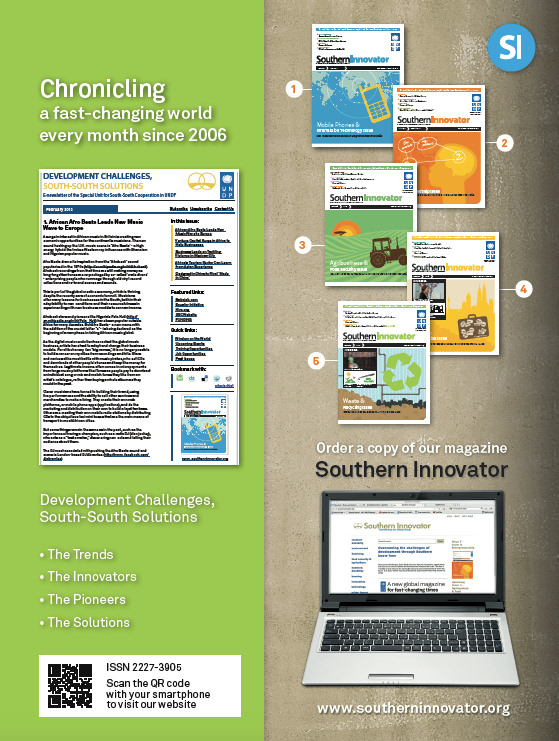
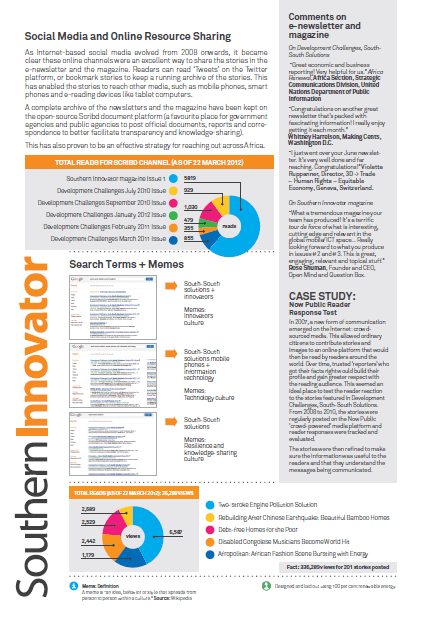
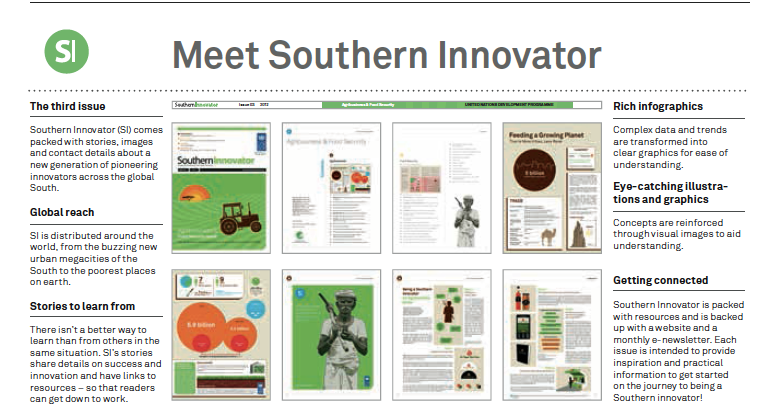
    Development Challenges, South-South Solutions was launched as an e-newsletter in 2006 by UNDP’s South-South Cooperation Unit (now the United Nations Office for South-South Cooperation) based in New York, USA. It led on profiling the rise of the global South as an economic powerhouse and was one of the first regular publications to champion the global South’s innovators, entrepreneurs, and pioneers. It tracked the key trends that are now so profoundly reshaping how development is seen and done. This includes the rapid take-up of mobile phones and information technology in the global South (as profiled in the first issue of magazine Southern Innovator), the move to becoming a majority urban world, a growing global innovator culture, and the plethora of solutions being developed in the global South to tackle its problems and improve living conditions and boost human development. The success of the e-newsletter led to the launch of the magazine Southern Innovator.

    https://davidsouthconsulting.org/2021/03/05/southern-innovator-issue-1/

    https://davidsouthconsulting.org/2021/03/05/southern-innovator-issue-3/

    Creative Commons License

    This work is licensed under a
    Creative Commons Attribution-Noncommercial-No Derivative Works 3.0 License.

    ORCID iD: https://orcid.org/0000-0001-5311-1052.

    © David South Consulting 2023

  • Afropolitan: African Fashion Scene Bursting with Energy

    Afropolitan: African Fashion Scene Bursting with Energy

    By David SouthDevelopment Challenges, South-South Solutions

    SOUTH-SOUTH CASE STUDY

    ISSN 2227-3905

    Fashion is a significant global business: some estimates place the world’s clothing industry at US $900 billion a year. Clothing – like food – is something everyone requires, so fashion can be an accessible way for small-scale entrepreneurs and craftspeople to earn income and eventually tap into larger marketplaces. Through clever use of the internet and online shopping, small-scale fashion designers and clothing makers can access global markets and earn income from around the world. Initiatives like ShopAfrica53 (http://www.shopafrica53.com/) are helping people to get online and establish small web shops.

    The Democratic Republic of Congo is the size of western Europe. A bitter, decade-long civil war that officially ended in the rest of the country in 2003, and that has claimed several million lives through fighting and disease, still burns on in the eastern border provinces of Ituri, North Kivu and South Kivu. As a result, Congo is now home to the world’s largest UN peacekeeping mission.

    In the face of this civil strife, a group of very fashionable gentlemen bring colour and style to the country while also pioneering a way to make money and improve standards of dress in the country. Members of “La sape,” or La Societe des Ambianceurs et Personnes Elegantes (http://fr.wikipedia.org/wiki/Société_des_ambianceurs_et_des_personnes_élégantes) — the society of tastemakers and elegant people — wear designer fashions either bought in Europe, or handmade in Congo.

    They are inspired by Paris’s society world of parties, social events and fashion as they see it in magazines. It is a hybrid style: French colonialism (the Congo is a former French colony) mixed with individual interpretations of the in ‘look’.

    All in the last place in the world you would expect to find such cutting-edge fashion: a place where slums and warfare are the everyday norm.

    The gentlement of La Sape are featured in the new book Gentlemen of Bacongo (http://www.trolleybooks.com/bookSingle.php?bookId=118) by photographer Daniele Tamagni. He chronicles in loving detail this bright fashion phenomenon. The cover of the book features a man in an elegantly tailored lipstick pink suit and pink bowler hat – testament to the eye-catching styles on display.

    But rather than a local fancy, the look refined by these gentlemen has become the inspiration for designers in Europe, like Britain’s Paul Smith (http://www.paulsmith.co.uk/).

    “A Congolese sapeur is a happy man even if he does not eat, because wearing proper clothes feeds the soul and gives pleasure to the body,” Tamagni said.

    They also are the living embodiment of a distinctive modern African style.

    Their suits are either designer or handmade copies. The sapeurs have strict rules to go with their style: never wear more than three colours together for example.

    Tamagni says there is more to the phenomenon than just appearances. Sapeur Salvador Hassan “thinks that a real sapeur needs to be cultivated and speak fluently, but also have a solid moral ethic: that means beyond the appearance and vanity of smart, expensive clothing there is the moral nobility of the individual.”

    Says Hassan, “The label is not important, what is important is to be able to dress depending on the taste of the individual.”

    For a sapeur, the saints are Pierre Cardin, Roberto Cavalli, Dior, Fendi, Gaultier, Gucci, Issey Miyake, Prada, Yves Saint Laurent, Versace and Yohji Yamamoto.

    Unlike the followers of some other fashion styles, they do not worship violence and gang warfare.

    Some find the clothes in shops in Brazzaville and Kinshasa but most try to get them from Paris.

    So how do they afford these clothes that sometimes cost in the thousands when most are unemployed? They have turned their passion for fashion into a business too. They rent the clothes out for around US $25 a day to earn income. They also save their money to travel back and forth to Europe selecting the best clothes, which they then carry back to Congo and sell for a good profit.

    In another development, African fashion magazines are also playing their role in shifting perceptions.

    The African look has attracted a new wave of magazines to capture it and promote it. The new glossy magazine titles – Arise (http://www.arisemagazine.net/) (published in London), HauTe (http://www.fashionafrica.com/), Helm (http://www.facebook.com/pages/HELM-Magazine/41931572531) and True Love – are good examples of this new wave.

    “Honestly, upwardly mobile African readers are crying out for this magazine,” Helen Jennings, editor of Arise, told the New York Times. Arise is a Nigerian style monthly started by Nigerian media mogul Nduka Obaigbena, who also publishes Nigeria’s leading newspaper, This Day.

    “Because the local magazines aren’t as high-end or progressive, and no other international titles speak directly to an African readership, Arise has really caused a stir,” said Jennings.

    Jennings calls the magazine’s mix of content “afropolitan”: blending pan-African and global content.

    The magazine’s debut issue features the models Alek Wek, Naomi Campbell and Liya Kebede. Stories run the gamut from electronic music to football academies, and the rise of Nollywood, Nigeria’s home-grown film industry.

    It features African designers and is distributed in seven countries to 60,000 readers.

    Along with new magazines, more and more African designers are now getting attention on Africa’s – and the world’s – catwalks. They include Lisete Silvandira Bento Pires Pote, who started as a designer in 1998 and has been featured in many fashion shows in Angola and around the world. Her clothes are now worn by singers and actors.

    Other Angolan fashion designers include Elisabeth Santos, Vadinho Pina, Tekasala Ma’at Nzinga and Shunnoz Fiel (whose appearance in a World Press Photo is drawing attention to the Angolan fashion scene) (http://www.worldpressphoto.org/index.php?option=com_photogallery&task=view&id=1463&Itemid=224).

    From Botswana, Koketso Chiepe has been so successful, she opened a fashion shop in London this past summer. Chrystalix is a Cameroonian fashion designer who uses raw materials found in the Equatorial forests of her country. Another Cameroonian design label is Kreyann and sells from its boutique in Douala clothing made from rich materials like silk.

    In Ghana, young pioneer Aisha Obuobi has revitalized the use of African prints in fashion (http://www.youtube.com/watch?v=0M2rEQ0Wehw).

    A list of fashion weeks across the global South (http://en.wikipedia.org/wiki/Fashion_week) offers many opportunities to witness this creative surge across the continent.

    Published: December 2009

    Resources

    https://davidsouthconsulting.org/2022/10/02/african-afro-beats-leads-new-music-wave-to-europe/

    https://davidsouthconsulting.org/2022/11/19/african-culture-as-big-business/

    https://davidsouthconsulting.org/2022/11/17/african-ingenuity-attracting-interest/

    https://davidsouthconsulting.org/2023/01/16/african-theatre-becomes-european-success/

    https://davidsouthconsulting.org/2022/11/22/happy-nigeria-west-african-nation-has-good-attitude/

    Development Challenges, South-South Solutions was launched as an e-newsletter in 2006 by UNDP’s South-South Cooperation Unit (now the United Nations Office for South-South Cooperation) based in New York, USA. It led on profiling the rise of the global South as an economic powerhouse and was one of the first regular publications to champion the global South’s innovators, entrepreneurs, and pioneers. It tracked the key trends that are now so profoundly reshaping how development is seen and done. This includes the rapid take-up of mobile phones and information technology in the global South (as profiled in the first issue of magazine Southern Innovator), the move to becoming a majority urban world, a growing global innovator culture, and the plethora of solutions being developed in the global South to tackle its problems and improve living conditions and boost human development. The success of the e-newsletter led to the launch of the magazine Southern Innovator.

    https://davidsouthconsulting.org/2021/03/05/southern-innovator-issue-2/

    Creative Commons License

    This work is licensed under a
    Creative Commons Attribution-Noncommercial-No Derivative Works 3.0 

    ORCID iD: https://orcid.org/0000-0001-5311-1052.

    © David South Consulting 2023

  • 2009: Development Challenges, South-South Solutions

    2009: Development Challenges, South-South Solutions

    By David SouthDevelopment Challenges, South-South Solutions

    SOUTH-SOUTH CASE STUDY

    ISSN 2227-3905

    December

    Southern Art Hubs Grab Attention for Creative Economy Development Challenges: Regeneration – of poor neighbourhoods, districts, even whole countries after a conflict – is both a challenge and a key to transforming lives. One approach that has a track record is turning to artists and creative people to re-imagine a neighbourhood or country’s culture, and restore pride and vitality to places beaten down by life’s hardships.

    Afropolitan: African Fashion Scene Bursting with EnergyDevelopment Challenges: In the face of Congo’s civil strife, a group of very fashionable gentlemen bring colour and style to the country while also pioneering a way to make money and improve standards of dress in the country. Members of “La sape,” or La Societe des Ambianceurs et Personnes Elegantes (http://fr.wikipedia.org/wiki/Société_des_ambianceurs_et_des_personnes_élégantes) — the society of tastemakers and elegant people — wear designer fashions either bought in Europe, or handmade in Congo.

    Brewing Prosperity Creates Good Jobs Development Challenges: In the Democratic Republic of Congo – home to the world’s largest United Nations peacekeeping mission and decades of bloody civil war – a brewery has not only survived, it has thrived to become a popular brand throughout central Africa. By being a success, the Brasimba brewery has brought prosperity and high-quality jobs to Congo’s second largest city, Lubumbashi (http://en.wikipedia.org/wiki/Lubumbashi), and proven that a modern business can do well there despite the obstacles.

    Digital Mapping to put Slums on the Map Development Challenges: People are now turning to the growing penetration of digital technologies into slums and poor areas to find solutions. With mobile phones available across much of the global South, and plans underway to expand access to broadband internet even in poorly served Africa, it is becoming possible to develop a digital picture of a slum area and map its needs and population.

    November

    Innovation Villages Tackling MDGs Development Challenges: The global economic crisis that began to roll across the world in September 2008 is threatening gains made against poverty and hunger all over the South. As Kevin Watkins from UNESCO’s Global Monitoring Report told the Financial Times, “With the slowdown in growth in 2009, we estimate that the average income of the 391 million Africans living on less than US $1.25 a day will take a 20 percent hit.”

    New Appetite for Nutritious Traditional VegetablesDevelopment Challenges: Throughout the history of farming, around 7,000 species of plants have been domesticated. Yet everyday diets only draw on 30 percent of these plants and even this number has been going down as more people consume mass-market foods (FAO).

    African Countries Re-branding for New Economic RoleDevelopment Challenges: Africa’s diverse countries have been subject to years of negative stories in the media. The effect on global audiences has left many to cast the whole continent in a bad light and to know little about the individual countries and cultures. This has damaged business confidence over the years. Just like products and people, nations need to have a strong and positive brand to do well in the global economy.

    Tiny Homes to Meet Global Housing Crisis Development Challenges: More than 1 billion people around the world lack decent shelter. Of these, the majority live in urban areas, usually in slums and informal settlements (UN-HABITAT). The world’s megacities – like Mumbai, India, where more than 22 million live in the metropolitan region – have to find a way to provide housing that is both affordable and does the minimum possible amount of harm to the environment.

    Original Development Challenges newsletter, November 2009:http://ssc.undp.org/November-2009.268.0.html

    October

    Ending Gang Violence While Cleaning the Streets in HaitiDevelopment Challenges: The Caribbean nation of Haiti is the poorest country in the western hemisphere, with 80 percent of the population living below the poverty line (CIA World Factbook). The country had been enjoying some positive economic growth since 2005 after decades of economic and political turmoil.

    Growing a Southern Brand to Global Success: The Olam Story Development Challenges: Most people haven’t heard of Olam International, but they know the brands they work for and they more than likely eat their produce. The story of Olam (www.olamonline.com) – a global food supply company in ‘agri-products’ that got its start in Nigeria – shows how a Southern brand can grow and go global, and overcome the difficulties of cross-border trade.

    September

    Making the World a Better Place for Southern ProjectsDevelopment Challenges: An exciting new initiative based in Germany, but already featuring hundreds of projects from across the South, is using the power of the internet to directly connect projects and donors.

    Bamboo Becomes Transport Option for the SouthDevelopment Challenges: The sturdy bamboo plant (http://en.wikipedia.org/wiki/Bamboo) is enjoying a revival around the world as a building material. A strong, fast-growing and highly renewable woody plant, it is becoming increasingly popular as people seek out less environmentally wasteful alternatives to steel and other materials.

    Kenyan Mobile Phone Innovations Development Challenges: A couple of enterprising Kenyan engineering students are showing how mobile phones are an inventor’s dream. Their two inventions – one a way to re-charge phones while bicycling, the other an aid for catching fish – show the potential for adapting this technology to the needs of the poor.

    Info Ladies and Question Boxes: Reaching Out to the PoorDevelopment Challenges: Quick access to accurate and useful information is crucial for development. With the remarkable spread of information around the world via the Internet – one of the greatest achievements of the 21st century – more than 1.5 billion people now use the Web to boost their incomes and opportunities (Internet World Stats).

    Original Development Challenges newsletter, September 2009:http://ssc.undp.org/September-2009.262.0.html

    August

    Avoiding Wasting Food and Human Potential with ICTsDevelopment Challenges: Creative use of information technology in the South is helping to address two very different kinds of waste – of food and of human and community potential.

    Toilet Malls Make Going Better Development Challenges: Across the global South, clever entrepreneurs are transforming services that were bare-bones, grim and out-of-date into modern facilities packed with features that help to pay for their operation. In Kenya, an entrepreneur has used this approach to transform the poor quality of public toilets.

    African Ingenuity Attracting Interest Development Challenges: At this August’s Maker Faire Africa gathering (http://makerfaireafrica.com/) in Accra, Ghana, African pioneers in grassroots innovation offered inspiring inventions.

    July

    Crowdsourcing Mobile Phones to Make the Poor MoneyDevelopment Challenges The proliferation of mobile phones across the global South, reaching even the poorest places on the planet, has given birth to whole new ways of making money. A phenomenon called ‘crowdsourcing’ – in which the power of individuals is harvested to achieve a goal – is now being used to create networks of people earning extra income.

    Tourist Passion for Quirky Holidays Helps SouthDevelopment Challenges:Conventional thinking holds that any country with a poor or non-existent reputation in the international media will not attract tourists. But this conventional thinking is wrong: The hottest tourist trend for 2009 is directly benefiting the South’s more out-of-the-way and under-appreciated countries. So says a travel expert who specializes in overlooked travel destinations.

    Protecting Threatened Fruits and Nuts in Central AsiaDevelopment Challenges: Between 94,000 and 144,000 plant species — a quarter to a half of the world’s total — could die out in the coming years, according to an estimate by Scientific American (2002). Among them are vital food crops, threatened by a world in which climate change is causing more weather turbulence and diseases and viruses can spread rapidly and destroy crops.

    African Theatre Becomes European Success Development Challenges: In Britain, the country that gave the world the plays of William Shakespeare (http://en.wikipedia.org/wiki/William_Shakespeare), a new creative force has taken stages by storm: African theatre. And it is proving how economically rewarding Southern culture can be.

    Southern Drink Challenges Corporate DominanceDevelopment ChallengesAcross the global South, its thirsty people have long been a target market for Northern drinks companies. The ubiquity of the American soft drink Coca Cola, or even its rival Pepsi Cola, is testimony to that. Even the most remote village on the impoverished island of Haiti can offer an ice-cold Coke.

    Original Development Challenges newsletter, July 2009:http://ssc.undp.org/July-2009.261.0.html

    June

    Kenyan Eco-Village Being Built by Slum-DwellersDevelopment Challenges: A Kenyan eco-village is helping slum dwellers to start new lives and increase their wealth. The community, Kaputei, is being built by former slum residents – some of whom used to beg to survive – and is providing new homes with electricity, running water and services like schools and parks. By building their own homes, with the help of affordable mortgage loans, the residents are able to make a big upgrade to their quality of life while acquiring real wealth.

    Taxis Promote African Music Beats Development Challenges: South Africa’s township music is pounding its way into the global music charts. How has music made in the impoverished townships that are a hangover from decades of apartheid – the country’s former racial separation laws, which trapped millions of black South Africans in disenfranchisement and poverty – travelled around the world? By hitching a ride with the country’s ubiquitous taxi drivers.

    Successful Fuel-Efficient Cookers Show the WayDevelopment Challenges: Kenyan entrepreneur has cooked up a fuel-efficient stove and oven that uses less of a precious national resource: wood from trees. Most African households using fuel-burning stoves either cannot afford clean-burning fuels like natural gas or electric stoves, or do not have access to them. They are stuck having to burn wood or other materials like animal dung – collectively called biomass – on open fires.

    A New Mobile Phone Aimed at the Poor Development Challenges: A low-cost Venezuelan mobile phone aimed at the South’s poor is proving that South-South technological cooperation works. Packed with features and costing no more than US $15 – making it one of the cheapest mobile handsets in the world – the phone is aimed at the fast-growing mobile market across the global South.

    Original Development Challenges newsletter, June 2009:http://ssc.undp.org/June-2009.260.0.html

    May

    African Online Supermarket Set to Boost TradeDevelopment Challenges: African Online Supermarket Set to Boost Trade Online retailing and marketing strategies are revolutionizing how people around the world buy products and services – but so far they have not benefited most of Africa’s small businesses and traders. On a continent where trading for survival is the norm, very few people are reaping the benefits of selling on the Internet.

    Rebuilding After Chinese Earthquake: Beautiful Bamboo Homes Development Challenges: It has been a year since the May 12, 2008 Sichuan earthquake in China that killed more than 70,000 people. Getting Sichuan back to normal is critical for not only the province’s people, but for all of China. Sichuan is China’s rice bowl, growing more food than any other province. But despite the abundance of food, Sichuan remains poor and has seen its working age population move away for work. If it is to have a viable future then its communities need to get back to normal as fast as possible – and its farming economy back to full production.

    SOS Shops Keep Food Affordable for Poor, UnemployedDevelopment Challenges: As the global downturn bears down on country after country, governments around the world are introducing austerity measures to try to keep their economies going. Many countries are now facing financial crisis and the need for loans and support from the International Monetary Fund (IMF). Formerly comfortable people are going from regular employment to unemployment or erratic employment, and growing numbers of people are finding it hard even to afford basics such as food.

    Cleaner Stoves To Reduce Global Warming Development Challenges: The use of polluting fuel-burning stoves by half the world’s population – including 80 percent of rural households – is a documented contributor to a host of health problems. Poor households not only have to contend with the ill health effects of dirty water and poor sanitation, the fumes from burning dung, wood, coal or crop leftovers lead to the deaths of more than 1.6 million people a year from breathing toxic indoor air (WHO).

    Original Development Challenges newsletter, May 2009:http://ssc.undp.org/May-2009.256.0.html

    April

    Solar Powered Village Kick-Starts Development GoalsDevelopment Challenges: More than 1.7 billion people around the world have no domestic electricity supply, of whom more than 500 million live in sub-Saharan Africa (World Bank). Without electricity, many development goals remain dreams that will never be achieved. But in a first for India, a village is now entirely powered by solar energy, kick-starting its development and reversing the decline common to many villages.

    Rainforest Gum Gets Global Market Development Challenges: Mexico is home to the second largest rainforest in the Americas after the Amazon jungle. But the country’s forests face serious threats from logging, cattle ranching and agriculture. As much as 80 percent of Mexico’s original forests have already been lost. A group of Mexican farmers is now using sophisticated product marketing to preserve their income, and the 1.3 million hectares of rainforest as well.

    Disabled Congolese Musicians Become World HitDevelopment Challenges: A group of Congolese musicians is using music to overcome obstacles – both economic and social – that come with being disabled in a poor country. Called Staff Benda Bilili, they are on course to be a global sensation and are looking forward to their first European tour. A remarkable achievement for anyone from a war-torn country, let alone for musicians who live as paraplegics in the slums of the Democratic Republic of Congo’s capital, Kinshasa (http://en.wikipedia.org/wiki/Kinshasa).

    Camel Ice Cream Delivering Desert Dessert Development Challenges: The global food crisis is forcing people around the world to think differently about how food is produced and what new products can boost the incomes of farmers. U.N. Secretary General Ban Ki-moon has called for food production to increase 50 percent by 2030 just to meet rising demand – and right now there are 862 million people worldwide who are undernourished (FAO). The world’s over 19.4 million camels (FAO, 2003) are now being tapped for their highly nutritious, healing and tasty milk.

    Original Development Challenges newsletter, April 2009:http://ssc.undp.org/April-2009.257.0.html

    March

    Finding Fortune in Traditional Medicine Development Challenges:Traditional medicines and treatments could help provide the next wave of affordable drugs and medicines for the world. But a phenomenon known as ‘bio-prospecting’ – in which global companies grab a stake in these once-free medicines – has been placing traditional medicines out of reach of Southern entrepreneurs.

    Accessing Global Markets Via Design SolutionsDevelopment Challenges:The power of design to improve products and the way they are manufactured is increasingly being seen as a critical component of successful economic development.

    Berber Hip Hop Helps Re-ignite Culture and EconomyDevelopment Challenges: Music is being used to revive the ancient language of the original North African desert dwellers, the Berbers (http://en.wikipedia.org/wiki/Berber_people). And in the process, it is spawning a whole new generation of entrepreneurs and generating income.

    Cashing in on Music in Brazil Development Challenges:Brazilian musicians have found a way to prosper and exploit the realities of music distribution in the modern age. The biggest problem for most artists – both beginners and those who are more established – is how to earn an income from their work. In the digital age, it is next to impossible to stop people freely copying your work and passing it on.

    Original Development Challenges newsletter, March 2009:http://ssc.undp.org/March-2009.233.0.html

    February

    Cuba’s Hurricane Recovery Solution Development Challenges: The frequency of extreme weather in the past decade has been attributed to global warming (http://tinyurl.com/5peel). Many scientists believe the future will bring even more turbulent weather events and disasters. The devastation and hardship brought by natural disasters can eradicate development gains, and destroy livelihoods and health. It is critical countries help people to get back to their normal lives as fast as possible.

    Afghanistan’s Juicy Solution to Drug Trade Development Challenges:Afghanistan is the world’s largest source of the illegal drugs opium and heroin (International Narcotics Control Board), both of which are derived from the bright-red flower, the poppy (http://en.wikipedia.org/wiki/Poppy).The country produced 8,200 tons of heroin in 2007, up 34 percent from the previous year.The negative consequences of the flourishing drug trade are numerous: it is destabilizing Afghanistan’s neighbours and undermining political and legal institutions, addiction rates are soaring, and addicts are spreading HIV/AIDS.

    DIY Solution Charges Mobile Phones with BatteriesDevelopment Challenges: There are now more than 3.5 billion mobile phones in use around the world. In the past five years, their use and distribution has exploded across the global South, including in once hard-to-reach places in Africa. In fact, Africa is the world’s fastest growing mobile phone market. Over the past five years the continent’s mobile phone usage has increased at an annual rate of 65 percent – twice the rate of Asia.

    African Bus to Tackle African Roads Development Challenges: Roads in many parts of Africa are rough at best, and hostile to vehicles designed with smooth, flat highways in mind. Even in countries like South Africa, where modern highways are common, a quick turn off the smooth highway to visit many communities will mean tackling makeshift dirt roads. In these conditions, buses imported from Western Europe are at a disadvantage when they hit the bone-jarring reality of potholed roads.

    January

    Debt-free Homes For the Poor Development Challenges:As the population around the world’s cities grows, and slums grow larger and more prevalent, the urgent need for affordable and decent housing becomes more pressing. The world’s megacities – like Buenos Aires, Argentina, where more than 13 million live in the metropolitan region – have to find a way to provide housing that is both cheap and does the minimum possible amount of harm to the environment.

    Rickshaw Drivers Prosper with New ServicesDevelopment Challenges:The rickshaw is the world’s oldest form of wheeled transportation and forms a significant part of India’s transport infrastructure. In large cities across Asia, 1 million three-wheeled auto-rickshaws form an important means of daily transportation and a vital source of income for their drivers. There are 8 million cycle rickshaws on the streets of India, the government says. They perform many tasks: as taxis, as couriers, as goods movers. And the Indian government promotes cycle rickshaws as a non-polluting alternative.

    Venezuela’s Currencies Promote Cooperation Not Competition Development Challenges: The global economic crisis has spread around the world and is bringing many problems in its wake. As global currency markets gyrate wildly, and people find they can go from having wealth to being poor almost overnight, the question is being asked: “is there another way?”

    Kenyan Bank Helps the Poor and Gets Rich Development Challenges: Good quality banking services are a basic building block to rising incomes. Yet the poor across the South are often overlooked and denied access to savings accounts and loans. Many low-income people are openly discriminated against as ‘bad risks’ by banks, and denied the sort of banking services middle and higher income people take for granted. Yet it is a myth that the poor do not have money or do not wish to save and invest for their future or for business.

    ISSN Portal.

    Back Issues

    Development Challenges, South-South Solutions Newsletter | 2011-2014

    Development Challenges, South-South Solutions Newsletter | 2007-2010

    2013

    2012

    2011

    2010

    2009

    2008

    2007

    Development Challenges, South-South Solutions was launched as an e-newsletter in 2006 by UNDP’s South-South Cooperation Unit (now the United Nations Office for South-South Cooperation) based in New York, USA. It led on profiling the rise of the global South as an economic powerhouse and was one of the first regular publications to champion the global South’s innovators, entrepreneurs, and pioneers. It tracked the key trends that are now so profoundly reshaping how development is seen and done. This includes the rapid take-up of mobile phones and information technology in the global South (as profiled in the first issue of magazine Southern Innovator), the move to becoming a majority urban world, a growing global innovator culture, and the plethora of solutions being developed in the global South to tackle its problems and improve living conditions and boost human development. The success of the e-newsletter led to the launch of the magazine Southern Innovator.

    Creative Commons License

    This work is licensed under a
    Creative Commons Attribution-Noncommercial-No Derivative Works 3.0 License.

    ORCID iD: https://orcid.org/0000-0001-5311-1052.

    © David South Consulting 2022