Category: Archive

An archive of published content for media and clients.

  • A UNDP Success Story: Grassroots Environmental Campaign Mobilizes Thousands In Mongolia | 1999

    A UNDP Success Story: Grassroots Environmental Campaign Mobilizes Thousands In Mongolia | 1999

    I had read the other day the following headline from Bloomberg: World’s Worst Air Has Mongolians Seeing Red, Planning Action. As far back as 1999, such a health and environmental tragedy was foreseen by a highly successful UNDP environment project. As its Canadian adviser Robert Ferguson said to UNDP News at the time, “Mongolia’s environment is endangered by a range of problems that are on the brink of exploding.”

    He knew what he was talking about: Ferguson and his Mongolian colleagues had spent two years mobilizing Mongolians across the country to take practical steps to address the country’s environmental problems as part of the Environmental Public Awareness Programme (EPAP). Few people had as much first-hand knowledge of the country and its environmental challenges as they did.

    In its 2007 Needs Assessment, the Government of Mongolia found the EPAP projects “had a wide impact on limiting many environmental problems. Successful projects such as the Dutch/UNDP funded Environmental Awareness Project (EPAP), which was actually a multitude of small pilot projects (most costing less than [US] $5,000 each) which taught local populations easily and efficiently different ways of living and working that are low-impact on the environment.” 

    UNDP News: Networking Publication of UNDP Staff Worldwide April/May 1999

    A UNDP Success Story 

    By David South, Communications Coordinator, UNDP Mongolia 

    Grassroots environmental campaign mobilizes thousands in Mongolia 

    A countrywide environmental education campaign in Mongolia has drawn praise from around the world, most especially for its ability to mobilize thousands of people and produce hundreds of advocacy materials.  

    Robert Ferguson, a UNV Information Specialist from Canada, has just finished a two-year assignment advising on the Environmental Public Awareness Programme. The project, implemented by UNDP, proved that civil society is alive and very well in Mongolia, despite 70 years of Communism and the hardships of transition to a free-market economy.  

    For the first-time visitor to Mongolia, it is easy to be dazzled by the view: the expansive steppe, the sparse population with a sprinkling of nomadic tents, the enormous herds of sheep, goats and cows. First impressions tend toward the belief that Mongolia is an unspoiled paradise where nomads have roamed for thousands of years. The reality is considerably different. The 600,000-plus capital of Ulaanbaatar, or Red Hero, is densely populated, urban and home to the country’s remaining factories and electrical power plants. In winter, pollution from power plants and coal stoves in the traditional tents, or gers, where half of the city’s population still lives, chokes the population and causes numerous respiratory problems. 

    While Mongolia has space to spare – the population is 2.4 million, plus 32 million head of livestock, in a territory the size of Western Europe – a long list of threats are taking their toll on this harsh but beautiful country.  

    “Mongolia’s environment is endangered by a range of problems that are on the brink of exploding,” says Robert Ferguson. “As these  problems are not yet out of control, this country is in a very good position for grassroots initiatives that can help communities to realize their environmental problems and understand possible ways to keep them under control … 

    … On one cold autumn day, Ferguson and his colleagues are visiting a project in the shantytown of Chingeltei in the north of the capital. A majority of Ulannbaatar’s population live in neighbourhoods like this, where the mix of traditional gers, wooden cottages and newly built Mongolian monster homes gives a vivid example of the transition years. The population has exploded as more and more Mongolians seek out their dreams in the capital.  

    The Environmental Public Awareness Programme, or EPAP, uses small grants of between $1,000 and $2,000 to start awareness projects with local NGOs. After two years, nearly 100 small projects have been implemented – yet the original project document had only proposed 15 projects.  According to Ferguson, the project team, which includes Sumiya and Davaasuren, were struck by the wellspring of enthusiasm they were tapping.

    … Garbage is strewn liberally on the dusty streets. Inspired by recycling campaigns in his native Canada, Ferguson encouraged local women to start the Blue Bag Project. Local women proudly show off their streets – garbage-free – as they collect pop and beer bottles and animal bones to turn in for cash at the local recycler. This is just one EPAP project that has galvanized grassroots action. Back in the EPAP at the Stalinesque Ministry of Nature and Environment, Ferguson continues … 

    …. were all weak. What was needed was a means to take the right to public participation and an understanding of these laws to community organizations and let them develop public awareness campaigns that get the information out.”  

    The Programme has exceeded expectations … 

    …. “The response we got to our initial call for interested environmental groups was unexpected,” says Ferguson. “NGOs came from nowhere. And they embraced the idea …

    … In October last year, EPAP launched the Mongolian Green Book, a pocket-sized environmental awareness handbook for NGOs. More recently Ferguson completed a Handbook on Environmental Public Awareness to share Mongolia’s experiences with others who care about the environment…

    … The workshop is an immediate follow-up to the launching of the network through a workshop attended by 12 members in December 1998…

    … with such enthusiasm that we pursued more money and nearly doubled the funding for small public awareness problems.”

    Note: This is just an excerpt from the story. This issue of UNDP News featured contributions from UN Secretary-General Kofi Annan, Danny Glover, Nadine Gordimer and Amartya Sen.

    The highly successful EPAP project was profiled in UNDP News in April/May 1999. This issue of UNDP News featured contributions from then UN Secretary-General Kofi Annan, Danny Glover, Nadine Gordimer and Amartya Sen.

    The highly successful EPAP project was profiled in UNDP News in April/May 1999. This issue of UNDP News featured contributions from then UN Secretary-General Kofi Annan, Danny Glover, Nadine Gordimer and Amartya Sen.
    Many resources are available online to explore Mongolia’s 1990s transition experience.
    The Environmental Public Awareness Handbook: Case Studies and Lessons Learned in Mongolia, published in 1999 by the UNDP Mongolia Communications Office.
    The Mongolian Green Book was published in 1999 by the UNDP Mongolia Communications Office.
    The EPAP Handbook and the Mongolian Green Book were published by the UNDP Mongolia Communications Office and funded by the European Union’s TACIS programme.
    European Union. europa.eu

    Read Robert Ferguson’s The Devil and the Disappearing Sea: Or, How I Tried to Stop the World’s Worst Ecological Catastrophe (Publisher: Raincoast Books, 2004) to learn more about the toxic mix of politics and the environment. The book has been widely cited since and can be purchased online here: The Devil and the Disappearing Sea: A True Story about the Aral Sea Catastrophe: Amazon.co.uk: Ferguson, Robert, Ferguson, Rob: 9781551925998: Books

    Robert Ferguson’s The Devil and the Disappearing Sea: Or, How I Tried to Stop the World’s Worst Ecological Catastrophe (Publisher: Raincoast Books, 2004).

    Further reading on the plight of the Mongolian steppe in China: Life sentence for former Party chief who killed the Mongolian steppe: For 8 years Liu Zhouzhi pocketed bribes favoring mines exploitation, destroying the landscape, polluting land and drying up the pastures’ water sources. 

    “The former head of the Communist Party in Inner Mongolia has been sentenced to life imprisonment for taking bribes that have led to pollution of the Mongolian steppe and the oppression of Mongolian herders. According to the judgment, published yesterday, by Beijing News, Liu Zhozhi, who had been expelled from the party before trial, used his eight years in power to pocket up to 8.17 million Yuan (over one million euros).”

    Read more on the connection between corruption and air pollution levels here: 

    The effect of corruption on carbon emissions in developed and developing countries: empirical investigation of a claim 

    UN agency hit with corruption allegations at climate projects – United Nations Development Programme internal audit describes signs of fraud and collusion

    Document of the Week: Aid Donors Blast UNDP for Resisting Appeals to Fight Corruption – A dozen wealthy donor states press the United Nations Development Program to investigate allegations that funds were misappropriated from a Russia climate program it managed.

    Greed and Graft at U.N. Climate Program – Whistleblowers and experts allege corruption at a United Nations Development Program project for reducing greenhouse gas emissions in Russia, according to a Foreign Policy investigation.

    And it hasn’t got better, according to UNICEF, as reported in The New York Times:

    Mongolian Air Pollution Causing Health Crisis-UNICEF

    The story reports on a child health crisis in the country’s capital, Ulaanbaatar, because “Many ger households burn coal or even trash to keep warm and the smog they produce has led to a surge in respiratory and heart disease and stoked anger and protests.”

    And “Pollution levels in Ulaanbaatar” have “become worse than that in cities such as Beijing and New Delhi”, according to the UNICEF report. 

    In 2018, Time published a story titled “Life in the Most Polluted Capital in the World”. This consequence of poor development policy stands in stark contrast to just a few years earlier, when the Mongolian President was awarded the 2012 Champions of the Earth award for “leadership that had a positive impact on the environment” and in 2013 was named as Global Host for World Environment Day 2013 because Mongolia “is prioritizing a Green Economy shift across its big economic sectors such as mining and promoting environmental awareness among youth”. Awards and meetings are clearly not enough. Update on Tuesday, August 28, 2018 at 3:35AM by David South

    The importance of reducing exposure to urban air pollution is being backed up with more studies and evidence. What we have seen in the past 20 years of globalization has been a big push to encourage urbanization and denser urban living conditions. But, unfortunately for human health and well-being, this has not been connected to a strategy to reduce urban air pollution. In fact the opposite has been happening in many cities.

    Urban air pollution has increased from various sources, in developed countries from vehicles, in particular those burning diesel fuel, and in developing countries, from not only vehicles but also households burning fuel for heating and cooking.

    The tragedy unfolding in Mongolia’s capital, Ulaanbaatar, is a classic case of this public health problem. But it is also a crisis in developed world cities, as more vehicles clog streets (many people have been encouraged to buy these vehicles as a boost to the economy during the Global Financial Crisis). Bizarrely, highly polluting diesel engines were marketed as a ‘green’ solution, in particular in the UK!   

    Some stories that highlight the harm done, especially to children, can be read below:

    Air Pollution Linked To Increased Mental Illness In Children

    Air Pollution Causes ‘Huge’ Reduction In Intelligence, Study Reveals

    A new book to be launched in April 2019 by journalist Beth Gardiner (@Gardiner_Beth), “Choked: The Age of Air Pollution and the Fight for a Cleaner Future” (Granta) (University of Chicago Press), explores today’s global air pollution crisis in the world’s cities. Gardiner is an environmental journalist who writes for The New York Times, The Guardian and other publications (bethgardiner.com).  

    The UK cover for Choked: The Age of Air Pollution and the Fight for a Cleaner Future (Granta, 2019). 

    A story by Beth Gardiner on the air pollution crisis in Mongolia from National Geographic. Kids suffer most in one of Earth’s most polluted cities – In winter, coal stoves and power plants choke Mongolia’s capital, Ulaanbaatar, with smoke—and lung disease.

    “An urgent, essential read” Arnold Schwarzenegger

    Listed in the Financial Times’ “What we’ll be reading in 2019”

    “A compelling book about a critical subject” Elizabeth Kolbert, Pulitzer Prize-winning author of The Sixth Extinction

    “Air pollution kills seven million people every year, causing heart attacks, strokes, cancer, dementia and more. In Choked, Beth Gardiner travels the world to tell the story of this modern-day plague, exposing the political decisions and economic forces that have kept so many of us breathing dirty air.” 

    ORCID iD: https://orcid.org/0000-0001-5311-1052.

    © David South Consulting 2020
  • Development Profile: UNDP In The Southern Gobi Desert | May-June 1998

    Development Profile: UNDP In The Southern Gobi Desert | May-June 1998

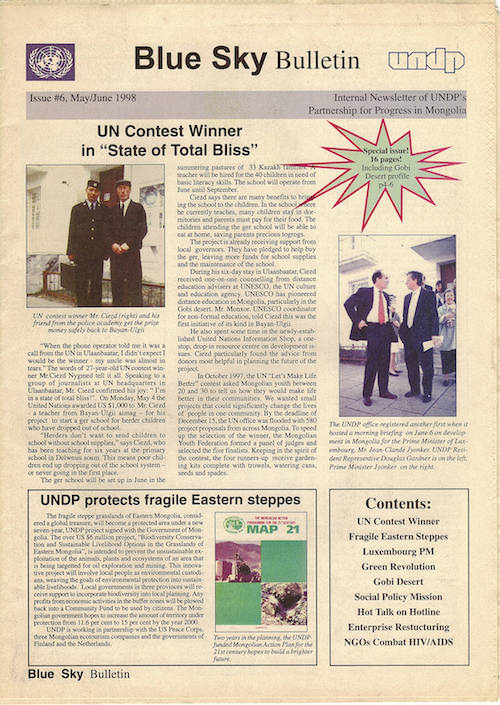
    By David South, Blue Sky Bulletin (Dalanzadgad, Mongolia), May-June 1998

    Development Profile: UNDP in the Southern Gobi Desert

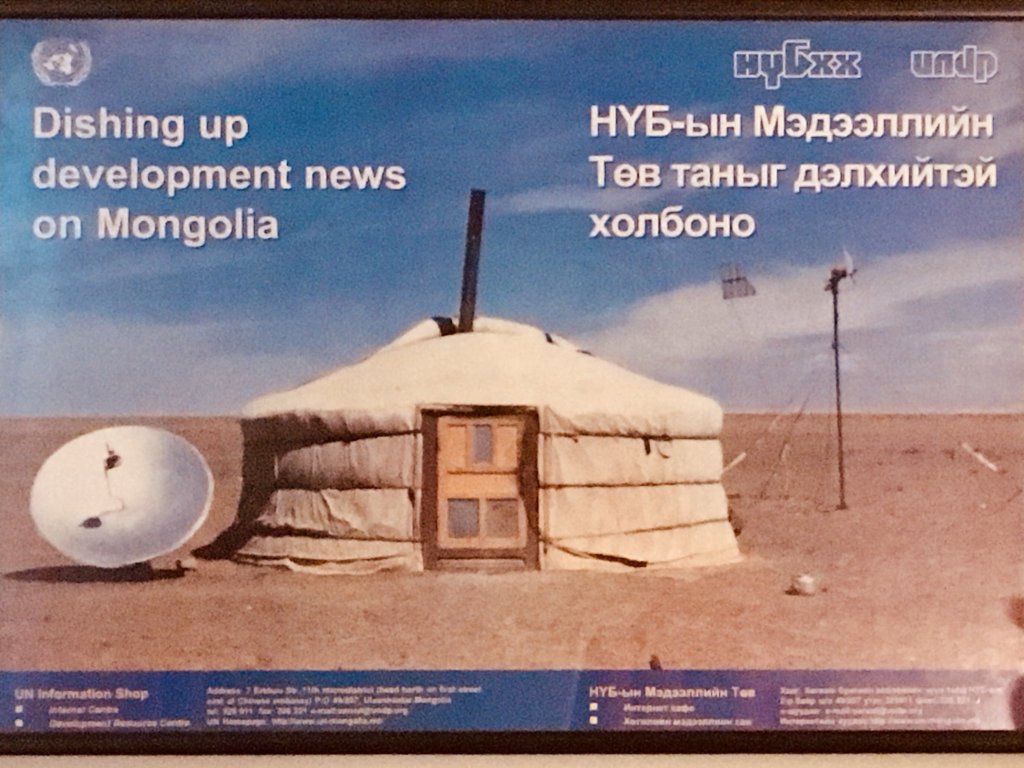
    In late May UNDP visited its environment and poverty projects in Omnogobi or South Gobi on the border with China and in the heart of the Gobi Desert. The aimag (province) is home to 45,000 people spread over a territory of 165,000 kilometers. It is a harsh environment where temperatures can plummet to minus 40 degrees Celsius in winter and shoot up to plus 40 in summer. What is striking about the capital of Omnogobi, Dalanzadgad, is how well things are working. It is a garden capital – despite being in the desert the central boulevard is covered in trees – and trade with China has brought a prosperity for some herdsmen, many of whom buzz around the town on Planeta motorcycles. The offices of the Malchin television company are hidden by a bouquet of white satellite dishes – it is not an uncommon sight to see a ger with a satellite dish in South Gobi. 

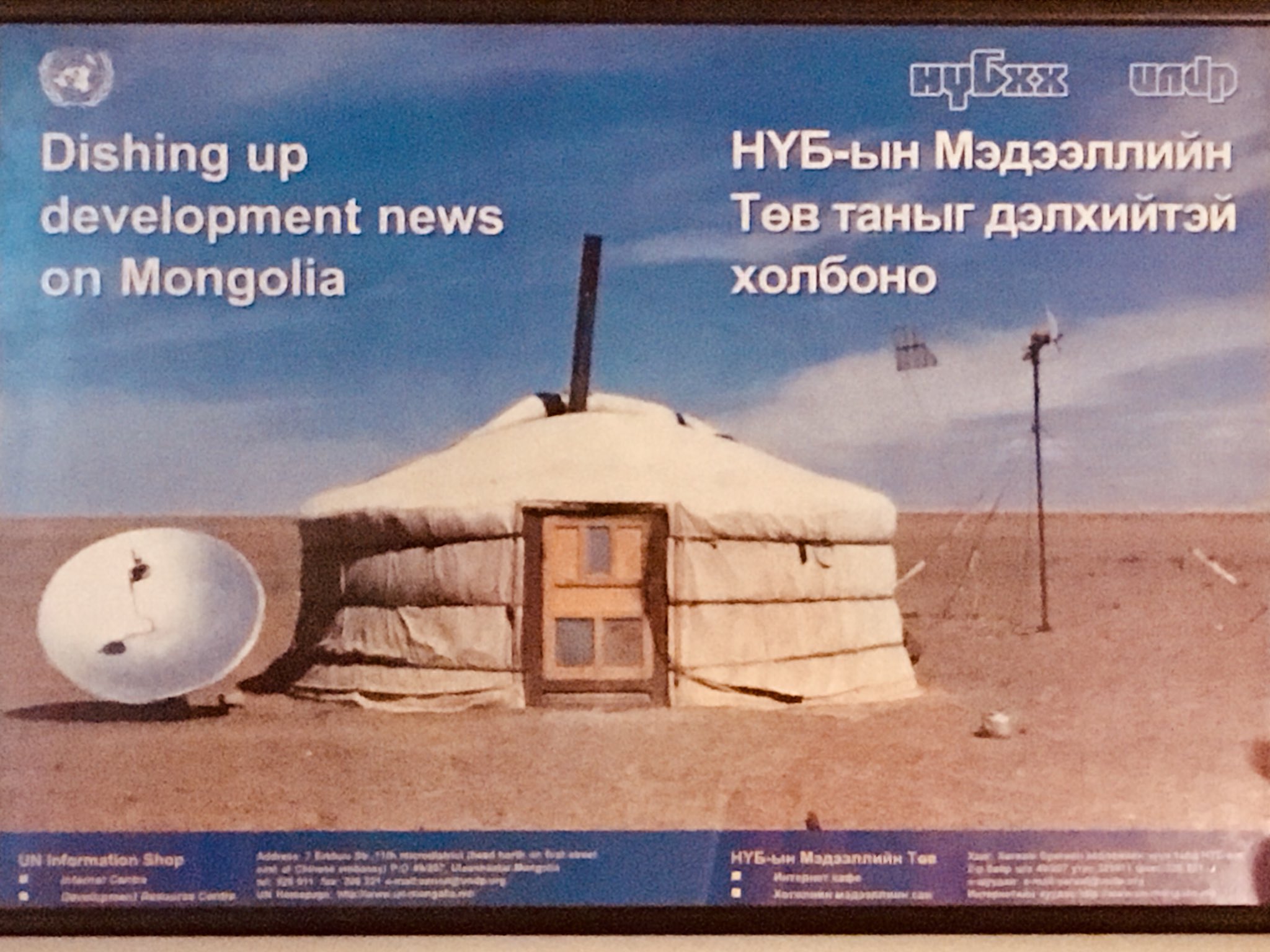
    “Dishing up development news on Mongolia”: a UNDP Mongolia Communications Office poster campaign from the late 1990s. Photo: David South.
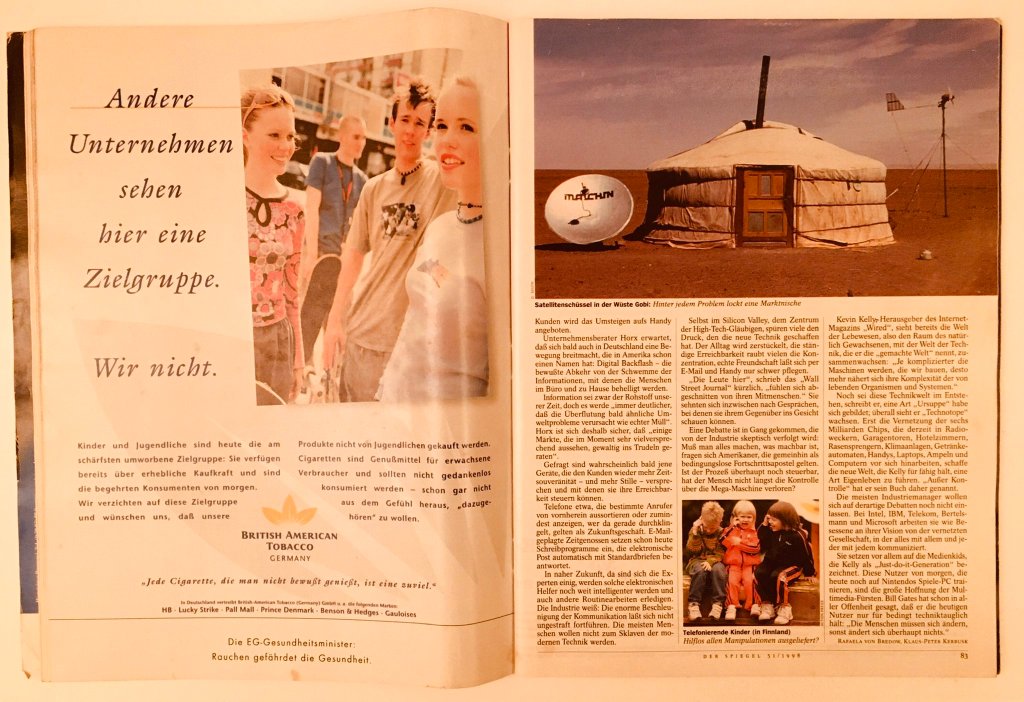
    In 1998 Der Spiegel’s “Kommunikation total” issue profiled the global connectivity revolution underway and being accelerated by the Internet boom of the late 1990s. It chose my picture of a satellite dish and a ger in the Gobi Desert to symbolise this historic event.

    “The transformation of Mongolia from a largely rural nomadic society of herdsmen to a community dominated by the increasingly ultra-globalized city of Ulan Bator, where almost a third of the population lives, is nothing short of astounding.” The New Mongolia: From Gold Rush to Climate Change, Association for Asian Studies, Volume 18:3 (Winter 2013): Central Asia

    Der Spiegel is a German weekly news magazine and is one of Europe’s largest publications of its kind. It chose my photo taken in the Gobi Desert for its profile of the Internet revolution in 1998.

    English translation: “Total communication: the seventh continent – 
    The cell phone society was just the beginning: Experts see a new continent emerging in the spheres of the Internet. The information elite live here, surrounded by PCs, pagers and power books. The multimedia industry is becoming the key industry of the 21st century – with serious consequences for society.” (http://t-off.khd-research.net/Spiegel/10.html)

    Electricity in the air – 85 women discover the Women’s Development Fund

    The Mongolian Human Development Report singled out South Gobi for having the highest poverty incidence in Mongolia (41.9 per cent). While this ranking is hotly debated by locals who say it is a statistical anomaly resulting from their low population, there is no question life is hard in the Gobi. 

    In a crowded room in the Governor’s building, 85 of the poorest women in Dalanzadgad have gathered to hear about an innovative UNDP-initiated fund. The meeting, organised by the NGO the Liberal Women’s Brain Pool, is introducing the Women’s Development Fund. Many questions are asked as to why some of the women were passed over when the local government started distributing poverty alleviation funds. 

    With the assistance of the British Government who donated Tg 12 million, these women are getting a chance. The Women’s Development Fund was founded in partnership with the Poverty Alleviation Programme Office to take account of the unique role women have in the prosperity of families. Support is key and the women will be assisted by community activists as they develop their project ideas and begin to implement them. In early June they started to receive funding for their projects. 

    Note: This story was part of a series highlighting life and the state of human development in Mongolia’s Gobi Desert after the publishing of the country’s first human development report in 1997

    ORCID iD: https://orcid.org/0000-0001-5311-1052.

    © David South Consulting 2020

  • UNRISD Blog

    UNRISD Blog

    A Report from the UN Conference on the Social and Political Dimensions of the Global Crisis: Implications for Developing Countries (12-13 November 2009)

    Organised by the United Nations Research Institute for Social Development (UNRISD), Geneva, Switzerland. Held at the Palais des Nations.

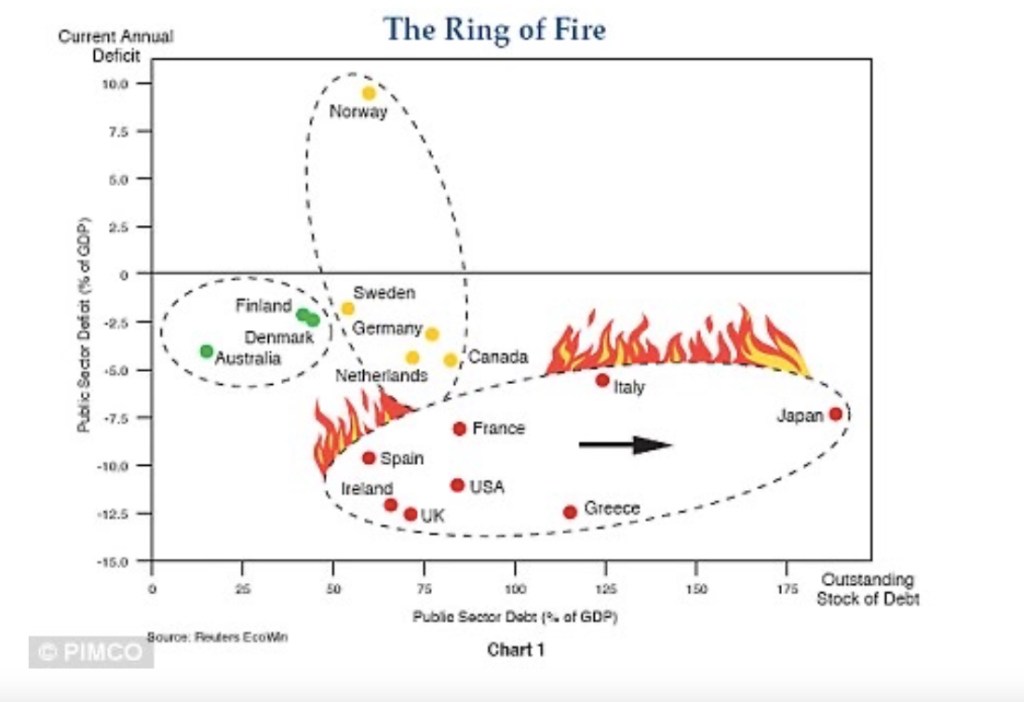
    Just as this chart showed at the time of the Global Financial Crisis, the countries in “The Ring of Fire” have experienced exceptional turbulence and turmoil in the years after the crisis. For example, the UK has had austerity budgets, a no-growth economy, Brexit and the ‘shock therapy’ of the COVID-19 pandemic. The US, on the other hand, has clashed with its allies, seen a new cold war emerge with rivals China and Russia, and experienced significant domestic unrest, culminating in the storming of its seat of Government, the Capitol.
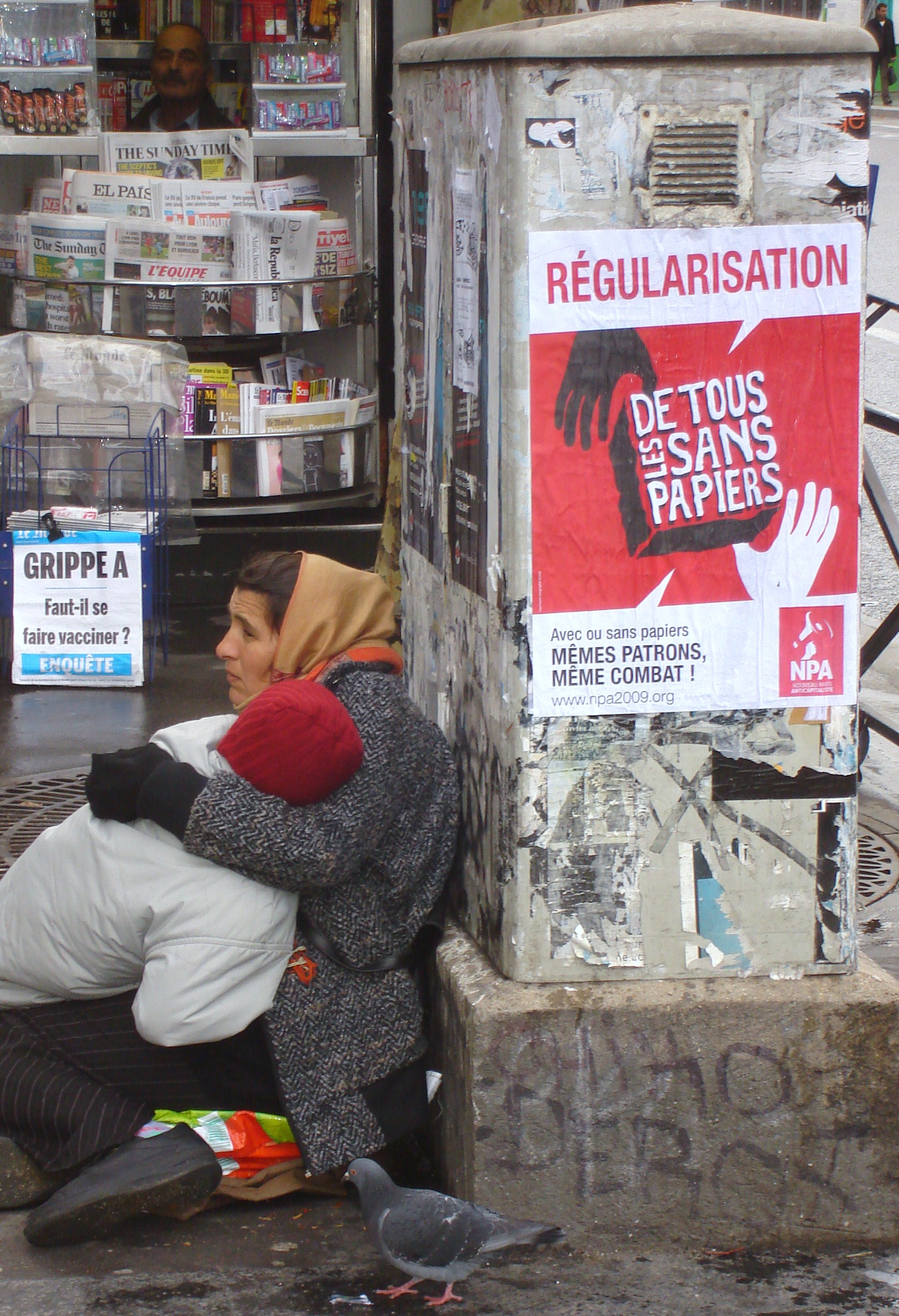
    Just as now (2021) 2009 was a year in which the questions revolved around receiving a vaccine (for H1N1) and how best to affirm a person’s identity and citizenship. Photo: David South
    Iceland saw its banking system collapse during the Global Financial Crisis, sparking demonstrations (October 2008-2011) and the “Pots and Pans Revolution”. Photo: David South

    A conference in Geneva struck a pessimistic note on the current global financial crisis and any hope for a new social and economic order. The conference asked “whether current policy reforms are conducive to a transformative social change or if they only reproduce the status quo.”

    A March 2009 IMF report on the downturn’s affect on the Global South and developing countries found that “fluctuating commodity prices, high fuel costs, the rise in food prices in addition to a decrease in remittances, foreign direct investment and aid flow could mean an increase in the financing needs of low-income countries by at least US $25 billion.”

    The presenters at the conference painted a picture of a robust neo-liberal economic order that is already in the process of dusting itself off from the crisis and restoring its dominance.

    Bob Jessop, from the University of Lancaster, captured the paralysis of opposition to the neo-liberal order by saying “They are busy doing it and we are busy talking about it.”

    To paraphrase philosopher Friedrich Nietzsche, that which does not kill us makes us stronger. Neo-liberalism may in fact be strengthened by the crisis, according to presenters. It will evolve and take on new forms, they argued.

    The world’s business elites have an enormous capacity to re-shape the rules of the economic game back in their favour. While the massive state support to the banking sector had led some to believe governments were restoring faith in public investments, in fact state support is seen as “timely, targeted and temporary.”

    When asked about the future as the crisis passes and countries come out of recession, the presenters believed this was a short-term recovery, and that far worse economic crises would be coming in the next five to 10 years.

    Andrew Martin Fischer, from the Institute for Social Studies at Erasmus University, believes the harmful effects of the bailouts will be pushed to the periphery over the next five to 10 years, harming the poor. He also believes a major financial crisis is brewing in China. He called ‘China the fault line in the future.’

    The powerful, he pointed out, displaced the costs of their mistakes onto other people. Proponents of different approaches had missed the moment because they were not able to present off-the-shelf strategies that could be deployed in a crisis on short notice. Thus, they had left the field open to neo-liberal solutions.

    The global crisis in the short-term has not been worse because of unprecedented global cooperation. Keynsian measures have been used to solve the crisis, but are also used to preserve Wall Street. Also, the enormous contribution of growth in China and India means there are other sources of wealth in the world than just the North.

    Getting back to normal should not be what we are doing, the panellists concluded at the conference’s final session. Governments should look at new opportunities for social policy. The panellists were disturbed that the International Monetary Fund (IMF) is seen as part of the solution. This means deep cuts in public expenditure are coming. There will not be a trickle down of wealth and the imbalances from before the crisis will remain. In short, the system was not working before the crisis.

    Some policy suggestions put forward included: rural income guarantees, managed migration to support development goals, making a gender perspective critical to development. Governments should take a preventive approach to tackle future crises. Unfortunately, it now seems no money is left to address these problems. Yet business as usual is not an option with so many inequalities and imbalances.

    “This conference on the social and political consequences of crisis is a critical subject for debate at this juncture,” said UNRISD’s director, Dr. Sarah Cook. “We are now at a point where many countries, particularly in the North, are emerging out of the severe shock of immediate crisis. Discussions of alternative policies and institutional arrangements at national and global levels may become less urgent; the status quo is reasserting itself and the space for ideas and policies that offer the possibilities of more stable, sustainable and equitable development will quickly shrink.”

    Session 1: Impacts, Coping Strategies and Livelihoods

    Session 2: Social Policy: Country and Regional Perspectives

    Session 3: Social Policy: Global Perspective

    Session 4: Political Economy Dimensions of Crisis

    Southern Innovator Magazine was developed from 2008-2010 in London, New York and Iceland by the United Nations in response to the Global Financial Crisis and was launched in 2011.

    Business Insider has reproduced a fascinating presentation about the crisis put together by the French bank, Societe Generale (SocGen). The presentation can be found here: http://www.businessinsider.com/socgen-prepare-yourself-for-the-worst-case-scenario-2009-11#first-it-starts-with-sky-high-public-debt-1

    From 1997 to 1999, I worked as the head of communications for the United Nations mission in Mongolia. The country was already experiencing a severe economic crisis as a result of its transition to free markets and democracy from the Soviet economic system. The scale of the economic collapse following the fall of communism was described at the time as the worst peacetime, post-WWII economic collapse. On top of this challenge, the Asian economic crisis erupted.

    You can read the Mongolia Update 1998 book I wrote here: http://www.scribd.com/doc/20864541/Mongolia-Update-1998-Book. It shows how chaotic events are in the middle of a major crisis. Some of the key lessons we learned during this time include: 1) transparency: trust was critical and all our work was done under the full glare of public and media scrutiny, 2) action: with our existing budgets we made sure to keep doing and spending to hire people, 3) strategy: to encourage the growth of businesses and innovation, in particular the take-up of new information technologies.

    This work is licensed under a Creative Commons Attribution 4.0 International License.

    ORCID iD: https://orcid.org/0000-0001-5311-1052.

    © David South Consulting 2021

  • Women scientists prove potency of Mongolian beverage

    Women scientists prove potency of Mongolian beverage

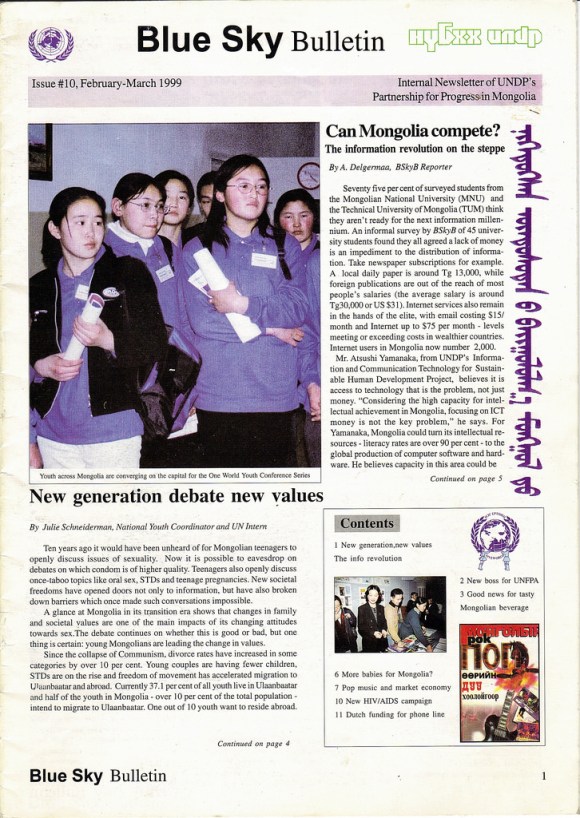
    By David South, Blue Sky Bulletin (Ulaanbaatar, Mongolia), Issue 10, February-March 1999

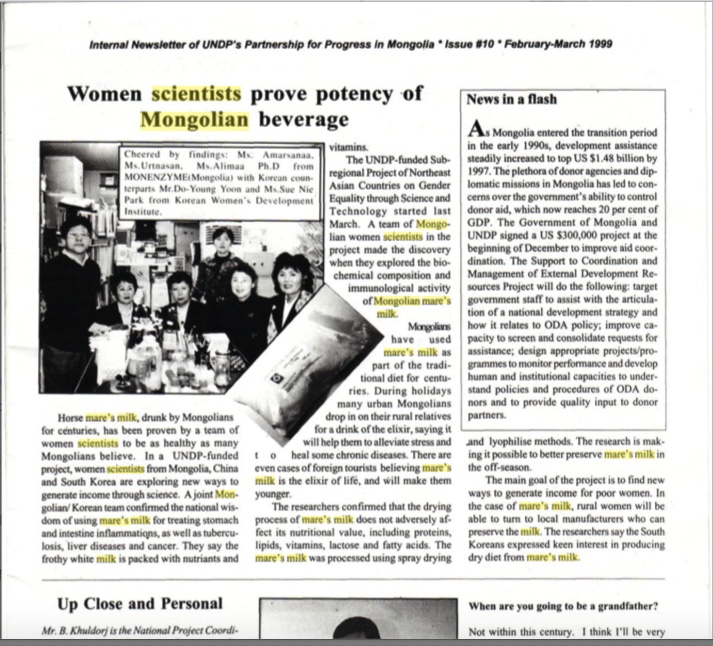
    Horse mare’s milk, drunk by Mongolians for centuries, has been proven by a team of women scientists to be as healthy as many Mongolians believe. In a UNDP-funded project, women scientists from Mongolia, China and South Korea are exploring new ways to generate income through science. A joint Mongolian/Korean team confirmed the national wisdom of using mare’s milk for treating stomach and intestine inflammations, as well as tuberculosis, liver diseases and cancer. They say the frothy white milk is packed with nutrients and vitamins.

    The UNDP-funded Subregional Project of Northeast Asian Countries on Gender Equality through Science and Technology started last March. A team of Mongolian women scientists in the project made the discovery when they explored the bio-chemical composition and immunological activity of Mongolian mare’s milk.

    Mongolians have used mare’s milk as part of the traditional diet for centuries. During holidays many urban Mongolians drop in on their rural relatives for a drink of the elixir, saying it will help them to alleviate stress and to heal some chronic diseases. There are even cases of foreign tourists believing mare’s milk is the elixir of life, and will make them younger.

    The researchers confirmed that the drying process of mare’s milk does not adversely affect its nutritional value, including proteins, lipids, vitamins, lactose and fatty acids. The mare’s milk was processed using spray drying and lyophilise methods. The research is making it possible to better preserve mare’s milk in the off-season.

    The main goal of the project is to find new ways to generate income for poor women. In the case of mare’s milk, rural women will be able to turn to local manufacturers who can preserve the milk. The researchers say the South Koreans expressed keen interest in producing dry diet from mare’s milk.

    The Blue Sky Bulletin newsletter provided timely and valuable updates on Mongolia in the late 1990s. In particular, it was able to highlight urgent health needs for a population undergoing extreme crisis resulting from food supply disruptions, loss of income, social distress (alcoholism, family breakdown etc.), sexually transmitted diseases, and extreme weather. Stories from the newsletter have been cited in many journals and books since 2000, and the high quality of its contributers is evident in their scholarship and career success since. An example is below:

    Poor Nutrition Taking its Toll on the Health of Mongolians By Jacinda Mawson

    Rickets very prevalent in Mongolia – 1998

    Prevalence of rickets in Mongolia

    Asia Pacific J Clin Nutr (1998) 7(3/4): 325-328
    U Tserendolgor1 MD pubhealth@magicnet.mn, JT Mawson2 MA, AC MacDonald3 MSc and M Oyunbileg1 MD, PhD

    “The high prevalence of rickets in Mongolian children is a serious public health concern. In addition to the adverse effects on growth, development and immune function, it is probably indicative of widespread subclinical vitamin D deficiency.”

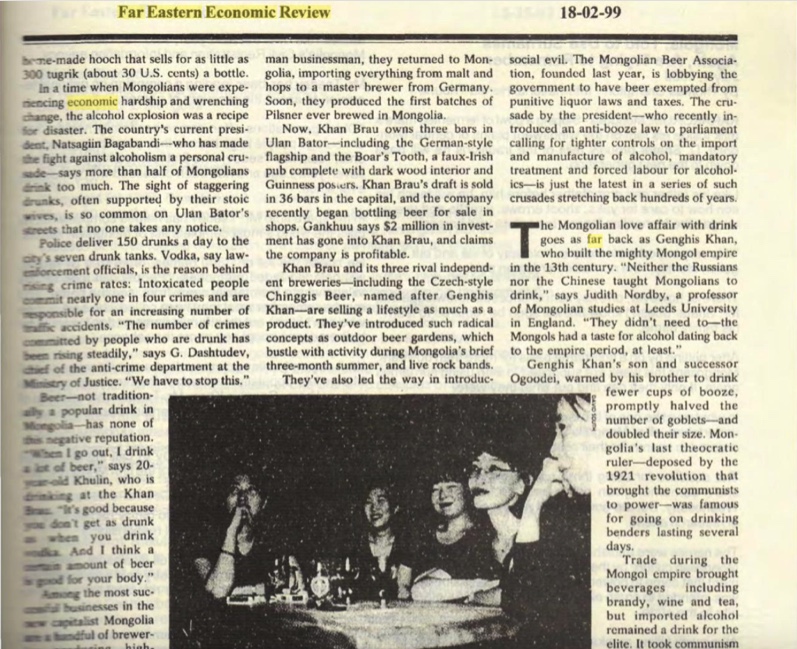
    Another beverage was catching the interest of Mongolians in the late 1990s: beer. 

    From The Far Eastern Economic Review, February 18, 1999

    A New Brew: As Mongolia changes under the influence of economic reforms, the country’s elite are trading fermented mare’s milk and vodka for a new status symbol: beer 

    Story by Jill Lawless

    Photo by David South

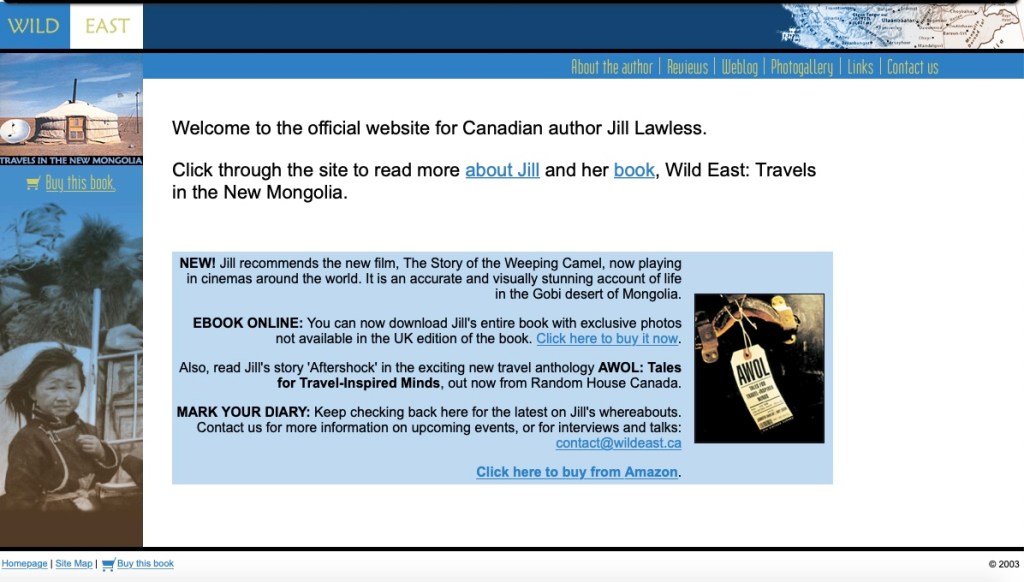
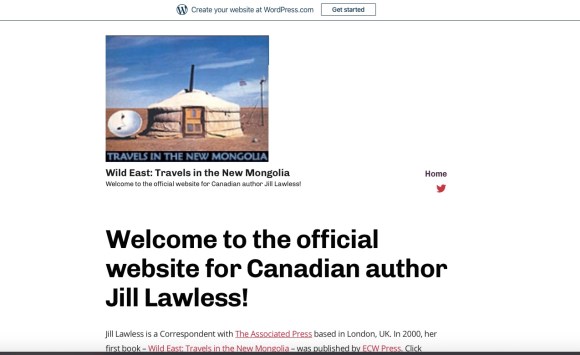
    Jill Lawless has two websites about her book, Wild East: Travels in the New Mongolia.

    Designed in London, the first website for Wild East: Travels in the New Mongolia launched in 2003.
    The new brand site for Jill Lawless is currently under construction.

    More of Jill Lawless‘ journalism for The Far Eastern Economic Review here: https://www.google.co.uk/books/edition/Far_Eastern_Economic_Review/SkuvAAAAIAAJ?hl=en&gbpv=1&bsq=david%20south,%20Mongolian%20rock

    https://davidsouthconsulting.org/2022/06/24/can-we-talk-hannah-promotes-communication-between-medical-schools/

    https://davidsouthconsulting.org/2021/06/02/case-study-5-gosh-ich-child-health-portal-2001-2003/

    https://davidsouthconsulting.org/2020/04/25/china-pushing-frontiers-of-medical-research/

    https://davidsouthconsulting.org/2021/03/08/the-dawn-of-the-genetics-revolution-2001-2003/

    https://davidsouthconsulting.org/2021/05/25/ger-mongolias-first-web-magazine-and-a-pioneering-web-project-for-the-united-nations-12-january-2016/

    https://davidsouthconsulting.org/2017/10/18/hannah-institute-for-the-history-of-medicine-1992-1994/

    https://davidsouthconsulting.org/2021/05/27/het-wilde-oosten-reizen-in-het-moderne-mongolie%cc%88/

    https://davidsouthconsulting.org/2021/03/12/mongolia-prepares-for-a-magazine-explosion-1998/

    https://davidsouthconsulting.org/2023/01/09/mongolia-update-1998/

    https://davidsouthconsulting.org/2023/02/07/mongolian-rock-and-pop-book-mongolia-sings-its-own-song/

    https://davidsouthconsulting.org/2022/11/11/online-free-knowledge-sharing/

    https://davidsouthconsulting.org/2020/12/17/philippine-conference-tackles-asias-aids-crisis/

    https://davidsouthconsulting.org/2021/10/20/research-reviews-2001-2002/

    https://davidsouthconsulting.org/2021/04/19/reviews-wild-east-the-new-mongolia/

    https://davidsouthconsulting.org/2022/11/18/southern-drink-challenges-corporate-dominance/

    https://davidsouthconsulting.org/2020/04/17/taking-medicine-to-the-people-four-innovators-in-community-health/

    Like our content? Help contribute to the costs of keeping it online. 

    Scan code with your phone and help us out.

    ORCID iD: https://orcid.org/0000-0001-5311-1052

    © David South Consulting 2023