Category: Archive

An archive of published content for media and clients.

  • Critics Blast Government Long-Term Care Reforms

    Critics Blast Government Long-Term Care Reforms

    “They cut hospital beds and lay off staff without having community health care services ready…”

    “When the elderly… decide that facility-based care is the best option, they can’t get it…”

    By David South

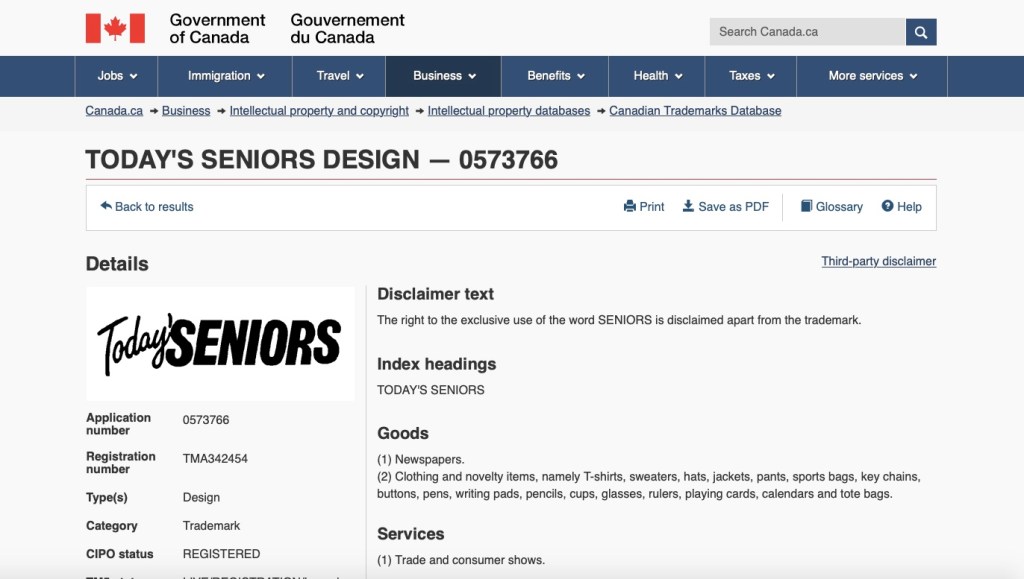
    Today’s Seniors (Canada), October 1992

    Seniors should keep a close eye on the Ontario government’s proposed long-term care reforms. According to critics, the plan has more than a few bugs. 

    The term long-term care encompasses an often confusing web of services, from home-provided community services like meals on wheels to institutional care including homes for the aged, seniors’ apartments and chronic care hospitals. 

    Like other provincial governments, the Rae government is trying to rein in escalating health care costs – and long-term care services aren’t immune. They hope that emphasizing prevention and healthy lifestyles, plus providing more services in the home and community, will reduce reliance and expensive health care services like high-cost drugs, surgery and high-tech equipment. According to health minister Frances Lankin, this will preserve medicare in the age of fiscal restraint. 

    The government has outlined seven goals for its long-term care reforms: prepare for the coming surge in the over-65 population; cater services to better reflect the cultural, racial and linguistic make-up of Ontario; eliminate confusion over what services are available; involve the community in planning so that services reflect community needs; lessen reliance on institutions; provide support to family caregivers; tighten regulations governing government-run and private facilities; and improve working conditions for the largely female caregiving workforce. 

    But many people are wary of the proposed reforms and worry that if they aren’t managed properly, some seniors will fall through the cracks. 

    A report released in July by the Senior Citizens’ Consumer Alliance for Long-Term Care Reform blasts the government for being simplistic in its plans. The report compares the present reforms to the failed attempt in the 1970s to move psychiatric care out of the institutions and into communities by closing 1,000 beds. The tragic result in that case was homelessness for many psychiatric patients who found community services unable to help, or, more often than not, non-existent. The Alliance fears seniors – the biggest users of health services – could fall victim to reforms in a similar way. 

    Emily Phillips, president of the Registered Nurses’ Association of Ontario, is blunt: “The NDP’s plans sound good on paper, but they can’t give a budget or direct plan on how they hope to carry out reforms. They are going about things backwards. They cut hospital beds and lay off staff without having community health care services ready.”

    The Ontario Association of Non-Profit Homes and Services for Seniors (OANHSS) – which operates charitable and municipal homes for the aged, non-profit seniors’ apartments. chronic care hospitals and community services serving over 100,000 seniors – says 4,300 seniors are on waiting lists for their member facilities right now, and things won’t improve if the government continues to reduce the number of long-term care beds. 

    But Lankin insists that beds are available in homes and hospitals and it is funding formulas that prevent them from being filled. 

    To help carry out its reforms, the NDP will reallocate $647 million by 1996-97. In bureaucratese, this funding is said to be “back-end loaded”, or mostly spent close to 1996-97. 

    The problem with this, according to the Alliance, is that the government has already embarked on a radical “downsizing” of hospitals, closing beds and laying off health care workers. Lankin claims the worst case scenario for layoffs this year won’t exceed 2,000, but the Ontario Hospital Association claims 14,000 jobs are in jeopardy. Because of this, the Alliance wants money to be spent earlier to avoid gaps in services. 

    Phillips believes it will be hard to pin down the extent of job losses. “For every full-time job cut many part-time and relief positions go with it,” she says. 

    Dr. Rosana Pellizzari, a member of the Medical Reform Group and chair of the Ontario Association of Health Centres, wants better community accountability for hospitals before they lay off staff and cut services. “Sometimes it makes sense to bring people to hospitals,” she says. “Planning must be at the community level, open and democractic. Health care workers, who are mostly women, should not be scapegoated for financial problems. Doctors and management should go first. Physicians experience very little unemployment.” 

    Many nursing and charitable homes for the aged are facing financial crisis. According to OANHSS, six charitable homes for the aged have closed since 1987 due to deficits. In 30 homes, the total annual deficit has increased 125 per cent since 1987. The Ministry of Health recently allocated special funds of $8.1 million to ensure these facilities survive until January, when a new, needs-based funding formula will be introduced. It is intended to better match the actual care requirements of the 59,000 consumers living in long-term care facilities. 

    Michael Klejman, executive director of OANHSS, agrees with helping seniors to stay in their homes. “But when the elderly and their care-givers in Ontario decide that facility-based care is the best option, they simply can’t get it,” he notes. “We know from experience that many of them remain in acute care hospital beds with a cost to the province of about four times what it would cost them to fund a long-term care bed. And many, unfortunately, remain in their own flats or apartments at considerable risk to themselves, isolated and dependent on a patchwork of services.” 

    Beatrix Robinow, who worked on the Alliance’s report, was not impressed with the government’s initial plans, especially the proposed creation of 40 service coordination agencies whose mandate would be to control the delivery of home care services to seniors. Robinow thinks this would add to the confusion and just be another layer of bureaucracy. Many people who appeared at the Alliance’s public hearings expressed confusion over how the long-term care system worked. 

    Robinow says that the government could save money by trimming the bureaucracy and using present organizations like the little-known District Health Councils. 

    “District Health Councils have nothing to do with social services,” says Robinow. “But we want them to be expanded to include long-term care and general supervision of community services. We are waiting to hear if they are interested. I would urge the government to make sure that services are in place before pushing people out of institutions.” 

    The health minister is cautious about the government’s next steps. “The Alliance’s report has been very helpful,” she says. “We are in the process of developing options. Two other ministers are involved and we also need to take this through Cabinet.

    “Ontario is much larger and more complex (than other provinces). The range of services is more developed. We also have a mess in jurisdictions between municipalities and the province. And in Ontario there isn’t a concensus that this is the way to go. 

    “We have been doing a lot of rationalization and streamlining for longer than other provinces. Most thinking people looking at the situation agree that doing nothing would hurt the system. It is not sustainable at present. You hear a lot of things about user fees. That would be the slippery slope for medicare. That would make people think they could buy better services.”

    Ironically, user fees were recently endorsed by the Canadian Medical Association, suggesting the minister will have a fight on her hands with angry doctors. 

    Amidst all the confusion, Dr. Perry Kendall was appointed on Aug. 24 as the provincial government’s special advisor on long-term care and population health. This veteran of both the City of Toronto as Medical Officer of Health – and the groundbreaking Victoria Health Project in British Columbia (often seen as the model for community services to seniors) seems well qualified. “One problem in the past has been the creation of smaller and smaller organizations every time somebody felt the system was not responsive to their needs,” he says. “This created organizational chaos. The challenge  now is to get all the organizations back together to share their expertise.”

    Lankin says she hopes to have a conference on the reforms in the fall. 

    ORCID iD: https://orcid.org/0000-0001-5311-1052.

    © David South Consulting 2021

  • Channel Regulation: Swedes Will Fight Children’s Advertising All The Way

    Channel Regulation: Swedes Will Fight Children’s Advertising All The Way

    By David South

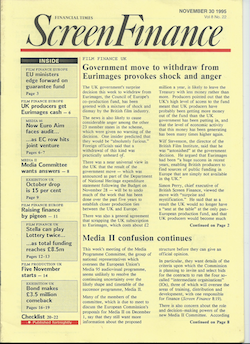
    Financial Times New Media Markets (NMM) (London, UK), November 30, 1995

    ISSN: 02654717

    OCLC Number / Unique Identifier: 1266447669

    The Swedish government is set to clamp down on satellite channels which carry advertising aimed at children and will tell channels to drop such advertising or face legal action.

    The centre-left government’s threat of tough action follows Sweden’s winning extra powers last week through an amendment to the European directive on transfrontier broadcasting agreed by European culture ministers (NMM 13:42). 

    The main focus of the Swedish government’s wrath is the TV3 channel, owned by Kinnevik, which uplinks to the Astra 1a and Sirius satellites from the UK. TV3 based itself in the UK in order to benefit from the Independent Television Commission’s more liberal rules on advertising. 

    TV3’s main commercial television rival, TV4, has long protested to the government about what it sees as unfair competition from TV3 and other foreign-based channels. 

    The government will initially go after TV3 and the Luxembourg-based cable and satellite channel Femmen. The Ministry of Cultural Affairs said that pro-European satellite channels such as TNT/Cartoon Network and the Children’s Channel were lesser priorities, but could face action in the future. 

    TNT/Cartoon Network has a Swedish soundtrack and many Children’s Channel programmes are subtitled in Swedish on cable systems.

    The Ministry of Cultural Affairs plans a two-pronged attack to remove the advertising it finds offensive and which is banned under Swedish broadcasting law: advertising aimed at children under 12 and carried in breaks around children’s programming. 

    First, the consumer-protection agency the Konsument Ombudsmanen will take action against advertising agencies which produce children’s advertising. Monica Bengtsson, a legal adviser to the Ministry of Culture, said that agencies will be warned once and then fined if they violate the rules a second time. 

    If this fails – and some observers believe that it will, because advertisers could move their accounts to non-Swedish agencies – the Ombudsmanen would then try the riskier move of taking channels to court to stop the ads. 

    The Ombudsmanen is not expected to act until it hears the results of the case it has already taken to the European Court of Justice against Italian children’s magazine publishers De Agostini for allegedly placing commercials targetting children under the age of 12 on both TV4 and TV3. Judgement is expected in mid-1996. 

    The Swedish government is also banking on public opinion to help pressure satellite channels to stop showing children’s advertising. The political climate in Sweden is strongly in favour of strict controls on advertising aimed at children. Swedish prime minister, Ingvar Carlsson, made cracking down on such advertising a key part of his opening speech to the present session of the Swedish parliament. 

    The amended directive (which still needs the approval of the European Parliament) allows a member state to ban children’s advertisements under its own rules even if the channel satisfies the rules of the country from which it is broadcast. 

    The Swedish government believes that the combination of the amended directive provisions and its ban on children’s advertising is all it needs to prevent the adverts. 

    Per Bystedt, vice-president of TV3, insisted this week that the channel is UK-licensed and therefore does not fall under Swedish law: “We are following the Independent Television Commission’s rules.”

    New definitions on which countries are responsible for regulating channels, adopted by the European culture ministers last week, could lead to TV3 being regulated in Sweden rather than the more liberal UK if it is deemed that the channel is really established there. However, the Swedish government has investigated the extent to which TV3 is based in the UK and, according to Bystedt, has declared that it is satisfied that the company is British. 

    Creative Commons License

    This work is licensed under a
    Creative Commons Attribution-Noncommercial-No Derivative Works 3.0 License.

    ORCID iD: https://orcid.org/0000-0001-5311-1052.

    © David South Consulting 2023

  • US $450 Million Pledged for Green Economy Investments at Kenyan GSSD Expo

    US $450 Million Pledged for Green Economy Investments at Kenyan GSSD Expo

    By David SouthDevelopment Challenges, South-South Solutions

    SOUTH-SOUTH CASE STUDY

    Innovators working in the global green economy could benefit from over US $450 million in investment recently pledged at the UN’s Global South-South Development Expo (GSSD Expo) held in Nairobi, Kenya.

    A combination of green investors, businesses, governments and others came together at the UN Environment Programme’s (UNEP) headquarters in the Kenyan capital from 28 October to 1 November 2013 to share solutions and strike deals and partnerships.

    The event represented a significant turning point in awareness of the role played by the global South’s innovators in global development and growing economies. The quantity of pledges and investment deals struck at the Expo bodes well for the future of south-south solution sharing.

    Organized by the UN’s Office for South-South Cooperation in UNDP (UNOSSC) (southsouthexpo.org) and hosted by UNEP (unep.org) under the theme “Building inclusive green economies”, the Global South-South Development Expo (GSSD Expo) is the world’s biggest event for development solutions created in the South for the South.

    “The theme of this year’s Expo is fitting in that Southern countries have both the opportunity and the obligation to pursue a ‘smarter’ development course than their predecessors,” said General Assembly President John Ashe.

    Examples of the investment deals struck include helping to build organic fertilizer factories and constructing solar power plants in Kenya, and growing green business ventures for women in Egypt.

    South-South cooperation is the exchange of resources, technology and knowledge between developing countries. Today, over US $5 trillion in currency reserves are held by countries of the global South. They also make up 47 per cent of global trade.

    Tapping this rich resource is an unparalleled economic development opportunity and could be one of the main engines of growth in the years ahead, the Expo organizers believe.

    “As so many stories that we have heard this week demonstrate, South-South Cooperation is playing a vital role in facilitating this global transition,” said UN Under-Secretary-General and UNEP Executive Director Achim Steiner.

    “Not only are these local, national and regional efforts producing positive results, but they are overcoming barriers, building new partnerships, creating new finance mechanisms, generating knowledge, sharing information, providing training and capacity building in areas and sectors that are critical for a global transition to a low carbon, resource efficient and inclusive economy,” he added.

    As an example of how solutions are shared and deals are struck, more than 40 companies were successfully matched and held business negotiations using the Expo’s South-South Global Assets and Technology Exchange (SS-GATE). An online match-making service bringing together innovative companies with the knowledge and funding they need to grow, the SS-GATE was able to get 148 companies to list their projects on the SS-GATE web-platform during an Expo event.

    For the first time in its history, the Expo garnered a strong online presence with the help of volunteers who collaborated remotely around the world on social media. The event was so popular that it trended on Twitter in Kenya, meaning that the message of the value and growing scope of South-South cooperation reached the next generation of development practitioners, entrepreneurs, environmentalists, thinkers and leaders.

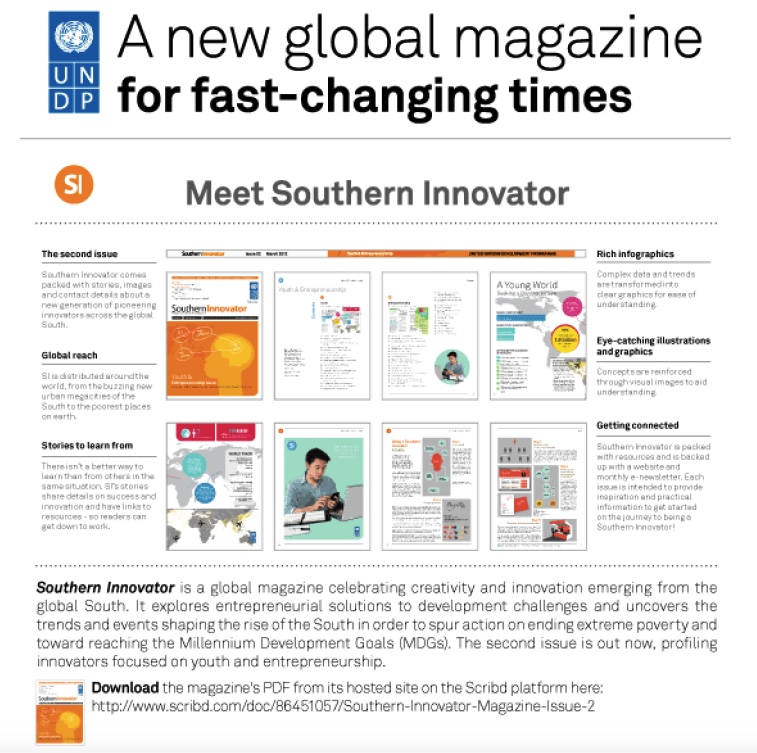
    Also at the Expo, the fourth issue of Southern Innovator magazine (southerninnovator.org) had its official launch. Southern Innovator Issue 4 visits the new cities being built to tackle the challenges of a rapidly urbanizing 21st-century world. The magazine also highlights some of the solutions being devised to the challenges people face as the world becomes a majority urban place.

    Some innovators are building new cities from scratch, applying the latest thinking and hard-wiring in cutting-edge information technologies and innovative environmental measures to create “smart” cities and eco-cities. Architects are designing and refining homes that are beautiful and functional, easy to build, affordable and conserve energy. Social entrepreneurs are innovating ways to create liveable and socially inclusive urban areas, often in places where planning has been scant and where incomes are very low. All the stories featured in the magazine were chosen for their focus on improving human development and for their ingenuity and fresh thinking.

    Southern Innovator champions a 21st-century global innovator culture. It is being distributed through the United Nations’ network and partners and reaches some of the world’s poorest and remotest places, as well as the vibrant but stressed growing global megacities. It is hoped the magazine will inspire budding innovators with its mix of stories, essential information, facts and figures, images and graphics.

    Published: November 2013

    Resources

    1) Global South-South Development Expo: The Global South-South Development Expo (GSSD Expo) is the FIRST EVER Expo solely from the South and for the South. It showcases successful Southern-grown development solutions (SDSs) to address the need to meet the Millennium Development Goals (MDGs). Website: http://www.southsouthexpo.org/

    2) Southern Innovator online story archive: Organized by theme, the story archive is a treasure trove of innovation stories and resources from the global South stretching back to 2006. Website: southerninnovator.org

    3) Southern Innovator on Scribd: Archived copies of the full-color, 60-page magazine can be downloaded here. Website: http://www.scribd.com/SouthernInnovator.

    4) Southern Innovator on Twitter: Catch Southern Innovator’s Tweets and keep on top of a growing global network of innovators. Follow @SouthSouth1

    Development Challenges, South-South Solutions was launched as an e-newsletter in 2006 by UNDP’s South-South Cooperation Unit (now the United Nations Office for South-South Cooperation) based in New York, USA. It led on profiling the rise of the global South as an economic powerhouse and was one of the first regular publications to champion the global South’s innovators, entrepreneurs, and pioneers. It tracked the key trends that are now so profoundly reshaping how development is seen and done. This includes the rapid take-up of mobile phones and information technology in the global South (as profiled in the first issue of magazine Southern Innovator), the move to becoming a majority urban world, a growing global innovator culture, and the plethora of solutions being developed in the global South to tackle its problems and improve living conditions and boost human development. The success of the e-newsletter led to the launch of the magazine Southern Innovator.

    Creative Commons License

    This work is licensed under a
    Creative Commons Attribution-Noncommercial-No Derivative Works 3.0 License.

    ORCID iD: https://orcid.org/0000-0001-5311-1052.

    © David South Consulting 2021

  • New Cuban Film Seeks to Revive Sector

    New Cuban Film Seeks to Revive Sector

    By David SouthDevelopment Challenges, South-South Solutions

    SOUTH-SOUTH CASE STUDY

    Since Cuba’s 1959 revolution, the country’s film sector has largely survived on the largesse of the state. The switch to Communism as the guiding economic model of the country after the revolution led, at first, to generous support to filmmakers. The government ranked cinema ahead of television seeing both cinema and television as the two most important forms of artistic expression in the country. But as state funding has dwindled in recent years, adventurous independent filmmakers have tried to keep the Cuban film tradition going using other sources.

    Prior to the revolution, Cuban cinema had been dominated by American and Mexican companies that used Cuba as an exotic backdrop for their productions and dominated the distribution of film in the country.

    In the 17 years after the 1959 revolution, generous funding for filmmaking in Cuba produced 74 full-length films and 600 documentary shorts (Julianne Burton: Revolutionary Cuban Cinema). Soon Cuba had established a reputation for making its own, interesting, high-quality films. These range from “Memories of Underdevelopment” (http://en.wikipedia.org/wiki/Memories_of_Underdevelopment) released in 1968, with its innovative narrative technique, to Academy Award-nominated “Strawberry and Chocolate” in 1993 and 2006’s “Tomorrow” (http://www.cubaabsolutely.com/articles/art/article_art.php?landa=23).

    But funding for Cuban film has been dropping since the ending of generous state supports with the collapse of the Soviet Union in 1991. Cuba had received extensive subsidies from the Soviet Union and enjoyed preferential trading privileges.

    But a new Cuban film is grabbing fistfuls of international accolades and shows it is possible to make films with a combination of foreign investment and state support.

    The zombie horror-comedy “Juan of the Dead” (juanofthedeadmovie.com/lang/en/) has raised more than a few eyebrows but it is also showing a more commercial instinct among Cuban filmmakers and points the way to greater diversity in Cuba’s film sector.

    The film’s poster declares: “50 years after the Cuban revolution a new one is about to start.” The film’s website is a colourful feast of images from the film and uses slick graphic design. It has previews, background resources and online clips for viewers to sample.

    Calling itself a “zombie comedy”, the film was written and directed by Alejandro Brugués and produced by Gervasio Iglesias, Inti Herrera and Claudia Calviño.

    The plot revolves around Juan, a 40-year-old man who has spent most of his life doing nothing. He and his lazy pal Lazaro witness people starting to attack each other. Mistaking this for another stage in Cuba’s revolution, the pair at first believe the government media when it says the incidents are provoked by dissidents paid by the U.S. government. But it begins to dawn on the two men they are surrounded by zombies. Taking a Cuban approach to the problem, Juan decides to get rid of the zombies while making some money at it.

    “Cubans have basically three ways of dealing with problems: they try to make a business out of it, they get used to it and keep going with their lives; or they throw themselves to the sea to run away from the island,” Brugués says on the movie’s website. “‘Juan’ gave me the opportunity to make things really difficult for Cubans, filling the country with zombies, which is in a way what we have become after all these years, but also gave me a leading character that could take a different option, that could stand and say ‘I’m not going to allow this, this is my country, I love it and will stay to defend it’ … after trying to make a business out of it and keep going with his life, of course.”

    The film has received enthusiastic praise from international film festivals and audiences, and its producers are hoping it will give a boost to Cuban cinema.

    Released in 2011 as a joint Spanish/Cuban co-production, “Juan of the Dead” was filmed on location in Cuba’s capital, Havana. The country’s first feature length horror film in half a century, its title is a play on George Romero’s 1978 zombie classic “Dawn of the Dead”, which also inspired the successful 2004 British comedy “Shaun of the Dead”.

    It cost US $2.7 million, and the funds were raised from Spanish investors and the Cuban Institute on Cinematographic Industry and Arts (ICAIC) (http://www.cubarte.cult.cu/paginas/servicios/directorio/directorio.php?id_institucion=77&selected=&offset=36&windowstart=1&letra=&canal).

    Brugués was born in Buenos Aires, Argentina in 1976 and graduated from the International Film and Television School of San Antonio de los Baños, Cuba.

    He built up his expertise in the Cuban film industry as a scriptwriter for several Cuban films and is one of the partners at the Cuban indie film production company Producciones La 5ta Avenida (http://eses.facebook.com/pages/Producciones-de-la-5ta-Avenida/110339122340016).

    His first feature film was “Personal Belongings”, which received worldwide distribution.

    “I have been a follower of the zombie movies since I was a little kid (zombie movies have followers, not fans),” Brugués said. “The idea of ‘Juan’ simply came from watching the reality around me. That reality is Cuba, so one day inevitably, I was asking myself if we were so different from film zombies. Besides that, Cuba is a country that has been preparing itself for a confrontation with the United States during the last 50 years. So, what if instead of that, have to confront zombies?”

    Brugués sees a coming together of independent filmmakers and state-funded filmmakers in the future: “At the moment there are two trends, films produced by Cuba’s state production company and films made outside of that,” he told the BBC.

    “There needs to be a balance but I think the two will eventually merge. When this happens I think this will produce the best Cuban cinema.”

    Published: March 2012

    Resources 

    1) UNCTAD Global Database on the Creative Economy. Website: http://unctadstat.unctad.org/ReportFolders/reportFolders.aspx?sCS_referer=&

    sCS_ChosenLang=en

    2) Creative Economy Report 2010: Creative Economy: A Feasible Development Option. Website: www.unctad.org/Templates/WebFlyer.asp?intItemID=5763&lang=1

    Creative Commons License

    This work is licensed under a
    Creative Commons Attribution-Noncommercial-No Derivative Works 3.0 License.

    ORCID iD: https://orcid.org/0000-0001-5311-1052.

    © David South Consulting 2023