Categories
Archive Blogroll Scan Magazine

Undercurrents: A Cancellation At CBC TV Raises A Host Of Issues For The Future

By David South

Scan Magazine (Canada), April/May 1997

The screensaver on an Undercurrents researcher’s computer terminal bears a maxim that might strike a chord in a lot of CBC units these days: “Only the paranoid survive.”

The quirky media and technology show will fade to black at the end of March. Its cancellation raises a host of issues for a CBC deeply troubled by budget cuts, an ageing audience, a dearth of alternative programme concepts and an inability to plan for a future.

In the show’s pilot, Wendy Mesley – Undercurrents’ host and progenitor – set the tone for this accessible look at the relationship among technology, media and society: “Like it or not we are living in a wired world where OJ Simpson, Big Brother, even your bank machine, all converge … we’ll explore all the issues, the undercurrents of the information age.”

To those who loved it, Undercurrents was a program that satisfied a vital public need, and an ambitious concept for a public broadcaster that some say had grown a little musty. The show promised avant-garde production and investigative journalism that critically explored today’s new media and technology culture. Youngish researchers and producers were hired from outside the CBC. They brought with them experience and new ideas from specialty channels, TV Ontario and CTV. Some came straight out of journalism school.

Critical reaction to the first programs was mixed. John Doyle, a critic with the Globe and Mail’s Broadcast Week, lauded Undercurrents when it launched, calling it “a superb example of  solid CBC-TV journalism and original reporting.” Others were less flattering. The Toronto Star’s Greg Quill accused the show of “flirting with infotainment.” At the Vancouver Sun, Alex Strachan wasn’t impressed by a report on a weekend conclave of computer geeks in the California desert for a kind of Hackerstock. “It sounds interesting,” he wrote, “but it isn’t.”

What hurt more was schedulers playing musicial chairs with the show’s slot. Switching Undercurrents from Tuesday at 7 pm to Friday at 7 pm midway through its life left viewers confused and sent ratings plummeting just as network programmers were casting about for places to apply a whopping 30 percent budget cut. As a result, some feel the show never had a fighting chance.

In the end, it was the show’s precarious financial arrangement that killed it. Undercurrents was never funded from the general current affairs budget. Instead, it drew on a special reserve of cash created by the network. When it came time to mete out the cuts in December, the special funding bubble burst. Rather than cut further into the budgets of flagship current affairs programs, executives chose to drop Undercurrents.

Executive producer Frances Mary (FM) Morrison acknowledges that gratitude for her program’s special funding obscured a recognition of its fragility. “That was really our Achilles heel,” she says. “We were just this little orphan that didn’t have its own money. We weren’t adopted into the larger family.”

With the network funding gone, Undercurrents’ budget (rumoured to be over a million dollars per season) was nowhere to be found. Discussions about chasing a corporate sponsor went nowhere because the show needed more money than any sponsor could have provided. “It was never an issue of $100,000 or $200,000,” says Morrison. “It was the issue of our entire budget. [CBC] would still have had to come up with the rest of it.”

CBC TV’s news, current affairs and Newsworld director Bob Culbert and former current affairs head Norm Bolen both say they wanted the show to stay on the air but couldn’t find a way to fund it withou seriously hurting programs like The Fifth Estate, Marketplace and Venture.

Bolen, now VP of programming at the History and Entertainment Network, says it came down to choosing between The Health Show and Undercurrents. The Health Show won because it had a “bigger audience, a broader demographic and was bringing in revenue from sales of programming to the specialty channels.”

Mesley has another theory. “The majority of people who worked on this programme are not traditional CBCers… They can’t bump, they don’t get huge severance packages. Of course, if you want a future, those are the wrong reasons for letting people go.”

With its intensive focus on issues like the abuse of computer-morphed images, surreptitious “data-mining” of consumer purchase records, or media “freebies,” there’s no question that Undercurrents has met a need in this media-saturated world. But controversy over the cancellation centres on the age-old question of CBC and the youth audience.

Morrison and Mesley both say they intended the show to appeal to a younger-than-usual CBC audience. But CBC executives weren’t convinced it was an audience the network could, or should, go after. According to Culbert, a youth mandate was something the production team brought to Undercurrents. “It started as a media ethics show targeted at a classic CBC audience. Nobody sat around one day and said ‘let’s invent the show that will go after younger viewers.’”

Bolen expresses a profound lack of faith in the under-30 audience. “People under 30 don’t watch information programming, okay? Let’s get that straight. I sure wouldn’t spend the rest of my life trying to get an audience that doesn’t watch a certain genre of programming. This is a business where you pay attention to reality. People under 30 watch trashy American sitcoms, which I’m not in the business of doing, and which the CBC isn’t in the business of doing.”

“I think that’s bullshit,” says Reid Willis, producer and director of CityTV’s Media Television. “People under 30 are interested in what’s going on in the media. The 20 to 30 group is more media savvy than the generation that preceded them.” But Willis thinks the lack of information programming pitched at a young audience is down to a lack of interest from advertisers.

Mesley and Morrison remain convinced Undercurrents did appeal to a younger audience, but felt it was sabotaged by the schedule shuffling. In the show’s first slot, Tuesdays at 7 pm, its average audience was 499,000. The biggest night came on Sunday, October 22, 1995 when a repeat aired at 9:30 pm got an audience of 865,000. But Undercurrents’ debut in the 96/97 season in its new 7 pm slot on Fridays was demoralizing for the crew. Morrison reports the audience for the season opener at 438,000 and 434,000 for a strong programme the following week.

She says the numbers built as audiences found the programme’s new location, peaking at 678,000 on December 6. According to CBC audience research figures, average minute audience for the 96/97 season to February 2 stood at 518,000 viewers.

“Friday at seven was not a good place for Undercurrents,” claims Morrison. “It’s an older audience. In fact the audience for Air Farce [which followed Undercurrents at 7:30] is quite old, surprisingly old. I was actually astonished to find out how old that audience was.”

CBC audience research bears Morrison out, reporting that the 18-34 demographic for both Air Farce and Undercurrents has been identical this season – a mere 14 percent of the total audience.

Fridays at seven is also a heavily competitive slot packed with overhyped American tabloid TV shows like Entertainment Tonight, Inside Edition, Hard Copy and A Current Affair. Morrison says focus groups told her that audiences in that time period surf around looking for stories they like and then switch around with no loyalty to a particular programme.

“People build a menu. We took a leaf out of the tabloid book in terms of our presentation in order to survive in the seven o’clock environment.”

Undercurrents’ jerky camera work and flashy graphics didn’t endear itself to everyone, a fact the show’s producers recognized early on. “I can point to stories where we sabotaged ourselves with stylistic extremes,” admits Morrison.

But Mesley bristles at accusations the show was all style and no content, or a clone of Media Television. “We are the antithesis of Media Television. Obviously everyone has adopted their style from rock videos.  But they get nearly all their video as handouts. We are not saying, ‘This is hip.’ We are not saying, ‘This is the latest consumer thing you can add to your collection.’ We are saying ‘Think about this.’”

Undercurrents’producers express pride in the show’s innovations. They cite its lead role in web page design at the corporation., its efforts at promoting a more playful visual presentation, and its success in promoting an acceptance of media stories elsewhere in news and current affairs. But what seemed to enliven everyone interviewed for this story was a love of the public broadcasting ethos, where stories are told because they are important, not because advertisers say they are important. Many of the young researchers and producers at Undercurrents had done time at the privates, and appreciated the freedom and extensive resources offered by the CBC. But they felt they had come to a CBC whose values were in peril.

“It will be like C-SPAN here,” quipped an Undercurrents freelancer who has done time at the specialty channels.

Others who thrived in the upbeat atmosphere at Undercurrents say they’re not too keen to look for work elsewhere in the CBC. One such is 25-year-old researcher Bret Dawson. “It’s not a happy place,” he says.

It’s not clear what, if any, programming will replace Undercurrents. If the current trend prevails, it looks like any new programming will have to survive on a smaller budget, generate outside income and prove it can draw in viewers in short order. Under those conditions, people at Undercurrents and elsewhere wonder how long CBC’s commitment to innovative new programming  can hold out.

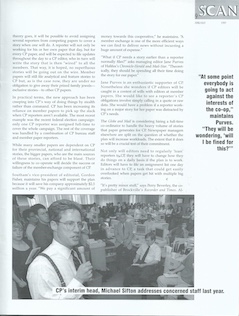
CBC TV’s Undercurrents host Wendy Mesley. Scan Magazine was published in the 1990s for Canadian media professionals.

In 2021 Wendy Mesley commented on the story in a Tweet.

More from Scan Magazine:

The Big Dump: CP’s New Operational Plan Leaves Critics With Questions Aplenty

https://davidsouthconsulting.org/2021/02/05/channel-regulation-swedes-will-fight-childrens-advertising-all-the-way/

https://davidsouthconsulting.org/2021/02/03/do-tv-porn-channels-degrade-and-humiliate/

https://davidsouthconsulting.org/2021/01/14/from-special-report-nmm-new-media-markets-spotlight-on-the-emergence-of-satellite-porn-channels-in-the-uk/

https://davidsouthconsulting.org/2022/04/21/nsd-partners-in-bitter-row-over-choice-of-satellite-as-brussels-deadline-nears/

https://davidsouthconsulting.org/2022/10/27/reality-television-teaches-business-skills-in-sudan/

https://davidsouthconsulting.org/2020/12/11/tvs-moral-guide-in-question-again/

https://davidsouthconsulting.org/2021/02/01/uk-laws-on-satellite-porn-among-toughest-in-europe/

Creative Commons License

This work is licensed under a
Creative Commons Attribution-Noncommercial-No Derivative Works 3.0 License.

ORCID iD: https://orcid.org/0000-0001-5311-1052.

© David South Consulting 2023

Categories
Archive Blogroll UNDP Mongolia 1997-1999 United Nations Development Programme

One World Youth Conferences: Mongolia | 1998 – 1999

In 1998 and 1999, the United Nations in Mongolia began the six One World Youth Conferences – on children, human rights, population and development, social development, women and development plus a national summit. One World brought together youth from across Mongolia to debate and challenge the country’s decision-makers on how they were meeting Mongolia’s international obligations. 

It drew praise from then-UN Secretary-General Kofi Annan: “This One World Conference Series is a shining example of Mongolia’s determination to build a more democratic and prosperous future for all its citizens based on human rights, good governance, and a free and fair market economy. … Never should young people have to be protected from government.”

UN Secretary-General Kofi Annan | Secretary-General Stresses Obligation of Government to Protect Young People (11 June 1999)http://www.un.org/press/en/1999/19990611.SGSM7027.html

Secretary-General stresses obligation of government to protect young people : ‘never should young people have to be protected from government’, Kofi Annan adds in message to final UN OneWorld Youth Conference, in Mongolia : [statement, 11 June 1999] / [by the Under-Secretary-General for Communications and Public Information]

United Nations Archives: https://search.archives.un.org/countries-mongolia-2004

Mongolia’s One World UN conferences series’ empowers youth, United Nations Chronicle; New York Vol. 37, Iss. 1,  (2000): 63.

Read media coverage of the One World Youth Conferences here: https://books.google.co.uk/books?id=vxk6-u-dVAgC&pg=PA188&dq=in+their+own+words+one+world&hl=en&sa=X&ved=0ahUKEwjr-5GO5ePWAhUEBMAKHaLOCCYQ6AEIJjAA#v=onepage&q=in%20their%20own%20wo

Blue Sky Bulletin Issue 9: The One World Kick-Off!
Blue Sky Bulletin Issue 10: The youth of One World featured on the cover.
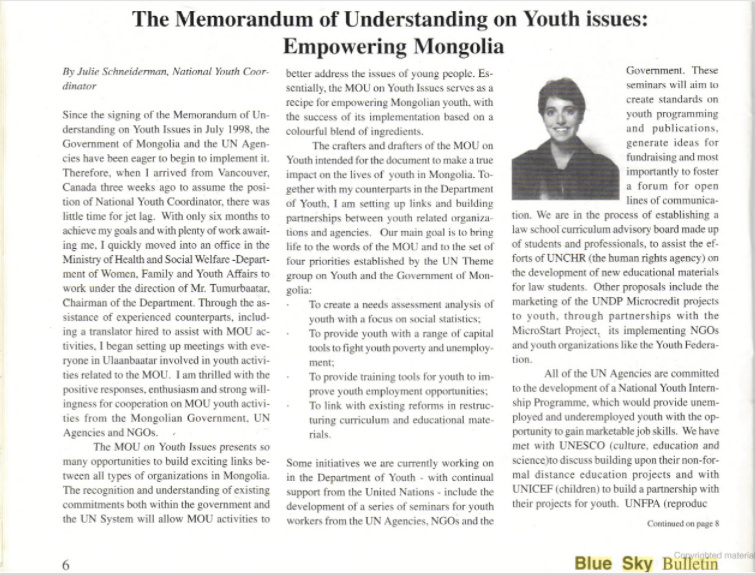
The Memorandum of Understanding on Youth: Negotiated with the Government of Mongolia, it led to the One World Youth Conferences. Pictured: National Youth Coordinator Julie Schneiderman.
The Nobel Peace Prize 2001 joint winners. “Never should young people have to be protected from government.” Kofi Annan, UN Secretary-General, 1999.

https://www.un.org/press/en/1999/19990611.SGSM7027.html

David South Consulting is an award-winning global consultancy based in London, UK.

© David South Consulting 2024

Categories
Archive Blogroll

Featured In New Book Busted: An Illustrated History Of Drug Prohibition In Canada | December 2017

Upon my return from a United Nations workshop in Dhaka, Bangladesh, I was delighted to receive a copy of the new book Busted: An Illustrated History of Drug Prohibition in Canada (Fernwood Publishing, 2017, ISBN 978-1-55266-976-1) by Professor Susan Boyd from the Faculty of Human and Social Development at the University of Victoria in British Columbia, Canada. 

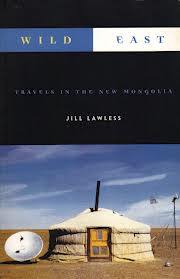
Busted: An Illustrated History of Drug Prohibition in Canada by Susan Boyd (Fernwood Publishing).

It is a beautifully illustrated book and an excellent introduction to Canada’s unique history surrounding drug use and drug prohibition. As the country embarks on a new phase in its relationship to some drugs, the book gives the bigger picture that many Canadians are probably unaware of. Canada had a period of extensive social experimentation in the late 1960s and early 1970s, defying perceptions the country is ‘boring’ and where excitement doesn’t happen.

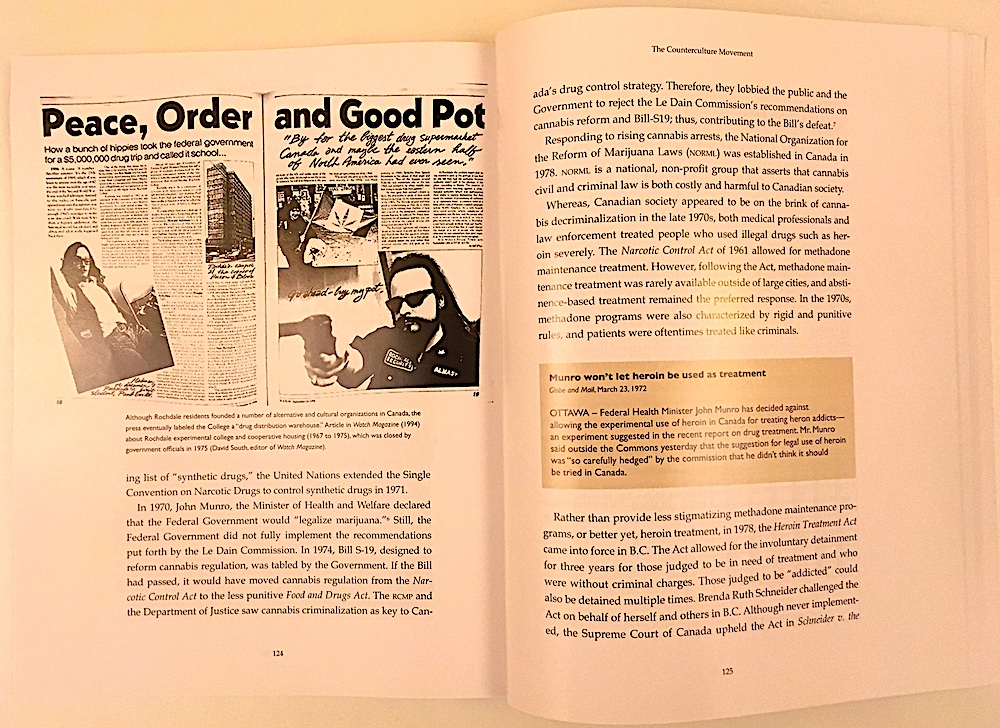
A feature we did for Toronto’s Watch Magazine in 1994 (in which I was Editor-in-Chief) is on page 124 in the chapter on The Counterculture Movement: The 1960s and 1970s.

“Peace, Order and Good Pot” by Bill White from Toronto’s Watch Magazine in 1994.
Citation in Busted: An Illustrated History of Drug Prohibition in Canada (2017).

© David South Consulting 2017 

Categories
Archive Blogroll

Wild East 17 Years Later | 2000 – 2017

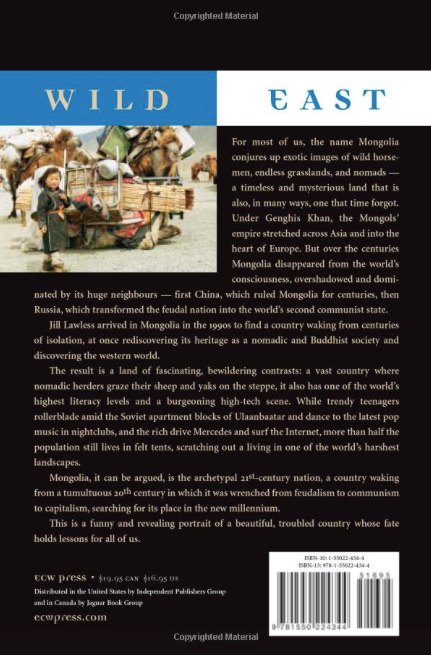
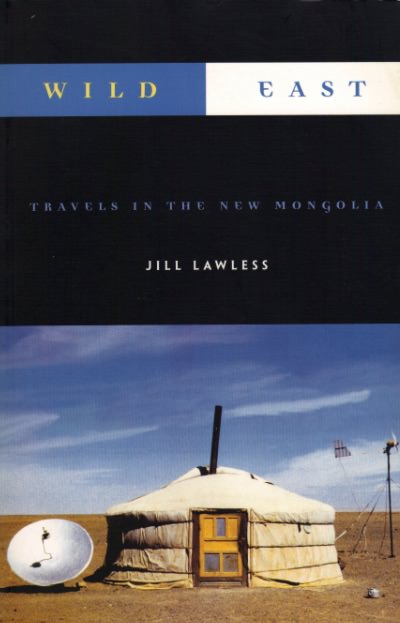
Published in 2000 (ECW Press: Toronto), Wild East: Travels in the New Mongolia is 17 years old. It is also 100 years since the 1917 October Revolution in Russia that began the long experiment of the Soviet Union. Mongolia was the second country after Russia to adopt Communism.

“Engaging…a revealing and often amusing account of her journeys through a beautiful country awakening from a tumultuous era.”

Wild East author and foreign correspondent Jill Lawless.

“One of the top 10 Canadian travel books of 2000.” The Globe and Mail

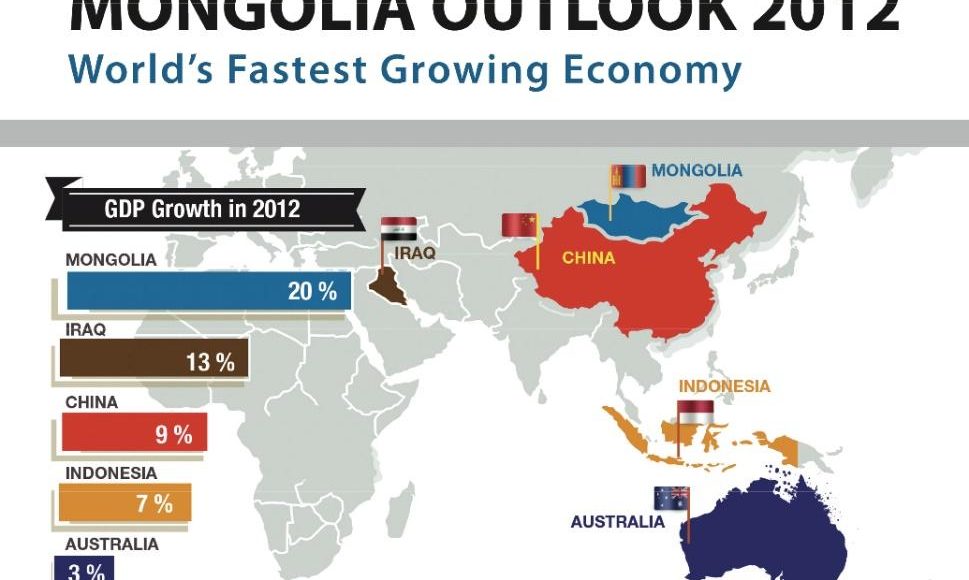
The world has changed considerably since then; and so has Mongolia. The digital revolution has rolled across the planet, the attacks of 9/11 unleashed a wave of violence and wars, and Mongolia even became the fastest-growing economy in the world a few years ago (2012). But back when this book was researched, Mongolia was just coming out of decades of isolation within the Soviet orbit under Communism, and the country experienced in the 1990s “one of the biggest peacetime economic collapses ever” (Mongolia’s Economic Reforms: Background, Content and Prospects, Richard Pomfret, University of Adelaide, 1994). 

“The years 1998 and 1999 have been volatile ones for Mongolia, with revolving door governments, the assassination of a minister, emerging corruption, a banking scandal, in-fighting within the ruling Democratic Coalition, frequent paralysis within the Parliament, and disputes over the Constitution. Economically, the period was unstable and rife with controversies.” Mongolia in 1998 and 1999: Past, Present, and Future at the New Millennium by Sheldon R. Severinghaus, Asian Survey, Vol. 40, No. 1, A Survey of Asia in 1999 (Jan. – Feb., 2000), pp. 130-139 (Publisher: University of California)

That collapse made for some crazy times, as Wild East shows. 

Wild East was called one of the top 10 Canadian travel books of 2000 by The Globe and Mail. 

Reviews for Wild East: Travels in the New Mongolia by Jill Lawless:

The Globe and Mail

“Engaging…a revealing and often amusing account of her journeys through a beautiful country awakening from a tumultuous era.”

The Georgia Straight, Vancouver

“This readable and reportorial book is the perfect antidote to … those tiresomely difficult, pointlessly dangerous, and essentially fake expedtions undertaken against the advice of local people who know better.”

Toronto Star

“Lawless introduces us to Mongolia’s tabloid press, to teenage mineworkers, sharp-eyed young hustlers, nomads whose only possessions are their livestock, Mongolian wrestlers and Mongolian horse races.”

Mongolian Buryat Civilisation Bookstore

“Wryly funny and wide-spectrum account of Mongolia’s tumultuous rebirthing into the 21st century. Half the population lives in Soviet apartment blocks and watches satellite TV but the other half still eek a living from the exquisite, barren hills while living in nomadic felt tents. Of course, I’d much rather be in the tents… but whatever your preference, you will definitely enjoy Ms. Lawless’ writing. She was editor of an Ulaan Baator newspaper for two years, and she tells it like it is. Very highly recommended.”

Alicia J. Campi in Mongolian Studies

“Jill Lawless’ book is not a scholarly tome per se, yet it is of definite value to the contemporary Mongolian scholar … Lawless’ period is 1997-1999, the heart of the tumultuous and ill-spent years of Democratic Coalition Government… a period of great hopes for democratic flowering and free market enterprise leading the nation to prosperity and progress.” 

Join the conversation about Wild East: Travels in the New Mongolia at goodreads and post reviews: https://www.goodreads.com/book/show/773080.Wild_East

Read a story by Jill in The Guardian (9 June 1999): Letter from Mongolia | Herding instinct .

Copies of Wild East: Travels in the New Mongolia by Jill Lawless are still available in various editions and languages.
A promotional poster for Wild East from 2003.

Explore further Jill Lawless’ work here: https://muckrack.com/jilllawless

UK edition (Summersdale Travel: 2002). Front cover images © David South and Liz Lawless.

The New York Post called Wild East: Travels in the New Mongolia “harrowing, hilarious” (April 26, 2016).
New brand sites for Jill Lawless and Wild East on the way for 2021.
“This is a good, fun book about life in Mongolia. … it’s an interesting and often amusing series of stories loosely connected.”

On the difference between Wild East: Travels in the New Mongolia and other travel writing on contemporary Mongolia: 

“Others sent me Jill Lawless’s Wild East: The New Mongolia, a compilation of pieces she wrote when she was editor of Mongolia’s English-language newspaper, the UB Post, during Mongolia’s transition from a socialist people’s republic to young democracy. With the wind shaking the frame of my ger, I lit the stove and read what these and other writers claimed to have found just outside my flapping felt walls.

“By the time veteran journalist Jasper Becker’s Mongolia: Travels in an Untamed Land arrived, I had put aside books written since Mongolia opened up to the West in the early 1990s. Most Western travellers and writers discovered the same sights from the back of a borrowed horse. Only Lawless had investigated the place over time on its own terms. The others, full of pith and vinegar and a standard set of assumptions about what they would find, built books on flights of fancy – golfing across Mongolia, following the path of medieval monks, ‘rediscovering shamanism’ – that were flimsier even than those that had set me in motion. The books were as exciting as museum diorama, papier-mâché models of their ‘medieval’ travels and capitalist fantasies.” Three Years in Mongolia: Trying to be a Travel Writer, Luke Meinzen, Kill Your Darlings, 10 April 2012

“I put Becker away and pulled out Wild East by Jill Lawless. She was heaps better than Becker, which wasn’t hard.” MÖRÖN TO MÖRÖNTwo Men, Two Bikes, One Mongolian Misadventure, Tom Doig, Allen & Unwin, 2013

“In the early 2000s, Canadian journalist Jill Lawless accepted a correspondent position at a news outlet in the remote and isolated foreign capital of Ulaanbaatar, Mongolia. At that time, Mongolia’s media was newly privatized from beneath Communist oversight, and her role was as much a consultant for how to run a newspaper under freedom of the press, as she was a journalist with the UB Post.

Lawless was in Mongolia during a time of exciting political and cultural transition. Wild East is less of a travel memoir, but rather essays and shorter narratives of creative non-fiction that describe her adventures in reporting. Even so, it provides a compelling narrative into the historical moment when Mongolia dropped its isolation and began to connect to China and Europe on its journey toward modernization.” Three Works of Travel Writing to Ignite Your Imagination (while we patiently wait for the pandemic to run its course), Barefoot Journey with Amanda, 10 Nov 2020.

Creative Commons License

This work is licensed under a
Creative Commons Attribution-Noncommercial-No Derivative Works 3.0 License.

ORCID iD: https://orcid.org/0000-0001-5311-1052.

© David South Consulting 2022