Categories
Archive Development Challenges, South-South Solutions Newsletters

Women Empowered by Fair Trade Manufacturer

By David SouthDevelopment Challenges, South-South Solutions

SOUTH-SOUTH CASE STUDY

There is sometimes a great deal of negativity surrounding the issue of manufacturing in Africa. Some claim the risks of doing business are too high or that the workers are not motivated enough. But one garment manufacturer is out to prove the skeptics wrong. It pays decent wages and gives its mostly female workforce a stake in the business in a bid to drive motivation and make it worthwhile to work hard.

Liberty and Justice (http://libertyandjustice.com), one of Africa’s newest fair-trade garment manufacturers, is drawing attention for the way it is transforming women’s lives. It is also giving opportunities to a group often ignored by employers: women over the age of 30.

Liberty and Justice has factories in Liberia and Ghana, and 90 per cent of its workers are female. The company says it pays 20 per cent higher wages than the industry norm, and gives employees collectively a 49 per cent stake in the enterprise.

The global fair trade market – in which producers are guaranteed a minimum fair price and goods are marketed under the Fairtrade logo – has been growing year on year since it was established in the late 1980s.

The brand and certification process is managed by the Fairtrade Foundation (fairtrade.net) and is considered the most recognized ethical mark in the world.

More than 1 million small-scale producers and workers around the world participate in the Fairtrade system. As of 2013, fair trade has become a 5 billion euro-a-year (US $6.79 billion a year) global movement.

The label can be found on more than 30,000 products, ranging from tea to bananas to sugar and chocolate. It benefits more than 1.35 million farmers and workers around the world.

Liberty and Justice specializes in “high-volume, time-sensitive, duty-free goods for leading American clothing brands, trading companies, and other importers who care about exceptional quality, on-time delivery, social and environmental impact, and geographic diversity.”

The company wants to “transform the apparel supply chain from worker exploitation and environmental degradation to partnership and sustainability.”

Liberty and Justice was established by Chid Liberty (http://libertyandjustice.com/#about), the son of an exiled Liberian diplomat. His life had been a privileged one living amongst Africa’s overseas diplomatic community.

“I thought Africans drove (Mercedes) Benzes and dressed up every day and went to the best schools,” he told Fast Company magazine. “It even messed up my orientation on things like race, because we had all different kinds of people working in my house as a kid – German, Indian, Turkish – and all of them were serving us in some way. So I just kind of grew up thinking that Africans were at the top of the food chain.”

Living in a prosperous bubble in Germany, he had an awakening to the real conditions in Africa when he was in the seventh grade: “When I read only 2 per cent of people have a telephone, I was so confused,” he said. “I started to really understand my place.”

After the death of his father, Liberty started to wonder about life back in Liberia. He had moved on to working in Silicon Valley in California, helping technology startups get funding. Inspired by Liberia’s President Ellen Sirleaf (http://en.wikipedia.org/wiki/Ellen_Johnson_Sirleaf) and the end of the country’s 15-year civil war, he thought: “‘All right, well, I think I can apply that skill to providing economic opportunities for women.’ And decided to come here and try, in an industry that I knew absolutely nothing about.”

In 2010 he and Adam Butlein founded Liberty and Justice fair-trade apparel manufacturer. The company now makes tops and bottoms for brands such as Prana, FEED Projects, Haggar and others in the US.

“We really try to be worker-focused,” Liberty said. “And we actually think that’s what gave us a cutting edge at the end of the day: having really devoted workers. People don’t really believe in these types of factories in Africa, because they believe that African workers aren’t motivated. I think that’s hogwash.”

The company faced a dilemma common to any manufacturing enterprise trying to make goods for the highly competitive global export markets. How to produce the garments fast enough? A consultant had advised them to only hire young women. But Liberty and Justice had hired women in their 30s, 40s and 50s. Rather than firing everyone, the company decided to invest in the workers’ skills and get productivity to where it should be.

“These older women really set the culture of the Liberian Women’s Sewing Project, our first factory,” Liberty said. “They come to work an hour early – we never asked them to do that – they pray and sing together before they get on the machines, they’re very serious about the details of how your uniform should look, and you just wouldn’t have gotten that out of a bunch of 19-year-old girls the first time.”

Liberty and Justice expanded to Ghana in 2012 and launched the Ghanaian Women’s Sewing Project. It had to adapt to how things are done in Ghana, and that was a steep learning curve.

But the company has learned a great deal about how to succeed in Africa as opportunities increase alongside growing wealth and incomes.

“You could easily get squashed in Africa if you don’t know the right people. You’ll just get sent down rabbit holes every day,” Liberty said.

“In Liberia, the World Bank reports that about 40 per cent of children are enrolled in school. Among the women for whom we provide jobs, 98 per cent of their children are in school. So to me it’s very clear: You give a woman the opportunity to work, and her priority will be putting her kids in school.”

And he believes this is just the beginning of something big. As LIberia recovers from civil war, it will lead to an economic and innovation renaissance that will filter out across West Africa.

“I really think that the opportunities for innovation are right here. And once we get the social finance opportunities right, I think you’ll see a little West African impact renaissance happening. There’s still a lot of work to do. I hope Liberty and Justice can be a small part of that.”

Published: March 2014

Resources

1) Fairtrade International: Fair trade is an alternative approach to conventional trade based on a partnership between producers and traders, businesses and consumers. The international Fairtrade system – made up of Fairtrade International and its member organizations – represents the world’s largest and most recognized fair trade system. Website: http://www.fairtrade.net/

2) Fairtrade Max Havelaar Netherlands: The Max Havelaar Foundation is an independent non-profit organization that licenses use of the Fairtrade Certification Mark on products in the Netherlands in accordance with internationally agreed Fairtrade standards. Website: http://www.maxhavelaar.nl/

3) Ten Thousand Villages: Ten Thousand Villages is an exceptional source for unique handmade gifts, jewelry, home decor, art and sculpture, textiles, serveware and personal accessories representing the diverse cultures of artisans in Asia, Africa, Latin America and the Middle East. One of the world’s largest fair trade organizations and a founding member of the World Fair Trade Organization (WFTO), the company strives to improve the livelihood of tens of thousands of disadvantaged artisans in 38 countries. Website: http://www.tenthousandvillages.com/

4) Ananse Village: An online marketplace selling traditional African crafts produced in a fair trade environment. Website: http://www.anansevillage.com/

5) Ecouterre: An online guide to the best ideas, innovations and emerging trends in eco fashion, sustainable style, organic beauty and ethical apparel. Website: http://www.ecouterre.com

6) Partnering with the United Nations-endorsed Ethical Fashion Initiative, whose motto “Not Charity, Just Work” seeks to promote sustainable development over aid, New Zealand designer Karen Walker tasked Kenya’s finest micro-producers, designers, and craftspeople to produce screen-printed pouches that will accompany every Karen Walker eyewear purchase from the collection. Website: http://www.karenwalkereyewear.com/ and https://www.facebook.com/media/set/?set=a.10152167286434183.1073741834.92673569182&type=1

Google Books: https://books.google.co.uk/books?id=WBM9BQAAQBAJ&dq=development+challenges+march+2014&source=gbs_navlinks_s

Slideshare: http://www.slideshare.net/DavidSouth1/development-challenges-march-2014-published-44135069

Southern Innovator Issue 1: https://books.google.co.uk/books?id=Q1O54YSE2BgC&dq=southern+innovator&source=gbs_navlinks_s

Southern Innovator Issue 2: https://books.google.co.uk/books?id=Ty0N969dcssC&dq=southern+innovator&source=gbs_navlinks_s

Southern Innovator Issue 3: https://books.google.co.uk/books?id=AQNt4YmhZagC&dq=southern+innovator&source=gbs_navlinks_s

Southern Innovator Issue 4: https://books.google.co.uk/books?id=9T_n2tA7l4EC&dq=southern+innovator&source=gbs_navlinks_s

Southern Innovator Issue 5: https://books.google.co.uk/books?id=6ILdAgAAQBAJ&dq=southern+innovator&source=gbs_navlinks_s

Development Challenges, South-South Solutions was launched as an e-newsletter in 2006 by UNDP’s South-South Cooperation Unit (now the United Nations Office for South-South Cooperation) based in New York, USA. It led on profiling the rise of the global South as an economic powerhouse and was one of the first regular publications to champion the global South’s innovators, entrepreneurs, and pioneers. It tracked the key trends that are now so profoundly reshaping how development is seen and done. This includes the rapid take-up of mobile phones and information technology in the global South (as profiled in the first issue of magazine Southern Innovator), the move to becoming a majority urban world, a growing global innovator culture, and the plethora of solutions being developed in the global South to tackle its problems and improve living conditions and boost human development. The success of the e-newsletter led to the launch of the magazine Southern Innovator.  

Creative Commons License

This work is licensed under a
Creative Commons Attribution-Noncommercial-No Derivative Works 3.0 License.

ORCID iD: https://orcid.org/0000-0001-5311-1052.

© David South Consulting 2023
Categories
Archive Blogroll Harvard Institute for International Development Special Unit for South-South Cooperation United Nations Development Programme United Nations Office for South-South Cooperation

CASE STUDY 6: International Consulting | 1999 – 2014

Expertise: Project evaluation, strategy, project management, project delivery, UN system, MDGs, research papers, media strategies and digital media strategies.

Locations: Ulaanbaatar, Mongolia, Kiev, Ukraine, Pretoria, South Africa, Ashgabat, Turkmenistan 2000 to 2006

Consultant: David South

Abstract

From 1999, I worked as a consultant for United Nations (UN) missions in Africa, Asia, Central Asia and Eastern Europe, for USAID Mongolia and for a UK-based international development consultancy. 

About

Was the United Nations being effective and reflecting the potential for change in the mobile and information technology age? What needed to change? Who were the policy innovators?

This work included overseeing various digital media projects, including the strategic re-development of the UN Ukraine web portal, aiding in the rolling out of the media campaign for the Millennium Development Goals (MDGs) in Mongolia, including the first use of infographics in the Mongolia UN mission, advising on strategies for youth engagement in development goals in South Africa, and support to the UN mission in Turkmenistan as it finalised its United Nations Development Assistance Framework (UNDAF) with the government and also work with UNICEF there. What I learned during this period proved crucial to the insights and thinking reflected in two highly influential United Nations publications, e-newsletter Development Challenges, South-South Solutions, and Southern Innovator magazine (developed in 2010). 

This period was particularly advantageous because I had a front-row seat to the unfolding digital and mobile information technology revolution sweeping across the emerging markets and the global South. I also had insight into what worked and didn’t in international development as well as the UN system. I also learned a great deal about development challenges first-hand in highly varied countries, how the Millennium Development Goals (MDGs) were actually being rolled out, and met amazing people who were challenging existing precepts on how to do development. All of this work proved very useful later on. 

I have either travelled to, or worked and lived, in many countries, enhancing my global perspective and affording me a valuable trove of knowledge that has in turn informed my work in international development. I have always paid attention to the level of development in the country, how it has organized itself, the quality of its design, and how it interacts with other countries for trade and relations. The countries visited to date include: Antigua and Barbuda, Australia, Azerbaijan, Belgium, Canada, China, Cuba, Denmark, Domenica, Finland, France, Germany, Greece, Guadalupe, Haiti, Hong Kong, Iceland, Ireland, Israel, Italy, Japan, Kenya, Luxembourg, Malaysia, Mexico, Monaco, Mongolia, Montseratt, Morocco, the Netherlands, Norway, Philippines, Portugal, Russia, Singapore, South Africa, South Korea, Spain, Sweden, Switzerland, Thailand, Tunisia, Turkey, Turkmenistan, Ukraine, the United Kingdom, the United States of America, Vatican City. A fascinating mix of countries – some holders of top place on the UN’s Human Development Index – and others where human development is at its worst. Seeing with your own eyes what works and what does not is highly illuminating, while knowing first-hand how human development can be improved is critical for giving informed advice.  

Timeline

1999/2000: USAID Mongolia (design and publicity strategy for business development brochure, US Mongol (Mongolia) Construct and US tour, work with Riverpath Associates in the UK on communications strategies and the drafting of papers for the American Foundation for AIDS Research, the Global Fund to Fight AIDS, Tuberculosis and Malaria, UNCTAD, Harvard Institute for International Development, and the preparation of the report and launch strategy for the World Bank’s Task Force on Higher Education. 

http://www.davidsouthconsulting.com/blog/2018/1/10/us-mongol-construct-2000-business-prospectus-building-a-new.html

สล็อตเว็บตรง

2000: UN Ukraine: strategic re-development of the UN Ukraine web portal and incorporation of the Millennium Development Goals (MDGs). 

2004: UN Mongolia (media campaign for MDGs) and UN South Africa (evaluation of youth NGO associated with the University of Pretoria and its projects and providing a strategic marketing plan).  

2005: UN Mongolia (media campaign for MDGs) and UN Turkmenistan (finalising its United Nations Development Assistance Framework – UNDAF).

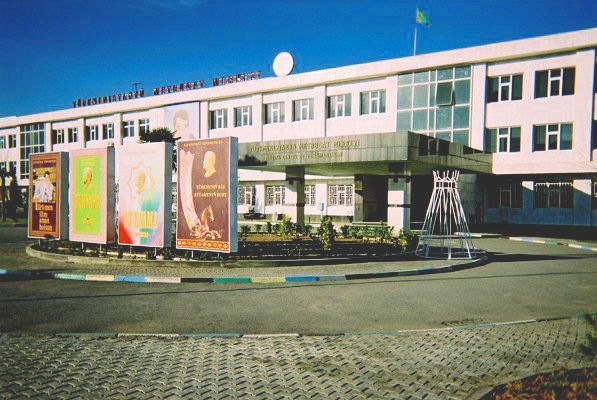
Rukhnama publishers in Turkmenistan’s capital, Ashgabat (2005). Photo: David South
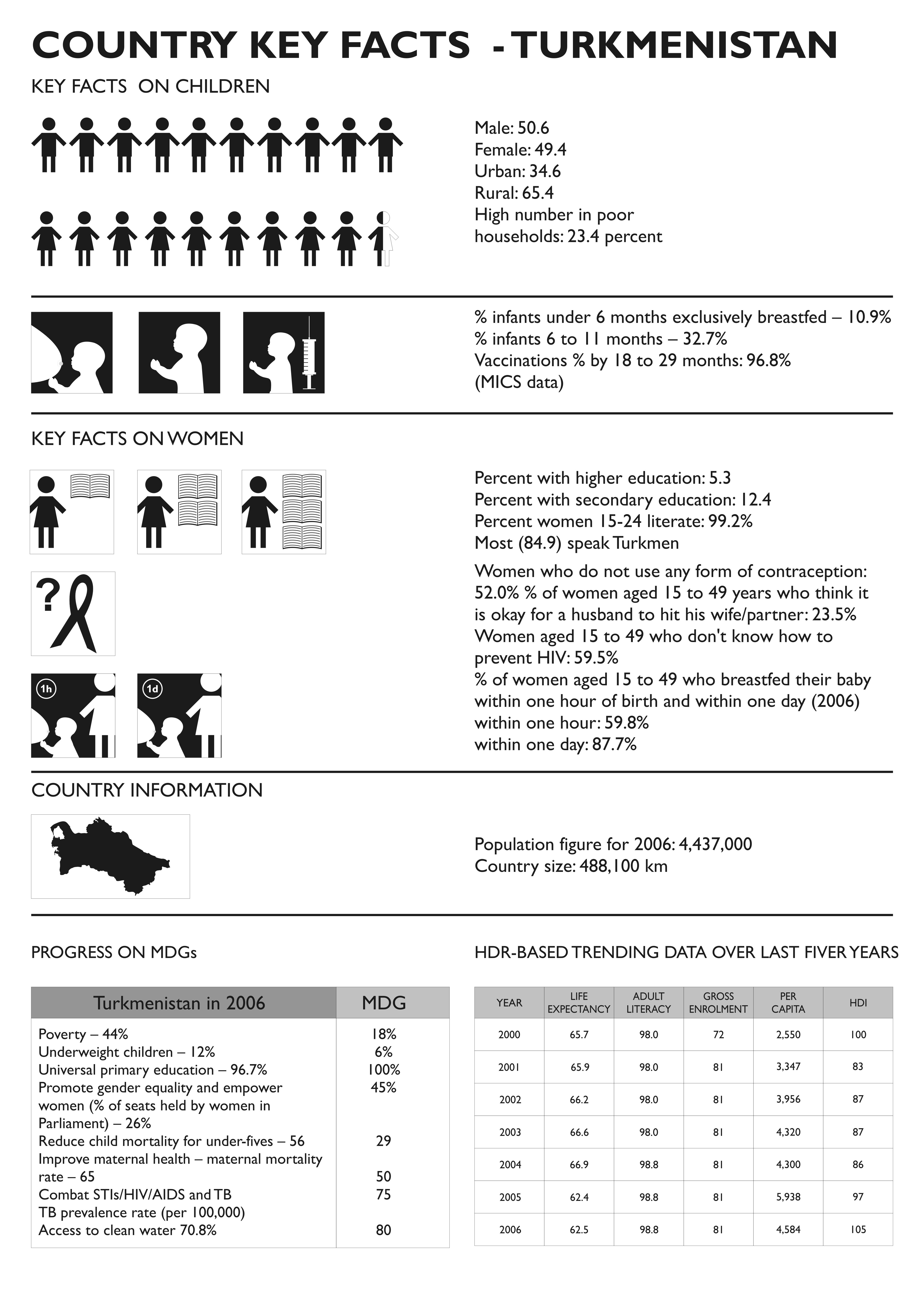
An infographic commissioned for UN Turkmenistan MDGs report (2006).

2006: UN Turkmenistan (work with UNICEF). 

Testimonials 

“I highly recommend Mr. David South as a communications consultant who gets results.” Brian DaRin, Representative/Director, USAID Investment & Business Development Project, Global Technology Network/ International Executive Service Corps-Mongolia, 23 September 1999

Impact 

Micro 

  • working as a communications consultant for UN missions – Ukraine, South Africa, Mongolia, Turkmenistan
  • redeveloping mission websites, preparing content, reports, advising on communications strategy
  • working with local designers on new ways to present development data through inforgraphics (2005/2006) 

Macro 

  • in the course of travel and work, seeing the unfolding impact of the global communications revolution, in particular the rapid roll-out and take-up of mobile technologies, and the urgent need for the UN system to take this on board. Also witnessed firsthand the grassroots solutions revolution brought about by information and mobile technologies and the Internet, which needed to be fully embraced by the UN 

Resources 

A Marketing and e-Marketing Strategy – the New SASVO, Prepared from December 2004 to February 2005 for the Southern African Student Volunteers (University of Pretoria). 

A Moment in Time: AIDS and Business, American Foundation for AIDS Research, 1999 

Closing the Loop: Latin America, Globalization and Human Development, UNCTAD, 1999 

David South Consulting Summary of Impact 1997 to 2014

Development Challenges, South-South Solutions

Innovations in Green Economy: Top Three Agenda

Mongolian Media Project Infographic

Peril and Promise: Higher Education in Developing Countries, World Bank/UNESCO Task Force on Higher Education, 2000

South-South Cooperation for Cities in Asia

Southern Innovator

Southern Innovator and the Growing Global Innovation Culture

Southern Innovator Summary of Impact 2011 to 2012

Southern Innovator Summary of Impact 2012 to 2014

This work is licensed under a Creative Commons Attribution 4.0 International License.

ORCID iD: https://orcid.org/0000-0001-5311-1052.

© David South Consulting 2025

Categories
Archive data Development Challenges, South-South Solutions Newsletters digital ID

Microwork Pioneer Transforms Prospects For Poor, Vulnerable

By David SouthDevelopment Challenges, South-South Solutions

SOUTH-SOUTH CASE STUDY

A pioneering technology social enterprise has found a way to connect people around the world to the new digital economy, transforming their lives and providing long-term employment opportunities. It is closing the digital divide in a very practical way, teaching new skills and, most importantly, providing income to the poor and vulnerable.

The San Francisco, USA-based non-profit social enterprise Samasource (samasource.org) uses what it calls microwork – a virtual assembly line of small tasks broken down from a larger project so they can be completed over the Internet – to outsource work to its network of workers around the world.

The tasks in this virtual piecework range from writing to transcribing to organizing online content.

The company organizes the projects using its own online work distribution system connecting workers around the world to the SamaHub in San Francisco. Most of the workers are women, youth and refugees. When they complete their task, it is sent back to the SamaHub in San Francisco where the staff check it and assure its quality. Once approved and completed, the project is returned to the client.

The company was founded in 2008 and draws on experts in “distributed work, economic development, and outsourcing.”

The microwork is divided into three areas: content services, data enrichment and transcription.

Content services can include writing descriptions for online business listings, organizing large databases on information or creating brief descriptions of existing content to make it easier for search engines to find it. “Data enrichment” tackles the vast quantity of information on the Internet that needs to be kept up to date and reliable. It also includes ‘tagging’, where text or images on the Internet need to have appropriate ‘tags’ or labels. And finally, transcription services include digitizing paper documents like receipts or books or transcribing audio and video files for the web.

All these tasks are labour intensive and require high attention to detail. And they are critical to any online business’s success if it wants a reputation for accuracy and consistency.

Samasource is optimistic about its future potential because of the sheer size of the market for business process outsourcing: estimated to be worth over US $100 billion. What Samasource does, called ‘impact sourcing’ – outsourcing to people in the developing world living in poor or remote communities – is a market worth US $5 billion, according to Samasource’s website.

It differs from conventional business process outsourcing in a number of respects, including the educational background of the workers. Most conventional outsourcing goes to college graduates in cities in India, China and the Philippines. Impact outsourcing is done by people with at most a high school education.

The digital economy needs these workers to handle the many millions of detailed tasks required to link together information. It is easy to take this for granted because it is hidden from view, but it is what enables the Internet to function and businesses to thrive. Samasource provides outsourcing services including content moderation and data entry to clients like LinkedIn, Intuit and the US State Department.

“We bring dignified, computer-based work to women, youth, and refugees living in poverty,” said Samasource’s founder and chief executive officer, Leila Janah.

Janah has a background in development studies and formerly worked for the World Bank. This experience convinced her that much foreign aid was failing to target what poor people are really looking for: a job that pays well.

Samasource sees what it does as work, and not handouts.

It also believes it is changing perspectives, proving people from the poorest places on earth can become trustworthy, hard-working knowledge workers.

The Internet is a unique medium because it transcends borders and smooths contact between people with varying linguistic, cultural and educational capabilities.

“The Internet reduces the friction of collaboration across all of these centres and time zones, and with a highly distributed workforce,” said Janah.

Samasource claims to have paid out US $1 million in wages to more than 1,500 workers around the world. Ambitiously, it wants to expand this to reach some of the 144 million youth between 16 and 24 living on less than US $2 a day.

Youth are a particular focus for Samasource. Samasource targets young people who are literate and have received an education but still can’t get a job.

As for the many women employed by Samasource, they were either unemployed or earning poverty-level wages doing precarious work in low-level manufacturing and not building their skills.

Samasource currently has 16 partnerships in Haiti, India, Pakistan, Kenya, Uganda and South Africa. Criteria to work with Samasource includes being in a high-poverty region. Another criteria is for most of the money earned to stay within the region where the work is done and adhere to the standards laid down by Samasource.

Samasource’s success means it has attracted further funding. In December 2011, it was given a US $1.5 million grant from Google.org – the Google.com search engine’s charity. It has also raised US $5 million from non-profit investors, including the Ford Foundation, the Rockefeller Foundation and the eBay Foundation. The challenge for the Samasource model will be to prove, with this new funding, that it can scale its operations to pay out more to its workers than it is taking in to meet its operating costs.

Microwork is turning out to be big work indeed!

Published: January 2012

Development Challenges, South-South Solutions was launched as an e-newsletter in 2006 by UNDP’s South-South Cooperation Unit (now the United Nations Office for South-South Cooperation) based in New York, USA. It led on profiling the rise of the global South as an economic powerhouse and was one of the first regular publications to champion the global South’s innovators, entrepreneurs, and pioneers. It tracked the key trends that are now so profoundly reshaping how development is seen and done. This includes the rapid take-up of mobile phones and information technology in the global South (as profiled in the first issue of magazine Southern Innovator), the move to becoming a majority urban world, a growing global innovator culture, and the plethora of solutions being developed in the global South to tackle its problems and improve living conditions and boost human development. The success of the e-newsletter led to the launch of the magazine Southern Innovator.  

Follow @SouthSouth1

Like this story? Here is a dirty secret: this website is packed with stories about global South innovators. We spent 7 years researching and documenting these stories around the world. We interviewed the innovators to learn from them and we visited them to see how they did it. Why not use the Search bar at the top and tap in a topic and see what stories come up? As for my work, I have been involved with start-ups and media ventures since the early 1990s. In the years since I have learned a great deal about innovation and digital and have shared these insights in the stories on this website as well as in the 5 issues of Southern Innovator magazine. So, stick around and read some more!    

Google Books: https://books.google.co.uk/books?id=qLYTxcC8HgcC&dq=development+challenges+january+2012&source=gbs_navlinks_s

Slideshare: http://www.slideshare.net/DavidSouth1/development-challengessouthsouthsolutionsjanuary2012issue

Southern Innovator Issue 1: https://books.google.co.uk/books?id=Q1O54YSE2BgC&dq=southern+innovator&source=gbs_navlinks_s

Southern Innovator Issue 2: https://books.google.co.uk/books?id=Ty0N969dcssC&dq=southern+innovator&source=gbs_navlinks_s

Southern Innovator Issue 3: https://books.google.co.uk/books?id=AQNt4YmhZagC&dq=southern+innovator&source=gbs_navlinks_s

Southern Innovator Issue 4: https://books.google.co.uk/books?id=9T_n2tA7l4EC&dq=southern+innovator&source=gbs_navlinks_s

Southern Innovator Issue 5: https://books.google.co.uk/books?id=6ILdAgAAQBAJ&dq=southern+innovator&source=gbs_navlinks_s

Creative Commons License
This work is licensed under a
Creative Commons Attribution-Noncommercial-No Derivative Works 3.0 License.

ORCID iD: https://orcid.org/0000-0001-5311-1052.

© David South Consulting 2021

Categories
Archive Development Challenges, South-South Solutions Newsletters

Carbon Markets Need to Help the Poor

By David SouthDevelopment Challenges, South-South Solutions

SOUTH-SOUTH CASE STUDY

The global carbon credit trading schemes emanating from the Kyoto Protocol have created a multi-billion dollar market – the global carbon market was worth US $30 billion in 2007 (World Bank) – and represents one of the fastest growing business opportunities in the world. The bulk of this trading is with the European Union’s emissions trading scheme, some US $25 billion. But the big problem to date has been most of this investment is enriching stock brokers, and not the poor.

And this is a huge opportunity missed, as some point out: “These numbers are relevant because they demonstrate that the carbon market has become a valuable catalyst for leveraging substantial financial flows for clean energy in developing countries,” according to Warren Evans, the World Bank’s director of environment.

And the way to do this is through the Clean Development Mechanism (CDM) – where wealthy countries can meet their greenhouse gas targets by investing in clean energy projects in the South. But so far, it has been criticised for spending 4.6 billion Euros on projects that would have cost just 100 million Euros if implemented by development agencies.

But if done right, the CDM could become directly beneficial to the so-called Bottom of the Pyramid (BOP) – the four billion who live on less than US $2 a day. The CDM allows developed countries to offset their greenhouse gas emissions by paying projects targeting the poor to develop clean energy, or to create what are called carbon sinks (planting trees for example), to cut global emissions.

One mechanism to make all of this work is the CDM Bazaar: officially launched in September 2007, it is about linking together buyers and sellers. This is a place where people with business ideas or projects can go for start-up funding. It is also a place to share information, contacts and learn about how to tap the market.

And two Southern innovators are showing what can be achieved by tapping the power of the sun to help the poor.

One such initiative In India, owned by Mr. Deepak Gadhia and Dr Mrs. Shirin Gadhia, is targeting the 63 per cent of the BOP market that is with rural populations. All of these people need affordable and clean energy if their lives are to improve: most currently use firewood and kerosene for cooking and heating. The company Gadhia Solar is building and selling solar steam cook stoves in rural villages. The giant solar dishes which resemble satellite TV dishes, can fry and roast using the sun and come in Do-it-Yourself kits. The enormous silver dishes beam concentrated sunlight on to a black plate on the oven, reaching temperatures of over 450 Celsius.

In Morocco, the company Tenesol, an electric supply co-operative society, is using solar power to bring electricity to 60,000 poor households in 29 provinces. And it is making Morocco a world leader in the use of solar for rural electricity.

Each house is equipped with a solar home system comprising a solar panel, battery and controller. It is powerful enough to light four to eight lamps, and support a television, radio or mobile phone charger.

Customers pay a connection fee of US $80, and then a monthly service fee of between US $7.50 and US $17.50. The fee competes well with what rural households were spending on candles and batteries.

The initial outlay for equipment is mostly paid for by investors, with the hope that the money will be made back on the service fees.

Tenesol hopes to bring electricity to 101,500 households, and also wire them up and provide light bulbs.

Published: March 2008

Resources

  • More on emissions trading: Click here
  • UNDP has produced a free users guide introduction to the Clean Development Mechanism.
    Website: http://www.undp.org/
  • South South North has also produced a Practitioners’ Practical Toolkit.
    Website: http://www.cdmguide.com/

Development Challenges, South-South Solutions was launched as an e-newsletter in 2006 by UNDP’s South-South Cooperation Unit (now the United Nations Office for South-South Cooperation) based in New York, USA. It led on profiling the rise of the global South as an economic powerhouse and was one of the first regular publications to champion the global South’s innovators, entrepreneurs, and pioneers. It tracked the key trends that are now so profoundly reshaping how development is seen and done. This includes the rapid take-up of mobile phones and information technology in the global South (as profiled in the first issue of magazine Southern Innovator), the move to becoming a majority urban world, a growing global innovator culture, and the plethora of solutions being developed in the global South to tackle its problems and improve living conditions and boost human development. The success of the e-newsletter led to the launch of the magazine Southern Innovator.  

Follow @SouthSouth1

Google Books: https://books.google.co.uk/books?id=DqmXBgAAQBAJ&dq=development+challenges+march+2008&source=gbs_navlinks_s

Slideshare: http://www.slideshare.net/DavidSouth1/development-challengessouthsouthsolutionsmarch2008issue-44443163

Southern Innovator Issue 1: https://books.google.co.uk/books?id=Q1O54YSE2BgC&dq=southern+innovator&source=gbs_navlinks_s

Southern Innovator Issue 2: https://books.google.co.uk/books?id=Ty0N969dcssC&dq=southern+innovator&source=gbs_navlinks_s

Southern Innovator Issue 3: https://books.google.co.uk/books?id=AQNt4YmhZagC&dq=southern+innovator&source=gbs_navlinks_s

Southern Innovator Issue 4: https://books.google.co.uk/books?id=9T_n2tA7l4EC&dq=southern+innovator&source=gbs_navlinks_s

Southern Innovator Issue 5: https://books.google.co.uk/books?id=6ILdAgAAQBAJ&dq=southern+innovator&source=gbs_navlinks_s

This work is licensed under a Creative Commons Attribution 4.0 International License.

ORCID iD: https://orcid.org/0000-0001-5311-1052.

© David South Consulting 2021