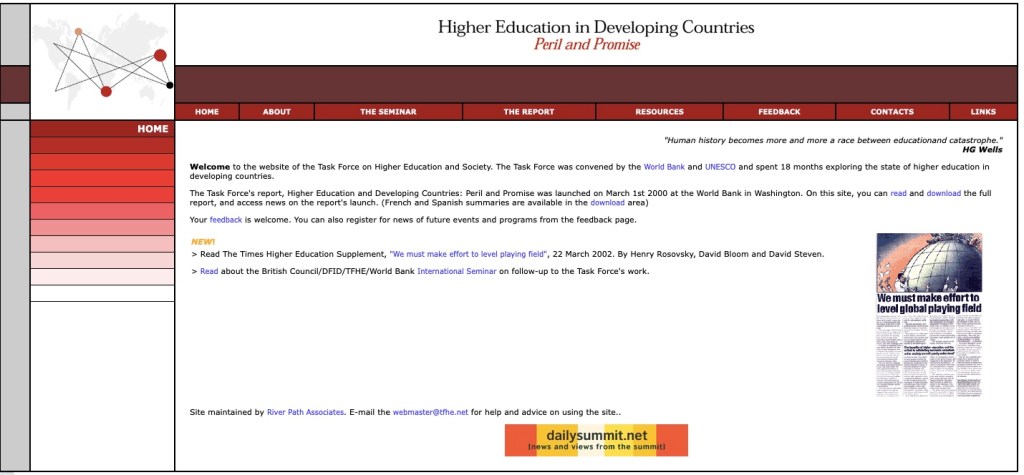
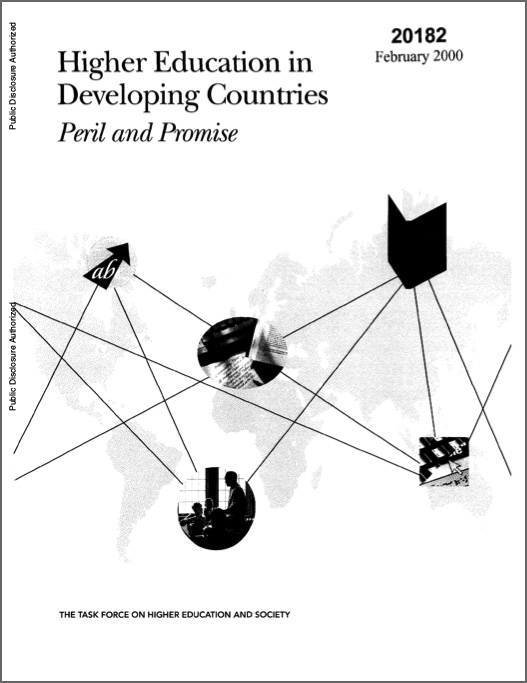
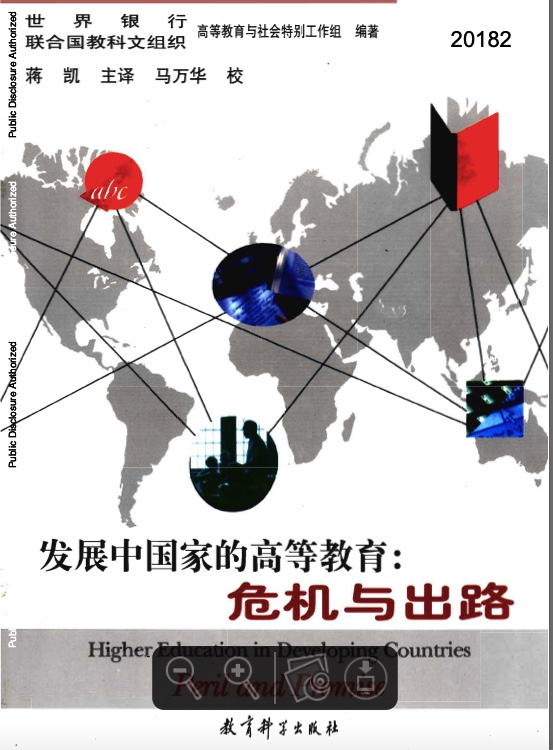
“This publication reports on 18 months of research, debate, and deliberation by the Task Force on Higher Education and Society, convened by the World Bank and UNESCO, to bring together experts from 13 countries to explore the future of higher education in developing nations.”
In 1999 I began work on the communications strategy as well as editing the expert contributions for the Task Force on Higher Education and Society’s report, Higher Education in Developing Countries: Peril and Promise (2000). The brief was to unpack the report and present its findings in a web-friendly format. At the time, it was still rare to see reports made user friendly for the world’s web audience. As a survey in 2014 discovered, a shocking third of the World Bank’s publications are never downloaded, 40 per cent were downloaded just 100 times, and only 13 per cent were downloaded more than 250 times in their lifetime (The Washington Post).
Education is recognized as critical for development and improving people’s lives. Universal primary education is a Millennium Development Goal and countries are now allocating more funds for primary education across the global South. However, the options available to youth after primary education are often very limited.
The World Bank estimates that only nine percent of youth in the developing world will be able to go to a university or benefit from higher education scholarships. For the vast majority of youth, getting a job is often the only viable option to securing a livelihood; but in most developing countries the number of formal sector jobs is low and the only option is self-employment. Acquiring relevant training and practical skills can be crucial to becoming successfully self-employed. But where will the training and skills come from and who will provide it and pay for it?
This dilemma is being addressed by the “self-sufficient schools” concept. The model combines entrepreneurship and vocational education through school-based businesses that blend training and revenue-generation. The principle is simple: entrepreneurship and entrepreneurial skills are taught by successful entrepreneurs.
The model is being pioneered in several countries and has been successfully applied by UK-based charity TeachAManToFish in Ghana and Paraguay, targeting rural youth from farming families through a network of 250 vocational experts and institutions in 45 countries. The approach promotes a model for making education both more relevant and financially sustainable in rural communities.
Self-sufficient schools share several characteristics: they produce and sell goods and services; they focus on developing an entrepreneurial culture; they make a direct connection between theory, practical work and financial reward; they encourage learning by doing; they strive to keep improving in order to remain economically competitive; students are encouraged to work cooperatively; and students receive support after graduating, often in the form of microfinance for their new businesses.
In the South American nation of Paraguay, the Fundacion Paraguaya – San Francisco Agricultural High School – run by an NGO committed to poverty reduction through supporting entrepreneurship – found that small-scale farmers not only knew how to produce food, they also knew how to make a prosperous living out of it when given the right tools. Taking over a school previously run by a religious order, the NGO had the opportunity to put the concept to the test.
The organization’s head, Martin Burt states, ”It is not a matter of knowing how to grow the crop, or raise the animal; it is a matter of how to make money and then how to be financially successful doing farming in poor countries.”
The Paraguayan school is half way through its five-year plan, and already is covering two thirds of its recurring costs from the production and sale of goods and services, including specialist cheeses.
Published: May 2007
Resources
A paper on the concept of self-sufficient schools: Click here
CIDA City Campus, Johannesburg, South Africa: CIDA is the country’s only “’free’, open-access, holistic, higher educational facility” and is “operated and managed by its students, from administration duties to facilities management. In addition every student is required to return to their rural schools and communities, during holidays, to teach what they have learnt.”
The First International Conference on Self-Sufficient Schools is being planned by TeachAManToFish. Expressions of interest are sought from all individuals and organizations interested in taking part in the conference. Email conference@teachamantofish.org.uk for more information.
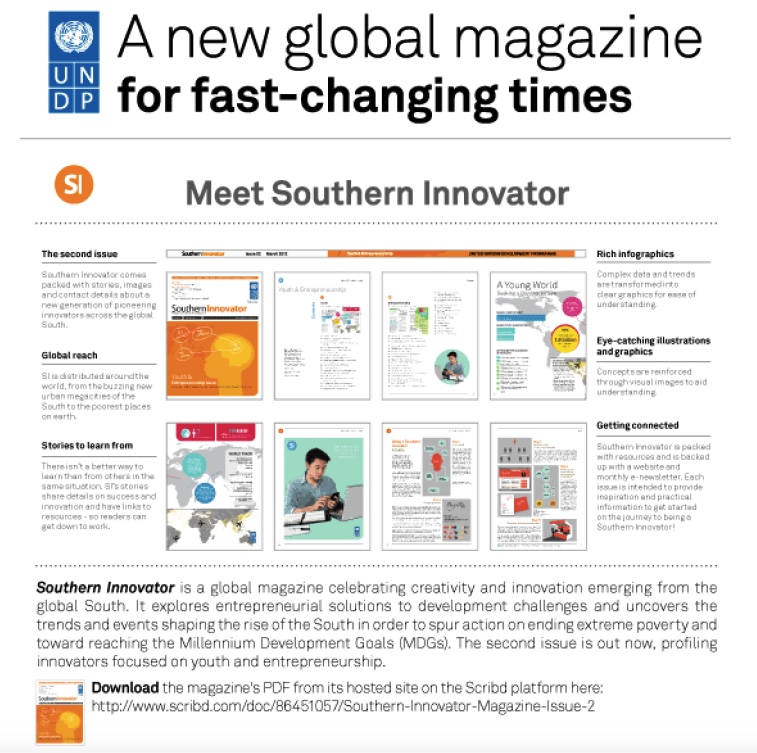
Development Challenges, South-South Solutions was launched as an e-newsletter in 2006 by UNDP’s South-South Cooperation Unit (now the United Nations Office for South-South Cooperation) based in New York, USA. It led on profiling the rise of the global South as an economic powerhouse and was one of the first regular publications to champion the global South’s innovators, entrepreneurs, and pioneers. It tracked the key trends that are now so profoundly reshaping how development is seen and done. This includes the rapid take-up of mobile phones and information technology in the global South (as profiled in the first issue of magazine Southern Innovator), the move to becoming a majority urban world, a growing global innovator culture, and the plethora of solutions being developed in the global South to tackle its problems and improve living conditions and boost human development. The success of the e-newsletter led to the launch of the magazine Southern Innovator.
Many people are aware of the significant role played in global development by remittance payments from migrant workers working in the wealthy North to the global South. But they may not be aware of the significant sums migrant workers have saved in bank accounts in these wealthy countries. Across the global South, efforts are underway to lure these sums back to home countries to boost development efforts.
As the hard-earned money migrant workers save sits in bank accounts in wealthy Western countries earning very low interest rates – a consequence of the current global economic crisis – so-called “Diaspora Bonds” seek to offer a way to earn good interest returns and help build up home countries at the same time.
The money can help developing countries build facilities they need but cannot afford: roads, bridges, railways, water supplies, power, sewerage, street lighting. It is a way to bypass dependence on foreign aid and borrowing from aid agencies or the general marketplace.
US $501 billion in remittance payments was sent in 2011, of which US $372 billion went to developing countries, involving some 192 million migrants or 3 per cent of the world’s population (World Bank). On top of this, migrants from developing countries have saved an estimated US $400 billion – and these funds are being targeted by those selling diaspora bonds (The Economist).
The idea is being promoted by the World Bank and draws on the successful experiences with bonds for Israel and India. Both countries have long histories of turning to diaspora communities to raise funds through bonds.
The bonds work by playing on patriotism and the genuine desire of migrants to want to see conditions improve back home. As the thinking goes, patriotic investors are more likely to be patient. This is critical because many countries cannot offer rapid profits and a quick pay off – something sought by short-term investors obsessed with the ups and downs of the stock market. They are also sterner investors, less likely to run away when the going gets tough. Their local knowledge means they will not panic and pull their investments when bad news hits the headlines. And probably best of all, they don’t mind if the local currency declines in value – that just means they can pick up a local house on the cheap or buy a business for even less money.
One business working in this area is Homestrings (homestrings.com): Motto “Come make a difference.” An Internet platform offering diaspora bonds, it is run by founder and chief executive officer Eric-Vincent Guichard. An American born to a Guinean father and American mother, he spent 20 years growing up in rural Guinea and knows the country well. He also heads up GRAVITAS Capital Advisors, Inc. (gravitascapital.com), founded in 1996, which advises governments on how to manage their assets. A graduate of HarvardBusinessSchool and a former World Bank scholar, he is based in Washington, D.C.
According to its website, Homestrings works like this: “It all starts with your ability to scan through a catalog of projects, funds and public-private partnership opportunities that focus on regions you come from or that you care deeply about. Each of these projects and/or funds is detailed in a Fact Sheet that is set up to help you do the due diligence needed to make an investment decision. Then, Homestrings directs your investment into the selected project or fund, with the help of our administrator.”
Investments are monitored on a monthly or quarterly basis and are selected for their socio-economic impact and investment profitability.
The website has a personal “Dashboard” that allows investors to use the site to vote for or against investments and make comments. And Homestrings will promote the investments that receive the most support and positive comments.
To make an investment, a potential investor selects a fund or project that matches their interest. They read the Fact Sheet and choose. The funds are then passed on to the investment bond and an interest percentage or dividend is paid at regular intervals. Investors can keep track of the investment through the personal Dashboard on the website.
Fact Sheets are organized by geographical region, industry focus, and development theme. Investments “cover infrastructure, health care, education, transportation, and small and medium sized enterprise finance – all critical areas of economic growth.”
The Homestrings Catalog of investments includes the governments of Kenya, Senegal, Ghana, Nigeria and also AFREN PLC, which is looking to finance oil and gas exploration off the coast of Nigeria.
Dramatic improvements in global communications in the past five years have also made it much easier for everyone involved to stay in touch and for bond promoters to identify and target potential customers.
The World Bank is currently advising countries on how to run diaspora bond schemes. Kenya, Nigeria and the Philippines have schemes in the works, according to The Economist.
Ethiopia has announced the “Renaissance Dam Bond” (http://grandmillenniumdam.net/). Proceeds will be used to fund the construction of the Grand Renaissance Dam, the largest hydroelectric power plant in Africa, able to generate 5,250 megawatts. Ethiopia tried a similar scheme before with the Millennium Corporate Bond to raise funds for the Ethiopian Electric Power Corporation (EEPCO). This did not entirely meet expectations and sales were slow. Reasons given for this included a perception that EEPCO could not meet payment expectations when the hydroelectric power plant was operating. There was also a lack of trust in the government and its financial stability and the overall political risks.
The second attempt at a bond is believed to better thought through. It comes with an aggressive marketing and awareness-raising campaign aimed at the diaspora, and it starts at US $50, making it more affordable for more people. It can be used as collateral in Ethiopia – an advantage for those wanting to do business back in the home country.
For potential investors, it is worth remembering that bonds are debts that are rewarded with regular interest payments and paid back at the end of the bond term. They are not risk-free and the risk can lie either in the sovereign solvency of the country or in the investment.
The secret to a successful bond issue is to keep up good relations with the diaspora; countries that are too oppressive could find themselves short of people willing to take up the offer.
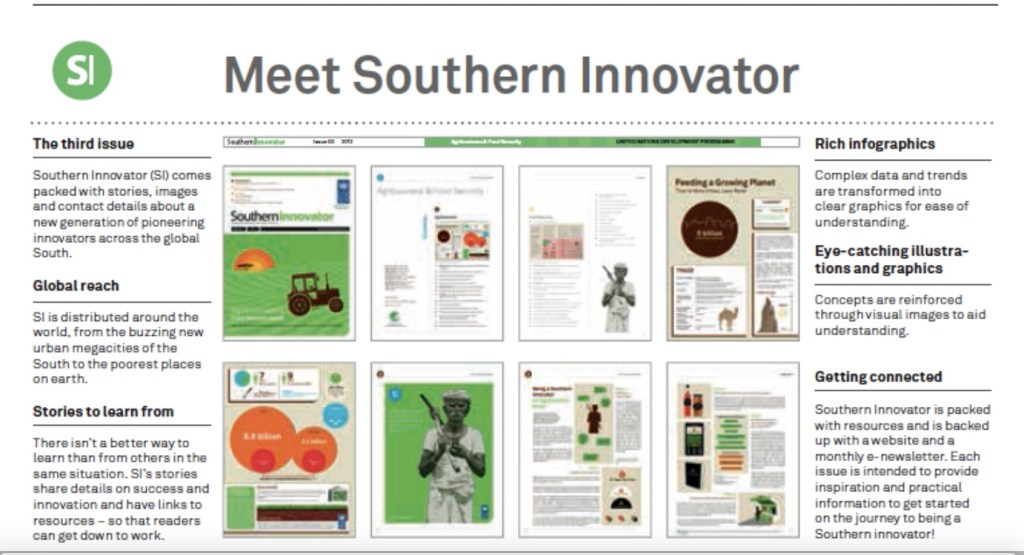
Development Challenges, South-South Solutions was launched as an e-newsletter in 2006 by UNDP’s South-South Cooperation Unit (now the United Nations Office for South-South Cooperation) based in New York, USA. It led on profiling the rise of the global South as an economic powerhouse and was one of the first regular publications to champion the global South’s innovators, entrepreneurs, and pioneers. It tracked the key trends that are now so profoundly reshaping how development is seen and done. This includes the rapid take-up of mobile phones and information technology in the global South (as profiled in the first issue of magazine Southern Innovator), the move to becoming a majority urban world, a growing global innovator culture, and the plethora of solutions being developed in the global South to tackle its problems and improve living conditions and boost human development. The success of the e-newsletter led to the launch of the magazine Southern Innovator.
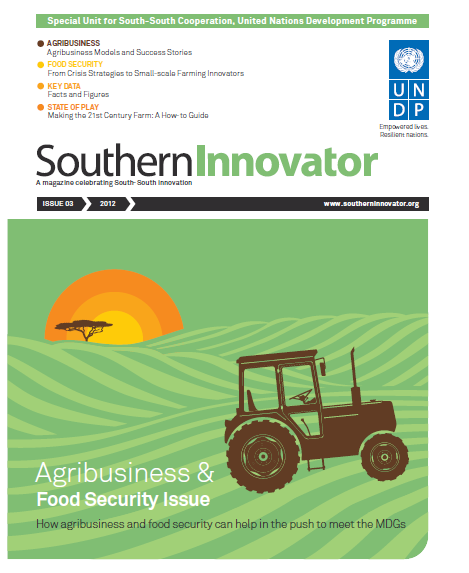
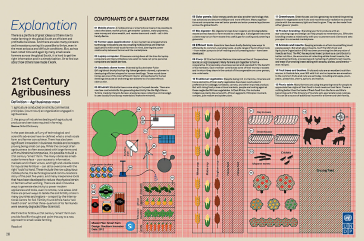
As the world’s population continues to grow – surpassing 9 billion people by 2050, the United Nations estimates – and more and more people move to urban areas, producing enough food to feed this population will be one of the biggest economic challenges and opportunities in the global South.
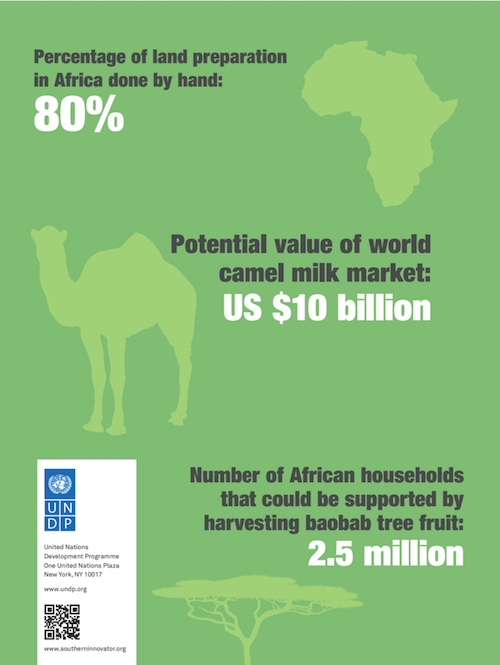
Africa, a continent undergoing significant economic change, has yet to fully realize its potential as a producer of agricultural products to feed itself and the world. Africa currently has a labour-intensive but very inefficient agriculture system. While many Africans either make their living in agriculture or engage in subsistence farming for survival, much of the continent’s farming is inefficient and fails to make the most of the continent’s rich resources and potential.
What will need to change to make this happen? African farms will need greater access to capital, as well as more investment in infrastructure and better irrigation. All of these elements will need to dramatically improve if Africa is going to compete effectively in global markets.
The report urges greater cooperation between governments and agribusinesses, farmers and consumers and for all parties to recognize that the continent is being rapidly urbanized, changing the way food is grown, sourced and distributed.
It says Africa’s farmers and agribusinesses require more capital, steady supplies of electricity, better technology and irrigated land. All these resources then need to be applied to the growing of high-value, nutritious foods.
At present, agriculture, farmers and agribusinesses make up almost 50 per cent of Africa’s economic activity, and the continent’s food system is worth an estimated US $313 billion a year (World Bank). But the report believes this could triple if governments and business leaders adopted radically different policies.
“The time has come for making African agriculture and agribusiness a catalyst for ending poverty,” said Makhtar Diop, the World Bank Vice President for Africa. “We cannot overstate the importance of agriculture to Africa’s determination to maintain and boost its high growth rates, create more jobs, significantly reduce poverty, and grow enough cheap, nutritious food to feed its families, export its surplus crops, while safeguarding the continent’s environment.”
The report addresses the problems African agriculture is currently experiencing: slow yield growth for major food crops, slowing research spending, degraded land, water scarcity, and climate change. It looks at solutions to allow Africa to tackle these problems and seize the opportunity to significantly increase its food and agricultural exports. Africa can more than meet its own needs and meet the world’s needs too, the report argues.
But what can be done? At present, 50 per cent of the world’s uncultivated land suitable for growing food resides in Africa. This works out to 450 million hectares of land that is neither forested, protected nor densely populated – all could be available for growing food.
The report also found Africa is using just 2 per cent of its renewable water resources while the rest of the world averages 5 per cent. African harvests currently do not yield anything close to what is possible. Another weakness is waste from post-harvest losses, averaging 15 to 20 per cent for cereals, and even more for perishable foods, because of poor storage and farm infrastructure.
Areas the report recommends farmers and agribusinesses should focus on include fast-growing markets for rice, maize, soybeans, sugar, palm oil, biofuel and feedstock. In sub-Saharan Africa, the focus should be on rice, feed grains, poultry, dairy, vegetable oils, horticulture and processed foods for the domestic market. And there are also good examples to follow by studying the ways Latin America and Southeast Asia used world markets to boost income and profits.
Agribusiness enterprises looking to purchase more land to expand the number of hectares under cultivation are urged to act ethically and not to threaten existing people’s livelihoods or violate local users’ rights. This includes consulting with locals and paying fair market price for land bought.
Rice is one crop that needs attention. Significant quantities of rice are imported and consumed in Africa. Half the rice eaten is imported, costing around US $3.5 billion a year (World Bank). Big importers include Ghana and Senegal – both countries singled out in the report for needing to improve their domestic rice production and quality.
Another food staple needing attention is maize (corn). A daily food staple for many Africans, it takes up 14 per cent of crop lands on the continent. While most Zambians get half their calories from maize, Zambia is currently unable to export maize at a cost comparable to market leader Thailand – Zambian maize costs one-third more. Zambia was singled out as needing to raise yields, reduce costs, and remove disincentives for the private sector in markets and trade.
“Improving Africa’s agriculture and agribusiness sectors means higher incomes and more jobs. It also allows Africa to compete globally. Today, Brazil, Indonesia and Thailand each export more food products than all of sub-Saharan Africa combined. This must change,” said Jamal Saghir, the World Bank’s Director for Sustainable Development in the Africa Region.
How to make the most of this opportunity?
One innovative idea coming out of Africa comes from the mega-brewer SABMiller (sabmiller.com). As a sign of confidence in the continent’s growing economies, the brewer has pledged to slash its beer prices and use more African-grown grains – a boost to local farmers – and to start a campaign of opening new breweries for the next three years. Countries targeted include Ghana, Nigeria, Mozambique and Zambia.
“African farmers and businesses must be empowered through good policies, increased public and private investments and strong public-private partnerships,” according to Gaiv Tata, World Bank director for Financial and Private Sector Development in Africa. “A strong agribusiness sector is vital for Africa’s economic future.”
Development Challenges, South-South Solutions was launched as an e-newsletter in 2006 by UNDP’s South-South Cooperation Unit (now the United Nations Office for South-South Cooperation) based in New York, USA. It led on profiling the rise of the global South as an economic powerhouse and was one of the first regular publications to champion the global South’s innovators, entrepreneurs, and pioneers. It tracked the key trends that are now so profoundly reshaping how development is seen and done. This includes the rapid take-up of mobile phones and information technology in the global South (as profiled in the first issue of magazine Southern Innovator), the move to becoming a majority urban world, a growing global innovator culture, and the plethora of solutions being developed in the global South to tackle its problems and improve living conditions and boost human development. The success of the e-newsletter led to the launch of the magazine Southern Innovator.








 David South Consulting
You must be logged in to post a comment.