Manila, Philippines – Since HIV is contracted through sex, the disease has always been a difficult subject for the world’s religious leaders. When there is sex to be discussed, no religion can do it without bringing up morality.
This moral debate about bedroom behaviour has tainted discussion of AIDS in many countries. At the extreme end of the spectrum, some evangelical Christian leaders in the US have painted AIDS as an apocalyptic disinfectant for humanity.
Not surprisingly, this attitude has not helped in educating the faithful that AIDS can happen to anyone and its victims should be treated like any other ill person.
The Philippine conference heard that the standoff between the world’s leaders and public health authorities must stop. Dr Peter Piot, executive director of UNAIDS, pointed to the numerous delegates from the world’s religions and called on others to follow their example.
“In Myanmar, the Myanmar Council of Churches, the YWCA and other community-based organizations have joined hands with local authorities, health workers and Buddhist groups for community-based prevention, care and support programmes,” he told the assembly.
“This is the best practice in action.”
Mongolian delegate Dr Altanchimeg thinks a similar approach could work in this country.
“Now every Mongolian goes to see lamas. It’s a good channel to advocate for AIDS education. In Thailand, lamas are very experienced at this. People believe in lamas.”
Like their colleagues in Thailand and Myanmar, Cambodian lamas have been in the forefront of AIDS education.
Lamas there use festivals and ceremonies to raise the issue.
You Chan, a 30-year-old lama from Tol Sophea Khoun monestary in Phnom Penh, likes to raise the issue delicately, by referring to diseases in Buddha’s time.
“I feel it is difficult to speak about sexual methods with a large audience – I will not speak to sexual methods.
“At first, it was very difficult. People would ask why a monk would say such things. But I tried and tried and the people understood who is helping them.
“My message to Mongolia’s lamas is this: you have a moral responsibility to educate the people about AIDS, that it is happening all around the world and there is no medicine to cure it.
“You have to take care in the name of Buddhism to help people in this world.”
You Chan teaches lamas at 15 temples in Cambodia, who pass the message along to other lamas and congregations.
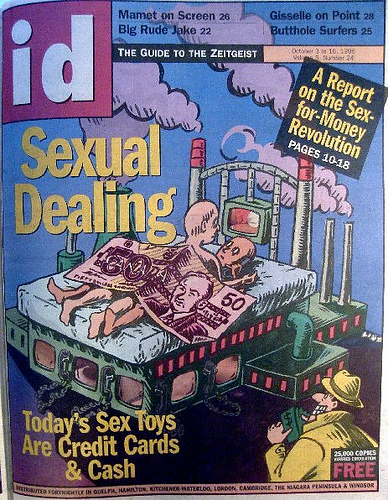
Prostitution is called the world’s oldest profession, and can be found in one form or another in every country and society. And where poverty is rife and women have few economic choices, it flourishes. But it also flourishes in societies and economies undergoing rapid change, and where people move around more and more, as in the South’s fast-growing cities.
The money to be made trafficking people for the sex trade is huge. Sex trafficking is organized crime’s fastest growing business, with up to two million people worldwide – mostly women and children – trafficked into the sex trade every year (UN). Approximately 80 percent of today’s trafficked people around the world are female, and up to 50 percent are under the age of 18 (The New Global Slave Trade by Ethan B. Kapstein).
It is difficult to gauge the total number of prostitutes in the South: often, many women drift in and out of the profession for economic reasons. In Cambodia for example, Oxfam (http://www.oxfam.org.uk/) has put the number as high as 300,000 to 500,000, with one third of the sex workers below the age of 18. In India, there are more than 7 million prostitutes (UNICEF). It’s thought more than a third are forced into the sex trade, and most are under the age of 18. Many are between 12 and 15 years old.
In India, Mumbai’s Kamathipura (http://www.netphotograph.com/viewset.php?id=23) area is called Asia’s biggest home to brothels: over 150,000 prostitutes work there. The women can make as little as 10 rupees (US 23 cents) per customer, and many have been sold by sex traffickers. But prostitutes in Kamathipura are being helped to get out of the poverty trap that leads them into sex work. Population Services International (www.psi.org) has set up bank accounts for the women working as prostitutes in the area so they can start saving to be able to buy their way to a better life. By saving as little as 10 rupees with each deposit, the women are able to set aside money and keep it safe from theft and from the pimps and madams who run the brothels.
“It has helped a lot,” Reena, who moved to the area from Calcutta, told the Independent newspaper. “Now no one can steal the money.”
“I was tricked here. I was in love with a man and came here with him. But when I got here he sold me,” said Simla, 42, from Nepal. Simla has two children outside the red light district and the money she saved was for school fees. Simla wants her children to avoid her fate: “I was fooled into this. I will not allow my children to do it,” she said.
The bank accounts work like this: one of the women walks around the area with an envelope and a notebook. She gathers money from the sex workers, which is then deposited into a single bank account under the Sangini co-operative. When one of the women wants to get some money, it is returned by the cooperative. To date, over 2,500 women have deposited more than US $157,477.
How does this money-saving help the women? Apart from slowly building up some wealth, it also gives them power; the power to say “no” to a customer who refuses to use a condom or who is abusive. It takes away a bit of the daily desperation that forces so many women to do things they don’t want to just to survive another day.
And it is important their savings grow if they are to have a better future: competition is getting fiercer as the crisis in India’s rural areas drives more women to the cities. And more turn to prostitution to survive. This has its own market dynamics: younger women become the desired commodity and older prostitutes see their incomes go down – a young woman can charge 100 rupees (US $2.31) for sex, while older women only get 30 rupees (US 69 cents).
Resources
Coalition Against Trafficking in Women – Asia Pacific: international network of feminist groups, organizations and individuals fighting the sexual exploitation of women globally. Website: http://www.catw-ap.org/
UN.GIFT: Global Initiative to Fight Human Trafficking: this website is packed with resources, including an anti-trafficking toolkit. Website: http://www.ungift.org/
Anti-Trafficking Alliance: A charity founded in 2005 to prevent, tackle and eliminate forced abduction and trafficking into sexual slavery and to empower survivors. Website: http://www.atalliance.org.uk/
More on the role played by sex work in an economic crisis (especially as a survival and/or resilience strategy), or when there are high levels of poverty present in a country:
Risks and resiliency of women engaged in sex work in Mongolia
As a reporter for two Financial Times newsletters, New Media Markets and Screen Finance, I covered the rapidly growing UK (and Scandinavian) television and new media markets and the expanding film-financing sector in Europe.
A newly-formed group representing cancer doctors says it is fed up with the inhumane and bureaucratic approach to cancer care in Ontario.
Dr. Shailendra Verma of Access to Equal Cancer Care in Ontario (AECCO) says he’s had enough.
“My group has served the government notice that we’re fighting on our patients’ behalf,” says Verma, who faces gut-wrenching quandaries every day in his growing Ottawa practice. “In a public health system, I’m damned if I’m going to be divided into giving one set of patients a Cadillac treatment and the other Hyundai-type treatment; I don’t think that’s why we have a public health system.”
Verma says cutbacks to health care funding have meant that doctors must leap increasingly high hurdles to get the drugs their patients need.
In jeopardy
While chemotherapy drugs administered in hospitals are still free, he says the important drugs necessary for patient comfort and treatment effectiveness are in jeopardy.
These drugs were once free under the Ontario Drug Benefit Plan (ODBP), but now their status is tenuous. One drug, GCSF – which is crucial in helping patients between treatments of chemotherapy – is now listed under Section 8 of the ODBP and requires doctors to plead with the government each time for coverage. Often the bureaucracy moves so slowly that the course of chemotherapy is seriously disrupted, Verma says.
“As an oncologist I’m particularly interested in ensuring everyone has access to all treatment. I think we are at a very sensitive crossroads. Over the last three or four decades we’ve developed certain treatments for diseases that more often kill than cure. And now we are at a point where we’ve got new treatments that can make the older treatments more effective. Or we’ve got brand new treatments that we are hoping to apply, and the one thing that is holding us back is cost.”
Cost
“The decisions are not based on science, they’re based on cost. It would not be an issue if treatments cost a penny a shot.”
Verma says colleagues can’t introduce some new drugs because the costs would be too high to offer it to everyone. So no one gets it.
“We have patients who walk in and say they would like to pay for it,” continues Verma. “Ethically, as a physician do you allow a patient to pay for it while sitting next to a similar patient who can’t afford it?”
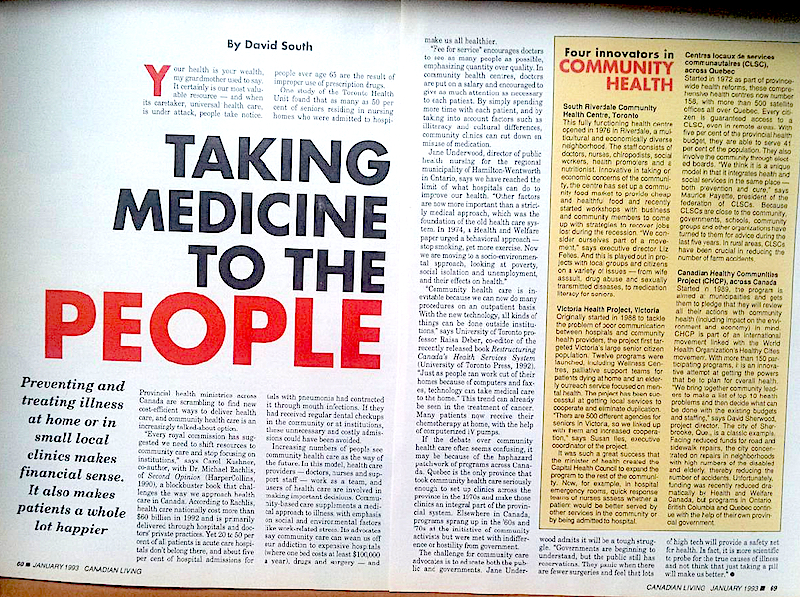
Your health is your wealth, my grandmother used to say. It certainly is our most valuable resource – and when its caretaker, universal health care, is under attack, people take notice.
Provincial health ministries across Canada are scrambling to find new cost-efficient ways to deliver health care, and community health care is an increasingly talked-about option.
“Every royal commission has suggested we need to shift resources to community care and stop focusing on institutions,” says Carol Kushner, co-author, with Dr. Michael Rachlis, of Second Opinion (HarperCollins, 1990), a blockbuster book that challenges the way we approach health care in Canada. According to Rachlis, health care nationally cost more than $60 billion in 1992 and is primarily delivered through hospitals and doctors’ private practices. Yet 20 per cent of all patients in acute care hospitals don’t belong there, and about five per cent of hospital admissions for people over age 65 are the result of improper use of prescription drugs.
One study of the Toronto Health Unit found that as many as 50 per cent of seniors residing in nursing homes who were admitted to hospitals with pneumonia had contracted it through mouth infections. If they had received regular dental check-ups in the community or at institutions, these unnecessary and costly admissions could have been avoided.
Increasing numbers of people see community health care as the way of the future. In this model, health care providers – doctors, nurses and support staff – work as a team, and users of health care are involved in making important decisions. Community-based care supplements a medical approach to illness, with emphasis on social and environmental factors like work-related stress. Its advocates say community care can wean us off our addication to expensive hospitals (where one bed costs at least $100,000 a year), drugs and surgery – and make us all healthier.
“Fee for service” encourages doctors to see as many people as possible, emphasizing quantity over quality. In community health centres, doctors are put on a salary and encouraged to give as much attention as necessary to each patient. By simply spending more time with each patient, and by taking into account factors such as illiteracy and cultural differences, community clinics can cut down on misuse of medication.
Jane Underwood, director of public health nursing for the regional municipality of Hamilton-Wentworth in Ontario, says we have reached the limit of what hospitals can do to improve health. “Other factors are now more important than a strictly medical approach, which was the foundation of the old health care system. In 1974, a Health and Welfare paper urged a behavioral approach – stop smoking, get more exercise. Now we are moving to a socio-environmental approach, looking at poverty, social isolation, and unemployment, and their effects on health.”
“Community health care is inevitable because we can now do many procedures on an outpatient basis. With the new technology, all kinds of things can be done outside institutions,” says University of Toronto professor Raisa Deber, co-editor of the recently released book Restructuring Canada’s Health Services System (University of Toronto Press, 1992).
“Just as people can work out of their homes because of computers and faxes, technology can take medical care to the home.” This trend can already be seen in the treatment of cancer. Many patients now receive their chemotherapy at home, with the help of computerized IV pumps.”
If the debate over community health care often seems confusing, it may be because of the haphazard patchwork of programs across Canada. Quebec is the only province that took community health care seriously enough to set up clinics across the province in the 1970s and make those clinics an integral part of the provincial system. Elsewhere in Canada, programs sprang up in the ’60s and ’70s at the initiative of community activists but were met with indifference or hostility from government.
The challenge for community care advocates is to educate both the public and governments. Jane Underwood admits it will be a tough struggle. “Governments are beginning to understand, but the public still has reservations. They panic when there are fewer surgeries and feel that lots of high tech will provide a safety net for health. In fact, it is more scientific to probe for the true causes of illness and not think that just taking a pill will make us better.”
Four Innovators in Community Health
South Riverdale Community Health Centre, Toronto
This fully functioning health centre opened in 1976 in Riverdale, a multicultural and economically diverse neighborhood. The staff consists of doctors, nurses, chiropodists, social workers, health promoters and a nutritionist. Innovative in taking on economic concerns of the community, the centre has set up a community food market to provide cheap and healthful food and recently started workshops with business and community members to come up with strategies to recover jobs lost during the recession. “We consider ourselves part of a movement,” says executive director Liz Feltes. And this is played out in projects with local groups and citizens on a variety of issues – from wife assault, drug abuse and sexually transmitted diseases, to medication literacy for seniors.
Victoria Health Project, Victoria
Originally started in 1988 to tackle the problem of poor communication between hospitals and community health providers, the project first targeted Victoria’s large senior citizen population. Twelve programs were launched, including Wellness Centres, palliative support teams for patients dying at home and elderly outreach service focused on mental health. The project has been successful at getting local services to cooperate and eliminate duplication. “There are 500 different agencies for seniors in Victoria, so we linked up with them and increased cooperation,” says Susan Lles, excutive coordinator of the project.
It was such a great success that the minister of health created the Capital Health Council to expand the program to the rest of the community. Now, for example, in hospital emergency rooms, quick response teams of nurses assess whether a patient would be better served by other services in the community or by being admitted to hospital.
Centres locaux de services communautaires (CLSC), across Quebec
Started in 1972 as part of province-wide health reforms, these comprehensive health centres now number 158, with more than 500 satellite offices all over Quebec. Every citizen is guaranteed access to a CLSC, even in remote areas. With five per cent of the provincial health budget, they are able to serve 41 pr cent of the population. They also involve the community through elected boards. “We think it is a unique model in that it integrates health and social services in the same place – both prevention and cure,” says Maurice Payette, president of the federation of CLSCs. Because CLSCs are close to the community, governments, schools, community groups and other organizations have turned to them for advice during the last five years. In rural areas, CLSCs have been crucial in reducing the number of farm accidents.
Canadian Healthy Communities Project (CHCP), across Canada
Started in 1989, the program is aimed at municipalities and gets them to pledge that they will review all their actions with community health (including impact on the environment and economy) in mind. CHCP is part of an international movement linked with the World Health Organization’s Healthy Cities movement. With more than 150 participating programs, it is an innovative attempt at getting the powers that be to plan for overall health. “We bring together community leaders to make a list of top 10 health problems and then decide what can be done with the existing budgets and staffing,” says David Sherwood, project director. The city of Sherbrooke, Que., is a classic example. Facing reduced funds for road and sidewalk repairs, the city concentrated on repairs in neighborhoods with hig numbers of the disabled and elderly, thereby reducing the number of accidents. Unfortunately, funding was recently reduced dramatically by Health and Welfare Canada, but programs in Ontario, British Columbia and Quebec continue with the help of their own provincial government.
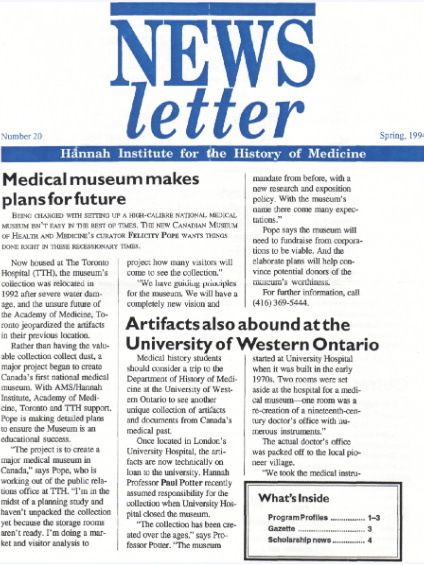
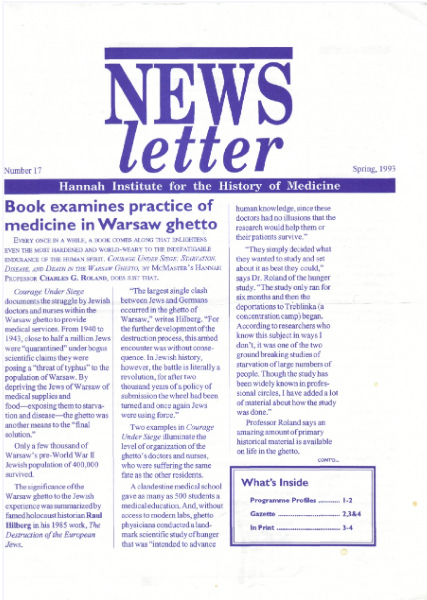
“… in recent years it has become a pursuit for a growing number of researchers. … Behind much of this growth has been the Hannah Institute for the History of Medicine …”










 David South Consulting
You must be logged in to post a comment.