Categories
Archive Development Challenges, South-South Solutions Newsletters Southern Innovator magazine

The Water-Free South African Bathing Solution

By David SouthDevelopment Challenges, South-South Solutions

SOUTH-SOUTH CASE STUDY

As the world’s population grows from its current 7 billion to a projected 9 billion in 2050 (UN), competition for access to the Earth’s resources will become fiercer. The most essential resource for life on the planet – and an increasingly precious resource – is water. Water is necessary for the very survival of humans, animals and plants, and is also used in vast quantities by industries and farms.

As demand increases, water resources will need to be conserved more and more, while clever ways will have to be developed to use less water. And there is also another factor to consider for the world’s poor: many millions live in very constrained conditions in urban and rural areas. For their health and dignity, the ability to wash every day is critical. Being clean is vital to being able to economically advance in life: it is something that sounds obvious but is often not a possibility for many millions of people living in slums.

Many will face lives where water is an uncertain resource that will be either expensive to purchase or will require lots of labour to obtain.

Anyone who can come up with a way to help bring the dignity of being clean and healthy while also saving water is onto a winner.

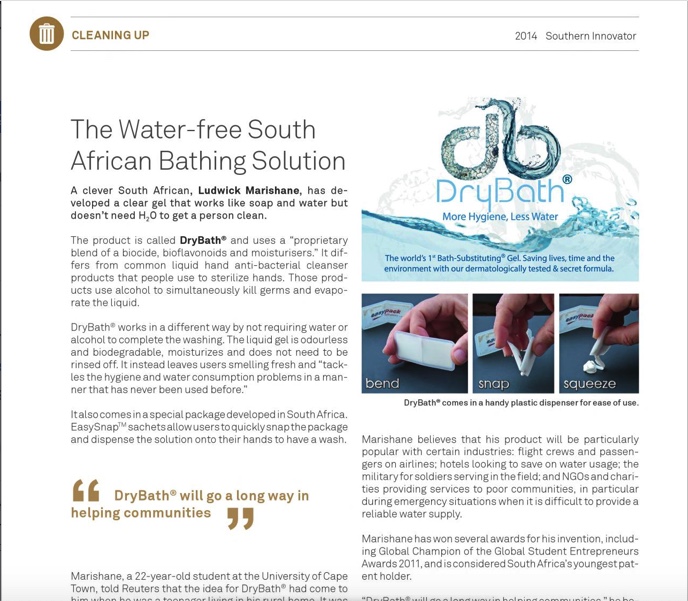
A clever South African, Ludwick Marishane, has developed a clear gel that works like soap and water but doesn’t need H2O to get a person clean.

The product is called DryBath (http://headboy.org/drybath/) and uses a “proprietary blend of a biocide, bioflavonoids and moisturisers.” It differs from common liquid hand anti-bacterial cleanser products that people use to sterilize hands. Those products use alcohol to simultaneously sterilize germs and evaporate the liquid.

DryBath works in a different way by not requiring water or alcohol to complete the washing. The liquid gel is odourless, biodegradable and moisturises and does not need to be rinsed off. It instead leaves users smelling fresh and “tackles the hygiene and water consumption problems in a manner that has never been used before.”

It also comes in a special package developed in South Africa. EasySnap™ sachets allow users to quickly snap the package and dispense the solution on to their hands to have a wash. EasySnap is a rectangular sachet that is snapped in the middle to open.

Marishane, a 22-year-old student at the University of Cape Town, told Reuters that the idea for DryBath came to him when he was a teenager living in his rural home. It was wintertime and his friend didn’t want to bother washing because there was no hot water available.

“He was lazy and he happened to say, ‘why doesn’t somebody invent something that you can just put on your skin and you don’t have to bathe’,” Marishane said.

That was when the light bulb went off in his head.

Intrigued, he started doing research on his web-enabled mobile phone. He trawled through the search engine Google and the online encyclopedia Wikipedia to find what would work as a water-free wash. After six months of research, he came up with the formula for DryBath and acquired a patent.

Now the strategy of Headboy Industries Inc. (headboy.org) – the company set up by Marishane – is to sell DryBath to corporate clients and in turn donate a free sachet for each sale to DryBath’s global charity partners, who will distribute DryBath to poor communities either for free or at a subsidized cost.

Marishane believes his product will be particularly popular with certain industries: flight crews and passengers on airlines; hotels looking to save on water usage; the military for soldiers serving in the field; and NGOs and charities providing services to poor communities, in particular during emergency situations when it is difficult to provide a reliable water supply.

Marishane has won several awards for his invention, including Global Champion of the Global Student Entrepreneurs Awards 2011, and is considered South Africa’s youngest patent holder.

“DryBath will go a long way in helping communities,” he believes.

Published: September 2012

Resources

1) How to register for a patent in South Africa. Website:https://www.sabs.co.za/index.php?page=patents

2) SABS Design Institute: The SABS Design Institute promotes the benefits of good design in order to stimulate the economic and technological development of South Africa. Website: https://www.sabs.co.za/index.php?page=designinstitute

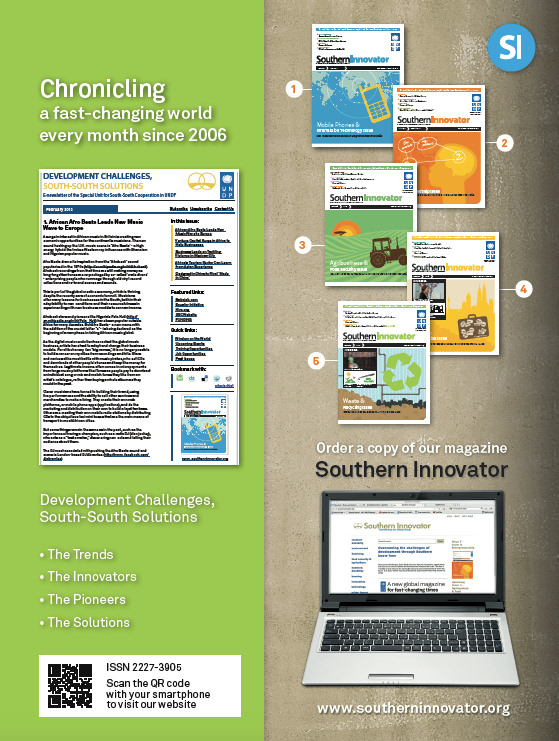
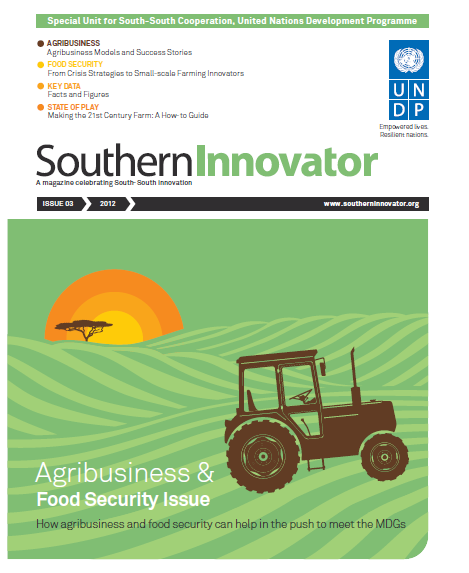
Development Challenges, South-South Solutions was launched as an e-newsletter in 2006 by UNDP’s South-South Cooperation Unit (now the United Nations Office for South-South Cooperation) based in New York, USA. It led on profiling the rise of the global South as an economic powerhouse and was one of the first regular publications to champion the global South’s innovators, entrepreneurs, and pioneers. It tracked the key trends that are now so profoundly reshaping how development is seen and done. This includes the rapid take-up of mobile phones and information technology in the global South (as profiled in the first issue of magazine Southern Innovator), the move to becoming a majority urban world, a growing global innovator culture, and the plethora of solutions being developed in the global South to tackle its problems and improve living conditions and boost human development. The success of the e-newsletter led to the launch of the magazine Southern Innovator. 

Creative Commons License

This work is licensed under a
Creative Commons Attribution-Noncommercial-No Derivative Works 3.0 License.

ORCID iD: https://orcid.org/0000-0001-5311-1052.

© David South Consulting 2023

Categories
Archive Development Challenges, South-South Solutions Newsletters

Innovative Ways to Collect Water from Air

By David SouthDevelopment Challenges, South-South Solutions

SOUTH-SOUTH CASE STUDY

 World water resources are being depleted quickly as populations grow, urbanize and demand better living standards. Many scientists believe we are reaching peak water – the point at which fresh water is consumed faster than it is replenished.

According to Ensia (ensia.com), a magazine showcasing environmental solutions in action, 70 per cent of the earth’s fresh water reserves are locked up in snow or ice, and are expensive to tap and bring to the world’s water-stressed places. Of the remainder, most is in groundwater, soil moisture, swamps or permafrost, while just 0.3 per cent is easy to access in freshwater lakes and rivers.

By far the biggest user of water in the world – accounting for 69 per cent of the total – is farm irrigation. That’s a serious concern when considering the world will need to grow more food to feed an increasing population. Just 1 per cent of water is used for livestock, while 15 per cent is used for electricity generation and 7 per cent for manufacturing. More water is currently being pumped from underground resources than is being replaced from underground aquifers.

The average person needs to consume 0.6 to 1.3 gallons (2.72 liters to 6 liters) of water per day to survive in a moderate climate. For drinking, cooking, bathing and sanitation, an individual needs 13 gallons (59 liters) a day (Ensia).

In many places, obtaining water requires a long trek to a well or stream. But non-desert climates have water as a resource readily available all around – trapped in the air. The clue to this resource’s existence is in the air’s humidity levels, the most visible sign of which is the dew that is found covering the grass and leaves every morning when people wake up. The trick is to extract that water from the air and create a steady supply of this essential resource.

Italian architect and designer Arturo Vittori (http://www.vittori-lab.com/team/arturo-vittori), a lecturer on aerospace architecture, technology transfer and sustainability, believes he has an answer.

Wired magazine (http://www.wired.com/2014/03/warka-water-africa/) reported that Vittori was inspired by a trip to Ethiopia, where he observed the daily struggle to get water. Access to water in northeastern Ethiopia often requires a long walk, which reduces the amount of time left in the day to do other things. Parents often take along their children, meaning the children cannot go to school. The time consumed by gathering water leaves people poorer and unable to dedicate more of their day to income-earning activities.

And there is no guarantee the water is safe to drink or free of chemical contaminants. This situation left Vittori pondering ways of coming up with an inexpensive solution that would eliminate the daily hassle of finding water and guarantee its quality.

The answer was a WarkaWater Tower (http://www.architectureandvision.com/projects/chronological/84-projects/art/492-073-warkawater-2012?showall=&start=1). The bamboo structure – which looks like an upended, latticework funnel – captures the dew and moisture in the air and collects it in a basket at the bottom.

The water collector is inspired by the Warka tree, or Ficus vasta (http://en.wikipedia.org/wiki/Ficus_vasta). Native to Ethiopia, it is known for providing shade and as a rendezvous point for traditional gatherings.

A WarkaWater Tower stands 8 meters in height and is made from either bamboo or reeds. Inside, a mesh traps humidity from the air and the water drips down into a basket. One tower can gather around 94 liters of water a day. The water is right there in the community and not kilometers away, meaning time and energy saved for income-generating tasks.

A WarkaWater Tower is constructed in sections, which are assembled and then stacked on top of each other. The construction does not need special scaffolding or special machinery. Once the tower is in place, it can also be used as a solar-power generator.

The tower is still a prototype and Vittori plans to build two towers for a launch in 2015.

In Peru, reports the Latin American Herald Tribune (http://www.laht.com/article.asp?ArticleId=700400&CategoryId=14095), another innovative solution to the water crisis has been developed by students at the University of Engineering and Technology (UTEC) (http://www.utec.edu.pe/Utec.aspx). The students have developed a highway advertising billboard that can draw drinking water out of the air. Inspired by a campaign called “Ingenuity in Action”, the students teamed up with a local advertising agency to design the billboard. It is capable of extracting water from the air and processing it through a filtration system as it flows down to a series of taps at the bottom.

The water-making billboard is at the 89.5 kilometer distance marker of the Pan-American Highway and has five electric-powered tanks that can hold a total of 96 liters of drinkable water. It is capable of providing enough water for hundreds of families. A true sign of our times!

Published: July 2014

Resources

1) How to Build a Rainwater Collection System. Website: http://www.wikihow.com/Build-a-Rainwater-Collection-System

2) The geopolitical difficulties of access to water covered in The Devil and the Disappearing Sea: A True Story about the Aral Sea Catastrophe by Robert Ferguson. Website: amazon.com

3) “Earth may have underground ‘ocean’ three times that on surface” from The Guardian. Website: http://www.theguardian.com/science/2014/jun/13/earth-may-have-underground-ocean-three-times-that-on-surface

An article on the impact of the water crisis on food supplies. Website: http://www.theguardian.com/lifeandstyle/2014/jul/09/enjoy-your-coffee-you-may-soon-not-be-able-to-afford-it

5) How to Make Water in the Desert. Website: http://www.wikihow.com/Make-Water-in-the-Desert


Development Challenges, South-South Solutions was launched as an e-newsletter in 2006 by UNDP’s South-South Cooperation Unit (now the United Nations Office for South-South Cooperation) based in New York, USA. It led on profiling the rise of the global South as an economic powerhouse and was one of the first regular publications to champion the global South’s innovators, entrepreneurs, and pioneers. It tracked the key trends that are now so profoundly reshaping how development is seen and done. This includes the rapid take-up of mobile phones and information technology in the global South (as profiled in the first issue of magazine Southern Innovator), the move to becoming a majority urban world, a growing global innovator culture, and the plethora of solutions being developed in the global South to tackle its problems and improve living conditions and boost human development. The success of the e-newsletter led to the launch of the magazine Southern Innovator.  

https://davidsouthconsulting.org/2022/11/02/clay-filters-are-simple-solution-for-clean-water/

https://davidsouthconsulting.org/2023/01/16/hip-driven-pump-brings-water-to-parched-fields/

https://davidsouthconsulting.org/2022/11/19/saving-water-to-make-money/

https://davidsouthconsulting.org/2021/03/05/southern-innovator-issue-5/

https://davidsouthconsulting.org/2022/02/10/urban-farmers-gain-from-waste-water/

https://davidsouthconsulting.org/2022/10/17/the-water-free-south-african-bathing-solution/

Follow @SouthSouth1

Google Books: https://books.google.co.uk/books?id=waeXBgAAQBAJ&dq=Development+Challenges+February+2008&source=gbs_navlinks_s

Slideshare: http://www.slideshare.net/DavidSouth1/development-challengessouthsouthsolutionsfebruary2008issue

Southern Innovator Issue 1: https://books.google.co.uk/books?id=Q1O54YSE2BgC&dq=southern+innovator&source=gbs_navlinks_s

Southern Innovator Issue 2: https://books.google.co.uk/books?id=Ty0N969dcssC&dq=southern+innovator&source=gbs_navlinks_s

Southern Innovator Issue 3: https://books.google.co.uk/books?id=AQNt4YmhZagC&dq=southern+innovator&source=gbs_navlinks_s

Southern Innovator Issue 4: https://books.google.co.uk/books?id=9T_n2tA7l4EC&dq=southern+innovator&source=gbs_navlinks_s

Southern Innovator Issue 5: https://books.google.co.uk/books?id=6ILdAgAAQBAJ&dq=southern+innovator&source=gbs_navlinks_s

Creative Commons License

This work is licensed under a
Creative Commons Attribution-Noncommercial-No Derivative Works 3.0 License.

ORCID iD: https://orcid.org/0000-0001-5311-1052.

© David South Consulting 2023
Categories
Archive Development Challenges, South-South Solutions Newsletters Southern Innovator magazine

Urban Farmers Gain from Waste Water

By David SouthDevelopment Challenges, South-South Solutions

SOUTH-SOUTH CASE STUDY

The global food crisis continues to fuel food price inflation and send many into hunger and despair. Around the world, solutions are being sought to the urgent need for more food and cheaper food. U.N. Secretary General Ban Ki-moon has called for food production to increase 50 percent by 2030 just to meet rising demand – and right now there are 862 million people undernourished (FAO).

One fast-growing solution is bringing farming to urban and semi-urban spaces, where the majority of the world’s population now lives.

Urban farmers can take advantage of their close proximity to consumers, keeping costs down and profits up. They can also solve one of agriculture’s enduring problems – where to find water for irrigation by using existing waste water. Waste water is plentiful in urban environments, where factories usually pump out waste water into streams, rivers and lakes.

The amount of urban farmed agriculture is still small, about 10 percent of the world’s agricultural production, but is a potential growth area if handled well. In 53 cities surveyed by the International Water Management Institute, 1.1 million farmers – some 200 million worldwide – are now using recycled or waste water to irrigate their crops.

In Accra, Ghana, more than 200,000 people depend on food grown with wastewater. In Pakistan, a full quarter of the grown vegetables use wastewater.

The use of waste water comes with its ups and downs. While the World Health Organization rightfully points out that waste water can be a source of disease and pollution, cities also face a dilemma: diverting fresh water to irrigate crops means less for people to drink. Out of the 53 cities surveyed by the International Water Management Institute, 85 percent dumped their raw sewage and wastewater into streams and lakes. With this in mind, the WHO has altered its stance on wastewater, and now supports its use for irrigating farmland as long as all efforts are made to treat wastewater and that people are warned to thoroughly wash food before eating it.

Pay Drechsel, who heads the IWMI’s research division based in Accra, Ghana, studying safe and productive use of low-quality water, says sophisticated systems to use waste water have developed in Vietnam, China and India, “where this practice has been going on for centuries.”

“People know how to avoid health risks, like thorough cooking of vegetables,” he said. “In Vietnam and China, waste from households (fecal waste, solid waste and wastewater from household use) have always been effectively recycled in ‘closed systems’ at a household level where the waste/nutrients are recycled into the food chain and so return for human consumption.”

Drechsel cites examples like Calcutta, where a large wetland is being used for treating and recycling wastewater for beneficial uses such as fish farming. In Northern Ghana, fecal sludge from septic tanks is spread on fields that are later used to grow cereals.

“The risk for the consumer is extremely low, a waste product is productively recycled, the farmer has a good harvest and the city gets rid of their waste,” Drechsel said. “A multiple win-win situation.

“Depending on the local situations such models can be widely used, provided they are documented and the risk factors are controlled,” he added.

Farmers use various methods to reduce the risk of contamination, including drip irrigation where the water does not touch the crop.

The risks for both farmers and consumer can be managed with the right protocols. For farmers, Drechsel recommends wearing of rubber boots and careful hand washing to avoid skin diseases. He points out that these farmers usually make more money than those who do not use waste water, and thus can afford the extra cost of precautionary measures, like de-worming tablets. They can quickly get out of poverty by using this water.

For consumers, the risk is from diarrhoea, typhus or cholera if raw food is eaten unwashed or poorly washed. The best solution is to turn to the WHO’s guidelines and proven local practices and tested techniques developed by researchers.

“Here more awareness creation on invisible risks through pathogens is needed. Perception studies in West Africa showed that nearly all households wash vegetables but they target visible dirt. Thus, the methods used are not effective. Best would be therefore a combination of risk reducing interventions from farm to fork, as none alone is 100 percent efficient. This is also what the new WHO guidelines promote: a flexible approach, reducing in each country the health risks as far as it is possible and feasible.”

Drechsel sees an opportunity for water treatment plants to seize: “What is missing so far is a ‘design for reuse.’ If treatment plants would be designed to serve farmers they could be less sophisticated and easier to maintain. Farmers could be involved in this, maybe a win-win situation.

“The environment benefits too. Spreading wastewater over fields, and allowing it to leach back through the soil into local waterways, turns out to be a reasonable way to purify it. The process filters out all the organic contaminants, and much of the nitrogen and phosphates that would otherwise contribute to algal blooms and dead zones further downstream. It is certainly preferable to dumping wastewater straight into the nearest big river or lake.”

Published: September 2008

Resources

  • Vertical farming, where hothouses are piled one on top of the other, is an option being promoted as a solution to the food needs of urban dwellers.
    Website: http://www.verticalfarm.com/
  • Extensive photographs of vertical farm project concepts by Chris Jacobs in cooperation with the grandfather of skyscraper farm concepts: Dr. Dickson Despommier of Columbia University. His ideal: all-in-one eco-towers would actually produce more energy, water (via condensation/purification) and food than their occupants would consume. His mission: to gather architects, engineers, economists and urban planners to develop a sustainable and high-tech wonder of ecological engineering.
    Website: weburbanist.com
  • Urban Gardening News, a news service providing a review of daily news targeting everyone involved in planning & practicing alternative farming in cities. Great updates on how things are progressing across the South.
    Website: http://www.urbanagriculture-news.com

Follow @SouthSouth1

Slideshare: http://www.slideshare.net/DavidSouth1/development-challengessouthsouthsolutionsnovember2010issue

Southern Innovator Issue 1: https://books.google.co.uk/books?id=Q1O54YSE2BgC&dq=southern+innovator&source=gbs_navlinks_s

Southern Innovator Issue 2: https://books.google.co.uk/books?id=Ty0N969dcssC&dq=southern+innovator&source=gbs_navlinks_s

Southern Innovator Issue 3: https://books.google.co.uk/books?id=AQNt4YmhZagC&dq=southern+innovator&source=gbs_navlinks_s

Southern Innovator Issue 4: https://books.google.co.uk/books?id=9T_n2tA7l4EC&dq=southern+innovator&source=gbs_navlinks_s

Southern Innovator Issue 5: https://books.google.co.uk/books?id=6ILdAgAAQBAJ&dq=southern+innovator&source=gbs_navlinks_s

Creative Commons License

This work is licensed under a
Creative Commons Attribution-Noncommercial-No Derivative Works 3.0 License.

ORCID iD: https://orcid.org/0000-0001-5311-1052.

© David South Consulting 2023