It was the decade of the happy face, bell-bottoms, avocado fridges, disco and the Bay City Rollers; in short, the 70s was a pimple on the ass of history, better evaporated in a pot haze on a waterbed. Not so says 70s-obsessed author Pagan Kennedy, who believes the much-maligned decade is the victim of a bum rap perpetuated by the idolization of the 60s.
Kennedy says the 70s saw all the radical ideas and culture of the 60s go mainstream and mutate in a way the hippies couldn’t imagine.
Social relations and culture were profoundly reshaped during this decade as the non-traditional family took form, women flooded the workplace and unions became rich monoliths.
The social turmoil spawned blue collar red-necks with Confederate flags customizing fuck trucks – vans complete with waterbed, eight-track stereo, bong and sleazy airbrushed exteriors of naked women – to cruise the nation’s highways enjoying the liberal sexual values while keeping conservative political views. Sexual liberation for these clowns consisted of bumper stickers saying “Ass, gas or grass – nobody rides for free!”. Kennedy remembers it all too well.
“This was the midst of the energy crisis, so big cars that wasted a lot of gas were really cool,” she says. “I guess it came out of the whole drug culture, sex culture thing. It was like a basement kids have, only it was on wheels – a party on wheels. It’s not just the mattress for the fuck truck, you’re supposed to be doing your bong hits in there – so the police can’t see you.”
Sex holidays
“Our lives are much more constrained than they were in the 70s,” continues Kennedy. “I think the 70s must seem like an exotic time to grow up in. One of my favourite parts in Douglas Coupland’s Generation X is when the characters want to take a sex holiday to 1974.
“There was a lot of obsession in the early 70s with swingers and wife-swapping. It was the one time when suddenly the sexual revolution was kicking in, not just for white, privileged college kids, but for everybody – for the working class. There were discos and orgy clubs. There was Plato’s Retreat in New York City where you would go in and there was an orgy in full progress.”
In music, the 70s rocketed between extremes. There was nauseating soft rock, concept albums and “progressive” rock. There was the outrageous glam, with artists like Slade and Gary Glitter jacked up on elevator shoes in sequin one-piece flare suits. There was disco and punk. But the sickest phenomena says Kennedy was corporate rock.
David Cassidy
“In the 60s, people were just learning how to package rock and make it a big corporate thing. By the 70s they had learned a lot. The Partridge Family was a group that was entirely fabricated. David Cassidy had a bigger fan club than Elvis. This was a guy who didn’t become a rock star until he went on TV. In the 60s, FM was alternative radio – you could play anything. Corporate guys got their hooks into FM by the 70s. They were formatting. It was no longer what the DJ wanted to hear. You were getting playlists. The money came from big rock concerts, so there was a desire to push these mega-groups and superstars.”
Another truly 70s phenomena was TV as social conscience. Before the 70s, TV variety shows focused on pure entertainment. But now writers, directors and producers schooled in the 60s political milieu were in control.
Blaxploitation
“All in the Family, Maude and Good Times were all part of the same world. All in the Family acknowledged the deep rifts in American society – America was at war with itself. Yet it did it in a soft enough way to not offend people.”
US blacks had been ignored until the civil rights struggle of the 1960s woke up a dopey white America. In the 1970s, blacks were being portrayed like never before in the media and popular culture. But all of this awareness took a twisted turn.
“I think what happened among blacks was they saw their leaders either killed or put in jail. And that was devastating. Blacks really turned to electoralism in the 70s. A lot of black people started running for office. While trying to change things from outside the system, they realized the price was too high. A lot of black people were involved in making those blaxploitation movies, but so were a lot of white people. Shaft and Superfly are like the bookends of the genre. They were really made by black filmmakers. But then there were all these ripoff versions starring football players – whitebread ideas of what black culture was like.”
Pagan Kennedy’s latest book, Platforms: A Microwaved Cultural Chronicle of the 1970s, is published by St. Martin’s Press and available in most book shops. She’s got a really cool collection of eight-track tapes and drives a yetch! 1974 Plymouth Valiant.
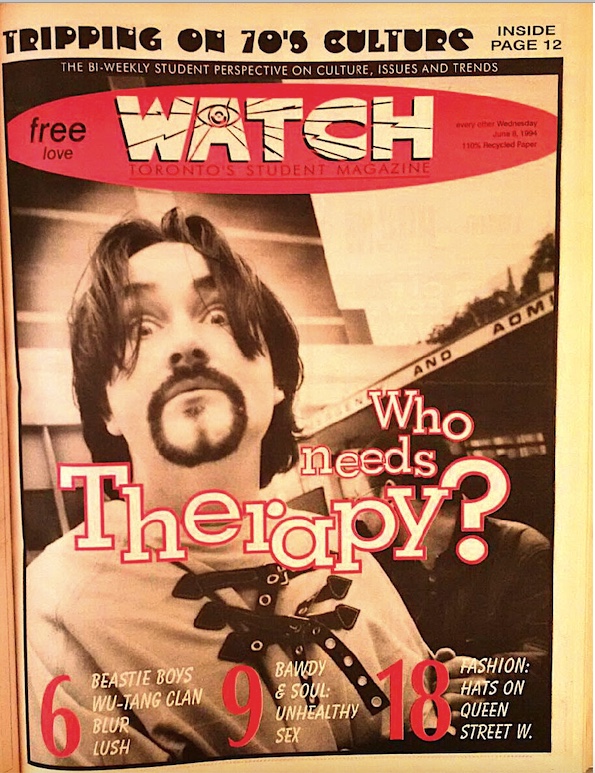
“Tripping on 70s Culture”: Watch Magazine was published in Toronto, Canada in the 1990s. “The Bi-Weekly Student Perspective on Culture, Issues and Trends.”



 David South Consulting
You must be logged in to post a comment.