Countries across the global South are experiencing rapid urbanization as people move to cities for better economic opportunities — and this massive social change is creating new business opportunities. Those who recognize how fundamentally people’s lifestyles are changing will be those who will benefit from this big shift in populations.
Finding ways to live well in urban areas will be critical to determining whether this move repeats past urban failures — from the favelas of Brazil to the slums of India — or introduces a new way of living that is exciting and colorful. Design and designers will be critical to this change.
One young design company in Brazil, Sao Paulo-based furniture studio NUUN (nuun.nu), is attempting to resolve a dilemma common across the rapidly urbanizing global South: How to create a design aesthetic that fits with the new way of living and being?
The company consists of designer and founder João Eulálio Kaarah and architects Renato Périgo and Carolina Sverner.
Périgo specializes in furniture and interior design, while Carolina Sverner worked with respected Japanese architect, Shigeru Ban (shigerubanarchitects.com), who is well known for designing buildings and houses made from paper and for creating easy-to-build homes for people after a disaster has struck (http://www.ted.com/talks/shigeru_ban_emergency_shelters_made_from_paper).
A collaboration among upcoming artists, designers and architects, NUUN tries to infuse its designs with a sense of “brazilianness”. Brazilianness is a modern aesthetic, made for modern lifestyles in the new urban landscape, that draws on aspects of Brazil’s culture and environment.
The young studio’s first collection of furniture offers simplicity. Called Eos, it tries to blend urban cosmopolitanism with raw nature. Brazil is known for its jam-packed urban cities as well as its vast expanse of Amazon rainforest. In practice, NUUN’s look is a mix of contrasts redolent of what used to be called brutalism: concrete mixed with glass, steel, wood and semi-precious gems. NUUN takes inspiration from NASA’s Earth Observation System (EOS): the collection vibes off of space satellites, antennae and the dry soil of the backwoods. NUUN says that “despite its Martian features, [the collection] is as Brazilian as it comes”. There is the modular Panorama sofa (http://nuun.nu/products/panorama) in five colors, capable of being re-shaped to fit a variety of living arrangements. A glass-topped coffee table with a concrete base and a side table with a carbon steel metallic structure to complement the sofa.
Elsewhere in the world of Brazilian design, footwear brand Grendene S.A. (http://ri.grendene.com.br/EN/Company/Profile) has become one of the world’s largest producers of footwear and made one of its founders a billionaire. And Grendene has boosted its international success by turning to another Brazilian success: supermodel Gisele Bündchen (giselebündchen.com.br).
Grendene began in 1971 and owns various successful shoe brands, including Melissa (melissa.com.br/en/), Grendha, Ilhabela, Zaxy, Cartago, Ipanema, Pega Forte, Grendene Kids and Grendene Baby.
It has six industrial zones with 13 footwear factories and can produce 240 million pairs of shoes a year. It undertakes all areas of production— from making its own moulds for the shoes to creating PVC (polyvinyl chloride) (http://en.wikipedia.org/wiki/Polyvinyl_chloride) – and handles its own distribution.
While Grendene is already a well-known shoe brand in Brazil, it wanted to expand its presence overseas to increase profits. Named after the two brothers who founded the company, Alexandre Grendene Bartelle and Pedro Grendene Bartelle, Grendene started working with supermodel Gisele Bündchen in 2002 to help her launch her own line of affordable flip-flops, iPanema (ipanemaflipflops.co.uk). The brightly colored sandals with elaborate patterns became an instant success.
But do celebrity endorsements really work? In the case of Bündchen and Grendene, the answer is yes. According to Forbes, 25 million pairs of the flip-flops and sandals are sold every year, accounting for 60 per cent of Grendene’s annual exports of about US $250 million.
Brazil was able to produce 864 million pairs of shoes in 2012, up 5.5 per cent from 2011.
Of these, 113 million pairs were exported to the United States, Argentina and France.
Brazil, like many other countries, has had to work out how it could compete with cheaper shoe imports from China. The strategy it chose was to target the growing number of middle-class people both in Brazil and elsewhere, as well as the high end of the market.
In 1979, Grendene created the Melissa brand, which has now become a coveted style leader. It collaborates with top design names such as Karl Lagerfeld and architect Zaha Hadid.
Making a partnership with Bündchen is part of the company’s strategy to reach higher-income buyers.
And it is working: Grendene increased its export revenue by 50 per cent in 2013.
Co-founder Alexandre Grendene Bartelle became a billionaire according to Forbes World’s Billionaires list and is worth US $1.4 billion. He owns 41 per cent of Grendene S.A. and close to 40 per cent of the Dell Anno brand.
This is a critical lesson for manufacturers in the global South. Grendene had achieved strong market dominance at home, and was already benefiting from growing wealth among Brazil’s middle classes. But it was the overseas market that had the potential to clinch even more profits for the company.
Bündchen’s high brand profile has enabled the company to compete head-to-head with the well-known Brazilian flip-flop brand, Havaianas (havaianas-store.com).
Another modern design leader owned by Grendene, Dell Anno (lojasdellanno.com.br), is a maker of modernist cabinets and furniture.
Dell Anno only use wood from renewable forest sources, to protect and preserve the Amazon and other native forests. Dell Anno tries to recycle as much as possible: up to 80 per cent of the water used in manufacturing is recycled, and byproducts from the production process such as a sawdust, wood, plastic and cardboard are also reused.
Dell Anno makes a full range of furniture for kitchens, bedrooms, closets, home theatres, home offices, service areas, restrooms and commercial environments. Dell Anno uses research and development to study trends and advise customers on the best options. The brand offers its staff training to help standardize customer service, and also has an excellent blog covering developments in modern design around the world (http://www.lojasdellanno.com.br/blog/).
Published: May 2014
Development Challenges, South-South Solutions was launched as an e-newsletter in 2006 by UNDP’s South-South Cooperation Unit (now the United Nations Office for South-South Cooperation) based in New York, USA. It led on profiling the rise of the global South as an economic powerhouse and was one of the first regular publications to champion the global South’s innovators, entrepreneurs, and pioneers. It tracked the key trends that are now so profoundly reshaping how development is seen and done. This includes the rapid take-up of mobile phones and information technology in the global South (as profiled in the first issue of magazine Southern Innovator), the move to becoming a majority urban world, a growing global innovator culture, and the plethora of solutions being developed in the global South to tackle its problems and improve living conditions and boost human development. The success of the e-newsletter led to the launch of the magazine Southern Innovator.
Expertise: Crisis leadership, mission leadership, strategy, communications, web strategy, digital media, crisis recovery, public health, Northeast Asia, UN system.
Location: Ulaanbaatar, Mongolia 1997 to 1999
UN/UNDP Mongolia Communications Coordinator:David South
The question posed itself from the start of the assignment: In the middle of a major crisis, is it possible to recover quickly while simultaneously growing and modernizing the United Nations mission (this was the dawn of the digital revolution)? It was only possible by teaching and mentoring colleagues, offering leadership, vision, strategy, and practical actions to get there – all with a budget and mandate for two years.
The mission had to tackle in particular, three, severe crises: the country’s turbulent transition from Communism to free markets and democracy, the social and economic crash this caused, and, later in 1997, the Asian Financial Crisis (Pomfret 2000)* – all combined with the political instability this exacerbated. Richard Pomfret said in 1994, “In 1991 Mongolia suffered one of the biggest peacetime economic collapses ever (Mongolia’s Economic Reforms: Background, Content and Prospects, Richard Pomfret, University of Adelaide, 1994).” From Curbing Corruption in Asia: A Comparative Study of Six Countries by Jon S. T. Quah: “The combined effect of these three shocks was devastating as ‘Mongolia suffered the most serious peacetime economic collapse any nation has faced during this century’. Indeed, Mongolia’s economic collapse ‘was possibly the greatest of all the (peaceful) formerly’” Communist countries.
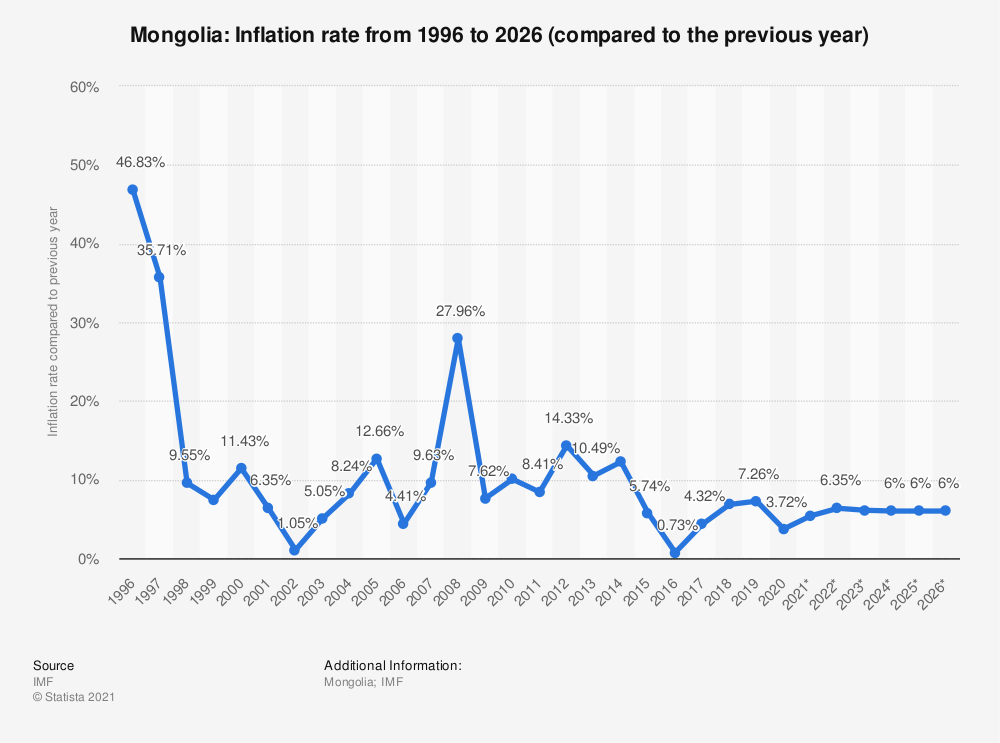
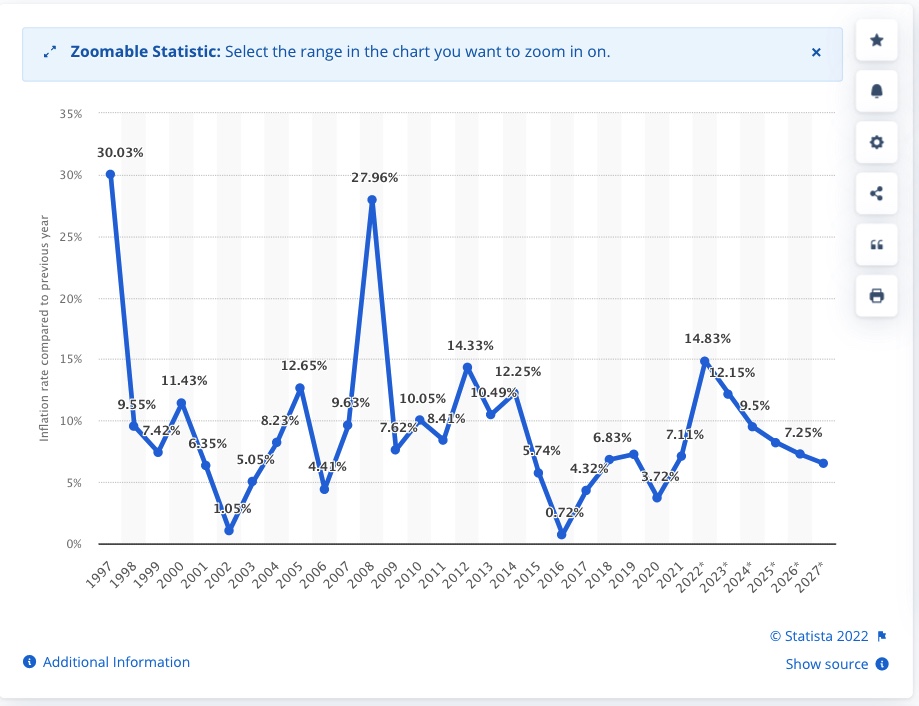
A dramatic decline in inflation paired with political and economic stabilisation allowed Mongolia to enjoy the fruits of the fast-growing economies of the 2000s. Source: Statista.
During the last 16 years the financial and monetary system of our country saw the worst crisis in 1991-1994, there was a recovery in 1995-1997 and another crisis in 1997-1999. However, it has entered a stable stage since 2000.
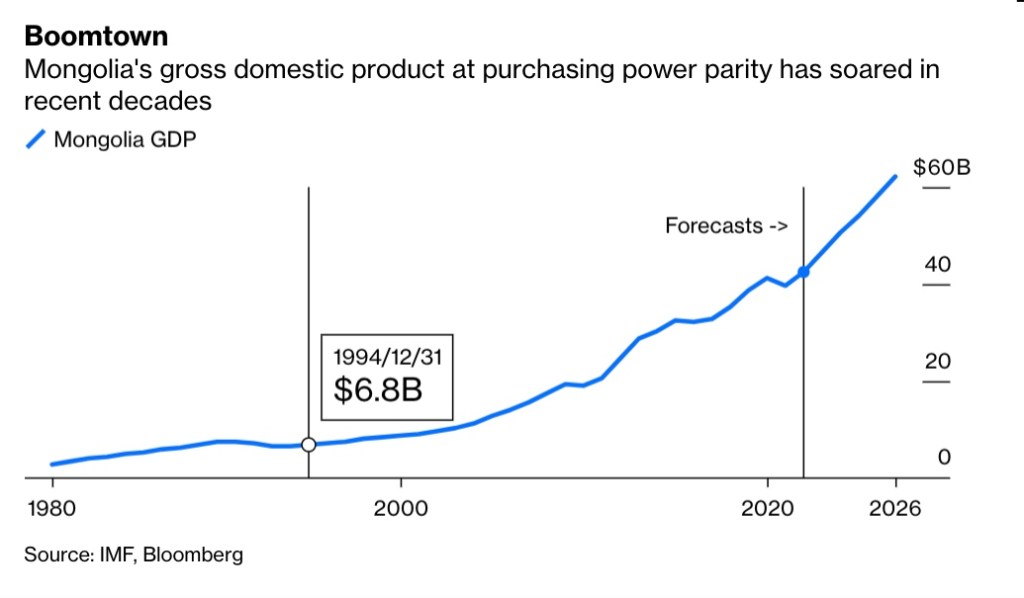
A resources “boomtown” throughout the 2000s. Source: Bloomberg. When I left in 1999, Mongolia’s PPP was US $8.8 bn; today (2021) it is US $42.4 bn. Graph from Migration under economic transition and changing climate in Mongolia, Journal of Arid Environments, Volume 185, February 2021. “Urbanization in Mongolia accounted for over 80% of all migration, mostly into the capital city Ulaanbaatar (UB), where nearly 70% of recent population growth was from migration.” As can be seen in this chart, Mongolia’s economic growth since 2000 has benefited greatly from its proximity to China.
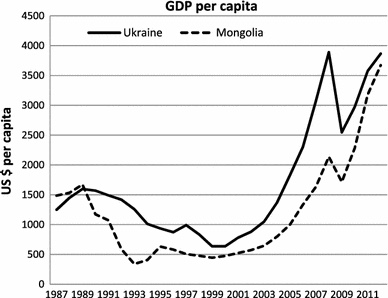
As this chart shows, increasing connectivity had a profound impact on living standards in Ukraine and Mongolia post-2000. The extreme turbulence Mongolia experienced in the 1990s – after the collapse of support mechanisms from the Soviet Union – calmed down as Mongolia integrated with the global economy, especially a booming China. Read about my work in Ukraine here: UN Ukraine Web Development Experience | 2000.
The Economist: “Those free-trading Mongolians” was published Apr 24th 1997. I arrived in May of 1997 to find a country on the cusp of great and turbulent change.
In this role, I pioneered innovative uses of the Internet and digital resources to communicate the UN’s work and Mongolia’s unfolding crises. The UN called this work a “role model” for the wider UN and country offices. A survey of United Nations country office websites in 2000 ranked the UN Mongolia website I launched in 1997 and oversaw for two years (1997-1999), third best in the world, saying: “A UN System site. A very nice, complete, professional site. Lots of information, easily accessible and well laid out. The information is comprehensive and up-to-date. This is a model of what a UNDP CO web site should be.” (http://www.scribd.com/doc/274319690/UNDP-Mongolia-United-Nations-2000-Survey-of-Country-Office-Websites)
“The years 1998 and 1999 have been volatile ones for Mongolia, with revolving door governments, the assassination of a minister, emerging corruption, a banking scandal, in-fighting within the ruling Democratic Coalition, frequent paralysis within the Parliament, and disputes over the Constitution. Economically, the period was unstable and rife with controversies.” Mongolia in 1998 and 1999: Past, Present, and Future at the New Millennium by Sheldon R. Severinghaus, Asian Survey, Vol. 40, No. 1, A Survey of Asia in 1999 (Jan. – Feb., 2000). pp. 130-139 (Publisher: University of California)
As part of a strategic plan to raise awareness of Mongolia’s development challenges and to spur action on meeting them, a Communications Office was established for the UN mission in 1997 – a structure that is commonplace in UN missions today. The Office also led on digital communications, marking many firsts, from the first digital photo and video library, the first online magazine, the first web portal, the first online newsletter, and many other firsts. It gathered numerous stories on resilience in a crisis, and documented in data and storytelling the country’s development challenges, while introducing a transparent way of working and communicating unprecedented for the time (the country was still recovering from the state secrecy of its years under Communism), and led on modernizing communications in the country. Acting as a strategic hub, the Communications Office and its dynamic and talented team, were able to leverage the existing budget to spur action on many fronts, including:
I launched it in 1997 in the middle of a major crisis, and oversaw its expansion and development for two years. A pioneering digital resource, this award-winning United Nations Mongolia development web portal was singled out by UN headquarters in New York as an example of what a country office website should be like. It featured extensive resources in both Mongolian and English and also was home to the bilingual online magazine, Ger – Mongolia’s first web magazine. It can be viewed at www.archive.org and there is more at Wikipedia here: https://en.wikipedia.org/wiki/Ger_(magazine).
Media
Working with journalists and media both within Mongolia and outside, the Communications Office was able to significantly raise awareness of Mongolia and its development challenges. This was reflected in a substantial increase in media coverage of the country and in the numerous books and other publications that emerged post-1997. The book In Their Own Words: Selected Writings by Journalists on Mongolia, 1997-1999 (ISBN 99929-5-043-9) published by UNDP Mongolia archived the stories by theme.
Ger Magazine
Ger Magazine (the Mongolian word for home and traditional tent dwelling) was published as the country’s first e-magazine in 1998. There were four issues in total from 1998 to 2000. The launch issue was on the theme of youth in the transition. Mongolia was transitioning from Communism to free markets and democracy and this had been both an exhilarating time and a wrenching time for young people. The magazine drew on talented journalists from Mongolia and the handful of international journalists based there to create a mix of content, from stories about life adapting to free markets to stories on various aspects of Mongolian culture and life.
The second issue of the magazine proved particularly effective and inspiring, with its modern life theme and cover story on a thriving Mongolian fashion scene.
Archived issues of the magazine can be found at the Wayback Machine here: https://archive.org/. Just type in the UN Mongolia website address for the years 1997 to 1999: http://www.un-mongolia.mn.
An online survey of the state of Mongolia’s media and its history (www.pressreference.com/Ma-No/Mongolia.html), had this to say: “An interesting variation from some of the other publications available is Ger Magazine (published online with guidance from the United Nations Development Program, UNDP), which is concerned with Mongolian youth in cultural transition. The name of the magazine is meant to be ironic because a ger is the Mongolian word for yurt—a yurt being traditional nomadic housing—but the magazine is about urbanization and globalization of Mongolian youth.”
Blue Sky Bulletin
The Blue Sky Bulletin newsletter was launched in 1997 initially as a simple, photocopied handout. It quickly founds its purpose and its audience, becoming a key way to communicate what was happening in the country and a crucial resource for the global development community, scholars, the media and anyone trying to figure out what was happening in a crazy and chaotic time. It eschewed the typical ‘grip and grin’ content found in many development newsletters and instead offered stories, data and insights useful to anyone seeking to understand Mongolia’s development challenges. The Blue Sky Bulletin was distributed via email and by post and proved to be a popular and oft-cited resource on the country. The quality of its production also paralleled Mongolia’s growing capacity to publish to international standards, as desktop publishing software became available and printers switched to modern print technologies. The Blue Sky Bulletin evolved from a rough, newsprint black and white publication to becoming a glossy, full-colour, bilingual newsletter distributed around Mongolia and the world.
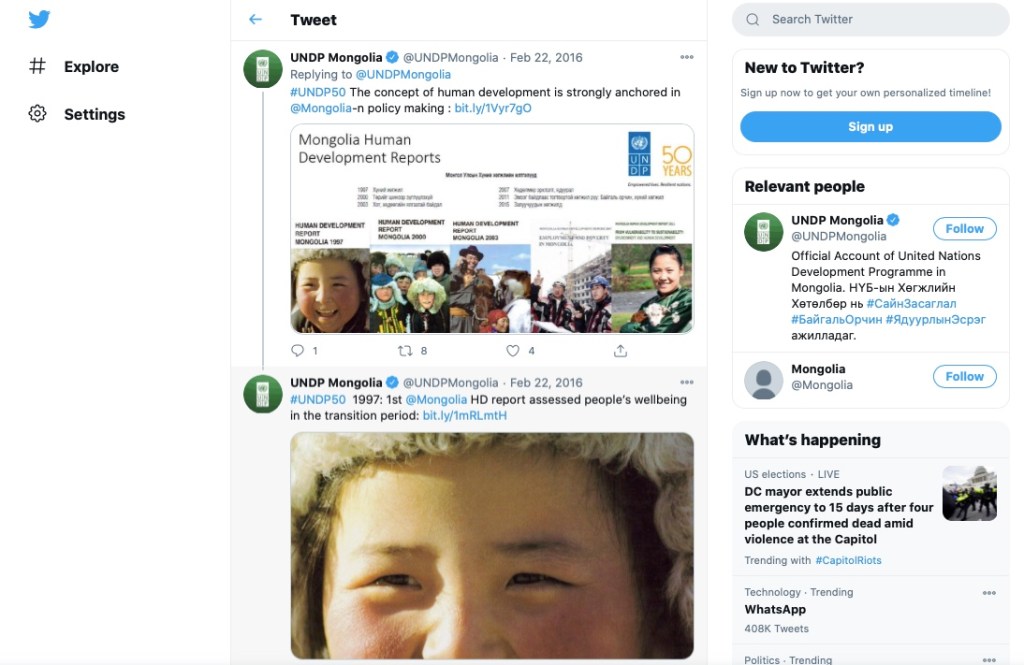
The Mongolian Human Development Report 1997 (MHDR), the country’s first, placed the story of the Mongolian people during the transition years (post-1989) at its heart, using photographs, stories and case studies to detail the bigger narrative at play.
This groundbreaking Mongolian Human Development Report – the country’s first – went beyond just chronicling Mongolia’s state of development in statistics and graphs. Designed, laid out and published in Mongolia, the report broke with the practices of many other international organisations, who would publish outside of Mongolia – denying local companies much-needed work and the opportunity to develop their skills. The report’s costs helped to kick-start a publishing boom in the country and significantly raised standards in design and layout in the Mongolia. The foundations laid down by the project producing the report ushered in a new age in publishing for Mongolia.
The report’s launch was innovative, not only being distributed for free across the country, but also part of a multimedia campaign including television programming, public posters, town hall meetings and a ‘roadshow’ featuring the report’s researchers and writers.
The initial print run of 10,000 copies was doubled as demand for the report increased. To the surprise of many, once hearing about the free report, herders would travel to the capital, Ulaanbaatar, to pick up their copy. The report proved people cared passionately about the development of their country and that development concepts are not to be the secret domain of ‘development practitioners’. The report also became an English language learning tool as readers compared the Mongolian and English-language versions.
1997 saw the launch of the first human development report for Mongolia.
Mongolian AIDS Bulletin
UNDP acted swiftly to address a breaking HIV/AIDS crisis in 1997, offering a key lesson for others working in public health (the Ebola Crisis and global air pollution crisis both show those lessons have still yet to be fully absorbed).
Assembled by a team of health experts after the Fourth International Congress on AIDS in Asia and the Pacific, the Mongolian AIDS Bulletin was published in 1997 in the middle of an HIV/AIDS crisis. It provided timely information and health resources in the Mongolian language and was distributed across the country.
“Mongolia’s first AIDS Bulletin marked the beginning of the UNDP Response to HIV/AIDS/STDs Project back in the autumn of 1997. Over 5,000 copies of the magazine were distributed across the country, offering accurate information on the HIV/AIDS situation. The project has been pivotal in the formulation of a national information, education and communication (IEC) strategy, bringing together NGOs, donors, UN agencies and the government.”
Source: YouandAids: The HIV/AIDS Portal for Asia Pacific
Green Book
In the Mongolian language, the Mongolian Green Book details effective ways to live in harmony with the environment while achieving development goals. Based on three years’ work in Mongolia – a Northeast Asian nation coping with desertification, mining, and climate change – the book presents tested strategies.
EPAP Handbook
The Environmental Public Awareness Handbook was published in 1999 and features the case studies and lessons learned by UNDP’s Mongolian Environmental Public Awareness Programme (EPAP). The handbook draws on the close to 100 small environmental projects the Programme oversaw during a two-year period. These projects stretched across Mongolia, and operated in a time of great upheaval and social, economic and environmental distress. The handbook is intended for training purposes and the practice of public participation in environmental protection.
In its 2007 Needs Assessment, the Government of Mongolia found the EPAP projects “had a wide impact on limiting many environmental problems. Successful projects such as the Dutch/UNDP funded Environmental Awareness Project (EPAP), which was actually a multitude of small pilot projects (most costing less than $5,000 each) which taught local populations easily and efficiently different ways of living and working that are low-impact on the environment.”
Mongolia Updates 1997, 1998, 1999
Mongolia Update 1998 detailed how the country was coping with its hyperinflation and the Asian economic crisis.
1998 proved a tumultuous year for Mongolia. The country’s existing economic crisis caused by the transition from Communism to free markets was made worse by the wider Asian Crisis. The government was destabilised, leading to an often-confusing revolving door of political figures. In order to help readers better understand the political changes in the country, a special edition of Mongolia Update was published that year.
UNDP Mongolia: The Guide
The Guide, first published in 1997, provided a rolling update on UNDP’s programmes and projects in Mongolia during a turbulent time (1997-1999). The mission simultaneously had to deal with the 1997 Asian Crisis (http://en.wikipedia.org/wiki/1997_Asian_financial_crisis) and the worst peacetime economic collapse in post-WWII history.
Each edition came with short project and context summaries, key staff contacts, and facts and figures on how the country was changing. For the first time, any member of the public could grasp what the UN was up to in the country and be able to contact the project staff. An unusual level of transparency at the time for a UN mission.
Memoranda of Understanding
Three Memoranda of Understanding were negotiated with the Mongolian Government to help focus efforts and aid the attainment of internationally-agreed resolutions. This was affirmed by a series of youth conferences, One World, held in 1998 and 1999.
Strategy and Leadership in a Crisis
The scale and gravity of the crisis that struck Mongolia in the early 1990s was only slowly shaken off by the late 1990s. The economic and social crisis brought on by the collapse of Communism and the ending of subsidies and supports from the Soviet Union, led to a sharp rise in job losses, poverty, hunger, and family and community breakdowns.
The challenge was to find inspiring ways out of the crisis, while building confidence and hope. The sort of challenges confronted by the UNDP Mongolia Communications Office included:
1) A food crisis: agricultural production was down sharply, and the traditional nomadic herding economy, while at peak herd, was failing to get the meat to markets and to a high enough standard to restore export levels to where they once were. As a result, a cross-border trading frenzy became the solution to falling domestic food production and availability.
2) HIV/AIDS/STDs crisis.
3) A major banking crisis.
4) Both the Asian Financial Crisis and the Russia Crisis.
5) An ongoing political crisis and an inability to form stable governments.
UN Annual Reports
Editor and designer. 1998 Report called by Under-Secretary-General Nafis Sadik “a clear, well-written, attractive and colourful report.”
One of many documents from that time held in the United Nations Archives Search Engine. In this case, reporting on Mongolia’s follow-up to global conferences to then-Secretary-General Kofi A. Annan in 1999.
Mongolia’s Follow-Up To The UN Global Conferences (1999) UNDP Mongolia Communications Office, Ulaanbaatar, Mongolia.
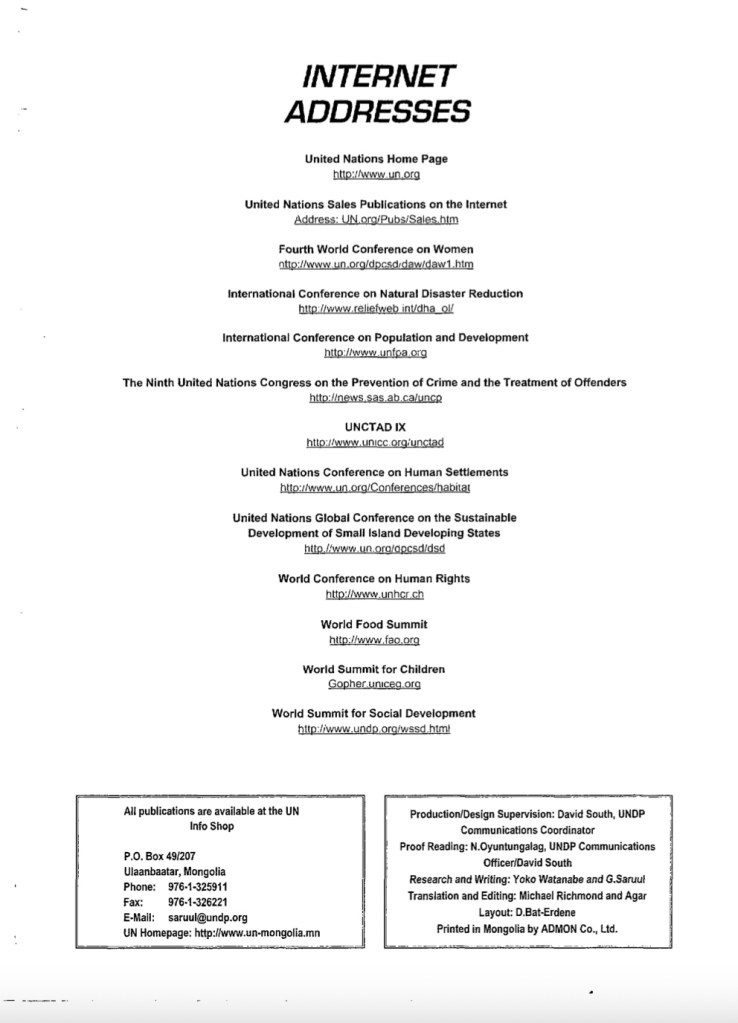
Production/Design Supervision: David South, UNDP Communications Coordinator; Proof Reading: N. Oyuntungalag, UNDP Communications Officer/David South (1999).
1998: International media tours of the country, launching of Mongolia’s first online magazine, Ger, distribute globally a regular newsletter on Mongolia’s development challenges, Blue Sky Bulletin. Open United Nations Info Shop for the public. Assist the Government of Canada to connect with Canadians working with the United Nations in Mongolia during the first official visit by a Canadian Government Minister.
1999: Launch a string of books documenting insights gleaned from the Mongolia development experience.
Testimonials
“Mongolia is not an easy country to live in and David [South] showed a keen ability to adapt in difficult circumstances. He was sensitive to the local habits and cultures and was highly respected by his Mongolian colleagues. … David’s journalism background served him well in his position as Director of the Communications Unit. … A major accomplishment … was the establishment of the UNDP web site. He had the artistic flare, solid writing talent and organizational skills that made this a success. … we greatly appreciated the talents and contributions of David South to the work of UNDP in Mongolia.” Douglas Gardner, UN Resident Coordinator and UNDP Resident Representative Mongolia
Impact
Micro
strategic communications approach including establishing the UN/UNDP Mongolia Communications Office and team and strategic communications plan
led on digital transformation, including use of digitial media (photo/video archive) and digital publishing (web site, online magazine and newsletter, etc.)
established and ran the United Nations Info Shop – a one-stop resource open to the public with archive of development publications and current periodicals and Internet access
began largest bilingual online and offline publishing programme in country – led on publishing and design modernisation
laid down the foundations for many UN initiatives in Mongolia that are still underway. Contributed to stabilizing the country in a turbulent time. Mongolia was briefly the fastest-growing economy in the world by 2011
championed transparency and access to information and media freedoms
oversaw a period in which Transparency International found lower levels of perceived corruption
managing editor for country’s first Human Development Report
Macro
raised profile of country and its development challenges. Donor pledges rose
2 international media tours
strong relationship with Mongolian and international journalists
championed innovators in commnications
crisis response: AIDS, economy, political
country’s largest website and one of its first. Called “Godfather of the Mongolian web”
called a “role model” for the wider UN
led on new approach to UN communications in the digital age
design-led approach
transparent and timely updates
negotiated three Memoranda of Understanding (MOUs): youth, food security and nutrition, STDs/HIV/AIDS
The response by the UNDP Mongolia Communications Office has been cited in numerous articles, books, publications and stories. It has also contributed to the development of the human development concept and understanding of human resilience in a crisis and innovation in a crisis.
This resource was praised for having: “Very useful references and original materials that documented UNDP Mongolia work. I needed to trace community-based development, and this book provided a valuable source.” Review on Google Books
In 2001, the UN won the Nobel Peace Prize for “their work for a better organized and more peaceful world” and its communications innovations, with work such as that in Mongolia being cited as a contributing factor to the awarding of the Prize.
The Nobel Peace Prize 2001 joint winners.
In 2000, the Millennium Development Goals (MDGs) were launched in a 15-year bid to use a focused approach to development centred around eight goals to accelerate improvements to human development. From 2000 to 2005, consulting work was undertaken in various UN missions (Mongolia, South Africa, Turkmenistan, Ukraine) to communicate the goals and to reshape communications activities around the goals.
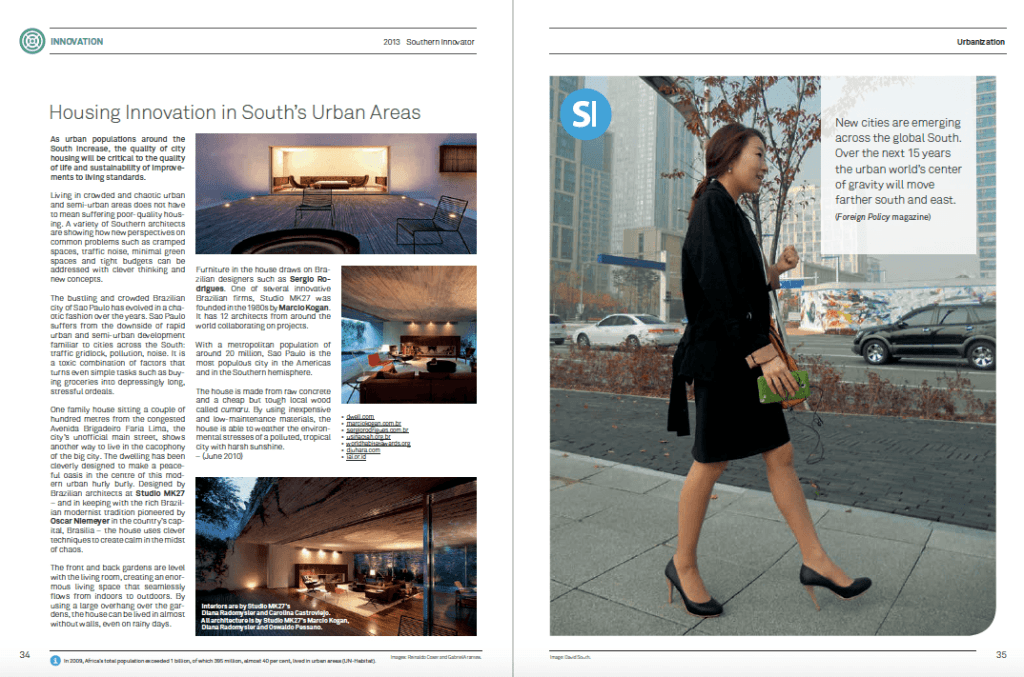
As of 2007, the world became a majority urban place. The largest movements of people in human history are occurring right now, as vast populations relocate to urban and semi-urban areas in pursuit of a better quality of life, or because life has become intolerable where they currently live.
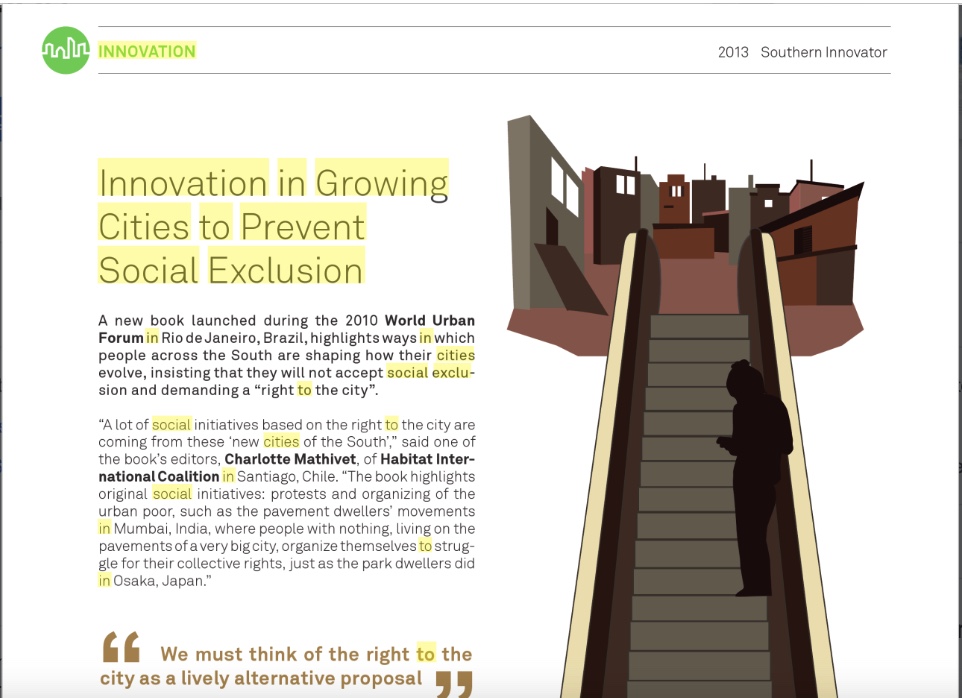
A new book launched during this year’s World Urban Forum in Rio de Janeiro, Brazil highlights ways in which people across the South are shaping how their cities evolve, insisting that they will not accept social exclusion and demanding a “right to the city.”
“A lot of social initiatives based on the right to the city are coming from these ‘new cities of the South,’ said one of the book’s editors, Charlotte Mathivet of Habitat International Coalition in Santiago, Chile. “The book highlights original social initiatives: protests and organizing of the urban poor, such as the pavement dwellers’ movements in Mumbai, India where people with nothing, living on the pavements of a very big city, organize themselves to struggle for their collective rights, just as the park dwellers did in Osaka, Japan.”
The book’s chapters span an eclectic mix of topics, from democracy in the world’s future cities to experiences in Africa’s cities, to how the 2008 Beijing Olympics affected the metropolis, to ways of involving children in urban planning.
One innovative case study included in the book is the children’s workshops in Santiago, Chile, which aim to make a more child-friendly city by including children in the planning process.
One example of the success of a child-friendly approach has been the work of the former mayor of Bogotá, Colombia, Enrique Peñalosa (http://www.pps.org/epenalosa-2/) . As mayor of the city of over 6.6 million people from 1998 to 2001, he put children to the fore in planning.
“In Bogotá, our goal was to make a city for all the children,” he told Yes! magazine. “The measure of a good city is one where a child on a tricycle or bicycle can safely go anywhere. If a city is good for children, it will be good for everybody else. Over the last 80 years we have been making cities much more for cars’ mobility than for children’s happiness.”
His term in office saw the establishment or refurbishing of 1,200 parks and playgrounds, the building of three large and 10 neighbourhood libraries and the opening of 100 nurseries for children under five. He also oversaw the creation of 300 kilometres of bike lanes, the largest such network in the developing world, created the world’s longest pedestrian street, at 17 kilometres, and turned land earmarked for an eight-lane highway into a 45 kilometre green belt path.
Cities for All’s publisher, Habitat International Coalition (HIC) (www.hic-net.org) , says it focuses on the link between “human habitat, human rights, and dignity, together with people’s demands, capabilities, and aspirations for freedom and solidarity.”
The group works towards the creation of a theoretical and practical framework for what it calls a “right to the city.”
The cities of Africa and Asia are growing by a million people a week. If current trends continue, megacities and sprawling slums will be the hallmarks of this majority urban world. Currently in sub-Saharan Africa, 72 percent of the population lives in slum conditions. And by 2015, there will be 332 million slum-dwellers in Africa, with slums growing at twice the speed of cities.
“The consequences have produced a deeper gap between the city and countryside and also within the city between the rich and poor,” said Mathivet.
“We must think of the right to the city as a lively alternative proposal,” Mathivet said, “a banner under which social movements, academics, and social organizations are struggling against the perverse effects of neo-liberalism in cities such as the privatization of land, public spaces and services, land speculation, gentrification, forced evictions, segregation, and exclusion.”
Published: July 2010
Resources
1) Model Village India: Drawing on self-organizing methods used in India since 1200 BC, the Model Village India is based around India’s democratic system of Panchayats: a village assembly of people stemming back to pre-colonial times. Website: www.modelvillageindia.org.in
2) More Urban, Less Poor: The first textbook to explore urban development and management and challenge the notion unplanned shanty towns without basic services are the inevitable consequence of urbanization. Website:www.earthscan.co.uk
3) Building and Social Housing Foundation: The Building and Social Housing Foundation (BSHF) is an independent research organisation that promotes sustainable development and innovation in housing through collaborative research and knowledge transfer. Website: http://www.bshf.org
Development Challenges, South-South Solutions was launched as an e-newsletter in 2006 by UNDP’s South-South Cooperation Unit (now the United Nations Office for South-South Cooperation) based in New York, USA. It led on profiling the rise of the global South as an economic powerhouse and was one of the first regular publications to champion the global South’s innovators, entrepreneurs, and pioneers. It tracked the key trends that are now so profoundly reshaping how development is seen and done. This includes the rapid take-up of mobile phones and information technology in the global South (as profiled in the first issue of magazine Southern Innovator), the move to becoming a majority urban world, a growing global innovator culture, and the plethora of solutions being developed in the global South to tackle its problems and improve living conditions and boost human development. The success of the e-newsletter led to the launch of the magazine Southern Innovator.
“Cities for All, recently published by Habitat International Coalition, draws together thinkers and innovators in a compilation of case studies addressing the challenges of inclusive cities in the global South. The book seeks to articulate experiences of South-South cooperation and enhance the links between different regions. David South interviews the co-editor, Charlotte Mathivet.”
As the provincial government tries to shoehorn six municipalities into one megacity, opponents of the plan worry that one of the results of amalgamation will be widespread privatization of public services.
References to contracting out and tendering municipal services in order to achieve savings run through the provincial government’s much-maligned report supporting a megacity, produced by consultants KPMG.
Many observers feel the new city will have no choice, while others argue privatization won’t be nearly as extensive as some fear. Still others think it is far from a foregone conclusion that a future amalgamated council will push privatization.
“Who knows if the council will have an interest in privatization?” says a senior bureaucrat at the City of Toronto, who did not want to go on record. “People are running around saying they will privatize everything, but who knows what the political make-up will be of the new council? They are assuming there will always be savings to be had from privatization – that doesn’t automatically follow. The financial pressures on the megacity can’t be avoided by privatization.”
Among the six current Metro municipalities, it is Etobicoke that has most fully embraced contracting out. The City of Etobicoke’s experiments with contracting out – 60 per cent of public works contracts are performed by private-sector companies – calls into question the estimates of substantial savings being bandied about by the provincial government.
According to the senior bureaucrat in charge of running that city, acting city manager and commissioner of public works Tom Denes, contracting out isn’t the tax-saving nirvana some believe.
“I think we are finding in contracting out,” says Denes, “that the higher the skills of the workforce, the less sense it makes to contract out. For example, it would be very expensive to contract out water treatment.”
Denes says the city’s pride and joy is its privatized garbage collection handled by Waste Management Inc. and BFI. The WMI contract is worth $6 million a year, down from the $7.5 million a year it was costing to publicly run garbage collection. The price is fixed for five years, when it must be negotiated again. While the city made $1.9 million selling its old trucks, councillors set up a $4 million fund so Etobicoke could go back to collecting garbage itself if private companies tried to gouge the city.
Denes, who has been meeting with counterparts at other cities and the provincial government, believes the new Toronto will be divided up into several districts which private garbage collectors will have to compete for.
“Based on what I know, if you were to divide the city up into waste contracts, it would be at least four areas,” claims Denes. “No company can handle the whole city. You just can’t find a company that could handle a megacity. It would become a monopoly.”
Denes thinks the likely suspects for contracting out would be any manual labour work and the TTC. He thinks a megacity would be mistaken to contract out skilled work like surveying, arguing that skilled workers would use their desirability to their advantage and charge high consulting fees.
“The US cities have all gone through these exercises. They are in fact contracting services back in,” says Denes.
While the Tories have been slipperier than a scoop of ice cream about their specific privatization plans, one thing is clear: An essential element of the Tory economic vision is a greater role for the private sector in delivering public services. The $100,000 KPMG report plays to this, making it clear contracting out is a key means to saving money in the new megacity. The report claims between $28 million and $43 million per year could be saved from contracting out computer operations and some management; between $38.5 million and $68 million by contracting out fraud investigations; between $29.6 million and $54.5 million by contracting out road and electrical maintenance, snow removal and data collection; between $21 million and $39.4 million by contracting out garbage pick-up and processing.
The report also offers this proviso: “There is no such thing as automatic, cost-free savings from organizational change. The implementation process must be tightly managed to produce the savings suggested here.”
Ron Moreau is the administrator for Local 43 of the Metro Toronto Civic Employees Union, which represents over 3,000 public works workers and ambulance drivers at Metro.
“How will the megacity and municipalities cope with pressure from the public to hold the line on taxes? Where will councils find the difference between spending and revenues?” asks Moreau. “The level of service will suffer. When you contract out, public policy is held hostage by private enterpise.”
Moreau threatens that labour will play hardball with the new city. Most of the contracts for Moreau’s members run out on Dec. 31 of this year.
“Assuming the government doesn’t tamper with the labour legislation on our books, the unions can be organized into two large locals, one clerical/technical, the other outside workers. They would have effective bargaining clout.”
One major player looking for government contracts in a megacity will be Laidlaw Inc. While the company recently sold its garbage collection operations to an American firm, USA Waste, it still has interests in operating school buses and ambulances. Laidlaw is a heavy contributor to the Ontario Progressive Conservative Party, according to records kept by the Commission on Election Financing. Laidlaw has also made an influential new friend: in January, it hired former Metro chief administrative officer Bob Richards as its vice-president.
Ward 13 city councillor John Adams is definitely in the privatization-if-necessary-but-not-necessarily-privatization camp. “I don’t see everything being contracted out, but more stuff being put out for competitive bids.”
Adams thinks contracting out could be a good tactic to help modernize garbage collection, for example. He points to the City of Toronto’s deal with WMI to collect garbage at apartment buildings. In that deal, costs were reduced by $2.5 million over a five-year contract, and the crews on trucks were reduced from two to one. Instead of an extra crew member, closed-circuit television cameras were installed on trucks to speed up pick-up. Adams points out the crews are still unionized, but instead of CUPE it is the Teamsters.
“The way we pick up garbage from households is back-breakingly stupid. I think we need to rethink how we do it, to use machines more than people’s backs.”
But Adams doesn’t believe a megacity is a money-saver. “There will be a leveling up of wages. How long will two firefighters work side-by-side for different salaries? You can bet the union will negotiate an increase at the first opportunity.”
Adams thinks a megacity will be more prone to the slick lobbying efforts of companies like Laidlaw because councillors will be dependent on political parties to get elected. “The provincial government will contract out municipal government to Laidlaw,” he says sarcastically.
In 2010, David South Consulting was relaunched with a new logo and branding for the 21st century. It represented a new phase, as work became global and very high-profile and influential. The foundations have been laid for future growth and expansion.

















 David South Consulting
You must be logged in to post a comment.