Categories
Archive Development Challenges, South-South Solutions Newsletters Southern Innovator magazine

Africa’s Fast-Growing Cities: A New Frontier of Opportunities

By David SouthDevelopment Challenges, South-South Solutions

SOUTH-SOUTH CASE STUDY

According to a new report by the International Institute for Environment and Development, Africa now has a larger urban population than North America and 25 of the world’s fastest growing big cities. Europe’s share of the world’s 100 largest cities has fallen to under 10 percent in the past century.

Counter to common misperceptions about what is luring people to big cities, the report’s author, David Satterthwaite, said it isn’t because governments and aid are attracting them: government “policies leave much to be desired as they tend to neglect the urban poor, leading to high levels of urban poverty, overcrowding in slums and serious health problems. Governments should see urbanisation as an important part of a stronger economy and their expanding urban population as an asset, not as a problem.”

But global perceptions of Africa are changing. The Mo Ibrahim Foundation has listed the most efficiently run African economies, with a strong correlation between good governance and higher growth rates (Mauritius, Seychelles, Botswana, South Africa, Namibia, Ghana and Senegal).

In most of urban French West Africa, extensive interviews with micro-entrepreneurs and micro-finance practitioners found that most operating micro-enterprises in the informal economy are entrepreneurs by necessity, and that their most basic needs drove their business activities and behaviours. Success was held back by lack of capital, poor training, and a general aversion to risk (Faculty of Management, Dalhousie University).

While access to capital has been identified as the key factor in opportunity, entrepreneurs aren’t even waiting for microfinance institutions to help them. “I started this business of selling chips (French fries) two years ago using money we raised as a group of 30 women,” said Mary Mwihaki, 27, who lives in the Mathare slum area outside Nairobi.

Each member of her group of women contributes about US 30 cents a day and the resulting US $9 is given to a different member of the group on a rotating basis, she told IRIN news agency. Mwihaki waited three months to raise the US $27 she needed. She joins many other women across the country taking the same approach to raising capital.

For some entrepreneurs, it is just the proximity to a buzzing urban atmosphere that is a spur to action. One clothes seller told the African Executive he has been able to make enough money to get a house built just selling second hand clothing. Twenty-three-year-old Henry Mutunga in Nairobi, Kenya takes advantage of the high turnover of the city’s Machakos Country bus terminal to sell second hand clothes.

“After months of searching for a job, I asked myself, ‘Why am I wasting the business studies knowledge I acquired in school?’ I was not comfortable being left in the house every morning, with nothing to do, while my uncle went to work in order to feed me and pay the house rent. I got hooked to the urban mentality and tried my hand at selling trousers.”

Now with two employees, he is able to rent his own house, and is able to use extra money to have his own house built. He urges other youth to become employers, not employees.

At the technological end of entrepreneurship, in Nairobi, Kenya, Mumbi’s Dial-a-Cab company is joining 20 fleet firms in the country to adopt a new mobile phone-based vehicle-tracking technology developed by two young African IT entrepreneurs, Waweru Kimani and Paul Mahiaini. The technology allows management to know how low fuel is, which car has gone where, when a car has been hijacked, what car doors are open, how long it has been stopped, and where it is located. Impressively, it also allows management to stop the car at the touch of a button if it has been stolen. It costs US $570 to install, and costs US $40/month to use.

Other entrepreneurs are piggy backing their success on the booming housing markets in Angola, Ivory Coast, Liberia, Nigeria, Congo, Mali, Morocco, Tunisia, Botswana, Ghana, Mozambique, Rwanda, Kenya, Mauritius, Uganda, Algeria, Egypt, Senegal: all creating enormous opportunities for entrepreneurs providing other services, like furniture, appliances, insurance, landscaping, security, architecture etc.

And the giant US internet search engine Google is now setting up operations in West Africa, based in Dakar – a sure sign that they see this as a new boom market. And Indian investment in Africa has also dramatically shot up this year, according to mergers and acquisitions magazine, The Deal. In 2005, US $81 million was invested in Africa. In 2006, US $340 million; and in 2007, US $294 million.

Published: November 2007

Resources

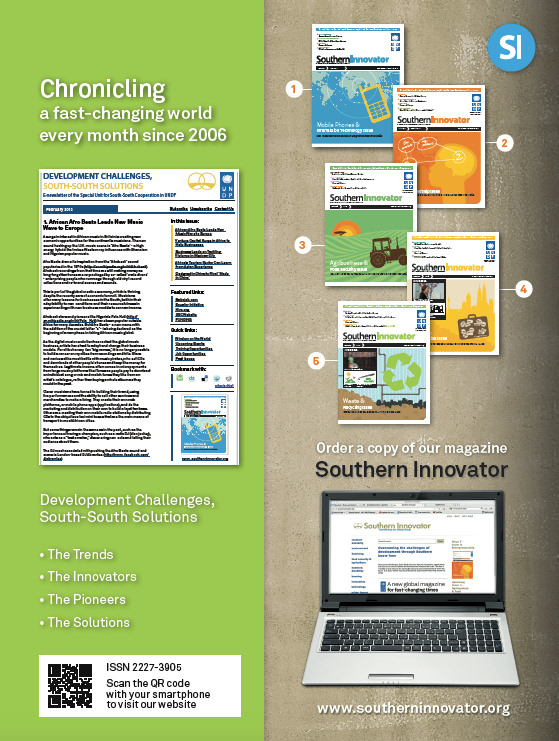
Development Challenges, South-South Solutions was launched as an e-newsletter in 2006 by UNDP’s South-South Cooperation Unit (now the United Nations Office for South-South Cooperation) based in New York, USA. It led on profiling the rise of the global South as an economic powerhouse and was one of the first regular publications to champion the global South’s innovators, entrepreneurs, and pioneers. It tracked the key trends that are now so profoundly reshaping how development is seen and done. This includes the rapid take-up of mobile phones and information technology in the global South (as profiled in the first issue of magazine Southern Innovator), the move to becoming a majority urban world, a growing global innovator culture, and the plethora of solutions being developed in the global South to tackle its problems and improve living conditions and boost human development. The success of the e-newsletter led to the launch of the magazine Southern Innovator.  
Creative Commons License

This work is licensed under a
Creative Commons Attribution-Noncommercial-No Derivative Works 3.0 License.

ORCID iD: https://orcid.org/0000-0001-5311-1052.

© David South Consulting 2023

Categories
Archive Development Challenges, South-South Solutions Newsletters Southern Innovator magazine

Global South Urbanization Does Not Have to Harm Biodiversity

By David SouthDevelopment Challenges, South-South Solutions

SOUTH-SOUTH CASE STUDY

How to balance fragile ecosystems with rapid urbanization will be the challenge for planners and governments across the global South in the coming years. The urbanization trend is clear: the world’s total urban area is expected to triple between 2000 and 2030, with urban populations set to double to around 4.9 billion in the same period (UNEP). This urban expansion will draw heavily on water and other natural resources and will consume prime agricultural land.

Global urbanization will have significant implications for biodiversity and ecosystems if current trends continue, with knock-on effects for human health and development, according to a new assessment by the United Nations Convention on Biological Diversity (CBD).

Cities and Biodiversity Outlook – the first global analysis of how projected patterns of urban land expansion will affect biodiversity and crucial ecosystems – argues that promoting low-carbon, resource-efficient urban development can counter urbanization’s adverse effects on biodiversity while improving quality of life.

“The way our cities are designed, the way people live in them and the policy decisions of local authorities, will define, to a large extent, future global sustainability,” said Braulio Dias, Executive Secretary of the CBD.

“The innovation lies not so much in developing new infrastructural technologies and approaches but to work with what we already have. The results often require fewer economic resources and are more sustainable,” he added.

The report says urban expansion is occurring fast in areas close to biodiversity ‘hotspots’ and coastal zones. And rapidly urbanizing regions, such as large and mid-size settlements in sub-Saharan Africa, India and China, often lack resources to implement sustainable urban planning.

But the study found that cities do not need to be in conflict with plant and animal species and ecosystems. They can, in fact, protect species, as is the case with Belgium, where 50 per cent of the country’s floral species are found in Brussels, or Poland, where 65 per cent of the country’s bird species occur in Warsaw.

At the Alexander von Humboldt Research Institute in Bogota, Colombia (humboldt.org.co) researchers have been thinking about how to get this balance right and make sure the growing cities of the future are not ecological disasters.

According to Juana Marino and Maria Angélica Mejia at the Institute’s Biological Resources Policy Program – which investigates “Biodiversity, Ecosystem Services and Urban-Regional Environments” – how cities grow and develop must change.

They believe cities need to take into account the resources they require to function and the impact this has on biodiversity and ecosystems.

“The more people who arrive in cities, the more they demand goods and services (in a massive way!): roads, housing, infrastructure, food, water – (creating) an impressive amount of waste, challenging traditional waste management and sanitation policies,” said Marino.

In short, “Cities enhance consumption.”

The Humboldt researchers believe common patterns can be seen across the global South, where ecosystems “surrounding urban areas are deforested and have significant levels of water and air pollution; they also become deeply transformed by informal settlements.”

This process means cities “lose their ability to be resilient, they become highly vulnerable to global change and they decrease their production of ecosystem services to maintain human well-being in cities.”

They argue that human settlements must be sustainably planned for, with ecological resilience and human well-being. If this is not done, areas suitable for agricultural production and biodiversity preservation will be harmed.

While better planning is needed there also needs to be long-term thinking.

But planning and managing are not the only things required: “it is a matter of design” if new “resilient” urban-rural landscapes are to be created.

And what can be done? They believe better analysis is required and it needs to take on social and cultural knowledge, and take in the border regions around cities, the “suburban, peri-urban and other ‘transition’ landscapes should become main actors in these relationships, not mere by-products; (they are) compromise territories between a lack of definition and low governance.”

These complex relationships with the border ecosystems of cities need to be communicated to the general public in simple, user-friendly ways so they can understand how important these areas are to the overall health of the city.

In Latin America, the cities of Curitiba (Brazil) and Bogotá and Medellin (Colombia) have made great strides in managing and planning for biodiversity and ecosystem services, they say. But it is not just as simple as recording the number of native species and the percentage of protected areas in urban places. Links need to be created between “social, scientific and political” elements to create “socio-ecological indicators” that can be developed and turned into “easy-to-adopt mechanisms” for people to use.

And they see innovation as the way to do this. Innovation is critical if cities and urban areas are to avoid widespread destruction of biodiversity as urbanization increases.

“Innovation is not just an option – it is a ‘must’,” said Marino. “Not just the technical innovation already being carried on by infrastructure, transport and building sectors that are rapidly changing their patterns based on mitigation technologies.

“Innovation is also needed in terms of biodiversity, biotechnology, information and knowledge production; appropriation, use and management. Knowledge turns into innovation when appropriated by social spheres; when it enters the social and political arenas.”

Environmental governance can be strengthened “when promoting top-down and bottom-up innovations.”

Published: December 2012

Resources

1) Environmental Public Awareness Handbook: Case Studies and Lessons Learned in Mongolia. Website: http://tinyurl.com/yhjyd7h

2) Hyderabad Case Study: During the recent UN biodiversity talks in Hyderabad, the International Union for Conservation of Nature gave journalists the opportunity to see how biodiversity can thrive in the middle of a bustling metropolis. Website: http://www.rtcc.org/hyderabad-a-showcase-of-urban-biodiversity/

3) UNEP: A Global Partnership on Cities and Biodiversity was launched by UNEP, the Secretariat of the Convention on Biological Diversity (CBD), UN-HABITAT, ICLEI, IUCN Countdown 2010, UNITAR, UNESCO and a Steering Group of Mayors from Curitiba, Montreal, Bonn, Nagoya and Johannesburg to bring together existing initiatives on cities and biodiversity. Website: http://www.unep.org/urban_environment/issues/biodiversity.asp

4) Nature in the City: Nature in the City, a project of Earth Island Institute, is San Francisco’s first organization wholly dedicated to ecological conservation, restoration and stewardship of the Franciscan bioregion. Website: http://natureinthecity.org/urbanbiodiversity.php

Development Challenges, South-South Solutions was launched as an e-newsletter in 2006 by UNDP’s South-South Cooperation Unit (now the United Nations Office for South-South Cooperation) based in New York, USA. It led on profiling the rise of the global South as an economic powerhouse and was one of the first regular publications to champion the global South’s innovators, entrepreneurs, and pioneers. It tracked the key trends that are now so profoundly reshaping how development is seen and done. This includes the rapid take-up of mobile phones and information technology in the global South (as profiled in the first issue of magazine Southern Innovator), the move to becoming a majority urban world, a growing global innovator culture, and the plethora of solutions being developed in the global South to tackle its problems and improve living conditions and boost human development. The success of the e-newsletter led to the launch of the magazine Southern Innovator.  
Creative Commons License

This work is licensed under a
Creative Commons Attribution-Noncommercial-No Derivative Works 3.0 License.

ORCID iD: https://orcid.org/0000-0001-5311-1052.

© David South Consulting 2023
Categories
Archive Development Challenges, South-South Solutions Newsletters Southern Innovator magazine

Model City to Test the New Urbanism Concept in India

By David SouthDevelopment Challenges, South-South Solutions

SOUTH-SOUTH CASE STUDY

India’s phenomenal economic growth rate – forecast to be 7.9 percent this year by the Asian Development Bank, after averaging 7.7 percent per year over the past decade – has been the force behind an expanding middle class population, now estimated at 50 million people (McKinsey). Forecasts see it swelling from 5 percent of the population to 40 percent by 2025.

India now boasts many fast-growing global companies and booming enterprise zones like the technology hub of Bangalore. But the country still comes in for heavy criticism of the way it has managed the growth of its cities. Poor planning and chaotic growth have left many cities with vast slum areas, congestion, poor hygiene and sanitation services, crumbling infrastructure and poor-quality transportation services. To more and more Indians it has become clear these factors are now serious impediments to economic growth and modernisation of the country and its economy.

With 30 percent of the population living in urban areas and cities contributing 60 percent of the country’s GDP and 90 percent of government revenues (Wall Street Journal), city-dwellers’ fate is critical to the functioning of the economy.

According to the 2001 Indian census, slums make up 25 percent of all housing, and 26 percent of urban households lack access to sanitation facilities.

And as the middle class grows and its members accumulate savings, their desire to be better housed will also grow. They will be on the hunt for new places to live to realise their dreams. Those who can satisfy this strong urge will be those who will also profit.

This is where the new city concept of Lavasa (www.lavasa.com) comes in. This new community sits nestled in picturesque mountains and features promenades, sidewalk cafes, and ice cream parlours, but none of the clichéd fixtures of today’s Indian cities: rickshaws, noise and pollution, poor sanitation and over-crowding. It has apartment houses in mustard, terra cotta, ochre, olive and beige. It is also going to have a medical campus, luxury hotels, boarding schools, sports academies, a golf course, a space camp, animation and film studios, software-development companies, biotech labs and law and architectural companies. A thoroughly ‘knowledge economy’ mix that India’s aspiring classes wish to see the country embrace for its future development.

The people behind Lavasa see it as a new model of governance and urban development for India in the 21st century.

Lavasa is located in Western Ghats, 200 kilometres southeast of Mumbai, India’s financial and entertainment capital, and 65 kilometres west of Pune, a centre for software programming and computer animation.

Lavasa’s colourful and detailed website boasts it as a “private hill city being developed by Lavasa Corporation Limited where people can live, work, learn and play in harmony with nature.” It’s billed as “an inclusive city, based on the principles of New Urbanism.”

The master plan is to house more than 300,000 people divided in to five linked towns.

The first town, Dasve, will be completed in 2011. Its houses are selling well and are almost sold out, according to its developers.

Lavasa is the concept of Ajit Gulabchand, chairman of Hindustan Construction Company, an Indian company with extensive experience building bridges and dams.

The development is located in the remote hills along the Varasgaon Lake, a reservoir providing water to Pune. Lavasa Hill City covers “25,000 acres with 60 Kms of lakefront” according to its website. The land had originally been designated for holiday homes, but this seemed too small an aspiration.
Lavasa will be governed by a private corporation. It is also being planned according to the principles of New Urbanism (www.newurbanism.org) – a belief in cities built around walkability not cars, where business and residential sit side-by-side, with mixed income housing and lots of green space for parks.

The corporation will take responsibility for providing all major utilities: running water, electricity, sewage treatment, garbage collection and fibre optic connections.

This thoroughly modern approach has startled prospective buyers of homes, puzzled there weren’t water tanks on the roofs and septic tanks for each house: something they had come to expect with current Indian cities.

The Lavasa Corporation has hired an American city administrator, Scot Wrighton, to run the new city.

He told The Atlantic magazine that Lavasa offered him “a chance to build a new governance model for a country where governance at the municipal level does not work.”

The project seeks to exploit a portion of Maharashtra state law that lets corporations assume many of the responsibilities normally provided by, or in the domain of, the state. These do not include police powers or the ability to raise taxes but take in pretty much everything else.

Lavasa has private security guards to watch over its residents and funds itself through home sales, renting, and business deals. The prices for apartments in the development range between US $17,000 and US $36,000. While cheap by Western standards, this is still expensive to middle class Indians.

The project has come in for criticism for being just for the wealthy and being a pipe dream in chaotic India.

In response to criticism, Gulabchand is introducing cheaper apartments targeting young professionals and starter homes that he claims will rent for US $11 a month. This far lower monthly rent could make the development affordable for more people, including domestic servants and laborers.

Gulabchand admitted the plan was not without risks. “We’re worried we’ll still get slums,” he said. “Do we have all the answers yet? No. It is still an experiment, okay?”

As for charges the development doesn’t look much like the ‘real’ India, Gulabchand says: “Why should we look to the past? India is a young society.”

But Gulabchand doesn’t think India has the time to waste pondering these aesthetic questions: the country has a desperate need for better quality living conditions.

“We may not get a perfect Singapore-style model city,” he told The Atlantic. “But this is a model for a more vibrant, inclusive, greener place that still has soul.”

Published: September 2011

Resources

1) New documentary Urbanized gives a passionate over-view of the challenges facing the rapidly urbanizing world around us. Website: http://urbanizedfilm.com/

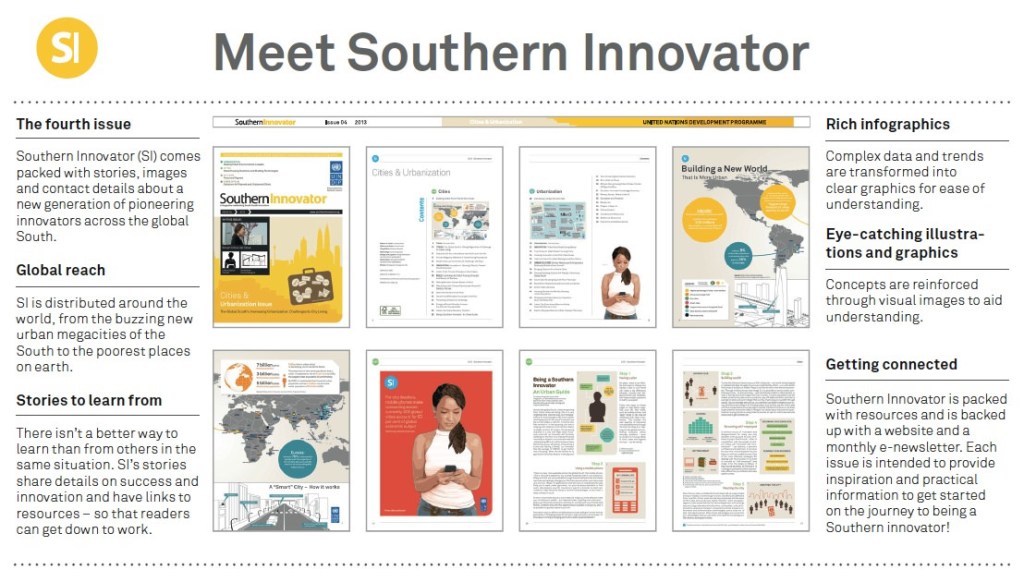
https://davidsouthconsulting.org/2021/03/05/southern-innovator-issue-4/

https://davidsouthconsulting.org/2022/09/28/model-cities-across-the-south-challenge-old-ways/

https://davidsouthconsulting.org/2020/12/04/model-indian-villages-to-keep-rural-relevant/

Creative Commons License

This work is licensed under a
Creative Commons Attribution-Noncommercial-No Derivative Works 3.0 License.

ORCID iD: https://orcid.org/0000-0001-5311-1052.

© David South Consulting 2022

Categories
Archive

Austerity And History | 27 November 2015

Two historical works I am cited in as a resource both share a connection to austerity crises. The first, Modern Mongolia: From Khans to Commissars to Capitalists by Morris Rossabi (University of California Press), draws on my work for UNDP Mongolia (1997-1999) to show the impact of austerity policies on the country as it peacefully transitioned from Communism to free markets and democracy in the 1990s.

Modern Mongolia: From Khans to Commissars to Capitalists.
Modern Mongolia on Google Books.

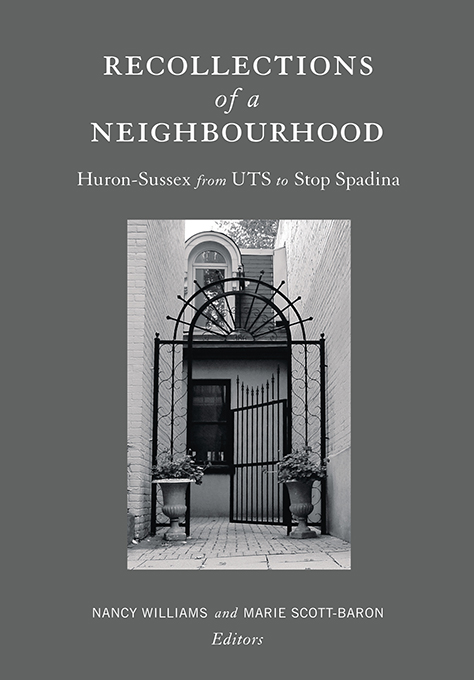
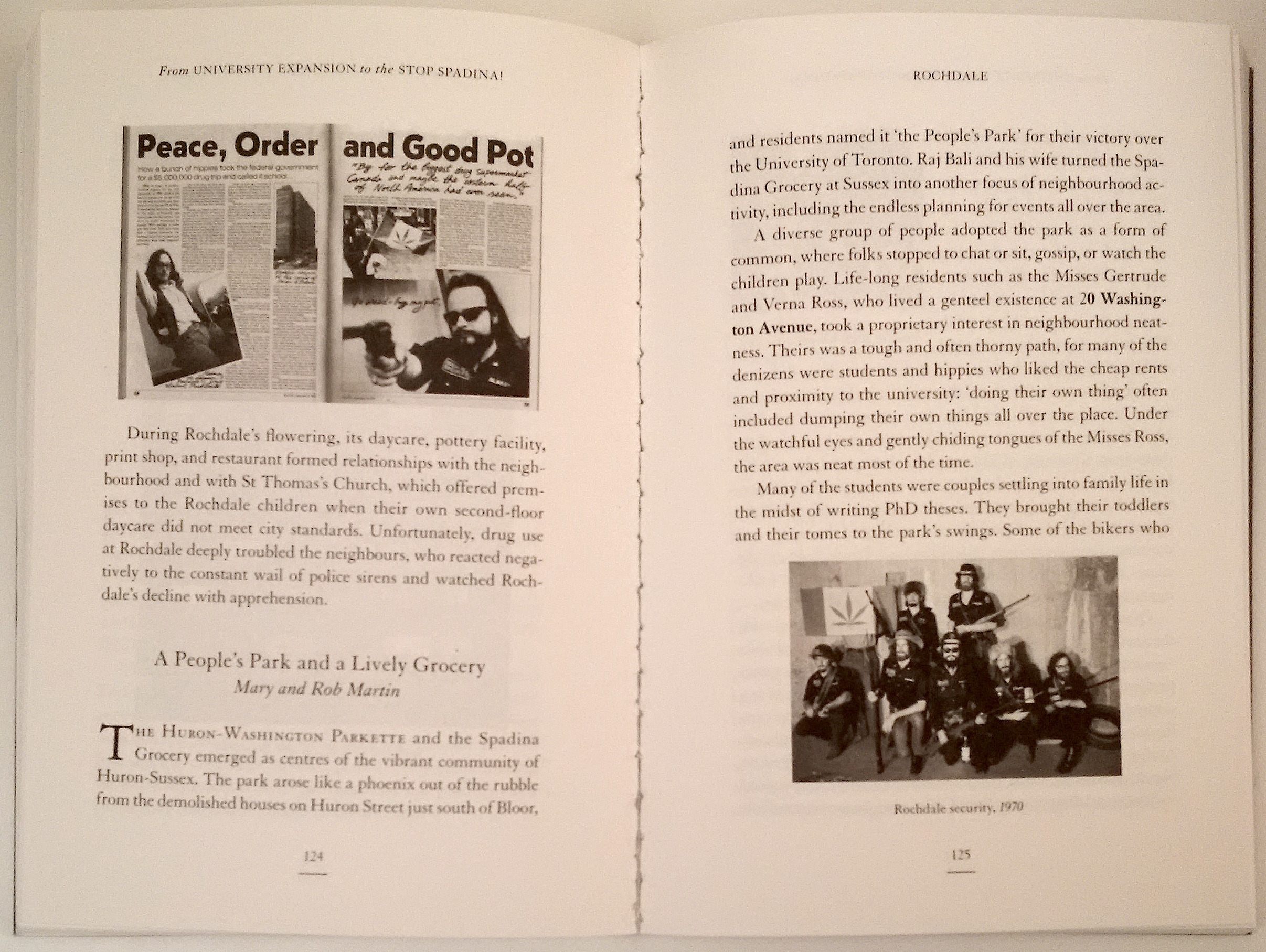
The second, Recollections of a Neighbourhood: Huron-Sussex from UTS to Stop Spadina by Nancy Williams and Marie Scott-Baron (editors) (Words Indeed Publishing), details the evolution of a remarkable – and bohemian – Toronto, Canada neighbourhood in which I lived in the 1980s and 1990s. It uses an image from Watch Magazine, a youth culture biweekly I edited in 1994 and 1996. The magazine was launched during the depths of Canada’s austerity crisis. Despite the economic gloom, the magazine fizzed with youthful vitality and edge and contributed to Toronto’s resurgence. The particular piece cited is a feature on Rochdale College, a late 1960s experimental college associated with the University of Toronto that lit up the neighbourhood with hippie and alternative cultures, until it went into meltdown as drug gangs took control. It was a bold experiment and a reflection of the counter culture vibe of the time.

Recollections of a Neighbourhood: Huron-Sussex from UTS to Stop Spadina.
“Peace, Order and Good Pot” by Bill White.
List of Illustrations: Sandwiched between Prime Minister Pierre Elliott Trudeau and urbanist Jane Jacobs.

The Globe and Mail

Tiny downtown Toronto enclave has a big story to tell

ORCID iD: https://orcid.org/0000-0001-5311-1052.

© David South Consulting 2022