Tag: UNESCO

  • Landmark Study Finds Simple Toys Key to Boosting Educational Development and Meeting MDGs

    Landmark Study Finds Simple Toys Key to Boosting Educational Development and Meeting MDGs

    By David SouthDevelopment Challenges, South-South Solutions

    SOUTH-SOUTH CASE STUDY

    African youth need to play more according to a new landmark study published in the UK’s leading medical journal, The Lancet. The study tackles the high rates of illiteracy and educational under-achievement in Africa and finds that malnourishment and lack of stimulation are leaving millions unable to benefit from schooling. It found projects that encouraged learning through play led to children boosting their IQs and getting better reading skills. And it comes up with a very simple and low-cost solution – but excellent opportunity for entrepreneurs – toys and play.

    “These are not high tech interventions,” said team leader for the study, Professor Sally McGregor of the Institute of Child Health of University College London. “Research over decades in Jamaica (and other countries) has shown that women with only primary school-level education and a few home made toys can be trained to make a significant difference in the education, intelligence and mental health of disadvantaged children. The Millennium Goal of universal primary education for all cannot be met unless these children’s poor development is tackled.”

    The paper – Strategies to Avoid the Loss of Developmental Potential among Over 200 Million Children in the Developing World – is published in three parts in the journal.

    Twenty projects around the world were evaluated for the benefits they produce for children under five who use toys. McGregor, who has set up several projects in Kenya, Tanzania and Uganda designing and constructing toys using whatever materials are available, was appalled by the widespread neglect of play throughout these countries. With play, the study found children read better, have better mental health and better self-esteem. In Africa it is ‘desperate, really desperate’ she says.

    African primary school enrolments and literacy rates are among the lowest in the world, with over 42 million school children in sub-Saharan Africa not enrolled in school, and many children not able to afford to go or stay in primary school. Today a little more than half of African adults are literate and some 60 per cent of children go to school, according to UNESCO. The agency has forecasted the need for an additional 1.6 million teachers in Sub-Saharan African classrooms by 2015 – an increase of 68 percent.

    The materials used to construct the toys do not need to be expensive or sophisticated. Toys can be constructed from banana trees, mud, corn on the cob, old plastic bottles, or cloth and straw dolls. It is key that the toys are safe for children under five and that anyone building such toys for sale must follow existing manuals.

    McGregor continues: ‘One mother in a village was doing marvellous things with tiny scraps of material to make a doll. She received no recognition in the village for the work she was doing yet it was so important. It doesn’t take much – dolls or simple wooden blocks – they are so versatile. You see schools with nothing – it is unforgivable. The problem is how poor these people are – food just takes priority over toys – it is that stark.”

    Locally produced toys are key to resolving this crisis for several reasons. Cost is the most important, with those most adversely affected also the least able to pay for toys and who are already living a precarious existence where basic survival takes precedence over play. Another factor is Africa being home to the countries who import the least number of toys: Somalia, Liberia, Togo, Rwanda and Chad. But the situation for African toymakers is often desperate as well, with many craft workers living at the economic margins. Several initiatives have emerged in the last couple of years to address this problem and ensure African toys are local and toymakers earn a living.

    Initiatives like the African Toyshop based in Johannesburg, South Africa – a fair trade business – work to ensure African toymakers can make a living and get their wares to as wide a market as possible. The toymakers featured all use natural resources or recycled materials. Most work at the village level and produce toys that are culturally relevant to Africa. The organization COFTA – Cooperation For Fair Trade in Africa – is a network of Fair Trade producer Organizations in Africa involved and working with disadvantaged grassroots producers to eliminate poverty through fair trade. It is an excellent resource for grassroots organizations wanting to work with African toymakers.

    Published: January 2007

    Resources

    The UK charity TALC – Teaching-aids At Low Cost – is planning to make available toy making manuals on a CD. Tel: (0) 1727 853869

    This website also has excellent resources for budding toy and play area makers in Africa.

    Online exhibition of African toys: Click here

    Book: Africa on the Move: Toys from West Africa Stefan Eisenhofer, Karin Guggeis, Jacques Froidevaux Stuttgart, Germany: Arnoldsche, 2004. 216 pp., 195 color, 28 b/w illustrations. $75.00, cloth.
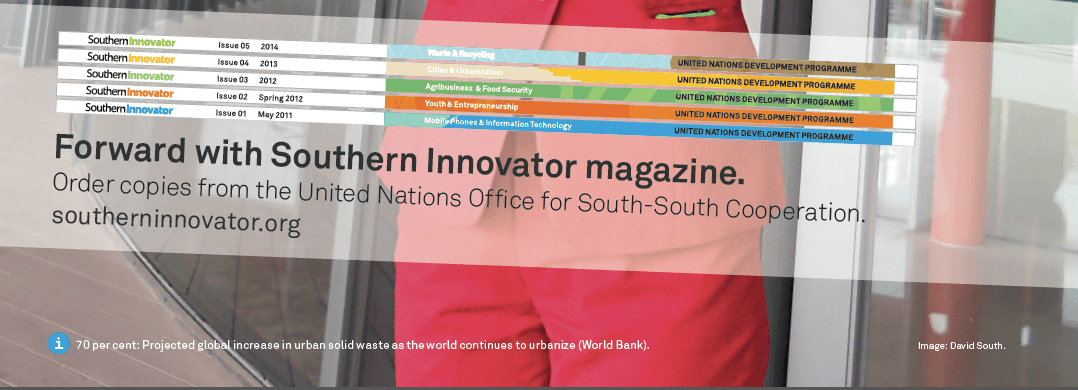
    SDG Resource Centre: The southern origins of sustainable development goals: Ideas, actors, aspirations.

    https://davidsouthconsulting.org/2021/06/02/case-study-5-gosh-ich-child-health-portal-2001-2003/

    https://davidsouthconsulting.org/2021/02/05/channel-regulation-swedes-will-fight-childrens-advertising-all-the-way/

    https://davidsouthconsulting.org/2021/07/29/infographics-2005-2014/

    https://davidsouthconsulting.org/2021/03/04/innovation-villages-tackling-mdgs/

    https://davidsouthconsulting.org/2016/04/14/interviews-for-the-gosh-child-health-portal-2001-2003-14-april-2016/

    https://davidsouthconsulting.org/2020/12/10/one-world-youth-conferences-mongolia-1998-1999/

    https://davidsouthconsulting.org/2021/03/05/southern-innovator-issue-2/

    https://davidsouthconsulting.org/2020/12/09/study-finds-simple-toys-key-to-boosting-educational-development-january-2007/

    https://davidsouthconsulting.org/2022/10/27/tapping-the-power-of-child-play/

    https://davidsouthconsulting.org/2021/02/11/turning-street-children-into-entrepreneurs/

    Creative Commons License

    This work is licensed under a
    Creative Commons Attribution-Noncommercial-No Derivative Works 3.0 License.

    ORCID iD: https://orcid.org/0000-0001-5311-1052.

    © David South Consulting 2023

  • Innovation Villages Tackling MDGs

    Innovation Villages Tackling MDGs

    By David SouthDevelopment Challenges, South-South Solutions

    SOUTH-SOUTH CASE STUDY

    The global economic crisis that began to roll across the world in September 2008 is threatening gains made against poverty and hunger all over the South. As Kevin Watkins from UNESCO’s Global Monitoring Report told the Financial Times, “With the slowdown in growth in 2009, we estimate that the average income of the 391 million Africans living on less than US $1.25 a day will take a 20 percent hit.”

    How well millions of people survive the economic turmoil will depend on how local communities respond. And there are innovating communities across the South that show it is possible to succeed. By studying the microcosm of test villages, where quantifiable results are being tracked, lessons are being learned on how to achieve the Millennium Development Goals (http://www.undp.org/mdg/).

    The challenge of matching improving living standards and quality of life with environmental sustainability has been taken up by one village in Colombia. The technologies it has developed over the past few decades have been adopted around the country.

    In Las Gaviotas, Colombia a unique experiment was hatched at the end of the 1960s: to see if a village could survive – and even thrive – while eschewing fossil fuels and industrial agriculture. It found its first test in the oil crisis of the early 1970s. For Las Gaviotas’ survival, meeting energy needs became paramount.

    One of the simple concepts the community applied is a take on the physical reality that energy is never created or destroyed, it just moves from one medium to another. Las Gaviotas believes in using all the sources for energy that can be found in a local area first, before seeking out others.

    Founded by development specialist Paolo Lugari,Las Gaviotas(http://www.friendsofgaviotas.org) is located in a desert region of Colombia. The area covers a vast territory comprising three-fifths of the country but is home to just 10 percent of the population. To Lugari, the harsh environment is a challenge to be overcome. To begin to reverse the arid environment at Las Gaviotas, the villagers reversed the dry climate by planting trees.

    This had the effect of increasing local rainfall by 10 percent, making it possible to do other economic activities.”The only deserts that exist in this world are deserts of the imagination,” Lugari told the New York Times.

    The 200 people living in Las Gaviotas have been able to get by without guns, police, a mayor, cellphones, television or the Internet. Nobody uses a job title — instead the adults in the community rotate jobs.

    While the villagers do not use many of the technological tools people associate with modern life and prosperity, they do have a culture of invention. The inventions they have come up with include a solar kettle for sterilizing water and a 8,012 hectare pine forest which is harvested for resin to make biofuel for trucks and motorcycles. The resin is also used to make varnishes and linseed oil.

    For years Colombia’s ongoing civil war raged around the community. Violent drug traffickers and private armies destabilized the country for decades. But despite this mayhem, Las Gaviotas has attracted rural peasants seeking to double their wages (US $500 a month) and enjoy the quiet life away from the war.

    “We try to live a quiet life, depending on nothing but our own labor and ingenuity,” said Teresa Valencia, a teacher who has lived in Las Gaviotas for three decades.

    Other products developed by the village included a turbine powered by a small, one metre high dam that produced 10 kilowatts of electricity, a windmill that was able to spin despite light breezes, and a pump strong enough to draw water from the hard-to-reach savannah water table.

    Pride of place was the village’s hospital. Despite hot temperatures and high humidity, the hospital used clever technologies like subsurface tunnels and double ventilation systems in the walls to cool its operating theatre. The roof slid off to allow ultraviolet sunlight to disinfect rooms. After healthcare reforms in Colombia, the hospital was closed. Undefeated, the village turned the hospital’s kitchen into a potable water bottling facility, and reduced the need for hospital visits by making sure everyone in the area had access to clean water.

    The community’s approach inspired scientists and architects, who came to design homes, laboratories and factories for Las Gaviotas.

    One significant success has been the windmill-driven water pumps developed by Las Gaviotas. Invented by Jorge Zapp, head of the mechanical engineering department of Bogota’s Universidad de Los Andes, it is a lightweight windmill unit weighing barely 45 kilograms. The blades use the airfoil found on airplane propellers to make the most of light breezes.

    In the 1980s, UNDP hired the Gaviotas team to install water and windmill pumps in other places in Colombia. Thousands have now been installed in Colombia and the design has been copied throughout Latin America.

    Other inventions include a solar-powered kitchen, a water pump powered by a children’s see-saw, and a zeppelin that floats above the savannah plains to detect forest fires.

    While the community has been able to forge a success, it can’t avoid the ups and downs of the global economy entirely. Competition from cheap imports of pine resin have pushed down the price the community can charge.

    But in a topsy-turvy world, and surrounded by a civil war, what Las Gaviotas has achieved still seems impressive. “We have survived,” said Andrea Beltran. “Maybe, at this time and place in Colombia, that is enough.”

    More recently, a much-publicized experiment is also underway in the Millennium villages. The Millennium Villages (http://www.millenniumvillages.org/index.htm) is a joint project between Columbia University’s The Earth Institute and UNDP, and is a bold experiment working with villages in Africa to identify and test solutions to help in achieving the Millennium Development Goals (http://www.undp.org/mdg/).

    Britain’s Guardian newspaper has also been sponsoring and tracking changes in the villages of Katine sub-county in Uganda (http://www.guardian.co.uk/katine). Comprising 25,000 people, the project began in October 2007, and is conducted in partnership with the African Medical and Research Foundation (Amref) and Farm-Africa in Katine.

    What is useful to people looking for solutions is the way the project is being tracked in detail on the newspaper’s website.

    In India, the Model Village India (www.modelvillageindia.org.in) concept pioneered by Rangeswamy Elango, a head of the village of Kuthampakkam near Chennai, has now expanded to 30 model villages. Its approach is about being positive, eschewing griping about problems and instead getting down to work to solve them. Its success is based on an ancient Indian self-organizing model, the Panchayat, and Elango has modernized it to become what he calls The “Network Growth Economy Model” – a direct challenge to the “special economic zones that benefit only capitalist owners,” he said.

    Gaviotas: A Village to Reinvent the World – 10th Anniversary Edition by Alan Weisman details further the achievements of the village (www.amazon.com)

    Published: November 2009

    Resources

    1) Unleashing India’s Innovation: Toward Sustainable and Inclusive Growth, a report by the World Bank. Website: http://www.worldbank.org/

    2) NextBillion.net: Hosted by the World Resources Institute, it identifies sustainable business models that address the needs of the world’s poorest citizens. Website: http://www.nextbillion.net/news

    3) Model Village India: Drawing on self-organizing methods used in India since 1200 BC, the Model Village India is based around India’s democratic system of Panchayats: a village assembly of people stemming back to pre-colonial times. Website: http://www.modelvillageindia.org.in

    4) Maker Faire: The African Maker Faire has tapped into Africa’s well-entrenched do-it-yourself development culture. It went looking for more inventors like those celebrated on the website AfriGadget (http://www.afrigadget.com/), with its projects that solve “everyday problems with African ingenuity.” The Faire works with the participants to share their ideas and to find ways to make money from their ideas. Website: http://makerfaireafrica.com/

    5) eMachineShop: This remarkable service allows budding inventors to download free design software, design their invention, and then have it made in any quantity they wish and shipped to them: Amazing! Website: http://www.emachineshop.com/

    6) The red dot logo stands for belonging to the best in design and business. The red dot is an internationally recognized quality label for excellent design that is aimed at all those who would like to improve their business activities with the help of design. Website: http://www.red-dot.de

    https://davidsouthconsulting.org/2022/05/02/landmark-study-finds-simple-toys-key-to-boosting-educational-development-and-meeting-mdgs/

    https://davidsouthconsulting.org/2021/12/20/press-release-1-southern-innovator/

    https://davidsouthconsulting.org/2021/12/20/press-release-2-southern-innovator/

    https://davidsouthconsulting.org/2021/12/20/press-release-3-southern-innovator/

    https://davidsouthconsulting.org/2021/03/05/southern-innovator-issue-1/

    https://davidsouthconsulting.org/2021/03/05/southern-innovator-issue-2/

    https://davidsouthconsulting.org/2021/03/05/southern-innovator-issue-3/

    https://davidsouthconsulting.org/2021/03/05/southern-innovator-issue-4/

    https://davidsouthconsulting.org/2021/03/05/southern-innovator-issue-5/

    https://davidsouthconsulting.org/2020/12/09/study-finds-simple-toys-key-to-boosting-educational-development-january-2007/

    https://davidsouthconsulting.org/2023/01/17/war-peace-and-development-may-2018/

    Development Challenges, South-South Solutions was launched as an e-newsletter in 2006 by UNDP’s South-South Cooperation Unit (now the United Nations Office for South-South Cooperation) based in New York, USA. It led on profiling the rise of the global South as an economic powerhouse and was one of the first regular publications to champion the global South’s innovators, entrepreneurs, and pioneers. It tracked the key trends that are now so profoundly reshaping how development is seen and done. This includes the rapid take-up of mobile phones and information technology in the global South (as profiled in the first issue of magazine Southern Innovator), the move to becoming a majority urban world, a growing global innovator culture, and the plethora of solutions being developed in the global South to tackle its problems and improve living conditions and boost human development. The success of the e-newsletter led to the launch of the magazine Southern Innovator.

    Creative Commons License

    This work is licensed under a
    Creative Commons Attribution-Noncommercial-No Derivative Works 3.0 License.

    ORCID iD: https://orcid.org/0000-0001-5311-1052.

    © David South Consulting 2023

  • Nollywood: Booming Nigerian Film Industry

    Nollywood: Booming Nigerian Film Industry

    By David SouthDevelopment Challenges, South-South Solutions

    SOUTH-SOUTH CASE STUDY

    The digital revolution in filmmaking over the last decade has given birth to an African success story: Nollywood – Nigeria’s answer to Hollywood, uses low-cost digital filmmaking and editing to tell local stories — in the process making money and creating thousands of jobs.

    This do-it-yourself (DIY), straight-to-DVD and video market has in just 13 years ballooned into a US $250 million-a-year industry employing thousands of people. In terms of the number of films produced each year, Nollywood is now in third place behind India’s Bollywood and America’s Hollywood. Despite rampant pirating of DVDs and poor copyright controls, directors, producers, actors, stars, vendors and technicians are all making a living in this fast-growing industry.

    The power of creative industries to create jobs and wealth has been a focus of UNESCO, through its Global Alliance for Cultural Diversity. UNESCO has been in the forefront in helping African countries re-shape their policies to take cultural industries into consideration. The promotion of cultural industries also has been incorporated into the New Partnership for Africa’s Development (NEPAD).

    What is particularly attractive about Nollywood to the poor in the South is its rough-and-ready approach to filmmaking: combining low-cost digital cameras and film editing software on personal computers, with small budgets and fast turn-around times. Films are made on location using local people. These factors make getting into filmmaking accessible and within reach of more people.

    Nollywood grew out of frustration, necessity and crisis: in the late 1980s and early 1990s, Nigerian cities became crime hotbeds. People were terrified to go out on the streets, and this led to the closing down of many movie theatres. Desperate for entertainment at home – and unsatisfied with foreign imports from India and the West – Nigerians turned to telling their own stories to stave off the boredom of staying in.

    The film credited with sparking off the industry is 1992’s Living in Bondage – a huge financial hit credited with raising the level of professionalism and production values in Nigerian cinema.

    Now, between 500 and 1,000 feature-length movies are made each year, selling well across the continent of Africa. Average productions take 10 days and cost around US $15,000 (www.thisisnollywood.com). Nollywood stars are famous throughout Africa – and Nigeria culturally dominates West Africa just as the US does the world. It is estimated there are 300 producers and that 30 titles go to shops and market stalls every week. On average, a film sells 50,000 copies: a hit will sell several hundred thousand. With each DVD costing around US $2, it is affordable to most Nigerians and very profitable for the producers.

    “These are stories about Africa, not someone else’s,” well-known actor Joke Silva told the Christian Science Monitor.

    Focused on Africa, the films’ themes revolve around AIDS, corruption, women’s rights, the occult, crooked cops and prostitution. They do so well because they speak directly to the lives of slum-dwellers and rural villagers.

    “We are telling our own stories in our way, our Nigerian way, African way,” said director Bond Emeruwa. “I cannot tell the white man’s story. I don’t know what his story is all about. He tells his story in his movies. I want him to see my stories too.”

    The big brands – Sony, Panasonic, JVC and Canon – all produce cameras capable of high-definition digital filmmaking and these have become the staple tools of this filmmaking revolution.

    More and more, the films are capitalising on the large African diaspora around the world, on top of Africa’s large internal market. And this is offering a step-up into the global marketplace for Nigerian directors and producers.

    The Nollywood phenomemon has been documented in the documentary This is Nollywood, directed by Franco Sacchi, a teacher from the Center of Digital Imaging Arts at Boston University.

    The prospects for the industry are only looking up: the Nigeria in the Movies project has been launched to help grow the industry, establish standards, improve distribution and broaden its international appeal and awareness. It also offers filmmaking grants for neophyte filmmakers.

    Of course, filmmaking can be a tricky business: authorities in largely Muslim northern Nigeria have imposed 32 restrictions on the local film industry — nicknamed “Kannywood” after the city of Kano. A six-month ban lost the industry US $29 million and put thousands out of work: a sign of the economic importance of this DIY filmmaking business. The message is clear: filmmakers need to be sensitive to the cultural norms of the communities in which they work.

    Kannywood, started in 1992, has 268 production companies and 40 editing studios, employing over 14,000 people.

    Adim Williams is one Nigerian director who is getting an international audience. He spends about US $40,000 on films that take two weeks to shoot. He has already secured an American release of a comedy, Joshua. Another director, Tunde Kelani, is regularly featured at international film festivals, where Nollywood screenings are more common.

    And some, like young director Jeta Amata, believe Nollywood’s cheap, fast-production, DIY approach has a lot to teach Hollywood, with its expensive filmmaking and ponderous production cycles.

    Published: March 2008

    Resources

    • This is Nollywood: A documentary about Nigeria’s booming movie industry.
      Website: http://www.thisisnollywood.com
      There is also an inspiring trailer to the film here.
      Website: http://www.thisisnollywood.com
    • The global charity Camfed (dedicated to eradicating poverty in Africa through the education of girls and empowerment of women) has projects to teach women filmmaking skills.
      Website: http://uk.camfed.org
    • Festival Panafricain du Cinema et de la Television de Ouagadoogou 2009: Africa’s biggest film festival.
      Website: http://www.fespaco.bf/
    • Naijarules: Billing itself as the “largest online community of lovers and critics of Nollywood”, an excellent way to connect with all the players in the business.
      Website: http://www.naijarules.com/vb/index.php
    • Nollywood Foundation: Based in the US, aims to bring Nigerian films and culture to an international audience and to promote new films and new media.
      Website:http://www.nollywoodfoundation.org/home.php

    https://davidsouthconsulting.org/2022/03/30/angolan-film-grabs-attention-at-film-festival/

    https://davidsouthconsulting.org/2022/04/01/bolivian-film-schools-film-scene-paying-off/

    https://davidsouthconsulting.org/2022/04/01/new-african-film-proving-power-of-creative-economy/

    https://davidsouthconsulting.org/2021/02/04/new-cuban-film-seeks-to-revive-sector/

    https://davidsouthconsulting.org/2022/03/30/riverwood-kenyan-super-fast-super-cheap-filmmaking/

    Development Challenges, South-South Solutions was launched as an e-newsletter in 2006 by UNDP’s South-South Cooperation Unit (now the United Nations Office for South-South Cooperation) based in New York, USA. It led on profiling the rise of the global South as an economic powerhouse and was one of the first regular publications to champion the global South’s innovators, entrepreneurs, and pioneers. It tracked the key trends that are now so profoundly reshaping how development is seen and done. This includes the rapid take-up of mobile phones and information technology in the global South (as profiled in the first issue of magazine Southern Innovator), the move to becoming a majority urban world, a growing global innovator culture, and the plethora of solutions being developed in the global South to tackle its problems and improve living conditions and boost human development. The success of the e-newsletter led to the launch of the magazine Southern Innovator.  

    Follow @SouthSouth1

    Google Books: https://books.google.co.uk/books?id=DqmXBgAAQBAJ&dq=development+challenges+march+2008&source=gbs_navlinks_s

    Slideshare: http://www.slideshare.net/DavidSouth1/development-challengessouthsouthsolutionsmarch2008issue-44443163

    Southern Innovator Issue 1: https://books.google.co.uk/books?id=Q1O54YSE2BgC&dq=southern+innovator&source=gbs_navlinks_s

    Southern Innovator Issue 2:https://books.google.co.uk/books?id=Ty0N969dcssC&dq=southern+innovator&source=gbs_navlinks_s

    Southern Innovator Issue 3:https://books.google.co.uk/books?id=AQNt4YmhZagC&dq=southern+innovator&source=gbs_navlinks_s

    Southern Innovator Issue 4: https://books.google.co.uk/books?id=9T_n2tA7l4EC&dq=southern+innovator&source=gbs_navlinks_s

    Southern Innovator Issue 5:https://books.google.co.uk/books?id=6ILdAgAAQBAJ&dq=southern+innovator&source=gbs_navlinks_s

    One of the many stories we covered on Africa’s fast-growing cities from 2007. It was witnessing first-hand Africa’s innovators and their adaptive use of mobile and information technologies that inspired us to give birth to Southern Innovator’s first issue.

    Citations

    Cited in Innovation Africa: Emerging Hubs of Excellence edited by Olugbenga Adesida, Geci Karuri-Sebina, Joao Resende-Santos (Emerald Group Publishing, 2016).

    https://davidsouthconsulting.org/2021/03/05/southern-innovator-issue-2/

    Creative Commons License

    This work is licensed under a
    Creative Commons Attribution-Noncommercial-No Derivative Works 3.0 License.

    ORCID iD: https://orcid.org/0000-0001-5311-1052.

    © David South Consulting 2023