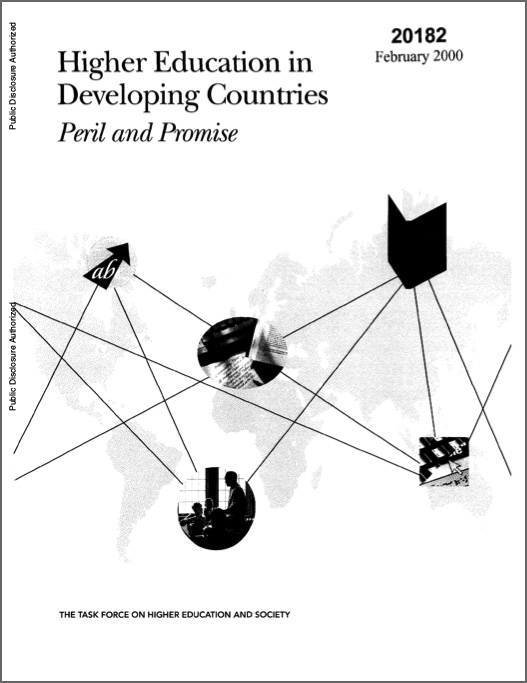
“This publication reports on 18 months of research, debate, and deliberation by the Task Force on Higher Education and Society, convened by the World Bank and UNESCO, to bring together experts from 13 countries to explore the future of higher education in developing nations.”
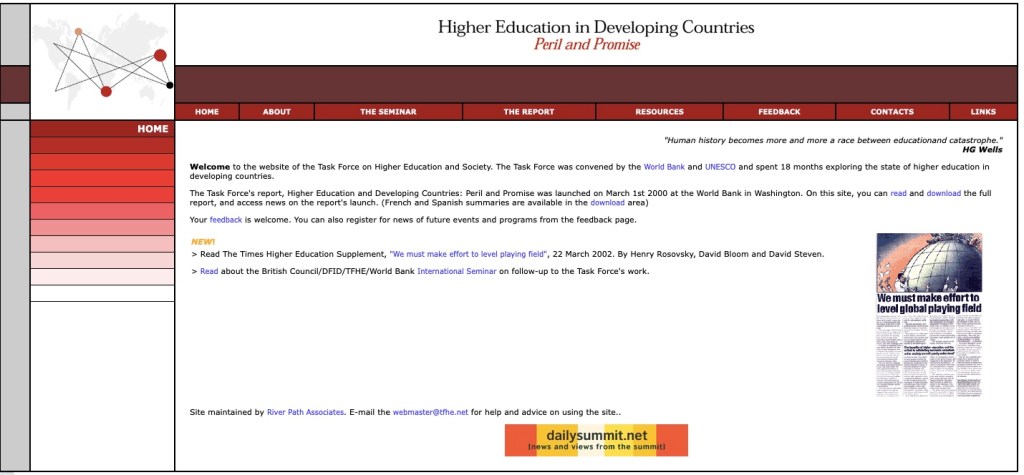
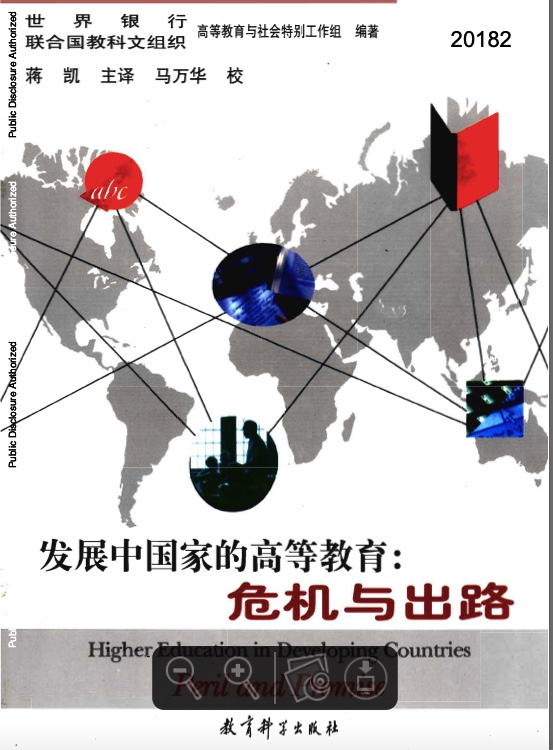
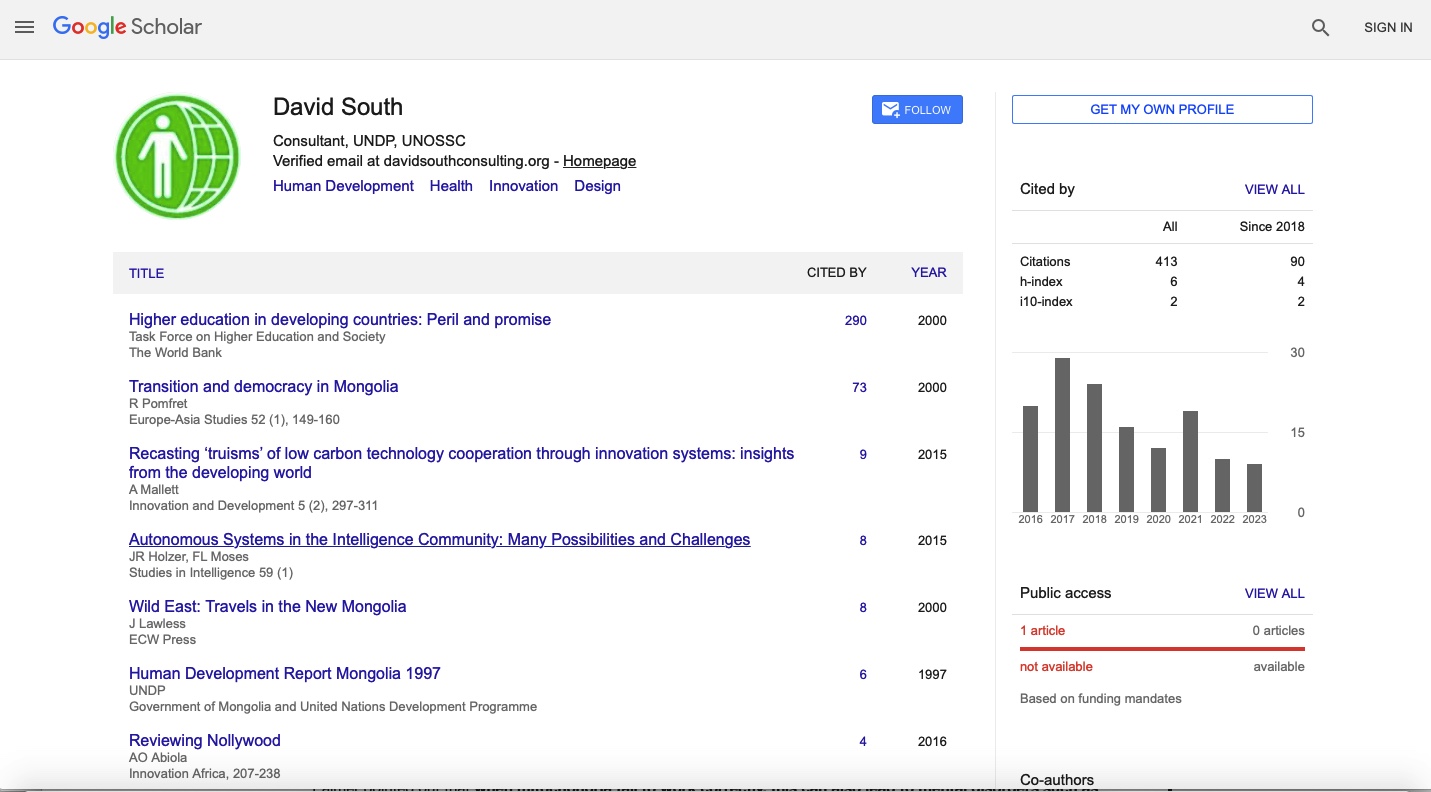
In 1999 I began work on the communications strategy as well as editing the expert contributions for the Task Force on Higher Education and Society’s report, Higher Education in Developing Countries: Peril and Promise (2000). The brief was to unpack the report and present its findings in a web-friendly format. At the time, it was still rare to see reports made user friendly for the world’s web audience. As a survey in 2014 discovered, a shocking third of the World Bank’s publications are never downloaded, 40 per cent were downloaded just 100 times, and only 13 per cent were downloaded more than 250 times in their lifetime (The Washington Post).
A highly successful cooperative of women in Brazil has shown that it is possible for outsiders to make it in the fast-paced world of fashion. Despite being based in one of Rio de Janerio’s slums, or favelas (http://en.wikipedia.org/wiki/Favela), the women have developed a reputation for high-quality merchandise and even put on fashion shows.
Fashion earns big money around the world: The global clothing industry is estimated to be worth more than US $900 billion a year. But fashion also has a reputation for relying on sweat shops, poor pay and poor working conditions. The poor are the most at risk of exploitation in the industry – upwards of 90 percent of sweatshop workers are women (www.feminist.org).
Yet the COOPA-ROCA cooperative (www.coopa-roca.org.br/en/index_en.html) – or Rocinha Seamstress and Craftwork Co-operative Ltd – has pioneered a way to involve poor women in the business, build their skills while creating high-quality products, and be flexible enough to make time for their families’ needs. It particularly helps single mothers.
The cooperative was founded by Maria Teresa Leal in Rocinha – the largest favela in Rio, home to over 180,000 people. After visiting her housekeeper’s home in the favela, Leal was impressed by the sewing skills of the women but found they weren’t making any money from their work. She decided to found the cooperative in 1981 and start making quilts and pillows. By the early 1990s, the cooperative had attracted the attention of Rio’s fashion scene. And in 1994, it jumped into making clothes for the fashion catwalks. Fashion designers in turn taught the women advanced production skills and about fashion trends.
Today, the coop has established a hard-won reputation for quality and sells its clothes to the wealthy elite of Rio. Its success has led to contracts with major clothing stores, including Europe’s C&A.
“Creativity is an important tool for transforming people and raising their consciousness,” Leal told Vital Voice. “My great passion is beauty. Beauty has the capacity to inspire, to touch individuals in a more subtle way. For this reason, I like to make beautiful things with the artisans of COOPA-ROCA.”
Leal realized that most small businesses helping the poor fail despite their best intentions. They often make the same mistakes: they fail to produce high quality goods, they fail to do market research and understand who they are selling to, they fail to develop the skills of their workers, and most importantly, they fail to see that they have to compete in a global economy with lots of other enterprises. How many people have seen crafts and knickknacks for sale that nobody really wants?
Slum dwellers are on the increase across the South. As the world becomes a more urban place – and 70 million people move every year to the world’s cities (UN) – the growing population of poor women and households presents a dilemma: how to provide meaningful work so they do not fall risk to exploitation? Without work opportunities, women can feel pressured to turn to prostitution, or even be trafficked by gangs for work or sex. And women in slums experience greater levels of unemployment than those who live elsewhere (UNHABITAT).
Women now make up the majority of the world’s poor: 70 percent of the world’s poor are women, as are a majority of the 1.5 billion living on less than US $1 a day (UNESCO).
Established in 1981 from a recycling project for local children, COOPA-ROCA started with finding ways to use thrown away scraps of cloth to make clothing. It eventually evolved into a cooperative. It focused on improving traditional Brazilian decorative craftwork skills like drawstring appliqué, crochet, knot work and patchwork.
“COOPA-ROCA works with traditional handicraft techniques that are widely used by women around the world,” explains Leal. “As COOPA-ROCA works with fashion, and fashion is always linked with media, the COOPA-ROCA artisans inspire other women who recognize in themselves the potential to do the kind of work that COOPA-ROCA does.”
For its first five years, COOPA-ROCA concentrated on building the organization and the skills of the artisans. Once a production structure was in place, quality control workshops were set up to increase the quality of the products so they could compete better in the marketplace.
“Many social projects believe that money is the only resource required to begin their work. The COOPA-ROCA case proves that social organizations must use a more entrepreneurial vision to understand the concept of resources.”
The cooperative’s mission statement is to “provide conditions for its members, female residents of Rocinha, to work from home and thereby contribute to their family budget, without having to neglect their childcare and domestic duties.”
By doing this to a high standard, the profile and reputation of traditional crafts has been raised.
The COOPA-ROCA hopes the work shows others how they can increase income in poor communities. The cooperative has 150 members and has partners in the wider fashion and decorative design markets.
The women equally share responsibility for production, administration and publicity. While they work at home, they come to the office to drop off the completed pieces and pick up more fabric.
The success of the cooperative has led to donations of funds to build a new headquarters designed by architect Joao Mauricio Pegorim.
Despite the cooperative’s success, it is still not easy to work with partners. “There are many negative preconceptions about Rocinha and the people who live there, both within and outside of Brazil. COOPA-ROCA is consistently rejected when it applies for loans,” Leal said. “Furthermore, the cooperative’s commercial partners usually do not enter the favela themselves, and I must serve as a bridge between the two worlds.”
But Leal is still ambitious for bigger things: “I envision COOPA-ROCA expanding to include 400 women artisans, producing for commercial partners, selling their own brand in Brazil and abroad, and carrying out fashion and design projects in the new headquarters in Rocinha.”
Published: March 2010
Resources
1) The online service CafePress is a specially designed one-stop shop that lets entrepreneurs upload their designs, and then sell them via their online payment and worldwide shipping service. Website:http://www.cafepress.com/cp/info/sell/
3) Once inspired to get into the global fashion business, check out this business website for all the latest news, jobs and events. Website:http://us.fashionmag.com/news/index.php
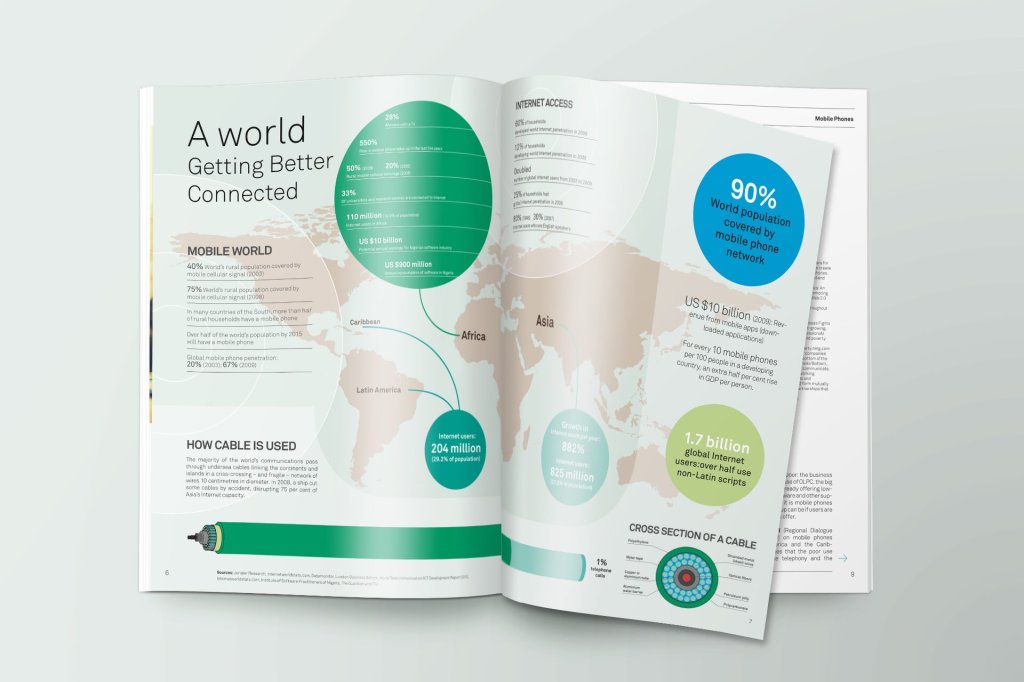
Development Challenges, South-South Solutions was launched as an e-newsletter in 2006 by UNDP’s South-South Cooperation Unit (now the United Nations Office for South-South Cooperation) based in New York, USA. It led on profiling the rise of the global South as an economic powerhouse and was one of the first regular publications to champion the global South’s innovators, entrepreneurs, and pioneers. It tracked the key trends that are now so profoundly reshaping how development is seen and done. This includes the rapid take-up of mobile phones and information technology in the global South (as profiled in the first issue of magazine Southern Innovator), the move to becoming a majority urban world, a growing global innovator culture, and the plethora of solutions being developed in the global South to tackle its problems and improve living conditions and boost human development. The success of the e-newsletter led to the launch of the magazine Southern Innovator.
UNESCO’s Kronberg Declaration on the Future of Knowledge Acquisition and Sharing is blunt: the future of learning will increasingly be mediated by technology, and traditional educational processes will be revolutionized. Acquiring factual knowledge will decrease and instead people will need to find their way around complex systems and be able to judge, organize and creatively use relevant information.
According to Abdul Waheed Khan, UNESCO’s Assistant Director General for Communications and Information, “Lack of access to knowledge increasingly accentuates marginalization and economic deprivation, and we need to join efforts to bridge these gaps”
More and more initiatives are stepping in to break down barriers in the exchange of information and knowledge, and break out from the gatekeepers. The advent of Web 2.0 and its user-contributed resources is making this happen.
Connexions sees itself as the partner to go with the free and low-cost laptops being distributed by the One Laptop Per Child Project to schoolchildren in the developing world. Connexions is a Web 2.0 website that allows teachers and educators to upload their learning materials by subject for sharing with anyone who wants them. All content is broken down into modules for easy access. The content can be mixed to build courses, and adapted to suit local conditions. It represents a cornucopia of knowledge, ranging from mathematics to engineering to music lessons.
The content’s adaptability is its charm – users can add additional media like video and photos and modify and add on-the-ground case studies to really bring the material to life for students. The ability to re-mix and re-contextualise into the local circumstances is critical to get take-up of these resources argues Connexions.
Open Educational Resources is a global teaching and learning sharing website. It is all about getting teachers to open up and share their knowledge with other teachers. It contains full courses, course modules, syllabi, lectures, homework assignments, quizzes, lab and classroom activities, pedagogical materials, games and simulations, It is run by ISKME,an independent, non-profit educational think tank whose mission is to understand and improve how schools, colleges, and universities, and the organizations and agencies that support them, build their capacity to systematically collect and share information
Another excellent way to share information is the online publishing tool Lulu. While it is free to publish – whether a book, photo book, brochure, artwork, digital media, DVD and e-books – it does cost the person who wants to download or order a printed and bound copy. The creator of the content gets to choose how much should be charged and what is a fair price. The beauty of this website is the ability for anyone to publish and to bypass the limitations of traditional publishing.
Once you have created your content, and taken the decision to share it with the world, you can also make sure it is copyright protected so that nobody accept you makes money from it. It is aimed at authors, scientists, artists and educators, and lets them protect their work for free. The Creative Commons initiative allows repeat use for free of the content as long as the user attributes its source to its original author. Any content you publish online will be given a logo clearly stating what rights it has.
Published: August 2007
Resources
Professor Richard Baraniuk explains his concept in a video: click here to view
The Creative Commons provides free tools that let authors, scientists, artists and educators to easily define what rights they will allow people to have who use their work. The website has all the tools (including logos) to get started licensing work: www.creativecommons.org
Development Challenges, South-South Solutions was launched as an e-newsletter in 2006 by UNDP’s South-South Cooperation Unit (now the United Nations Office for South-South Cooperation) based in New York, USA. It led on profiling the rise of the global South as an economic powerhouse and was one of the first regular publications to champion the global South’s innovators, entrepreneurs, and pioneers. It tracked the key trends that are now so profoundly reshaping how development is seen and done. This includes the rapid take-up of mobile phones and information technology in the global South (as profiled in the first issue of magazine Southern Innovator), the move to becoming a majority urban world, a growing global innovator culture, and the plethora of solutions being developed in the global South to tackle its problems and improve living conditions and boost human development. The success of the e-newsletter led to the launch of the magazine Southern Innovator.
Education is recognized as a major catalyst for human development. During a high-level meeting on the Millennium Development Goals (MDGs) (http://www.undp.org/content/undp/en/home/mdgoverview.html) in 2010, UNESCO – the United Nations Educational, Scientific and Cultural Organization – pointed out the necessity of making rapid gains in education if all the MDGs are to be achieved. The goals deadline is 2015 – just two years away.
Two of the eight goals are directly related to education systems. MDG2 focuses on boosting universal primary education by 2015, and MDG3 calls for the elimination of barriers to primary and secondary education for women and girls.
UNESCO found that between 2000 and 2007, the share of total government education expenditure devoted to primary education across sub-Saharan Africa fell from 49 per cent to 44 per cent (Rawle, 2009). It also found total aid for education was on the decline and foreign aid for basic education began to stagnate in 2008. This contrasted, UNESCO stated, with the “strong advances made over the past decade.”
Overall, in the countries of sub-Saharan Africa, resources for education fell by US $4.6 billion a year on average in 2009 and 2010 (UNESCO, 2010).
With funding for education dependent on fluctuating factors such as foreign aid, government budgets and the state of the global economy, alternatives are needed to retain the gains made in education and to improve them even further.
Thankfully, one new innovative learning tool, dubbed massive open online courses (MOOCs) (http://en.wikipedia.org/wiki/Massive_open_online_course), is about to have a major impact in Africa. Rapid improvements in access to the Internet in Africa means that online learning tools could be a growing solution to the education deficit.
MOOCs mean people will have access to a global treasure trove of free online courses in science, technology, engineering and math. Many believe the leapfrog into digital education will do for education what mobile phones have done for African’s ability to communicate and do business.
These online courses vary in approach – some have set start and finish dates and can last from six to 10 weeks, while others are more loosely structured. But they all offer students the ability to learn from online video lectures and use online forums as a replacement for seminars, debates and question-asking.
According to a recent paper by Harvard University Professor of International Development Calestous Juma, “There is a real possibility for Africa to dramatically improve its teaching – especially in science, technology, engineering, and math – through the deployment of MOOCs.”
The diffuse nature of the Internet means many of the drivers behind promoting this trend in Africa will be found at the regional rather than the national level. The Internet helps remove the dependence on national governments and their education policies and funding – or lack thereof – to further education goals. This means the ability to make the most of the powerful new resource of MOOCs will be amplified by innovators within Africa, from entrepreneurs to information technology pioneers.
Their solutions will help make it easier to access these learning resources.
MOOCs are a variation on OpenCourseWare (http://en.wikipedia.org/wiki/OpenCourseWare) university courses, created for free distribution on the Internet. MOOCs bypass the hazard in the past of digital courses going missing or being mislaid: they are online and always available. Nobody can mislay the content by accident.
The Khan Academy (khanacademy.org) is one of the best-known popular MOOCs pioneers. It was founded in the United States in 2008 by Salman Khan, who quit his job as a hedge fund manager to run the business full time. Khan is academically highly accomplished – he has three degrees from MIT and an MBA from Harvard University. The Khan Academy targets mainly secondary school students and claims to have 5.5 million unique users a month. It is run as a not-for-profit and receives donations to keep it going.
It does this with a staff of just 37: proof of how much can be achieved when the power of the Internet is leveraged to pass on knowledge.
The Khan Academy platform greets readers with questions such as “What is the eccentricity of an ellipse?” or “What if there’s a negative exponent?” And if you do not know, you better get cracking doing their problem sets. Students can practice their math skills, answer other students’ questions or watch a video walk-through of the services on offer on the website. The main categories are math, science and economics, computer science, the humanities and help with preparing for various standardized tests such as the GMAT (Graduate Management Admission Test). There are over 4,000 videos on offer on the website.
“Each video is a digestible chunk, approximately 10 minutes long, and especially purposed for viewing on the computer,” the website states.
“I teach the way that I wish I was taught. The lectures are coming from me, an actual human being who is fascinated by the world around him,” states Khan.
MOOCs offer not just course materials, videos, readings and problem sets but also discussion forums for the students, professors/teachers and tutorial assistants to build a community. This is considered an ideal model for reaching students over great distances and in remote regions. So-called “open” educational resources are used and often no fees or tuition are charged.
The OpenCourseWare (OCW) (http://ocw.mit.edu/index.htm) project at the Massachusetts Institute of Technology (MIT) seeks to “publish all of our course materials online and make them widely available to everyone,” according to Dick K.P. Yue, Professor at MIT’s School of Engineering.
Through its website, it offers nearly all of MIT’s course content, a treasure trove from one of the top research universities in the world, a long-standing home for pioneers and innovators in science and technology.
By way of the Internet, anybody anywhere in the world can access this resource. The most visited courses online as of February 2013 included undergraduate “Introduction to Computer Science and Programming,” “Physics I: Classical Mechanics,” “Introduction to Electrical Engineering and Computer Science I,” “Principles of Microeconomics,” “Introduction to Algorithms,” and “Principles of Chemical Science.” There are 2,150 courses and so far 125 million visitors to the website.
Having access to the courses allows teachers to gain new insights into the subjects they teach and benefit from the impressive resources of MIT.
MIT also sees it as a way to aid people to tackle the big development issues of our time, including climate change and health problems such as cancer.
Other MOOCs providers include Peer-to-Peer University (https://p2pu.org/en/), Udemy (udemy.com), Coursera (coursera.org), Udacity (udacity.com), and edX (edx.org), a not-for-profit partnership between Harvard and MIT to develop courses for interactive study on the Internet.
Boosting access to MOOCs presents a great business opportunity for Africa’s mobile phone entrepreneurs and its mushrooming information technology (IT) hubs (https://africahubs.crowdmap.com/).
“I view online learning as a rising tide that will lift all boats,” Anant Agarwal, professor of electrical engineering and computer science at MIT and president of edX, told The Financial Times. “It will not only increase access, it will also improve the quality of education at all our universities.”
All of this matters because it means Africans will increasingly have the tools to participate in the global marketplace of ideas and products and services on a more level playing field. By far the biggest obstacle to competing is the lack of timely information and knowledge about what is happening in the global economy. It is a frequent complaint, from the farmer desperate for the latest news on market prices and trends and innovations, to the strivers in the growing megacities of the continent who have their sights set on global success.
2) Queen Elizabeth Prize for Engineering: The Queen Elizabeth Prize for Engineering is a new global engineering prize that will reward and celebrate an individual (or up to three individuals) responsible for a ground-breaking innovation in engineering that has been of global benefit to humanity. Website:http://www.qeprize.org/
3) Belfer Center for Science and International Affairs: The Belfer Center is the hub of the Harvard Kennedy School’s research, teaching, and training in international security affairs, environmental and resource issues, and science and technology policy. Website: http://belfercenter.ksg.harvard.edu/
4) A place to host MOOC news and information. Website:http://mooc.ca/
5) OpenCourseWare Consortium: The OpenCourseWare Consortium is a collaboration of higher education institutions and associated organizations from around the world creating a broad and deep body of open educational content using a shared model. Website:http://www.ocwconsortium.org/
7) Hiobo MoPC: Joining the ongoing push to drive down the price of personal computers in Africa is the latest offering from Mauritian information technology company, Hiobo. Website:http://www.hiobo.com/mopc/
London Edit
31 July 2013
Development Challenges, South-South Solutions was launched as an e-newsletter in 2006 by UNDP’s South-South Cooperation Unit (now the United Nations Office for South-South Cooperation) based in New York, USA. It led on profiling the rise of the global South as an economic powerhouse and was one of the first regular publications to champion the global South’s innovators, entrepreneurs, and pioneers. It tracked the key trends that are now so profoundly reshaping how development is seen and done. This includes the rapid take-up of mobile phones and information technology in the global South (as profiled in the first issue of magazine Southern Innovator), the move to becoming a majority urban world, a growing global innovator culture, and the plethora of solutions being developed in the global South to tackle its problems and improve living conditions and boost human development. The success of the e-newsletter led to the launch of the magazine Southern Innovator.










 David South Consulting
You must be logged in to post a comment.