Tag: UNDP

  • India’s Modernizing Food Economy Unleashing New Opportunities

    India’s Modernizing Food Economy Unleashing New Opportunities

    By David SouthDevelopment Challenges, South-South Solutions

    SOUTH-SOUTH CASE STUDY

    Increasing prosperity in India is reshaping the country’s relationship to its food. A number of trends are coming together that point to significant improvements to India’s long-running problems with food supply and distribution. This matters because India, despite its two-decade economic boom – and increasing middle-class population – is still home to about 25 per cent of the world’s hungry poor, according to the World Food Programme (WFP).

    According to Indian government figures, around 43 per cent of children under five are malnourished and more than half of pregnant women between 15 and 49 suffer from anaemia (http://en.wikipedia.org/wiki/Anemia), a consequence of poor diets (WFP).

    Many Indians go hungry despite the fact that the country grows enough food for its entire population. The problem isn’t lack of food but a wasteful system that fails to distribute affordable food efficiently and to make participating in the food system a viable income source. Farming employs as much as 70 per cent of Indians. But many work small plots of land, are heavily in debt and earn a meagre income.

    However, a number of developments are improving the efficiency of India’s food system and modernizing the way it works.

    There are signs that big changes lie ahead: New restaurants exploring foreign cuisines; modern supermarkets; online food shopping services; food academies teaching new skills; food gurus proselytising for new approaches; and a thriving publishing and media sector.

    They are creating new jobs, increasing price competition and encouraging more modern delivery, marketing and distribution systems.

    In 2011 the introduction of global supermarkets into the Indian marketplace became a hot debate. The Indian government announced it would open the marketplace to global competition and foreign direct investment (FDI), but put the move on hold in December after an outcry by political parties and protests by small- and medium-sized retailers fearful it would harm livelihoods. The Indian supermarket sector is a market estimated to be worth US $475 (The Guardian).

    One retailer that is already bringing international methods to Indian retailing is the Best Price chain of wholesale stores. Best Price is a joint venture between U.S.-based Walmart and Bharti Enterprises, one of India’s largest business groups. In 2007, Walmart India made a deal with Bharti Enterprises to set up a cash and carry business called Best Price Modern Wholesale. The first store opened in 2009, and by 2012 there were 15 outlets.

    By teaming up with Walmart, Bharti Enterprises gets to learn from one of the world’s leading retailers and a pioneer in efficiencies, logistics, supply chain management and sourcing.

    The stores have all the hallmarks of modern food selling – warehouses, sophisticated inventory control, hygienic conditions and connection to new information technologies (http://www.indiaretailing.com/bharti-walmart-II.asp).

    Best Price Modern Wholesale employs 3,710 people, and the stores sell more than 6,000 items, a mix of food and non-food products. It claims 90 per cent of the goods and services are sourced locally.

    Food is a highly volatile and politicized issue in India. High food inflation – which reached 12.21 per cent in November 2011, according to India’s Finance Minister Pranab Mukherjee – has led to political tensions. Inflation has driven up the price of staple foods, essential commodities and imported products.

    At the same time, India’s commerce ministry has forecast that 10 million jobs will be created if foreign supermarkets are allowed to set up in India. Many of these jobs will be in logistics as more efficient, modern methods shake up India’s food industry. Poor logistics in the Indian food sector means that as much as 40 per cent of produced food does not reach consumers. This waste comes at a high cost in a country with 50 million malnourished children.

    New jobs are already being created in the country’s restaurant industry.

    While there have always been high-end restaurants in India’s cities, the gastronomic scene has received a recent boost from expatriate Indian restaurateurs returning from the competitive London, Tokyo and New York scenes, bringing skills and experience from some of the most demanding kitchens in the world.

    One example is Megu, a restaurant in New Delhi’s Leela hotel(theleela.com/new-delhi-megu.html) that sells Japanese-influenced food.

    Such cuisine is being called “elite Indian international gastronomy”, according to The Guardian newspaper.

    “We are aiming at the affluent traveller or the ultra-rich local,” Aishwarya Nair, a senior executive at the Leela, told The Guardian. “The idea is to give people a taste of globalization. In our restaurant you don’t know you are in India. You could be in New York, Japan, anywhere.”

    That appeals to many newly affluent Indians, food critic Vir Sanghvi told the newspaper.

    “The food (at somewhere like Megu) doesn’t matter so much as the experience and the glamour,” Sanghvi said. “There is a lot of money outside the traditional elite now and these people are looking for ways to spend it on something that seems sophisticated.”

    The new food fascination is also leading families who once would have employed a cook to watch 24-hour TV channels about food. This programming changes habits and encourages buying new foods and exploring new flavours.

    Market analysts believe these trends are likely to continue. A middle class with spending power has been growing in India for almost two decades, and forecasts see the number of middle class Indians reaching 250 million by 2016.

    “With bigger and better restaurants and international food brands coming in to the country, it’s only a matter of time before fine dining finds its place among a growing cosmopolitan population,” said Siddharth Mathur, manager of the independent Smoke House Room restaurant (facebook.com/SmokeHouseRoom).

    Online food shopping in India is also thriving. Research by Juxt found that 65 million people use the web in India, four-fifths of whom shop online. Murali Krishnan, head of eBay India, told the BBC that the country could become one of the top 10 e-commerce hubs in the world by 2015.

    Online grocery services include MyGrahak.com, which calls itself “India’s Largest Food Store” and offers home delivery of food, toiletries and pet supplies. Another is Greenytails.com, which brings together multiple food retailers into one online shopping website and is based in Bangalore and Hyderabad.

    As an example of the spin-offs that can be created from rising interest in food culture, there is the story of Nita Mehta. Considered one of India’s most celebrated cookbook authors, Mehta (nitamehta.com) not only publishes recipes but also runs a chain of cooking academies.

    As she tells it, her interest in cooking was always there and she started experimenting at home with new recipes for her friends and family. The response was encouraging and she started teaching people how to make ice cream in her home. Curious students flocked to her classes to learn how to make flavours like mint, chocolate chip and mocha.

    Following on this success, she started teaching classes in baking, Chinese cooking and what she calls “multicuisine”.

    The lessons soon turned into a cookbook, which she wrote after doing her household chores. But her battles had only begun: publishers were not interested so she self-published. She called her publishing company Snab Publishers and released her first book, “Vegetarian Wonders”. It was modestly successful but it was with her second book, “Paneer All the Way”, that things got cooking. Her publishing company has now produced 400 cook books and sold 5 million copies. She has won international awards, does TV cooking programmes, has established several cooking institutes in New Delhi and teaches classes in the U.S., Canada, Britain and other countries.

    With successes like Nita Mehta, the Indian food revolution is well underway.

    Published: March 2012

    Resources 

    1) India Retailing.com: Calling itself “a path-breaking retail information interface portal. Addressed and directed towards the retailing community across the world, the portal provides a wide-angle view and analysis of the business of retail in India”. Website: indiaretailing.com

    2) Retailers Association of India (RAI): RAI is the unified voice of Indian retailers. RAI works with all the stakeholders for creating the right environment for the growth of the modern retail industry in India. Website: rai.net.in/

    3) The Wal-Mart Effect: A book on how highly competitive retail supermarkets can drive down food prices and inflation. Website: http://www.amazon.co.uk/Wal-Mart-Effect-Out—town-Superstore/dp/0141019794/ref=sr_1_1?s=books&ie=UTF8&qid=1322570100&sr=1-1

    4) More on India’s food situation from the World Food Programme. Website: http://www.wfp.org/countries/india

    5) Report on the State of Food Insecurity in Urban India: A report from Networked Ideas. The Report reveals an alarming situation of a permanent food and nutrition emergency in urban India. Website: http://www.networkideas.org/focus/feb2012/fo28_M_S_Swaminathan.htm

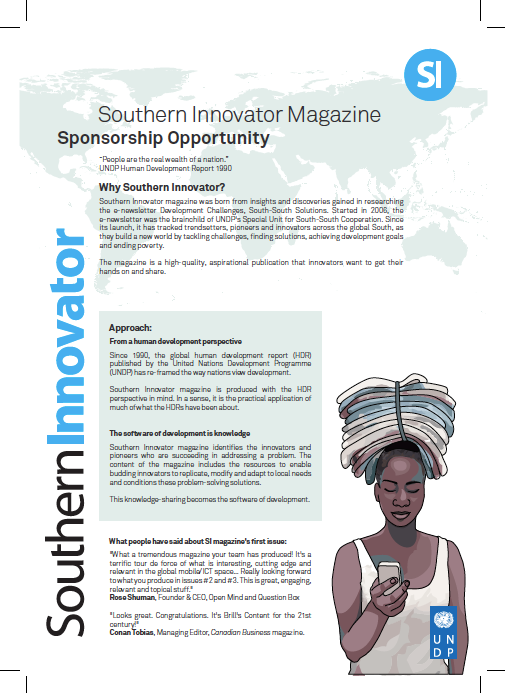
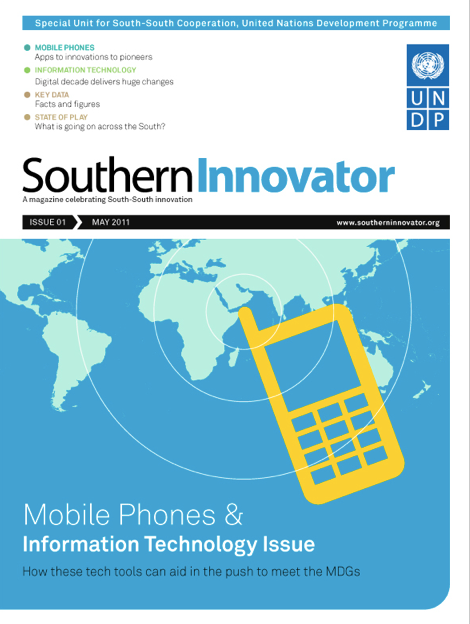
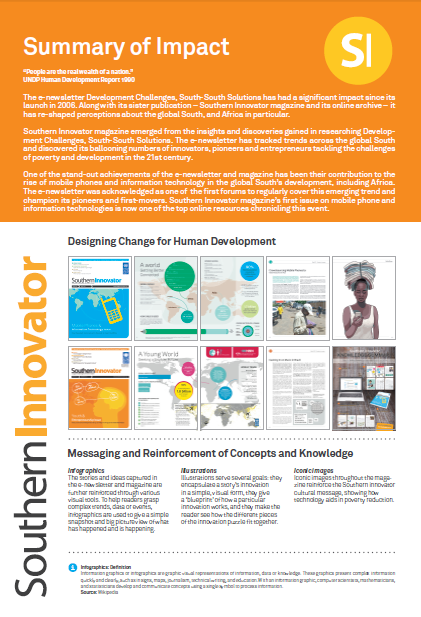
    Development Challenges, South-South Solutions was launched as an e-newsletter in 2006 by UNDP’s South-South Cooperation Unit (now the United Nations Office for South-South Cooperation) based in New York, USA. It led on profiling the rise of the global South as an economic powerhouse and was one of the first regular publications to champion the global South’s innovators, entrepreneurs, and pioneers. It tracked the key trends that are now so profoundly reshaping how development is seen and done. This includes the rapid take-up of mobile phones and information technology in the global South (as profiled in the first issue of magazine Southern Innovator), the move to becoming a majority urban world, a growing global innovator culture, and the plethora of solutions being developed in the global South to tackle its problems and improve living conditions and boost human development. The success of the e-newsletter led to the launch of the magazine Southern Innovator. 

    Creative Commons License

    This work is licensed under a
    Creative Commons Attribution-Noncommercial-No Derivative Works 3.0 License.

    ORCID iD: https://orcid.org/0000-0001-5311-1052.

    © David South Consulting 2023

  • Staple Foods Are Becoming More Secure in the South

    Staple Foods Are Becoming More Secure in the South

    By David SouthDevelopment Challenges, South-South Solutions

    SOUTH-SOUTH CASE STUDY

    Finding ways to ensure food security in countries experiencing profound economic and social change and stress is critical to achievement of development goals.

    Food security is crucial to ensuring economic development is sustainable, and it is vital to long-term human health. Just one bout of famine can damage a generation of youth, stunting brain development and leaving bodies smaller and weaker than they should be.

    Thankfully, many innovators are working on this problem and are making significant progress. A report from the Asian Development Bank, The Quiet Revolution in Staple Food Value Chains (http://www.adb.org/publications/quiet-revolution-staple-food-value-chains), found improvements to security of rice and potatoes – common staple foods in many countries. It said the so-called value chains – the various activities a company does to deliver a product or service to the marketplace (http://en.wikipedia.org/wiki/Value_chain) – for potatoes and rice have seen significant improvements in Bangladesh, China and India.

    This is important because improvements in access to staple foods will mean better food security and less threat of extreme hunger events. This matters because it just takes one extreme hunger event and a generation is scarred for life.

    The human brain is a heavy user of energy: it uses between 20 and 30 per cent of a person’s energy intake. Failure to consume enough calories means brain functioning begins to  be altered (brain-guide.org).

    Hunger and starvation slow a person’s mental responsiveness. Low energy intake from minimal diets leads to apathy, sadness and depression. Fetuses and infants are especially sensitive to brain damage caused by malnutrition. A malnourished child can suffer life-long low intelligence and cognitive defects.

    More than 70 per cent of the world’s 146 million underweight children aged five and under live in just 10 countries, with more than 50 per cent located in South Asia alone (UNICEF). A quarter of all children – roughly 146 million – in developing countries are underweight, and it is estimated that 684,000 child deaths worldwide could be prevented by increasing access to vitamin A and zinc (WFP).

    Undernutrition contributes to 53 per cent of the 9.7 million deaths of children under five each year in developing countries (UNICEF).

    Food insecurity also shows on the faces of people who experience it. This extreme stress scars people and harms their prospects in the labour market and their ability to improve their incomes.

    Why is access to staple foods improving? It seems, according to the report, to result from innovations such as rapid modernization, with the increasing roll out of supermarkets, the use of cold storage facilities and large rice mills. It also cites the impact of small farmers taking on modern technologies, such as mechanized farming, and making the most of soil by using fertilizers and efficient techniques.

    Supermarkets by their nature encourage highly sophisticated supply lines to ensure a steady stream of fresh produce coming in from farms to urban areas. Because of the variety and vast range of produce on offer, they require finely-tuned organizing models and information technologies. In short, they radically alter the way people buy their food, and what people will expect from food providers.

    By negotiating deals with farmers, supermarkets create stability, as well as low and competitive prices. They allow for better traceability for food and give consumers more confidence in what they are purchasing. They use cold storage, which means food lasts longer and there is less waste than if food is left to spoil in a marketplace without refrigeration – a revolutionary change in hot countries.

    The downside with supermarkets, as has been the case in some countries, is they can quickly dominate the marketplace and push out all other competitors with their economies of scale. When this happens, farmers can also find themselves with little bargaining power again and be hostage to the price the supermarket tells them to sell their product at.

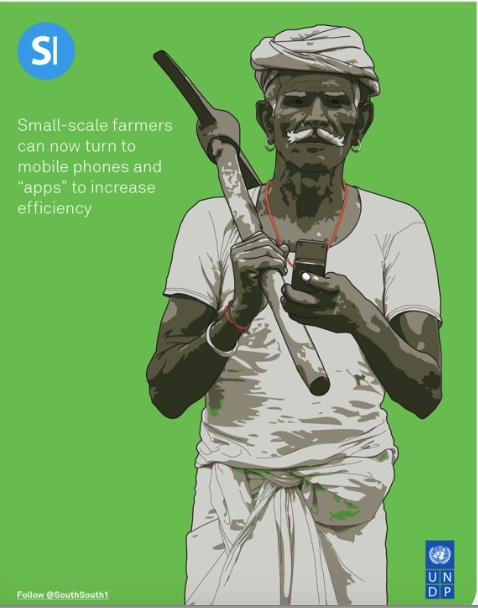
    Another critical improvement is the rapid spread of mobile phones. Armed with a mobile phone, small-scale farmers are able to access critical knowledge and information. This means they can make better decisions and quickly adjust what they are doing when mistakes are made.

    The survey found that India is a country where the food-supply game has changed dramatically. In the past, traders would advance cash to farmers in the form of loans. But since the use of mobile phones has increased, the balance of power has shifted: farmers now have many other options to finance their operations than turning to middlemen and traders. This means they are no longer as easily manipulated by the traders and can negotiate better prices. Also, better roads, combined with greater competition to provide services to farmers, are improving farming of staple foods in general.

    Among potato farmers in rural areas, 73 to 97 per cent have mobile phones and use them to organize deals with traders or receive market information. The take-up of mobile phones was also a recent development for the farmers: most had acquired a mobile phone in the last four years.

    It is clear this quiet revolution in food security for staples is a result of greater use of innovative technology and taking on of new techniques.

    Published: July 2013

    Resources

    1) How to start a supermarket in Lagos, Nigeria: A supermarket is one of the most lucrative businesses that can thrive anywhere in the world. Website: http://www.ackcity.net/supermarket-startup-in-lagos

    2) Write a supermarket business plan: Templates for writing professional business plans. Website: http://planmagic.com/business_plan/supermarket_business_plan.html

    3) How to get your product into a supermarket: Use this mindmap to remind you what you should be doing at every stage of the process. Website: http://www.smarta.com/advice/suppliers-and-trade/logistics-management/mindmap-how-to-get-your-product-into-a-supermarket/

    4) The hidden tricks behind making a successful supermarket: Website: http://www.independent.co.uk/news/business/news/the-secrets-of-our-supermarkets-8228864.html

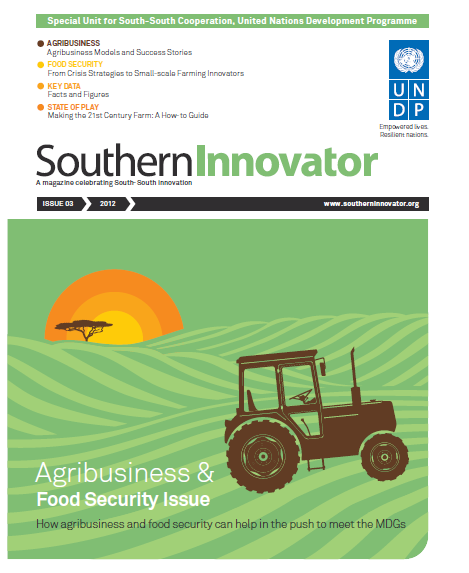
    Development Challenges, South-South Solutions was launched as an e-newsletter in 2006 by UNDP’s South-South Cooperation Unit (now the United Nations Office for South-South Cooperation) based in New York, USA. It led on profiling the rise of the global South as an economic powerhouse and was one of the first regular publications to champion the global South’s innovators, entrepreneurs, and pioneers. It tracked the key trends that are now so profoundly reshaping how development is seen and done. This includes the rapid take-up of mobile phones and information technology in the global South (as profiled in the first issue of magazine Southern Innovator), the move to becoming a majority urban world, a growing global innovator culture, and the plethora of solutions being developed in the global South to tackle its problems and improve living conditions and boost human development. The success of the e-newsletter led to the launch of the magazine Southern Innovator. 
    Creative Commons License

    This work is licensed under a
    Creative Commons Attribution-Noncommercial-No Derivative Works 3.0 License.

    ORCID iD: https://orcid.org/0000-0001-5311-1052.

    © David South Consulting 2023

  • Anti-bribery Website in India Inspires Others

    Anti-bribery Website in India Inspires Others

    By David SouthDevelopment Challenges, South-South Solutions

    SOUTH-SOUTH CASE STUDY

    An Indian website tackling corruption has been so successful it has inspired a wave of followers in China.

    The I Paid a Bribe website – motto: “Uncover the Market Price of Corruption” – was set up by the Janaagraha Centre for Citizenship and Democracy (http://www.janaagraha.org), a non-profit organisation based in Bangalore, India.

    Janaagraha is dedicated to working with government and citizens to “improve the quality of life in Indian cities and towns,” according to its website.

    Janaagraha’s initiatives strive “to make government departments transparent and accountable,” and the ipaidabribe programme (http://www.ipaidabribe.com) fits in with that goal. It seeks to harness the collective voices of the citizens to report and quantify incidents of corruption. The website will help to paint a picture of the level of corruption in cities and help the NGO in its fight to improve government oversight systems and procedures and to improve law enforcement and adherence to regulations.

    The website tackles the “pernicious effect of corruption on destroying city life and disempowering citizens,” according to Raghunandan Thoniparambil, the site’s programme coordinator. “The original idea was that the website could become a simple means of tracking the market price of corruption – a kind of price prediction mechanism.”

    He said the original idea was tongue in cheek and propelled by cynicism – but the site’s creators soon realized that “such an effort was indeed a very powerful one.”

    The website displays reports and analytics on bribe patterns by city and by transaction amounts, frequency and averages.

    The long-term goal is to reduce corruption faced by Indians when they use government services. The website asks users to log both recent and past incidences of bribery. It says: “Please tell us if you resisted a demand for a bribe, or did not have to pay a bribe, because of a new procedure or an honest official who helped you. We do not ask for your name or phone details, so feel free to report on the formats provided.”

    Neither accusers nor accused are identified by name – only the incidents are logged. The website is funded by a grant of US $3 million and the NGO is planning to launch a mobile phone application as well.

    The website doesn’t pursue individuals because it has found this approach is a distraction to getting systemic improvements by government.

    “By not allowing names to be published, we have eliminated any incentive for any individual to make a false or malicious complaint,” said Thoniparambil. “Since nobody will gain anything by reporting a false complaint on our site because we do not act on complaints, we expect that the stories on the site are true.”

    The site has been so popular it has spawned imitators in China and elsewhere. Thoniparambil said Janaagraha has been approached by civil society organisations in 13 countries about collaborating.

    After a story was published in the Beijing News about I Paid a Bribe, a flurry of ‘tips’ and accusations flooded the Internet in China, and people set up similar websites to gather information on bribery and corruption in their country. One web developer called “Peater Q” set up a Chinese version of I Paid a Bribe, calling it wohuilule.com. Another two websites that popped up included “I Bribe…” (http://www.wxhwz.com) and http://www.tmzg.org. Some of the dozens of websites have been taken down, but others have received official support and encouragement.

    “Peater Q” says he is a young Communist Party member and has received government permission for his site. He says the name of his site, wohuilule.com, is a Chinese translation of “I paid a bribe.”

    These are still early days as these websites work out how to balance the need to ferret out corruption and bribery and the need to avoid gossip, rumour and slander. It is clear the damage done to a country when corruption and bribery get out of control is significant.

    The United Nations’ Global Compact on anti-corruption calls it “one of the world’s greatest challenges.”

    A report by the Carnegie Endowment for International Peace on Chinese corruption (http://carnegieendowment.org/2007/10/09/corruption-threatens-china-s-future/g4) found it threatens the country’s future by increasing socioeconomic inequality and social unrest. The report found 10 percent of government spending, contracts, and transactions goes to kickbacks and bribes, or is simply stolen. It also found the indirect costs of corruption to include efficiency losses, waste and damage to the environment, public health, education, credibility and morale.

    “Corruption both undermines social stability (sparking tens of thousands of protests each year), and contributes to China’s environmental degradation, deterioration of social services, and the rising cost of health care, housing, and education,” the report said.

    I Paid a Bribe is being used to build up an intelligent picture of corruption and bribery in India so that real change can be made.

    “Citizens’ reports on the nature, number, pattern, types, locations and frequency of actual corrupt acts and values of bribes will add up to a valuable knowledge bank that will contribute to a reduction in bribe payments,” Thoniparambil said.

    Not only does the website raise awareness about the problem and its dynamics, it maps out the path corruption takes through a public service. This, the website hopes, will enable better “more consistent standards of law enforcement and better vigilance and regulation.”

    “We believe that every citizen who reports a story on our website about paying a bribe is angry enough to begin to resist it,” explains Thoniparambil.

    “Except for using the data that we receive for further analysis, we will not take the complaints and stories forward. We do not intend to invoke the courts.”

    But these websites need to be run with caution and care and they do have their critics.

    “If you wanted to tarnish the reputation of the government or a department within it, or settle a vendetta, you could just get all of your friends to post claims against them,” Raymond Fisman, a professor at Columbia Business School who has studied corruption, told the BBC.

    “There is no way of credibly aggregating the information to assess the magnitude of the problem,” he added.

    Thoniparambil, however, remains positive that corruption and bribery are problems that can be tackled.

    “I believe that corruption has grown this big only because as citizens, we have tolerated it,” he explains. “If we actively oppose it and there are enough of us, the government has to buckle down and tackle the problem effectively.

    “Corruption may be rampant in India, but it is not endemic,” believes Thoniparambil. “Blaming it on our value systems is a poor alibi with no substance in it. I do not believe that Indians are inherently corrupt; our value systems are as good or as bad as anybody else’s. Corruption is not a social trend that arises out of an erosion of value systems; it is born out of systems failure. Corruption flourishes because we have poorly designed governance systems in the country.”

    Thoniparambil sites a number of Indian successes to back up his optimism: competition in telephone service providers has reduced corruption; booking of railway tickets online has taken the power away from corrupt ticket sellers; and government departments have been forced to state how long services will take to complete.

    Thoniparambil believes it is about changing the relationship between citizens and the public services they receive.

    “We would like citizens to begin to realize that public services are our entitlements,” he says. “These are not favours dispensed from above. They ought not to be pessimistic about corruption. Countries have cleaned up very dramatically and the processes by which it has been done have been documented.

    “Reduction of bribery in India will improve access to government services, particularly for the poor, reduce the cost of delivery of such services, speed up business and recourse to legal remedies. It will improve the quality of infrastructure and will be deeply empowering for Indian citizens.”

    “It is only the collective energy of people that can turn the tables on the corrupt.”

    Published: August 2011

    Resources

    1) United Nations Global Compact: A website packed with resources on how to tackle corruption and how to network globally with others to tackle corruption. Website:http://www.unglobalcompact.org/Issues/transparency_anticorruption/

    2) India Against Corruption: India Against Corruption movement is an expression of collective anger of people of India against corruption. This is their campaign website. Website:http://www.indiaagainstcorruption.org/

    Read more about the perils of bribery here: The Strange Saga of “South-South News”

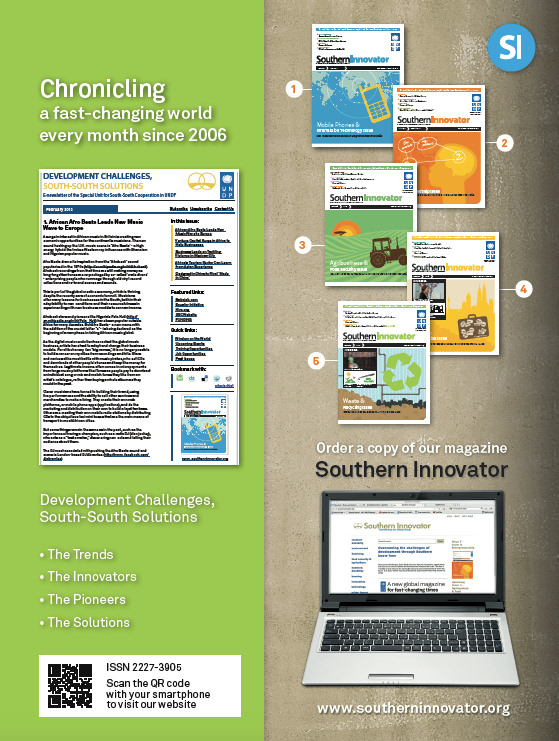
    Development Challenges, South-South Solutions was launched as an e-newsletter in 2006 by UNDP’s South-South Cooperation Unit (now the United Nations Office for South-South Cooperation) based in New York, USA. It led on profiling the rise of the global South as an economic powerhouse and was one of the first regular publications to champion the global South’s innovators, entrepreneurs, and pioneers. It tracked the key trends that are now so profoundly reshaping how development is seen and done. This includes the rapid take-up of mobile phones and information technology in the global South (as profiled in the first issue of magazine Southern Innovator), the move to becoming a majority urban world, a growing global innovator culture, and the plethora of solutions being developed in the global South to tackle its problems and improve living conditions and boost human development. The success of the e-newsletter led to the launch of the magazine Southern Innovator. 
    https://davidsouthconsulting.org/2022/10/18/indians-fighting-inflation-with-technology/

    https://davidsouthconsulting.org/2020/04/23/the-strange-saga-of-south-south-news-may-2018/

    https://davidsouthconsulting.org/2022/02/09/ugandan-project-pioneers-transparent-development/

    https://davidsouthconsulting.org/2022/11/18/web-2-0-networking-to-eradicate-poverty/

    https://davidsouthconsulting.org/2022/06/16/web-2-0-to-the-rescue-using-web-and-text-to-beat-shortages-in-africa/

    Creative Commons License

    This work is licensed under a
    Creative Commons Attribution-Noncommercial-No Derivative Works 3.0 License.

    ORCID iD: https://orcid.org/0000-0001-5311-1052.

    © David South Consulting 2022

  • Rwandan Coffee Brand Boost

    Rwandan Coffee Brand Boost

    By David SouthDevelopment Challenges, South-South Solutions

    SOUTH-SOUTH CASE STUDY

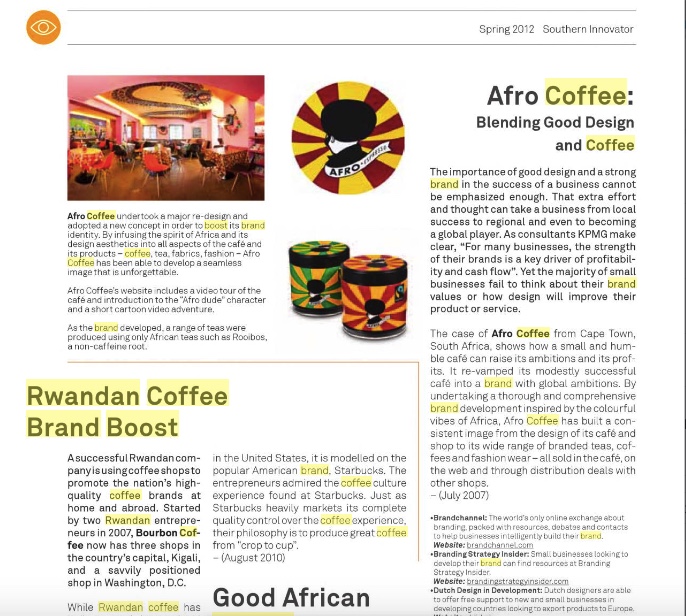
    A successful Rwandan company is using coffee shops to promote the nation’s high-quality coffee brands at home and abroad. Started by two Rwandan entrepreneurs three years ago, Bourbon Coffee (http://www.bourboncoffeeusa.com) now has three shops in the country’s capital, Kigali, and a savvily positioned shop in Washington DC.

    While Rwandan coffee has built a good international reputation, the country’s more than 500,000 coffee farmers (mostly small-scale) previously depended on the product’s reputation alone. But Bourbon Coffee joins several other initiatives changing this situation and starting to significantly raise the profile of Rwandan coffee and build the Rwanda brand.

    The East African nation experienced the horrific genocide of almost 1 million people in 1994. Ever since, the country has been on a journey to reconcile with the damage done during this time and move on to a more prosperous future for all its citizens. A key part of the country’s future success will be its economic prosperity. And historically, coffee has played a critical role in Rwanda’s economy.

    The Bourbon Coffee chain of shops (taking its name from the high quality Bourbon coffee varietal (http://en.wikipedia.org/wiki/List_of_coffee_varieties) which accounts for the majority of Rwandan coffee), started with its first shop in Kigali in 2007. Started by Emmanuel Murekezi and Arthur Karuletwa, two Rwandans living in the United States, it is modelled on the popular American brand Starbucks (http://www.starbucks.com). The entrepreneurs admired the coffee culture experience found at Starbucks. Just as Starbucks heavily markets its complete quality control over the coffee experience, their philosophy is to produce great coffee from “crop to cup.”

    “There are over 500,000 farmers that own 100 to 200 trees in the back of their yards, so the only way they can come up with a product is to come together in a cooperative sense,” Karuletwa told the Washington Post. It is a learning experience for the Rwandan coffee farmers: they learn to work together, trust each other and be accountable to each other. “Neighbours that once killed each other and communities that once floated in the same bloodbath are now hand in hand producing one of the most amazing products.”

    “If done right, it could be the platform to re-brand the country,” continued Karuletwa, a former chief executive and now a shareholder in the company. Coffee can “create awareness that there’s recovery, there’s trade, there’s investment opportunities, there’s tourism. There’s life after death.”

    The importance of good design and a strong brand in the success of a business cannot be emphasised enough. That extra effort and thought can take a business from local success to regional and even global success. As consultants KPMG make clear, “For many businesses, the strength of their brands is a key driver of profitability and cash flow.” Yet the majority of small businesses fail to think about their brand values or how design will improve their product or service.

    The shops have a very tasteful modern, African design and feel. African sculpture and furniture are surrounded by African artwork. The shop’s logo is an eye-catching orange and there is an overall recognizable brand identity for the entire Bourbon Coffee concept.

    The founders see it as an opportunity to educate people about the health benefits of coffee culture and the joys of the lifestyle. They proudly serve only Rwandan coffee and promote the national brands they serve, including Akagera, Kivu Lake, Kizi Rift, Muhazi and Virunga.

    Bourbon Coffee, in a clever move, opened the Washington branch in 2009 in a former Starbucks in a neighbourhood packed with aid organizations and NGOs, many of which work with Rwanda on projects.

    Karuletwa says Bourbon Coffee’s ambitious vision “is to stand as a symbol of a new era in African economic development, one in which African nations rise to participate directly in the global marketplace.”

    “Coffee is a very intimate, emotional product,” he said. “The preparation, the processes and the profiling of coffee is similar to wine.”

    The Rwandan branches can be found at the Union Trade Centre (UTC) in Kigali’s city centre, the MTN centre in Nyarutarama and Kigali airport.

    The business is funded by Rwandan investors Tristar (http://www.tri-starinvestments.com/index.html).

    Another initiative is the Rwandan Farmers Brand (http://www.rwandanfarmers.com). It also hopes to raise the profile of Rwandan coffee and drive more of the profits made into the hands of farmers. It is a joint venture between the foundations of former U.S. President Clinton and philanthropist Sir Tom Hunter. They fund all the brand’s creation and operation in partnership with 8,700 farmers. They have started selling Rwanda Medium Roast Ground in the United Kingdom’s Sainsbury’s supermarkets. Sixteen percent of sales are clear profit and returned to the farmers via their own Trust Fund.

    Karuletwa says he doesn’t want Rwandan coffee to be “a pity-driven mission”. It is all about the quality: “The value initiative here is because this coffee tastes great,” he says.

    And Bourbon Coffee is looking further afield to grow the brand: “We hope to expand even further,” Murekezi told Monocle magazine. “Congo, Burundi, Tanzania, but also Europe. We think the concept can work there too.”

    Published: August 2010

    Resources

    • East African Fine Coffees Association: All the latest news on events and initiatives for East Africa’s coffee producers. Website: http://www.eafca.org/
    • Brandchannel: The world’s only online exchange about branding, packed with resources, debates and contacts to help businesses intelligently build their brand. Website: www.brandchannel.com
    • Small businesses looking to develop their brand can find plenty of free advice and resources here. Website: www.brandingstrategyinsider.com
    • The red dot logo stands for belonging to the best in design and business. The red dot is an internationally recognized quality label for excellent design that is aimed at all those who would like to improve their business activities with the help of design. Website: http://www.red-dot.de
    • Dutch Design in Development: The Dutch NGO works with producers to develop skills and adapt producers’ products to present and future demands in Europe. By following this approach, Southern producers can reduce the risk of making products nobody wants, or that lack originality in the marketplace and thus won’t sell. Website: http://www.ddid.nl/english/index.html

    https://davidsouthconsulting.org/2021/03/12/afro-coffee-blending-good-design-and-coffee/

    https://davidsouthconsulting.org/2022/09/29/the-battle-for-indias-coffee-drinkers-in-buzzing-economy/

    https://davidsouthconsulting.org/2021/10/03/civet-cat-coffee-brews-filipino-opportunity/

    https://davidsouthconsulting.org/2021/01/08/haitian-coffee-becoming-a-hit-with-american-connoisseurs/

    Development Challenges, South-South Solutions was launched as an e-newsletter in 2006 by UNDP’s South-South Cooperation Unit (now the United Nations Office for South-South Cooperation) based in New York, USA. It led on profiling the rise of the global South as an economic powerhouse and was one of the first regular publications to champion the global South’s innovators, entrepreneurs, and pioneers. It tracked the key trends that are now so profoundly reshaping how development is seen and done. This includes the rapid take-up of mobile phones and information technology in the global South (as profiled in the first issue of magazine Southern Innovator), the move to becoming a majority urban world, a growing global innovator culture, and the plethora of solutions being developed in the global South to tackle its problems and improve living conditions and boost human development. The success of the e-newsletter led to the launch of the magazine Southern Innovator. 
    https://davidsouthconsulting.org/2021/03/05/southern-innovator-issue-2/

    Creative Commons License

    This work is licensed under a
    Creative Commons Attribution-Noncommercial-No Derivative Works 3.0 License.

    ORCID iD: https://orcid.org/0000-0001-5311-1052.

    © David South Consulting 2022