Tag: UNDP

  • Small-scale Farmers Can Fight Malaria Battle

    Small-scale Farmers Can Fight Malaria Battle

    By David SouthDevelopment Challenges, South-South Solutions

    SOUTH-SOUTH CASE STUDY

    Malaria is one of Africa’s biggest killers. Each year globally 300 to 500 million people are infected, and around 1 million die from the disease (theglobalfund). Ninety percent of malaria deaths occur in sub-Saharan Africa – mostly to children under the age of five. The disease costs African countries US$12 billion a year in lost gross domestic product.

    Malaria is a parasitic disease – the parasite plasmodium – transmitted by mosquito bites. Symptoms include fever, headache and vomiting. Internal bleeding, kidney and liver failure may follow and can result in coma and death.

    The most common and effective treatment, recommended by the World Health Organization, is artemisinin-based combination therapies, known as ACTs. ACTs have low toxicity, few side effects and act rapidly against the parasite. Research shows that artemisinin remedies cure 90 percent of patients within three days.

    But there are far fewer doses available than people who need them. WHO has claimed the quantity made available by pharmaceutical companies falls far short of the more than 130 million doses required to combat malaria throughout the world.

    And ACTs are very expensive to deliver: in just one country, Tanzania, providing such therapy for three years would cost US $48.3 million. Every year, this would account for 9.5 percent of Tanzania’s health budget, and 28.7 percent of yearly spending on medical supplies: a six-fold increase in budget for malaria treatment (Malaria Journal 2008, 7:4).

    But a cheap alternative to the expensive pill form of the treatment is being piloted across Africa. It involves the drinking of a tea made from the bushes of the artemisia plant. Artemisia annua is an annual shrub and the active ingredient in the pills (artemisinin). It is native to China and Vietnam and has been used for 2,000 years to treat fevers.

    Bushes cultivated by farmers in Kenya, Malawi, Tanzania, Zambia, Zimbabwe and Mozambique under the supervision of the World Agroforestry Centre in Nairobi, Kenya, are helping to bring down malaria rates without the long wait for the pills to arrive.

    The leaves are boiled and made into a tea. Drinking the tea gives a high enough dose of artemisinin in the blood to cure malaria. Helen Meyer, a nurse operating nine mobile health clinics in rural Mozambique, is using the bitter tea made from the dried leaves. Even in treating drug resistant malaria, she has found the artemisia tea effective: “If you drink the tea, you feel better after the first day. Other medicines take a few days.”

    A special hybrid of artemisia, A-3, is used because it is adapted for warmer climates. The wild variety grows to only five centimetres in the tropics, but A-3 grows to three metres and packs 20 times more artemisinin. It is also highly economical: thousands of plants can come from a single stem.

    The daily adult dose of anti-malaria tea just needs five grams of dried A-3 leaves in one litre of water. The tea is drunk every six hours for seven days. Each plant produces 200 grams of dried leaves, and a thousand shrubs can cure 5,700 people. Since it is a cheap cure, money can be spent instead on other things. Farmers are also able to supplement their income by growing the bushes. And the dried leaves have long-lasting power: even after three years the leaves retain close to a 100 percent of their artemisinin.

    Access to authentic artemisinin is critical: it is estimated 16 percent of malaria medicines in Kenya are counterfeit. Elsewhere, the proliferation of counterfeit anti-malarials substantially raises the risk of the emergence of resistance to artemesinin combination therapy, the last truly effective treatment against malaria. Past misuse of other malaria drugs, such as chloroquine in the 1980s and sulphadoxine/pyrimethamine in the 1990s, resulted in the malaria parasite becoming resistant. Hundreds of thousands of people in malaria-prone areas may have died as a result.

    The World Agroforestry Centre, recognizing potential problems with artemesinin monotherapies, is working to combine it with indigenous herbal remedies made from other anti-malarial trees, producing a herbal combination therapy (HCT).

    “I used to grow fruits and beans here,” said Charles Kiruthi, a Kenyan farmer, to the IRIN news service. “but I will get a better return from this plant. No pests attack it, and until harvesting time it requires very little labour.”

    “I expect to get a good return, and I am also very happy to be helping fight malaria,” continued Kiruthi. “I recently lost two friends to the disease, and my child gets sick with malaria sometimes.”

    Published: July 2008

    Resources

    Development Challenges, South-South Solutions was launched as an e-newsletter in 2006 by UNDP’s South-South Cooperation Unit (now the United Nations Office for South-South Cooperation) based in New York, USA. It led on profiling the rise of the global South as an economic powerhouse and was one of the first regular publications to champion the global South’s innovators, entrepreneurs, and pioneers. It tracked the key trends that are now so profoundly reshaping how development is seen and done. This includes the rapid take-up of mobile phones and information technology in the global South (as profiled in the first issue of magazine Southern Innovator), the move to becoming a majority urban world, a growing global innovator culture, and the plethora of solutions being developed in the global South to tackle its problems and improve living conditions and boost human development. The success of the e-newsletter led to the launch of the magazine Southern Innovator. 

    Creative Commons License

    This work is licensed under a
    Creative Commons Attribution-Noncommercial-No Derivative Works 3.0 License.

    ORCID iD: https://orcid.org/0000-0001-5311-1052.

    © David South Consulting 2023

  • Vietnam Launches Low-cost, High-Quality Video Game

    Vietnam Launches Low-cost, High-Quality Video Game

    By David SouthDevelopment Challenges, South-South Solutions

    SOUTH-SOUTH CASE STUDY

    The creative economy offers huge opportunities to the countries of the global South. With the proliferation of new technologies – mobile phones, digital devices, personal computers with cheap or free software, the Internet – the tools to hand for creative people are immense. This begins to level the playing field and allows hardworking and talented people in poor countries to start to compete directly with those in wealthy countries.

    One case of this dynamic at work is the computer and video games industry. Once, they were only created by ‘first world’ nations like Japan, the United States and the United Kingdom. And then came South Korea, as its prosperity increased through the 1980s and 1990s. And then China got in on the game. And India.

    And now innovators in Vietnam are using the medium to make money, and tell a story from a distinctly Vietnamese perspective. And that story is the long-running Vietnam wars that engulfed the country, from the 1950s through the 1960s until 1975 when the last of the United States’ helicopters left Saigon, then the capital of South Vietnam.

    Emobi Games (http://emobigames.vn) from Hanoi, unified Vietnam’s current capital, uses the motto “Enjoy challenges.” Launched in 2011 by founder and director Nguyen Tuan Huy, it has created 7554, a game that places players in the shoes of a Vietnamese soldier during the independence war against the French. Cleverly, it also comes at a competitive price: US $12.

    The game’s name refers to May 7, 1954, the day the French army in Dien Bien Phu surrendered to the Vietnamese People’s Army. This led to the end of the European colonial power’s occupation of its Indochinese colonies. The high death toll and sacrifice from the wars with France and the United States still resonate in the country, and the game reflects this.

    A young team of 20 developers worked on the project for three years. It cost the company an estimated US $802,748 to complete. It was extensively researched to ensure historical accuracy.

    “Dien Bien Phu is a great victory that we are proud of. That day, 7th of May 1954, is a symbol of our strength,” Huy told Ars Technica (http://arstechnica.com).

    “I think it is similar to what Americans feel when they celebrate July 4th. Independence is very important and something worth fighting for. It is also something worth honouring.”

    The game is the end product of an intense struggle to prove critics and sceptics wrong. Many doubted the company could deliver a product that could compete with the more established players. The video game market for firstperson shooters – where the player uses a weapon to engage in first-person combat – has been transformed in the last decade. Many games are highly sophisticated products akin to major films. The Call of Duty (callofduty.com) franchise is a good example. These games have elaborate graphics and story concepts, often use professional actors and come with high-cost, high-publicity marketing campaigns to back up game launches.

    The money at stake is significant: the global video games market is estimated to be worth US $65 billion in 2011 (Reuters). Game makers Activision Blizzard, makers of Call of Duty, had an annual revenue of US $4.8 billion.

    On its website, Emobi proudly takes on the doubters: “We are a very young company in Vietnam, currently we focus on one task: Building a successful PC Video Game for the Vietnamese. Most Vietnamese don’t believe that Vietnam can produce (a) PC Video Game.

    “We, the young people, think about this as a challenge, and want to overcome that. Maybe we will fail, maybe we will succeed. But that’s not important. (It is) Important that it must be time for the Vietnamese Game.”

    Huy admits it was a struggle to make the game.

    “Video games, films or any kind of entertainment in our country must adhere to certain standards,” explains Huy. “Entertainment must not be too violent or too sexy. Our government policy is stricter than other countries, especially when compared to Western countries.”

    Vietnam regulates gaming in various ways including limiting how long people can play online and the opening hours for Internet cafes.

    Out of a population of over 86 million people (World Bank) it is believed Vietnam has 12 million video gamers: a substantial market in the country alone. They play games from around the world and increasingly are willing to pay for legal licenses. This is a key development, since getting gamers to pay represents a revenue stream. With revenue, players in the global South can contribute to the building of their home-grown businesses to become big players.

    “The video game industry is just in its infancy,” said Huy. “We only have four studios that develop major games. Most work on online games. There are not many people who work in game development. Those that do are self-taught. There are no universities that provide education in games development. We learn by doing, failing and doing it again until we get it right.”

    Viewing warfare through non-Western eyes is part of the game’s unique selling point, Huy says.

    “American gamers have not been exposed to many war games where they play as a soldier who is not of American or British background. I think some may find this perspective refreshing.”

    Huy said that “7554 may give some gamers a new perspective. But what is most important is that we create a game that is fun to play.

    “We think we have created a game that FPS (first person shooter) shooter fans will enjoy. The price point is low so that will hopefully allow more people to play the game. I think gamers understand that a good game can come from anywhere in the world. I think gamers are willing to experience different cultures through games, so long as the experience is enjoyable.”

    The 7554 game is scheduled to be launched in the United States and France in February 2012 for personal computers.

    In the future, the company hopes to raid history for more battle scenarios to create new games.

    “Unfortunately there have been many battles fought, so we have a full history to pull from in order to create games,” Huy said.

    Published: January 2012

    Resources

    1) Animation Xpress Asia Pacific: A website packed with interviews and resources for the animation community.Website: http://www.axapac.com

    2) How to make video games: An online website with step-by-step resources to get started. Website:http://www.make-video-games.com

    3) Changing Dynamics of Global Computer Software and Services Industry: Implications for Developing Countries:A report from UNCTAD on how computer software can become the most internationally dispersed high-tech industry. Website:http://www.unctad.org/templates/webflyer.asp?docid=1913&intitemid=2529&lang=1

    4) Southern Innovator: A new magazine launched by UNDP’s Special Unit for South-South Cooperation. The first issue’s theme is mobile phones and information technology. Website: http://www.southerninnovator.org

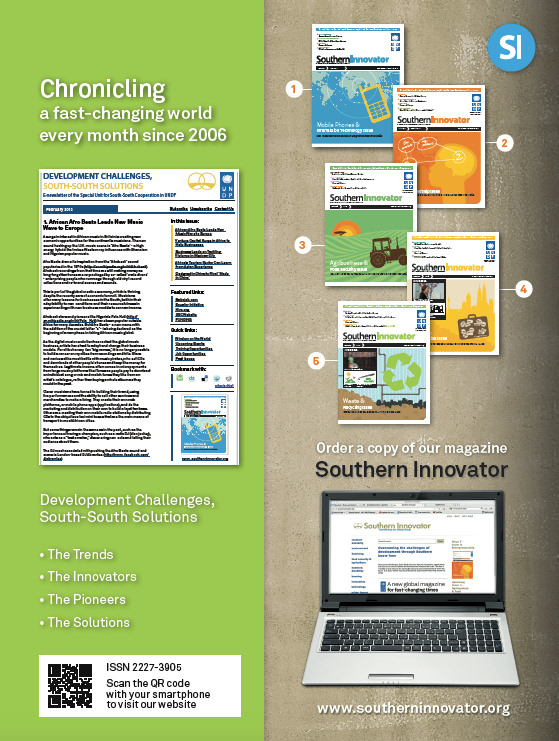
    Development Challenges, South-South Solutions was launched as an e-newsletter in 2006 by UNDP’s South-South Cooperation Unit (now the United Nations Office for South-South Cooperation) based in New York, USA. It led on profiling the rise of the global South as an economic powerhouse and was one of the first regular publications to champion the global South’s innovators, entrepreneurs, and pioneers. It tracked the key trends that are now so profoundly reshaping how development is seen and done. This includes the rapid take-up of mobile phones and information technology in the global South (as profiled in the first issue of magazine Southern Innovator), the move to becoming a majority urban world, a growing global innovator culture, and the plethora of solutions being developed in the global South to tackle its problems and improve living conditions and boost human development. The success of the e-newsletter led to the launch of the magazine Southern Innovator. 
    Creative Commons License

    This work is licensed under a
    Creative Commons Attribution-Noncommercial-No Derivative Works 3.0 License.

    ORCID iD: https://orcid.org/0000-0001-5311-1052.

    © David South Consulting 2023

  • Mapping to Protect Kenya’s Environment: the eMazingira Solution

    Mapping to Protect Kenya’s Environment: the eMazingira Solution

    By David SouthDevelopment Challenges, South-South Solutions

    SOUTH-SOUTH CASE STUDY

    Powerful new grassroots crowd-mapping tools have sprung up in the past few years across the global South, from Brazil’s Wikicrimes (www.wikicrimes.org) real-time crime mapping technology to the now famous Ushahidi (http://ushahidi.com) – a non-profit company making the free and open source Ushahidi software for information collection, visualization and interactive mapping – from its base in Kenya. They share some common features. All draw on the widespread use of mobile phones in the global South combined with growing access to the Internet, either through 3G mobile phone services, WiFi wireless connections, Internet centres or increasingly available broadband Internet services.

    They then connect the mobile phones to the new mapping services available either on the phones or on the Internet. One example is Google Maps (http://maps.google.com).

    These mapping services are revolutionary in what they bring to poor communities. They allow people to quantify in real time what is happening in their area, as well as see what is happening around the world. Where in the past this sort of mapping and statistical data collection was chiefly the domain of government departments and private services for wealthy corporations, individuals can now participate in the collection of data and map what is happening in their area. This can include mapping actual crime as it occurs, or slum-mapping, where a visual snap-shot of a slum area is made to better target aid and development.

    This is a game-changer for human and sustainable development. It has the potential to close the gap between the collection and analysis of data and action. Accurate, real-time data makes it easier to push government agencies to deliver on their promises, especially during a crisis.

    Kenya’s eMazingira website (www.emazingira.org) is showing the difference these tools can make. It allows people to identify potentially destructive practices that harm the environment – unregulated forestry, pollution, dangerous animals, land degradation, climate change – and alert others to what is happening. This level of awareness, it is hoped, will in time reduce the destruction of local environments and improve the quality of life for both humans and wildlife.

    Mazingira means “environment” in Swahili. The website’s motto is “Keeping the environment clean for the future generation”.

    The eMazingira website is a visually simple affair with a leafy banner image and an interactive map showing what is happening. It is in its first iteration and future upgrades are on the way. A rolling list of incidents keeps readers briefed on what is happening, from “Fire burning” to “Sewer burst” to “Rogue elephant”. There are five main categories to choose from and users can file reports by text message, email, sending a Tweet (www.twitter.com) or filling in an online form on the website.

    “We got to know about Ushahidi during its first deployment which was in Kenya, when it was used to map post-election violence incidents in early 2008,” explains Dunston Machoka, director of BTI Millman Limited (www.btimillman.com) inNairobi,Kenya, a custom software development firm leading the project.

    “We were inspired to develop eMazingira, on one hand, because of the passion we had for environmental conservation and on the other hand, from the success stories we had observed of Ushahidi deployments inKenya,HaitiandJapan.”

    Machoka believes this is a critical time forKenya’s environment: “eMazingira comes at a time when environmental conservation is a huge concern inKenya. Our key observation was that there was no effective reporting mode for environmental incidents for citizens.”

    The website hopes to better engage citizens in tackling the country’s environmental problems and sees this as a way to spur further government action.

    One of eMazingira’s proudest moments came when it won the World Summit Youth Award as the 2011 Runner Up for the use of ICT towards attaining the United Nations Millennium Development Goals.

    But how easy is it to work with this technology? Machoka advises those starting out to turn to the Ushahidi team for support.

    “I would advise them to get in touch with the Ushahidi team through their website and by doing so the deployment will be easy, fast and there will be adequate assistance in case of any challenges,” he said.

    For the next two years, eMazingira will be focusing on rolling out the service to the country, from the main towns to rural areas.

    “At the end of the period we hope to start similar programmes in East Africa based on the lessons learnt inKenya,” confirms Machoka.

    And that isn’t where the eMazingira story will stop: its creators also want to deploy the technology globally, if countries have the right conditions.

    “The key necessity for the application would be good mobile and Internet infrastructure and government that can promote citizen participation in environmental conservation,” Machoka said.

    Published: December 2011

    Resources

    1) With less than five years until the 2015 deadline to meet the Millennium Development Goals, any tool that can make development decisions more precise is a benefit. Website:http://www.undp.org/mdg

    2) The Map Kibera project uses an open-source software programme, OpenStreetMap, to allow users to edit and add information as it is gathered. This information is then free to use by anybody wanting to grasp what is actually happening in Kibera: residents, NGOs, private companies and government officials. Website:http://www.openstreetmap.org

    3) NGO called Rede Jovem is deploying youths armed with GPS (global positioning system)-equipped (http://en.wikipedia.org/wiki/Global_Positioning_System) mobile phones to map the favelas of Rio de Janerio. Website: http://www.redejovem.org.br

    4) Mobile Active.org: MobileActive.org is a community of people and organizations using mobile phones for social impact. They are committed to increasing the effectiveness of NGOs around the world who recognize that the over 4 billion mobile phones provide unprecedented opportunities for organizing, communications, and service and information delivery. Website: http://www.mobileactive.org

    https://davidsouthconsulting.org/2020/12/04/big-data-can-transform-the-global-souths-growing-cities/

    https://davidsouthconsulting.org/2020/12/11/cyber-cities-an-oasis-of-prosperity-in-the-south/

    https://davidsouthconsulting.org/2020/12/04/data-surge-across-global-south-promises-to-re-shape-the-internet/

    https://davidsouthconsulting.org/2022/02/17/digital-mapping-to-put-slums-on-the-map/

    https://davidsouthconsulting.org/2022/10/25/indian-city-slum-areas-become-newly-desirable-places-to-live/

    https://davidsouthconsulting.org/2021/03/04/indian-id-project-is-foundation-for-future-economic-progress/

    https://davidsouthconsulting.org/2022/10/31/mapping-beirut-brings-city-to-light/

    https://davidsouthconsulting.org/2021/03/31/new-weapon-against-crime-in-the-south/

    Development Challenges, South-South Solutions was launched as an e-newsletter in 2006 by UNDP’s South-South Cooperation Unit (now the United Nations Office for South-South Cooperation) based in New York, USA. It led on profiling the rise of the global South as an economic powerhouse and was one of the first regular publications to champion the global South’s innovators, entrepreneurs, and pioneers. It tracked the key trends that are now so profoundly reshaping how development is seen and done. This includes the rapid take-up of mobile phones and information technology in the global South (as profiled in the first issue of magazine Southern Innovator), the move to becoming a majority urban world, a growing global innovator culture, and the plethora of solutions being developed in the global South to tackle its problems and improve living conditions and boost human development. The success of the e-newsletter led to the launch of the magazine Southern Innovator. 
    https://davidsouthconsulting.org/2021/03/05/southern-innovator-issue-1/

    Creative Commons License

    This work is licensed under a
    Creative Commons Attribution-Noncommercial-No Derivative Works 3.0 License.

    ORCID iD: https://orcid.org/0000-0001-5311-1052.

    © David South Consulting 2022

  • East Africa to get its First Dedicated Technology City

    East Africa to get its First Dedicated Technology City

    By David SouthDevelopment Challenges, South-South Solutions

    SOUTH-SOUTH CASE STUDY

    An ambitious scheme is underway to create a vast technology city on the outskirts of Nairobi, Kenya.

    With information technology proliferating across Africa after decades of stagnation and underinvestment, a host of exciting new technologies have had to exist within structures not built for the 21st century.

    One attempt to change things is Konza Technology City (konzacity.co.ke), an ambitious project that aims to build the infrastructure to host the companies of the 21st century for Kenya and East Africa. Konza Technology City joins a growing network of technology cities and parks across the global South. If the links between these centres of technological innovation and smart thinking can be strengthened, they have the potential to contribute to exceptional gains in human development.

    Konza Technology City will be built on 5,000 acres (2,023 hectares) of land 60 kilometres south of Kenya’s capital, Nairobi.

    The lead agency on the US $10 billion project is the Ministry of Information and Communication (http://www.information.go.ke/). The Kenyan government is seeking partners and investors to help with funding the project, whose components include a business process outsourcing (BPO) (http://en.wikipedia.org/wiki/Business_process_outsourcing) zone – where specific business functions are contracted to third party providers. There is also a financial district and a commercial district with office space.

    This will be combined with the other side of Konza: hotels, hospitals, a sports stadium and other support services necessary to support a city. The idea is to develop the site over a period of 20 years, with the BPO and IT Educational and Science Park taking up 23 per cent of the site.

    Kenya plans to expand its business process outsourcing sector and has been hosting conferences in Europe to gather the best advice. The sector has experienced double-digit growth in the past three years, rising on the increasing capacity brought by new undersea cables like TEAMs, Seacom and EASSy.

    The idea is to put in place the building blocks of a 21st century Kenya and to become the leading hub for the whole of East Africa. Kenya has an ambitious plan to become a middle-income country by 2030 (http://www.vision2030.go.ke/).

    There is scepticism about large projects in Kenya, with some fearing they will be abandoned before they are finished. But it does seem this project has galvanized a wide community of support. According to IT Web’s (http://www.itweb.co.za/) Ken Macharia, opponents of the project make various arguments. People in the information and communication technologies sector would like to see greater local capacity in place before such massive investment in buildings goes ahead. Others oppose the idea of having a planned city and would like to see things evolve organically. Still others question the government’s capacity to undertake such an ambitious scheme.

    According to Macharia, the ‘if you build it, they will come’ argument is winning the day. The scope and ambition of the project has both excited many players within and outside government and focused their efforts.

    Macharia even believes the public sector is way ahead of the private sector.

    “The government is light years ahead in terms of the vision and drive of developing the ICT sector in the country, while the private sector is trying to catch up,” he said.

    Kenya will become the first country in the region to build a technology city. It can look to China for some examples. One is Shenzhen City and its Science and Technology Park (http://www.ship.gov.cn/en/index.asp?bianhao=20). Or Cairo, Egypt’s Smart Village (http://www.smart-villages.com/).

    Macharia also says the focus solely on technology is missing the bigger impact Konza can have.

    “The city’s concept has financial, educational, commercial and industrial implications, which have not been sold as aggressively as the tech aspect has. Perhaps the better name for the proposed city would be Konza Special Economic Zone, where the key pillars mutually benefit from each other’s presence. Technology, after all, is a means to an end, not the end itself.”

    The timing for a place like Konza City is excellent: undersea cables are being placed around and to Africa. The continent was notorious for being the most underserved continent on the planet and is in a furious transition from this information technology wasteland to a potential oasis of prosperity.

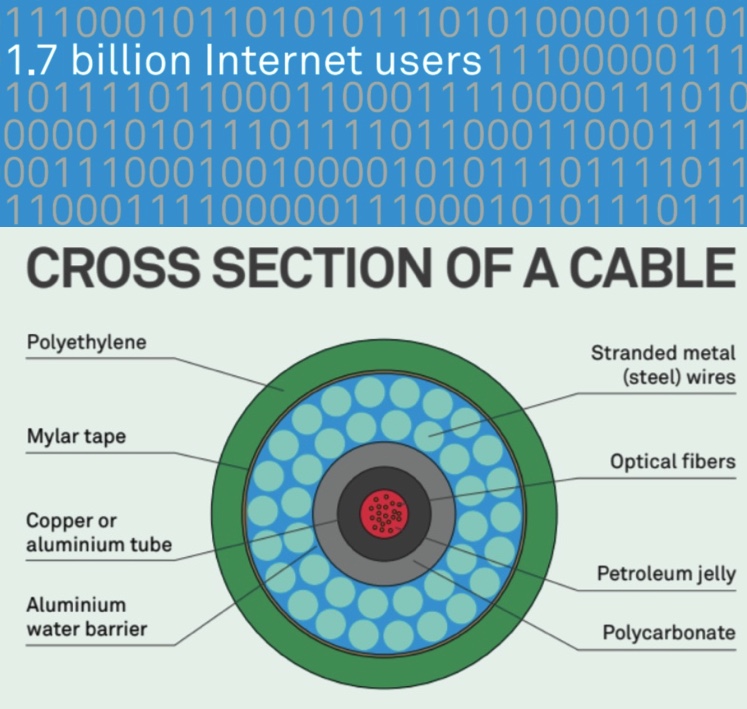
    The undersea cable projects are promising a bandwidth explosion for the continent of Africa. The WACS cable (http://wacscable.com/index.jsp) is being put in place to link South Africa and Britain, and is due to be completed in 2012. It runs up the West Coast of Africa and will become the first direct connection to the undersea cable network for Namibia, the Congo and Togo.

    It will increase South Africa’s bandwidth by an estimated 23 per cent.

    Various technology investors, including the search engine giant Google, are also planning to build an undersea cable linking the so-called BRICS countries by 2014 – Brazil, Russia, India, China and South Africa. The cable will also link them all to the United States. The technology group i3 Africa is leading the project (http://www.i3-mea.com/africa/), which should open up 21 additional African countries to the world’s undersea cable network.

    Konza Technology City could make Kenya a significant beneficiary of all this new connectivity and bandwidth.

    Published: July 2012

    Resources

    1) Center for Innovation Testing and Evaluation: CITE will represent a 20th century American city with a population of approximately 35,000 people and be built on roughly 15 square miles. CITE’s test city will be unpopulated. CITE will be a catalyst for the acceleration of research into applied, market-ready products by providing “end to end” testing and evaluation of emerging technologies and innovations from the world’s public laboratories, universities and the private sector. Website: http://www.cite-city.com/index.php

    2) Dubai Internet City: Since its official opening in 2000, Dubai Internet City (DIC) has grown to become the Middle East and North Africa’s largest Information and Communication Technology (ICT) Business Park, hosting both global and regional companies. Website: http://www.dubaiinternetcity.com/

    3) Songdo International Business District (IBD) officially opened on August 7, 2009 as a designated Free Economic Zone and the first new sustainable city in the world designed to be an international business district. With its strategic location just 15 minutes driving time from Incheon International Airport and 3 ½ hours flying time to 1/3 of the world’s population and regional markets such as China, Russia and Japan, Songdo IBD will position South Korea as the commercial epicenter of Northeast Asia. Website: http://www.songdo.com/

    4) Nasrec Smart City: South Africa’s own ‘smart city’ is in development. Website: http://www.businessday.co.za/articles/Content.aspx?id=168466

    Development Challenges, South-South Solutions was launched as an e-newsletter in 2006 by UNDP’s South-South Cooperation Unit (now the United Nations Office for South-South Cooperation) based in New York, USA. It led on profiling the rise of the global South as an economic powerhouse and was one of the first regular publications to champion the global South’s innovators, entrepreneurs, and pioneers. It tracked the key trends that are now so profoundly reshaping how development is seen and done. This includes the rapid take-up of mobile phones and information technology in the global South (as profiled in the first issue of magazine Southern Innovator), the move to becoming a majority urban world, a growing global innovator culture, and the plethora of solutions being developed in the global South to tackle its problems and improve living conditions and boost human development. The success of the e-newsletter led to the launch of the magazine Southern Innovator. 

    Creative Commons License

    This work is licensed under a
    Creative Commons Attribution-Noncommercial-No Derivative Works 3.0 License.

    ORCID iD: https://orcid.org/0000-0001-5311-1052.

    © David South Consulting 2023