Tag: UNDP

  • African Tourism Leads the World and Brings New Opportunities

    African Tourism Leads the World and Brings New Opportunities

    By David SouthDevelopment Challenges, South-South Solutions

    SOUTH-SOUTH CASE STUDY

    Tourism around the world is growing rapidly again after the setbacks caused by the September 11, 2001 terrorist attacks. Tourism is also finally acknowledging Africa – home to 888 million people (2005, UN) – and where 46 percent of sub-Saharan Africa’s people live on less than US$1 a day. Led by Kenya and South Africa, the continent has come out on top in world tourism growth according to the United Nations World Tourism Organisation (UNWTO) (http://www.unwto.org/). While global tourism is forecast to grow by four percent in 2007, Africa as a whole enjoyed growth of 10.6 percent in 2006.

    Tourism, because it is a labour intensive industry, is seen as a great way to both reduce poverty and meet all the Millennium Development Goals. It favours small scale businesses, it is decentralized and can diversify regional economies, it is relatively non-polluting and can contribute to the conservation and promotion of natural and cultural heritage, and most importantly it can act as a catalyst for kick-starting other sectors of the economy.

    Tourism is now generally recognized to be one of the largest industries-if not the largest-in the world. It has grown rapidly and almost continuously over the past 20 years, and is now one of the world’s most significant sources of employment and of Gross Domestic Product (GDP). Tourism particularly benefits the economies of developing countries, where most of the sector’s new tourism jobs and businesses are being created. This rapid growth has encouraged many developing nations to view tourism as key to promoting economic growth, and global development assistance agencies see it as having real potential to help achieve many of their own development goals.

    Tourism provides opportunities for diversifying local economies and promoting formation of micro and small enterprises, many of them women-owned. These enterprises promote better lives for poor entrepreneurs, especially in rural areas where there may be few other livelihood options. Tourism is generally labor-intensive and it tends to employ relatively higher proportions of women and young people than most other sectors. Tourism introduces technology and basic infrastructure, and strengthens linkages with the outside world. Well-planned and -implemented tourism projects can improve local governance, natural resources management, biodiversity conservation and other important development goals.

    Within Africa, sub-Saharan Africa led the way with 12.6 percent growth. The countries benefiting the most included Kenya, South Africa, Mozambique, Swaziland and the Seychelles. Kenya received almost a million tourists in 2006, and earned US $857 million in revenue.

    Kenya’s success rests on the fact it set aside 10 percent of the country for wildlife and biodiversity conservation. The majority of its tourists come to see the ‘big five’ – elephant, rhino, lion, buffalo, and leopard. Tourism currently employs 11 percent of the country’s workforce.

    In October 2004 the World Tourism Organization released the Washington Declaration on Tourism as a Sustainable Development Strategy. Governments, international aid agencies, and the world’s leading universities agreed to make sustainable tourism development a top priority in their strategies to reduce poverty and meet other MDGs.

    Aid agencies like USAID have targeted women for micro-funding for tourism projects. They have been able to help women start businesses making crafts in Tanzania and Botswana. The UK’s DfID helped Toni Shina from the Cape Town-based The Backpack to become a fair trade business. “Fair Trade Tourism South Africa recognises our commitment to uplifting our staff and community, and our utilisation of local service providers,” she said. “As a business we also have a strong and positive attitude to working with and supporting staff who are affected by HIV and Aids and we abide strongly with required labour and legal standards.”

    And the fair trade concept is getting greater recognition. In a recent survey of the local tourism industry in South Africa, half recognised the Fair Trade in Tourism South Africa brand.

    On the other hand, the scale of missed opportunities is illuminated in Rwanda. A consultant on a tourism management plan for the Volcano National Park, Edwin Sabuhoro, is urging communities living nearby to embrace eco-tourism and cash in on the tourists visiting nearby gorillas.

    “According to our research,” he told Kigali’s The New Times, “some tourists say they carry their money back to their countries because they can’t find what to spend on.” And he pointed out the fate of the gorillas were directly linked to the poverty of the community: poachers would not be stopped if the community remained poor and had no other source of income.

    How popular Africa has become is exemplified by Ethiopia’s rise into the top ten travel destinations for 2007, according to travel guide specialist Frommer’s. According to the guide, “Ethiopia has finally emerged out of the shadows caused by years of political strife, economic hardship and famine. The improved infrastructure has made travelling in Ethiopia increasingly popular, especially among independent-minded travellers and those seeking adventure.”

    Another country, Tanzania, is targeting tourism as a key growth area. The country is trumpeting its peaceful and stable status and low-crime to attract tourists.

    Published: March 2014

    Resources

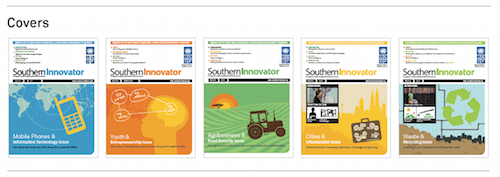
    Development Challenges, South-South Solutions was launched as an e-newsletter in 2006 by UNDP’s South-South Cooperation Unit (now the United Nations Office for South-South Cooperation) based in New York, USA. It led on profiling the rise of the global South as an economic powerhouse and was one of the first regular publications to champion the global South’s innovators, entrepreneurs, and pioneers. It tracked the key trends that are now so profoundly reshaping how development is seen and done. This includes the rapid take-up of mobile phones and information technology in the global South (as profiled in the first issue of magazine Southern Innovator), the move to becoming a majority urban world, a growing global innovator culture, and the plethora of solutions being developed in the global South to tackle its problems and improve living conditions and boost human development. The success of the e-newsletter led to the launch of the magazine Southern Innovator. 

    Creative Commons License

    This work is licensed under a
    Creative Commons Attribution-Noncommercial-No Derivative Works 3.0 License.

    ORCID iD: https://orcid.org/0000-0001-5311-1052.

    © David South Consulting 2023

  • Trade to Benefit the Poor Up in 2006 and to Grow in 2007

    Trade to Benefit the Poor Up in 2006 and to Grow in 2007

    By David SouthDevelopment Challenges, South-South Solutions

    SOUTH-SOUTH CASE STUDY

    The global fair trade market – in which goods and services are traded under the Fairtrade logo, guaranteeing a minimum fair price to producers experienced unprecedented growth in 2006. In the UK alone, 2006 sales totalled £290 million – a jump of 46 percent from 2005. The Fairtrade Foundation predicts sales will reach UK £300 million in 2007.

    In 2005 Fairtrade sales were € 1.1 billion in the brand’s main markets of Switzerland, the UK, New Zealand, Australia and the US. At present fair trade works with 5 million farmers in the global South, and it represents an ever-increasing opportunity for Southern entrepreneurs.

    A tipping point has been reached in Western awareness of and demand for the Fairtrade brand and concept, and it is now being adopted by major supermarkets. In the UK, 62 percent of consumers know the logo and understand what it means.

    The concept of fair trade began in the Netherlands in 1988, when the Max Havelaar Foundation launched the Fairtrade consumer label with coffee from Mexico. Unlike conventional businesses, where the price paid to a producer is what the market dictates, fair trade guarantees the producer a minimum price for their product. This amount is set at a level that ensures the producer can live a life with dignity and meet all the essentials. A portion of the profits is also kept in a communal fund which the producers democratically elect to spend as they wish (many choose to spend it on community projects).

    Fair trade has been criticized for a number of reasons. It has been seen as too small and marginal to really make inroads on poverty, and has been accused of privileging a small number of producers while ignoring the rest. It has also been criticized for not focusing enough on innovation and increasing production to really eradicate poverty in the developing world.

    For all its faults and shortcomings, it is a fact that the Fairtrade brand is a runaway success and offers a wide range of opportunities for entrepreneurs.

    In the UK, fair trade now includes 2,500 products, ranging from footballs, to tea, cotton and honey – up from just 150 in 2003, an astonishing rate of growth. Where fair-trade products were once confined to co-operative and charity shops, they are now widely sold in major supermarkets.

    The success of fair trade is not confined to Europe and the US. It is growing in Japan, where, says fair trade retailer Sonoko Iwasa, “the concept of using trade to equalize the world by buying goods from developing countries from Asia and Africa was a notion that had no connection with everyday lives.”

    Iwasa’s Rumaba Goods store just outside Tokyo sells organic chocolates from Africa, woollen gloves and hats from Nepal, and elegant clothes from Thailand. Iwasa found that the key in the highly competitive Japanese consumer market was to focus on quality, not fairness. This, she says, has made these products fashionable.

    At present, the fair trade market is worth only about US $6 to $7 million a year in Japan and includes 1,500 products. But according to Michiko Ono of Japan’s best-known fair trade label, People Tree, the trend is catching on among the country’s socially aware youth.

    To start a fair trade business, entrepreneurs or producers need first to contact the international body that certifies fair trade products and ensure that production meets the ethical standards required.

    Published: January 2007

    Resources

    https://davidsouthconsulting.org/2022/06/02/afghanistans-juicy-solution-to-drug-trade/

    https://davidsouthconsulting.org/2022/11/02/african-online-supermarket-set-to-boost-trade/

    https://davidsouthconsulting.org/2022/10/26/african-trade-hub-in-china-brings-mutual-profits-2/

    https://davidsouthconsulting.org/2022/11/21/chinese-trade-in-angola-helps-recovery/

    https://davidsouthconsulting.org/2022/11/19/cooking-up-a-recipe-to-end-poverty/

    https://davidsouthconsulting.org/2022/04/12/djibouti-re-shapes-itself-as-african-trade-hub/

    https://davidsouthconsulting.org/2022/10/24/flurry-of-anti-poverty-innovations/

    https://davidsouthconsulting.org/2021/07/19/global-south-trade-boosted-with-increasing-china-africa-trade-in-2013/

    https://davidsouthconsulting.org/2022/10/21/local-animation-a-way-out-of-poverty/

    https://davidsouthconsulting.org/2022/10/26/perfume-of-peace-helps-farmers-switch-from-drug-trade/

    https://davidsouthconsulting.org/2022/10/21/social-networking-websites-a-way-out-of-poverty/

    https://davidsouthconsulting.org/2021/07/19/south-south-trade-helping-countries-during-economic-crisis/

    https://davidsouthconsulting.org/2021/03/05/southern-innovator-issue-2/

    https://davidsouthconsulting.org/2021/01/23/a-steppe-back-economic-liberalisation-and-poverty-reduction-in-mongolia/

    https://davidsouthconsulting.org/2021/01/23/the-sweet-smell-of-failure-the-world-bank-and-the-persistence-of-poverty/

    https://davidsouthconsulting.org/2022/11/18/web-2-0-networking-to-eradicate-poverty/

    https://davidsouthconsulting.org/2022/10/05/women-empowered-by-fair-trade-manufacturer/

    https://davidsouthconsulting.org/2022/06/16/women-mastering-trade-rules/

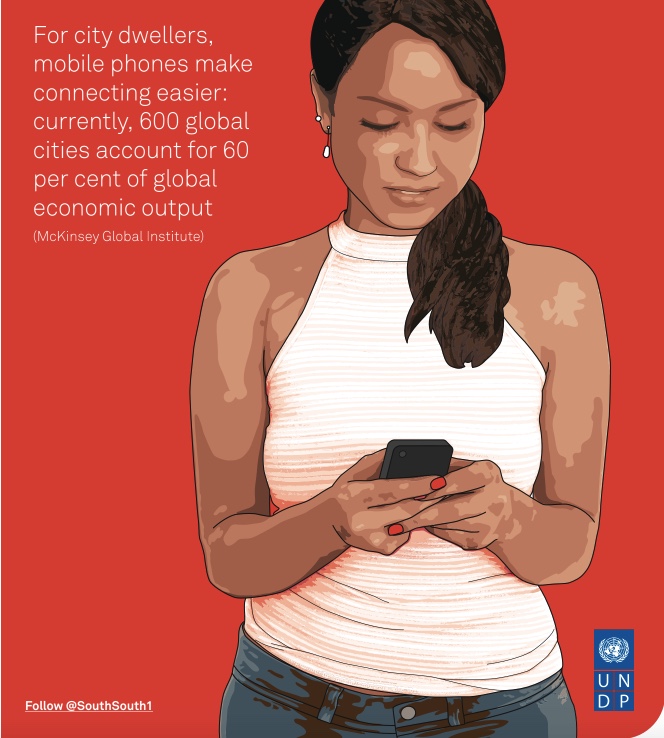
    Development Challenges, South-South Solutions was launched as an e-newsletter in 2006 by UNDP’s South-South Cooperation Unit (now the United Nations Office for South-South Cooperation) based in New York, USA. It led on profiling the rise of the global South as an economic powerhouse and was one of the first regular publications to champion the global South’s innovators, entrepreneurs, and pioneers. It tracked the key trends that are now so profoundly reshaping how development is seen and done. This includes the rapid take-up of mobile phones and information technology in the global South (as profiled in the first issue of magazine Southern Innovator), the move to becoming a majority urban world, a growing global innovator culture, and the plethora of solutions being developed in the global South to tackle its problems and improve living conditions and boost human development. The success of the e-newsletter led to the launch of the magazine Southern Innovator. 
    Creative Commons License

    This work is licensed under a
    Creative Commons Attribution-Noncommercial-No Derivative Works 3.0 License.

    ORCID iD: https://orcid.org/0000-0001-5311-1052.

    © David South Consulting 2023

  • New Appetite for Nutritious Traditional Vegetables

    New Appetite for Nutritious Traditional Vegetables

    By David SouthDevelopment Challenges, South-South Solutions

    SOUTH-SOUTH CASE STUDY

    Throughout the history of farming, around 7,000 species of plants have been domesticated. Yet everyday diets only draw on 30 percent of these plants and even this number has been going down as more people consume mass-market foods (FAO).

    One consequence has been poor nutrition resulting from the reduction in consumption of high-vitamin foods, leading to stunted mental and physical development across the global South.

    Once-rich culinary traditions have wilted and left many people not knowing what to do with formerly common vegetables and fruits, even if they can actually find them in markets.

    Between 94,000 and 144,000 plant species — a quarter to a half of the world’s total — could die out in the coming years, according to an estimate by Scientific American (2002). Among them are vital food crops, threatened by a world in which climate change is causing more weather turbulence and diseases and viruses can spread rapidly and destroy crops.

    This scale of plant loss risks leaving the world’s food security dependent on fewer – and more vulnerable – domesticated species.

    Despite being rich in vitamins, minerals and trace elements, African leafy vegetables have been overlooked in preference for cabbage, tomatoes, carrots, and other imported produce. But with rising food prices at local markets, people are looking again at these neglected African vegetables. In East Africa, this includes indigenous plants like amaranth (http://en.wikipedia.org/wiki/Amaranth), African eggplant, Ethiopian mustard, cowpea, jute mallow and spider plant.

    Like tomatoes and potatoes, some of these vegetables are members of the nightshade family — but unlike those imports, they are indigenous to Africa. According to Patrick Maundu of Bioversity International (http://www.bioversityinternational.org/), African nightshades provide good levels of protein, iron, vitamin A, iodine, zinc, and selenium at seven times the amounts derived from cabbage. The high levels of vitamins and micronutrients, he says, are especially important to people at risk of malnutrition and disease, particularly HIV/AIDS.

    As the cost for basic foodstuffs have shot up during the global economic crisis, growing food has become an increasingly lucrative source of income. Estimates of the number of people doing this across Africa range from hundreds of thousands to millions.

    In the bid to reduce the over-dependence on imported foods, urban farming is coming to the rescue and becoming an effective survival tactic in Africa’s fast-growing cities. Thousands of urban workers in Kenya’s capital, Nairobi, are supplementing their wages by investing in farms growing food.

    Eunice Wangari, a nurse in Kenya, supplements her US $350/month salary with money earned from growing food. “For too long our country has been flooded with imported food and westernized foods,” Wangari told The Guardian newspaper. “This is our time to fight back – and grow our own.”

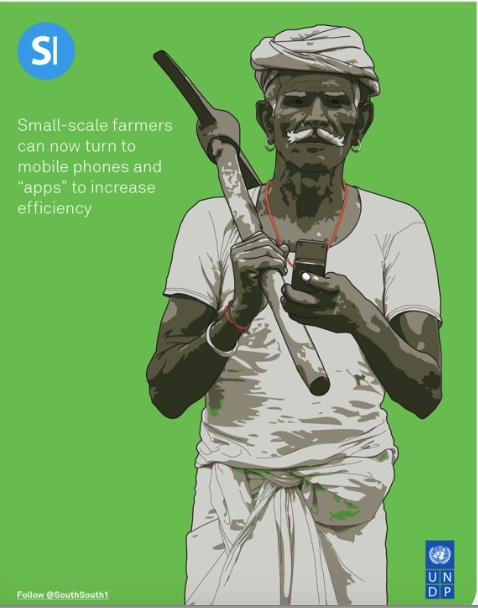
    In Kenya, this type of agriculture usually involves an urbanite taking a stake in farmland outside the city. Relatives then do the farming. Mobile phones play a key role in this approach. The urban dweller can keep in touch with the farm by phone and receive updates on progress. They use their knowledge of urban food tastes to then adjust the crops and increase profits.

    An accountant, James Memusi in Nairobi, is growing mushrooms in a spare bedroom in his home and then selling them to hotels and supermarkets, according to The Guardian. Miringo Kinyanjui is selling unrefined maize and wheat. Loved for its nutritional qualities, the flour is also flavoured with amarathan, a common green vegetable in Kenya.It is a clever way to make the most of the fact that many urban dwellers have some access to land in the countryside.

    Pride is also returning to the topic of food, as people re-discover traditional foods and vegetables and fruits.

    In Liberia, president Ellen Johnson-Sirleaf has launched a “Back to the Soil” campaign to get urban dwellers to farm and help the country lose its dependence on foreign food imports.

    Liberia is trying to reduce the importing of rice and tomatoes.

    In Zambia, the embracing of traditional foods has been fuelled by recipes used by a chain of popular restaurants. This appetite has driven demand for dried pumpkins, ‘black jack’ leaves and fresh okra.

    The success of this revival of traditional foods has attracted big multinationals as well. Unilever Kenya ran a campaign in 2008 called ‘taste our culture,’ promoting African herbs and spices.

    Published: November 2009

    Resources

    1) The Global Trees Campaign, a partnership between Fauna & Flora International, Botanic Gardens Conservation International and many other organisations around the world, aims to save threatened tree species through provision of information, conservation action and support for sustainable use. Website: http://www.globaltrees.org

    2) World Vegetable Center: The World Vegetable Center is the world’s leading international non-profit research and development institute committed to alleviating poverty and malnutrition in developing countries through vegetable research and development. Website: http://www.avrdc.org/

    3) Sylva Professional Catering and College: A well-known Zambian food entrepreneur who runs a range of businesses, including restaurants, a cooking school and a guest house. Website: http://sadcbiz.com/countries/zambia/categories/index.htm

    4) Marketing African Leafy Vegetables: Challenges and Opportunities in the Kenyan Context By Kennedy M. Shiundu and Ruth. K. Oniang. Website: http://www.ajfand.net/Issue15/PDFs/8%20Shiundu-IPGR2_8.pdf

    Development Challenges, South-South Solutions was launched as an e-newsletter in 2006 by UNDP’s South-South Cooperation Unit (now the United Nations Office for South-South Cooperation) based in New York, USA. It led on profiling the rise of the global South as an economic powerhouse and was one of the first regular publications to champion the global South’s innovators, entrepreneurs, and pioneers. It tracked the key trends that are now so profoundly reshaping how development is seen and done. This includes the rapid take-up of mobile phones and information technology in the global South (as profiled in the first issue of magazine Southern Innovator), the move to becoming a majority urban world, a growing global innovator culture, and the plethora of solutions being developed in the global South to tackle its problems and improve living conditions and boost human development. The success of the e-newsletter led to the launch of the magazine Southern Innovator. 
    Creative Commons License

    This work is licensed under a
    Creative Commons Attribution-Noncommercial-No Derivative Works 3.0 License.

    ORCID iD: https://orcid.org/0000-0001-5311-1052.

    © David South Consulting 2023

  • African Hotel Boom Bringing in New Investment and Creating Jobs

    African Hotel Boom Bringing in New Investment and Creating Jobs

    By David SouthDevelopment Challenges, South-South Solutions

    SOUTH-SOUTH CASE STUDY

    Africa is experiencing a boom not seen for decades. The IMF forecasts economic growth in sub-Saharan Africa of 6 per cent in 2014, compared to global growth of 3.6 per cent.

    And this boom is getting an additional jolt of support from the world’s multinational hotel chains. January 2014 saw Africa’s largest hotel chain bought by global giant Marriott (marriott.com). For decades major global multinationals shied away from Africa, but today they are battling to get a place in Africa’s fast-growing economies and to serve the growing middle classes.

    Marriott is leading the way by investing US $1.5 billion in 25 new hotels equalling 5,000 rooms. To boost capacity further, Marriott is taking over South Africa’s Protea group (proteahotels.com) and its 116 African hotels.

    “We have 25 Marriott brand hotels under construction in seven countries in Africa that will come on stream over the next four years,” Alex Kyriakidis, the chain’s president for the Middle East and Africa, told Bloomberg (bloomberg.com).

    The new hotels “are going to bring us into Benin, Gabon, Ghana, Ethiopia and Mauritius. With our existing hotels plus those in the pipeline and those Protea operates today, we will be in 16 countries in Africa by 2017.”

    Bloomberg calls what Africa is experiencing the “fastest pace of hotel development in the world”.
    “Our mission here is to grow, grow, grow,” according to Kyriakidis.

    Meanwhile, a further boost is coming from the US $5 billion Angolan sovereign wealth fund, Fundo Soberano de Angola (fundosoberano.ao/language/en/). It will be investing in hotels and commercial infrastructure in sub-Saharan Africa, according to Bloomberg. This could include 50 sub-Saharan African hotels in the next three years.

    “We believe there’s a lot of investment interest in Africa,” said Chairman Jose Filomeno dos Santos. “It has a lot of mineral potential, almost a commodity hub. We believe this interest will remain there for the coming years.”

    Little thought is given to the role hotels play in development, yet they are a critical development tool for any country wishing to move up the economic ladder. As the quality of hotels improves, they tend to become key gathering and meeting places. Conferences and seminars can act as catalysts for change, attracting people from around the world. When quality hotels are in place, then the top-drawer global conferences will come to town, in turn bringing new tourist income for local businesses.

    Anyone who has stayed in a hotel in Africa knows that standards are variable: the pool with dirty water, the power cuts, the food hygiene standards that might not match what people are used to at home. This is what international hotel chains can change. Not only do they demand the highest standards in their own establishments, they also push up standards at local competitors, as all of them battle for the attention of visitors.

    Africa has been overlooked by the large global hotel chains and brands since the end of the colonial period in the 1960s and 70s. Africa was considered too poor, too chaotic, too dangerous and too much hard work for it to be worth the effort.

    But now the tune has changed. With Africa’s population over a billion, and many of the continent’s economies experiencing rapid growth while also urbanizing, conditions are fortuitous for the hotel trade.

    The situation has changed in the last decade, for a variety of reasons: debt relief, a rise in commodity prices, expanding trade and investment with China and the global South, and a growing middle class — all slowing the growth of poverty. Africa is still notorious for under-investment in infrastructure and has a long way to go to catch up to the fast-moving economies of Asia. But greater optimism is leading to greater real investment. And the world’s large hotel brands are the latest to join in the rush to Africa.

    Large chains including Four Seasons, Ritz-Carlton, Hyatt and Kempinski hope to open 300 new hotels in Africa over the next five years. The number of hotel beds is set to increase by 30 per cent by 2018.

    Four Seasons Safari Lodge Serengeti in Tanzania (http://www.fourseasons.com/serengeti/) is the first investment in Africa by the Canadian brand. Four Seasons is known for its luxury, upmarket city hotels and has kept with this tradition by building the largest and most luxurious safari lodge ever built in Africa.

    This is having a knock-on effect on African hotel operators. The surge in investment is giving these local operators the right incentives to create African brands and to raise their game.

    Nairobi in Kenya has become something of a test market for high-end boutique hotels. Already a city benefiting from its status as an international development hub, home to many agencies including the UN Environment Programme’s sprawling and verdant headquarters (unep.org), it has also become a corporate headquarters for Africa and has a large U.S. presence (nairobi.usembassy.gov). This means lots of people coming to the city to do business and attend events, creating a market for better quality accommodation.

    The Kenyan-owned, 156-room Sankara Nairobi Hotel (sankara.com) boasts of having the best wine list in Africa and claims to be a five-star hotel. It also capitalizes on being close to the international airport and the UN’s Nairobi headquarters.

    “There’s an appetite for something local that’s different and, for the first time, there’s the confidence and funding to bankroll new developments,” said Sankara Hotel Group director Rohan Patel to Wallpaper Magazine. “Africans don’t want a theme-park African hotel, with prints of ‘the big five’ on the wall. That’s condescending. Nor do they want a New York-style hotel. They’ve probably been to New York. They want modern, connected Africa.”

    Elsewhere in Nairobi, the Kenyan-owned Tribe Hotel (tribe-hotel.com) is looking to expand to meet growing market demand.

    “The market for new, authentic, yet modern African hotels is growing,” manager Michael Flint, who previously ran New York’s Ritz-Carlton, told Wallpaper.

    “We’ve been so successful here we are building a new 187-room hotel in Nairobi. We’ve taken over a boutique hotel called Westhouse (westhouse.co.ke). And we’re looking to expand further, with properties at the airport and on the coast. Who knows what will be next? Tribe will be a mini empire.”

    In Rwanda’s capital Kigali, the Rwanda Marriott has ambitious plans. Rwanda was ripped apart by ethnic genocide in the 1990s that killed an estimated 500,000 to 1 million people (http://en.wikipedia.org/wiki/Rwandan_Genocide). Now, the country’s economy is booming and its hotels are getting an upgrade.

    The Akilah Institute for Women (akilahinstitute.org) in Kigali has been helping in training women for the hotel sector. They sent trainees to Dubai and Doha to learn how to do hotel service the Marriott way.

    Starwood (starwoodhotels.com), a competitor to Marriott, is hoping to grow its African hotel investment by 30 per cent as well. It will be done through the Sheraton, Aloft, Le Meridien, St Regis and Four Points brands. The first St Regis has already opened in Mauritius.

    Neil George, Starwood’s head of African development, believes “Africa is the final frontier. It’s adventurous.

    “I would rather arrive in Kinshasa and work out how to do a hotel there than do it in Frankfurt,” he told Wallpaper.

    The Hyatt (hyatt.com) brand is now running the Hyatt Kilimanjaro Hotel in Dar es Salaam (http://daressalaam.kilimanjaro.hyatt.com/en/hotel/home.html), Tanzania. Peter Norman, Hyatt’s African head, is working on opening a Park Hyatt in Zanzibar (http://zanzibar.park.hyatt.com/en/hotel/home.html) and another Hyatt Regency (http://investors.hyatt.com/phoenix.zhtml?c=228969&p=irol-newsArticle&ID=1863203&highlight=) will open in Arusha and a further 140-room Hyatt in Senegal (http://investors.hyatt.com/phoenix.zhtml?c=228969&p=irol-newsArticle&ID=1863204&highlight=).

    The 200-room Villa Rosa Kempinski in Nairobi (http://www.kempinski.com/en/nairobi/hotel-villa-rosa/welcome/), boasting an outdoor heated pool, and the Olare Mara Kempinski (http://www.kempinski.com/en/masai-mara/olare-mara/welcome/) luxury camp in the Maasai Mara will also be joined by projects in Ghana and Equatorial Guinea.

    Kempinski also has properties in Chad and the Congo, has bought the Hotel des Mille Collines (https://www.millecollines.net/) in Kigali and aims to operate 20 hotels across sub-Saharan Africa.

    British entrepreneur Richard Branson has the Mahali Mzuri in the Maasai Mara and it is seen as a stylish role model for other hotels. The local landowners and herdsmen have been included in the business, benefiting from the hotel and helping to preserve the local ecosystem.

    EasyHotel (http://www.easyhotel.com/news/2011/africa0.html), a low budget hotelier, is also rapidly expanding across southern Africa.

    Published: May 2014

    Resources

    1) Catererglobal.com: Catererglobal.com offers a unique service that provides an easy-to-use, specific recruitment website for vacancies in the world’s best hotels and cruise ships. Website: http://www.catererglobal.com/jobs/africa/hotel/

    2) South African hotel jobs: HotelJobs South Africa is an industry specific job website for the hotel, hospitality and catering industry. Website: http://www.hoteljobs.co.za/

    3) Hotel Staff Africa: Many hotel jobs across Africa. Website: http://www.hotelstaff.co.za/

    4) Hotel Career: Many hotel jobs for the Middle East and Africa. Website: http://www.hotelcareer.com/jobs/middle-east-africa

    Development Challenges, South-South Solutions was launched as an e-newsletter in 2006 by UNDP’s South-South Cooperation Unit (now the United Nations Office for South-South Cooperation) based in New York, USA. It led on profiling the rise of the global South as an economic powerhouse and was one of the first regular publications to champion the global South’s innovators, entrepreneurs, and pioneers. It tracked the key trends that are now so profoundly reshaping how development is seen and done. This includes the rapid take-up of mobile phones and information technology in the global South (as profiled in the first issue of magazine Southern Innovator), the move to becoming a majority urban world, a growing global innovator culture, and the plethora of solutions being developed in the global South to tackle its problems and improve living conditions and boost human development. The success of the e-newsletter led to the launch of the magazine Southern Innovator. 

    Creative Commons License

    This work is licensed under a
    Creative Commons Attribution-Noncommercial-No Derivative Works 3.0 License.

    ORCID iD: https://orcid.org/0000-0001-5311-1052.

    © David South Consulting 2023