UNDP Mongolia Communications Coordinator (1997-1999):David South
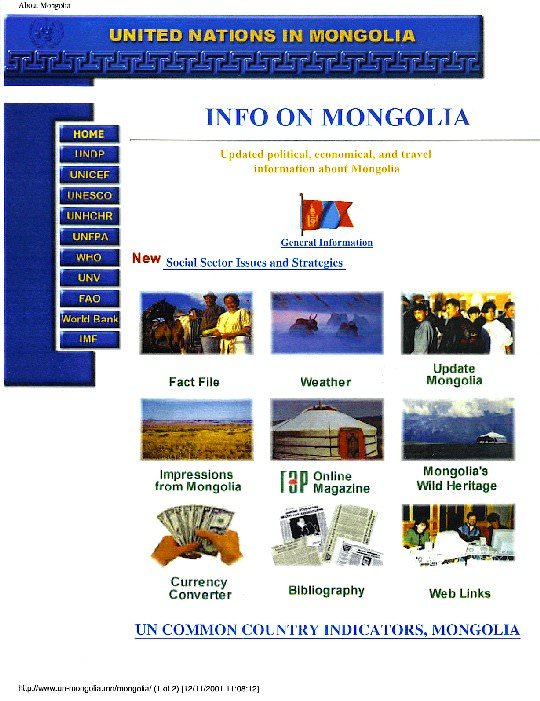
I launched this portal in 1997, in the middle of a major economic crisis in Mongolia. This award-winning (winner in 1998 of the People’s Choice WebSite 500 award and the CyberTeddy Top 500 Website award) and pioneering United Nations Mongolia development web portal was singled out by UN headquarters as an example of what a country office website should be like.
At this time, Mongolia was still recovering from the chaotic and turbulent transition from Communism to free markets and democracy begun at the start of the 1990s, called by some “one of the biggest peacetime economic collapses ever” (Mongolia’s Economic Reforms: Background, Content and Prospects, Richard Pomfret, University of Adelaide, 1994). There was a thirst for information: access to the Internet was still limited and access to mobile phones was just the preserve of the rich. As a legacy of the past, information, especially that about the outside world and the country’s true economic and social conditions, was restricted. During the years of Communism, even simple travel from one place to the next was strictly regulated.
While today we can take it for granted the world’s information arrives in seconds via the Internet on mobile and smart phones and devices, this just was not the case in the late 1990s in Mongolia.
The UN/UNDP Mongolia development web portal addressed the urgent need to communicate what was happening in the country during a major crisis, and to transparently show what the UN was doing to address the crisis. It made critical data on the country’s development easy to find, and informed the wider world about the country and its people and culture. While the Internet had only just arrived in Mongolia, from the start the UNDP Mongolia Communications Office was experimenting with this powerful new technology to reach a global audience. This included Mongolia’s first web magazine, Ger (launched in 1998).
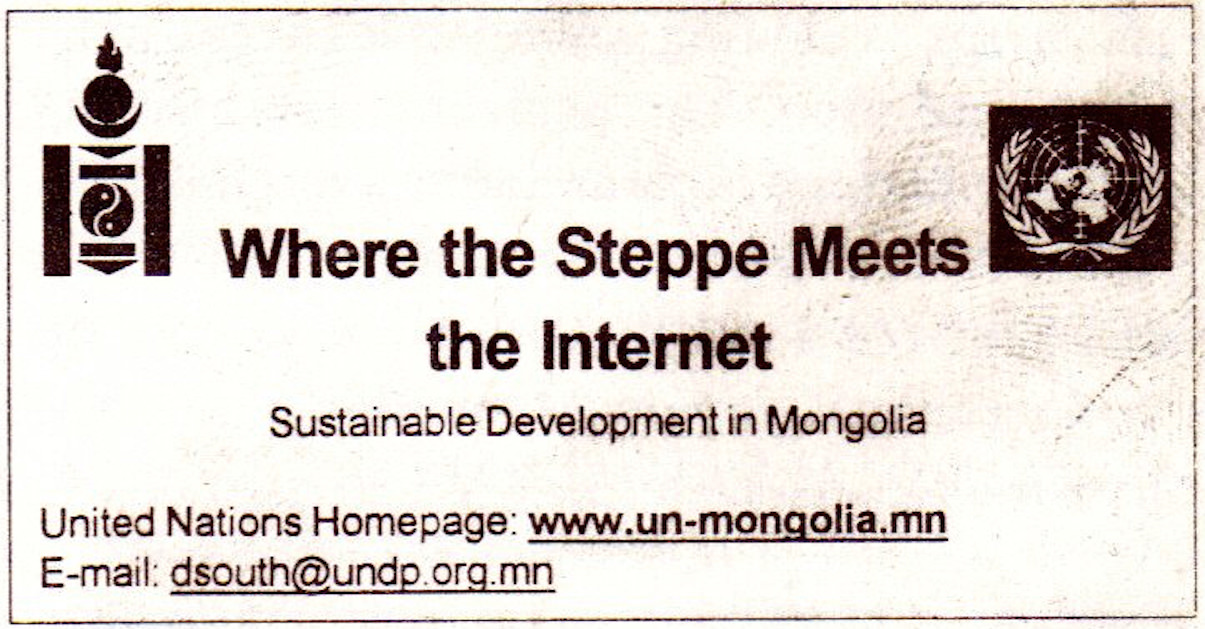
After the http://www.un-mongolia.mn website launched in 1997, a media campaign began to inform readers of its presence. This ad appeared regularly in magazines, newsletters and newspapers.
Ger Magazine was launched on September 9, 1998 (Ger is the Mongolian word for both the traditional tent dwelling and home). The theme of youth in the transition was explored by a combined team of Mongolian and foreign journalists. The Ger Magazine project had basically three goals: first, raise the quality of journalism in the country, secondly, introduce the country to a wider global audience and, thirdly, by being the country’s first online magazine, prove the Internet was an effective way to communicate.
Issue 1 of the magazine investigated what life was like for youth during the transition years (post-1989). Stories tackled the struggle to find work in the free market, the booming pop music scene and how it is leading the way in business entrepreneurship, reproductive health, the basics on Mongolian culture, and vox pop views from Mongolian youth.Issue 2 of the magazine investigated modern life in Mongolia during transition. The team of journalists were hitting their stride by this issue. Stories probed the proliferation of bars and the problem of alcoholism, corrupt banking practices and the loss of savings, how the young were the country’s leading entrepreneurs, Mongolia’s meat and milk diet, “girl power” and the strong role played by women, the burgeoning new media, the rise and rise of Buddhism, and Mongolia’s dynamic fashion designers (this article inspired foreign fashion designers to embrace the Mongolian ‘look’ in the next season’s designs).
The UN/UNDP Mongolia homepage quickly became the top resource for development news on Mongolia in the late 1990s.“A UN System site. A very nice, complete, professional site. Lots of information, easily accessible and well laid out. The information is comprehensive and up-to-date. This is a model of what a UNDP CO web site should be.”
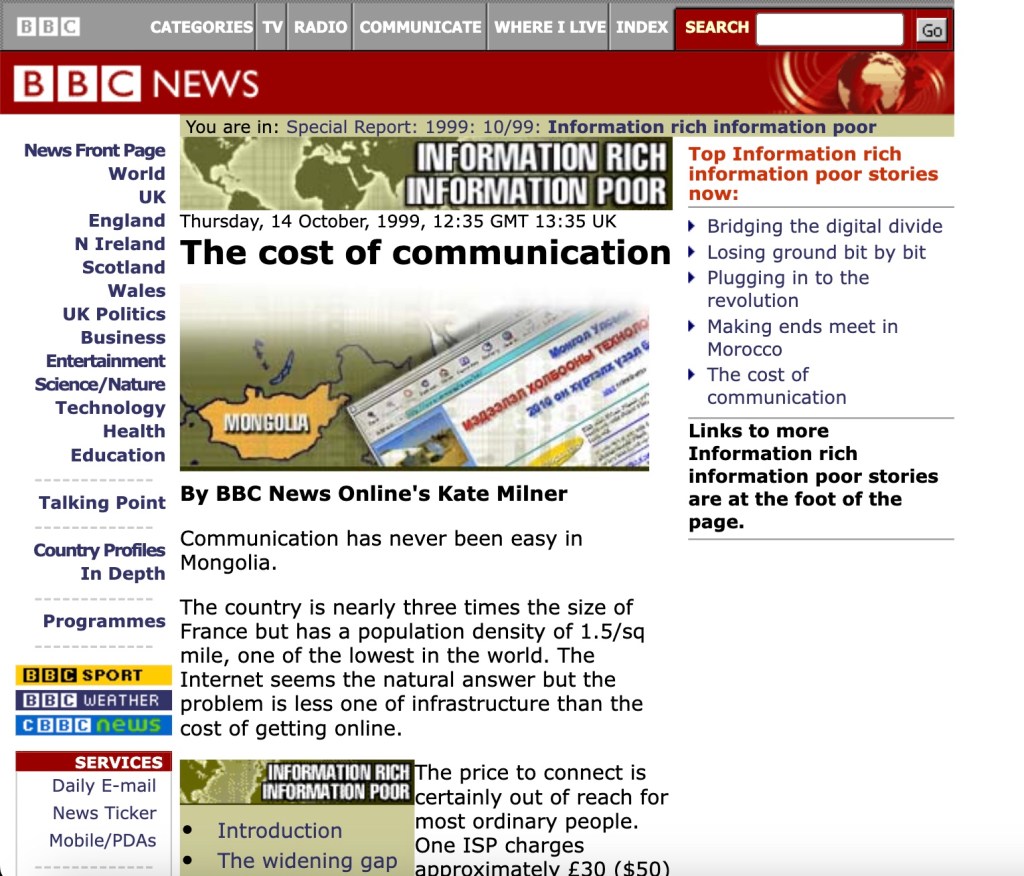
“Information Rich Information Poor: The cost of communication”, BBC News Online, Thursday, 14 October 1999.
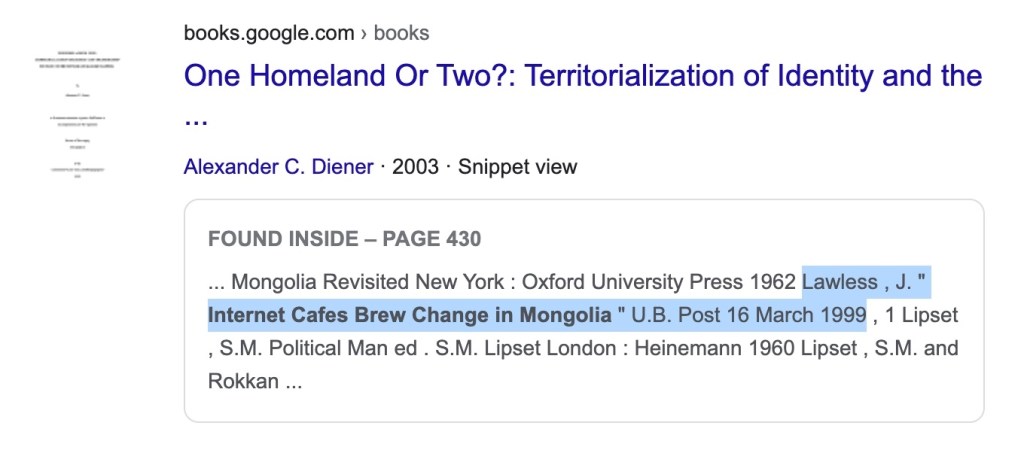
“Internet Cafes Brew Change in Mongolia”, UB Post 16 March 1999 by Jill Lawless, cited in One Homeland or Two?: Territorialization of Identity and the Migration Decision of the Mongolian-Kazakh Diaspora by Alexander C. Diener, 2003.
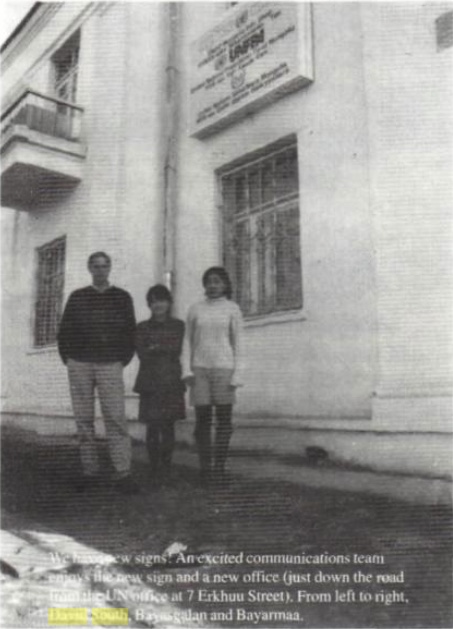
United Nations Cyber Center Ulaanbaatar, Mongolia: UNDP Mongolia established the first public internet cafe in its former headquarters as part of the UNDP Mongolia Communications Office hub in the late 1990s.
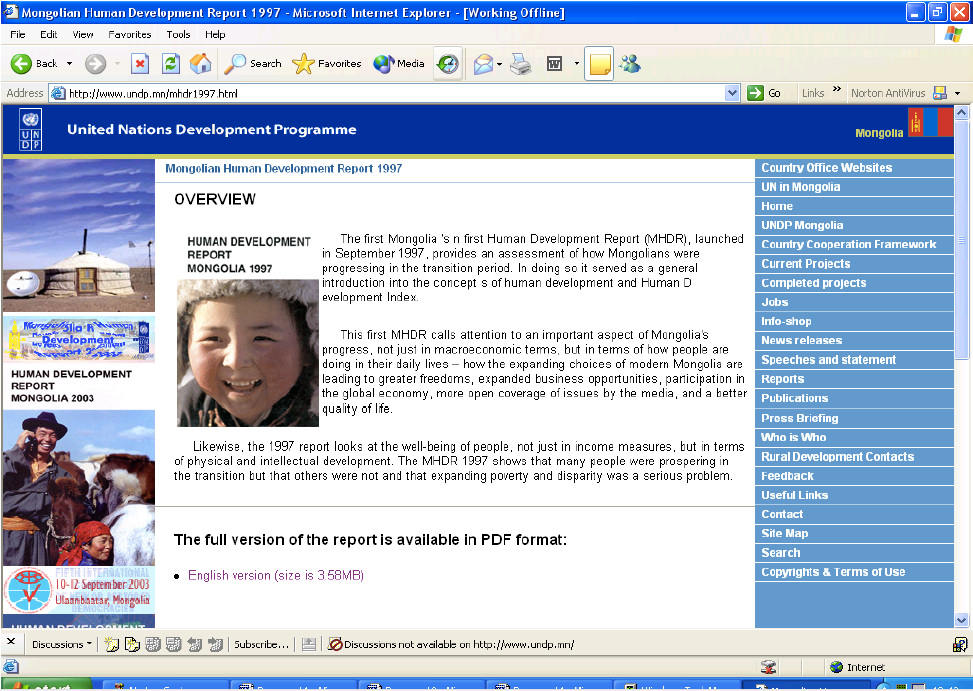
In 2000, the Kiev-based UN Ukraine team had to improve the design and capability of the mission website to handle new content and online services. There was a strong demand for information on country conditions and how to support the UN’s work (for example, on HIV/AIDS). It was a dangerous time to be involved in any online communications and the media and online communicators were routinely threatened with violence and even death.Whilst with a UK-based international development consultancy, I worked on the drafting and online launch in 2000 of the World Bank’s Task Force on Higher Education and Society report, Higher Education in Developing Countries: Peril and Promise. At the time, it was still rare to see reports made user friendly for the world’s web audience. As a survey in 2014 discovered, a shocking third of the Bank’s publications are never downloaded, 40 per cent were downloaded just 100 times, and only 13 per cent were downloaded more than 250 times in their lifetime (The Washington Post).As the Millennium Development Goals (MDGs) were being communicated, the link between the powerful new digital and mobile/information technologies and development goals became explicit in information materials. The cleaner and more modern design introduced with Mongolia’s first human development report in 1997, continued in future publications and online, as can be seen in this screen grab from 2003 and that year’s human development report. The first use of infographics was also introduced in a report on the MDGs for UNDP Mongolia in 2005. Importantly, a country that had been isolated from the non-Communist world for decades, was now routinely using the Internet to tell its stories and post development data.
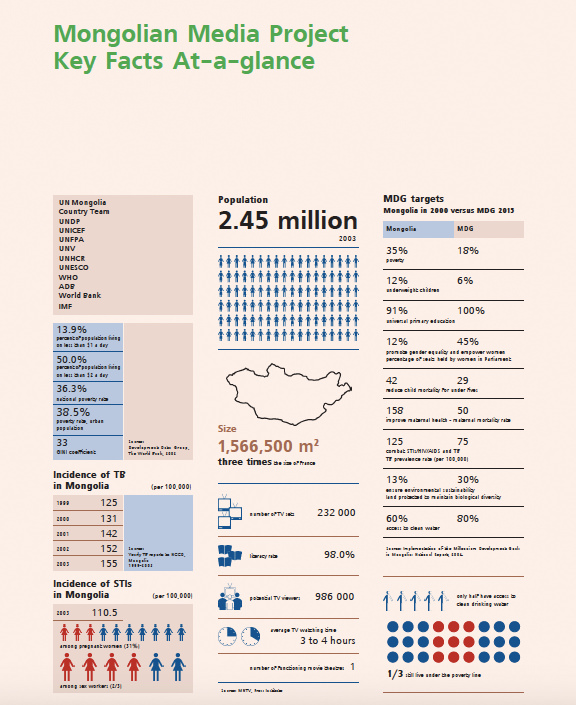
Human Development Infographics: Infographics have proven a useful visual aid for communicating human development concepts. This example was created for a UNDP Mongolia report during missions undertaken in 2005.
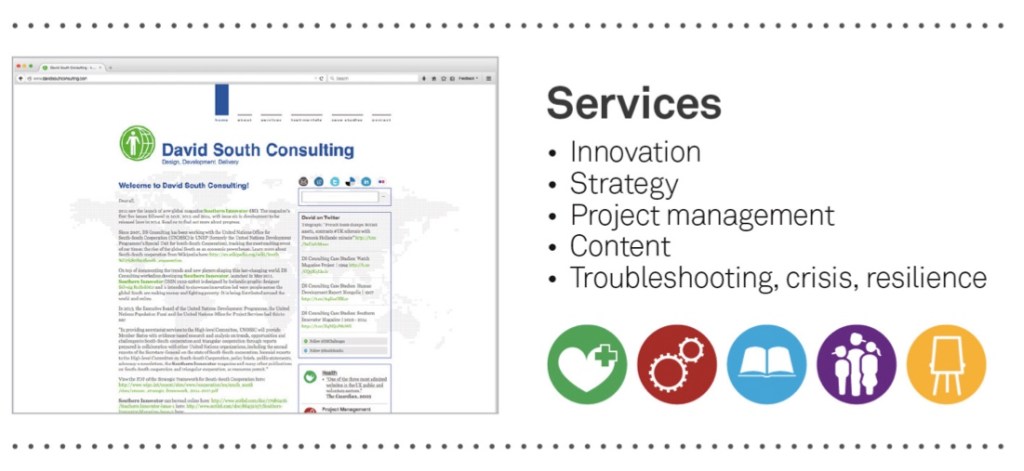
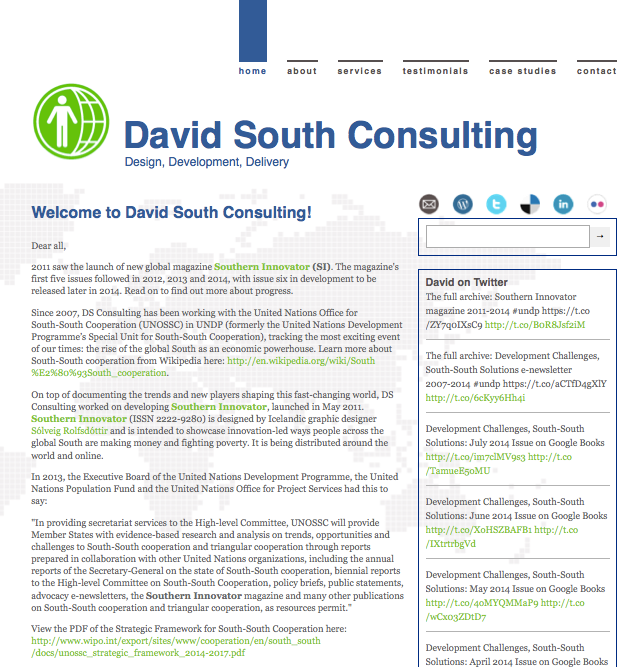
Five years prior to the MDGs deadline in 2015, the David South Consulting website went live (2010). Featuring a new branding and design, it signaled a new design phase more comfortable with developments in social media and online and mobile content sharing. Designed by Solveig Rolfsdottir, one of Iceland’s top graphic designers and illustrators, the website’s design was intentially made compatible with the new global magazine, Southern Innovator (also designed by Solveig Rolfsdottir).The online story archive for Southern Innovator was launched by the United Nations Office for South-South Cooperation (UNOSSC) in 2011. Organized by theme, the stories were cited in blogs, books and reports around the world.
The new template for the United Nations e-newsletter Development Challenges, South-South Solutions was launched in 2011 and designed by Solveig Rolfsdottir. It included a QR code for mobile and smartphone users to connect to the Southern Innovator website.
In 2016 the mobile-friendly version of the David South Consulting website was launched.
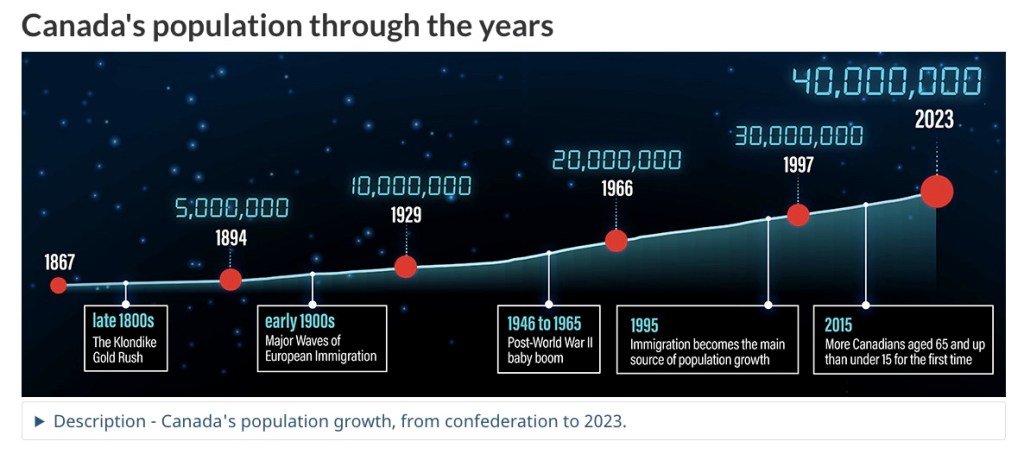
When I first emerged as a Canadian (I was born in 1966), the country’s population was 20 million. So the population has doubled in my lifetime.
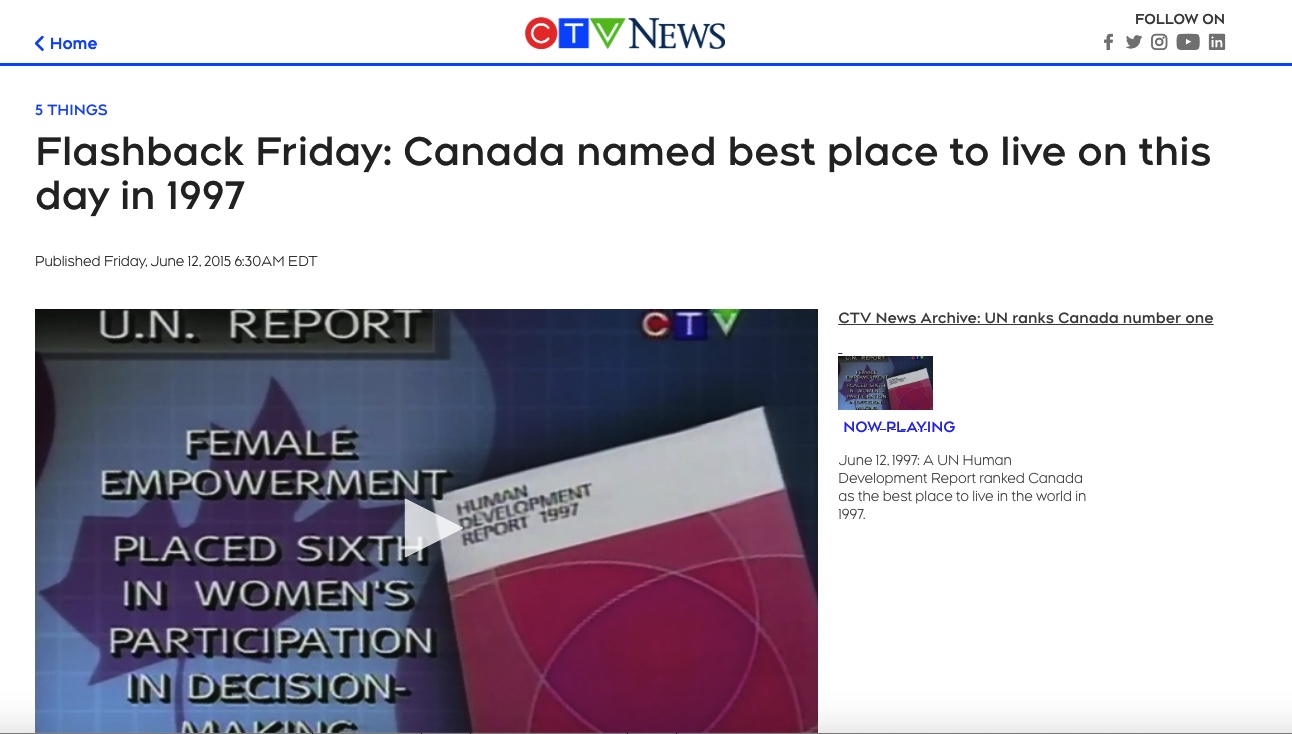
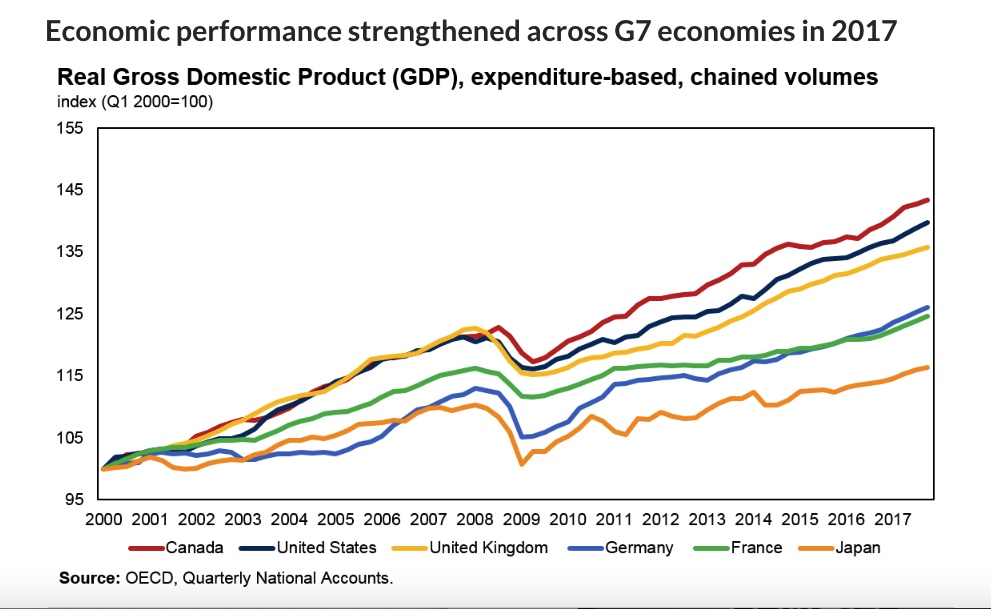
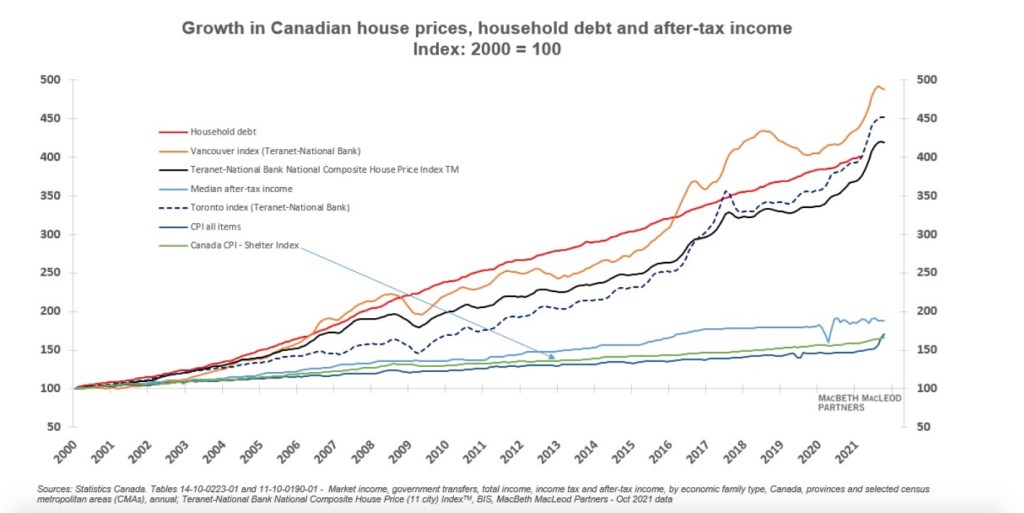
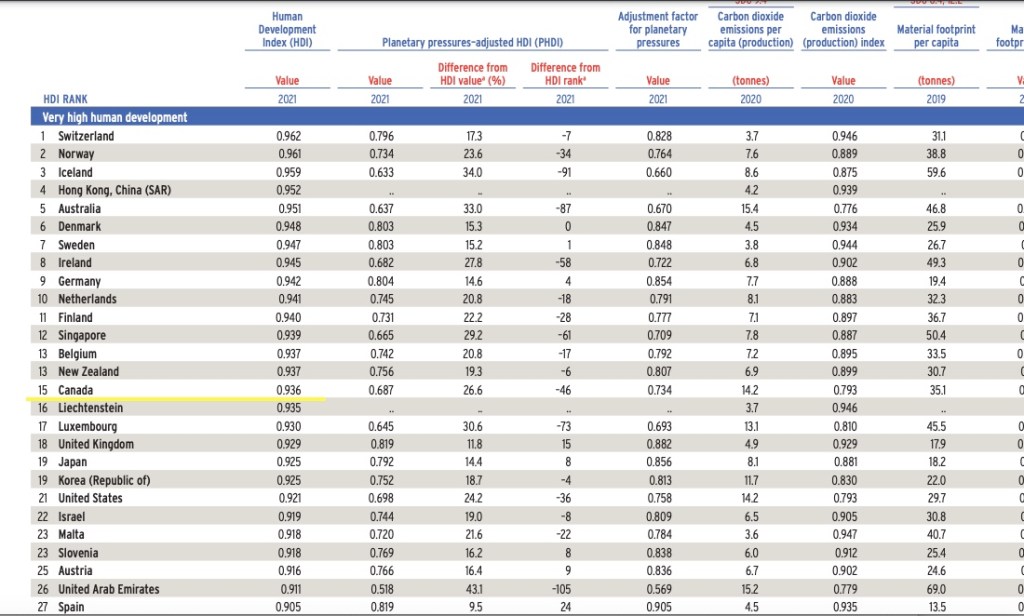
Since Canada topped the HDI rankings in the late 1990s, however, the population has grown, house prices have surged and GDP (Gross Domestic Product) has exploded, yet the country has also slipped down the rankings, hitting 15th place in 2021. Does this mean there are more people, but fewer living as well as they did in the 1990s?
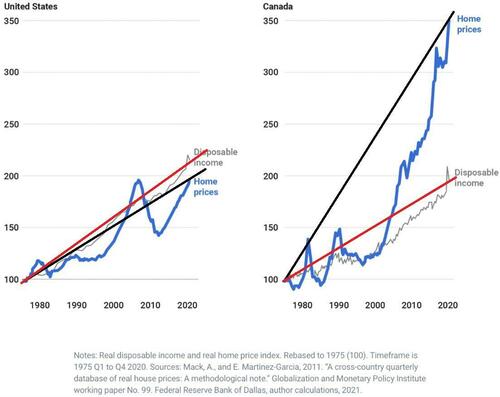
Source: Statistics Canada. Source: Macleans.ca.
Since 2000 house prices in Canada have surged far past growth in Canadian household disposable income, as compared to US households.
“ChatGPT is an artificial-intelligence chatbot developed by OpenAI and launched in November 2022. It is built on top of OpenAI’s GPT-3.5 and GPT-4 families of large language models and has been fine-tuned using both supervised and reinforcement learning techniques” (Wikipedia).
UN Bribery and Money Laundering Networks
Since 2015 a number of bribery and money laundering networks were identified by the U.S. Department of Justice operating at the United Nations, resulting in arrests and criminal trials. In one case, an appeal reached the U.S. Supreme Court. Here is what ChatGPT has to say about convicted bad actors in these networks.
On the Patrick Ho network:
“Title: The Patrick Ho Bribery Network at the United Nations: An In-depth Analysis
Introduction:
The Patrick Ho bribery network at the United Nations (UN) represents a complex web of corruption and illicit activities that operated within the realm of international diplomacy. Led by Patrick Ho, a former Hong Kong government official and the head of a prominent non-profit organization, the network aimed to influence UN officials and advance the interests of specific individuals and entities. This essay delves into the inner workings of the network and provides an ordered list of key actors involved.
I. Background of Patrick Ho and the Bribery Network:
Patrick Ho, the former Secretary for Home Affairs of Hong Kong, rose to prominence as the Deputy Chairman and Secretary-General of the China Energy Fund Committee (CEFC), a non-profit organization with strong ties to the Chinese government. The CEFC presented itself as a platform for international cooperation and development but, in reality, served as a conduit for Patrick Ho’s corrupt activities.
II. The Modus Operandi of the Bribery Network:
The Patrick Ho bribery network employed various tactics to achieve its objectives. These tactics typically involved bribery, money laundering, and the provision of illicit financial benefits to UN officials and other influential individuals. The following steps outline the modus operandi:
Identification of Targets: The network strategically targeted UN officials who held significant decision-making power or influence over key issues. This included officials from countries of interest to the network’s objectives.
Establishing Relationships: Through intermediaries and personal connections, the network established relationships with the targeted UN officials. These relationships often involved exploiting personal or professional vulnerabilities, such as financial difficulties or the promise of career advancement.
Offering Bribes and Illicit Financial Benefits: The network would offer bribes, kickbacks, or other illicit financial benefits to the targeted UN officials. These benefits could include cash payments, luxury goods, travel expenses, or even shares in lucrative business ventures.
Influencing Decision-making: Once the network successfully established a relationship with a UN official, it would seek to influence the official’s decision-making processes. This could involve swaying votes, advocating for specific policies, or providing confidential information to advance the network’s interests.
Concealing Illicit Transactions: The bribery network employed sophisticated money laundering techniques to conceal the illicit origins and transfers of funds. These techniques included the use of shell companies, offshore bank accounts, and complex financial transactions across multiple jurisdictions.
III. Key Bad Actors in the Patrick Ho Bribery Network:
Patrick Ho: As the mastermind behind the network, Patrick Ho orchestrated its operations and served as the primary point of contact for UN officials. He utilized his position at the CEFC and his personal connections to facilitate bribery and exert influence within the UN system.
CEFC China Energy Company Limited: The CEFC, under Patrick Ho’s leadership, played a central role in funding the network’s activities. The company provided financial resources and logistical support for bribery schemes, enabling Ho to carry out his illicit operations effectively.
Intermediaries and Facilitators: The network relied on a network of intermediaries and facilitators to establish connections with targeted UN officials. These individuals acted as liaisons, coordinating meetings, arranging payments, and maintaining communication channels between the network and its targets.
Corrupt UN Officials: The bribery network involved several UN officials who willingly participated in illicit activities in exchange for personal gain. These officials abused their positions of trust, compromising the integrity and impartiality of the UN system.
IV. Investigation, Arrest, and Legal Consequences:
In 2017, Patrick Ho was arrested in the United States on charges of bribery and money laundering related to his activities within the UN. Following an extensive investigation, evidence of the network’s operations …”
On the Ng Lap Seng network:
“Title: The Ng Lap Seng Bribery Network at the United Nations: An In-depth Analysis
Introduction:
The Ng Lap Seng bribery network at the United Nations (UN) represents a far-reaching scheme of corruption and illicit activities aimed at influencing UN officials and advancing personal interests. Led by Ng Lap Seng, a wealthy Chinese billionaire and philanthropist, the network operated within the complex realm of international diplomacy. This essay provides a comprehensive examination of the inner workings of the network and presents an ordered list of key actors involved.
I. Background of Ng Lap Seng and the Bribery Network:
Ng Lap Seng, a prominent figure in the business world, amassed significant wealth through his ventures in real estate and international trade. As the Chairman of Sun Kian Ip Group, he sought to leverage his financial resources and influence to advance his personal agenda within the UN.
II. The Modus Operandi of the Bribery Network:
The Ng Lap Seng bribery network employed a range of tactics to achieve its objectives, including bribery, money laundering, and the provision of illicit financial benefits. The following steps outline the modus operandi:
Identifying Targeted UN Officials: The network strategically identified UN officials who held key decision-making positions or had influence over critical matters. These officials were often from countries or departments of interest to the network.
Establishing Relationships and Exploiting Vulnerabilities: Through intermediaries, personal connections, and various social engagements, the network sought to establish relationships with the targeted UN officials. They exploited personal or professional vulnerabilities, such as financial difficulties, to gain their cooperation.
Offering Bribery and Financial Benefits: The network would offer bribes, kickbacks, or other illicit financial benefits to the targeted UN officials. These benefits could range from cash payments, luxury gifts, expensive trips, to investment opportunities in lucrative business ventures.
Influencing Decision-making and Policy: Once a relationship was established, the network sought to influence the decision-making processes and policies within the UN. This involved manipulating votes, advocating for specific agendas, and providing insider information to further their own interests.
Concealing Illicit Transactions: The bribery network employed sophisticated money laundering techniques to conceal the origins and transfers of illicit funds. This included the use of shell companies, offshore bank accounts, complex financial transactions, and networks of intermediaries to obscure the paper trail.
III. Key Bad Actors in the Ng Lap Seng Bribery Network:
Ng Lap Seng: As the mastermind of the bribery network, Ng Lap Seng orchestrated its operations and provided the necessary financial resources. He utilized his wealth, connections, and philanthropic endeavors to establish influence within the UN and carry out his corrupt activities.
Jeff Yin: Jeff Yin, a business associate of Ng Lap Seng, acted as a key facilitator within the network. He helped establish relationships with targeted UN officials, coordinated meetings and payments, and played a crucial role in executing bribery schemes on behalf of Ng Lap Seng.
John Ashe: John Ashe, a former President of the UN General Assembly, played a central role in the bribery network. He accepted bribes from Ng Lap Seng and his associates in exchange for advancing their interests within the UN. Ashe abused his position of power to manipulate decision-making processes and facilitate corruption.
Francis Lorenzo: Francis Lorenzo, the Deputy Permanent Representative of the Dominican Republic to the UN, was another key actor within the network. He acted as an intermediary, facilitating bribes and providing assistance in influencing UN officials. Lorenzo used his diplomatic status to further the network’s agenda.
Sheri Yan: Sheri Yan, the CEO of Global Sustainability Foundation (GSF), played a significant role in the bribery network. GSF acted …”
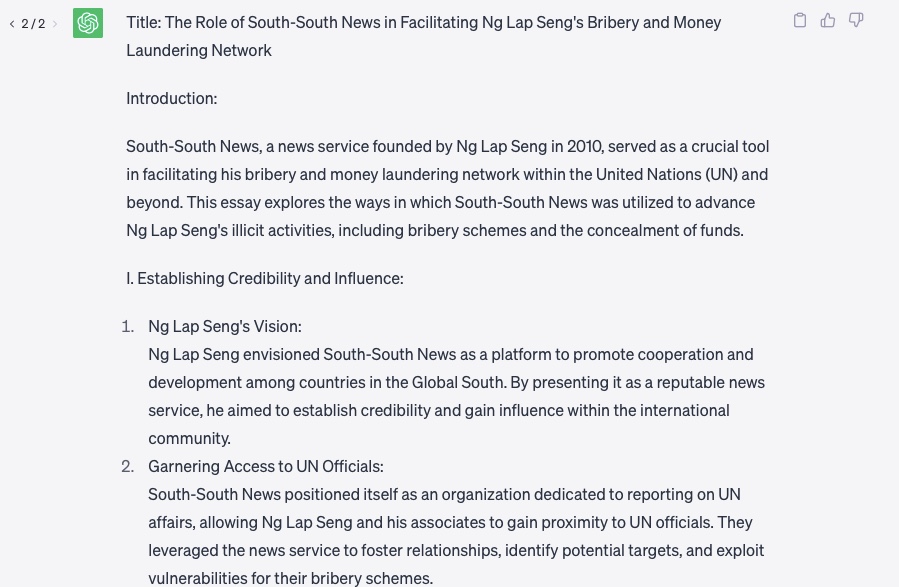
On New York-based South-South News (funded and founded by Ng Lap Seng):
“Title: The Role of South-South News in Facilitating Ng Lap Seng’s Bribery and Money Laundering Network
Introduction:
South-South News, a news service founded by Ng Lap Seng in 2010, served as a crucial tool in facilitating his bribery and money laundering network within the United Nations (UN) and beyond. This essay explores the ways in which South-South News was utilized to advance Ng Lap Seng’s illicit activities, including bribery schemes and the concealment of funds.
I. Establishing Credibility and Influence:
Ng Lap Seng’s Vision: Ng Lap Seng envisioned South-South News as a platform to promote cooperation and development among countries in the Global South. By presenting it as a reputable news service, he aimed to establish credibility and gain influence within the international community.
Garnering Access to UN Officials: South-South News positioned itself as an organization dedicated to reporting on UN affairs, allowing Ng Lap Seng and his associates to gain proximity to UN officials. They leveraged the news service to foster relationships, identify potential targets, and exploit vulnerabilities for their bribery schemes.
II. Manipulating News Coverage:
Shaping the Narrative: Ng Lap Seng and his network utilized South-South News to shape the narrative surrounding certain issues and individuals within the UN. By controlling the content and tone of news articles, they aimed to influence public opinion and sway decision-making processes in their favor.
Positive Coverage for Targeted Officials: South-South News provided favorable coverage to targeted UN officials who were part of Ng Lap Seng’s bribery network. This positive portrayal aimed to enhance their reputation, deflect suspicion, and maintain their cooperation in furthering Ng Lap Seng’s interests.
III. Channeling Bribery Funds:
Concealing Illicit Transactions: South-South News acted as a conduit for channeling bribery funds and facilitating money laundering activities. Ng Lap Seng and his associates used the news service’s financial infrastructure to transfer funds discreetly and obscure the origins of illicit transactions.
Payments Disguised as Media Services: Bribe payments were often disguised as legitimate media services, such as advertising or sponsorships, provided by South-South News. By issuing invoices and receipts for these services, the network could legitimize the movement of funds and create a semblance of a genuine business transaction.
IV. Expanding the Network’s Reach:
Extending Influence Beyond the UN: South-South News allowed Ng Lap Seng’s bribery network to extend its influence beyond the UN. The news service provided a platform for networking and establishing connections with government officials, business leaders, and influential individuals from various countries, thereby expanding the network’s reach and potential for corruption.
Securing Political Support: Ng Lap Seng strategically utilized South-South News to secure political support for his initiatives. By showcasing favorable coverage and highlighting the accomplishments of politicians sympathetic to his cause, he aimed to garner political backing and protect his network’s operations from scrutiny.
V. Legal Consequences and Exposure:
Arrest and Investigation: Ng Lap Seng’s involvement with South-South News and its role in facilitating corruption came under scrutiny, leading to his arrest in 2015. Authorities launched investigations into the network’s operations, exposing the extent of bribery, money laundering, and illicit activities conducted through the news service.
Legal Accountability: Ng Lap Seng and his associates were prosecuted for their involvement in bribery and money laundering. The exposure of South-South News as a tool for facilitating corruption contributed to the legal consequences faced by the individuals involved in Ng Lap Seng’s network.
Conclusion:
South-South News, founded by Ng Lap Seng, played a pivotal role in facilitating his bribery and money … “
“ChatGPT is an artificial-intelligence chatbot developed by OpenAI and launched in November 2022. It is built on top of OpenAI’s GPT-3.5 and GPT-4 families of large language models and has been fine-tuned using both supervised and reinforcement learning techniques” (Wikipedia).
On Southern Innovator Magazine:
“The UNDP magazine Southern Innovator was a critical resource that highlighted the significant social and economic changes taking place in the global south. Published from 2011 to 2015, the magazine focused on the innovative solutions and strategies being developed by communities and individuals in the global south to tackle poverty, inequality, and environmental degradation. This essay will discuss the importance of Southern Innovator in promoting development in the global south, its impact on global policy and practice, and its legacy in shaping the discourse around innovation and development.
One of the key contributions of Southern Innovator was its role in promoting innovative solutions and practices in the global south. The magazine showcased a range of inspiring stories of innovation, from grassroots initiatives to high-tech solutions, that were transforming communities and improving people’s lives. The magazine highlighted innovative approaches to challenges such as health, education, agriculture, and energy, among others. By showcasing these solutions, Southern Innovator helped to challenge the dominant narrative of the global south as a place of poverty, conflict, and underdevelopment. Instead, the magazine highlighted the ingenuity and resourcefulness of communities and individuals in the global south and provided inspiration for others to replicate these innovative practices in their own contexts.
Moreover, Southern Innovator had a significant impact on global policy and practice. The magazine helped to shape the discourse around innovation and development, challenging traditional models of development that relied on top-down approaches and external funding. Instead, the magazine promoted a more participatory and inclusive approach to development that emphasized the importance of community-led innovation and local ownership of development initiatives. The magazine also helped to shift the focus of development discussions from aid and charity to investment and partnership, emphasizing the importance of sustainable and equitable growth. Through its reporting and analysis, Southern Innovator contributed to the emergence of new approaches to development that prioritize local innovation and community empowerment.
Furthermore, Southern Innovator played a crucial role in facilitating knowledge-sharing and networking among communities, individuals, and organizations in the global south. The magazine provided a platform for innovators and change-makers to share their experiences, exchange ideas, and connect with others working in similar areas. This knowledge-sharing and networking helped to foster collaboration and partnerships, enabling innovators to scale up their solutions and achieve greater impact. The magazine also provided a forum for policy-makers, academics, and experts to contribute their perspectives and engage in discussions around critical development issues. Through its role as a knowledge-sharing and networking platform, Southern Innovator helped to create a more connected and collaborative development community in the global south.
Finally, the legacy of Southern Innovator can still be seen in the ongoing emphasis on innovation and partnership in the global development agenda. The magazine helped to catalyze a shift towards more participatory and inclusive approaches to development, emphasizing the importance of community-led innovation and local ownership of development initiatives. This emphasis on innovation and partnership is reflected in the Sustainable Development Goals (SDGs), which prioritize the importance of innovation and partnership in achieving sustainable and equitable development. Moreover, the magazine’s legacy can be seen in the emergence of new approaches to development that prioritize local innovation, community empowerment, and collaboration. Southern Innovator played a critical role in shaping the discourse around innovation and development and continues to influence policy and practice in the global south.
In conclusion, the UNDP magazine Southern Innovator played a critical role in promoting development in the global south by highlighting innovative solutions and practices, shaping the discourse around innovation and development, facilitating knowledge-sharing and networking, and promoting a more participatory and inclusive approach to development. The magazine’s legacy can still be seen in the ongoing emphasis on innovation and partnership in the global development agenda and the emergence of new approaches to development that prioritize local innovation, community empowerment, and collaboration. Southern Innovator was a pioneering publication that challenged the dominant narrative of the global south and provided inspiration and hope for communities and individuals.”
“The magazine “Southern Innovator” holds significance to the work of the United Nations Development Programme (UNDP) as it aims to showcase and promote innovation and creativity in the Global South. Here are some key aspects that highlight its significance:
Spotlighting innovative solutions: “Southern Innovator” focuses on highlighting innovative solutions and practices originating from the Global South. The magazine showcases groundbreaking ideas, technologies, and approaches that address development challenges in areas such as healthcare, education, agriculture, energy, and entrepreneurship. By doing so, it promotes innovative thinking and solutions that can contribute to sustainable development.
Inspiration and knowledge sharing: The magazine serves as a source of inspiration and knowledge for development practitioners, policymakers, and entrepreneurs. It shares success stories, case studies, and best practices from the Global South, offering insights into innovative approaches that have made a positive impact on development outcomes. The magazine’s content provides valuable lessons that can inform and guide future development initiatives.
Amplifying voices from the Global South: “Southern Innovator” provides a platform to amplify the voices and experiences of individuals, communities, and organizations in the Global South. It showcases their ingenuity, resilience, and creativity in addressing development challenges. By highlighting these stories, the magazine helps to counterbalance traditional narratives that often focus on challenges rather than the potential and achievements of the Global South.
Informing policy and programming: The magazine’s content can inform policy discussions and programming within the UNDP and other development organizations. The innovative ideas and practices featured in “Southern Innovator” may inspire policymakers to explore new approaches and integrate innovative solutions into their policies and programs. The magazine’s insights can influence the design and implementation of development initiatives, fostering a culture of innovation within the UNDP and its partner organizations.
Advocacy for innovation: “Southern Innovator” advocates for a greater recognition and support of innovation in development. By showcasing successful innovations, the magazine promotes the understanding that innovation is not limited to advanced economies but can emerge from within developing countries as well. It encourages the adoption of policies and practices that foster innovation ecosystems and support the scaling up of innovative solutions to address development challenges.
Overall, “Southern Innovator” is significant to the work of the UNDP as it promotes a culture of innovation, shares knowledge and best practices, amplifies voices from the Global South, and inspires policymakers and practitioners to adopt innovative approaches in development. The magazine contributes to the UNDP’s mission by showcasing the transformative potential of innovation and creativity in advancing sustainable development in the Global South.”
“The portal www.southerninnovator.org, first launched online in 2011, holds significance as a platform that showcases and promotes innovation from the global South. Here are some key aspects that highlight the portal’s significance:
Focus on Southern innovation: The portal specifically highlights innovations, initiatives, and solutions emerging from the global South. It shines a spotlight on creative and groundbreaking ideas originating from countries in Africa, Asia, Latin America, and the Caribbean. By focusing on Southern innovation, the portal aims to challenge the traditional narrative that innovation is predominantly driven by the global North.
Inspiring and empowering: The portal serves as a source of inspiration for entrepreneurs, innovators, policymakers, and individuals interested in development and innovation from the global South. It showcases successful examples of innovations addressing various challenges such as healthcare, education, agriculture, technology, and sustainable development. By sharing these stories, the portal seeks to empower others with the belief that transformative change can happen even in resource-constrained environments.
Knowledge sharing and networking: The portal facilitates knowledge sharing by providing articles, interviews, case studies, and features that explore different aspects of innovation from the global South. It acts as a hub where innovators, experts, and organizations can connect, learn from one another, and collaborate to further enhance their impact. The portal may also provide a platform for discussions, forums, and events related to Southern innovation.
Amplifying voices and perspectives: The portal aims to amplify the voices, perspectives, and stories of innovators and change-makers from the global South. It seeks to challenge the dominant narratives and stereotypes surrounding development, emphasizing the agency and creativity of individuals and communities in the South. By doing so, it contributes to a more inclusive and balanced global dialogue on innovation and development.
Promoting sustainable and inclusive development: The innovations showcased on the portal often focus on sustainable development goals and inclusive practices. They may address social, economic, and environmental challenges in unique and context-specific ways. By highlighting these innovations, the portal encourages the adoption and replication of successful practices that can contribute to sustainable development and positive social impact.
Overall, the significance of the www.southerninnovator.org portal lies in its role as a platform for celebrating, promoting, and connecting innovators from the global South. By showcasing Southern innovation, the portal helps to reshape narratives, inspire change, foster collaboration, and contribute to sustainable and inclusive development worldwide.”
On Ger Magazine:
“The UNDP Mongolia web magazine Ger was a pioneering online platform that provided insights into Mongolia’s social, economic, and political landscape during the late 1990s. Launched in 1998, Ger played a vital role in disseminating information about the country’s development initiatives, highlighting the challenges faced by local communities, and advocating for human development in Mongolia. This essay will discuss the impact of Ger on Mongolia’s development agenda, its contribution to the country’s media landscape, and its significance in promoting national dialogue and public participation.
Ger had a significant impact on Mongolia’s development agenda by promoting public awareness and understanding of key development issues. During the late 1990s, Mongolia was undergoing a period of significant transformation, with the country transitioning from a socialist system to a market-oriented economy. Ger played a critical role in informing the public about these changes and their impact on local communities. The magazine covered a wide range of issues, including poverty reduction, gender equality, environmental sustainability, and economic development, among others. Through its in-depth reporting and analysis, Ger helped to raise public awareness of these critical issues, and created a sense of urgency around the need for sustainable and equitable development in Mongolia.
Furthermore, Ger played a significant role in shaping the country’s media landscape by providing a platform for independent journalism and fostering media freedom. In the 1990s, Mongolia’s media landscape was relatively underdeveloped, with a limited number of independent media outlets and a lack of resources and training for journalists. Ger helped to fill this gap by providing a platform for independent journalism and fostering media freedom. The magazine featured articles written by local and international journalists, academics, and experts, providing a diverse range of perspectives on key development issues. Moreover, Ger played a crucial role in building the capacity of local journalists by providing training, resources, and mentorship programs. Through these initiatives, Ger helped to strengthen the country’s media landscape and create a more vibrant and diverse media environment.
Ger was also significant in promoting national dialogue and public participation in development initiatives. During the late 1990s, Mongolia was undergoing a period of political and economic transformation, and the country was grappling with a range of challenges related to poverty, inequality, and environmental degradation. Ger played a critical role in facilitating discussions among various stakeholders, including policymakers, civil society organizations, and the media. The magazine provided a platform for these groups to exchange ideas, share perspectives, and identify common challenges and opportunities. Through its reporting and analysis, Ger helped to promote national dialogue on critical development issues, and fostered public participation in decision-making processes.
Moreover, Ger was instrumental in advocating for human development in Mongolia. The magazine recognized the importance of human development in driving sustainable and equitable growth and developed several initiatives to promote this agenda. For instance, Ger published a series of articles and features on issues such as healthcare, education, and social inclusion, highlighting the importance of investing in these areas to promote human development. Moreover, Ger organized several campaigns and public awareness programs to raise awareness of these critical issues and create a sense of urgency around the need for action. Through these initiatives, Ger helped to advance the country’s human development agenda and promote sustainable and equitable growth.
In conclusion, the UNDP Mongolia web magazine Ger had a significant impact on Mongolia’s development agenda, its media landscape, and its promotion of national dialogue and public participation. Through its reporting and analysis, Ger helped to raise public awareness of key development issues, promote media freedom, and foster independent journalism. Moreover, Ger played a crucial role in facilitating discussions among various stakeholders and advocating for human development in Mongolia. The legacy of Ger can still be seen in the country’s media landscape and its ongoing commitment to sustainable and equitable development.”
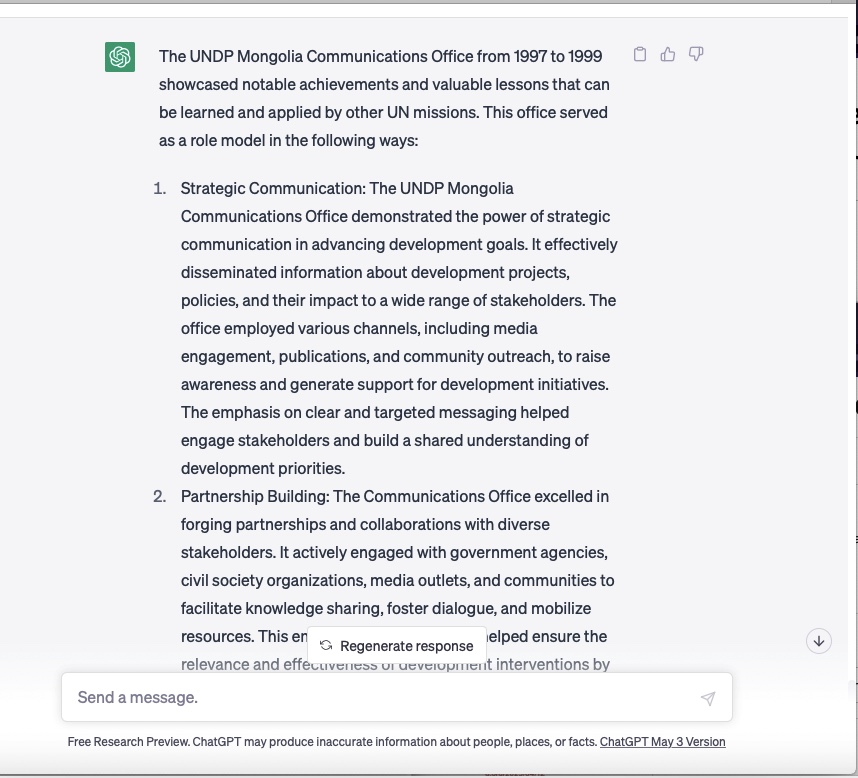
On the UNDP Mongolia Communications Office from 1997 to 1999:
“The UNDP Mongolia Communications Office from 1997 to 1999 showcased notable achievements and valuable lessons that can be learned and applied by other UN missions. This office served as a role model in the following ways:
Strategic Communication: The UNDP Mongolia Communications Office demonstrated the power of strategic communication in advancing development goals. It effectively disseminated information about development projects, policies, and their impact to a wide range of stakeholders. The office employed various channels, including media engagement, publications, and community outreach, to raise awareness and generate support for development initiatives. The emphasis on clear and targeted messaging helped engage stakeholders and build a shared understanding of development priorities.
Partnership Building: The Communications Office excelled in forging partnerships and collaborations with diverse stakeholders. It actively engaged with government agencies, civil society organizations, media outlets, and communities to facilitate knowledge sharing, foster dialogue, and mobilize resources. This emphasis on partnerships helped ensure the relevance and effectiveness of development interventions by integrating local knowledge, expertise, and perspectives.
Innovative Approaches: The UNDP Mongolia Communications Office embraced innovative approaches to communication. It leveraged emerging technologies, such as the internet and email, to enhance information dissemination and engagement with stakeholders. The office also utilized creative storytelling techniques, including visual media and documentaries, to effectively communicate complex development issues in a compelling and accessible manner. These innovative approaches enhanced the impact and reach of communication efforts.
Local Context Sensitivity: Recognizing the importance of contextual understanding, the Communications Office prioritized local knowledge and cultural sensitivity in its communication strategies. It adapted messages and approaches to align with Mongolian traditions, values, and communication preferences. This approach helped foster trust, engagement, and ownership among local communities, ensuring that development efforts were responsive to their needs and aspirations.
Results-Oriented Communication: The Communications Office was committed to highlighting the tangible results and impact of development projects. It effectively communicated success stories, best practices, and lessons learned, demonstrating the value and effectiveness of development interventions. By emphasizing the outcomes and benefits of development initiatives, the office strengthened accountability, generated public support, and inspired further action.
Knowledge Sharing and Learning: The UNDP Mongolia Communications Office actively promoted knowledge sharing and learning among stakeholders. It facilitated platforms for dialogue, exchange of experiences, and dissemination of research findings. By creating spaces for mutual learning and collaboration, the office fostered a culture of continuous improvement and innovation in development practices.
The achievements of the UNDP Mongolia Communications Office from 1997 to 1999 served as a role model for other UN missions by highlighting the importance of strategic communication, partnership building, innovative approaches, local context sensitivity, results-oriented communication, and knowledge sharing. These lessons can guide other UN missions in effectively engaging stakeholders, promoting development goals, and building sustainable partnerships for impactful and inclusive development.”
“The website www.un-mongolia.mn, first launched in 1997, is the official website of the United Nations (UN) in Mongolia. The significance of this website lies in its role as a platform for disseminating information, promoting transparency, and facilitating communication between the UN and Mongolia.
Here are some aspects that highlight the significance of the website:
Information hub: The website serves as a centralized source of information about the UN’s activities, programs, projects, and initiatives in Mongolia. It provides updates on various UN agencies working in the country, their areas of focus, and their contributions to development, humanitarian assistance, and other important issues.
Resource repository: The website likely hosts a wide range of resources such as reports, publications, research findings, and statistical data related to Mongolia’s development challenges and the UN’s efforts to address them. These resources are valuable for policymakers, researchers, and other stakeholders seeking information on specific topics.
Collaboration and partnerships: The website may feature information on partnerships and collaboration between the UN and the Government of Mongolia, as well as with civil society organizations, non-governmental organizations (NGOs), and other stakeholders. It serves as a platform for promoting dialogue, fostering partnerships, and sharing best practices in areas such as sustainable development, human rights, and social justice.
Public engagement: The website likely provides avenues for public engagement, allowing individuals and organizations to access information, participate in discussions, and contribute to the UN’s work in Mongolia. This engagement can take the form of feedback mechanisms, consultation processes, or opportunities to join initiatives or campaigns.
Promoting accountability and transparency: Through the website, the UN can demonstrate its commitment to transparency and accountability by sharing information about its activities, budgets, and results achieved in Mongolia. This helps to foster trust and ensure that the UN’s work aligns with the needs and priorities of the country.
Overall, the significance of the www.un-mongolia.mn website lies in its role as a vital platform for communication, information sharing, and collaboration between the UN and Mongolia. It contributes to the UN’s mission of supporting sustainable development, peace, and human rights in the country while promoting transparency and public engagement.”
On the GOSH Child Health Portal:
“The launch of the GOSH Child Health Portal in 2001 had a significant impact on child health information and support services. Developed by Great Ormond Street Hospital (GOSH) in London, the portal became a valuable resource for parents, caregivers, healthcare professionals, and researchers. Its impact can be seen in several key areas, including accessibility to reliable information, support for patients and families, collaboration among healthcare providers, and advancements in pediatric research and knowledge sharing.
One of the primary impacts of the GOSH Child Health Portal was the improvement in access to reliable and up-to-date information on child health. The portal provided a comprehensive and trustworthy source of medical information, covering a wide range of pediatric health conditions, treatments, and procedures. By offering easily accessible and understandable information, the portal empowered parents and caregivers to make informed decisions regarding the health and well-being of their children. It also served as a valuable resource for healthcare professionals seeking accurate and evidence-based information to support their clinical practice.
The GOSH Child Health Portal also had a significant impact on patient and family support. It provided a platform for families to access educational materials, guidance, and resources related to their child’s specific health condition. The portal offered practical advice, coping strategies, and support networks, helping families navigate the challenges associated with pediatric illnesses. By promoting patient and family empowerment, the portal contributed to improved outcomes and a higher quality of life for children and their families.
Furthermore, the GOSH Child Health Portal facilitated collaboration and knowledge sharing among healthcare providers. It served as a central hub for medical professionals to access clinical guidelines, research articles, case studies, and educational materials. The portal promoted interdisciplinary collaboration and best practices, allowing healthcare providers to stay updated on the latest advancements in pediatric healthcare. This shared knowledge and collaboration helped enhance the quality and effectiveness of care provided to children and facilitated the dissemination of best practices across healthcare settings.
The impact of the GOSH Child Health Portal extended beyond individual patients and healthcare professionals. It also contributed to advancements in pediatric research and knowledge sharing. The portal provided a platform for researchers to share their findings, publish articles, and engage in scientific discussions. By facilitating the exchange of research and clinical experiences, the portal promoted evidence-based practice and innovation in pediatric healthcare. It also helped bridge the gap between research and clinical application, ensuring that the latest discoveries were translated into improved care for children.
Additionally, the GOSH Child Health Portal had a broader societal impact by raising awareness and understanding of pediatric health issues. The portal’s educational resources and awareness campaigns helped increase public knowledge about childhood diseases, preventive measures, and the importance of early intervention. By fostering a better understanding of child health, the portal contributed to improved health outcomes and a more supportive environment for children with medical conditions.
In summary, the launch of the GOSH Child Health Portal in 2001 had a significant impact on child health information and support services. Its contributions included improved accessibility to reliable information, enhanced support for patients and families, facilitated collaboration among healthcare providers, and advancements in pediatric research and knowledge sharing. The portal’s comprehensive resources and user-friendly interface empowered parents, caregivers, and healthcare professionals, ultimately leading to improved health outcomes and a better quality of life for children with medical conditions.”
“The GOSH Child Health Portal, www.gosh.nhs.uk, first launched in 2001, holds significant importance in the field of child health and medicine. Here are some key aspects that highlight the portal’s significance:
Trusted source of information: The GOSH Child Health Portal is developed and maintained by Great Ormond Street Hospital (GOSH), one of the leading children’s hospitals in the United Kingdom. As such, it serves as a reliable and trusted source of information on various aspects of child health, including medical conditions, treatments, research, and patient care.
Comprehensive resource: The portal likely provides a wealth of information on pediatric diseases, conditions, and treatments, catering to healthcare professionals, patients, families, and the general public. It may include resources such as medical guidelines, research articles, educational materials, and multimedia content, offering a comprehensive knowledge base on child health.
Patient and family support: The GOSH Child Health Portal likely offers resources and information to support patients and their families in understanding medical conditions, treatment options, and managing healthcare needs. This can empower families to actively participate in their child’s care, make informed decisions, and access necessary support services.
Professional education and collaboration: The portal may serve as a platform for healthcare professionals to access educational resources, clinical guidelines, and research findings related to pediatric medicine. It could also facilitate collaboration and knowledge exchange among healthcare providers, fostering advancements in the field of child health.
Research and innovation: The GOSH Child Health Portal may feature information on ongoing research projects, clinical trials, and innovative practices in pediatric medicine. It can highlight breakthroughs, advancements, and emerging trends in child health, contributing to the overall improvement of pediatric care.
Global impact: While the portal is associated with GOSH, its online accessibility allows individuals and healthcare professionals worldwide to benefit from the information and resources provided. The portal’s global reach expands its significance by providing valuable support and knowledge to a wide audience.
Overall, the GOSH Child Health Portal is significant as a reliable source of information, support, and collaboration in the field of child health. It plays a vital role in improving the understanding, management, and treatment of pediatric conditions while empowering patients, families, and healthcare professionals with valuable resources and tools.”
On the Hannah Institute for the History of Medicine:
“The Hannah Institute for the History of Medicine … had a significant impact on the field of medical history. Although the institute’s existence was relatively short-lived, its contributions were noteworthy in terms of research, education, and the dissemination of historical knowledge. This article will explore the key initiatives and achievements of the Hannah Institute, shedding light on its impact.
One of the primary areas where the Hannah Institute made an impact was in research. The institute attracted scholars and researchers from various backgrounds, fostering interdisciplinary collaboration. Through its research programs, the institute facilitated investigations into significant medical historical topics. Scholars associated with the institute delved into archives, conducted oral history interviews, and analyzed primary sources to uncover valuable insights into the evolution of medical practices, theories, and institutions. Their work challenged conventional narratives and provided a more nuanced understanding of medical history.
The Hannah Institute also played a pivotal role in promoting education in the field of medical history. It offered specialized courses and workshops that catered to students and professionals interested in expanding their knowledge. These educational programs provided a platform for participants to engage with cutting-edge research, explore historical methodologies, and develop critical analytical skills. By equipping individuals with a deeper understanding of medical history, the institute empowered them to make meaningful contributions to the field through their own research and scholarship.
In addition to research and education, the Hannah Institute actively sought to disseminate historical knowledge to a wider audience. Through conferences, symposiums, and public lectures, the institute facilitated the exchange of ideas and fostered dialogue between scholars, practitioners, and the general public. These events not only highlighted the importance of medical history but also stimulated interdisciplinary collaborations that transcended traditional academic boundaries. By creating a platform for knowledge sharing, the institute contributed to the public’s awareness and appreciation of the historical underpinnings of medicine.
Furthermore, the Hannah Institute supported and encouraged the production of scholarly articles, books, and other research outputs. Its commitment to publishing ensured the dissemination of valuable findings and insights. By supporting research and scholarly publications, the institute enhanced the visibility and impact of medical history as a discipline. It also contributed to the preservation of historical knowledge for future generations.
The impact of the Hannah Institute extends beyond its operational years. The initiatives and research projects undertaken during this period laid the foundation for subsequent advancements in the field of medical history. Scholars associated with the institute went on to make significant contributions to the discipline, furthering the understanding of medical history through their continued research and scholarship. The institute’s legacy can be seen in the ongoing work of these scholars and the continued growth of the field.
The Hannah Institute for the History of Medicine, although short-lived, made a lasting impact on the field of medical history. Through its research programs, it expanded the knowledge and understanding of medical practices, theories, and institutions. Its educational initiatives equipped individuals with the tools to contribute meaningfully to the discipline. By disseminating historical knowledge and fostering interdisciplinary collaborations, the institute raised awareness and appreciation of the historical underpinnings of medicine. The Hannah Institute’s dedication to research, education, and knowledge dissemination continues to shape the field of medical history and inspire future generations of scholars.”

















 David South Consulting
You must be logged in to post a comment.