Tag: UNDP

  • Philippine Conference Tackles Asia’s AIDS Crisis

    Philippine Conference Tackles Asia’s AIDS Crisis

    Mongolians attend for first time

    By David South

    UB Post (Ulaanbaatar, Mongolia), October 28, 1997

    Manila, Philippines – More than 2,500 delegates have gathered in the steamy hot Philippine capital to renew the fight against HIV and AIDS.

    Working up a sweat alongside other participants at the Fourth International Congress on AIDS in Asia and the Pacific are nine Mongolians – a first that isn’t going unnoticed.

    The Congress opened Saturday (October 25) to the pounding beat of a theme song performed by teenagers, championing defiance of death and celebration of life.

    That tone was echoed by Dr Peter Piot, executive director of UNAIDS, the Joint United Nations Programme on HIV/AIDS. He said the epidemic can be slowed down with the right public health measures – a positive message for Mongolia as it grapples with an STD crisis that many believe leaves the country at risk of an HIV/AIDS epidemic.

    The magnitude of that epidemic outside Mongolia is startling. Around the world, 23 million people are infected with HIV, the virus that causes AIDS. Between 5 and 7 million of them live in the Asia/Pacific region.

    “The point is that prevention is feasible,” Piot told the Congress. “The results can be seen in those countries in the Asia-Pacific region where the epidemic has stalled or is in retreat.

    “A good indicator for unsafe sexual behaviour is the STD rate. I am impressed at the sustained decline in STD rates in Australia, Hong Kong, Singapore and Thailand over the past decade.

    “But I am concerned actual declines in HIV in this region have occurred only in Australia, New Zealand and Thailand.”

    The countries to Mongolia’s immediate south and north are experiencing exploding health crises. In China, HIV/AIDS is increasing at a rapid rate due to factors including growing prostitution, drug use and travel – all by-products of a booming economy. The infected population is estimated at 400,000 and is expected to reach 1.2 million by the year 2000, according to China’s national AIDS committee.

    To the north in Russia, a complete collapse in the public health system has dramatically slashed life expectancy and led to an upsurge in many diseases, including tuberculosis and HIV/AIDS.

    With many Mongolians doing business in both these countries, there are numerous opportunities for AIDS to enter the country.

    A wide range of topics is under discussion at the gathering, with women, youth and STD-control measures of particular interest to the Mongolian delegates.

    For the Mongolians, the Congress is an opportunity to learn from other countries’ successes and failures in the fight against AIDS.

    Mongolia’s nine-member delegation includes four doctors – Dr K. Davaajav, head of the AIDS/STD Department of the Research Centre for Infectious Diseases, Health Ministry representative Dr S. Enkhbat. Medical University director Dr Lkhagvasuren and Dr Darisuren from the United Nations Population Fund.

    Also in the team are Democrat MPs B. Delgermaa and Saikhanbileg, UNICEF’s B. Bayarmaa and two representatives from women’s NGOs: S. Tsengelmaa from the Women’s Information and Research Centre and N. Chinchuluun, executive director of the Mongolian Women Lawyers Association.

    On Sunday, several presentations focused on the difficulties of getting people to use condoms.

    In Fiji, studies found the majority of the population was aware of AIDS and had access to condoms, but still chose not to use them.

    Lisa Enriquez, a Filipino woman who is HIV-positive, gave a sobering speech on the epidemic.

    “One of the most important things I’ve learned from the epidemic is human nature. AIDS is such a humanizing disease. It reminds us of being human, complete with all the weaknesses and imperfections of being human.

    “Let us not kid ourselves: changing behaviour is not easy. One doesn’t change because somebody tells him or her to do so.

    “We will need to get our act together, institutionalize our efforts and continue working harder with passion and perserverance.”

    The Congress continues until October 30.

    More on the Congress here: Fourth International Congress on AIDS in Asia and the Pacific

    “The Fourth International Congress on AIDS and Asia in the Pacific convened 3,000 scientists, people working in the communities, and people living with HIV/AIDS to discuss the state of AIDS in Asia and the Pacific and how the problem is being addressed now and into the future. The following topics addressed at the Congress are explored: the extent of the HIV epidemic, HIV risk behaviors, women and HIV, clinical manifestations of HIV infection, antiretroviral therapy, and perinatal HIV transmission. HIV is spread differently among these countries and a nation’s wealth largely determines its ability to execute prevention programs and patient access to therapy. Most patients in Asia pay for their own medications. It is hoped that more prosperous and technologically advanced nations will demonstrate stronger leadership and commitment in the fight against AIDS in the region.” Phanuphak P. Fourth International Congress on AIDS in Asia and the Pacific. J Int Assoc Physicians AIDS Care. 1998 Feb;4(2):22-5. PMID: 11365085.

    More on HIV/AIDS:

    https://davidsouthconsulting.org/2020/12/18/feds-call-for-aids-blood-system-inquiry-some-seniors-infected/

    https://davidsouthconsulting.org/2020/12/17/lamas-against-aids/

    https://davidsouthconsulting.org/2017/08/15/mongolian-aids-bulletin/

    https://davidsouthconsulting.org/2022/10/31/rainforest-rubbers-save-lives/

    Creative Commons License

    This work is licensed under a
    Creative Commons Attribution-Noncommercial-No Derivative Works 3.0 License.

    ORCID iD: https://orcid.org/0000-0001-5311-1052.

    © David South Consulting 2023
  • African Farming Wisdom Now Scientifically Proven

    African Farming Wisdom Now Scientifically Proven

    By David SouthDevelopment Challenges, South-South Solutions

    SOUTH-SOUTH CASE STUDY

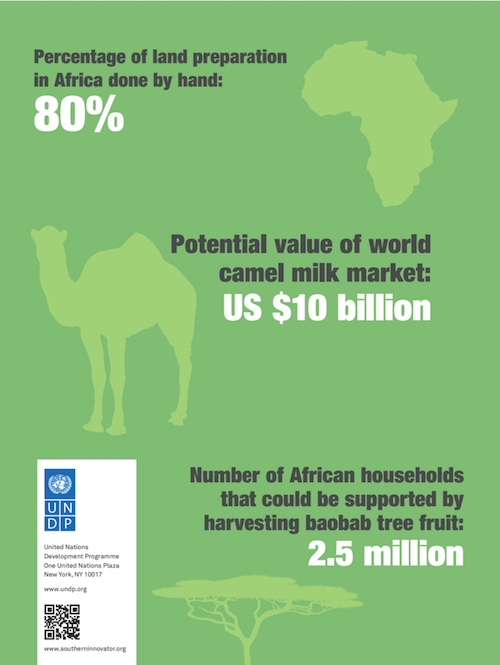
    Increasing the agricultural productivity of Africa is critical for the continent’s future development, and the world’s. Two-thirds of Africans derive their main income from agriculture, but the continent has the largest quantity of unproductive – or unused – potential agricultural land in the world.

    This means the continent has the potential to become the world’s new breadbasket – but there is a problem. A report by the International Centre for Soil Fertility and Agriculture (IFDC) found the continent had a “soil health crisis” and that three-quarters of its farmlands were severely degraded (New Scientist). The causes of this crisis include overuse of the same plot of land due to population growth, which prevents farmers moving around, and high fertilizer costs, leading to African farmers using just 10 per cent of the world average on their farms.

    But a new study shows that an existing practice by some African farmers could help solve this dilemma if it was adopted by the majority.

    At the University of Sydney in Australia, a study has confirmed the effectiveness of ants and termites as a tool to increase farm yields in dry areas. It found ants and termites in drier climates of the global South improved soil conditions just as earthworms do in northern, wetter and colder climates. Both termites and ants, by burrowing their way through the soil, carve out tunnels that make it easier for plants to shoot their roots outwards in search of water.

    In field experiments, ants and termites helped raise wheat yields by 36 per cent by increasing water and nitrogen absorption. This is critical for agriculture in arid climates.

    While termites wreak havoc on crops such as maize (corn) and sugarcane, they are very useful for other African crops.

    The Australian research found termites infuse nitrogen into the soil. Nitrogen is usually dumped on fields with expensive fertilizers that are subject to market fluctuations. The termites have nitrogen-heavy bacteria in their stomachs, which they excrete into the soil through their faeces or saliva.

    The research also found termites helped with reducing water wastage.

    This research reinforces what has long been known to some African farmers. Long-held farmer tradition in parts of West Africa uses termites to enhance soil by placing wood on the earth to attract them. By burying manure in holes near newly planted grains, farmers in Burkina Faso attract termites to the soil.

    In Malawi, bananas are planted near termite mounds to encourage the creatures. In southern Zambia, soil from termite nests is harvested and used as top soil on agricultural land.

    If more farmers adopted this practice, Africa could simultaneously address its chronic malnutrition and hunger problem and contribute to the world’s food needs. As the McKinsey Global Institute (MGI) found, “With 60 percent of the world’s uncultivated arable land and low crop yields, Africa is ripe for a ‘green revolution’ like those that transformed agriculture in Asia and Brazil.”

    McKinsey estimated that Africa’s agricultural output could increase from US $280 billion a year now to US $500 billion by 2020 and as much as US $880 billion by 2030.

    The UN recently declared that the world’s population has reached 7 billion. That is many mouths to feed and presents Africa with a dilemma and an opportunity.

    And as urban growth accelerates across the global South – the world is now a majority urban place – there is a huge profit to be made from providing food to growing urban populations.

    The time to act is now, as there have been reports from African farmers that they are seeing harvests declining by 15 to 25 per cent. And the picture gets gloomier: many farmers think their harvests will drop by half over the next five years.

    Given that there are 2,600 different species of termites now recognised in the world (UNEP) and with over 660 species, found in Africa, it is by far the richest continent in termite diversity (Eggleton 2000) and they are proof that an affordable solution is close at hand to the current crisis.

    Published: January 2012

    Resources

    1) World Vegetable Center: The World Vegetable Center is the world’s leading international non-profit research and development institute committed to alleviating poverty and malnutrition in developing countries through vegetable research and development. Website:http://www.avrdc.org

    2) Songhai Centre: a Benin-based NGO that is a training, production, research, and development centre in sustainable agriculture. Website:http://www.songhai.org/english

    3) Marketing African Leafy Vegetables: Challenges and Opportunities in the Kenyan Context by Kennedy M. Shiundu and Ruth. K. Oniang. Website:http://www.ajfand.net/Issue15/PDFs/8%20Shiundu-IPGR2_8.pdf

    4) 2050: Africa’s Food Challenge: Prospects good, resources abundant, policy must improve: A discussion paper from the Food and Agricultural Organization (FAO). Website:http://www.fao.org/wsfs/forum2050/wsfs-background-documents/issues-briefs/en

    5) African Alliance for Capital Expansion: A management consultancy focused on private sector development and agribusiness in West Africa. Website:http://www.africanace.com/v3

    6) Ants and termites increase crop yield in a dry climate by Theodore A. Evans, Tracy Z. Dawes, Philip R. Ward and Nathan Lo, Nature Communications 2, Article number: 262

    7) Integrating Ethno-Ecological and Scientific Knowledge of Termites for Sustainable Termite Management and Human Welfare in Africa by Gudeta W. Sileshi et al, Ecology and Society, Volume 14, Number 1. Website:http://www.ecologyandsociety.org/vol14/iss1/art48

    8) State of the World 2011: Innovations that Nourish the Planet. Website: http://www.worldwatch.org/sow11

    9) Soil health crisis threatens Africa’s food supply. Website:http://www.newscientist.com/article/dn8929-soilhealth-crisis-threatens-africas-food-supply.html

    Creative Commons License

    This work is licensed under a
    Creative Commons Attribution-Noncommercial-No Derivative Works 3.0 License.

    ORCID iD: https://orcid.org/0000-0001-5311-1052.

    © David South Consulting 2023

  • Cyber Cities: An Oasis of Prosperity in the South

    Cyber Cities: An Oasis of Prosperity in the South

    By David SouthDevelopment Challenges, South-South Solutions

    SOUTH-SOUTH CASE STUDY

    The future is arriving in the South even faster than many think: so-called “cyber cities” are being created to become this century’s new Silicon Valleys. Well-known ‘cyber cities’ like India’s Hyderabad and Bangalore have been joined by many other cities across the global South. But two places are set to make big waves with their ambition and drive in 2008: Mauritius and China.

    Mauritius, an island in the Indian Ocean strategically close to Africa, better known for tourism and luxury hotels, wants to become the world’s “cyber island”. Armed with the first 3G network in Africa (the third generation of mobile phone technology – offering high-speed internet access and video telephony), Mauritius is moving fast to make good on this advantage. And it is even moving to the next level of mobile-phone speed, something called High-speed Download Packet Access (HSDPA) – allowing even greater quantities of information to be exchanged.

    Mauritius joins a select few countries, including Japan and South Korea, at the forefront of access to 3G. Wireless – or wi-fi – computer access is available in three-quarters of the island.

    Outside the capital of Port Louis, former sugar cane plantations are being turned into a “cyber city”. The centrepiece of the development is the 12-story Cyber Tower, home to young technology start-ups. The country is also investing heavily in education from primary school to university, to make sure the country’s 1.2 million people are cyber-ready.

    Computer novices in remote villages are being visited by a Cyber Caravan with a classroom teaching housewives, children, the unemployed and the disabled basic computing and world processing.

    Mauritius built its wealth on tourism, sugar plantations and textile manufacturing. But it is worried that trading arrangements that helped the sugar and textile industries to flourish, will be taken away. So it is focusing on the future: it sees itself as the world centre for disaster recovery computing services for the world’s companies in event of a disaster in their own country that destroys computer networks.

    In China, its largest Cyber Park is under construction in Wujin New and High-tech Development Zone of Changzhou. It will be a technology incubator, a research and development centre, and a place for small and medium-sized enterprises to innovate.

    What is truly making people stop and think is another far-reaching project: the Beijing Cyber Recreation District (CRD) – China’s most ambitious digital media industry development: a virtual worlds’ initiative with digital media academies and company incubators. It is spread over 100 square kilometres, creating the world’s largest virtual world development. It is already home to more than 200 game and multimedia content producers in western Beijing.

    The CRD says its goal is “to create a virtual economy providing infrastructure and platforms through which any business – not just those based in China – can come in and sell their real-world products and services. While a concerted effort will be placed on bringing Chinese businesses and consumers in, the effort is worldwide and open to businesses and consumers from any country.”

    The idea is to create a vast virtual economy for commerce where manufacturers can directly connect with billions of customers – bypassing middlemen.

    It claims it will be “the world’s one-stop shop for customers and producers.” It will host billions of avatars – or virtual people – surpassing the capability of the very popular Second Life virtual world game’s 40,000.

    Published: January 2008

    Resources

    • The Atlas of Ideas is an 18-month study of science and innovation in China, India and Republic of Korea Korea, with a special focus on new opportunities for collaboration with Europe. It is a comprehensive account of the rising tide of Asian innovation. Special reports on China, India and Korea, introducing innovation policy and trends in these countries can be downloaded for free.
    • The Cyber Cities Reader: the first book to bring together a
      vast range of debates and examples of ICT-based city changes.
    • Entrepreneurship Development Institute of India
    • Innovation China: A website linking all stories on the fast-breaking world of Chinese innovation.

    https://davidsouthconsulting.org/2022/02/09/african-health-data-revolution/

    https://davidsouthconsulting.org/2020/12/04/big-data-can-transform-the-global-souths-growing-cities/

    https://davidsouthconsulting.org/2020/04/25/china-looking-to-lead-on-robot-innovation/

    https://davidsouthconsulting.org/2020/12/10/china-sets-sights-on-dominating-global-smartphone-market/

    https://davidsouthconsulting.org/2021/03/20/computer-gold-farming-turning-virtual-reality-into-real-profits/

    https://davidsouthconsulting.org/2020/12/04/data-surge-across-global-south-promises-to-re-shape-the-internet/

    https://davidsouthconsulting.org/2021/01/26/designed-in-china-to-rival-made-in-china/

    https://davidsouthconsulting.org/2017/11/08/eco-cities-up-close-2013/

    https://davidsouthconsulting.org/2020/12/11/false-data-makes-border-screening-corruptible/

    https://davidsouthconsulting.org/2022/09/28/model-cities-across-the-south-challenge-old-ways/

    https://davidsouthconsulting.org/2022/10/04/popular-chinese-social-media-chase-new-markets/

    https://davidsouthconsulting.org/2017/11/08/smart-cities-up-close-2013/

    https://davidsouthconsulting.org/2021/02/18/what-is-the-un-doing-with-your-data/

    Check out award-winning cyber and digital work here: http://www.davidsouthconsulting.com/blog/2020/2/26/awards-1998-2003-february-2020.html

    More stories on cyber innovation from e-newsletter Development Challenges, South-South Solutions and magazine Southern Innovator

    China Sets Sights on Dominating Global Smartphone Market

    China Looking to Lead on Robot Innovation

    Crowdsourcing Mobile Phones To Make The Poor Money

    Mobile Phones: Engineering South’s Next Generation of Entrepreneurs

    Development Challenges, South-South Solutions was launched as an e-newsletter in 2006 by UNDP’s South-South Cooperation Unit (now the United Nations Office for South-South Cooperation) based in New York, USA. It led on profiling the rise of the global South as an economic powerhouse and was one of the first regular publications to champion the global South’s innovators, entrepreneurs, and pioneers. It tracked the key trends that are now so profoundly reshaping how development is seen and done. This includes the rapid take-up of mobile phones and information technology in the global South (as profiled in the first issue of magazine Southern Innovator), the move to becoming a majority urban world, a growing global innovator culture, and the plethora of solutions being developed in the global South to tackle its problems and improve living conditions and boost human development. The success of the e-newsletter led to the launch of the magazine Southern Innovator.  

    Follow @SouthSouth1

    Google Books: https://books.google.co.uk/books?id=dKaXBgAAQBAJ&dq=Development+Challenges+January+2008&source=gbs_navlinks_s

    Slideshare: http://www.slideshare.net/DavidSouth1/development-challengessouthsouthsolutionsjanuary2008issue

    Southern Innovator Issue 1: https://books.google.co.uk/books?id=Q1O54YSE2BgC&dq=southern+innovator&source=gbs_navlinks_s

    Southern Innovator Issue 2: https://books.google.co.uk/books?id=Ty0N969dcssC&dq=southern+innovator&source=gbs_navlinks_s

    Southern Innovator Issue 3: https://books.google.co.uk/books?id=AQNt4YmhZagC&dq=southern+innovator&source=gbs_navlinks_s

    Southern Innovator Issue 4: https://books.google.co.uk/books?id=9T_n2tA7l4EC&dq=southern+innovator&source=gbs_navlinks_s

    Southern Innovator Issue 5: https://books.google.co.uk/books?id=6ILdAgAAQBAJ&dq=southern+innovator&source=gbs_navlinks_s

    https://davidsouthconsulting.org/2021/03/05/southern-innovator-issue-1/

    https://davidsouthconsulting.org/2021/03/05/southern-innovator-issue-4/

    Creative Commons License
    This work is licensed under a
    Creative Commons Attribution-Noncommercial-No Derivative Works 3.0 License.

    ORCID iD: https://orcid.org/0000-0001-5311-1052.

    © David South Consulting 2023

  • Data Surge across Global South Promises to Re-shape the Internet

    Data Surge across Global South Promises to Re-shape the Internet

    By David SouthDevelopment Challenges, South-South Solutions

    SOUTH-SOUTH CASE STUDY

    The deluge of data gathered by the digital revolution underway in the global South continues to offer a significant economic opportunity. How this data is harvested will forge the successful Internet business models of the future.

    As the Internet spreads its way further across the global South, many are forecasting this new surge in web users and the data they generate will radically reshape the way people engage with and use the Internet. Unlike previous generations of web users, most of these new users will be accessing the Internet primarily with mobile phones and other devices, rather than computers. Many will not be native English speakers.

    Argentinian philosopher and digital publisher Octavio Kulesz says “the digital experiences undertaken in the South suggest that new technologies represent a great opportunity for developing countries … but on the condition that local entrepreneurs seek out original models adapted to the concrete needs of their communities.”

    In a report for the International Alliance of Independent Publishers, Kulesz said we “must ask ourselves how useful it would be to reproduce the prototypes from the North in the South.”

    According to the Cisco Visual Networking Index Forecast (2010-2015), by 2015, there will be 3 billion Internet users in the world: 40 percent of the global population. Internet Protocol (IP) traffic is growing fastest in Latin America, where it is forecast to grow by 50 percent from 2010 to 2015. Next are the Middle East and Africa.

    There are already as many networked devices – tablets, mobile phones, connected appliances and smart machines – on the planet as people. By 2015 – the year of the Millennium Development Goals (http://www.un.org/millenniumgoals) – they’ll outnumber people by two to one.

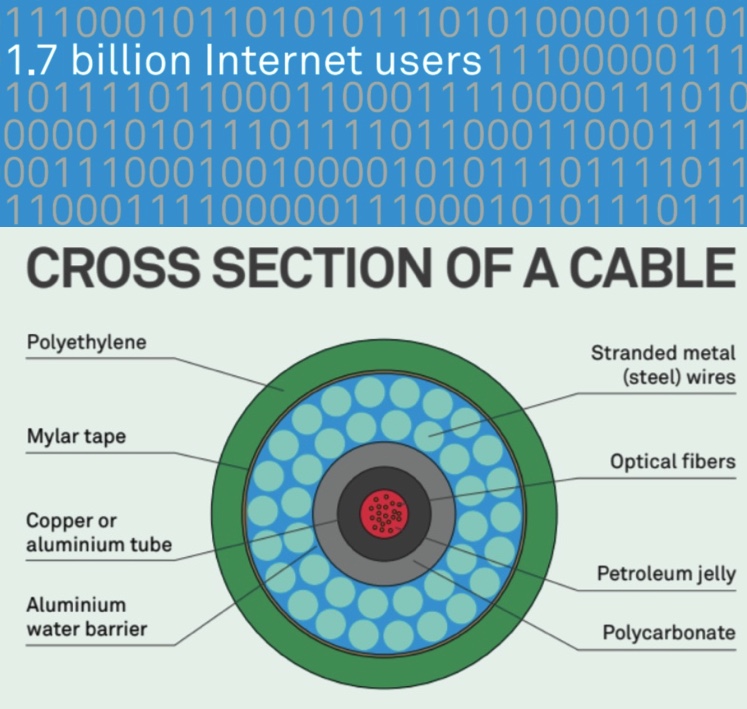
    The potential of the Internet revolution is especially compelling in Africa, a continent neglected for so long in the global communications revolution. The 10,000 kilometre-long East African Submarine Cable System (EASSy), connecting sub-Saharan Africa with Europe and Asia, has joined other cables from the continent. Gradually, the infrastructure is coming in to place to connect Africa properly to the world.

    The first batch of Internet users came from the United States, home of the Internet which grew out of the US military’s Arpanet system (http://en.wikipedia.org/wiki/ARPANET). This first wave of the Internet’s history was very much an American phenomenon. The priorities and content of the web were driven by the cultural and economic concerns of its American users. And the big brands of today’s web reflect this: Google, Facebook, eBay, Twitter, Yahoo, WordPress, to name a few.

    As the web expanded across wealthy, developed nations in Europe, users mostly mimicked the priorities of the American approach, using the web to express themselves, be entertained, share files, access government services and sell and market products and services.

    But the spread of the Internet across the global South is already showing itself to have a different character and set of priorities. One change is in the way people are accessing the web: through mobile phones and other devices, rather than through laptops and personal computers.

    In the future, the trend is towards a global mobile world, in which the communications medium will favour video and audio over text, according to Fast Company magazine (http://www.fastcompany.com). Information is being shared across boundaries on a vast scale for the first time. People around the world are gaining access to data and information never available before, and all of it is nearly instantaneous.

    Kulesz said countries of the South face a profound and difficult decision: follow the lead taken by the technology pioneers of the South, or try and replicate what was done in the North?

    “Sooner or later, these countries will have to ask themselves what kind of digital publishing highways they must build,” his report said, “and they will be faced with two very different options: a) financing the installation of platforms designed in the North; b) investing according to the concrete needs, expectations and potentialities of local authors, readers and entrepreneurs. Whatever the decision of each country may be, the long-term impact will be immense.”

    The costs of trying to replicate the technological infrastructure of the North makes little sense, when it is technologically possible to bypass this costly infrastructure with even newer work-arounds.

    “Of course, it would be extraordinary to obtain 80 percent Internet penetration in Africa or make huge investments in infrastructure throughout the developing regions,” continues Kulesz, “but that may never happen. And in the event that it does occur some day, by then the industrialized countries will no doubt have made another technological leap, meaning that the disparity in infrastructure would still persist. So the most effective option is to start working right now, with what is available.”

    New global magazine Southern Innovator (http://www.scribd.com/doc/57980406/Southern-Innovator-Issue-1), published by UNDP’s Special Unit for South-South Cooperation, captures how this process is happening, as the people of the global South re-shape the Internet to be their own and to meet their needs.

    Published: August 2011

    Resources

    1) Southern Innovator: New global magazine first issue gives a snapshot of the big changes across the global South in mobile phones and information technology. Website:http://www.scribd.com/doc/57980406/Southern-Innovator-Issue-1

    2) Cisco Visual Networking Index Forecast (2010-2015): The annual Cisco VNI Forecast was developed to estimate global Internet Protocol traffic growth and trends. Widely used by service providers, regulators, and industry influencers alike, the Cisco VNI Forecast is based on in-depth analysis and modelling of traffic, usage and device data from independent analyst forecasts. Website:http://newsroom.cisco.com/press-release-content?type=webcontent&articleId=324003

    3) Digital Publishing in Developing Countries: A report by the International Alliance of Independent Publishers. Website: http://alliance-lab.org/etude/archives/date/2010/01?lang=en

    https://davidsouthconsulting.org/2022/02/09/african-health-data-revolution/

    https://davidsouthconsulting.org/2020/12/04/big-data-can-transform-the-global-souths-growing-cities/

    https://davidsouthconsulting.org/2020/12/11/false-data-makes-border-screening-corruptible/

    https://davidsouthconsulting.org/2022/09/27/india-2-0-can-the-country-make-the-move-to-the-next-level/

    https://davidsouthconsulting.org/2022/10/31/mapping-beirut-brings-city-to-light/

    Development Challenges, South-South Solutions was launched as an e-newsletter in 2006 by UNDP’s South-South Cooperation Unit (now the United Nations Office for South-South Cooperation) based in New York, USA. It led on profiling the rise of the global South as an economic powerhouse and was one of the first regular publications to champion the global South’s innovators, entrepreneurs, and pioneers. It tracked the key trends that are now so profoundly reshaping how development is seen and done. This includes the rapid take-up of mobile phones and information technology in the global South (as profiled in the first issue of magazine Southern Innovator), the move to becoming a majority urban world, a growing global innovator culture, and the plethora of solutions being developed in the global South to tackle its problems and improve living conditions and boost human development. The success of the e-newsletter led to the launch of the magazine Southern Innovator.

    https://davidsouthconsulting.org/2021/03/05/southern-innovator-issue-1/

    Creative Commons License

    This work is licensed under a
    Creative Commons Attribution-Noncommercial-No Derivative Works 3.0 License.

    ORCID iD: https://orcid.org/0000-0001-5311-1052.

    © David South Consulting 2023