Categories
Archive Birkbeck University of London Blogroll

A Steppe Back?: Economic Liberalisation And Poverty Reduction In Mongolia

Paper delivered to the School of Politics and Government, Birkbeck College, University of London, London, UK, 2000

“… the neo-liberal claim that transition is most successful in situations where state organs wither away is highly problematic. The state, it seems, is required as a fundamental regulatory formation in transition (Pickles and Smith 1998: 15).”

By David South

This paper will explore the profound weaknesses of economic liberalisation as a tool of poverty reduction in the developing world. I have chosen to explore the experience of the Northeast Asian nation of Mongolia; a country sandwiched between Russia and China which has been held up as an example of how economic liberalisation policies and strong personal freedoms can help a country make the transition from a command-based Communist country to free markets and democracy (UNDP Mongolia: The Guide 1997-1999). I argue that the slate of policies that constitute economic liberalisation (or “shock therapy”) in the 1990s – privatisation, price liberalisation and a free-floating currency – are, by themselves, poor mechanisms for the alleviation of poverty; that in fact they increase poverty rates and leave a legacy of weak institutions that are either unwilling to, or incapable of, helping the poor. The author will also draw on firsthand evidence gained while working in the United Nations mission in Mongolia for two years.

Economic liberalisation policies have been inhibited from alleviating poverty by the cultural legacy of Mongolia’s economic development, which has de-emphasised private property and a money-based economy and placed a high emphasis on wealth being held in herds of animals and goods exchanged by barter.

Mongolia, with its relative isolation and small population of 2.4 million (Human Development Report Mongolia 2000: 55), has been seen as a self-contained petri dish by economic liberalisers hoping to incubate a robust transition to free markets and democracy that can serve as an example to other post-Communist states.

Mongolia’s journey towards neo-liberal ideas is unique. Unlike many other developing nations, Mongolia’s lively democratic movement that emerged at the end of the 1980s actively sought out these policies, and has enjoyed strong and widespread public support for them (though this has ebbed and flowed with the economic fortunes of the country). The 1996 election was fought and won by the Democratic Coalition based on these policies; the Coalition won 50 of the 76 seats in Mongolia’s parliament, and voter turnout was more than 90 per cent (Far Eastern Economic Review 1997: March 27). Thus, this is not a case of international institutions forcing upon a country policies against its wishes: the door was opened and the economic liberalisers were effectively invited in for a big bowl of fermented mare’s milk.

However, it is also a country in which economic liberalisation has failed to deliver anticipated reductions in poverty for the majority of the population, and a strong case exists that it has made things worse.

As the Human Development Report Mongolia 2000 states:

In recent years however, the predominant vision has been neo-liberal. Backed by some international donors, reformers have argued that the best thing the state can do is to largely withdraw from the economy – by rapidly privatising state enterprises, and dismantling as many regulations and controls as possible, and allowing market forces to determine the production and allocation of goods and services. (Human Development Report Mongolia 2000: 13)

Liberalisation policies in Mongolia: A potted history

With the fall of the Soviet Union at the beginning of the 1990s, Mongolia woke up to find itself without its financial benefactor for most of the 20th century, Russia, and in the grip of a severe economic decline (Rossabi 2000: 9).

But a new “big brother” was at hand. In 1991, economic liberaliser Jeffrey Sachs arrived in Mongolia (Fortune 1998: December 7). The arrival of Sachs and his ideas were to have a profound impact on the lives of Mongolians. He gathered a group of well-educated Mongolian economists to test economic liberalisation theories.

Smith and Swain neatly summerise the source of economic ideas for the transition states:

The roles played by Francis Fukuyama (1992), formerly of the US State Department, and Jeffrey Sachs (1990), as policy adviser … translated this agenda into the all too familiar programme of so-called ‘shock therapy’. Shock therapy has been based on the view that capitalism could be … imposed by fiat and that the unleashing of the power of capital will inevitably allow the institutions, regulations, habits and practices associated with the ‘normal’ functioning of a capitalist market economy to emerge (Smith and Swain 1998)

The economic liberalisation project in Mongolia can be split into two distinct phases. The first more tentative phase under the Communist government extended from 1990 to 1992 and included privatisation of some state firms, the issuing of stock-market vouchers to most of the population and a failed attempt to enter the foreign currency markets (as a result of which 80 per cent of the country’s reserves were lost). This phase coincided with a new constitution, democratic elections and significant improvements in personal freedoms.

The economic liberalisation project encountered serious difficulties from the start, and when all aid and subsidies from the Soviet Union were removed, the economy collapsed, with inflation spiralling to 320 per cent (Human Development Report Mongolia 2000: 13). Pro-economic liberalisation factions in the Communist government lost influence and the reforms stalled from 1992 until 1996, when they were re-started with a vengeance with the election of the Democratic Coalition. The Coalition was assembled from a hitherto fragmented opposition by the Washington-based International Republican Institute and mimicked the policies of the American Republican Party, including distributing a Newt Gingrich-style “Contract with the Mongolian Voter.”

The second phase of reforms, under Democratic Coalition Prime Minister M. Enkhsaikhan, was launched with the removal of price controls on fuel and electricity, increasing prices by 50 per cent (Rossabi 2000: 11). This phase of economic liberalisation also ran into difficulties, but its most successful policy achievements have been the privatisation of public housing, the removal of trade tariffs and the reining in of inflation.

Poverty and economic liberalisation

Prior to the introduction of economic liberalisation, there was no extreme poverty in Mongolia, though it is difficult to gauge relative poverty since this information was not gathered. Rossabi notes, however, an extensive public welfare system was spread throughout the country:

The Mongol economy required substantial subsidies from the Soviet Union. This command economy produced inefficient industries, few consumer goods, and scant increases in the size of the Mongol herds. The one-party system limited dissent and contributed to human rights abuses. On the other hand, the government provided extensive medical, educational, and welfare benefits to the young, women, the elderly, and indeed much of society. A growth in population, a longer life span, and high rate of literacy were byproducts of such state policies. (Rossabi 2000: 6)

All research data has shown an increase in poverty levels for a large portion of the population after 1990. Estimates vary wildly, but the United Nations Development Programme reports that 38.4 per cent of urban dwellers – and 32.6 per cent of rural residents – were poor in 1998 (Human Development Report Mongolia 2000: 23). School attendance is down, regional disparities have become more extreme, with the capital experiencing a boom fuelled by international aid (this totalled US $180 million in 1998 (Mongolia Update 1999: 27) and an expanding service sector. Provincial towns and smaller communities have seen local state-run businesses collapse, communications weaken, and a leaching of the population, either to the countryside to herd animals or to the capital to seek work.

To cite one graphic anecdotal example of the process, a consulant for the Asian Development Bank told a 1998 donor agencies meeting of the irony of going into former factory towns, and telling the well-educated residents to turn to small crafts and itinerant vegetable growing rather than restarting the existing factory.

Mongolia’s transition: theoretical dilemmas

As Pickles and Smith note in their work of political economy Theorising Transition: the Political Economy of Post-Communist Transformations, it is a profound mistake to ignore the distinctive evolution of each of the former Communist states. Mongolia’s attempts at transition to a market economy have been deeply marked by its cultural legacy, in spite of attempts to transcend this. While Ohmae may assert that “This movement up the ladder of development has nothing to do with culture and everything to do with the region’s ability to put the right policies, institutions, and infrastructure in place at the right time (Ohmae 1994: 21),” culture is crucial. It is simplistic to depend on a “stock set of policies to enable the supposed transition to capitalism at the end of the twentieth century to be achieved (Pickles and Smith 1998: 10).”

As Pickles and Smith add about post-Communist Eastern Europe:

Treating post-communist Eastern Europe as a whole fails to recognise the ever-present diversity of some 27 states and 270 million people. Even at the end of the nineteenth century, such political-economic diversity was central to what was unfolding in the region … The diversity of historical experiences was replicated under state socialism, and while we would not argue for some form of historical determination, the state socialist economy in part relied upon these spatial divisions of labour and forms of social organization and institutionalised practices, albeit that large-scale attempts at forced industrialisation were made to eradicate the legacies of ‘peasant societies’ and uneven capitalist development. (Pickles and Smith 1998: 12)

Historically, Mongolia had never experienced capitalism, even in its most basic and embryonic form. Prior to the 1921 revolution which made Mongolia the world’s second Communist country, the vast majority of its citizens were divided between two occupations: nomadic herding, and the herding of souls as Buddhist monks. There was a small trading community, including a tiny community of Jewish traders – a legacy of the long-gone silk route that once plied its way through the Mongol Empire. But modern, urban, industrial capitalism as was present at this time in Europe was nonexistent in Mongolia. Concepts of capitalism, market economics and private property were introduced anew after 1990.

Urbanisation, modernisation and industrialisation were wholly communist concepts in Mongolia prior to 1990. The traditional nomadic way of life measures wealth in terms of the size of the herd and places a high value on the ability to roam unencumbered by private property divisions and the ability to trade animals for other goods (though these needs are simple since a nomadic herder can only carry around a limited quantity of possessions).

Economic liberalisation policies have, ironically, only exacerbated this trend, driving more of the economy into barter relations and actually pushing a portion of the population out of urban areas and into subsistance herding in order to survive (Partnership for Progress 1998: 2-3).

Mongolia also offers some anomalies to theories of economic and democratic liberalisation. Lewis contends that democracy gives a nation a distinct economic advantage. “Average wealth, the degree of industrialisation and urbanisation and level of education are perceived to be much higher for countries which are democratic, education being of particular importance in this respect (Lewis: 1997).”

Yet as Fortune magazine noted, “No other Asian country enjoys more political freedom today than Mongolia. And no other Asian country has shown greater commitment to open markets. But Mongolia has received little reward for its efforts (Fortune 1998: December 7).”

The role of the state

Broad, Cavanagh and Bello see a strong argument for clear state direction in underdeveloped economies in the beginning stages, before allowing market mechanisms to dominate:

The South Korean economy’s resumption of growth after a brief period of stagnation at the onset of the 1980s and Eastern Europe’s slowdown after rapid growth in the 1960s confirm a more complex truth than the purveyed by free-market ideologues. Communist economies may propel societies through the first stages of development, but further growth into a more sophisticated economy necessitates a greater role for market mechanisms. (Broad/Bello/Cavanagh 2000: 392)

Strong state direction in economic development has been abandoned in Mongolia (it remains to be seen whether the re-election of the former Communist party in the summer of 2000 will alter this), and it can be argued that the over-dependence on market mechanisms has been premature.

In fact, “the neo-liberal claim that transition is most successful in situations where state organs wither away is highly problematic. The state, it seems, is required as a fundamental regulatory formation in transition (Pickles and Smith 1998: 15).”

The absence of this regulation in Mongolia means that where once economic transactions were transparent, they have now gone underground. The example of cashmere exports (one of the country’s major foreign-currency earners) is particularly interesting. In 1998 the Mongolian government, faced with ever-dwindling tax revenues, introduced a tax on cashmere exports, ostensibly to protect the domestic cashmere-manufacturing industry. Whatever the true intention, the result was catastrophic for government revenues. Recorded exports fell by more than 98 per cent, to US $306,000 in 1998 from US $16 million in 1997 (Far Eastern Economic Review: 1999). The trade went underground and a handful of customs officials could not make a dent in a border as vast as Mongolia’s. It is a graphic example of how weak the central government had become, unable to raise revenues when necessary.

Economic liberalisation also tends to pull economic activity into the capital, as has been witnessed across the transition states. Centrifugal forces leave great swathes of poverty in rural areas and drain marginal urban centres of their skilled workers (Pickles and Smith 1998: 17). Mongolia is no exception to this pattern (Rossabi 2000: 10).

Forces outside the market

After investigating the role economic liberalisers in non-communist developing nations, Robert Bates found that market-oriented economists routinely overlook the role politics and political power plays in wealth distribution:

One reason that market-oriented economists tend to deny the centrality of politics to the development process is that they tend to discount problems of distribution. Those who adhere to the efficiency-and-growth position counter that if development produces a maldistribution of income, those who are losers in the short run could become winners in the longer run … From this viewpoint, governments are not just irrelevant to the development process, the actually impede it. (Bates 1988: 239-240)

There is scant contemporary research into the role of clan or family elites in modern Mongolia, but Rossabi, a Mongolia historian, believes they wield significant influence to this day, and have glided from communism to capitalism with ease (Rossabi 2000: 12). He asks, “Has there been sufficient turnover in the political elite, or does it represent the same consitutency as in the past? Has it expanded sufficiently to make itself more broadly representative of the Mongol population, including the herders and the countryside in general?”

In search of a purpose

Mongolia today is undergoing a basic economic dilemma familiar to Ricardo. It is at once transforming political and economic relations while also exploring what advantages it has to offer to the world markets, that old chestnut of absolute and comparative advantage. To date, its absolute advantage has been to be the source of raw materials, the two key foreign currency earners being copper and cashmere wool (Human Development Report Mongolia 2000: 30).

Its large herds of animals (some 34 million) are under-utilised as foreign-currency earners, and for the most part provide food for domestic consumption. One of the main reasons for this has been the rudimentary livestock techniques that exclude these vast meat and dairy resources from foreign markets (while the herds are raised without any use of chemicals, there is no quality control – a service once provided by the state before 1990). The distortions to the economy caused by these policies are highlighted in the Gross Domestic Product (GDP). In 1985, agriculture accounted for 14.3 per cent of GDP, and industry was 31.8 per cent. By 1998, agriculture (now mostly nomadic herding) accounted for 32.8 per cent of GDP and industry shrank to 24.1 per cent (Human Development Report Mongolia 2000: 56). The economy had contracted and was more focused on meeting basic domestic food needs.

Mongolia has a number of strengths it can draw on, however, with its impressive steps at building democracy and personal freedom chief among them. Lewis categorises former communist states into two groups, with group two taking an undemocratic route. Mongolia would rank in group one, since these countries have: “relatively rapidly established a reasonably viable constitutional order and multiparty system, having held free elections, seen unequivocal changes of government and generally established civil liberties (Lewis: 1997).”

The economic model used by the Democratic Coalition was the United States; Mongolia’s new leaders, dismissed other Asian nations – with their stoic, thrifty populations taking direction from the state – as poor examples for Mongolia. Like the US, Mongolia’s nomadic heritage values freedom and individual effort over the state, assert government advisers such as Tserenpuntsag Batbold, an economic adviser to the Mongolian prime minister’s office.

Batbold is sanguine about finding a purpose for the country’s economy: “I’m always thinking about this, but I can’t give you an answer. This is exactly why we have to create a nondistortive economic environment, one which will show us the true comparative advantages of this nation (Asian Wall Street Journal 1997: May 27).”

Yet the process has been a difficult one. At a June 1998 international investors’ conference in Ulaanbaatar, the World Bank variously called Mongolia the “gateway to Russia”, the “gateway to China”, and the “gateway to Central Asia” (UB Post: 1998), giving the impression that both the global institutions and the Mongolian government would try anything in a desperate search for a purpose for the country’s economy. In fact, efforts in the 1990s to attract foreign direct investment (FDI) have not been fruitful. In 1999, FDI stood at US $70 million; it was US $200 million for all of the 1990s (Human Development Report Mongolia 2000). The belief that foreign private companies would pay for the country’s infrastructure improvements has run up against a wall: most foreign companies find it hard to see the benefits in investing in a country that only has a market of 2.4 million people and very high start-up costs.

By 1998, even Sachs was striking a pessimistic note. He told Fortune magazine he disagreed with the pace of reforms and insisted infrastructure improvements – more roads, improved livestock breeding, investment in information technology – were the only things that would improve the country’s economy (Fortune 1998: December 7).

Conclusion

Political power in Mongolia has switched from the hegemonic control of the Communist Party (and its overlords in Moscow) to be dispersed amongst a plethora of actors, including international aid organizations. Economic liberalisation has destroyed the state’s ability to guarantee a minimum standard of living. However, it has also expanded the number of small businesses in the country, and the GNP generated from the private sector has grown from 10 per cent of the total in 1990 to 64 per cent in 1999 (Human Development Report Mongolia 2000: 31). In spite of this, poverty rates remain stubbornly high, undermining assertions that free markets alone will generate wealth for the disadvantaged.

Unfortunately, Mongolia has significantly misdiagnosed the origins of prosperity in its current role model, the United States. Economic liberalisation policies cling to simplistic notions of the evolution of capitalist markets in the US, ignoring the complex relationship between state-funded or regulated infrastructure development and economic growth. Post-communist countries have been ill-advised on what policies will actually reduce poverty rates. These societies do not fit into conventional ideas of underdevelopment; on the whole their populations are highly literate and skilled. While products produced by these countries may not be able to compete head-on with more technologically sophisticated equivalents in Western markets, there is little evidence that wholesale destruction of these industries will spurn economic growth and reduce poverty.

Pax Chaotica: A Re-evaluation of Post-WWII Economic and Political Order

In The Interests Of The Exploited?: The Role Of Development Pressure Groups In The UK

The Sweet Smell Of Failure: The World Bank And The Persistence Of Poverty

ORCID iD: https://orcid.org/0000-0001-5311-1052.

© David South Consulting 2017

Categories
Archive Blogroll UNDP Mongolia 1997-1999 UNDP News United Nations Development Programme

A UNDP Success Story: Grassroots Environmental Campaign Mobilizes Thousands In Mongolia | 1999

I had read the other day the following headline from Bloomberg: World’s Worst Air Has Mongolians Seeing Red, Planning Action. As far back as 1999, such a health and environmental tragedy was foreseen by a highly successful UNDP environment project. As its Canadian adviser Robert Ferguson said to UNDP News at the time, “Mongolia’s environment is endangered by a range of problems that are on the brink of exploding.”

He knew what he was talking about: Ferguson and his Mongolian colleagues had spent two years mobilizing Mongolians across the country to take practical steps to address the country’s environmental problems as part of the Environmental Public Awareness Programme (EPAP). Few people had as much first-hand knowledge of the country and its environmental challenges as they did.

In its 2007 Needs Assessment, the Government of Mongolia found the EPAP projects “had a wide impact on limiting many environmental problems. Successful projects such as the Dutch/UNDP funded Environmental Awareness Project (EPAP), which was actually a multitude of small pilot projects (most costing less than [US] $5,000 each) which taught local populations easily and efficiently different ways of living and working that are low-impact on the environment.” 

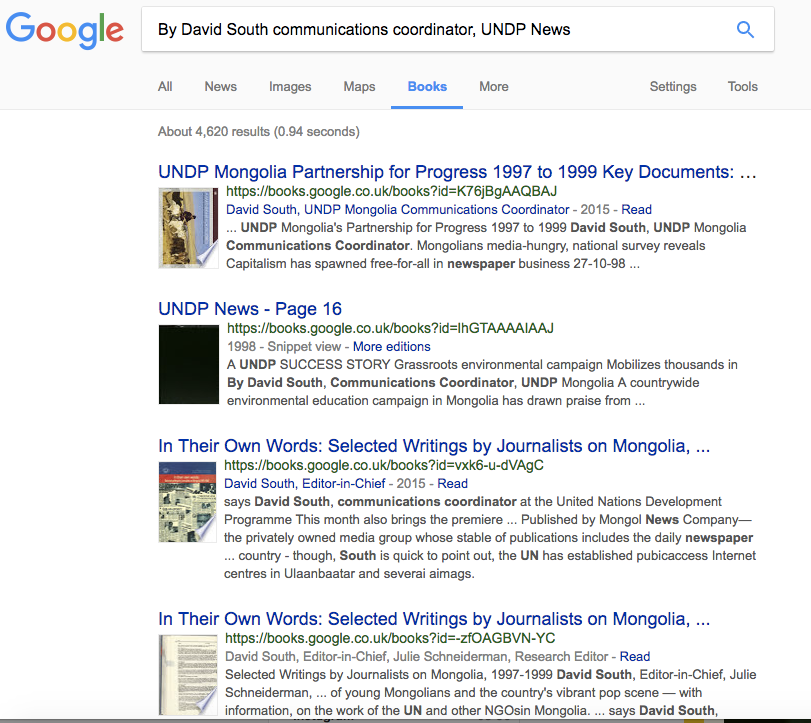
UNDP News: Networking Publication of UNDP Staff Worldwide April/May 1999

A UNDP Success Story 

By David South, Communications Coordinator, UNDP Mongolia 

Grassroots environmental campaign mobilizes thousands in Mongolia 

A countrywide environmental education campaign in Mongolia has drawn praise from around the world, most especially for its ability to mobilize thousands of people and produce hundreds of advocacy materials.  

Robert Ferguson, a UNV Information Specialist from Canada, has just finished a two-year assignment advising on the Environmental Public Awareness Programme. The project, implemented by UNDP, proved that civil society is alive and very well in Mongolia, despite 70 years of Communism and the hardships of transition to a free-market economy.  

For the first-time visitor to Mongolia, it is easy to be dazzled by the view: the expansive steppe, the sparse population with a sprinkling of nomadic tents, the enormous herds of sheep, goats and cows. First impressions tend toward the belief that Mongolia is an unspoiled paradise where nomads have roamed for thousands of years. The reality is considerably different. The 600,000-plus capital of Ulaanbaatar, or Red Hero, is densely populated, urban and home to the country’s remaining factories and electrical power plants. In winter, pollution from power plants and coal stoves in the traditional tents, or gers, where half of the city’s population still lives, chokes the population and causes numerous respiratory problems. 

While Mongolia has space to spare – the population is 2.4 million, plus 32 million head of livestock, in a territory the size of Western Europe – a long list of threats are taking their toll on this harsh but beautiful country.  

“Mongolia’s environment is endangered by a range of problems that are on the brink of exploding,” says Robert Ferguson. “As these  problems are not yet out of control, this country is in a very good position for grassroots initiatives that can help communities to realize their environmental problems and understand possible ways to keep them under control … 

… On one cold autumn day, Ferguson and his colleagues are visiting a project in the shantytown of Chingeltei in the north of the capital. A majority of Ulannbaatar’s population live in neighbourhoods like this, where the mix of traditional gers, wooden cottages and newly built Mongolian monster homes gives a vivid example of the transition years. The population has exploded as more and more Mongolians seek out their dreams in the capital.  

The Environmental Public Awareness Programme, or EPAP, uses small grants of between $1,000 and $2,000 to start awareness projects with local NGOs. After two years, nearly 100 small projects have been implemented – yet the original project document had only proposed 15 projects.  According to Ferguson, the project team, which includes Sumiya and Davaasuren, were struck by the wellspring of enthusiasm they were tapping.

… Garbage is strewn liberally on the dusty streets. Inspired by recycling campaigns in his native Canada, Ferguson encouraged local women to start the Blue Bag Project. Local women proudly show off their streets – garbage-free – as they collect pop and beer bottles and animal bones to turn in for cash at the local recycler. This is just one EPAP project that has galvanized grassroots action. Back in the EPAP at the Stalinesque Ministry of Nature and Environment, Ferguson continues … 

…. were all weak. What was needed was a means to take the right to public participation and an understanding of these laws to community organizations and let them develop public awareness campaigns that get the information out.”  

The Programme has exceeded expectations … 

…. “The response we got to our initial call for interested environmental groups was unexpected,” says Ferguson. “NGOs came from nowhere. And they embraced the idea …

… In October last year, EPAP launched the Mongolian Green Book, a pocket-sized environmental awareness handbook for NGOs. More recently Ferguson completed a Handbook on Environmental Public Awareness to share Mongolia’s experiences with others who care about the environment…

… The workshop is an immediate follow-up to the launching of the network through a workshop attended by 12 members in December 1998…

… with such enthusiasm that we pursued more money and nearly doubled the funding for small public awareness problems.”

Note: This is just an excerpt from the story. This issue of UNDP News featured contributions from UN Secretary-General Kofi Annan, Danny Glover, Nadine Gordimer and Amartya Sen.

The highly successful EPAP project was profiled in UNDP News in April/May 1999. This issue of UNDP News featured contributions from then UN Secretary-General Kofi Annan, Danny Glover, Nadine Gordimer and Amartya Sen.

The highly successful EPAP project was profiled in UNDP News in April/May 1999. This issue of UNDP News featured contributions from then UN Secretary-General Kofi Annan, Danny Glover, Nadine Gordimer and Amartya Sen.
Many resources are available online to explore Mongolia’s 1990s transition experience.
The Environmental Public Awareness Handbook: Case Studies and Lessons Learned in Mongolia, published in 1999 by the UNDP Mongolia Communications Office.
The Mongolian Green Book was published in 1999 by the UNDP Mongolia Communications Office.
The EPAP Handbook and the Mongolian Green Book were published by the UNDP Mongolia Communications Office and funded by the European Union’s TACIS programme.
European Union. europa.eu

Read Robert Ferguson’s The Devil and the Disappearing Sea: Or, How I Tried to Stop the World’s Worst Ecological Catastrophe (Publisher: Raincoast Books, 2004) to learn more about the toxic mix of politics and the environment. The book has been widely cited since and can be purchased online here: The Devil and the Disappearing Sea: A True Story about the Aral Sea Catastrophe: Amazon.co.uk: Ferguson, Robert, Ferguson, Rob: 9781551925998: Books

Robert Ferguson’s The Devil and the Disappearing Sea: Or, How I Tried to Stop the World’s Worst Ecological Catastrophe (Publisher: Raincoast Books, 2004).

Further reading on the plight of the Mongolian steppe in China: Life sentence for former Party chief who killed the Mongolian steppe: For 8 years Liu Zhouzhi pocketed bribes favoring mines exploitation, destroying the landscape, polluting land and drying up the pastures’ water sources. 

“The former head of the Communist Party in Inner Mongolia has been sentenced to life imprisonment for taking bribes that have led to pollution of the Mongolian steppe and the oppression of Mongolian herders. According to the judgment, published yesterday, by Beijing News, Liu Zhozhi, who had been expelled from the party before trial, used his eight years in power to pocket up to 8.17 million Yuan (over one million euros).”

Read more on the connection between corruption and air pollution levels here: 

The effect of corruption on carbon emissions in developed and developing countries: empirical investigation of a claim 

UN agency hit with corruption allegations at climate projects – United Nations Development Programme internal audit describes signs of fraud and collusion

Document of the Week: Aid Donors Blast UNDP for Resisting Appeals to Fight Corruption – A dozen wealthy donor states press the United Nations Development Program to investigate allegations that funds were misappropriated from a Russia climate program it managed.

Greed and Graft at U.N. Climate Program – Whistleblowers and experts allege corruption at a United Nations Development Program project for reducing greenhouse gas emissions in Russia, according to a Foreign Policy investigation.

And it hasn’t got better, according to UNICEF, as reported in The New York Times:

Mongolian Air Pollution Causing Health Crisis-UNICEF

The story reports on a child health crisis in the country’s capital, Ulaanbaatar, because “Many ger households burn coal or even trash to keep warm and the smog they produce has led to a surge in respiratory and heart disease and stoked anger and protests.”

And “Pollution levels in Ulaanbaatar” have “become worse than that in cities such as Beijing and New Delhi”, according to the UNICEF report. 

In 2018, Time published a story titled “Life in the Most Polluted Capital in the World”. This consequence of poor development policy stands in stark contrast to just a few years earlier, when the Mongolian President was awarded the 2012 Champions of the Earth award for “leadership that had a positive impact on the environment” and in 2013 was named as Global Host for World Environment Day 2013 because Mongolia “is prioritizing a Green Economy shift across its big economic sectors such as mining and promoting environmental awareness among youth”. Awards and meetings are clearly not enough. Update on Tuesday, August 28, 2018 at 3:35AM by David South

The importance of reducing exposure to urban air pollution is being backed up with more studies and evidence. What we have seen in the past 20 years of globalization has been a big push to encourage urbanization and denser urban living conditions. But, unfortunately for human health and well-being, this has not been connected to a strategy to reduce urban air pollution. In fact the opposite has been happening in many cities.

Urban air pollution has increased from various sources, in developed countries from vehicles, in particular those burning diesel fuel, and in developing countries, from not only vehicles but also households burning fuel for heating and cooking.

The tragedy unfolding in Mongolia’s capital, Ulaanbaatar, is a classic case of this public health problem. But it is also a crisis in developed world cities, as more vehicles clog streets (many people have been encouraged to buy these vehicles as a boost to the economy during the Global Financial Crisis). Bizarrely, highly polluting diesel engines were marketed as a ‘green’ solution, in particular in the UK!   

Some stories that highlight the harm done, especially to children, can be read below:

Air Pollution Linked To Increased Mental Illness In Children

Air Pollution Causes ‘Huge’ Reduction In Intelligence, Study Reveals

A new book to be launched in April 2019 by journalist Beth Gardiner (@Gardiner_Beth), “Choked: The Age of Air Pollution and the Fight for a Cleaner Future” (Granta) (University of Chicago Press), explores today’s global air pollution crisis in the world’s cities. Gardiner is an environmental journalist who writes for The New York Times, The Guardian and other publications (bethgardiner.com).  

The UK cover for Choked: The Age of Air Pollution and the Fight for a Cleaner Future (Granta, 2019). 

A story by Beth Gardiner on the air pollution crisis in Mongolia from National Geographic. Kids suffer most in one of Earth’s most polluted cities – In winter, coal stoves and power plants choke Mongolia’s capital, Ulaanbaatar, with smoke—and lung disease.

“An urgent, essential read” Arnold Schwarzenegger

Listed in the Financial Times’ “What we’ll be reading in 2019”

“A compelling book about a critical subject” Elizabeth Kolbert, Pulitzer Prize-winning author of The Sixth Extinction

“Air pollution kills seven million people every year, causing heart attacks, strokes, cancer, dementia and more. In Choked, Beth Gardiner travels the world to tell the story of this modern-day plague, exposing the political decisions and economic forces that have kept so many of us breathing dirty air.” 

ORCID iD: https://orcid.org/0000-0001-5311-1052.

© David South Consulting 2020

Categories
Archive Blogroll Blue Sky Bulletin

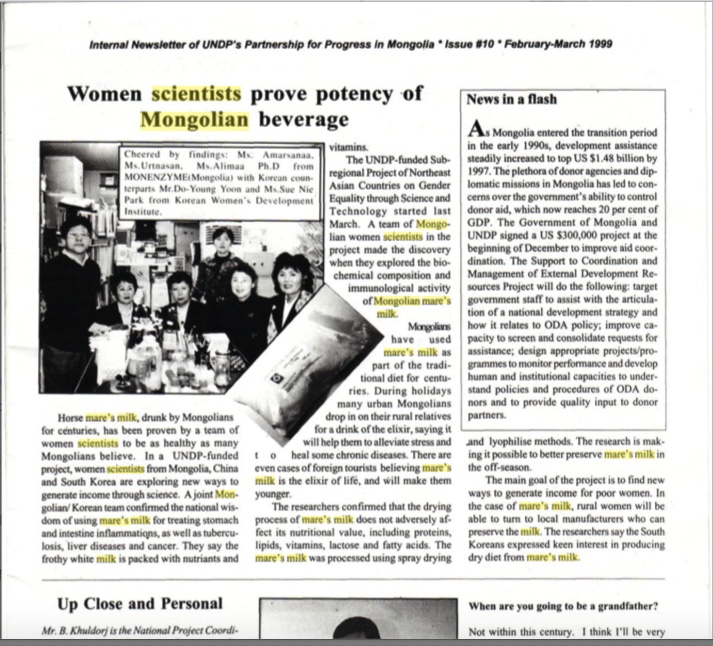
Women scientists prove potency of Mongolian beverage

By David South, Blue Sky Bulletin (Ulaanbaatar, Mongolia), Issue 10, February-March 1999

Horse mare’s milk, drunk by Mongolians for centuries, has been proven by a team of women scientists to be as healthy as many Mongolians believe. In a UNDP-funded project, women scientists from Mongolia, China and South Korea are exploring new ways to generate income through science. A joint Mongolian/Korean team confirmed the national wisdom of using mare’s milk for treating stomach and intestine inflammations, as well as tuberculosis, liver diseases and cancer. They say the frothy white milk is packed with nutrients and vitamins.

The UNDP-funded Subregional Project of Northeast Asian Countries on Gender Equality through Science and Technology started last March. A team of Mongolian women scientists in the project made the discovery when they explored the bio-chemical composition and immunological activity of Mongolian mare’s milk.

Mongolians have used mare’s milk as part of the traditional diet for centuries. During holidays many urban Mongolians drop in on their rural relatives for a drink of the elixir, saying it will help them to alleviate stress and to heal some chronic diseases. There are even cases of foreign tourists believing mare’s milk is the elixir of life, and will make them younger.

The researchers confirmed that the drying process of mare’s milk does not adversely affect its nutritional value, including proteins, lipids, vitamins, lactose and fatty acids. The mare’s milk was processed using spray drying and lyophilise methods. The research is making it possible to better preserve mare’s milk in the off-season.

The main goal of the project is to find new ways to generate income for poor women. In the case of mare’s milk, rural women will be able to turn to local manufacturers who can preserve the milk. The researchers say the South Koreans expressed keen interest in producing dry diet from mare’s milk.

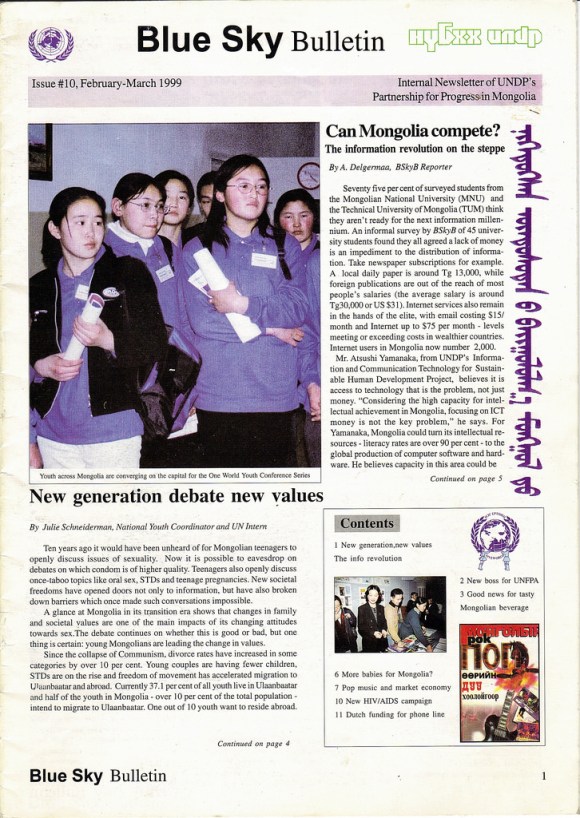
The Blue Sky Bulletin newsletter provided timely and valuable updates on Mongolia in the late 1990s. In particular, it was able to highlight urgent health needs for a population undergoing extreme crisis resulting from food supply disruptions, loss of income, social distress (alcoholism, family breakdown etc.), sexually transmitted diseases, and extreme weather. Stories from the newsletter have been cited in many journals and books since 2000, and the high quality of its contributers is evident in their scholarship and career success since. An example is below:

Poor Nutrition Taking its Toll on the Health of Mongolians By Jacinda Mawson

Rickets very prevalent in Mongolia – 1998

Prevalence of rickets in Mongolia

Asia Pacific J Clin Nutr (1998) 7(3/4): 325-328
U Tserendolgor1 MD pubhealth@magicnet.mn, JT Mawson2 MA, AC MacDonald3 MSc and M Oyunbileg1 MD, PhD

“The high prevalence of rickets in Mongolian children is a serious public health concern. In addition to the adverse effects on growth, development and immune function, it is probably indicative of widespread subclinical vitamin D deficiency.”

Another beverage was catching the interest of Mongolians in the late 1990s: beer. 

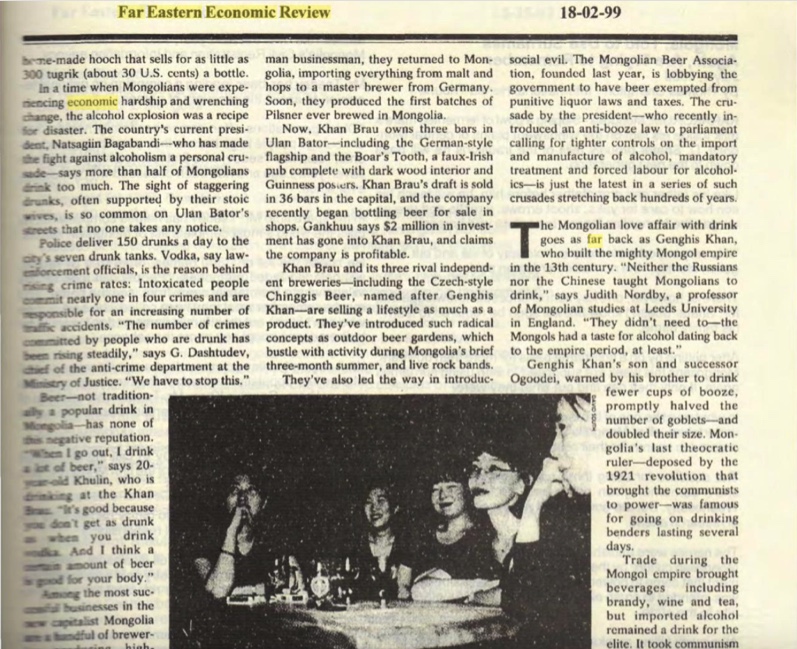
From The Far Eastern Economic Review, February 18, 1999

A New Brew: As Mongolia changes under the influence of economic reforms, the country’s elite are trading fermented mare’s milk and vodka for a new status symbol: beer 

Story by Jill Lawless

Photo by David South

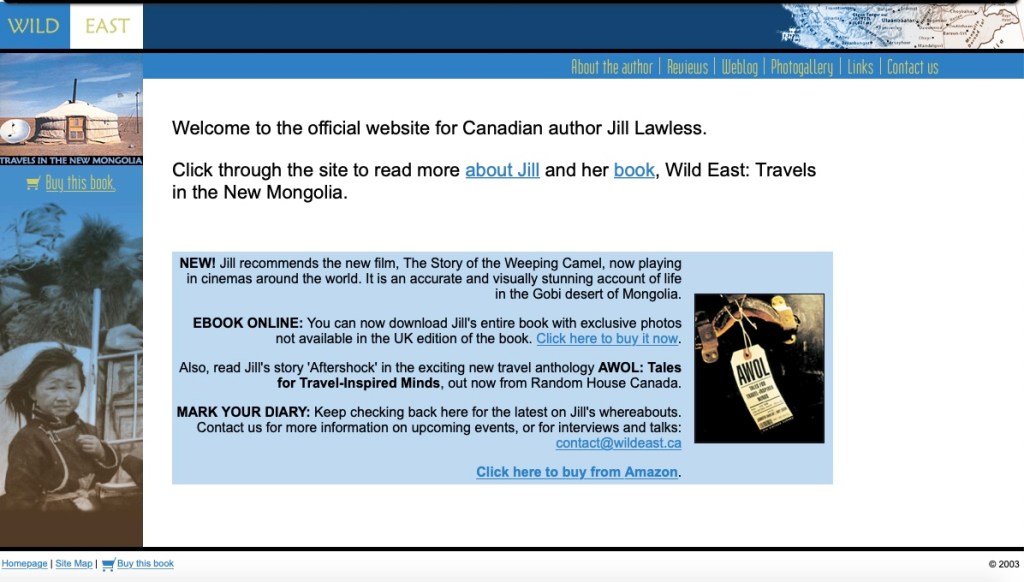
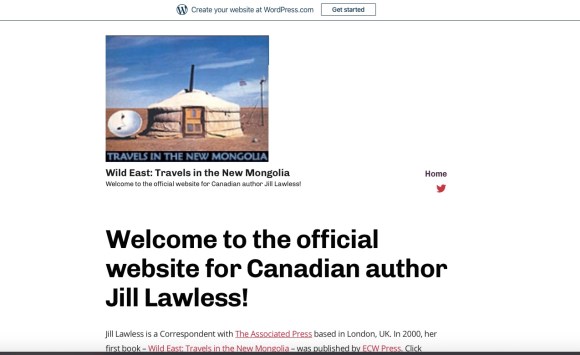
Jill Lawless has two websites about her book, Wild East: Travels in the New Mongolia.

Designed in London, the first website for Wild East: Travels in the New Mongolia launched in 2003.
The new brand site for Jill Lawless is currently under construction.

More of Jill Lawless‘ journalism for The Far Eastern Economic Review here: https://www.google.co.uk/books/edition/Far_Eastern_Economic_Review/SkuvAAAAIAAJ?hl=en&gbpv=1&bsq=david%20south,%20Mongolian%20rock

https://davidsouthconsulting.org/2022/06/24/can-we-talk-hannah-promotes-communication-between-medical-schools/

https://davidsouthconsulting.org/2021/06/02/case-study-5-gosh-ich-child-health-portal-2001-2003/

https://davidsouthconsulting.org/2020/04/25/china-pushing-frontiers-of-medical-research/

https://davidsouthconsulting.org/2021/03/08/the-dawn-of-the-genetics-revolution-2001-2003/

https://davidsouthconsulting.org/2021/05/25/ger-mongolias-first-web-magazine-and-a-pioneering-web-project-for-the-united-nations-12-january-2016/

https://davidsouthconsulting.org/2017/10/18/hannah-institute-for-the-history-of-medicine-1992-1994/

https://davidsouthconsulting.org/2021/05/27/het-wilde-oosten-reizen-in-het-moderne-mongolie%cc%88/

https://davidsouthconsulting.org/2021/03/12/mongolia-prepares-for-a-magazine-explosion-1998/

https://davidsouthconsulting.org/2023/01/09/mongolia-update-1998/

https://davidsouthconsulting.org/2023/02/07/mongolian-rock-and-pop-book-mongolia-sings-its-own-song/

https://davidsouthconsulting.org/2022/11/11/online-free-knowledge-sharing/

https://davidsouthconsulting.org/2020/12/17/philippine-conference-tackles-asias-aids-crisis/

https://davidsouthconsulting.org/2021/10/20/research-reviews-2001-2002/

https://davidsouthconsulting.org/2021/04/19/reviews-wild-east-the-new-mongolia/

https://davidsouthconsulting.org/2022/11/18/southern-drink-challenges-corporate-dominance/

https://davidsouthconsulting.org/2020/04/17/taking-medicine-to-the-people-four-innovators-in-community-health/

Like our content? Help contribute to the costs of keeping it online. 

Scan code with your phone and help us out.

ORCID iD: https://orcid.org/0000-0001-5311-1052

© David South Consulting 2023

Categories
Archive Blogroll Blue Sky Bulletin Ger Magazine UNDP Mongolia 1997-1999

Mongolia’s Musical Entrepreneurs Led Way Out Of Crisis | 2018

Publisher: UNDP Mongolia Communications Office/Press Institute of Mongolia

Managing Editor: David South

Editorial Advisors: Ts. Enkhbat, Mustafa Eric, David South

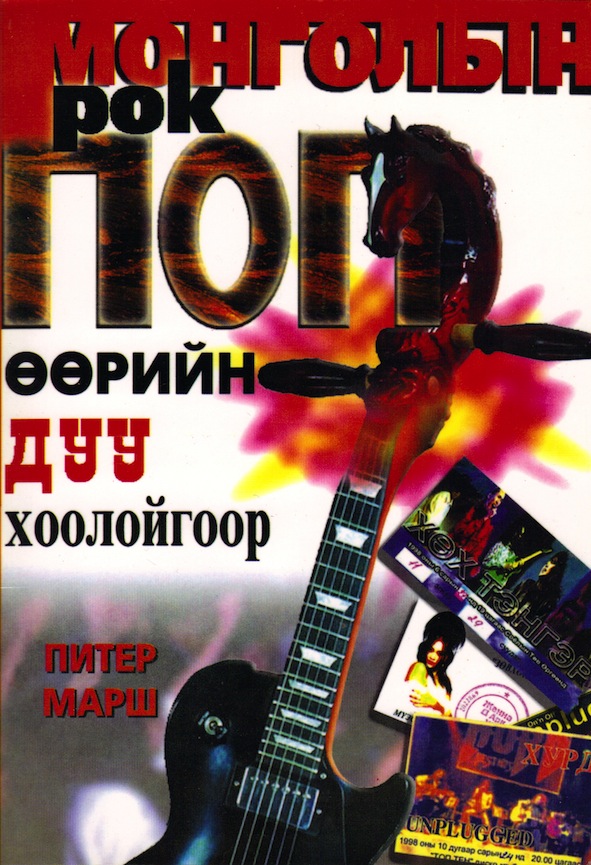
Author and Researcher: Peter Marsh, Indiana University

Copy Editor: N. Oyuntungalag

Production Editor: B. Bayarma

Published: 1999

ISBN 99929-5-018-8

It was the late 1990s. Mongolia was still recovering from “one of the biggest peacetime economic collapses ever” (Mongolia’s Economic Reforms: Background, Content and Prospects, Richard Pomfret, University of Adelaide, 1994). But it was the country’s young musicians who were showing the way out of the crisis, setting an example for entrepreneurship in the new, free-market economy that emerged in the country after 1990.

As UNDP Communications Officer N. Oyuntungalag wrote in the Blue Sky Bulletin (BSkyB) newsletter, “A thriving pop and rock scene has emerged over the last four years. .. The energy of these musicians and singers has not gone unnoticed by the burgeoning advertising market. Pop bands are promoting many things, from face creams to beer. … [but] there has been little serious writing on the business of popular music.”  

As the book’s author, American ethnomusicologist Peter Marsh, said in an interview with UNDP’s Blue Sky Bulletin newsletter, “we thought our book would provide important ideas about the direction and nature of the nation’s development.

“My impression about Mongolian pop-rock is that it is a lively, diverse and at times innovative Mongolian art form that closely reflects many of the hopes, fears and aspirations of its primary audience, Mongolian youth.”

The book still stands as an unusual and innovative contribution to thinking around the role played by youth in development and business and in crisis recovery.   

Google Books Key Words: авдаг адил аль англи аялан байж байлаа байх байхад байхгүй бараг барууны бас бензин Бид нар бидний биз бизнес бий биш болох бөгөөд бусад бүжиг бүр бүтээлчид бүх гадаад гадаадад

Other publications by Peter K. Marsh: 

The Horse-head Fiddle and the Cosmopolitan Reimagination of Tradition in Mongolia by Peter K. Marsh, Routledge, 25 Sept. 2008.

Journal Article Review. Reviewed Works: Mongolian Bling by Benj Binx, Nubar Ghazarian; Live from UB by Lauren Knapp, Dulguun Bayasgalan. Review by Peter K. Marsh, Ethnomusicology, Vol. 62, No. 1 (Winter 2018), pp. 157-162. 

Moving the World Through Two Strings: The Horse-head Fiddle and the Cosmopolitan Reimagination of Tradition in Mongolia by Peter K. Marsh, Indiana University, 2002. 

Our generation is opening its eyes: hip-hop and youth identity in contemporary Mongolia by Peter Marsh, Central Asian Survey, Volume 29, 2010 (https://doi.org/10.1080/02634937.2010.518013).

From Culture and Customs of Mongolia by Timothy Michael May (2009).

Interviews with Peter K. Marsh: 

“Culture and art – immunity for any nation during globalization”, Baljmaa.T, The Mongol Messenger, 2020-05-13.

More on this topic here: Why Does China Have 1.4 Billion People and No Good Bands? – Mongolia rocks out while its giant neighbor slumbers.

More on the development of contemporary Mongolian music and its rising global profile: 

The Unexpected Rise Of The Hu: The Mongolian Heavy Metal Band Resurrecting Rock

With more YouTube views than Stormzy, this metal band is a surprising smash hit – and they’ve only just begun. by Eleanor Peake

More music writing by David South

“You Can’t Have A Bird If You Want To Be The Biggest Band In The World”: Oasis Has Arrogance, A Pile Of Attitude And The Best Album Of 1994

ORCID iD: https://orcid.org/0000-0001-5311-1052.

© David South Consulting 2021