UNDP Mongolia Communications Coordinator (1997-1999):David South
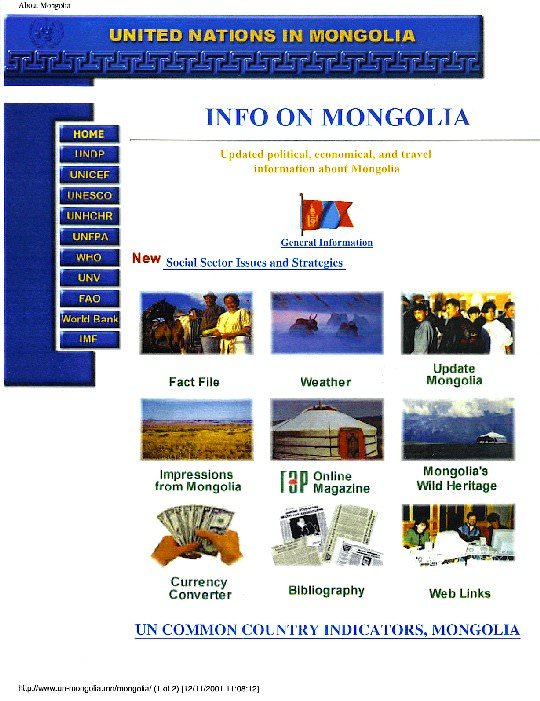
I launched this portal in 1997, in the middle of a major economic crisis in Mongolia. This award-winning (winner in 1998 of the People’s Choice WebSite 500 award and the CyberTeddy Top 500 Website award) and pioneering United Nations Mongolia development web portal was singled out by UN headquarters as an example of what a country office website should be like.
At this time, Mongolia was still recovering from the chaotic and turbulent transition from Communism to free markets and democracy begun at the start of the 1990s, called by some “one of the biggest peacetime economic collapses ever” (Mongolia’s Economic Reforms: Background, Content and Prospects, Richard Pomfret, University of Adelaide, 1994). There was a thirst for information: access to the Internet was still limited and access to mobile phones was just the preserve of the rich. As a legacy of the past, information, especially that about the outside world and the country’s true economic and social conditions, was restricted. During the years of Communism, even simple travel from one place to the next was strictly regulated.
While today we can take it for granted the world’s information arrives in seconds via the Internet on mobile and smart phones and devices, this just was not the case in the late 1990s in Mongolia.
The UN/UNDP Mongolia development web portal addressed the urgent need to communicate what was happening in the country during a major crisis, and to transparently show what the UN was doing to address the crisis. It made critical data on the country’s development easy to find, and informed the wider world about the country and its people and culture. While the Internet had only just arrived in Mongolia, from the start the UNDP Mongolia Communications Office was experimenting with this powerful new technology to reach a global audience. This included Mongolia’s first web magazine, Ger (launched in 1998).
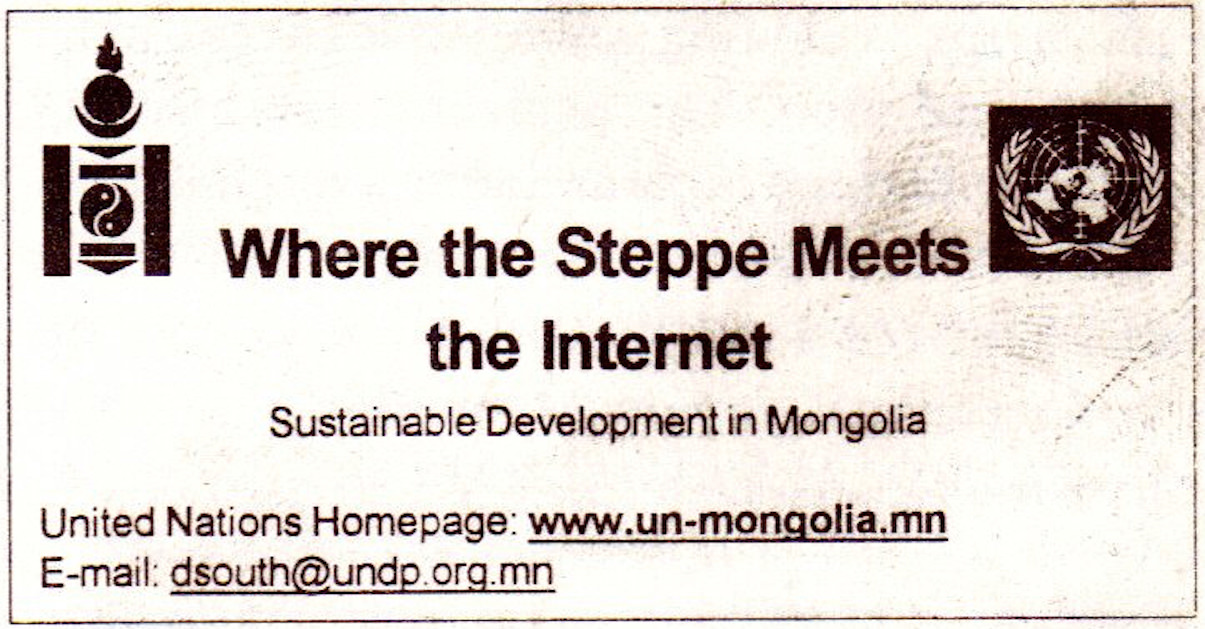
After the http://www.un-mongolia.mn website launched in 1997, a media campaign began to inform readers of its presence. This ad appeared regularly in magazines, newsletters and newspapers.
Ger Magazine was launched on September 9, 1998 (Ger is the Mongolian word for both the traditional tent dwelling and home). The theme of youth in the transition was explored by a combined team of Mongolian and foreign journalists. The Ger Magazine project had basically three goals: first, raise the quality of journalism in the country, secondly, introduce the country to a wider global audience and, thirdly, by being the country’s first online magazine, prove the Internet was an effective way to communicate.
Issue 1 of the magazine investigated what life was like for youth during the transition years (post-1989). Stories tackled the struggle to find work in the free market, the booming pop music scene and how it is leading the way in business entrepreneurship, reproductive health, the basics on Mongolian culture, and vox pop views from Mongolian youth.Issue 2 of the magazine investigated modern life in Mongolia during transition. The team of journalists were hitting their stride by this issue. Stories probed the proliferation of bars and the problem of alcoholism, corrupt banking practices and the loss of savings, how the young were the country’s leading entrepreneurs, Mongolia’s meat and milk diet, “girl power” and the strong role played by women, the burgeoning new media, the rise and rise of Buddhism, and Mongolia’s dynamic fashion designers (this article inspired foreign fashion designers to embrace the Mongolian ‘look’ in the next season’s designs).
The UN/UNDP Mongolia homepage quickly became the top resource for development news on Mongolia in the late 1990s.“A UN System site. A very nice, complete, professional site. Lots of information, easily accessible and well laid out. The information is comprehensive and up-to-date. This is a model of what a UNDP CO web site should be.”
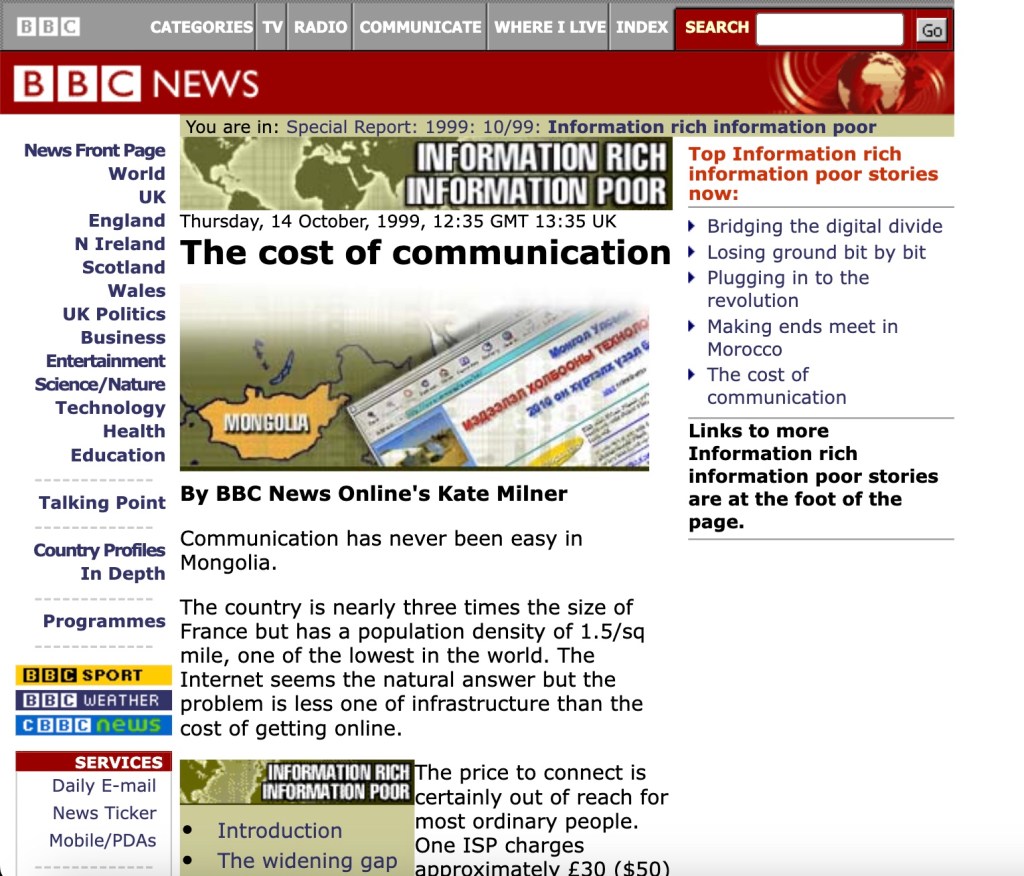
“Information Rich Information Poor: The cost of communication”, BBC News Online, Thursday, 14 October 1999.
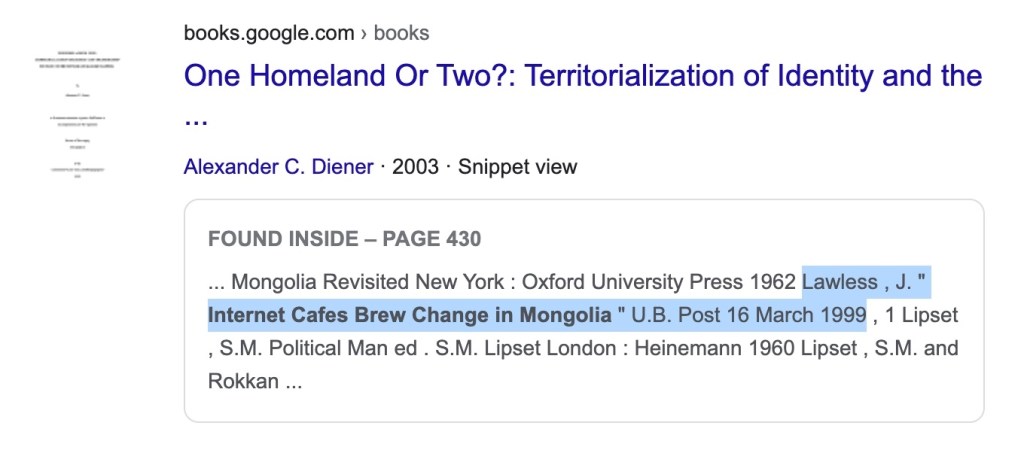
“Internet Cafes Brew Change in Mongolia”, UB Post 16 March 1999 by Jill Lawless, cited in One Homeland or Two?: Territorialization of Identity and the Migration Decision of the Mongolian-Kazakh Diaspora by Alexander C. Diener, 2003.
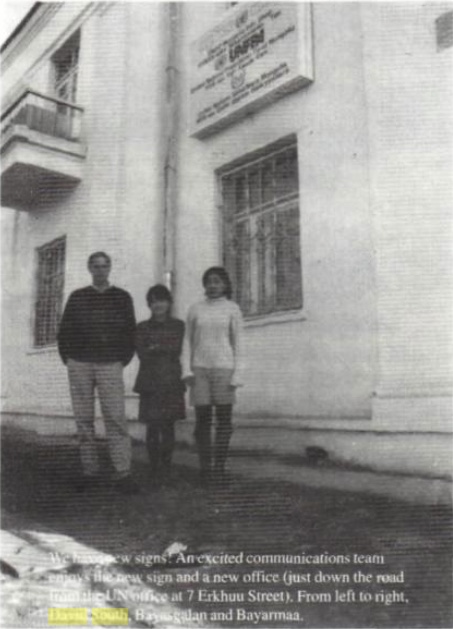
United Nations Cyber Center Ulaanbaatar, Mongolia: UNDP Mongolia established the first public internet cafe in its former headquarters as part of the UNDP Mongolia Communications Office hub in the late 1990s.
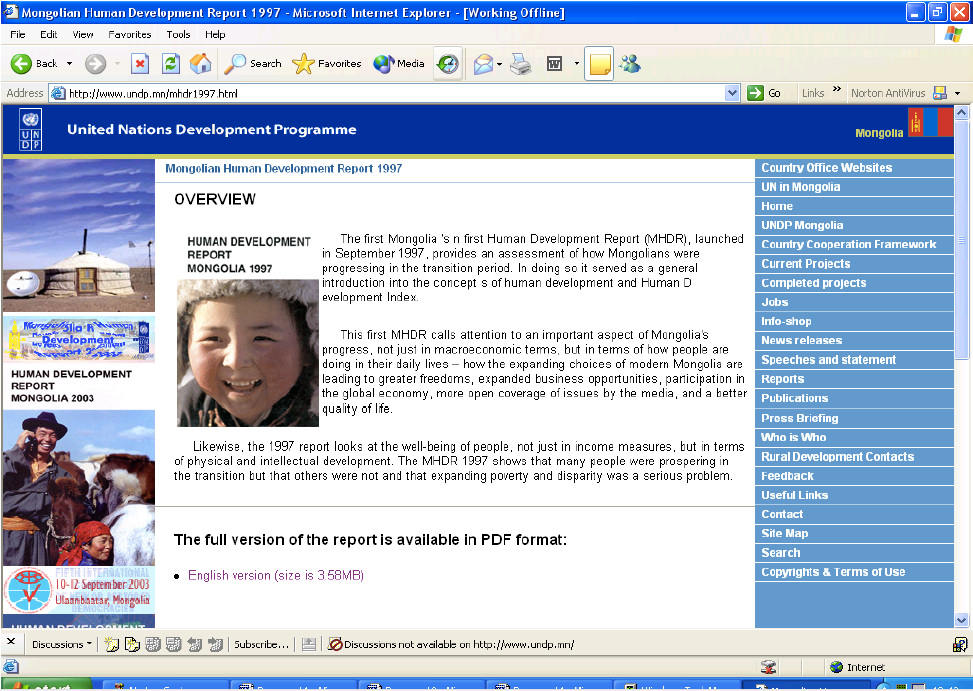
In 2000, the Kiev-based UN Ukraine team had to improve the design and capability of the mission website to handle new content and online services. There was a strong demand for information on country conditions and how to support the UN’s work (for example, on HIV/AIDS). It was a dangerous time to be involved in any online communications and the media and online communicators were routinely threatened with violence and even death.Whilst with a UK-based international development consultancy, I worked on the drafting and online launch in 2000 of the World Bank’s Task Force on Higher Education and Society report, Higher Education in Developing Countries: Peril and Promise. At the time, it was still rare to see reports made user friendly for the world’s web audience. As a survey in 2014 discovered, a shocking third of the Bank’s publications are never downloaded, 40 per cent were downloaded just 100 times, and only 13 per cent were downloaded more than 250 times in their lifetime (The Washington Post).As the Millennium Development Goals (MDGs) were being communicated, the link between the powerful new digital and mobile/information technologies and development goals became explicit in information materials. The cleaner and more modern design introduced with Mongolia’s first human development report in 1997, continued in future publications and online, as can be seen in this screen grab from 2003 and that year’s human development report. The first use of infographics was also introduced in a report on the MDGs for UNDP Mongolia in 2005. Importantly, a country that had been isolated from the non-Communist world for decades, was now routinely using the Internet to tell its stories and post development data.
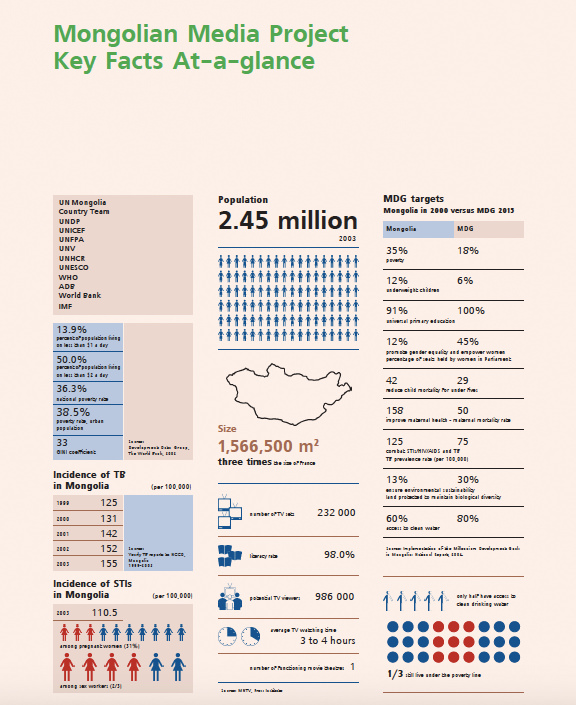
Human Development Infographics: Infographics have proven a useful visual aid for communicating human development concepts. This example was created for a UNDP Mongolia report during missions undertaken in 2005.
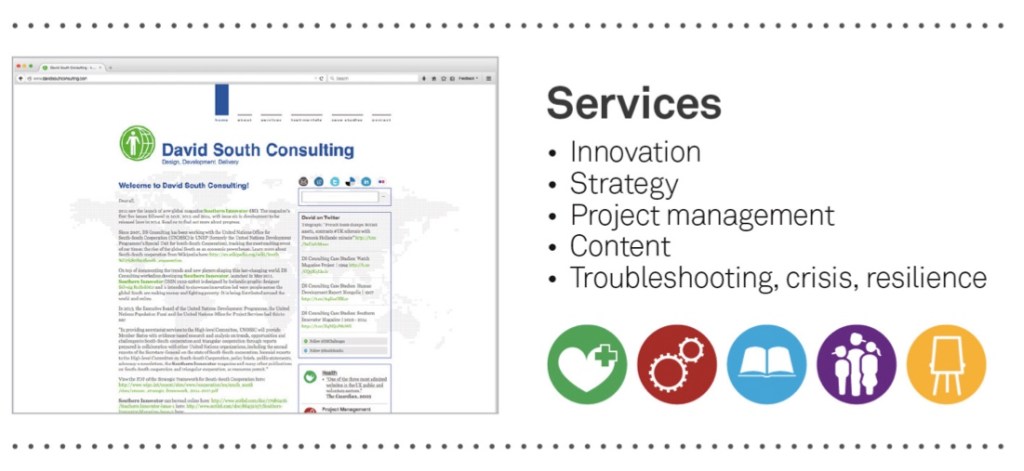
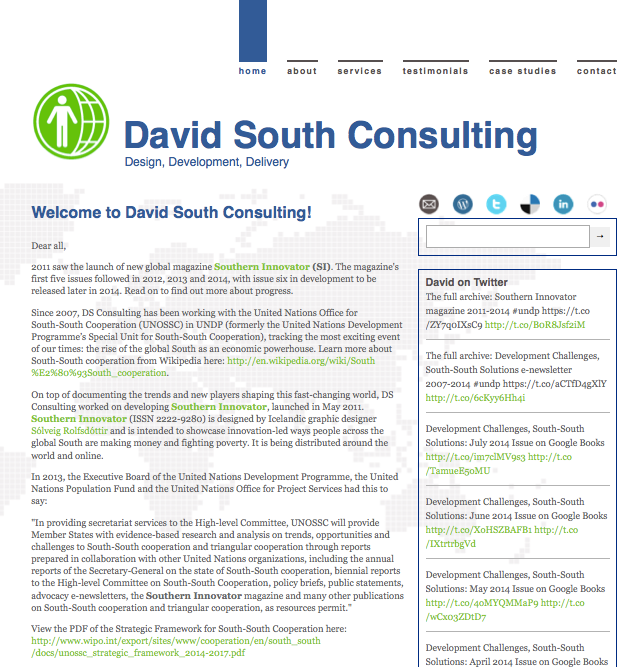
Five years prior to the MDGs deadline in 2015, the David South Consulting website went live (2010). Featuring a new branding and design, it signaled a new design phase more comfortable with developments in social media and online and mobile content sharing. Designed by Solveig Rolfsdottir, one of Iceland’s top graphic designers and illustrators, the website’s design was intentially made compatible with the new global magazine, Southern Innovator (also designed by Solveig Rolfsdottir).The online story archive for Southern Innovator was launched by the United Nations Office for South-South Cooperation (UNOSSC) in 2011. Organized by theme, the stories were cited in blogs, books and reports around the world.
The new template for the United Nations e-newsletter Development Challenges, South-South Solutions was launched in 2011 and designed by Solveig Rolfsdottir. It included a QR code for mobile and smartphone users to connect to the Southern Innovator website.
In 2016 the mobile-friendly version of the David South Consulting website was launched.
UN/UNDP Mongolia Development Portal (www.un-mongolia.mn)
I launched this portal in 1997, in the middle of a major economic crisis in Mongolia. This award-winning (winner in 1998 of the People’s Choice WebSite 500 award and the CyberTeddy Top 500 Website award) and pioneering United Nations Mongolia development web portal was singled out by UN headquarters as an example of what a country office website should be like.
At this time, Mongolia was still recovering from the chaotic and turbulent transition from Communism to free markets and democracy begun at the start of the 1990s, called by some “one of the biggest peacetime economic collapses ever” (Mongolia’s Economic Reforms: Background, Content and Prospects, Richard Pomfret, University of Adelaide, 1994). There was a thirst for information: access to the Internet was still limited and access to mobile phones was just the preserve of the rich. As a legacy of the past, information, especially that about the outside world and the country’s true economic and social conditions, was restricted. During the years of Communism, even simple travel from one place to the next was strictly regulated.
While today we can take it for granted that the Internet, and mobile and smart phones, deliver the world’s information in seconds, this just was not the case in the late 1990s in Mongolia.
“Cyber-Teddy’s Top 500 Web Site” was an online award from the late 1990s.The UN/UNDP Mongolia development web portal addressed the urgent need to communicate what was happening in the country during a major crisis, and to transparently show what the UN was doing to address the crisis. It made critical data on the country’s development easy to find, and informed the wider world about the country and its people and culture. While the Internet had only just arrived in Mongolia, from the start the UNDP Mongolia Communications Office was experimenting with this powerful new technology to reach a global audience. This included Mongolia’s first web magazine, Ger (launched in 1998). After the http://www.un-mongolia.mn website launched in 1997, a media campaign began to inform readers of its presence. This ad appeared regularly in magazines, newsletters and newspapers.“A UN System site. A very nice, complete, professional site. Lots of information, easily accessible and well laid out. The information is comprehensive and up-to-date. This is a model of what a UNDP CO web site should be.”
I was head of communications for the United Nations mission in Mongolia from 1997 to 1999. The mission had to primarily tackle three major crises: the country’s turbulent transition from Communism to free markets and democracy, the social and economic crash this caused, and the Asian Financial Crisis (Pomfret 2000) (Quah 2003)*.
UNDP Mongolia staff photo 1997. I served for two years as the UNDP Mongolia head of communications (1997-1999). I am sitting front row centre left of the UN Resident Coordinator Douglas Gardner.
Richard Pomfret said in 1994 “In 1991 Mongolia suffered one of the biggest peacetime economic collapses ever (Mongolia’s Economic Reforms: Background, Content and Prospects, Richard Pomfret, University of Adelaide, 1994).”
From Curbing Corruption in Asia: A Comparative Study of Six Countries by Jon S. T. Quah: “The combined effect of these three shocks was devastating as ‘Mongolia suffered the most serious peacetime economic collapse any nation has faced during this century’. Indeed, Mongolia’s economic collapse ‘was possibly the greatest of all the (peaceful) formerly’” Communist countries.
Writing in 2018, author John West found, in a chapter titled Mongolia’s Corruption Curse (Transparency International and the World Bank had found corruption worsened in Mongolia after 2001), “In many ways, Mongolia has everything going for it. After being a satellite state of the former Soviet Union for much of the twentieth century, Mongolia regained its independence with the end of the Cold War. A relatively peaceful political revolution in the early 1990s ushered in a multi-party democracy and open society which have remained in place. … And it is blessed with vast reserves of copper, gold, coal, molybdenum, fluorspar, uranium, tin and tungsten deposits. True, Mongolia experienced great upheavals as the breakup of the Soviet Union saw its trade decline by 80%. But Mongolia was also perfectly placed to benefit from the commodity super cycle driven by China, which is now the destination for the vast majority of its exports.
“However, despite much hype about the Mongolian “wolf economy”, this country of so much promise is being dragged down by massive corruption. …
In this role, I pioneered innovative use of the Internet and digital resources to communicate the UN’s work and Mongolia’s unfolding crises. The UN called this work a “role model” for the wider UN and country offices. A survey of United Nations country office websites in 2000 ranked the UN Mongolia website I launched in 1997 and oversaw for two years (1997-1999), third best in the world, saying: “A UN System site. A very nice, complete, professional site. Lots of information, easily accessible and well laid out. The information is comprehensive and up-to-date. This is a model of what a UNDP CO web site should be.” (http://www.scribd.com/doc/274319690/UNDP-Mongolia-United-Nations-2000-Survey-of-Country-Office-Websites)
As part of a strategic plan to raise awareness of Mongolia’s development challenges and to spur action on meeting them, a Communications Office was established for the UN mission in 1997. Acting as a strategic hub, the Communications Office and its dynamic and talented team, were able to leverage the existing budget to spur action on many fronts.
In 2001, the UN won the Nobel Peace Prize for “their work for a better organized and more peaceful world” and its communications innovations, with work such as that in Mongolia being cited as a contributing factor to the awarding of the Prize.
The Nobel Peace Prize 2001 joint winners.
GOSH Child Health Portal (www.gosh.nhs.uk)
In 2001 I undertook a two-year contract to modernise the online resources for the Great Ormond Street Hospital for Children NHS Trust (GOSH)/Institute of Child Health (ICH). My strategy was inspired and informed by initiatives encountered while working as a health and medical journalist in 1990s Canada – a time where government austerity spurred a need to experiment and try new ways of doing things.
Having seen the impact first-hand of pilot experiments in Toronto aimed at widening access to information and resources for patients and their families, I applied this knowledge to the GOSH Child Health Portal Project (2001 to 2003). Drawing on the wider NHS Modernisation Plan, and a multi-year consultation process undertaken by the hospital, the Project was launched in three phases.
How far the UK had fallen out of step with global developments with the Internet became clear from the start. The distance that had to be traveled in the span of two years was vast. Essentially, to go from being a web laggard to a web leader.
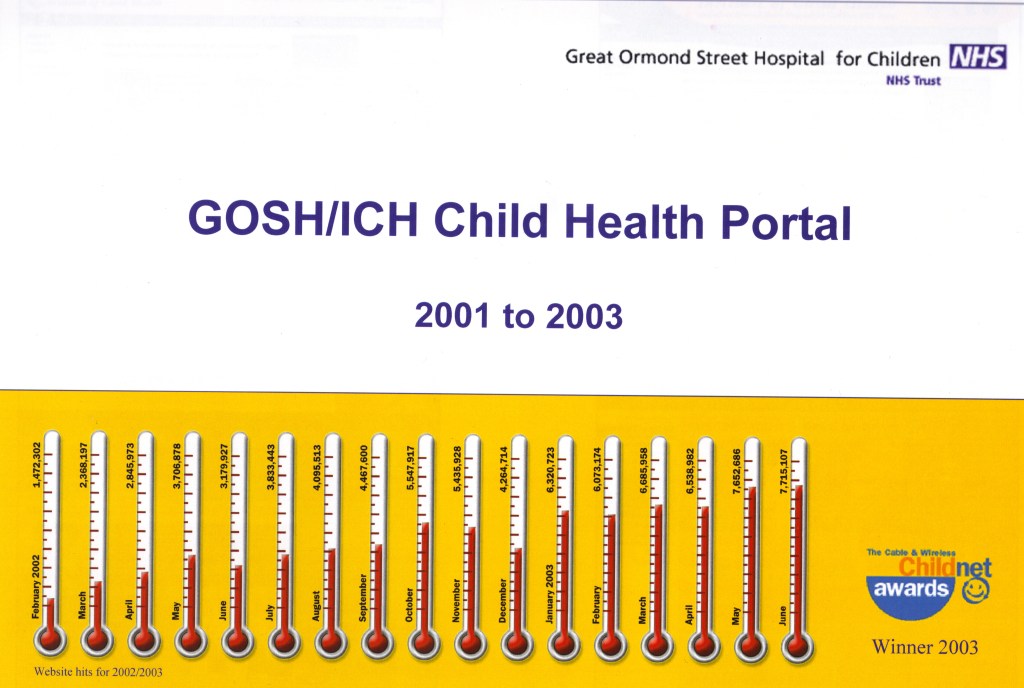
Award-winning (http://www.scribd.com/doc/35249271/Childnet-Awards-2003-Brochure), the GOSH Child Health Portal was called by The Guardian newspaper one of the “three most admired websites in the UK public and voluntary sectors,” and a UK government assessment called the overall GOSH child health web portal a role model for the NHS. At the time, Prime Minister Tony Blair (whose wife, Cherie Blair, was an early supporter and champion of the project) had this to say: “Making sure that your child has helpful, easy-to-read information will make a significant difference to their time in hospital. I am sure that this website will prove very useful for children and their families.”
The project was delivered in three phases. At every stage, progress was communicated to the wider public and colleagues in various ways, via in-house media and through constant engagement with British news outlets. Screen grabs and other resources from the project can be found online here:
The Cable and Wireless Childnet Award called Children First “an outstanding example of how a hospital can create quality, authoritative information on issues relating to health in a fun, child-centered and accessible way.”
The Childnet Awards in 2003 were awarded by Trond Waage, the Norwegian Ombudsman for Children, at the Science Museum in London.
The GOSH Child Health Portal team receive the Childnet Award in 2003 at London’s Science Museum (Photo: CBBC Newsround).
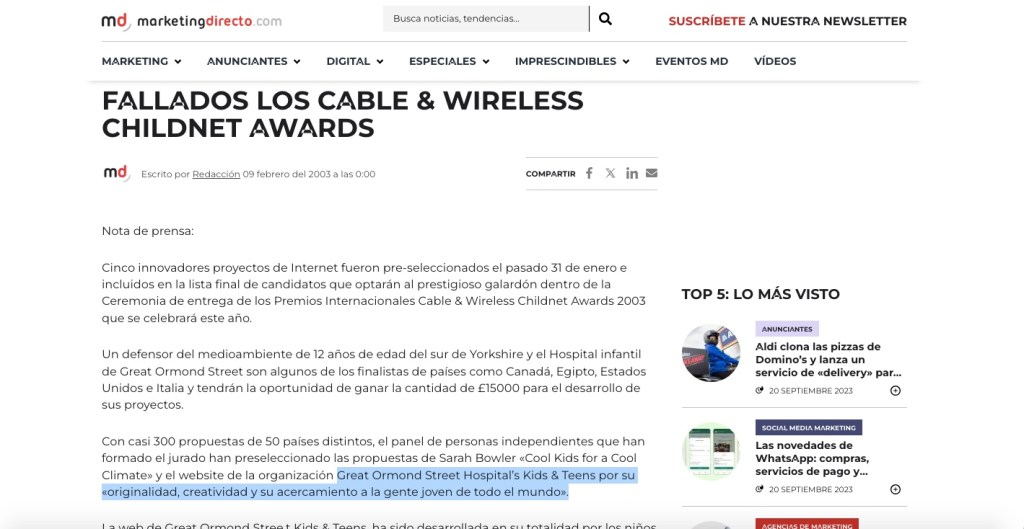
“Web Projects For Kids Get Their Due.” “Hospital unveils international website for children.”“… Great Ormond Street Hospital’s Kids & Teens por su «originalidad, creatividad y su acercamiento a la gente joven de todo el mundo». La web de Great Ormond Street Kids & Teens, ha sido desarrollada en su totalidad por los niños del hospital de mayor tamaño de Gran Bretaña.”
I was head of communications for the United Nations mission in Mongolia from 1997 to 1999. The mission had to primarily tackle three major crises: the country’s turbulent transition from Communism to free markets and democracy, the social and economic crash this caused, and the Asian Financial Crisis (Pomfret 2000) (Quah 2003)*.
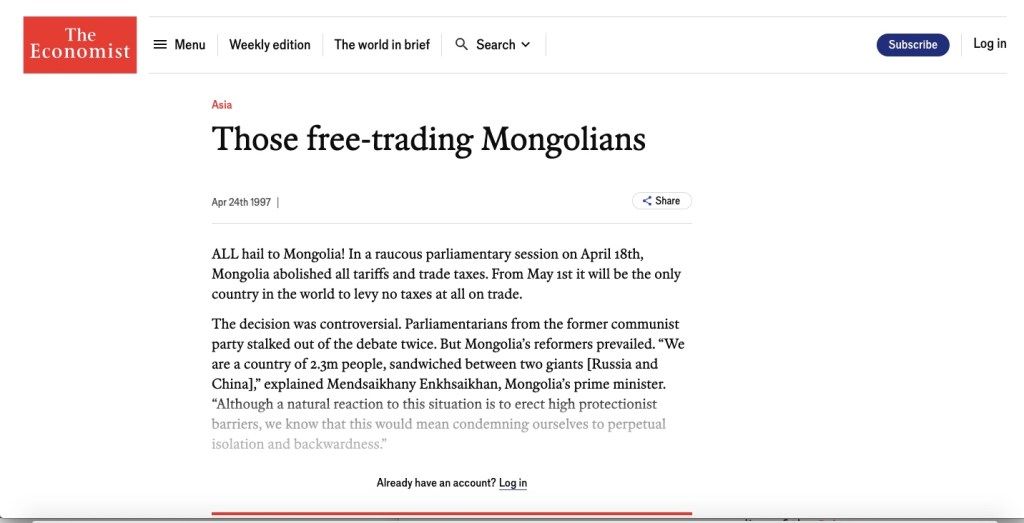
The Economist: “Those free-trading Mongolians” was published Apr 24th 1997. I arrived in May of 1997 to find a country on the cusp of great and turbulent change.
Richard Pomfret said in 1994 “In 1991 Mongolia suffered one of the biggest peacetime economic collapses ever (Mongolia’s Economic Reforms: Background, Content and Prospects, Richard Pomfret, University of Adelaide, 1994).”
From Curbing Corruption in Asia: A Comparative Study of Six Countries by Jon S. T. Quah: “The combined effect of these three shocks was devastating as ‘Mongolia suffered the most serious peacetime economic collapse any nation has faced during this century’. Indeed, Mongolia’s economic collapse ‘was possibly the greatest of all the (peaceful) formerly’” Communist countries.
Writing in 2018, author John West found, in a chapter titled Mongolia’s Corruption Curse (Transparency International and the World Bank had found corruption worsened in Mongolia after 2001), “In many ways, Mongolia has everything going for it. After being a satellite state of the former Soviet Union for much of the twentieth century, Mongolia regained its independence with the end of the Cold War. A relatively peaceful political revolution in the early 1990s ushered in a multi-party democracy and open society which have remained in place. … And it is blessed with vast reserves of copper, gold, coal, molybdenum, fluorspar, uranium, tin and tungsten deposits. True, Mongolia experienced great upheavals as the breakup of the Soviet Union saw its trade decline by 80%. But Mongolia was also perfectly placed to benefit from the commodity super cycle driven by China, which is now the destination for the vast majority of its exports.
“However, despite much hype about the Mongolian “wolf economy”, this country of so much promise is being dragged down by massive corruption. …
In this role, I pioneered innovative use of the Internet and digital resources to communicate the UN’s work and Mongolia’s unfolding crises. The UN called this work a “role model” for the wider UN and country offices. A survey of United Nations country office websites in 2000 ranked the UN Mongolia website I launched in 1997 and oversaw for two years (1997-1999), third best in the world, saying: “A UN System site. A very nice, complete, professional site. Lots of information, easily accessible and well laid out. The information is comprehensive and up-to-date. This is a model of what a UNDP CO web site should be.” (https://www.scribd.com/document/35249986/United-Nations-2000-Survey-of-Country-Office-Websites)
As part of a strategic plan to raise awareness of Mongolia’s development challenges and to spur action on meeting them, a Communications Office was established for the UN mission in 1997. Acting as a strategic hub, the Communications Office and its dynamic and talented team, were able to leverage the existing budget to spur action on many fronts, including:
Media
Working with journalists and media both within Mongolia and outside – including organising frequent cross-country media tours – the Communications Office was able to significantly raise awareness of Mongolia and its development challenges. This was reflected in a substantial increase in media coverage of the country and in the numerous books and other publications that emerged post-1997. The book In Their Own Words: Selected Writings by Journalists on Mongolia, 1997-1999 (ISBN 99929-5-043-9) archived the stories by theme.
Top journalists covering Asia in the late 1990s contributed to the book. The BBC’s Charu Shahane joined other journalists on a UNDP Mongolia media tour in 1998.
Ger Magazine
Ger Magazine (the Mongolian word for home and traditional tent dwelling) was published as the country’s first e-magazine in 1998. There were four issues in total from 1998 to 2000. The launch issue was on the theme of youth in the transition. Mongolia was transitioning from Communism to free markets and democracy and this had been both an exhilarating time and a wrenching time for young people. The magazine drew on talented journalists from Mongolia and the handful of international journalists based there to create a mix of content, from stories about life adapting to free markets to stories on various aspects of Mongolian culture and life.
The second issue of the magazine proved particularly effective, with its modern life theme and cover story on a thriving Mongolian fashion scene.
Archived issues of the magazine can be found at the Wayback Machine here: https://archive.org/. Just type in the UN Mongolia website address for the years 1997 to 1999: http://www.un-mongolia.mn.
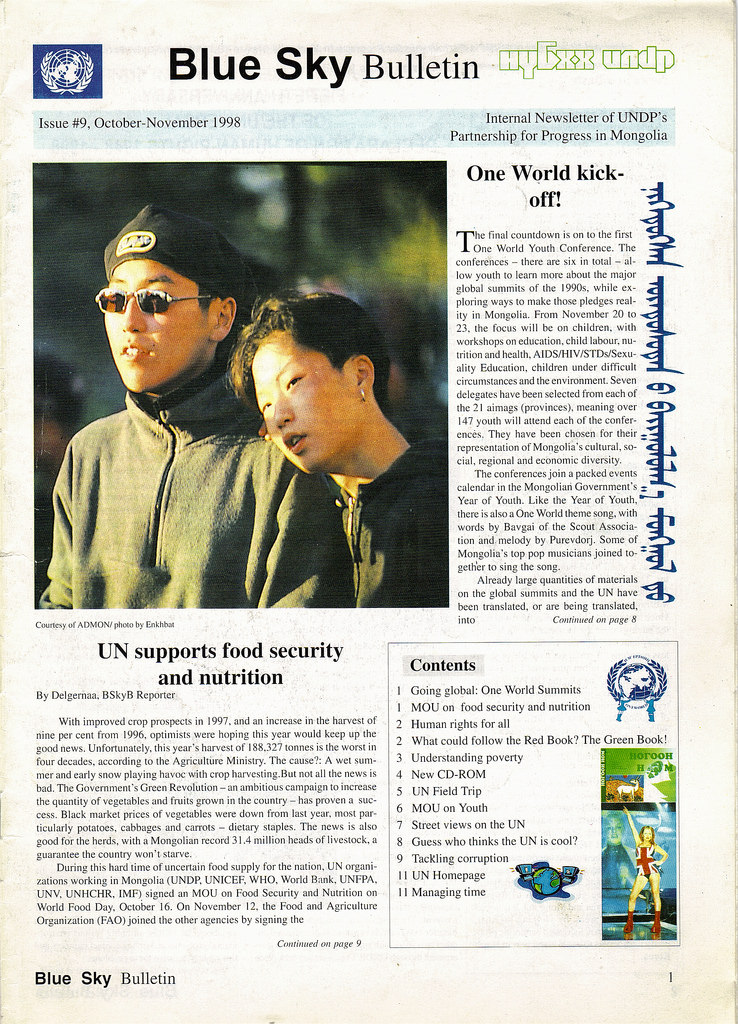
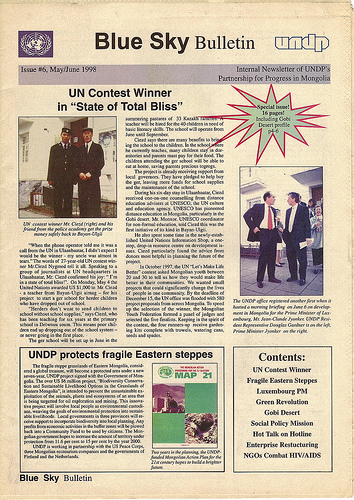
Blue Sky Bulletin
The Blue Sky Bulletin newsletter was launched in 1997 initially as a simple, photocopied handout. It quickly founds its purpose and its audience, becoming a key way to communicate what was happening in the country and a crucial resource for the global development community, scholars, the media and anyone trying to figure out what was happening in a crazy and chaotic time. Blue Sky Bulletin was distributed via email and by post and proved to be a popular and oft-cited resource on the country. The quality of its production also paralleled Mongolia’s growing capacity to publish to international standards, as desktop publishing software became available and printers switched to modern print technologies. Blue Sky Bulletin evolved from a rough, newsprint black and white publication to becoming a glossy, full-colour, bilingual newsletter distributed around Mongolia and the world.
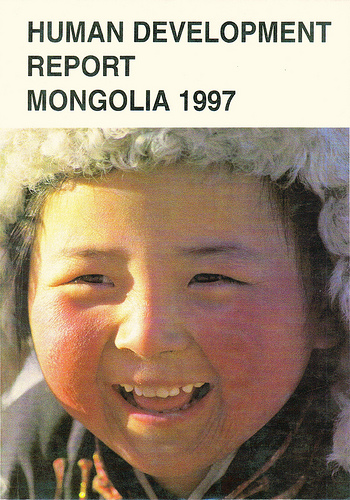
The Mongolian Human Development Report 1997 (MHDR), the country’s first, placed the story of the Mongolian people during the transition years (post-1989) at its heart, using photographs, stories and case studies to detail the bigger narrative at play.
This groundbreaking Mongolian Human Development Report went beyond just chronicling Mongolia’s state of development in statistics and graphs. Designed, laid out and published in Mongolia, the report broke with the practices of many other international organisations, who would publish outside of Mongolia – denying local companies much-needed work and the opportunity to develop their skills. The report’s costs helped to kick-start a publishing boom in the country and significantly raised standards in design and layout in the country. The foundations laid down by the project producing the report ushered in a new age in publishing for Mongolia.
The report’s launch was innovative, not only being distributed for free across the country, but also part of a multimedia campaign including television programming, public posters, town hall meetings and a ‘roadshow’ featuring the report’s researchers and writers.
The initial print run of 10,000 copies was doubled as demand for the report increased. To the surprise of many, once hearing about the free report, herders would travel to the capital, Ulaanbaatar, to pick up their copy. The report proved people cared passionately about the development of their country and that development concepts are not to be the secret domain of ‘development practitioners’. The report also became an English language learning tool as readers compared the Mongolian and English-language versions.
Assembled by a team of health experts after the Fourth International Congress on AIDS in Asia and the Pacific, the Mongolian AIDS Bulletin was published in 1997 in the middle of an HIV/AIDS crisis. It provided timely information and health resources in the Mongolian language and was distributed across the country.
“Mongolia’s first AIDS Bulletin marked the beginning of the UNDP Response to HIV/AIDS/STDs Project back in the autumn of 1997. Over 5,000 copies of the magazine were distributed across the country, offering accurate information on the HIV/AIDS situation. The project has been pivotal in the formulation of a national information, education and communication (IEC) strategy, bringing together NGOs, donors, UN agencies and the government.”
Source: YouandAids: The HIV/AIDS Portal for Asia Pacific
Green Book
In the Mongolian language, the Mongolian Green Book details effective ways to live in harmony with the environment while achieving development goals. Based on three years’ work in Mongolia – a Northeast Asian nation coping with desertification, mining, and climate change – the book presents tested strategies.
EPAP Handbook
The Environmental Public Awareness Handbook was published in 1999 and features the case studies and lessons learned by UNDP’s Mongolian Environmental Public Awareness Programme (EPAP). The handbook draws on the close to 100 small environmental projects the Programme oversaw during a two-year period. These projects stretched across Mongolia, and operated in a time of great upheaval and social, economic and environmental distress. The handbook is intended for training purposes and the practice of public participation in environmental protection.
In its 2007 Needs Assessment, the Government of Mongolia found the EPAP projects “had a wide impact on limiting many environmental problems. Successful projects such as the Dutch/UNDP funded Environmental Awareness Project (EPAP), which was actually a multitude of small pilot projects (most costing less than $5,000 each) which taught local populations easily and efficiently different ways of living and working that are low-impact on the environment.”
Mongolia Updates 1997, 1998, 1999
Mongolia Update 1998 detailed how the country was coping with its hyperinflation and the Asian economic crisis.
1998 proved a tumultuous year for Mongolia. The country’s existing economic crisis caused by the transition from Communism to free markets was made worse by the wider Asian Crisis. The government was destabilised, leading to an often-confusing revolving door of political figures. In order to help readers better understand the political changes in the country, a special edition of Mongolia Update was published that year.
UNDP Mongolia: The Guide
The Guide, first published in 1997, provided a rolling update on UNDP’s programmes and projects in Mongolia during a turbulent time (1997-1999). The mission simultaneously had to deal with the 1997 Asian Crisis (http://en.wikipedia.org/wiki/1997_Asian_financial_crisis) and the worst peacetime economic collapse in post-WWII history.
Each edition came with short project and context summaries, key staff contacts, and facts and figures on how the country was changing. For the first time, any member of the public could grasp what the UN was up to in the country and be able to contact the project staff. An unusual level of transparency at the time for a UN mission.
Memoranda of Understanding
Three Memoranda of Understanding were negotiated with the Mongolian Government to help focus efforts and aid the attainment of internationally-agreed resolutions. This was affirmed by a series of youth conferences, One World, held in 1998 and 1999.
Strategy and Leadership in a Crisis
The scale and gravity of the crisis that struck Mongolia in the early 1990s was only slowly shaken off by the late 1990s. The economic and social crisis brought on by the collapse of Communism and the ending of subsidies and supports from the Soviet Union, led to a sharp rise in job losses, poverty, hunger, and family and community breakdowns.
The challenge was to find inspiring ways out of the crisis, while building confidence and hope. The sort of challenges confronted by the UNDP Mongolia Communications Office included:
1) A food crisis: agricultural production was down sharply, and the traditional nomadic herding economy, while at peak herd, was failing to get the meat to markets and to a high enough standard to restore export levels to where they once were. As a result, a cross-border trading frenzy became the solution to falling domestic food production and availability.
2) HIV/AIDS/STDs crisis
3) A major banking crisis
4) Both the Asian Financial Crisis and the Russia Crisis.
5) An ongoing political crisis and an inability to form stable governments.
“Mongolia is not an easy country to live in and David [South] showed a keen ability to adapt in difficult circumstances. He was sensitive to the local habits and cultures and was highly respected by his Mongolian colleagues. … David’s journalism background served him well in his position as Director of the Communications Unit. … A major accomplishment … was the establishment of the UNDP web site. He had the artistic flare, solid writing talent and organizational skills that made this a success. … we greatly appreciated the talents and contributions of David South to the work of UNDP in Mongolia.” Douglas Gardner, UN Resident Coordinator and UNDP Resident Representative Mongolia
The response by the Communications Office has been cited in numerous articles, stories, publications and books. It has also contributed to the development of the human development concept and understanding of human resilience in a crisis and innovation in a crisis. Book citations include:
In 2001, the UN won the Nobel Peace Prize for “their work for a better organized and more peaceful world” and its communications innovations, with work such as that in Mongolia being cited as a contributing factor to the awarding of the Prize.
In 2000, the Millennium Development Goals (MDGs) were launched in a 15-year bid to use a focused approach to development centred around eight goals to accelerate improvements to human development. From 2000 to 2005, work was undertaken in various UN missions (Mongolia, South Africa, Turkmenistan, Ukraine) to communicate the goals and to reshape communications activities around the goals.
*Curbing Corruption in Asia: A Comparative Study of Six Countries by Jon S. T. Quah, Eastern Universities Press, 2003
This groundbreaking Mongolian Human Development Report – the country’s first – went beyond just chronicling Mongolia’s state of development in statistics and graphs. It placed the story of the Mongolian people during the transition years (post-1989) at its heart, using photographs, stories and case studies to detail the bigger narrative at play.
Designed, laid out and published in Mongolia, the report broke with the practices of many other international organisations, who would publish outside of Mongolia – denying local companies much-needed work. The report’s costs helped to kick-start a publishing boom in the country and significantly raised standards in design and layout. The foundations laid down by the project producing the report ushered in a new age in publishing for Mongolia.
The report’s launch was innovative, not only being distributed for free across the country, but also part of a multimedia campaign including television programming, public posters, town hall meetings and a ‘roadshow’ featuring the report’s researchers and writers.
The initial print run of 10,000 copies was doubled as demand for the report increased. To the surprise of many, once hearing about the free report, herders would travel to the capital, Ulaanbaatar, to pick up their copy. The report proved people cared passionately about the development of their country and that development concepts are not to be the secret domain of ‘development practitioners’.
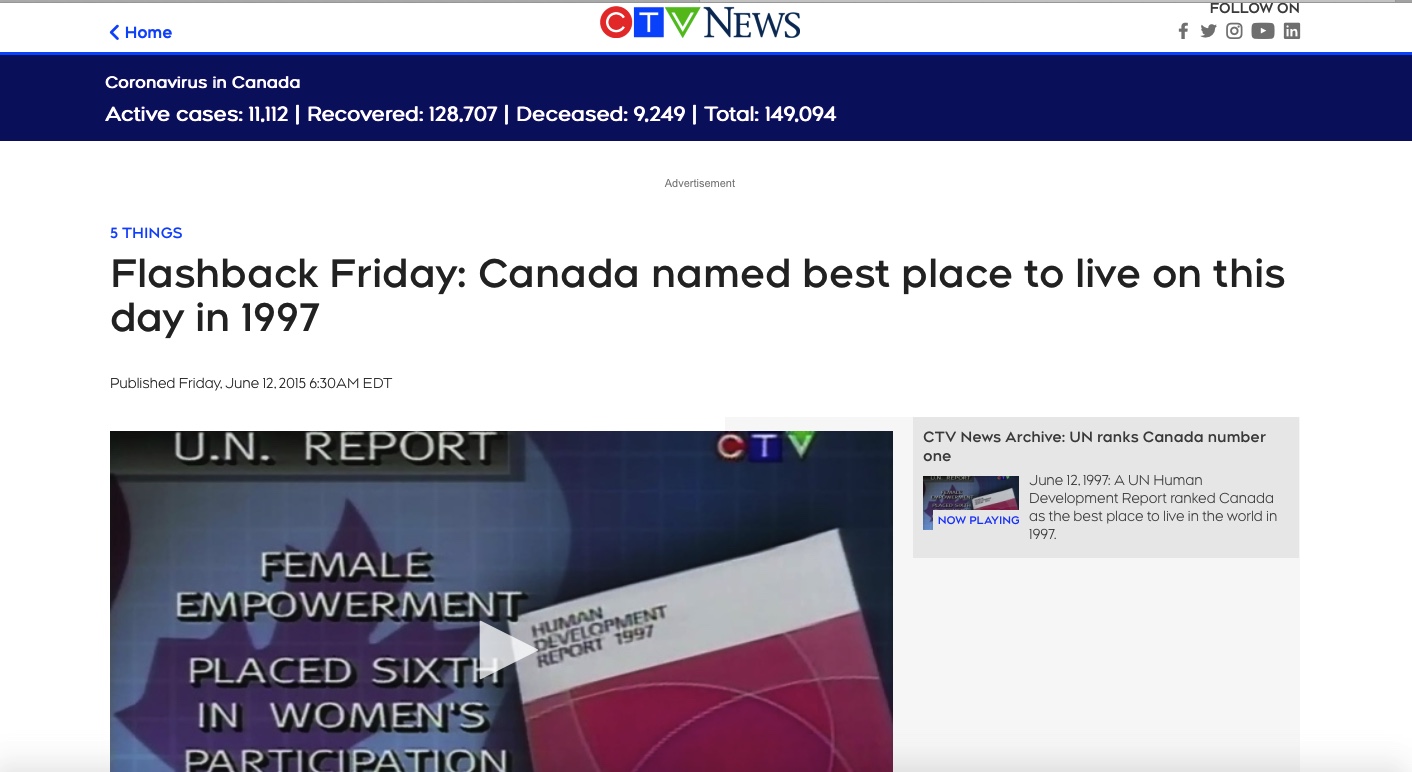
The MHDR 1997 was so popular it had two print runs. It has been cited in many books, journals and publications. It was the first exhaustive account of the country’s turbulent transition years and mapped the extent of poverty in the country.The Human Development Report Mongolia 1997 is available in many library collections around the world. In this case, the Oulu University Library Finland. The award-winning UN/UNDP Mongolia Development Portal was launched in 1997. It quickly became the go-to source on Mongolia’s development challenges.CTV News: “Canada named best place to live on this day in 1997”. I considered it an enormous privilege to be given the opportunity to work with fellow Canadians on sharing our experiences with Mongolia during the 1990s crisis.
“On this day in 1997, Canada was on top of the world. Or at least, on top of the United Nations’ annual ranking of the best places to live in the world.
“CTV News archival footage captured a proud moment for Canada on June 12, 1997, as then-National News anchor Lloyd Robertson hailed the UN ranking as a “report card to be proud of.”
“It’s not quite straight As but Canada is still at the head of the class,” Robertson said. “In fact, it’s No. 1 in the world.”
“Canada beat out France, Norway, the United States and Iceland for top spot on the UN human development list, which ranks countries based on a variety of factors linked to quality of life.
“It was the fourth straight year Canada topped the list.
“Canada earned top marks in the life expectancy, health, education and income categories, which helped propel the country’s overall Human Development Index score to No. 1 in the world.”
























 David South Consulting
You must be logged in to post a comment.