Tag: Ulaanbaatar

  • Philippine Conference Tackles Asia’s AIDS Crisis

    Philippine Conference Tackles Asia’s AIDS Crisis

    Mongolians attend for first time

    By David South

    UB Post (Ulaanbaatar, Mongolia), October 28, 1997

    Manila, Philippines – More than 2,500 delegates have gathered in the steamy hot Philippine capital to renew the fight against HIV and AIDS.

    Working up a sweat alongside other participants at the Fourth International Congress on AIDS in Asia and the Pacific are nine Mongolians – a first that isn’t going unnoticed.

    The Congress opened Saturday (October 25) to the pounding beat of a theme song performed by teenagers, championing defiance of death and celebration of life.

    That tone was echoed by Dr Peter Piot, executive director of UNAIDS, the Joint United Nations Programme on HIV/AIDS. He said the epidemic can be slowed down with the right public health measures – a positive message for Mongolia as it grapples with an STD crisis that many believe leaves the country at risk of an HIV/AIDS epidemic.

    The magnitude of that epidemic outside Mongolia is startling. Around the world, 23 million people are infected with HIV, the virus that causes AIDS. Between 5 and 7 million of them live in the Asia/Pacific region.

    “The point is that prevention is feasible,” Piot told the Congress. “The results can be seen in those countries in the Asia-Pacific region where the epidemic has stalled or is in retreat.

    “A good indicator for unsafe sexual behaviour is the STD rate. I am impressed at the sustained decline in STD rates in Australia, Hong Kong, Singapore and Thailand over the past decade.

    “But I am concerned actual declines in HIV in this region have occurred only in Australia, New Zealand and Thailand.”

    The countries to Mongolia’s immediate south and north are experiencing exploding health crises. In China, HIV/AIDS is increasing at a rapid rate due to factors including growing prostitution, drug use and travel – all by-products of a booming economy. The infected population is estimated at 400,000 and is expected to reach 1.2 million by the year 2000, according to China’s national AIDS committee.

    To the north in Russia, a complete collapse in the public health system has dramatically slashed life expectancy and led to an upsurge in many diseases, including tuberculosis and HIV/AIDS.

    With many Mongolians doing business in both these countries, there are numerous opportunities for AIDS to enter the country.

    A wide range of topics is under discussion at the gathering, with women, youth and STD-control measures of particular interest to the Mongolian delegates.

    For the Mongolians, the Congress is an opportunity to learn from other countries’ successes and failures in the fight against AIDS.

    Mongolia’s nine-member delegation includes four doctors – Dr K. Davaajav, head of the AIDS/STD Department of the Research Centre for Infectious Diseases, Health Ministry representative Dr S. Enkhbat. Medical University director Dr Lkhagvasuren and Dr Darisuren from the United Nations Population Fund.

    Also in the team are Democrat MPs B. Delgermaa and Saikhanbileg, UNICEF’s B. Bayarmaa and two representatives from women’s NGOs: S. Tsengelmaa from the Women’s Information and Research Centre and N. Chinchuluun, executive director of the Mongolian Women Lawyers Association.

    On Sunday, several presentations focused on the difficulties of getting people to use condoms.

    In Fiji, studies found the majority of the population was aware of AIDS and had access to condoms, but still chose not to use them.

    Lisa Enriquez, a Filipino woman who is HIV-positive, gave a sobering speech on the epidemic.

    “One of the most important things I’ve learned from the epidemic is human nature. AIDS is such a humanizing disease. It reminds us of being human, complete with all the weaknesses and imperfections of being human.

    “Let us not kid ourselves: changing behaviour is not easy. One doesn’t change because somebody tells him or her to do so.

    “We will need to get our act together, institutionalize our efforts and continue working harder with passion and perserverance.”

    The Congress continues until October 30.

    More on the Congress here: Fourth International Congress on AIDS in Asia and the Pacific

    “The Fourth International Congress on AIDS and Asia in the Pacific convened 3,000 scientists, people working in the communities, and people living with HIV/AIDS to discuss the state of AIDS in Asia and the Pacific and how the problem is being addressed now and into the future. The following topics addressed at the Congress are explored: the extent of the HIV epidemic, HIV risk behaviors, women and HIV, clinical manifestations of HIV infection, antiretroviral therapy, and perinatal HIV transmission. HIV is spread differently among these countries and a nation’s wealth largely determines its ability to execute prevention programs and patient access to therapy. Most patients in Asia pay for their own medications. It is hoped that more prosperous and technologically advanced nations will demonstrate stronger leadership and commitment in the fight against AIDS in the region.” Phanuphak P. Fourth International Congress on AIDS in Asia and the Pacific. J Int Assoc Physicians AIDS Care. 1998 Feb;4(2):22-5. PMID: 11365085.

    More on HIV/AIDS:

    https://davidsouthconsulting.org/2020/12/18/feds-call-for-aids-blood-system-inquiry-some-seniors-infected/

    https://davidsouthconsulting.org/2020/12/17/lamas-against-aids/

    https://davidsouthconsulting.org/2017/08/15/mongolian-aids-bulletin/

    https://davidsouthconsulting.org/2022/10/31/rainforest-rubbers-save-lives/

    Creative Commons License

    This work is licensed under a
    Creative Commons Attribution-Noncommercial-No Derivative Works 3.0 License.

    ORCID iD: https://orcid.org/0000-0001-5311-1052.

    © David South Consulting 2023

  • Lamas Against AIDS

    Lamas Against AIDS

    By David South

    UB Post (Ulaanbaatar, Mongolia), November 5, 1997

    Manila, Philippines – Since HIV is contracted through sex, the disease has always been a difficult subject for the world’s religious leaders. When there is sex to be discussed, no religion can do it without bringing up morality.

    This moral debate about bedroom behaviour has tainted discussion of AIDS in many countries. At the extreme end of the spectrum, some evangelical Christian leaders in the US have painted AIDS as an apocalyptic disinfectant for humanity.

    Not surprisingly, this attitude has not helped in educating the faithful that AIDS can happen to anyone and its victims should be treated like any other ill person.

    The Philippine conference heard that the standoff between the world’s leaders and public health authorities must stop. Dr Peter Piot, executive director of UNAIDS, pointed to the numerous delegates from the world’s religions and called on others to follow their example.

    “In Myanmar, the Myanmar Council of Churches, the YWCA and other community-based organizations have joined hands with local authorities, health workers and Buddhist groups for community-based prevention, care and support programmes,” he told the assembly.

    “This is the best practice in action.”

    Mongolian delegate Dr Altanchimeg thinks a similar approach could work in this country.

    “Now every Mongolian goes to see lamas. It’s a good channel to advocate for AIDS education. In Thailand, lamas are very experienced at this. People believe in lamas.”

    Like their colleagues in Thailand and Myanmar, Cambodian lamas have been in the forefront of AIDS education.

    Lamas there use festivals and ceremonies to raise the issue.

    You Chan, a 30-year-old lama from Tol Sophea Khoun monestary in Phnom Penh, likes to raise the issue delicately, by referring to diseases in Buddha’s time.

    “I feel it is difficult to speak about sexual methods with a large audience – I will not speak to sexual methods.

    “At first, it was very difficult. People would ask why a monk would say such things. But I tried and tried and the people understood who is helping them.

    “My message to Mongolia’s lamas is this: you have a moral responsibility to educate the people about AIDS, that it is happening all around the world and there is no medicine to cure it.

    “You have to take care in the name of Buddhism to help people in this world.”

    You Chan teaches lamas at 15 temples in Cambodia, who pass the message along to other lamas and congregations.

    Update: Interestingly, two decades after this story was written, it seems the other kind of llama’s antibodies can “neutralize a wide range of circulating HIV viruses”. From ScienceDaily: How llamas’ unusual antibodies might help in the fight against HIV/AIDS

    More on HIV/AIDS:

    https://davidsouthconsulting.org/2020/12/18/feds-call-for-aids-blood-system-inquiry-some-seniors-infected/

    https://davidsouthconsulting.org/2017/08/15/mongolian-aids-bulletin/

    https://davidsouthconsulting.org/2020/12/17/philippine-conference-tackles-asias-aids-crisis/

    https://davidsouthconsulting.org/2022/10/31/rainforest-rubbers-save-lives/

    Creative Commons License

    This work is licensed under a
    Creative Commons Attribution-Noncommercial-No Derivative Works 3.0 License.

    ORCID iD: https://orcid.org/0000-0001-5311-1052.

    © David South Consulting 2023
  • Wild East 17 Years Later | 2000 – 2017

    Wild East 17 Years Later | 2000 – 2017

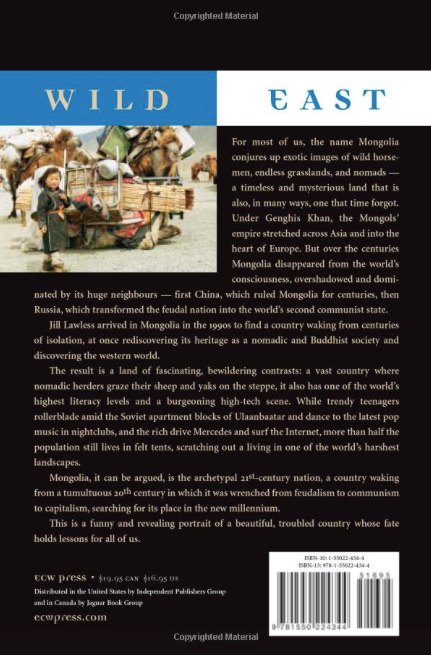
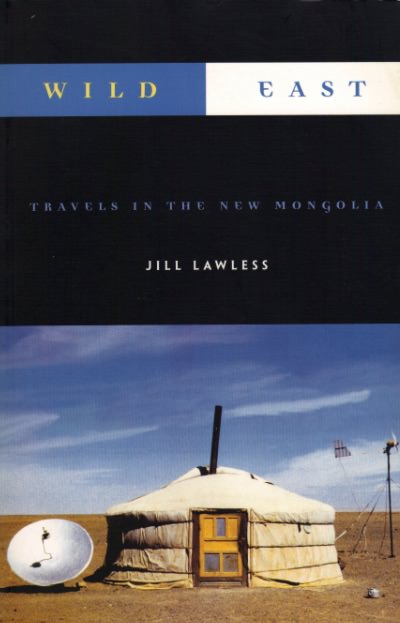
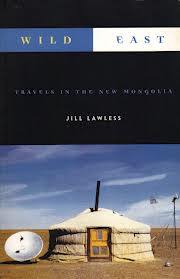
    Published in 2000 (ECW Press: Toronto), Wild East: Travels in the New Mongolia is 17 years old. It is also 100 years since the 1917 October Revolution in Russia that began the long experiment of the Soviet Union. Mongolia was the second country after Russia to adopt Communism.

    “Engaging…a revealing and often amusing account of her journeys through a beautiful country awakening from a tumultuous era.”

    Wild East author and foreign correspondent Jill Lawless.

    “One of the top 10 Canadian travel books of 2000.” The Globe and Mail

    The world has changed considerably since then; and so has Mongolia. The digital revolution has rolled across the planet, the attacks of 9/11 unleashed a wave of violence and wars, and Mongolia even became the fastest-growing economy in the world a few years ago (2012). But back when this book was researched, Mongolia was just coming out of decades of isolation within the Soviet orbit under Communism, and the country experienced in the 1990s “one of the biggest peacetime economic collapses ever” (Mongolia’s Economic Reforms: Background, Content and Prospects, Richard Pomfret, University of Adelaide, 1994). 

    “The years 1998 and 1999 have been volatile ones for Mongolia, with revolving door governments, the assassination of a minister, emerging corruption, a banking scandal, in-fighting within the ruling Democratic Coalition, frequent paralysis within the Parliament, and disputes over the Constitution. Economically, the period was unstable and rife with controversies.” Mongolia in 1998 and 1999: Past, Present, and Future at the New Millennium by Sheldon R. Severinghaus, Asian Survey, Vol. 40, No. 1, A Survey of Asia in 1999 (Jan. – Feb., 2000), pp. 130-139 (Publisher: University of California)

    That collapse made for some crazy times, as Wild East shows. 

    Wild East was called one of the top 10 Canadian travel books of 2000 by The Globe and Mail. 

    Reviews for Wild East: Travels in the New Mongolia by Jill Lawless:

    The Globe and Mail

    “Engaging…a revealing and often amusing account of her journeys through a beautiful country awakening from a tumultuous era.”

    The Georgia Straight, Vancouver

    “This readable and reportorial book is the perfect antidote to … those tiresomely difficult, pointlessly dangerous, and essentially fake expedtions undertaken against the advice of local people who know better.”

    Toronto Star

    “Lawless introduces us to Mongolia’s tabloid press, to teenage mineworkers, sharp-eyed young hustlers, nomads whose only possessions are their livestock, Mongolian wrestlers and Mongolian horse races.”

    Mongolian Buryat Civilisation Bookstore

    “Wryly funny and wide-spectrum account of Mongolia’s tumultuous rebirthing into the 21st century. Half the population lives in Soviet apartment blocks and watches satellite TV but the other half still eek a living from the exquisite, barren hills while living in nomadic felt tents. Of course, I’d much rather be in the tents… but whatever your preference, you will definitely enjoy Ms. Lawless’ writing. She was editor of an Ulaan Baator newspaper for two years, and she tells it like it is. Very highly recommended.”

    Alicia J. Campi in Mongolian Studies

    “Jill Lawless’ book is not a scholarly tome per se, yet it is of definite value to the contemporary Mongolian scholar … Lawless’ period is 1997-1999, the heart of the tumultuous and ill-spent years of Democratic Coalition Government… a period of great hopes for democratic flowering and free market enterprise leading the nation to prosperity and progress.” 

    Join the conversation about Wild East: Travels in the New Mongolia at goodreads and post reviews: https://www.goodreads.com/book/show/773080.Wild_East

    Read a story by Jill in The Guardian (9 June 1999): Letter from Mongolia | Herding instinct .

    Copies of Wild East: Travels in the New Mongolia by Jill Lawless are still available in various editions and languages.
    A promotional poster for Wild East from 2003.

    Explore further Jill Lawless’ work here: https://muckrack.com/jilllawless

    UK edition (Summersdale Travel: 2002). Front cover images © David South and Liz Lawless.

    The New York Post called Wild East: Travels in the New Mongolia “harrowing, hilarious” (April 26, 2016).
    New brand sites for Jill Lawless and Wild East on the way for 2021.
    “This is a good, fun book about life in Mongolia. … it’s an interesting and often amusing series of stories loosely connected.”

    On the difference between Wild East: Travels in the New Mongolia and other travel writing on contemporary Mongolia: 

    “Others sent me Jill Lawless’s Wild East: The New Mongolia, a compilation of pieces she wrote when she was editor of Mongolia’s English-language newspaper, the UB Post, during Mongolia’s transition from a socialist people’s republic to young democracy. With the wind shaking the frame of my ger, I lit the stove and read what these and other writers claimed to have found just outside my flapping felt walls.

    “By the time veteran journalist Jasper Becker’s Mongolia: Travels in an Untamed Land arrived, I had put aside books written since Mongolia opened up to the West in the early 1990s. Most Western travellers and writers discovered the same sights from the back of a borrowed horse. Only Lawless had investigated the place over time on its own terms. The others, full of pith and vinegar and a standard set of assumptions about what they would find, built books on flights of fancy – golfing across Mongolia, following the path of medieval monks, ‘rediscovering shamanism’ – that were flimsier even than those that had set me in motion. The books were as exciting as museum diorama, papier-mâché models of their ‘medieval’ travels and capitalist fantasies.” Three Years in Mongolia: Trying to be a Travel Writer, Luke Meinzen, Kill Your Darlings, 10 April 2012

    “I put Becker away and pulled out Wild East by Jill Lawless. She was heaps better than Becker, which wasn’t hard.” MÖRÖN TO MÖRÖNTwo Men, Two Bikes, One Mongolian Misadventure, Tom Doig, Allen & Unwin, 2013

    “In the early 2000s, Canadian journalist Jill Lawless accepted a correspondent position at a news outlet in the remote and isolated foreign capital of Ulaanbaatar, Mongolia. At that time, Mongolia’s media was newly privatized from beneath Communist oversight, and her role was as much a consultant for how to run a newspaper under freedom of the press, as she was a journalist with the UB Post.

    Lawless was in Mongolia during a time of exciting political and cultural transition. Wild East is less of a travel memoir, but rather essays and shorter narratives of creative non-fiction that describe her adventures in reporting. Even so, it provides a compelling narrative into the historical moment when Mongolia dropped its isolation and began to connect to China and Europe on its journey toward modernization.” Three Works of Travel Writing to Ignite Your Imagination (while we patiently wait for the pandemic to run its course), Barefoot Journey with Amanda, 10 Nov 2020.

    Creative Commons License

    This work is licensed under a
    Creative Commons Attribution-Noncommercial-No Derivative Works 3.0 License.

    ORCID iD: https://orcid.org/0000-0001-5311-1052.

    © David South Consulting 2022

  • UN Contest Winner In State Of Total Bliss

    UN Contest Winner In State Of Total Bliss

    DS Consulting logo copy

    In the autumn of 1997, a national contest – Let’s Make Life Better! – was launched to inspire and mobilise Mongolian youth between the ages of 20 and 30. The idea was simple: for youth to come up with the best ideas to “design their own small and local development project.”

    Launched with a cross-country advertising campaign, the prize of US $1,000 to implement the winning project (a substantial sum of money at the time) drew 580 project proposals by the contest deadline of December 15, 1997.

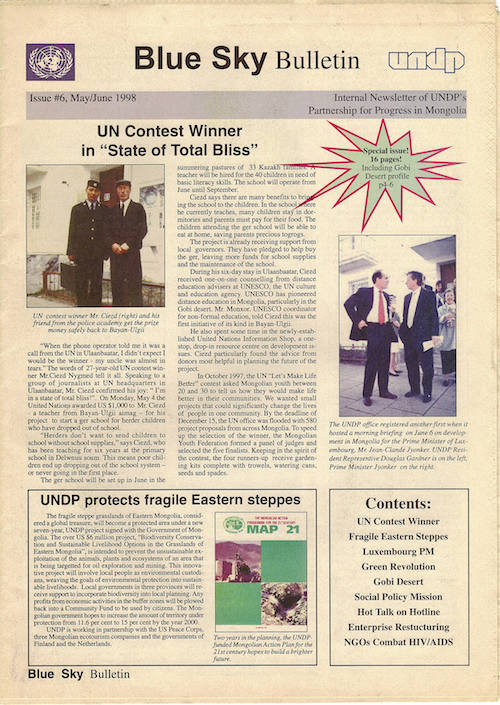
    So many of the ideas were excellent, they were later to receive support from either the government, NGOs or international organisations. Read the story in the Blue Sky Bulletin newsletter about the contest’s winner below:

    Editor: David South

    Publisher: UNDP Mongolia Communications Office

    Published: Blue Sky Bulletin, Issue Number Six, May/June 1998 

    “When the phone operator told me it was a call from the UN in Ulaanbaatar, I didn’t expect I would be the winner – my uncle was almost in tears.”

    The words of 27-year-old UN contest winner Mr. Ciezd Nygmed tells it all. Speaking to a group of journalists at UN headquarters in Ulaanbaatar, Mr. Ciezd confirmed his joy: “I’m in a state of total bliss!”

    On Monday, May 4 the United Nations awarded US $1,000 to Mr. Ciezd – a teacher from Bayan-Ulgii aimag – for his project to start a ger school for herder children who have dropped out of school.

    “Herders don’t want to send children to school without school supplies,” says Ciezd, who has been teaching for six years at the primary school in Delwnuu soum. This means poor children end up dropping out of the school system – or never going in the first place.

    The ger school will be set up in June in the summering pastures of 33 Kazakh families. A teacher will be hired for the 40 children in need of basic literacy skills. The school will operate from June until September.

    Ciezd says there are many benefits to bringing the school to the children. In the school where he currently teaches, many children stay in dormitories and parents must pay for their food. The children attending the ger school will be able to eat at home, saving parents precious togrogs.

    The project is already receiving support from local governors. They have pledged to help buy the ger, leaving more funds for school supplies and the maintenance of the school.

    During his six-day stay in Ulaanbaatar, Ciezd received one-on-one counselling from distance education advisers at UNESCO, the UN culture and education agency. UNESCO has pioneered distance education in Mongolia, particularly in the Gobi desert. Mr. Monxor, UNESCO coordinator for non-formal education, told Ciezd this was the first initiative of its kind in Bayan-Ulgii.

    He also spent some time in the newly-established United Nations Information Shop, a one-stop, drop-in resource centre on development issues. Ciezd particularly found the advice from donors most helpful in planning the future of the project.

    In October 1997, the UN “Let’s Make Life Better!” contest asked Mongolian youth between 20 and 30 to tell us how they would make life better in their communities. We wanted small projects that could significantly change the lives of people in one community. By the deadline of December 15, the UN office was flooded with 580 project proposals from across Mongolia. To speed up the selection of the winner, the Mongolian Youth Federation formed a panel of judges and selected the five finalists. Keeping in the spirit of the contest, the four runners-up receive gardening kits complete with trowels, watering cans, seeds and spades.

    BSKYB 6_mini
    Cover stories: UN contest winner and visit of Jean-Claude Juncker to UNDP Mongolia (pictured with UNDP Resident Representative Douglas Gardner).
    DSC web address in green_mini (1)

    ORCID iD: https://orcid.org/0000-0001-5311-1052.

    © David South Consulting 2017