Categories
Archive

Powerful Solar Light Spurring Income-Making Opportunities

By David SouthDevelopment Challenges, South-South Solutions

SOUTH-SOUTH CASE STUDY

A clever innovator from India has built a highly durable solar lantern that also doubles as a mobile phone charger.

The Sunlite lantern – the JS 30 MOB Sunlite – made by Sunlite Solar (sunlite-solar.com) is an LED (http://en.wikipedia.org/wiki/Light-emitting_diode) light packed with clever innovations. It is completely self-contained and does not require any extra parts, cables or separate solar panel to charge it. The clever design includes a pop-up, fold-down handle, a powerful solar PV (photovoltaic) panel on its top that – with a day out in the sun – charges the lantern’s battery enough to provide around 8 hours of 360-degree light when the sun goes down. It is also highly durable and moisture and heat resistant and can withstand a drop on a hard floor.

The manufacturer of the Sunlite lantern is India Impex, which focuses on making and exporting high quality off-grid solar lighting products and sees itself as a “socially driven company.” Founded in 2009, it has built up its reputation as a global vendor to humanitarian and relief agencies.

To date, the Sunlite lantern has been distributed to people following Japan’s 2011 earthquake and tsunami, after Thailand’s 2011 floods and to refugees caught up in the ongoing crisis in Syria.

“For the size of the lamp, for the number of hours, for the features we give, including the mobile (phone) charging – we are 100 per cent portable – it is all integrated,” said Sunlite representative Divyesh Thakkar, while demonstrating the lantern at the 2012 Global South-South Development Expo, held recently in Vienna, Austria (southsouthexpo.org).

The mobile phone charging capability has been seized as a great way to turn the lantern into an income-generating opportunity. Already, people are forming co-ops and charging rent time on the lantern for recharging mobile phones. And there are a few clever tweaks to the lantern to help control this.

“I don’t want this to be abused – I want it to be smart,” said Thakkar. “When someone comes in and charges the mobile phone and forgets, it is going to cut off after 20 minutes.”

Sunlite lanterns have many uses, according to the product’s maker. One aspect the manufacturer is emphasizing is the importance of light to the security of women and children. There is overwhelming evidence that better lighting makes for a more secure environment, and allows people to do more things safely at night. Children can look out for environmental threats such as poisonous snakes and spiders, and women and girls can feel safe doing things like going to the toilet without worrying that somebody might attack them in the dark.

Solar power is being seen as a way to get electricity to people in areas bypassed by conventional electricity grid networks. It also helps move people away from expensive, polluting and dangerous alternatives such as diesel generators, paraffin lamps, gas stoves and coal or dung fires.

“We compare our solar lantern to the kerosene lantern,” Sunlite representative Sagar Mehta explained. “On a payback basis, you use an approximate of 30 to 40 cents of a US dollar of kerosene every day for a four-hour light. First of all, it is very harmful – smoke inhalation, illnesses, burns, all sorts of things, security issues.

“That will cost a family one third or half of its income on a daily basis. If we can change this around where if we can make a solar lantern, where the sun is free, that can pay back in three months and you start earning rather than paying, (they are) making a living.”

Solar-powered devices have many advantages. They can power up their batteries during the day while sitting in the sunshine and then be a source of light and electricity at night. This free energy source reduces the cost of running lights at night and means people can do a wide range of activities, from reading and studying to running a business or socializing. Some have even used Sunlite lanterns as landing lights for aircraft runways in Africa.

Sunlite lanterns are currently being distributed to people in disaster situations and also in refugee camps and displaced persons communities.

“The lamp was developed as a basic light for refugees who don’t have anything and have been displaced from homes,” said Mehta. “We supply in excess of 50,000 lamps every year to aid agencies, in particular the (UN’s) refugee agency.”

In order to keep tight control on quality and be able to have an inventory of lanterns ready to go on a moment’s notice, the company has invested in and set up its own in-house manufacturing facilities in India.

Sunlite Solar sees itself as a social enterprise. It is not focused on quick profits, and developing the lantern has taken time.

“It requires a huge amount of investment and time,” said Thakkar. “We spent two years without selling a single piece. What we did was our R&D and went out in the field, some of the most dangerous places – Rwanda, Uganda – actually training people to use it and getting the awareness.

“When you work with the UN, when you work through other government channels, it is just a long process which you have to be willing to go through.”

Published: December 2012

LINKS:

1) More information on how renewable solar technologies work. Website:http://www.energysavingtrust.org.uk/Generating-energy/Choosing-a-renewable-technology/Solar-panels-PV 


2) Solar Sister: Solar Sister eradicates energy poverty by empowering women with economic opportunity. Website:http://www.solarsister.org/

3) D.Light Design: D.light is a for-profit social enterprise whose purpose is to create new freedoms for customers without access to reliable power so they can enjoy a brighter future. Website: http://www.dlightdesign.com/

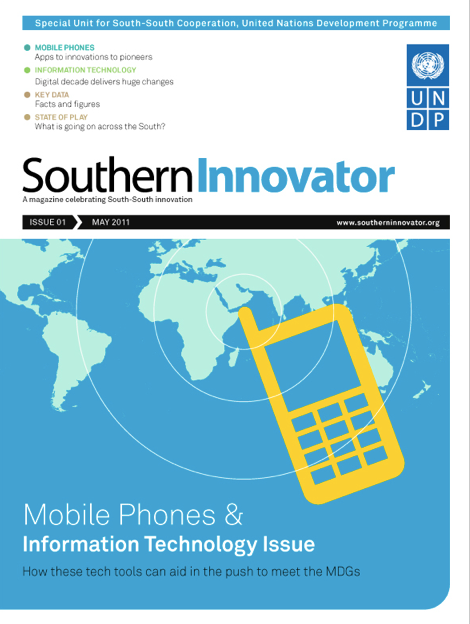
Development Challenges, South-South Solutions was launched as an e-newsletter in 2006 by UNDP’s South-South Cooperation Unit (now the United Nations Office for South-South Cooperation) based in New York, USA. It led on profiling the rise of the global South as an economic powerhouse and was one of the first regular publications to champion the global South’s innovators, entrepreneurs, and pioneers. It tracked the key trends that are now so profoundly reshaping how development is seen and done. This includes the rapid take-up of mobile phones and information technology in the global South (as profiled in the first issue of magazine Southern Innovator), the move to becoming a majority urban world, a growing global innovator culture, and the plethora of solutions being developed in the global South to tackle its problems and improve living conditions and boost human development. The success of the e-newsletter led to the launch of the magazine Southern Innovator.  

Creative Commons License

This work is licensed under a
Creative Commons Attribution-Noncommercial-No Derivative Works 3.0 License.

ORCID iD: https://orcid.org/0000-0001-5311-1052.

© David South Consulting 2022

Categories
Archive Development Challenges, South-South Solutions Newsletters Southern Innovator magazine

Solar Solution to Lack of Electricity in Africa

By David SouthDevelopment Challenges, South-South Solutions

SOUTH-SOUTH CASE STUDY

Electricity is critical to improving human development and living standards. Yet, for many in the global South, electricity is either non-existent or its provision is patchy, erratic, unreliable or expensive.

Just as Africa has been able to jump a generation ahead when it comes to communications through the mass adoption of mobile phones – a much cheaper option than trying to provide telephone wires and cables across the continent – so it could also bypass the burdensome costs of providing electricity mains to everyone by turning to smaller electricity generation technologies such as solar power. This is called “off-grid” electricity.

The UN has set the goal of universal access to modern energy services by 2030. A report issued in April 2010 by United Nations Secretary-General Ban Ki-moon’s Advisory Group on Energy and Climate Change (AGECC) calls for expanding energy access to more than 2 billion people (http://www.unido.org/fileadmin/user_media/Publications/download/AGECCsummaryreport.pdf).

The report found that a lack of access to modern energy services represents a significant barrier to development. Some 1.6 billion people still lack access to electricity.

A reliable, affordable energy supply, the report says, is the key to economic growth and the achievement of the anti-poverty targets contained in the Millennium Development Goals.

When a person has electricity and the lighting it powers, it is possible to do business and study late into the night. Electric lighting also makes streets and living areas safer. Electricity can power a plethora of labour-saving and life-enhancing consumer goods: televisions, refrigerators, vacuum cleaners, air conditioners and fans, washing machines, clothes dryers, computers. And electricity recharges that most essential item, the mobile phone, on which millions rely to do their daily business.

After witnessing the struggle African health clinics have to access electricity, a Nairobi, Kenya-based company has developed a simple solution to ensure a steady supply of solar electricity. One Degree Solar’s (http://onedegreesolar.com/) founder, Gaurav Manchanda, developed and sells the BrightBox solar-charging system for lights, mobile phones, tablet computers and radios.

He first gained experience working in the West African nation of Liberia with the Clinton Health Access Initiative (http://www.clintonfoundation.org/main/our-work/by-initiative/clinton-health-access-initiative/about.html). Working at the country’s Ministry of Health, he found most health clinics operated without electricity.

He identified solar power as the only viable energy source. Trying to deliver fuel to power generators by the road network had two impediments: the diesel fuel was expensive and the road conditions were poor.

After seeing that large solar-power systems required significant maintenance and upkeep, he started to explore the possibility of low-cost, and simple-to-use solar electricity products that would be useful to community healthcare workers.

This became the beginning of One Degree Solar and its mission.

The company’s main product is the BrightBox, a cleverly designed solar charger. A bright orange box with a folding, aluminum handle at the top for easy carrying, it switches on and off simply with a bright red button. It has a waterproof solar panel. The BrightBox has USB (universal service bus) (http://en.wikipedia.org/wiki/Universal_Serial_Bus) ports so that mobile phones and radios can be plugged in. It is also possible to plug in four lights at once with the four outports on the side of the box.

It meets the standards set by the Lighting Africa initiative (http://lightingafrica.org/specs/one-degree-brightbox-2-.html) of the International Finance Corporation and the World Bank.

One Degree Solar claim it is possible to set up a BrightBox in 10 minutes. When the indicator light has turned green, the box is fully charged and capable of providing 40 hours of light.

A full charge can power two light bulbs for 20 hours. Manchanda told How We Made It In Africa (http://www.howwemadeitinafrica.com/) that he has sold 4,000 units of the BrightBox since its launch in October 2012.

According to The Nation, the BrightBox is currently retailing in Kenya for Kenyan shillings 7,000 (US $82).

One Degree Solar’s product range is sold to local resellers and distributors. The products are designed to be repaired using locally sourced parts and can be fixed by local electricians.

Most of the sales so far have been in Kenya but the firm has also sold units to other countries.

Testimonials on the BrightBox website tell of the transformation to people’s lives the clean energy source makes: “BrightBox has helped us in so many ways! We used to spend 800 Shillings (US $9.50) a month for two paraffin lanterns. The fumes smelled and always made us feel sick.”

Manchanda is a strong believer in Africa’s potential and its future and dismisses those who are negative about the continent.

“That was not a holistic assessment, but rather, an unnecessary and damaging generalization,” he told How We Made It In Africa. “Fortunately, most news outlets in Africa are now available online and offer a wider range of perspectives. The middle class is booming in certain countries. We have seen the success of mobile phones in enabling people to access other services. I think hope and progress come with innovation. Technology access has helped create entirely new markets and reach populations that otherwise could have taken decades to service with traditional approaches.

“India was in a similar space 15 years ago before the Internet boom, and today parts of Nairobi (Kenya) are just like Delhi (India): people have a cell phone or two, there are large shopping malls, a booming middle class, and new construction everywhere.”

Published: June 2013

Resources

Global Off-Grid Lighting Association: Global Off-Grid Lighting Association (GOGLA) has been established to act as the industry advocate with a focus on small and medium enterprises. It is a neutral, independent, not-for-profit association created to promote lighting solutions that benefit society and businesses in developing and emerging markets. GOGLA will support industry in the market penetration of clean, quality alternative lighting systems. Website: http://globaloff-gridlightingassociation.org/

Solar Sister: Solar Sister eradicates energy poverty by empowering women with economic opportunity. Website: http://www.solarsister.org/

Solarpod: Sunbird Solar/Thousand Suns manufactures, sources and distributes the portable solar generator range. Website: http://www.thousandsuns.com/

4) Little Sun: An attractive, high-quality solar-powered lamp in the shape of a hand-sized sun developed by artist Olafur Eliasson and engineer Frederik Ottesen. Website: http://www.littlesun.com/

Southern Innovator logo

London Edit

31 July 2013

Development Challenges, South-South Solutions was launched as an e-newsletter in 2006 by UNDP’s South-South Cooperation Unit (now the United Nations Office for South-South Cooperation) based in New York, USA. It led on profiling the rise of the global South as an economic powerhouse and was one of the first regular publications to champion the global South’s innovators, entrepreneurs, and pioneers. It tracked the key trends that are now so profoundly reshaping how development is seen and done. This includes the rapid take-up of mobile phones and information technology in the global South (as profiled in the first issue of magazine Southern Innovator), the move to becoming a majority urban world, a growing global innovator culture, and the plethora of solutions being developed in the global South to tackle its problems and improve living conditions and boost human development. The success of the e-newsletter led to the launch of the magazine Southern Innovator.

Creative Commons License

This work is licensed under a
Creative Commons Attribution-Noncommercial-No Derivative Works 3.0 License.

ORCID iD: https://orcid.org/0000-0001-5311-1052.

© David South Consulting 2023

Categories
Archive Development Challenges, South-South Solutions Newsletters

Asian Factories Starting to go Green

By David SouthDevelopment Challenges, South-South Solutions

SOUTH-SOUTH CASE STUDY

Media headlines have recently highlighted the growing air pollution crisis in Asia’s expanding cities. This is caused by a mix of factors – the growing number of vehicles, coal-powered factories, people burning dirty fuels to heat their homes, and poor enforcement of standards – and has severe consequences for human health. If it’s not tackled, more and more countries will see large rises in respiratory problems, cancers and early deaths from pollution-caused illnesses (http://www.nrdc.org/air/).

The World Health Organization (WHO) says air pollution is the world’s largest environmental health risk, killing 7 million people every year. Asia has the largest number of air pollution deaths in the world, with 3.3 million deaths linked to indoor air pollution and 2.6 million deaths related to outdoor air pollution (Clean Air Asia).

While most of the Asian countries where this is a problem are also aggressively growing their economies in order to get richer and raise living standards, there is a rising awareness of the need to balance a modern, industrial economy with human health and the environment.

One solution is to adopt green and sustainable building standards when constructing new factories. This is more than just a public relations exercise: the energy savings possible from building smart pay off in the long run. And green factories not only pollute less, they save lives and the environment.

Asia plays a critical role in producing the world’s consumer products, from the small and simple to the highly complex components used in 21st-century computing technologies.

Intel (intel.com), the manufacturer of electronic devices and the computer chips that go inside them, is trying to lead the way. It has built a US $1 billion manufacturing plant 16 kilometers outside Ho Chi Minh City, Vietnam, and it is designed to exceed Vietnamese environmental and sustainability guidelines and laws.

Opened in 2010, it boasts the country’s largest solar power system. It is also currently working on a water reclamation system to reduce water consumption at the plant by 68 per cent, according to The New York Times. It is hoping to receive certification from the US Green Building Council (usgbc.org).

It is all part of a wider trend that is starting to reverse the damaging, short-termist approach of the past. More and more Western multinationals and their Asian suppliers are building environmentally sound factories in the developing world.

According to the US Green Building Council, around 300 manufacturing facilities in Asia are either certified or are awaiting Leadership in Energy and Environmental Design (LEED) certification. The LEED certification recognizes the building has met certain standards in becoming a ‘green’ building.

Going green is more and more part of corporate policy for companies that want to avoid the bad publicity of disasters such as the garment factory collapse that killed 1,135 people in Bangladesh in April 2013.

But it is not just driven by a desire to avoid bad publicity: large corporations that build factories in the global South are also realizing there are big financial savings to be made.

Intel has been able to reduce its global energy costs by US $111 million since 2008. It did this by investing US $59 million in 1,500 projects to boost sustainability across its facilities worldwide. The projects have reduced carbon dioxide emissions equivalent to the amount produced by 126,000 American households per year.

Intel’s solar array in Vietnam, which cost US $1.1 million, offsets the equivalent of 500 pollution-belching motorbikes every day.

How effective are LEED-certified buildings? The New York Times reported that a 2011 survey compared a typical shoe factory with a LEED factory run by the American sport shoe maker Nike. It found the LEED factory used 18 per cent less electricity and fuel and 53 per cent less water.

And this trend is creating a new economy unto itself. As an example, a new marketplace for industrial efficiency upgrading is developing in India. Power outages are frequent in India, so finding a way to save electricity and alternatives to dependence on the national power grid is attractive to any economic enterprise.

Prashant Kapoor, principal industry specialist for green buildings at the International Finance Corporation (IFC), believes demand for upgrades is strong enough that various companies can specialize in this field and profit from it.

And things are also happening in the notoriously smog-choked cities of China. By the end of 2012, China had certified eight factories and 742 buildings as LEED, according to the China buildings programme at the Energy Foundation (ef.org) in San Francisco.

Damien Duhamel of Solidiance (solidiance.com), a firm that advises businesses on how to grow in Asia, believes avoiding risk caused by environmental accidents or scandals is heightened by the growing presence of social media, which amplifies negative publicity.

“The next battle will be here” for higher corporate environmental standards, Duhamel believes. “This is why some smart companies – Intel, for example – took the steps of being proactive.”

Published: April 2014

Resources

1) Leadership in Energy and Environmental Design (LEED): LEED, or Leadership in Energy & Environmental Design, is a green building certification program that recognizes best-in-class building strategies and practices. Website: http://www.usgbc.org/leed

2) US Green Building Council (USGBC): Its mission is to transform the way buildings and communities are designed, built and operated, enabling an environmentally and socially responsible, healthy, and prosperous environment that improves the quality of life. Website: http://www.usgbc.org/

3) Dwell: Dwell magazine is focused on demonstrating that modern design can be both functional and comfortable. Website: dwell.com

4) Inhabitat: Design for a Better World: Inhabitat.com is a weblog devoted to the future of design, tracking the innovations in technology, practices and materials that are pushing architecture and home design towards a smarter and more sustainable future. Website: inhabitat.com

5) Solidiance: Singapore-based consulting firm specializing in Asia’s green-building sector. Website: solidiance.com

6) Clean Air Asia: Clean Air Asia was established in 2001 as the premier air quality network for Asia by the Asian Development Bank, World Bank, and USAID. Its mission is to promote better air quality and livable cities by translating knowledge to policies and actions that reduce air pollution and greenhouse gas emissions from transport, energy and other sectors. Website: cleanairinitiative.org

7) Southern Innovator Issue 4: Cities and Urbanization: This issue is packed with ideas on to how make cities and urban environments greener and reduce air pollution. Website: http://www.scribd.com/doc/133622315/Southern-Innovator-Magazine-Issue-4-Cities-and-Urbanization and here: http://tinyurl.com/oc2mqgm

8) Better Air Quality Conference 2014 and 8th Regional Environmentally Sustainable Transport Forum in Asia:  From 19 to 21 November 2014 in Colombo, Sri Lanka, BAQ is the leading event on air quality in Asia, covering the key sectors of transport, energy, industry and climate change, with a particular emphasis on government policies and measures. Website: http://cleanairinitiative.org/portal/node/12274

9) Tianjin Eco-city: The Sino-Singapore Tianjin Eco-city’s vision is to be a thriving city which is socially harmonious, environmentally-friendly and resource-efficient. Website: tianjinecocity.gov.sg

10) Songdo: Songdo International Business District (IBD) officially opened on August 7, 2009 as a designated Free Economic Zone and the first new sustainable city in the world designed to be an international business district. Website: songdo.com

https://davidsouthconsulting.org/2022/09/27/caribbean-island-st-kitts-goes-green-for-tourism/

https://davidsouthconsulting.org/2021/01/25/creating-green-fashion-in-china/

https://davidsouthconsulting.org/2021/02/01/ethiopia-and-djibouti-join-push-to-tap-geothermal-sources-for-green-energy/

https://davidsouthconsulting.org/2023/02/03/environmental-public-awareness-handbook-case-studies-and-lessons-learned-in-mongolia/

https://davidsouthconsulting.org/2021/08/29/indian-business-model-makes-green-energy-affordable/

https://davidsouthconsulting.org/2022/11/11/innovation-cairos-green-technology-pioneers/

https://davidsouthconsulting.org/2021/10/22/innovations-in-green-economy-top-three-agenda/

https://davidsouthconsulting.org/2021/08/07/mongolian-green-book/

https://davidsouthconsulting.org/2022/04/14/prisons-with-green-solutions/

https://davidsouthconsulting.org/2021/02/04/us-450-million-pledged-for-green-economy-investments-at-kenyan-gssd-expo/

Development Challenges, South-South Solutions was launched as an e-newsletter in 2006 by UNDP’s South-South Cooperation Unit (now the United Nations Office for South-South Cooperation) based in New York, USA. It led on profiling the rise of the global South as an economic powerhouse and was one of the first regular publications to champion the global South’s innovators, entrepreneurs, and pioneers. It tracked the key trends that are now so profoundly reshaping how development is seen and done. This includes the rapid take-up of mobile phones and information technology in the global South (as profiled in the first issue of magazine Southern Innovator), the move to becoming a majority urban world, a growing global innovator culture, and the plethora of solutions being developed in the global South to tackle its problems and improve living conditions and boost human development. The success of the e-newsletter led to the launch of the magazine Southern Innovator.  

Creative Commons License

This work is licensed under a
Creative Commons Attribution-Noncommercial-No Derivative Works 3.0 License

ORCID iD: https://orcid.org/0000-0001-5311-1052.

© David South Consulting 2022
Categories
Archive data Development Challenges, South-South Solutions Newsletters Southern Innovator magazine

Indian Mobile Phone Application Innovators Empower Citizens

By David SouthDevelopment Challenges, South-South Solutions

SOUTH-SOUTH CASE STUDY

With mobile phones becoming ubiquitous across the global South, the opportunity to make money – and possible fortunes – by providing ‘apps’ for these devices is now a reality.

Apps (http://en.wikipedia.org/wiki/Application_software) – applications which allow users of new mobile phones to do everything from running a business to banking to navigating chaotic cities – have quickly become a very creative space and a dynamic market for innovators and entrepreneurs. Because they are pieces of software and are relatively inexpensive to create, requiring only time and hard work, an individual working out of their home can develop an app, introduce it to the online marketplace and see if it will succeed.

The only limit is the imagination.

They are also a great way to solve people’s problems and possibly make some money in the process. As economies and cities grow across the South, many everyday difficulties can be tackled with these apps.

Apps are revolutionary because they solve the problem of how to view websites on mobile phones and smartphones (http://en.wikipedia.org/wiki/Smartphone). Apps are designed for a small screen and have simple functionality and design. They often can function without any constant connection to the Internet, updating themselves sporadically when the phone can connect with phone networks or the Internet. They are also either free or inexpensive, using micro-payments to make a profit. The essence of the micro-payment business model is to charge a small amount and turn this into a large amount by having large numbers of people download the app. It is a successful business formula that has made many vast fortunes throughout the age of the mass consumer market, which began in the late 19th century.

Bart Decrem, co-founder of Tapulous, a maker of apps for the iPhone (http://tapulous.com), told The Economist: “Apps are nuggets of magic.”

Apps are sold in online stores run by companies like Apple (http://itunes.apple.com/us/genre/ios/id36?mt=8), Google, Sweden’s GetJar (http://www.getjar.com), and South Korea’s SK Telecom. Apple’s store has over 425,000 apps and Google’s Android Market has more than 250,000. Other stores include Mobihand, PocketGear, Mobango, Handango, Blackberry App World and Handster (http://www.handster.com).

Research firm Gartner (http://www.gartner.com/technology/home.jsp) estimated that 18 billion apps have been downloaded since Apple opened its first app store in 2008. Remarkably, it forecasts this number could rise to 49 billion by 2013. The most popular topics include games, weather forecasts, social networks, maps, music and news.

The dynamic documented so far for apps seems to follow the way music charts work. A few apps, out of the many on offer, become big sellers and popular favourites, getting the most users. Partly this reflects the difficulty of quickly searching through all the apps available in the world to find the right one, a process that favours well-marketed apps.

The recent TechSparks 2011 App4India (http://www.facebook.com/techspark) contest showcased the creative thinking about apps now happening in India.

One Indian success story is the 1000Lookz (http://www.vdime.com/pro1.htm) app, developed by Vasan Sowriraj (http://www.vdime.com/about.htm), which helps women perform a virtual beauty makeover. A woman can check what shades work best for her skin tone by using her own photos uploaded to the app. The user adds features like foundation, blush, gloss, eye-shadow, eye-liner and lipstick. The app uses facial recognition and skin tone detection technology to assist the virtual makeover. It was developed by VDime Innovative Works headquarterd in Atlanta, Georgia, with its technology developed by its Indian division.

1000Lookz’ mission is to create “innovative products that bring cheer to consumers’ faces.”

Sowriraj got his experience from working as a key member of the team developing special image processing for the Indian Space and Research Organisation (http://www.isro.org).

The same team has also developed another service enabling users to transform standard emoticons – those cartoons used in electronic communications to convey emotions – into emoticons using your own face image. It is called Humecons (http://www.humecons.com), and its slogan is “Emote Yourself”.

The India TV Guide, based in Bangalore, India’s software hub (http://en.wikipedia.org/wiki/International_Tech_Park,_Bangalore), is a mobile phone application developed by Jini Labs (http://www.jinilabs.com) offering programme listings for 150 television channels broadcast in India, and allows viewers to save reminders for favourite shows and build favourites lists.

Jini Labs also makes Jini Books (http://itunes.apple.com/in/app/jinibooks/id404988026?mt=8), a clever app to display books, magazines and journals that are hard to find in conventional shops. It is free and promises to have “indie book authors and publishers – including small size, mid-size independent publishers, university presses, e-book publishers, and self-published authors.”

A very useful app improving people’s lives is the Indian Railway Lite app. India’s railways are a critical part of the country’s economy, and the world’s largest railway system. The complexity of trying to work out the train schedule has been made easier with the app.

Founded by Srinath Reddy, the app’s chief technology officer at RSG Software Services (http://www.rsgss.com), the app enables users to discover train connections between stations, and find which trains pass through stations, while navigating the Indian Railways website. It is a good example of how an app can quickly become a big hit. It became the second most popular on the Apple India app store and is downloaded more than 1,000 times a day.

One of the advantages of the app is its ability to function without access to the Internet. It draws on its own database of information and offers a friendlier user interface than the Indian State Railways website.

“This feature has proved to be very popular as users can access train information even while they are travelling and are out of network range,” Reddy told Yourstory.in. “We update the app at regular intervals and the user has to download a new version of the app to get updated information. Trains are generally added once in a few months and the timetable does not change significantly, so the user can use the same version until the next one is released.”

The app’s creators initially found it difficult to get information and updates from Indian Railways.

“We took around four to five months to build the app,” Reddy said. “Significant effort went into compiling the train and station data as this was not easily available. Refining the UI (user interface) took quite some time as well.”

The company saw a market for the app because there were so many iPhone (http://en.wikipedia.org/wiki/IPhone) users in India. The app was downloaded 45,000 times between June and September, and other versions, including one for Google Android (www.android.com) are in the works to broaden access to people without an iPhone.

The company has its headquarters in Ranchi, India and has four development centers in India located in Delhi, Pune, Ranchi and Hyderabad. Currently, the company has approximately 250 employees with core competencies in Apple, Filemaker and Open Source technologies.

The Tuk Tuk 2 app is a clever and practical application for users of India’s ubiquitous motorized and bicycle rickshaws. They are an important part of the country’s transport infrastructure – but a journey in one can be a stressful experience for many reasons. This app seeks to lesson the stress.

Tuk Tuk 2 app (https://market.android.com/details?id=com.mindhelix.tuktuk2&hl=en) is designed to introduce fairness to the auto rickshaw marketplace. It empowers travellers to track where they are on a journey, check the fare and find the distance covered. It helps to reduce exploitation of travellers and makes sure they know where they are at all times: a powerful resource in crowded, busy and confusing cities.

It was developed by Mind Helix Technologies (http://www.mindhelix.com), founded in 2009 as a dedicated application development company with a mission to empower people with its apps. And that is really what apps are all about!

Published: October 2011

Resources

1) Mobile phone boot camp: Entrepreneurial Programming and Research on Mobiles: Website: http://www.media.mit.edu/ventures/EPROM/entrepreneurship.html

2) Mobile Active: MobileActive.org connects people, organizations, and resources using mobile technology for social change. Website: http://mobileactive.org/

3) Teams of motorcyclists with mobile phones in Lagos, Nigeria take pictures of traffic gridlock and open road, send it to central control, who grade it “slow”, “moving” or “free” and in turn send the message to subscribers. Website: http://www.traffic.com.ng

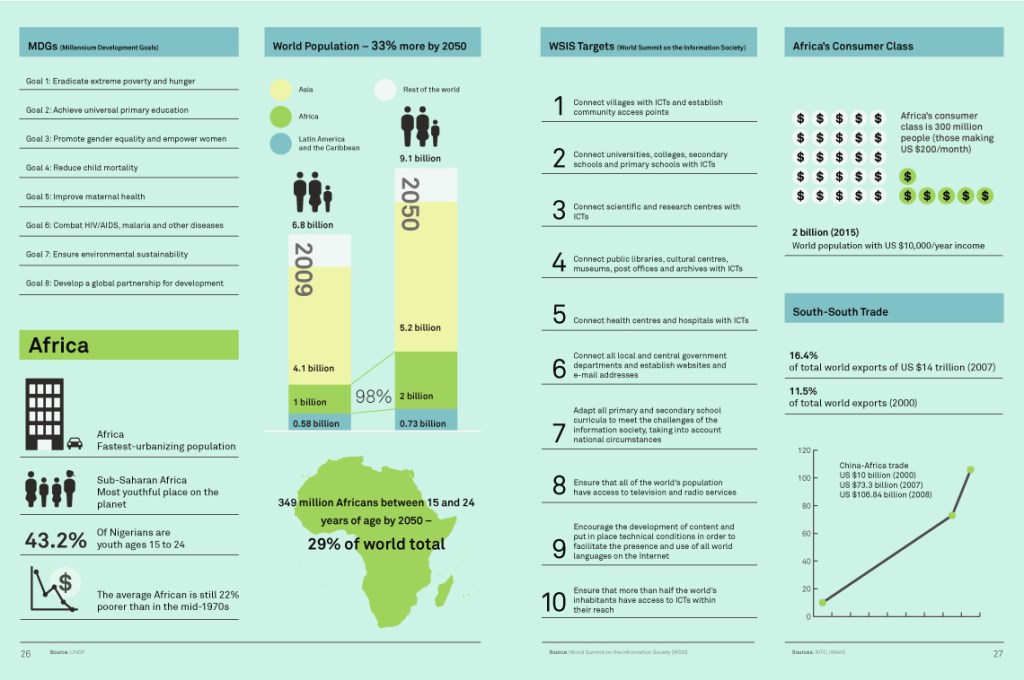
4) Southern Innovator magazine: New global magazine’s first issue tackles the boom in mobile phone and information technologies across the global South. Website: www.scribd.com/doc/57980406/Southern-Innovator-Issue-1

Creative Commons License

This work is licensed under a
Creative Commons Attribution-Noncommercial-No Derivative Works 3.0 License.

ORCID iD: https://orcid.org/0000-0001-5311-1052.

© David South Consulting 2023