

Preface
It could be said the world and the global order both stand at a crossroads. Countries have never been so connected as they are today because of the communications revolution that began in the 1990s. The trade linkages brought about by the most recent phase of globalization (post-1980s) have dramatically increased prosperity for some regions and countries, China being the most obvious example. But, as we are reminded on a daily basis, the environment is stressed, with species depletion and pollution being the most extreme signs of this stress. And war and civil strife are still with us.
In 2015, the United Nations launched the Sustainable Development Goals (SDGs), 15 years after it had launched the Millennium Development Goals (MDGs) in 2000. Both sets of goals attempt to benchmark progress on improvements to human well-being and to give countries and the international community a road-map to what is most important. The eight MDGs have been followed up with 17 SDGs (and many views on how effective such a strategy really is). It seemed as good a time as ever to reflect on what role I have played in this period, as well as to look forward to what will happen over the next 12 years (2030).
The Quotes
“The United Nations is designed to make possible lasting freedom and independence for all its members.”
“We must build a new world – a far better world – one in which the eternal dignity of man is respected.”
US President Harry S. Truman
“It has been said that the United Nations was not created in order to bring us to heaven, but in order to save us from hell.”
UN Secretary-General Dag Hammarskjold at University of California Convocation, 13 May 1954.
“Today continuing poverty and distress are a deeper and more important cause of international tensions, of the conditions that can produce war, than previously.”
“The stark and inescapable fact is that today we cannot defend our society by war since total war is total destruction, and if war is used as an instrument of policy, eventually we will have total war.”
“The grim fact is that we prepare for war like precocious giants, and for peace like retarded pygmies.”
Canadian Prime Minister Lester B. Pearson
“A shift is necessary toward lifestyles less geared to environmentally-damaging consumption patterns.”
“We may get to the point where the only way of saving the world will be for industrial civilization to collapse.”
Maurice F. Strong, Former Under-Secretary General of the United Nations; Founder of the United Nations Environment Programme (UNEP)
“a super-crate, to ship a fiasco to hell”
“a sinister emblem for world power”
F. Lloyd-Wright quoted in (1947) Journal of the American Institute of Architects, at 158.
Architect Frank Lloyd Wright
The First Development Phase
From its founding, the United Nations was constructed around the highest human aspirations after two devastating World Wars, while also drawing fire from its critics and skeptics (American architect Frank Lloyd Wright being one of the more biting).
In January 1949, US President Harry Truman set forth a challenge for the remainder of the 20th Century. The wealthy nations must aid the poorer ones to become wealthier and more democratic: in short, to become like the United States (Starke 2001: 143). The means of accomplishing this was to be international development, and its tool, foreign aid.
Development as defined by President Truman at the start of the first international development period of the 20th century meant “nothing less than freeing a people from want, war, and tyranny, a definition it is hard to improve on even today (Starke 2000: 153).”
I grew up in the Canada of the 1970s and 1980s. For most of that time, the charismatic and internationally-minded Liberal Prime Minister Pierre Trudeau was in power. Canada’s profile and role in the United Nations and international development was high at this time, in particular in ‘peacekeeping’ missions.
Peacekeeping holds a special place for Canadians. An innovative initiative from then-Ambassador to the United Nations and later Prime Minister Lester B. Pearson in the 1950s (he received the Nobel Peace Prize for it), Canada has since had a long history with peacekeeping missions.
When I served with the Canadian Armed Forces Reserve in the early 1980s, we trained not only for war with our Cold War foe the Soviet Union, but also for peacekeeping missions. In fact I nearly went on one if not for my acceptance to study at the University of Toronto in 1985. Otherwise, I would have been off on a peacekeeping mission that year.
This phase of international development and the United Nations was framed by the Cold War and its tensions and limits: the world divided between opposing ideologies and economic systems and travel between these two worlds (Communism versus free markets and democracy) was severely restricted.
And when I graduated in 1989 from the University of Toronto, all this fell apart very quickly. The First Phase of International Development had come to a swift end.
The Second Development Phase
In 1997, I was hired to head the communications office for the UN/UNDP Mongolia mission. It was a pivotal time in international development. With the forces of ‘globalization’ unleashed (and China’s rapid rise already well underway), the UN was clearly also in a period of great change and stress. The collapse of the Soviet Union in 1991 and its trading system (Comecon), pitched former Communist countries into severe crisis. Comecon locked-in Soviet Union satellite allied nations (including Mongolia) into a reciprocal arrangement of trade links and subsidies. The Mongolia I arrived in in 1997 was a country in turmoil. Poverty was widespread, food was difficult to get, unemployment was very high, families were falling apart under the stress of the crisis, and people’s health was poor, with very high rates of alcoholism and STDs.
This second phase of international development can be characterized by the international response to the collapse of the Soviet Union and the adjustment to the rapid changes brought about by the forces of globalization. The communications revolution was getting underway at this time as the Internet began to arrive, even in Mongolia, which had been cut-off from full relations with the Western world during the period of Communism. Mobile (cell) phones were around but still a luxury item used by wealthy businessmen or senior government officials. International aid and development was primarily in the domain of large international institutions and bilateral donors.
UN/UNDP Mongolia played an important role in helping to stabilize Mongolia during the late 1990s and to put in place the foundations for recovery from crisis (called “one of the biggest peacetime economic collapses ever” at the time). Mongolia eventually, briefly, became the fastest growing economy in the world by the second decade of the 21st century.
In the 1990s, the UN was being challenged to think and do things differently and to respond to the communications revolution. This presented a great opportunity to use the Internet and computing to communicate in new ways; to innovate and experiment. Despite its crisis, Mongolia was able to embrace these new ways and was called a “role model” for the wider United Nations by 1999 (the end of my assignment in Mongolia).


The Third Development Phase
With the adoption of the Millennium Development Goals (MDGs) in 2000, it could be argued, a third development phase had begun. The turn of the century was also during the so-called ‘Dotcom Bubble’ when investment in the Internet economy was peaking, and China was on the cusp of being accepted into the WTO (World Trade Organization) and getting set for another period of rapid expansion and growth. Both phenomenon were fueling greater trade and connectivity, especially between the countries of the so-called “global South”.


Kofi Annan Adds in Message to Final UN OneWorld Youth Conference, in Mongolia.” The report was cited in Women in Mongolia: Mapping Progress under Transition (United Nations Development Fund for Women, 304 East 45th Street, New York, NY 10017, USA).


The MDGs were an attempt to guide and focus development at the international and national level by setting forth eight goals as a challenge. But, just as these internationally agreed goals were being rolled out, something was quietly happening away from New York. In China, it was clear the country had done something truly remarkable: following its own development goals and plans, China lifted the largest number of people in human history out of poverty in the shortest space of time. Those who are students of history will know how stunning an accomplishment this is: China was once a country held up as a poster child for poverty, political instability, frequent famines, human misery and global isolation. China had been the country featured in the charity and famine appeals pleading for relief and aid, just as the countries in Africa and Southeast Asia were to become.
China’s growing export power was also powering globalization. And liberalized trade was powering growth for many countries in Asia and Latin America. This increasing export trade and global connectivity was creating new wealth for many countries and growing the middle classes of the so-called ‘global South’. At the same time, the Internet revolution was being joined by the mobile technologies revolution. These communications tools were making it possible to connect with people who had been frozen out of global markets, while simultaneously creating whole new digital economies employing people and creating new wealth.
Beginning in late 2006 after working around the world in various UN missions on assignments related to the MDGs, I began an exciting new opportunity with the then-Special Unit for South-South Cooperation (SSC) (now the United Nations Office for South-South Cooperation – UNOSSC).


21 Years of Creating International Change | 1997 – 2018
Timeline
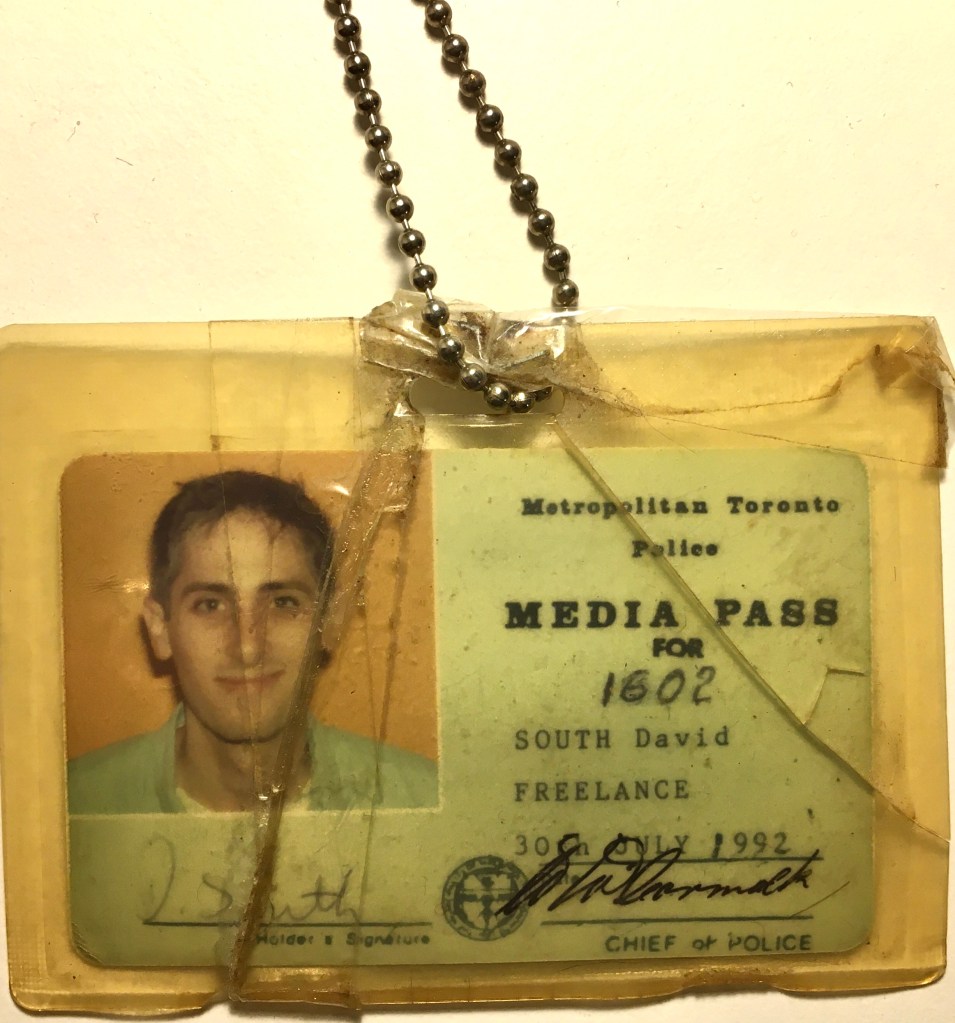
Early to Mid-1990s: Covering the United Nations as a Journalist. Stories included the Canadian peacekeeping mission in Somalia (Somali Killings Reveal Ugly Side of Elite Regiment and Does the UN know what it’s doing?), debates over the response to the conflict in the Balkans (Peaceniks Questioning Air-Raid Strategy in Bosnia), and what constitutes appropriate food aid (Aid Organization Gives Overseas Hungry Diet Food). In 1993 I covered the World Health Organization’s Canada-wide roll-out of the Healthy Cities initiative in the feature Taking Medicine to the People: Four Innovators in Community Health for Canadian Living magazine. In 1996 I covered, from Port-au-Prince, the Canadian UN peacekeeping mission in Haiti for Id Magazine (Haiti Turns to Free-Market Economics and the UN to Save Itself).

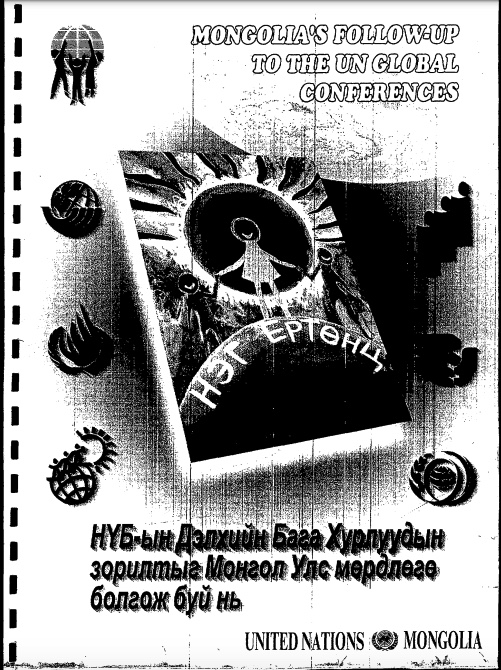
1997: Begin a two-year assignment as head of communications for the UN/UNDP Mongolia mission (1997-1999). Called “one of the biggest peacetime economic collapses ever”, I was thrown into the deep end as part of the UN’s efforts to rescue Mongolia from this severe crisis. I established the award-winning UN/UNDP Mongolia Communications Office (a high-profile and lively hub staffed by media professionals) and quickly developed and launched the award-winning UN Mongolia Development Portal (www.un-mongolia.mn) (called a “role model” for the United Nations). I developed and launched the mission’s first newsletter, Blue Sky Bulletin, as well as the first Mongolian Human Development Report, the Mongolian AIDS Bulletin, the UN’s and Mongolia’s first online magazine, Ger, while overseeing the country’s largest bilingual online and offline publishing operation. In Starting from Scratch: The Challenge of Transition, I document the challenge to re-start Mongolia’s data collection after it was wiped off the mainframe computers that once stored it during the Communist period (a cautionary tale for our times if there ever was one!). In Freedom of Expression: Introducing Investigative Journalism to Local Media in Mongolia, I give an account of a workshop for Mongolian journalists keen to learn more about the discipline of investigative journalism and how important it is in a democracy. In Partnership for Progress: UNDP in Mongolia, I painted a picture of Mongolia’s country conditions in 1997, what was at stake, and how the UN was responding.
1998: Develop and launch Mongolia’s first web magazine, Ger. Lead two international media tours of the country, one in 1997 (Scandinavian media), and the other in 1998 (women journalists). Many stories were generated from the two international media tours and were compiled in books published by UNDP, including In Their Own Words: Selected Writings by Journalists on Mongolia, 1997-1999 (ISBN 99929-5-043-9). Read an example story here: The Milk of Kindness Flows in a Peculiar Land A Steppe From Nowhere by Leslie Chang (The Asian Wall Street Journal, 15 August 1998).
1999: Publish many books on Mongolia’s development, including In Their Own Words: Selected Writings by Journalists on Mongolia, 1997-1999 (ISBN 99929-5-043-9) and the Mongolian rock and pop book (ISBN 99929-5-018-8). Whilst working for a UK-based international development consultancy, I prepared papers for the American Foundation for AIDS Research, the Global Fund to Fight AIDS, Tuberculosis and Malaria, the Harvard Institute for International Development (HIID), for various UN agencies including UNCTAD and UNAIDS, and coordinated the preparation of the report and launch strategy for the World Bank’s Task Force on Higher Education.
2000: My work in Mongolia is covered and cited in various books published after 1999, including Wild East: Travels in the New Mongolia by Jill Lawless (ISBN 97814-5-964-5783), Modern Mongolia: From Khans to Commissars to Capitalists by Morris Rossabi (ISBN 9780-5-209-38625), and Dateline Mongolia: An American Journalist in Nomad’s Land by Michael Kohn (ISBN 9781-5-7143-1554). Ukraine. Work on the strategic re-launch of the UN Ukraine web portal and advise on the communications strategy for the UN Resident Coordinator. This is also the year in which the Millennium Development Goals (MDGs) were launched and the new development portal reflected this in its structure and content.

2001: Begin work on the development of the award-winning GOSH Child Health Portal for the National Health Service (NHS). As part of the NHS’ Modernisation Plan, it was called a “role model” for the NHS and one of the “three most admired websites in the UK public and voluntary sectors,” and was developed and launched under heavy public and media scrutiny. Each stage of the Portal’s development would coincide with a high-profile media launch. For example, the Hospital’s 150th birthday celebrations included Her Majesty Queen Elizabeth II and pop star Madonna.
2002/2003: Win the Childnet Award in 2003 for the Children First website.


2004: South Africa. Work at the University of Pretoria for UN South Africa on a digital communications and marketing strategy for a youth volunteer organization.
2005: Turkmenistan and Mongolia.Work for UN missions on an MDGs communications strategy and on the country programme review.
2006: Turkmenistan. Work for UNICEF. Begin working for the Special Unit for South-South Cooperation (SSC) in New York.
2007: Research and write UN e-newsletter Development Challenges, South-South Solutions for UNDP’s Special Unit for South-South Cooperation (SSC). Sample Stories:
Computing in Africa is Set to Get a Big Boost
Ring Tones and Mobile Phone Downloads are Generating Income for Local Musicians in Africa
Dynamic Growth in African ICT is Unlocking Secrets of SME Treasure Trove
Grassroots Entrepreneurs Now Have Many Ways to Fund Their Enterprises
Trade to Benefit the Poor Up in 2006 and to Grow in 2007
Social Networking Websites: A Way Out of Poverty
Creative and Inventive Ways to Aid the Global Poor
Innovation from the Global South
Youth Surge in the South A Great Business Opportunity
Web 2.0 to the Rescue! Using Web and Text to Beat Shortages in Africa
Mobile Phones: Engineering South’s Next Generation of Entrepreneurs
2008: Research and write UN e-newsletter Development Challenges, South-South Solutions for UNDP’s Special Unit for South-South Cooperation (SSC). Sample Stories:
Cyber Cities in the South: An Oasis of Opportunity
Nollywood: Booming Nigerian Film Industry
Illiterate Get Internet at the Touch of a Button
The South Has a Good Story to Tell
Insects Can Help in a Food Crisis
New Weapon Against Crime in the South
Urban Youth: A Great Source of Untapped Growth
Innovative Mobile Phone Applications Storm South
Computer ‘Gold Farming’ Turning Virtual Reality into Real Profits
Mobile Phones: New Market Tools for the Poor
Reader response experiment begins with crowd-powered news website NowPublic. Initial proposal for the development of book or magazine on innovation. Awarded grant for Cuba study tour by BSHF.
2009: Research and write UN e-newsletter Development Challenges, South-South Solutions for UNDP’s Special Unit for South-South Cooperation (SSC). Sample Stories:
DIY Solution Charges Mobile Phones with Batteries
Solar Powered Village Kick-Starts Development Goals
Rebuilding After Chinese Earthquake: Beautiful Bamboo Homes
Making the World a Better Place for Southern Projects
Growing a Southern Brand to Global Success: The Olam Story
Afropolitan: African Fashion Scene Bursting with Energy
Digital Mapping to put Slums on the Map
Adjust e-newsletter content based on reader responses. Begin posting content on Twitter platform.
2010: Begin development of the new global magazine Southern Innovator with the UN’s Special Unit for South-South Cooperation (SSC) and a design team in Iceland led by Solveig Rolfsdottir. The magazine was produced to the UN’s design standards, as well as abiding by the UN’s Global Compact. With production in Iceland, the magazine could be designed and laid out using 100 percent renewable energy sources.
Develop and launch the new branding for David South Consulting and its website, davidsouthconsulting.com, all designed by one of Iceland’s top graphic designers and illustrators, Solveig Rolfsdottir.


2011: Launch the first issue of Southern Innovator Magazine at the GSSD Expo in Rome, Italy.
It is called “a terrific tour de force of what is interesting, cutting edge and relevant in the global mobile/ICT space…”. Launch www.southerninnovator.org website (now www.southerninnovator.com) and social media including Twitter account @SouthSouth1.
To avoid censorship and interference, Southern Innovator‘s editorial operations were based in London, UK and its design studio was based in Reykjavik, Iceland (a high-ranking country in the World Press Freedom rankings and a former top place holder in the UNDP Human Development Index). Using a women-led design studio, it developed a design vision that could communicate across borders using clear graphic design and high-quality images. For example, when it launched in 2011, infographics were rare in development publications and at the UN; now they are commonplace. It also tried to be as ‘green’ as possible. The studio was powered on 100 per cent renewable energy (in particular, geothermal energy); the hard copy of the magazine is printed on paper from renewable forests.


2012: Launch second and third issues of Southern Innovator Magazine at the GSSD Expo in Vienna, Austria.
Called a “Beautiful, inspiring magazine from UNDP on South-South innovation.”
With 201 Development Challenges, South-South Solutions stories posted on the NowPublic platform, a total of 336,289 views by 2012 had occurred, according to the NowPublic counter.
2013: Launch fourth issue of Southern Innovator Magazine at the GSSD Expo in Nairobi, Kenya.
Called “fantastic, great content and a beautiful design!” and “Always inspiring.”.

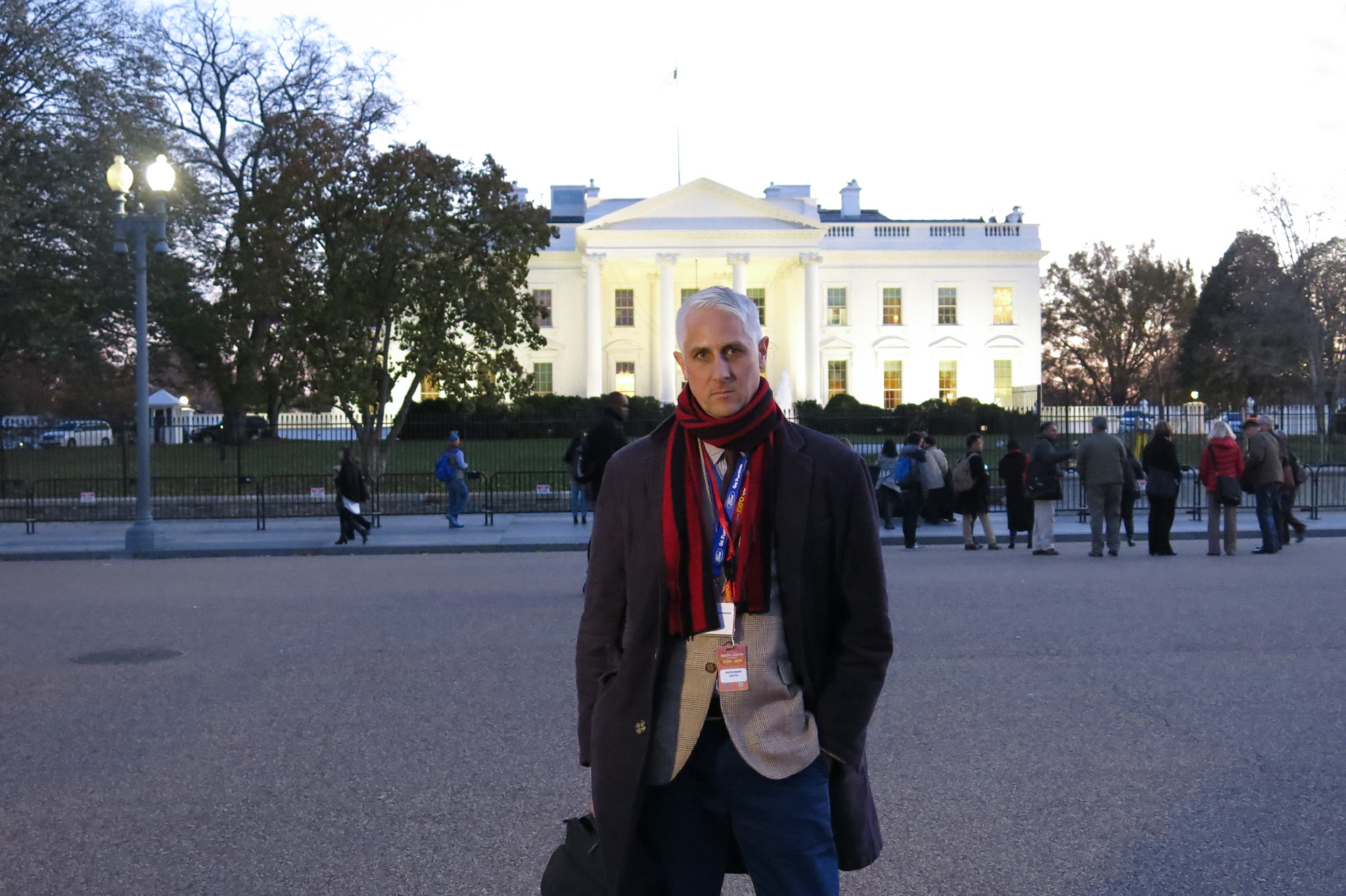
2014: Launch fifth issue of Southern Innovator Magazine at the GSSD Expo in Washington, D.C. U.S.A. The Twitter account @SouthSouth1 called “ one of the best sources out there for news and info on #solutions to #SouthSouth challenges.” Final issues of e-newsletter Development Challenges, South-South Solutions published.
The two publications proved influential on a number of fronts, being early to draw attention to the following: the rising use of mobile phones and information technology in development, the world becoming an urban place, innovative food solutions including the nascent insect food sector (now a big thing), altering perspectives on what is possible in Africa, the use of data science to innovate development, and tracking the growing number of technology hubs and the fast-growing start-up culture in the global South. The publications were cited for shaping the new strategic direction adopted by the United Nations Development Programme (UNDP) (the UN’s leading development organisation) and its first youth strategy, and the development of the Sustainable Development Goals (SDGs). As the world’s first global innovator magazine, Southern Innovator’s design had to be appropriate for a diverse audience. It has drawn praise for being both “beautiful” and “inspiring”, while its use of sharp, modern graphic design and infographics inspired others in the UN to up their game when it comes to design.

2015: Develop scale-up plan for Southern Innovator Magazine.
South-South cooperation and innovation have now become the key methodology for the UN’s delivery of its programmes and projects. In 2015, China pledged US $2 billion to “support South-South cooperation” and called for the international community to “deepen South-South and tripartite cooperation”. In development parlance, they have been “Mainstreaming South-South and Triangular Cooperation” in their plans.
The current policy vogue for innovation in developing and developed countries can trace its roots back to some of the early work done by these two publications (and which was further amplified by the annual Global South-South Development Expo (GSSD Expo), which often would feature innovators from the two publications, spreading the innovation message around the world). Both publications had set out to inspire and “champion a global 21st century innovator culture”. And they have done this, as can be seen from concrete evidence and anecdotal responses from individuals and organizations alike.

UN Bribery Scandal
After the arrests in 2015 related to the unfolding UN Bribery Scandal (read more on this here: The Strange Saga of “South-South News”), the budget for the UNOSSC was suspended pending the outcome of two internal audits conducted by the United Nations (Statement Concerning the United Nations Office for South-South Cooperation). The second audit can be found online here: https://www.scribd.com/doc/307245166/OIOS-Audit-of-Ng-South-South-News-OIOS-Cut-Out-Ban-Photo-Op-with-Ng-at-UNCA-Ball.
UNDP (the United Nations Development Programme) had the following to say about the UNOSSC’s senior management up to 2015 under the Directorship of United Nations Envoy for South-South Cooperation, Yiping Zhou, calling it “unsatisfactory”:
“The United Nations Office for South-South Cooperation (UNOSSC) is an independent entity created by the General Assembly in 1974, General Assembly resolution 3251(XXIX), to support cooperation among developing countries.
UNOSSC receives its mandate and policy framework from General Assembly decisions and resolutions. UNOSSC also serves as the Secretariat of the High-level Committee (HLC) on South-South Cooperation, a subsidiary body of the General Assembly.
UNOSSC is hosted by UNDP and, as is the case with similar entities, is expected to follow UNDP rules and regulations, including those pertaining to financial and HR management. UNOSSC is likewise subject to UNDP’s oversight and due diligence instruments.
The Audit makes 16 recommendations with the objective of improving UNOSSC’s effectiveness in the areas of: governance; programme and project activities; and operations.” Excerpt from Statement (5 May 2016)
The retirement in 2016 of Southern Innovator‘s Editor-in-Chief, Cosmas Gitta, meant the magazine lost its strongest advocate within the UNOSSC and thus was not included in the next budget post-audits.
The US investigations by the F.B.I. (Federal Bureau of Investigation) leading to arrests and subsequent court trials from 2015 onwards, were joined by Australian authorities in 2018. These revelations and confessions paint a picture of a high-level, multinational criminal conspiracy to launder money and pay bribes at the United Nations that also included the collusion and aid of various senior UN officials at the time. Not only do these revelations offer new context to Southern Innovator‘s attempts to gain future support from the UNOSSC, they explain why Southern Innovator faced extensive obstruction, deception and unethical and unprofessional behaviour during this time, despite the documented success of the magazine and its associated e-newsletter to reach and inspire readers, while shaping UN strategic policy on innovation (Strategic framework of the United Nations Office for South-South Cooperatio, 2014-2017).
2016: Many books have been published citing stories from the e-newsletter Development Challenges, South-South Solutions and Southern Innovator Magazine. They include: Beyond Gated Communities edited by Samar Bagaeen and Ola Uduku (Routledge: 2015), Chile in Transition: Prospects and Challenges for Latin America’s Forerunner of Development by Roland Benedikter and Katja Siepmann (Springer: 2015), Export Now: Five Keys to Entering New Markets by Frank Lavin and Peter Cohan (John Wiley & Sons: 2011), Innovation Africa: Emerging Hubs of Excellence edited by Olugbenga Adesida, Geci Karuri-Sebina and João Resende-Santos (Emerald Group Publishing: 2016), New Directions in Children’s and Adolescents’ Information Behavior Research edited by Dania Bilal and Jamshid Beheshti (Emerald Group Publishing: 2014), A Sociological Approach to Health Determinants by Toni Schofield (Cambridge University Press: 2015).
Many papers have been published citing stories from the e-newsletter and the magazine. They include: Afro-futurism and the aesthetics of hope in Bekolo’s Les Saignantes and Kahiu’s Pumzi by Mich Nyawalo, Journal of the African Literature Association, Volume 10, 2016, Issue 2, Autonomous Systems in the Intelligence Community: Many Possibilities and Challenges by Jenny R. Holzer, PhD, and Franklin L. Moses, PhD, Studies in Intelligence Vol 59, No. 1 (Extracts, March 2015), Decoding the Brand DNA: A Design Methodology Applied to Favela Fashion by Magali Olhats, Universidade Federal de Santa Catarina Florianopolis, 2012, Edible Insects and the Future of Food: A Foresight Scenario Exercise on Entomophagy and Global Food Security by Dominic Glover and Alexandra Sexton, Institute of Development Studies, King’s College London, Evidence Report No 149, September 2015, Evaluation of Kenyan Film Industry: Historical Perspective by Edwin Ngure Nyutho, School of Journalism and Mass Communication, University of Nairobi, 2015, Evaluation of the Regional Programme for Africa (2008-2013), UNDP Independent Evaluation Office, 2013, High-level Committee on South-South Cooperation Seventeenth Session: Framework of operational guidelines on United Nations support to South-South and triangular cooperation: Note by the Secretary-General, 22-25 May 2012, New York, The New Middle Class and Urban Transformation in Africa: A Case Study of Accra, Ghana by Komiete Tetteh, The University of British Colombia, 2016, Propagating Gender Struggles Through Nollywood: Towards a Transformative Approach by Nita Byack George Iruobe, Geonita Initiative for Women and Child Development, 17 July 2015, Reberberation: Musicians and the Mobilization of Tradition in the Berber Culture Movement by TMG Wiedenkenner et al, The University of Arizona, 2013, Recasting ‘truisms’ of low carbon technology cooperation through innovation systems: insights from the developing world by Alexandra Mallett, Innovation and Development, 5:2, 297-311, DOI: 10.1080/2157930X.2015.1049851, Routledge Taylor & Francis Group, 2015, “Slam the Slums”: Understanding architecture through the poor by Malini Foobalan, November 26th, 2009, Song Lines: Mapping the South African Live Performance Landscape: Report of the CSA 2013 Live Mapping Project Compiled by Concerts South Africa, Samro Foundation, 2013, Strategic Framework of the United Nations Office for South-South Cooperation, 2014-2017, Executive Board of the United Nations Development Programme, the United Nations Population Fund and the United Nations Office for Project Services, 27 to 31 January 2014, New York, Wearing Your Map on Your Sleeve: Practices of Identification in the Creation and Consumption of Philippine Map T-shirts by Pamela Gloria Cajilig, paper presented at the 6th Global Conference (2014): Fashion: Exploring Critical Issues, Mansfield College, Oxford, United Kingdom, 15th to 18th September 2014, Young Girls’ Affective Responses to Access and Use of Information and Communication Technology (ICT) in Information-Poor Societies by Dania Bilal et al, New Directions in Children’s and Adolescents’ Information Behavior Research, Library and Information Science, Volume 10, Emerald Group Publishing Limited, 2014, Youth Empowered as Catalysts for Sustainable Human Development: UNDP Youth Strategy 2014-2017, United Nations Development Programme, Bureau for Development Policy.
Testimonials
“The e-newsletter Development Challenges, South-South Solutions proved to be a timely and prescient resource on the fast-changing global South, tracking the rise of an innovator culture driven by the rapid adoption of mobile phones and information technology …
“In 2010, work began on the development of the world’s first magazine dedicated to the 21st-century innovator culture of the global South. My goal was to create a magazine that would reach across countries and cultures, meet the UN’s standards, and inspire action. Southern Innovator was the result. Mr. [David] South played a vital role in the magazine’s development from its early conception, through its various design prototypes, to its final global launch and distribution.
“Both the e-newsletter and magazine raised the profile of South-South cooperation and have been cited by readers for inspiring innovators, academics, policy makers and development practitioners in the United Nations and beyond.
“I highly recommend Mr. [David] South as a thoughtful, insightful, analytical, creative and very amicable person who has the unique ability to not only grasp complex problems but also to formulate a vision and strategy that gets things done. … ” Cosmas Gitta, Former Assistant Director, Policy and United Nations Affairs at United Nations Office for South-South Cooperation (UNOSSC) in UNDP
“I think you [David South] and the designer [Solveig Rolfsdottir] do great work and I enjoy Southern Innovator very much!” Ines Tofalo, Programme Specialist, United Nations Office for South-South Cooperation (UNOSSC)
2017: Invited to speak at the Workshop on Innovations in Service Delivery: The Scope for South-South and Triangular Cooperation in Dhaka, Bangladesh.
2018:
Stories
Somali Killings Reveal Ugly Side of Elite Regiment
Does the UN Know What it’s Doing?
State of Decay: Haiti Turns to Free-Market Economics and the UN to Save Itself
Starting from Scratch: The Challenge of Transition
Philippine Conference Tackles Asia’s AIDS Crisis
UN Contest Winner in “State of Total Bliss”
A UNDP Success Story: Grassroots Environmental Campaign Mobilizes Thousands in Mongolia
Freedom of Expression: Introducing Investigative Journalism to Local Media
Traffic Signs Bring Safety to the Streets
Stories: Development Challenges, South-South Solutions | 2007
Stories: Development Challenges, South-South Solutions | 2008
Stories: Development Challenges, South-South Solutions | 2009
Stories: Development Challenges, South-South Solutions | 2010
Stories: Development Challenges, South-South Solutions | 2011
Stories: Development Challenges, South-South Solutions | 2012
Stories: Development Challenges, South-South Solutions | 2013
Stories: Development Challenges, South-South Solutions | 2014
Books + Publications
A Steppe Back?: Economic Liberalisation and Poverty Reduction in Mongolia
Blue Sky Bulletin Newsletter UNDP Mongolia | 1997-1999
Human Development Report Mongolia 1997
In The Interests of the Exploited?: The Role of Development Pressure Groups in the UK
In Their Own Words: Selected Writings by Journalists on Mongolia, 1997-1999
Innovations in Green Economy: Top Three Agenda
Lima to Delhi: What Can Be Learned on Urban Resilience?
Mongolia Update – Coverage of 1998 Political Changes
A Partnership for Progress: UNDP in Mongolia 1997
Pax Chaotica: A Re-evaluation of Post-WWII Economic and Political Order
The Sweet Smell of Failure: The World Bank and the Persistence of Poverty
Southern Innovator Magazine Issue 1: Mobile Phones and Information Technology
Southern Innovator Magazine Issue 2: Youth and Entrepreneurship
Southern Innovator Magazine Issue 3: Agribusiness and Food Security
Southern Innovator Magazine Issue 4: Cities and Urbanization
Southern Innovator Magazine Issue 5: Waste and Recycling
Southern Innovator and the Growing Global Innovation Culture: Background Paper
South-South Cooperation for Cities in Asia
UNDP in Mongolia: The Guide | 1997-1999
UNDP Travelling Seminar: Environment and Development | Mongolia 1998
What is the Next Agenda for the Next 21 Years?: The Fourth Development Phase?
Update: I will publish this in the new year after the holidays. Keep checking back for this post.
Further Reading
Peacebuilding: The Twenty Years’ Crisis, 1997-2017 by David Chandler, Palgrave, 2017
ORCID iD: https://orcid.org/0000-0001-5311-1052
© David South Consulting 2018








 David South Consulting

You must be logged in to post a comment.