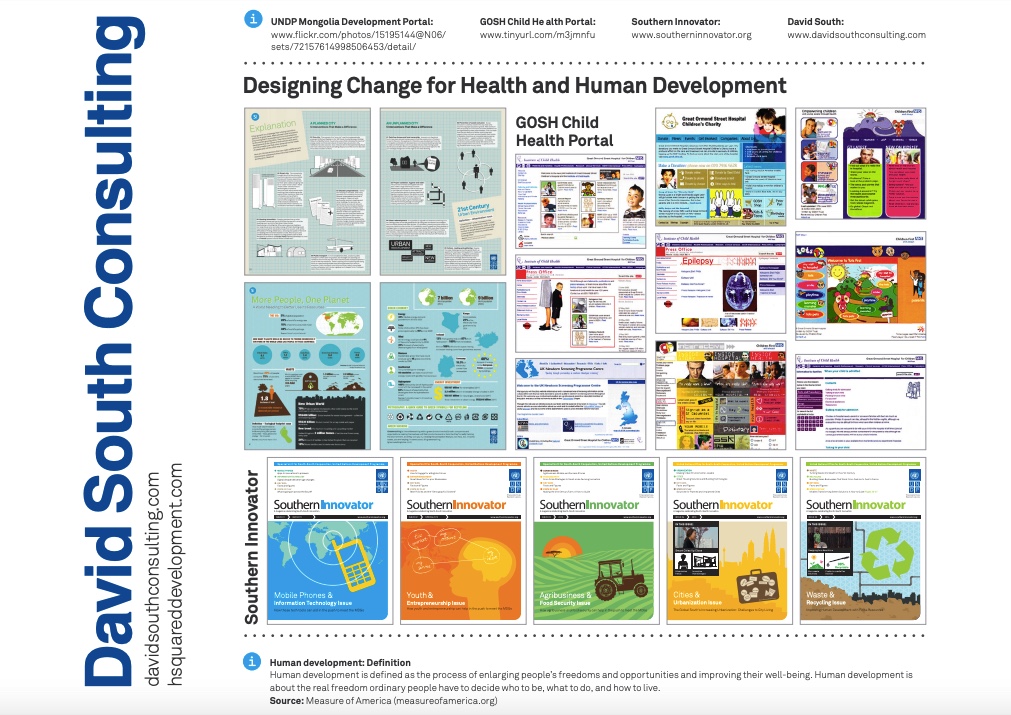
The first business card for David South Consulting. Inspired by the Dutch post office’s (PTT Post) corporate identity developed by Studio Dumbar, the card was designed by Brian Cartwright of Toronto’s Rocket Design. Work at this time included investigative journalism for Canada’s top magazines and newspapers, magazine and newsletter editing, and communications for a prestigious medical history funder. From the very beginning, we were inspired by Dutch design for the public sector and the importance placed on this in The Netherlands. The work of Hein van Haaren, former head of the PTT’s Aesthetics Department, and graphic design pioneers Wim Crouwel and Gert Dumbar, still remain key influences to this day.As a reporter for two Financial Times newsletters, New Media Markets and Screen Finance, I covered the rapidly growing UK (and Scandinavian) television and new media markets and the expanding film-financing sector in Europe.This Canadian alternative bi-weekly magazine broke new ground with its investigative journalism and online journalism. It gathered together highly talented, young contributors, many of whom are leading figures in journalism, the arts and technology today.As the UN’s head of communications in Mongolia (1997-1999), I founded the UNDP Mongolia Communications Office and oversaw a two-year communications programme to respond to the biggest post-WWII peacetime economic collapse. Award-winning and influential, the Office pioneered the use of the Internet in international development crisis response and was called a “role model” for the rest of the United Nations.Following on from the success of the UNDP Mongolia Communications Office, I worked with the head of the UN Ukraine mission to strategically relaunch the mission web portal, incorporating the newly launched UN Millennium Development Goals (MDGs).Drawing on my extensive experience strategically using the Internet to achieve communications goals, I was hired to head a two-year project to launch the GOSH Child Health Web Portal. Award-winning, it was called a “role model” for the wider National Health Service (NHS) and one of the most admired websites in the UK public and charity sectors. The website was cited as contributing to the hospital’s high rating and attracted additional funding for its research.As part of an assessment of Mongolia’s media capabilities to communicate the Millennium Development Goals (MDGs), infographics were introduced for the first time to the mission.With the Global Financial Crisis erupting, I was retained by the United Nations Office for South-South Cooperation (UNOSSC) to research and write a monthly e-newsletter and develop a new magazine to offer solutions and raise the profile of South-South cooperation as a development response to the crisis. Both publications proved highly influential, leading to the wider adoption of South-South cooperation and to national governments picking up the innovation agenda being brought about by the rapid take-up of mobile phones and information technology. The magazine Southern Innovator was called “a terrific tour de force of what is interesting, cutting edge and relevant in the global mobile/ICT space…”.In 2010, David South Consulting was relaunched with a new logo and branding for the 21st century. It represented a new phase, as work became global and very high-profile and influential. The foundations have been laid for future growth and expansion.
Watch Magazine
Watch Magazine was launched in 1994 and quickly became the authentic 1990s voice of Toronto’s youth. As one of Toronto’s first youth start-ups, Youth Culture became a successful youth communications brand and expanded to national distribution by the late 1990s. Launched during the economic austerity years in Canada, it was one of the contributors to Toronto’s economic resurgence and renewed business vitality.
New Media Markets
As a reporter for two Financial Times newsletters, New Media Markets and Screen Finance, I covered the rapidly growing UK (and Scandinavian) television and new media markets and the expanding film-financing sector in Europe.
A Partnership for Progress: The United Nations Development Programme in Mongolia
The Partnership for Progress brochure raised the curtain on the UN’s response to Mongolia’s economic and social crisis in the late 1990s. It celebrated Mongolia’s independence and its flourishing media scene and free expression after the long years of Communism and state repression.
Human Development Report Mongolia 1997
The first human development report for Mongolia captured in data and stories the damage done by the harsh transition from Communism and the imposition of austerity during the 1990s. It found high levels of poverty in the country and a heavy toll taken on people’s health, communities and families. The report was received with great enthusiasm and had two print runs.
Blue Sky Bulletin
The Blue Sky Bulletin newsletter broke with the usual approach taken by UN newsletters of offering up ‘grip n’ grin’ pictures of men in suits and instead offered actual stories and data on how Mongolia’s transition crisis was faring. It was distributed within Mongolia and by post and email outside the country to help raise awareness of the country and its development challenges.
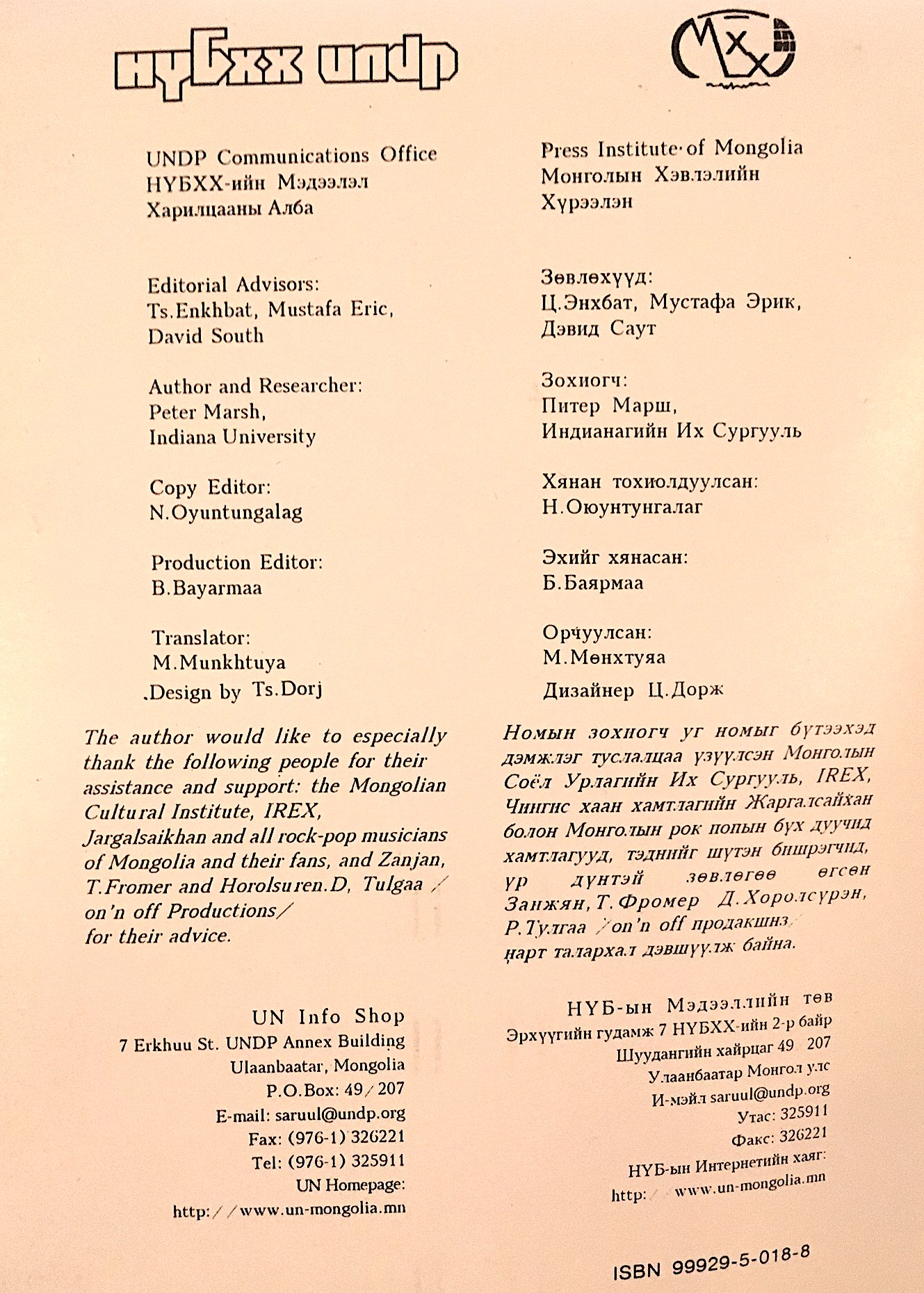
Mongolian Rock-Pop Book
Researched and written by ethnomusicologist Dr. Peter Marsh, this book on the impact of Mongolian rock and pop on the country’s business and entrepreneurship culture, shone a spotlight on a lively modern music scene.
Southern Innovator Magazine Issue 1: Mobile Phones and Information Technology
The first issue of Southern Innovator was called “a terrific tour de force of what is interesting, cutting edge and relevant in the global mobile/ICT space… ” and a “Beautiful, inspiring magazine from UNDP on South-South innovation.”
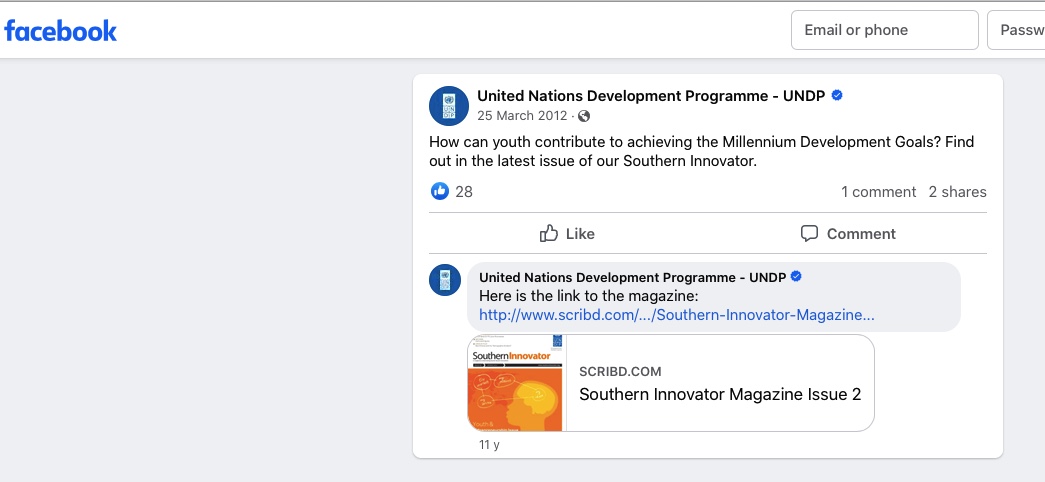
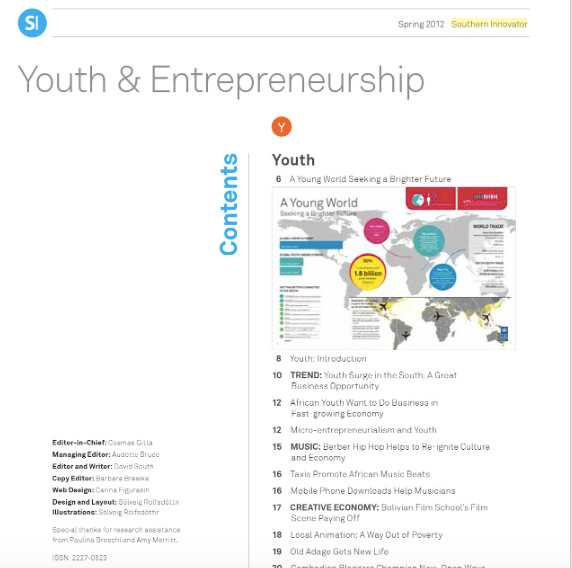
Southern Innovator Magazine Issue 2: Youth and Entrepreneurship
Issue 2 of Southern Innovator drew praise for painting a positive picture of how the world’s development challenges could be taken on: “Thank you David – Your insight into the issues facing us a[s] [a] ‘global Village’ is made real in the detail of your article – 10 out of 10 from the moladi team.”
Southern Innovator Magazine Issue 3: Agribusiness and Food Security
Issue 3 was on the theme of agribusiness and food security.
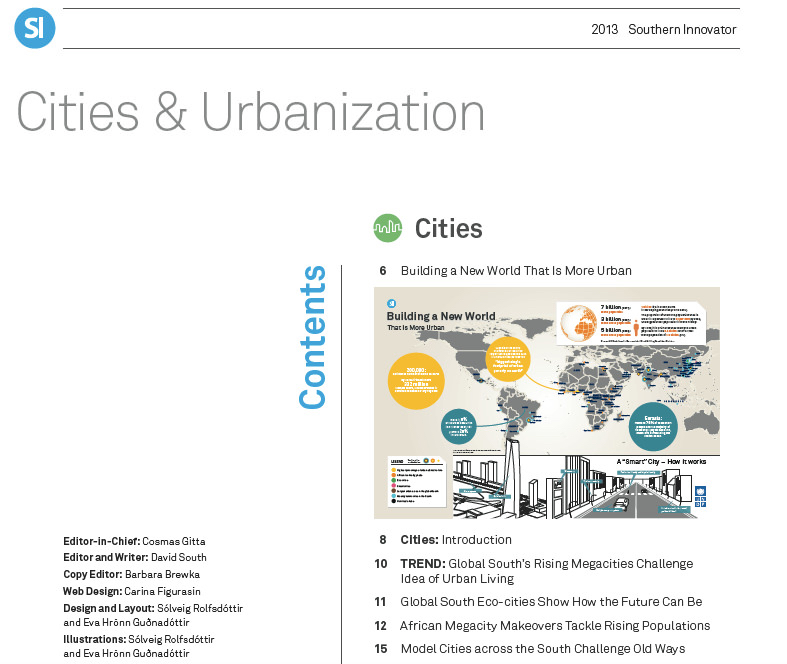
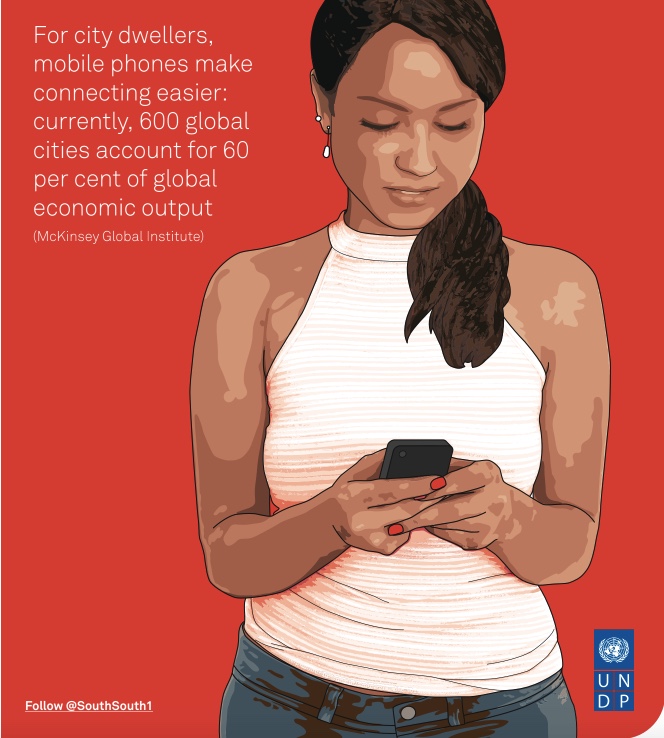
Southern Innovator Magazine Issue 4: Cities and Urbanization
Issue 4 on cities and urbanization saw Southern Innovator visit innovative new cities across Asia. Readers said “The magazine looks fantastic, great content and a beautiful design!” It is designed by Icelandic graphic designer and illustrator Solveig Rolfsdottir.
Southern Innovator Magazine Issue 5: Waste and Recycling
By this point, the Southern Innovator brand was drawing praise for being “one of the best sources out there for news and info on #solutions to #SouthSouth challenges.” Readers also said they “really enjoyed reading them [Southern Innovator], impressive work & a great resource. Looking forward to Issue 6. My best wishes to you & your team at SI.”
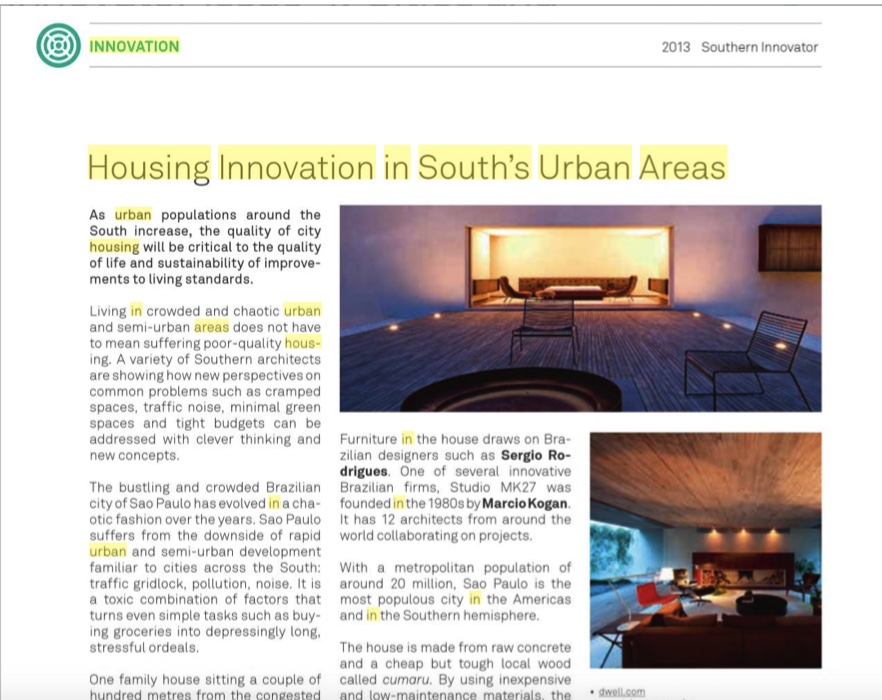
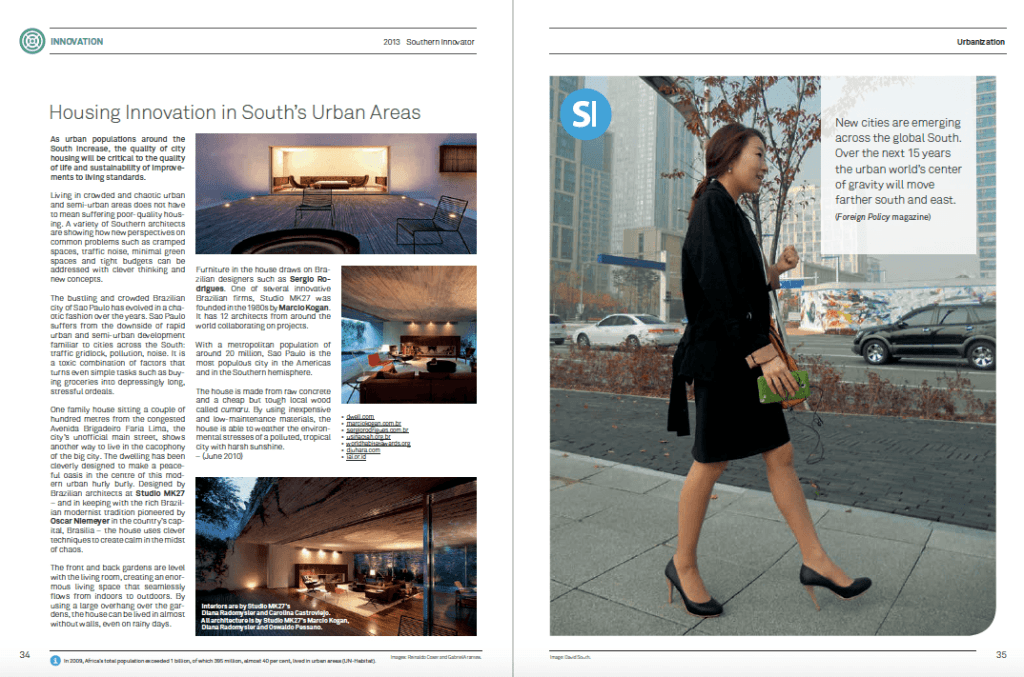
As urban populations around the South increase, the quality of city housing will be critical to the quality of life and sustainability of improvements to living standards.
Living in crowded and chaotic urban and semi-urban areas does not have to mean suffering poor quality housing. A variety of Southern architects are showing how new perspectives on common problems like cramped spaces, traffic noise, minimal green spaces and tight budgets can be addressed with clever thinking and new concepts.
The bustling and crowded Brazilian city of Sao Paulo has evolved in a chaotic fashion over the years. As Brazilian photographer Reinaldo Coser admitted to design and architecture magazine Dwell (www.dwell.com) , in many places it is “very ugly.”
Sao Paulo suffers from the downside of rapid urban and semi-urban development familiar to cities across the South: traffic gridlock, pollution, noise. It’s a toxic combination of factors that turns even simple tasks like buying groceries into depressingly long, stressful ordeals.
Coser’s family home sits a couple hundred metres from the congested Avenida Brigadeiro Faria Lima (http://en.wikipedia.org/wiki/Avenida_Brigadeiro_Faria_Lima) , the city’s unofficial main street. Yet the dwelling has been cleverly designed to make living in the centre of this modern urban hurly burly a peaceful and calming oasis. Designed by Brazilian architects Studio MK27 (http://www.marciokogan.com.br) – and in keeping with the rich Brazilian modernist tradition pioneered by Oscar Niemeyer in the country’s capital, Brasilia (http://en.wikipedia.org/wiki/Bras%C3%ADlia) – the home uses clever techniques to build calm into chaos.
The front and back gardens are level with the living room, creating an enormous living space that seamlessly flows from indoor to outdoor space. By using a large overhang over the gardens, even on rainy days the home can be lived in almost without walls.
One of several innovative Brazilian firms, Studio MK27 was founded in the 1980s by Marcio Kogan. It has 12 architects from around the world collaborating on projects.
With a metropolitan population of around 20 million, Sao Paulo (http://en.wikipedia.org/wiki/S%C3%A3o_Paulo) is the most populous city in the Americas, and in the Southern hemisphere.
While it is easy to point out the downsides of rapid and chaotic urban development, Coser, a professional photographer, lives and loves Sao Paulo nonetheless because, like so many cities across the South, it is a vibrant and dynamic place to be.
And by choosing a design for his home that is calming, he has been able to introduce balance into his family’s life while benefiting from the economic opportunities of the city.
“This house has actually changed the rhythm of our lives,” he told Dwell. “We eat at home more. We go to bed earlier. We wake up earlier. We sleep more.”
And how has the calm helped his two daughters? One is able to play without disturbing the neighbours, and the other can quietly study her books, which was difficult when the family lived in the noise and buzz of a small two-bedroom apartment.
And – something often overlooked in development plans cooked up by economists and urban planners – the aesthetics of the house are very appealing. “Our house is so pretty,” says his wife, Sophia. “Sometimes I like to just look at it for a long time.”
This calm home was created out of basic need. The family needed more space with a second daughter on the way, and had become frustrated with the congestion of the city and the lack of green space. Architect Marcio Kogan was consulted for a solution.
“We wanted a place where we could just shut the door and travel,” says Reinaldo.
The house is made from raw concrete and a cheap-but-tough local wood called cumaru (http://tinyurl.com/3y8kh8v) . By using inexpensive and low maintenance materials, the home is able to weather the environmental stresses of a polluted, tropical city with harsh sunshine.
Kogan deployed his previous experience as a filmmaker to make the home feel and look more spacious and open than it is. He calls it “looking at the world through a wide-screen lens.” The design of the home is seen as a “narrative”, leading the occupant from the garden to the living room, up the stairs, past bedrooms to a rooftop deck with panoramic views of the city.
Another innovative solution in Sao Paulo is USINA (http://www.usinactah.org.br) – a finalist for the World Habitat Awards (http://www.worldhabitatawards.org/about/?lang=00) – which brings people together to build high-density urban housing. It has aided more than 5,000 people to build with their own labour multi-storey buildings. These new apartments are not isolated from other services, but come with community facilities, childcare facilities, professional training courses and other employment-generating activities.
It is estimated up to 15 percent of the city’s population live in slums. This community organising approach is in contrast to the existing ad-hoc building of homes in the slums – often with no technical assistance – or public housing projects built by developers looking for quick profits while ignoring quality and services. USINA’s approach has led to Sao Paulo being a pioneer in participatory housing policies.
USINA provides the technical assistance to social movements looking to build housing for the poor. The cost for the buildings is borne by a combination of public funding and the labour of the residents (working 16 hours per week per household). The cost per housing unit tends to be between US $12,000 and US $15,000 (with land usually donated free by public authorities).
Architectural innovation is also underway in Indonesia, another country that has experienced spurts of rapid economic growth and urbanization, and where a growing middle class is demanding a higher quality of life.
The country’s capital, Jakarta (http://en.wikipedia.org/wiki/Jakarta) , with a population over 8 million, is a mixed bag of modern skyscrapers, crumbling colonial architecture, suburbs and slums.
In the Jakarta suburb of Bekasi (population more than 2 million), Nugrohu Wisnu was looking for a little more space for his family.
At first, the family encountered the downside of poorly designed housing. They bought a house which was infested with termites and was uncomfortable to live in. Frustrated, they began shopping around for something better. And they turned to Indonesian architects Djuhara + Djuhara (http://djuhara.com/home.html).
“We thought that an all-steel house like the one that Mr. Djuhara had built just down the road would be termite resistant,” Wisnu told Dwell.
Djuhara is a high-profile architect and chair of the Jakarta chapter of the Indonesian Institute of Architects (http://www.iai.or.id) and helped to modernize the city’s planning regulations.
The stereotype of young Indonesian architects is that they only work on luxury hotels. But Djuhara was designing and building suburban homes and this grabbed Wisnu’s attention.
Also against stereotype, Djuhara was actually attracted by a tight budget and the small space for the house. In a crowded city, using every bit of space efficiently is critical. The existing house was torn down and Djuhara set about building a new home. The majority of the building materials were sourced within the immediate area: an easy thing to do in Jakarta since there are many vendors selling building supplies on the streets.
By buying local like this, shipping costs were eliminated from the cost of the house. The home’s cost, US $20,000, is just 2/3 of what a more conventional Indonesian home would cost.
Djuhara revelled in the job: “Ad-hocism is my religion,” he told Dwell.
The split-level design of the home uses the space well. The kitchen opens up into the garden.
“Family breakfasts are great in here,” says Wisnu. “And the open kitchen encourages the kids to head out into the garden and run and play.”
There is also a strong environmental component to the design. Airflow cavities in the ceiling are used in the bedrooms to cool them. The house also uses heavy wooden shutters to keep the house cool during the day: “The shutters are unusual, but they are thick and sturdy,” Wisnu explains.
“They really shade the master bedroom to the extent that it feels mellow and cool. They let us reduce our air-conditioning consumption, even during the height of the day.”
And Djuhara also has another difference from many other architects: he refuses to patent his design.
“My friends have asked me why I don’t patent my low-cost houses,” he explains, “but they completely miss the point. I actually want my designs to be copied. I want Indonesian society to rethink its attitudes towards urban architecture.”
Published: June 2010
Resources
Building and Social Housing Foundation: The Building and Social Housing Foundation (BSHF) is an independent research organisation that promotes sustainable development and innovation in housing through collaborative research and knowledge transfer. Website: www.bshf.org/home.cfm
Mass Design Group are architects building “social value through design.” Their architectural projects focus on social goals, like their work building a hospital in Rwanda that reduces the transmission of airborne diseases. Website: http://www.masslab.org/home.htm
Development Challenges, South-South Solutions was launched as an e-newsletter in 2006 by UNDP’s South-South Cooperation Unit (now the United Nations Office for South-South Cooperation) based in New York, USA. It led on profiling the rise of the global South as an economic powerhouse and was one of the first regular publications to champion the global South’s innovators, entrepreneurs, and pioneers. It tracked the key trends that are now so profoundly reshaping how development is seen and done. This includes the rapid take-up of mobile phones and information technology in the global South (as profiled in the first issue of magazine Southern Innovator), the move to becoming a majority urban world, a growing global innovator culture, and the plethora of solutions being developed in the global South to tackle its problems and improve living conditions and boost human development. The success of the e-newsletter led to the launch of the magazine Southern Innovator.
Countries across the global South are experiencing rapid urbanization as people move to cities for better economic opportunities — and this massive social change is creating new business opportunities. Those who recognize how fundamentally people’s lifestyles are changing will be those who will benefit from this big shift in populations.
Finding ways to live well in urban areas will be critical to determining whether this move repeats past urban failures — from the favelas of Brazil to the slums of India — or introduces a new way of living that is exciting and colorful. Design and designers will be critical to this change.
One young design company in Brazil, Sao Paulo-based furniture studio NUUN (nuun.nu), is attempting to resolve a dilemma common across the rapidly urbanizing global South: How to create a design aesthetic that fits with the new way of living and being?
The company consists of designer and founder João Eulálio Kaarah and architects Renato Périgo and Carolina Sverner.
Périgo specializes in furniture and interior design, while Carolina Sverner worked with respected Japanese architect, Shigeru Ban (shigerubanarchitects.com), who is well known for designing buildings and houses made from paper and for creating easy-to-build homes for people after a disaster has struck (http://www.ted.com/talks/shigeru_ban_emergency_shelters_made_from_paper).
A collaboration among upcoming artists, designers and architects, NUUN tries to infuse its designs with a sense of “brazilianness”. Brazilianness is a modern aesthetic, made for modern lifestyles in the new urban landscape, that draws on aspects of Brazil’s culture and environment.
The young studio’s first collection of furniture offers simplicity. Called Eos, it tries to blend urban cosmopolitanism with raw nature. Brazil is known for its jam-packed urban cities as well as its vast expanse of Amazon rainforest. In practice, NUUN’s look is a mix of contrasts redolent of what used to be called brutalism: concrete mixed with glass, steel, wood and semi-precious gems. NUUN takes inspiration from NASA’s Earth Observation System (EOS): the collection vibes off of space satellites, antennae and the dry soil of the backwoods. NUUN says that “despite its Martian features, [the collection] is as Brazilian as it comes”. There is the modular Panorama sofa (http://nuun.nu/products/panorama) in five colors, capable of being re-shaped to fit a variety of living arrangements. A glass-topped coffee table with a concrete base and a side table with a carbon steel metallic structure to complement the sofa.
Elsewhere in the world of Brazilian design, footwear brand Grendene S.A. (http://ri.grendene.com.br/EN/Company/Profile) has become one of the world’s largest producers of footwear and made one of its founders a billionaire. And Grendene has boosted its international success by turning to another Brazilian success: supermodel Gisele Bündchen (giselebündchen.com.br).
Grendene began in 1971 and owns various successful shoe brands, including Melissa (melissa.com.br/en/), Grendha, Ilhabela, Zaxy, Cartago, Ipanema, Pega Forte, Grendene Kids and Grendene Baby.
It has six industrial zones with 13 footwear factories and can produce 240 million pairs of shoes a year. It undertakes all areas of production— from making its own moulds for the shoes to creating PVC (polyvinyl chloride) (http://en.wikipedia.org/wiki/Polyvinyl_chloride) – and handles its own distribution.
While Grendene is already a well-known shoe brand in Brazil, it wanted to expand its presence overseas to increase profits. Named after the two brothers who founded the company, Alexandre Grendene Bartelle and Pedro Grendene Bartelle, Grendene started working with supermodel Gisele Bündchen in 2002 to help her launch her own line of affordable flip-flops, iPanema (ipanemaflipflops.co.uk). The brightly colored sandals with elaborate patterns became an instant success.
But do celebrity endorsements really work? In the case of Bündchen and Grendene, the answer is yes. According to Forbes, 25 million pairs of the flip-flops and sandals are sold every year, accounting for 60 per cent of Grendene’s annual exports of about US $250 million.
Brazil was able to produce 864 million pairs of shoes in 2012, up 5.5 per cent from 2011.
Of these, 113 million pairs were exported to the United States, Argentina and France.
Brazil, like many other countries, has had to work out how it could compete with cheaper shoe imports from China. The strategy it chose was to target the growing number of middle-class people both in Brazil and elsewhere, as well as the high end of the market.
In 1979, Grendene created the Melissa brand, which has now become a coveted style leader. It collaborates with top design names such as Karl Lagerfeld and architect Zaha Hadid.
Making a partnership with Bündchen is part of the company’s strategy to reach higher-income buyers.
And it is working: Grendene increased its export revenue by 50 per cent in 2013.
Co-founder Alexandre Grendene Bartelle became a billionaire according to Forbes World’s Billionaires list and is worth US $1.4 billion. He owns 41 per cent of Grendene S.A. and close to 40 per cent of the Dell Anno brand.
This is a critical lesson for manufacturers in the global South. Grendene had achieved strong market dominance at home, and was already benefiting from growing wealth among Brazil’s middle classes. But it was the overseas market that had the potential to clinch even more profits for the company.
Bündchen’s high brand profile has enabled the company to compete head-to-head with the well-known Brazilian flip-flop brand, Havaianas (havaianas-store.com).
Another modern design leader owned by Grendene, Dell Anno (lojasdellanno.com.br), is a maker of modernist cabinets and furniture.
Dell Anno only use wood from renewable forest sources, to protect and preserve the Amazon and other native forests. Dell Anno tries to recycle as much as possible: up to 80 per cent of the water used in manufacturing is recycled, and byproducts from the production process such as a sawdust, wood, plastic and cardboard are also reused.
Dell Anno makes a full range of furniture for kitchens, bedrooms, closets, home theatres, home offices, service areas, restrooms and commercial environments. Dell Anno uses research and development to study trends and advise customers on the best options. The brand offers its staff training to help standardize customer service, and also has an excellent blog covering developments in modern design around the world (http://www.lojasdellanno.com.br/blog/).
Published: May 2014
Development Challenges, South-South Solutions was launched as an e-newsletter in 2006 by UNDP’s South-South Cooperation Unit (now the United Nations Office for South-South Cooperation) based in New York, USA. It led on profiling the rise of the global South as an economic powerhouse and was one of the first regular publications to champion the global South’s innovators, entrepreneurs, and pioneers. It tracked the key trends that are now so profoundly reshaping how development is seen and done. This includes the rapid take-up of mobile phones and information technology in the global South (as profiled in the first issue of magazine Southern Innovator), the move to becoming a majority urban world, a growing global innovator culture, and the plethora of solutions being developed in the global South to tackle its problems and improve living conditions and boost human development. The success of the e-newsletter led to the launch of the magazine Southern Innovator.
























 David South Consulting
You must be logged in to post a comment.