Categories
Ger Magazine UNDP Mongolia 1997-1999

Meat, milk and Mongolia: Misunderstood and often maligned, the Mongolian diet does make sense

By N. Oyunbayar, Ger Magazine, Modern Life, Issue 2, May 12, 1999

“A stroll down any Mongolian residential street is usually the first introduction to a visitor of the savoury odours of the traditional meals of this country. If you are invited into somebody’s ger (or traditional tent dwelling) or apartment, you will probably have an opportunity of tasting buuz, khuushuur and bansh.

“These Mongolian national meals are made with minced meat seasoned with garlic or onion (it can be anything from mutton to beef to camel to horse to gazelle) covered with flour and steamed in boiling water, fried in oil and boiled in water. For many visitors to the country the vast quantities of meat consumed can at first be surprising. But it is not long before a visitor finds their favourite Mongolian food, be it buuz, khuushur or a number of other treats. A Canadian living in Ulaanbaatar once told me, “the Mongolian national food contains a lot of meat, but I like the buuz.

“The meat-dependent diet arises from the need for hearty food to stave off the cold and long winters. Traditionally nomadic herders, Mongolians have for centuries been dependent on mostly animal products for their dietary staples. Now after over nine years of transition, the traditional diet has been used as a shield against hunger and for the wealthy, subject to the influence of imported foreign foods and cuisine. When the Russians pulled the plug on Mongolia’s aid in 1991, the economy went into a severe crisis. For many Mongolians it was their first experience of serious hunger. The staple traditional diet of meat, milk and flour saw many people through this crisis, when food imports from the former Soviet Union dropped off.

“Mongolians traditionally have turned to foods that are high in protein and minerals, relying less on more seasonable foods like vegetables and fruits. This means a diet heavy on meat and dairy products, the latter when sour in the summer time thought to clean the stomach. It isn’t just about meat though. Mongolians do also eat cereal, barley and natural fruits and plants native to the country.

“Out of necessity Mongolians have found creative and ingenious ways to use the milk of all five of the domestic animals in the country: sheep, cattle, goats, camels and horses. Orom is the cream that forms on top of boiled milk; aaruul are dried curds and can be seen baking in the sun on top of gers in the summer; eetsgii is the dried cheese; airag is fermented milk of mares (female horses); nermel, is the home-brewed vodka that packs a punch; tarag, is the sour yogurt; shar tos, melted butter from curds and orom, and tsagaan tos, boiled orom mixed with sometimes flour, natural fruits or eesgii. The method of drying the dairy products is common in preparing them. The Mongolians prepare enough dairy products for the long winter and spring.

“The traditions of using, producing and preparing these foods are stronger outside the main cities, where the population is more reliant on the vast herds for food. B. Baljmaa (Mongolians generally use their first names), a dietitian and nutritionist at the National Nutrition Research Centre, says there is a genetic compatability for the food.

‘Before 1992 there wasn’t much research in this area. But now we know from our research that Mongolians are better able to absorb foods with more acid. So, traditional food should be kept in the country.’

“Since 1997 Mongolians have seen a substantial increase in the variety and quantity of imported foods, many of which were only thought of as exotic 10 years ago. Since the start of 1999 the Soviet-style market stalls now compete against western-style supermarkets, with trolleys and shelves proudly saying “Made in Mongolia.” In markets like Dalai Eej, Dorvon Uul, Food Land and Mercury it is possible to buy delicious prepared and canned foods, candies, biscuits, and unknown and unused before by Mongolians, products like oranges, bananas, plums and American chickens.

“On top of the canteens and cafes serving Mongolian food, there are now many restaurants, canteens, bakeries and tea shops which serve meals from Russia, Italy, India, China, Japan, Korea, England, France, Senegal and Turkey. Most of these restaurants are located in the capital, Ulaanbaatar. Mongolians have taken to the new tastes. “I think Mongolians like roasted chicken and fish when they go to the foreign sit-down restaurants, and hot dogs and pizzas in the fast foods shops,” says I. Narantsetseg and her husband J.Battulga. Both were dining in the Seoul restaurant, and are happy they can go out for food: “it is a very good thing that there are opening a lot of restaurants where friends and family can go and enjoy food in comfort.”

“Isobe Hiroshi, manager of Seketei, a high-end Japanese restaurant, told me “only 20 per cent of our customers are Mongolians. The vast majority of our clients are foreign, especially Japanese people who are working and traveling here. I think Mongolians have still not grown used to sushi and sashimi, the raw fish prepared in our restaurant. But I hope we will welcome more and more Mongolians in the future.”

“The traditional diet in the cities is more changed, more european. And with comes its own dangers for Mongolians says the Nutrition Centre’s Baljmaa:

‘There is a big problem of importing poisonous foods and food which probably will cause the nutrition-related diseases common in more developed countries,” she continues.”While the trend around the world amongst health-conscious people is towards natural products for their food, some Mongolians use some food which can cause troubles for their health. For example, fast food made with more oil, salt and sugar are considered the biggest dangers for human health. On the plus side prices for these imported foods are higher and only the wealthiest people can afford them; the poor people can’t buy and eat it no matter how much they desire. This means their poverty is protecting their health. We should boost our efforts to raise awareness on what foods protect your health.’

“Help in improving nutrition awareness a poster portraying a ger details the food habits of Mongolians and the nutritional value of common foods.

“Now I want to present to you recipes of processing and preparing some Mongolian national products and meals:

“From ancient times, Mongolians use abundant and peculiar methods of processing meat and preparing food.. One of the more popular methods of processing the meat is to prepare borts (dried meat) for use in winter. Borts is made from the meat of cows, goats and camels. Here is a recipe for camel borts presented by Dr. Sh. Tserenpuntsag who engages in the research of the meat.

1. Separate the meat from its layer of fat, as fat will spoil in drying.
2. Cut meat into strips about 20-30 centimeters long and two to five centimeters thick.
3. Hang to dry in a well-ventilated room.
4. Leave for four to five months.
5. Cut into small strips for use in any dish you like.

“If soaked in water, the meat will expand up to two and half times in size. It should then be cooked for 18 minutes.

“The main method of cooking the meals of the Mongolians is boiling and steaming, considered the most healthy method in cooking by researchers the world over. Here is a recipe for buuz from the Nutrition Centre. It is considered one of the national meals of the Mongolians and is cooked by steaming and is a good fast food.”

Creative Commons License

This work is licensed under a
Creative Commons Attribution-Noncommercial-No Derivative Works 3.0 License.

ORCID iD: https://orcid.org/0000-0001-5311-1052.

© David South Consulting 2024
Categories
Archive Development Challenges, South-South Solutions Newsletters

Ecotourism to Heal the Scars of the Past

By David SouthDevelopment Challenges, South-South Solutions

SOUTH-SOUTH CASE STUDY

The legacy of underdevelopment during the communist era in parts of Eastern Europe is now being seen as an advantage in the global tourism trade. Well off the beaten path for tourists, areas as diverse as Chechnya and Romania are working to turn their rustic rural hinterlands into a strategic advantage in grabbing the market for ecotourists. Ecotourism – tourism that takes people to fragile and beautiful areas – is one of the tourism industry’s fastest growing areas.At stake is the lucrative and ever-growing world tourism market. Global tourist arrivals passed 800 million in 2006, with tourism in the world up by 5.5 per cent (World Tourism Organization), earning US $680 billion globally. In 1993, just seven per cent of travel was nature tourism; that share has now passed 20 per cent.

Romania, now a member of the European Union, boasts rural countryside like Europe of old: all hillsides are common land and there are no walls or fences to impede the view. Life is heavily dominated by agriculture and the rhythms of farm life.

Southern Transylvania is a high plateau of wooded hills and valleys and shielded by the Carpathian Mountains.

“The Carpathians of central and eastern Europe,” said Achim Steiner, head of the UN Environment Programme, “are among the world’s richest regions in terms of biodiversity and pristine landscapes. I have no doubt that the Carpathians, like the Alps, the Himalayas and the Rocky Mountains, will become world famous for walking, hiking, climbing, wildlife watching, photography and similar leisure pursuits.”

In order to preserve this way of life and generate income, various schemes are encouraging low-key tourism. This takes the form of renovating decaying farm buildings for guesthouses. The guesthouses are kept clean and simple and the focus is on typical local food like hearty stews and soups and pork sausages.

Much of this has been paid for by the Mihai Emenescu Trust, a charity seeking to preserve the traditions of the Saxon villages.

Patrick Holden of the Soil Association, a patron of the Mihai Eminescu Trust, thinks the organic agricultural methods of the local farmers could be a model for the rest of Europe.

Romania is also part of the Organization for Black Sea Economic Cooperation (BSEC), which is taking the lead in promoting ecotourism as an economic development option.

Ex-communist nation Bulgaria has also turned to ecotourism, launching its “Ecotourism: Naturally Bulgaria” campaign in September.

Even the once-war-torn Russian republic of Chechnya is trying to radically re-shape people’s perceptions. It is hard to believe, but the former site of a bitter civil war that left the capital Grozny in ruins now wants to be Russia’s Switzerland.

Shatoy region in southern Chechnya, during Soviet times, saw 20,000 visitors every month to ski, ride horses, and hike in the Caucasus Mountains. The new government plans to spend UK £40 million on new hotels, reconstructing old holiday camps, building spas and health centres. The region’s head of government, Mr Khasukha Demilkhanov, is confident that natural beauty can compete with the West: in the Argun Gorge, he pointed out to the Guardian newspaper, the scene is reminiscent of a 19th century woodcutting. Stone towers litter the hills, alpine meadows are full of wild flowers, the mountains are snow-capped and new roads have been built.

The Chechens hope to start with Russian holidaymakers and extreme tourists from the West, before moving more into the mainstream market.

Published: October 2007

Resources

  • Ecotourism.org: The International Ecotourism Society.
  • Ecotourism Kazakhstan: Kazakhstan has put together a dedicated website on ecotourism.
  • Planeta: one of the first ecotourism resources to go online (since 1994) and still offers plenty of information for those wanting to start a business.

https://davidsouthconsulting.org/2022/10/20/african-tourism-leads-the-world-and-brings-new-opportunities/

https://davidsouthconsulting.org/2022/10/20/africas-tourism-sector-can-learn-from-asian-experience/

https://davidsouthconsulting.org/2022/02/07/boosting-tourism-in-india-with-surfing-culture/

https://davidsouthconsulting.org/2022/09/27/caribbean-island-st-kitts-goes-green-for-tourism/

https://davidsouthconsulting.org/2023/02/03/environmental-public-awareness-handbook-case-studies-and-lessons-learned-in-mongolia/

https://davidsouthconsulting.org/2022/11/21/from-warriors-to-tour-guides/

https://davidsouthconsulting.org/2022/11/23/kenyan-safari-begins-minutes-from-airport/

https://davidsouthconsulting.org/2021/08/07/mongolian-green-book/

https://davidsouthconsulting.org/2022/10/10/a-solution-to-stop-garbage-destroying-tourism/

https://davidsouthconsulting.org/2021/03/05/southern-innovator-issue-2/

https://davidsouthconsulting.org/2021/03/05/southern-innovator-issue-5/

https://davidsouthconsulting.org/2023/01/17/war-peace-and-development-may-2018/

Development Challenges, South-South Solutions was launched as an e-newsletter in 2006 by UNDP’s South-South Cooperation Unit (now the United Nations Office for South-South Cooperation) based in New York, USA. It led on profiling the rise of the global South as an economic powerhouse and was one of the first regular publications to champion the global South’s innovators, entrepreneurs, and pioneers. It tracked the key trends that are now so profoundly reshaping how development is seen and done. This includes the rapid take-up of mobile phones and information technology in the global South (as profiled in the first issue of magazine Southern Innovator), the move to becoming a majority urban world, a growing global innovator culture, and the plethora of solutions being developed in the global South to tackle its problems and improve living conditions and boost human development. The success of the e-newsletter led to the launch of the magazine Southern Innovator.

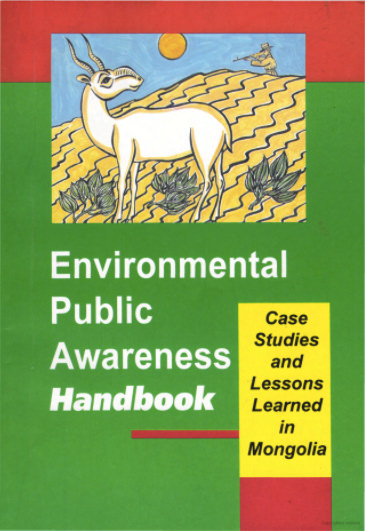
Environmental Public Awareness Handbook: Case Studies and Lessons Learned in Mongolia by Robert Ferguson.
Creative Commons License

This work is licensed under a
Creative Commons Attribution-Noncommercial-No Derivative Works 3.0 License.

ORCID iD: https://orcid.org/0000-0001-5311-1052.

© David South Consulting 2023

Categories
Archive Development Challenges, South-South Solutions Newsletters Southern Innovator magazine

Urban Farming to Tackle Global Food Crisis

By David SouthDevelopment Challenges, South-South Solutions

SOUTH-SOUTH CASE STUDY

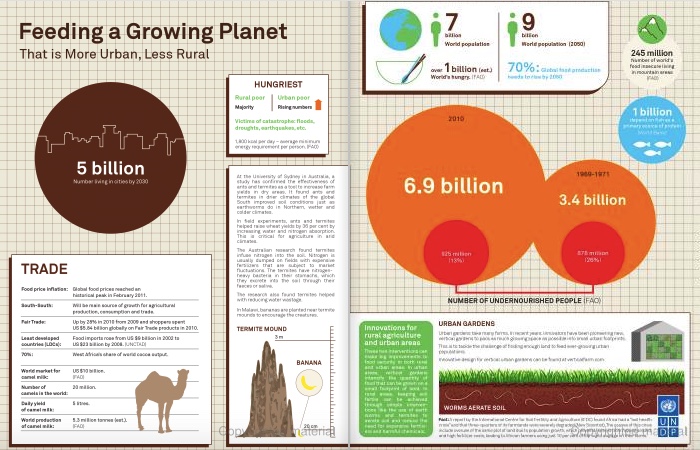
The world’s population is becoming more urban by the day. By 2030, some five billion people around the world will live in cities. This year is the tipping point: urban dwellers (3.3 billion people) now outnumber rural residents for the first time (UNFPA’s State of the World Population 2007 Report). 

But with rising food prices across the globe, many city-dwellers are experiencing hunger and real hardship. On international commodity markets, food prices have gone up 54 percent over the last year, with cereal prices soaring 92 percent (FAO – World Food Situation). While living in an urban environment means living cheek-by-jowl with other people, it doesn’t mean there aren’t ways to grow food and supplement urban dwellers’ tight budgets and boost diets.

U.N. Secretary General Ban Ki-moon has called for food production to increase 50 percent by 2030 just to meet rising demand – and right now there are 862 million people undernourished (FAO). But one solution, urban farming, can make a huge difference, as the Caribbean island of Cuba has shown.

Today, Cuba imports about 50 percent of its minimum fuel and food requirements – a cost that reached US $1.6 billion last year for food. (Reuters). The island has been buffeted by one food crisis after another in the past two decades, first by the collapse of its aid from the Soviet Union, and then by a fuel crisis. But now, urban farming in Cuba provides most of the country’s vegetables, thanks to urban gardens that have sprung up on abandoned land in the country’s cities and towns. And the food is pesticide-free: 70 percent of the vegetables and herbs on the island are organic (http://www.soilassociation.org/web/sa/saweb.nsf/Living/ whatisorganic.html).

These urban farms mean fresh food is just a short walk away from the people who eat it. And in a world of rising fuel prices, Cuba has reduced the use of fossil fuels in the production and transportation of food.

The urban farms have created 350,000 jobs that pay better than most government jobs. It has also improved Cuban’s health: many have moved from diets dominated by rice and beans and imported canned goods from Eastern Europe, to fresh vegetables and fruits.

While Cubans receive at least a basic state ration of rice, beans and cooking oil, the rations do not include fresh fruit and vegetables. After the withdrawal of Soviet subsidies, the average Cuban’s daily calorie intake fell sharply. Between 1989 and 1993, daily calorie intake dropped from 3,004 to 2,323 (UN). But with the growth of urban farms, this has moved up to 3,547 calories a day – even higher than the amount recommended for Americans by the US government.

The secret to this success has been the rise of entrepreneurs like Miladis Bouza, a 48-year-old former research biologist who had to abandon a comfortable middle class life after the collapse of the Soviet Union. Her government salary dropped to US $3 a month. Unable to make ends meet and provide food for her family, she quit her job.

The Cuban government allowed people to turn unused urban land into mini farms. The cities have many vacant lots because the state owns most land and there isn’t competition from private developers, as in many other countries. Unusually for communist Cuba, 80 percent of the profits are kept by the farmers. This can be an average wage of US $71 per month.

“Those salaries are higher than doctors, than lawyers,” Roberto Perez, an agronomist who runs the country’s first urban farm, told The Associated Press. “The more they produce, the more they make. That’s fundamental to get high productivity.”

Miladis grabbed this opportunity to farm a half-acre plot near her home in Havana. Along with her husband, she grows tomatoes, sweet potatoes and spinach, and sells the vegetables at a stall on nearby busy street. This has enabled her monthly income to rise to between US $100 per month and US $250 per month, far more than the average government salary of US $19 per month.

Cuba was inspired by greenbelt farms in Shanghai (http://en.shac.gov.cn/hjgl/jqgk/t20030805_82028.htm): but Cuba has gone even further to make urban farming a key part of the national food supply.

All this urban farming is also all-natural farming. Farms have had to turn to natural compost as fertilizer, and natural pesticides like strong-smelling celery to ward off insects.

So-called organoponicos (http://academicos.cualtos.udg.mx/Pecuarios/ PagWebEP/Lecturas/ORGANOPONICOS.htm ) gather together a wide variety of vegetables, fruits and herbs, as well as ornamental plants. Customers are offered mangos, plantains, basil, parsley, lettuce, garlic, celery, scallions, collard greens, black beans, watermelon, tomatoes, malanga, spinach and sweet potatoes.

“Nobody used to eat vegetables,” said David Leon, 50, buying two pounds of Swiss chard at a Havana organoponico. “People’s nutrition has improved a lot. It’s a lot healthier. And it tastes good.”

Published: June 2008

Resources

https://davidsouthconsulting.org/2020/12/14/african-farming-wisdom-now-scientifically-proven/

https://davidsouthconsulting.org/2022/10/10/cheap-farming-kit-hopes-to-help-more-become-farmers/

https://davidsouthconsulting.org/2023/01/16/hip-driven-pump-brings-water-to-parched-fields/

https://davidsouthconsulting.org/2022/11/23/kenyan-farmer-uses-internet-to-boost-potato-farm/

https://davidsouthconsulting.org/2022/10/31/new-kenyan-services-to-innovate-mobile-health-and-farming/

https://davidsouthconsulting.org/2021/11/09/pocket-friendly-solution-to-help-farmers-go-organic/

https://davidsouthconsulting.org/2021/09/16/small-fish-farming-opportunity-can-wipe-out-malnutrition/

https://davidsouthconsulting.org/2022/10/18/woman-wants-african-farming-to-be-cool/

Development Challenges, South-South Solutions was launched as an e-newsletter in 2006 by UNDP’s South-South Cooperation Unit (now the United Nations Office for South-South Cooperation) based in New York, USA. It led on profiling the rise of the global South as an economic powerhouse and was one of the first regular publications to champion the global South’s innovators, entrepreneurs, and pioneers. It tracked the key trends that are now so profoundly reshaping how development is seen and done. This includes the rapid take-up of mobile phones and information technology in the global South (as profiled in the first issue of magazine Southern Innovator), the move to becoming a majority urban world, a growing global innovator culture, and the plethora of solutions being developed in the global South to tackle its problems and improve living conditions and boost human development. The success of the e-newsletter led to the launch of the magazine Southern Innovator. 

https://davidsouthconsulting.org/2021/03/05/southern-innovator-issue-3/

Creative Commons License

This work is licensed under a
Creative Commons Attribution-Noncommercial-No Derivative Works 3.0 License.

ORCID iD: https://orcid.org/0000-0001-5311-1052.

© David South Consulting 2023

Categories
Archive Development Challenges, South-South Solutions Newsletters

Havana’s Restaurant Boom Augers in New Age of Entrepreneurs

By David SouthDevelopment Challenges, South-South Solutions

SOUTH-SOUTH CASE STUDY

Cuba, the Caribbean island nation known for its 1959 revolution and its tourism industry, is undergoing a shift in its economic strategy. The country has had heavy state control of its industries and business activities since the country adopted the official policy of state socialism and joined the Communist economic sphere headed by the Soviet Union.

When the Soviet Union fell apart in 1991, Cuba was pitched into an economic crisis as it lost access to preferential trade subsidies. This period is known as the ‘Special Period’ (http://en.wikipedia.org/wiki/Special_Period) and was marked by a severe reduction in access to fuel as supplies and subsidies from the Soviet Union disappeared. Some of the iconic images of the time include people abandoning their cars and turning to bicycles to get around, or using make-shift truck-buses packed with workers. Exports collapsed and slashed the size of the economy by a third.

Fast-forward to today, and tourism is booming. A record 2.7 million tourists went to Cuba in 2011, earning the country US $2.3 billion. And it is catering to this tourism market that probably offers the best near-term opportunities. With wages still just 50 per cent of what they were in 1989 many are taking up this new opportunity to become entrepreneurs.

To become an entrepreneur, Cubans need to apply for a pink identification card with their name and photo and the words “Autorizacion Para Ejercer el Trabajo por Cuenta Propria.” This gives authority “to work for your own account.” With the card, a person can start a business, hire staff and pay them what they like.

Cuba’s economy has been through many phases since the revolution, swinging between loosening up the ability of people to establish private businesses – and pulling back, restricting private enterprise. But since 2008, there has been a significant shift to encouraging greater private enterprise, entrepreneurship and the ownership of private property – once banned – to stimulate the economy.

“This is the most important thing to happen in Cuba since the revolution in 1959,” Juan Triana, senior fellow at the Centre for the Study of the Cuban Economy at Havana University, told The Sunday Times Magazine.

One visible sign of this change is the flourishing of what is called locally ‘paladar’ (http://en.wikipedia.org/wiki/Paladar), or privately run restaurants.

Paladares are usually located in a person’s home and staffed by family members. Their customers are a mix of tourists, expatriates living in Cuba, and Cubans with a high enough income to be able to afford restaurant meals.

The cost of a meal in these restaurants can run from US $40 to US $60 for two people.

Stocking the kitchen is not easy. Cuba experiences food shortages and there is still rationing for many. Basics like eggs can be hard to find. As for exotic, imported ingredients, many chefs rely on visitors to stock their larders.

Cuba will have to re-build its food sector to make this a lasting improvement.

The agriculture sector has declined and, where Cuba once provided a third of the world’s sugar harvest, the country now has to import half of its food supply. Measures are in the works to change this, with smallholder farmers now able to own 165 acres of land and sell their produce to private customers and hotels.

One restaurant owner, Héctor Higuera Martinez, told The New York Times:“You dream up a recipe that you’d like to make but then you can’t find the ingredients.

“One day you go out to get salt and there’s no salt. And I mean no salt,Anywhere.”

Martinez trained with a well-known Cuban chef and did a stint in Paris before returning to Havana. He has turned a 19th-century mansion into the restaurant Le Chansonnier (http://www.cubajunky. com/havana/restaurant_le_chansonnier.html) and decorated the walls with the work of local artists.

Martinez sees the paladares as a turning point in changing Cuba’s reputation for having boring food. “I believe we can play an important role in revolutionizing Cuban cuisine.”

Cuba is making the difficult shift from having an economy where 80 per cent of activity is in the state sector, to a mixed model balanced between private and public ownership.

Havana’s historic district offers tourists renovated colonial architecture mixed with shops, restaurants and bars. As a tourist strolls from the renovated district, they quickly come across the rest of Havana, which has beautiful buildings from the colonial period, 1950s American-influenced architecture with its fading retro signage, and more utilitarian Soviet-era architecture.

While charming and home to most of the city’s residents, much of it is rundown and crowded and in need of investment and renovation.

But things are changing fast. Oyaki Curbelo and Cedric Fernando use spices brought in by visitors for Bollywood, their restaurant in the Nuevo Vedado area (http://cubantripadvisor.com/destinations/havana-cityoutskirts/bollywood-paladar/). It has a small menu of Indian and Sri Lankan dishes, including shrimp curry with ginger and tamarind. The restaurant sources its curry leaves from a tree located in the Sri Lankan Embassy.

Another restaurant, Atelier (http://www.cubaabsolutely.com/articles/travel/article_travel.php?landa=70),located in a mansion in the Vedado neighbourhood, serves European Continental food and has a roof terrace letting diners enjoy the a view of the Havana skyline.

The restaurant Doña Eutimia (https://www.facebook.com/paladardona.eutimia) serves up Cuban favourites off the Cathedral Square. Specialties include a dish made of shredded beef with garlic, tomato, oregano and bay leaves.

At Vistamer (http://www.stay.com/havana/restaurant/4249/paladar-vistamar/),diners can enjoy garlic-laden lobster tails and lemon meringue pie. At the paladar Café Laurent (http://www.cubaabsolutely.com/articles/travel/article_travel.php?landa=71), the menu includes meatballs with sesame seeds and mustard in red-wine and tarragon sauce, according to The New York Times.

Habana Chef in the Vedado district (http://cubantripadvisor.com/destinations/havana-city-outskirts/habana-chefpaladar/) was started by Joel Begue and chef Ivan Rodriguez. Begue gained his experience in the state restaurant sector and took the opportunity to get a licence when the government offered them in 2011. He borrowed US $25,000 to start the restaurant and has been able to pay back half so far. His current success is prompting him to look into opening a second restaurant in the capital.

An enthusiastic Andrew Macdonald, who is looking for investment opportunities for a half a billion dollar fund held by the Escencia Anglo-Cuban firm, told The Sunday Times magazine, “Cuba is the top emerging tourism market in the Caribbean by a mile, and it’s in the top five emerging markets globally.”

Published: May 2012

Resources

1) Advice on starting a restaurant and links to additional resources. Website: runarestaurant.co.uk

2) How to start a restaurant: From Entrepreneur magazine, a guide to the planning required to start a successful restaurant. Website: http://www.entrepreneur.com/article/73384

3) AlaMesa: A directory of restaurants in Cuba. Website: alamesacuba.com

4) Southern Innovator: Youth and Entrepreneurship Issue: The new global magazine is launching its second issue and is packed with innovative entrepreneurs and youth using business to tackle poverty. Website: http://www.scribd.com/doc/86451057/Southern-Innovator-Magazine-Issue-2

https://davidsouthconsulting.org/2022/11/10/brazilian-restaurant-serves-amazonian-treats/

https://davidsouthconsulting.org/2022/11/19/cooking-up-a-recipe-to-end-poverty/

https://davidsouthconsulting.org/2022/10/24/latin-american-food-renaissance-excites-diners/

https://davidsouthconsulting.org/2022/11/11/woman-restaurant-entrepreneur-embraces-brand-driven-growth/

Development Challenges, South-South Solutions was launched as an e-newsletter in 2006 by UNDP’s South-South Cooperation Unit (now the United Nations Office for South-South Cooperation) based in New York, USA. It led on profiling the rise of the global South as an economic powerhouse and was one of the first regular publications to champion the global South’s innovators, entrepreneurs, and pioneers. It tracked the key trends that are now so profoundly reshaping how development is seen and done. This includes the rapid take-up of mobile phones and information technology in the global South (as profiled in the first issue of magazine Southern Innovator), the move to becoming a majority urban world, a growing global innovator culture, and the plethora of solutions being developed in the global South to tackle its problems and improve living conditions and boost human development. The success of the e-newsletter led to the launch of the magazine Southern Innovator. 

https://davidsouthconsulting.org/2021/03/05/southern-innovator-issue-3/

Creative Commons License

This work is licensed under a
Creative Commons Attribution-Noncommercial-No Derivative Works 3.0 License.

ORCID iD: https://orcid.org/0000-0001-5311-1052.

© David South Consulting 2023