

By David South, Development Challenges, South-South Solutions

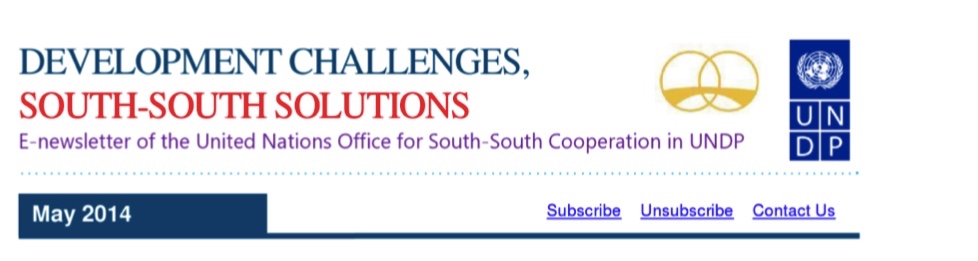
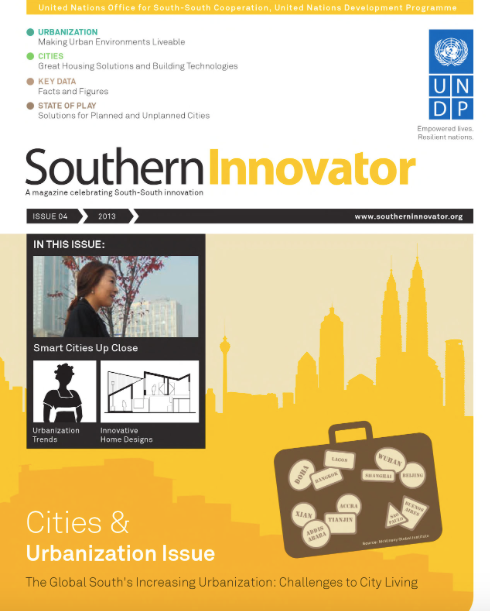
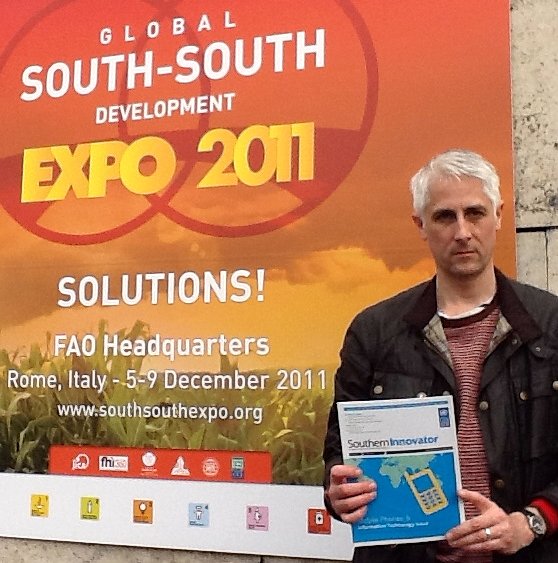
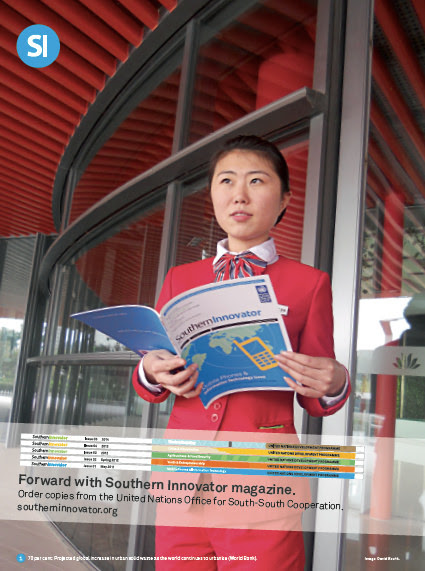
The fourth issue of Southern Innovator has launched online and in print. Order copies now for distribution. Email: southerninnovator@yahoo.co.uk.
December
Baker Cookstoves – Designing for the African Customer Development Challenges: An innovative social enterprise is using design to create an energy-efficient cookstove for Kenya. By turning to an experienced Swedish architecture and design firm, the people behind the Baker cookstove wanted to make sure the stove’s design was as efficient as possible and relevant to the customers’ needs, while also making sure it is visually appealing and something a person would proudly want in their home.
Texting for Cheaper Marketplace Food with SokoText Development Challenges: An international group of graduate-social entrepreneurs from the London School of Economics (LSE) is pioneering a way to reduce food prices in Kenya using mobile phones.
Ethiopia and Djibouti Join Push to Tap Geothermal Sources for Green Energy Development Challenges:Ethiopia and Djibouti are the latest global South countries to make a significant commitment to developing geothermal energy – a green energy source that draws on the heat below the earth’s surface (http://en.wikipedia.org/wiki/Geothermal_energy) – to meet future development goals.
Tackling China’s Air Pollution Crisis: An Innovative Solution Development Challenges: China reached an undesired landmark in 2013. While the country’s impressive economic growth has amazed the world, it has come at a price: pollution. China recorded record levels of smog in 2013, with some cities suffering air pollution many times above what is acceptable for human health.
November
Ghana Wants to Tap Global Trendy Party Scene Development Challenges: Tourism is big business – and one of the most resilient parts of the global economy. Despite the international economic crisis that has wreaked havoc and increased unemployment and poverty in many countries since 2007, tourism is still going strong.
China Pushing Frontiers of Medical Research Development Challenges: Cutting-edge medical research in China is promising to boost human health and development. Futuristic science is being conducted on a large scale and it is hoped this will increase the pace of discovery.
Latin American Food Renaissance Excites Diners Development Challenges: Food is essential for a good life and plays a critical part in overall human health and development. The better the quality of food available to the population, the better each individual’s overall health will be, and this will have a direct impact on mental and physical performance (http://www.sciencedirect.com/science/article/pii/S2213453012000055).
Perfume of Peace Helps Farmers Switch From Drug Trade Development Challenges: A tragedy in a time of war has led to a social enterprise that is creating jobs – and making the world smell a little better, too.
US $450 Million Pledged for Green Economy Investments at Kenyan Expo Development Challenges: Innovators working in the global green economy could benefit from over US $450 million in investment recently pledged at the UN’s Global South-South Development Expo held in Nairobi, Kenya.
October
African Fashion’s Growing Global Marketplace Profile Development Challenges: Tales of African global fashion successes have multiplied in the last few years. African fashion is seeing its profile rise as more and more shows and festivals boost awareness of the continent’s designs, designers and models. In turn, African fashion and design is being taken more seriously as an income and job generator, and as a sector able to weather the ups and downs of the global economy: people always need to wear clothes.
Cuban Entrepreneurs Embracing Changes to Economy Development Challenges: The Caribbean island of Cuba has gone its own way economically and socially since its revolution in 1959. The country has seen significant gains in its human development in the decades since, and can boast impressive education levels and good public health care.
Radical Drone Solution to Woeful Infrastructure in Poor Countries Development Challenges: Drones – unpiloted aircraft, formally called Unmanned Aerial Vehicles (UAV) or Unmanned Aircraft Systems (UAS) – have long been used for military purposes. The U.S. military claims to have 7,500 drones – a massive growth from just 50 a decade ago – and has used them for surveillance and combat in conflicts from Afghanistan to Iraq.
Pioneering African Airlines Help to Expand Routes Development Challenges: The last decade has seen a revolution in African air travel. The number of air routes has grown and this has paralleled the economic growth across the continent. As demand has been strong for Africa’s resources, it has also fueled a consumer boom that is benefiting an increasing number of people.
September
Affordable Space Programmes Becoming Part of South’s Development Development Challenges: Space: the final frontier. At least that was how heading off into the stars was portrayed in cult television and film series Star Trek. While many countries are working to raise living standards and eradicate poverty on earth, some are also looking to space for solutions to earth-bound problems.
Solar Bottle Bulbs Light Up Dark Homes Development Challenges: Finding ways to generate low-cost or free light has captured the imagination of innovators across the global South. The desire for light is strong: Light gives an immediate boost to income-making opportunities and quality of life when the sun goes down or in dark homes with few windows.
China Sets Sights on Dominating Global Smartphone Market Development Challenges: The rise of smartphones – mobile phones capable of Internet access and able to run ‘apps’ or applications – is the latest wave of the global connectivity revolution. Mobile phones rapidly made their way around the world to become almost ubiquitous – the most successful take-up of a piece of communications technology in history – and now smartphones are set to do the same. The number of mobile phone subscriptions in the world surpassed 6 billion in 2012 (out of a population of 7 billion) and, according to the International Telecommunications Union (ITU), the number of mobile phones will exceed the world’s population by 2014.
Poorest Countries Being Harmed by Euro Currency Crisis Development Challenges: The ongoing economic crisis in Europe is forecast to harm the economies of the world’s poorest countries if it continues, according to a study by the United Kingdom’s Overseas Development Institute (ODI) (odi.org.uk).
August
Solar-Powered Mobile Clinics to Boost Rural Healthcare in Africa Development Challenges: Around the world, innovative thinking is finding new ways of using solar power technology to bring electricity to underserved areas of the global South. Innovators are experimenting with new technologies, new business models and new ways to finance getting solar power into the hands of the poor.
Vietnamese Google Rival Challenging Global Giant Development Challenges: Information technologies are creating new business opportunities across the global South. As more and more people gain access to the Internet in one form or another, opportunities to offer them services also increase.
More Futuristic African Cities in the Works Development Challenges: It has been well documented that China is undergoing the largest migration in human history from rural areas to cities. But this urbanization trend is occurring across the global South, including in Africa, as well. According to the UN, more than half the world’s population already lives in cities, and 70 per cent will live in urban areas by 2050. Most of the world’s population growth is concentrated in urban areas in the global South.
Story cited in Beyond Gated Communities by Samer Bagaeen and Ola Uduku, Taylor & Francis, ISBN 9781317659051, 2015

Haitian Coffee Becoming a Hit with American Connoisseurs Development Challenges: The Caribbean country of Haiti has had to deal with the twin challenges of recovering from a devastating earthquake in 2010 while also pulling itself out of the economic and social chaos that has resulted in its status as the poorest place in the Western hemisphere.
New 3D Technology Makes Innovation Breakthrough and Puts Mind over Matter Development Challenges:Revolutions in technology are placing more and more power into the hands of the individual, and 3D printing and fabrication machines are opening a whole new chapter. These devices come in many forms, but they all do one thing: they can manufacture pretty well any three-dimensional object on the spot, from digital plans. These machines come in many sizes, from factory scale to smaller, home versions which are no bigger than personal computer printers, such as the well-known MakerBot Replicator 2 (makerbot.com).
July
African Infrastructure Dreams Back on Agenda Development Challenges: Africa’s patchy infrastructure is not keeping pace with the continent’s economic growth. Satellite photos of Africa at night show a place where light is concentrated overwhelmingly in the South – primarily South Africa – and in the North, with a sprinkling of lights on the west and east coasts (http://geology.com/articles/satellite-photo-earth-at-night.shtml).
Mobile Phone Microscopes to Revolutionize Health Diagnostics Development Challenges: Mobile phone usage has increased hugely across the global South in the past five years. In Africa, the number of mobile phone subscribers reached 545 million in 2013, while there are 3.5 billion mobile phone users in Asia and the Pacific (ITU). Some 93 million people in Africa and 895 million in Asia and the Pacific have mobile phone Internet access (ITU).
Small Fish Farming Opportunity Can Wipe Out Malnutrition Development Challenges: Pioneering work to boost diets across the global South is turning to the smallest of fish. While small in size, tiny fish are packed with nutrition when eaten whole, as they are in many cultures. Often these fish come packed with vitamin A, iron, zinc, calcium, protein and essential fats – all necessary elements to eradicate malnutrition and hidden hunger, especially among women and children.
Burgeoning African E-commerce Industry Full of Opportunity Development Challenges: Africa has seen huge change since 2000 in the way people access information and do business electronically. The most championed accomplishment has been the widespread take-up of mobile phones. This has given birth to countless entrepreneurs and innovators who are using phones to help people, do business and sell goods and services.
Staple Foods Are Becoming More Secure in the South Development Challenges: Finding ways to ensure food security in countries experiencing profound economic and social change and stress is critical to achievement of development goals. Food security is crucial to ensuring economic development is sustainable, and it is vital to long-term human health. Just one bout of famine can damage a generation of youth, stunting brain development and leaving bodies smaller and weaker than they should be.
June
African Innovators Celebrated in Prize Development Challenges: Innovation is increasingly being recognized as the key to tackling long-standing development problems in Africa, as well as across the developing and developed world. While it is easy to draw up a list of challenges facing the global South, it takes a special person to see not problems but solutions.
New Beer Helping to Protect Elephants Development Challenges: How to match the often conflicting goals of protecting animal habitats and supporting local economies? One clever solution may draw amusement but is actually a sharp marketing strategy to get attention for a product that is helping to preserve the elephants of Thailand’s Golden Triangle (http://en.wikipedia.org/wiki/Golden_Triangle_(Southeast_Asia).
Solar Solution to Lack of Electricity in Africa Development Challenges: Electricity is critical to improving human development and living standards. Yet, for many in the global South, electricity is either non-existent or its provision is patchy, erratic, unreliable or expensive.
Time-Tested Iranian Solutions to Cool and Refrigerate Development Challenges: Keeping food cool is critical for human health. No matter what the climate, a cool environment will prolong food preservation, stave off spoilage and lower the risk of food poisoning. This is crucial for the poor because it means they can reduce food waste and avoid illnesses caused by food poisoning. Diarrhea is a common problem when people do not have access to refrigeration for their food.
May
US $1 Trillion Opportunity for Africa’s Agribusinesses Says Report Development Challenges: As the world’s population continues to grow – surpassing 9 billion people by 2050, the United Nations estimates – and more and more people move to urban areas, producing enough food to feed this population will be one of the biggest economic challenges and opportunities in the global South.
Ambitious Schemes Hope to Advance Economic Development Development Challenges: Sometimes it takes a bold, fresh start to speed up economic and human development goals. Taking a large-scale approach has been used around the world, either establishing new trade zones or even a new city.
Indian Initiatives to Make Travel Safer for Women Development Challenges: Shocking assaults on women traveling in India have galvanized innovators to find solutions. One solution that is proving successful is to establish specialist taxi services for women. As a happy additional benefit, these taxi innovators are transforming the taxi experience, introducing more ethical practices such as honest fares, professional and safe driving habits and clean, hygienic and comfortable taxis.
Kenya Reaches Mobile Phone Banking Landmark Development Challenges: Financial transactions and banking with mobile phones have been a Kenyan success story.
April
Online Education Could Boost African Development Development Challenges: Education is recognized as a major catalyst for human development. During a high-level meeting on the Millennium Development Goals (MDGs) (http://www.undp.org/content/undp/en/home/mdgoverview.html) in 2010, UNESCO – the United Nations Educational, Scientific and Cultural Organization – pointed out the necessity of making rapid gains in education if all the MDGs are to be achieved. The goals deadline is 2015 – just two years away.
African Digital Laser Breakthrough Promises Future Innovation Development Challenges: For decades many African countries have experienced low investment in research and development (R&D) and scientific innovation. One of the few nations to benefit from a sophisticated university network and research and development sector was South Africa. It still ranks top on the continent for funding R&D and its high number of scientific journals.
Preserving Beekeeping Livelihoods in Morocco Development Challenges: The clever combining of tourism and long-standing beekeeping skills has revived a local craft and is also helping to preserve the ecology of Morocco. Beekeeping, or apiculture (http://en.wikipedia.org/wiki/Beekeeping), has two clear benefits. Bee products, including honey, beeswax, propolis, pollen and royal jelly can be a valuable source of income. The other benefit is the critical role bees play in the ecology by pollinating flowers and plants as they go about their daily business.
A New African Beer Helps Smallholder Farmers. Development Challenges: Africa’s growth in the past decade has held steady despite the trauma of the global economic crisis and the tumult of the “Arab Spring” in several countries of North Africa. African economies are growing because of a number of resilient trends. These include growing regional trade links, greater investment in infrastructure and the remarkable rise of China to become Africa’s number one trade partner, pushing the United States to second place (Technology + Policy). This has given birth to a growing consumer marketplace and consumer class – some 300 million people earning about US $200 a month (Africa Rising).
Boosting Tourism in India with Surfing Culture Development Challenges: Tourism has experienced decades of growth and diversification and is now considered one of the fastest-growing economic sectors in the world. According to the UNWTO – the United Nations World Tourism Organization – modern tourism is “a key driver for socio-economic progress.”
March
Made-in-Africa Fashion Brand Pioneers Aim for Global Success Development Challenges: African fashion brands have not always been the first place fashionistas turned to when shopping for new clothes or shoes in developed economies. While Africa has long been a source of inspiration in contemporary and traditional fashion, the continent has had a weak reputation for manufacturing and selling mass market global fashion brands.
Kenyan Book Company Brings Online Sales to East Africa Development Challenges: The Internet has revolutionized retail sales in many developed countries – and nowhere more so than for booksellers. The ability to offer an almost unlimited supply of books through a website is revolutionizing the way people shop and giving life to books long out of print or by unknown authors.
African Innovation Helps Make Banking Transactions Safer Development Challenges: As economies grow in Africa, more and more people are conducting their financial transactions electronically. This can be either through mobile phones and digital devices, or through the hole-in-the-wall of the automatic teller machine, or ATM.
New Apps Make Driving and Travelling in Egypt Easier, Safer Development Challenges: Mobile phones are ubiquitous across the global South. They have spawned whole new business opportunities and changed the way people solve problems and find solutions.
Bangladesh Coffin-Maker Offers an Ethical Ending Development Challenges: Few people want to think about death, and many are ill-prepared when it happens to a loved one or friend. But it will happen to us all – and growing ethical and environmental concerns are reshaping the way many deal with the inevitable event. More and more people are seeking a lower-cost option for being disposed of that also does not harm the environment.
February
Thai Organic Supermarkets Seek to Improve Health Development Challenges: A Thai business is working hard to expand access to organic food in the country. It sees this as part of a wider campaign to improve health in the country – and its success has caught the attention of the government, which wants to turn Thailand into a global health destination.
Global South Experiencing Transportation Revolution Development Challenges: Away from the news headlines, a quiet revolution has been taking place in public transportation across the global South. As cities have expanded and grown, they have also been putting in place public transport systems to help people get around and get to work.
Global South’s Middle Class is Increasing Prosperity Development Challenges: The global middle class is on the rise – and this is creating both challenges and opportunities. As poverty rates have come down across the global South, many countries have seen a rise in the proportion of their population categorized as “middle class”. Globally, being middle class is defined as a person able to consume between US $4 a day and US $13 a day (ILO).
Angolan Film Grabs Attention at Film Festival Development Challenges: The power of the creative economy to transform lives, livelihoods – and perceptions – should never be underestimated. Creativity can transform the image of places and situations often seen in a negative light. A film from Angola is shining a light on the country’s music scene and showing the vitality of the nation in the wake of a long-running civil war.
Back Issues
Development Challenges, South-South Solutions Newsletter | 2011-2014
Development Challenges, South-South Solutions Newsletter | 2007-2010


Development Challenges, South-South Solutions was launched as an e-newsletter in 2006 by UNDP’s South-South Cooperation Unit (now the United Nations Office for South-South Cooperation) based in New York, USA. It led on profiling the rise of the global South as an economic powerhouse and was one of the first regular publications to champion the global South’s innovators, entrepreneurs, and pioneers. It tracked the key trends that are now so profoundly reshaping how development is seen and done. This includes the rapid take-up of mobile phones and information technology in the global South (as profiled in the first issue of magazine Southern Innovator), the move to becoming a majority urban world, a growing global innovator culture, and the plethora of solutions being developed in the global South to tackle its problems and improve living conditions and boost human development. The success of the e-newsletter led to the launch of the magazine Southern Innovator.


This work is licensed under a
Creative Commons Attribution-Noncommercial-No Derivative Works 3.0 License.
ORCID iD: https://orcid.org/0000-0001-5311-1052.
© David South Consulting 2022













 David South Consulting

You must be logged in to post a comment.