Categories
Archive Development Challenges, South-South Solutions Newsletters

African Botanicals to be used to Boost Fight against Parasites

By David SouthDevelopment Challenges, South-South Solutions

SOUTH-SOUTH CASE STUDY

More than 1 billion people in the developing world currently suffer from tropical diseases, which leave a trail of disfigurement, disability and even death. Yet only 16 out of 1,393 – 0.01 percent – of new medicines marketed between 1975 and 1999 targeted tropical diseases (International Journal of Public Health).

A combination of poverty and lack of political will means disease-ridden countries do not invest enough in research and development to find new medical remedies to save lives.

A pioneering project hopes to turn to the continent’s plants to dig up new remedies to tackle the many diseases borne by parasites.

It seeks to boost prosperity in Africa while taking on the many diseases that harm and kill people and hold back economic progress on the continent. If successful, it will make disease-fighting part of the future prosperity of African science – and boost the woefully neglected field of tropical medicine.

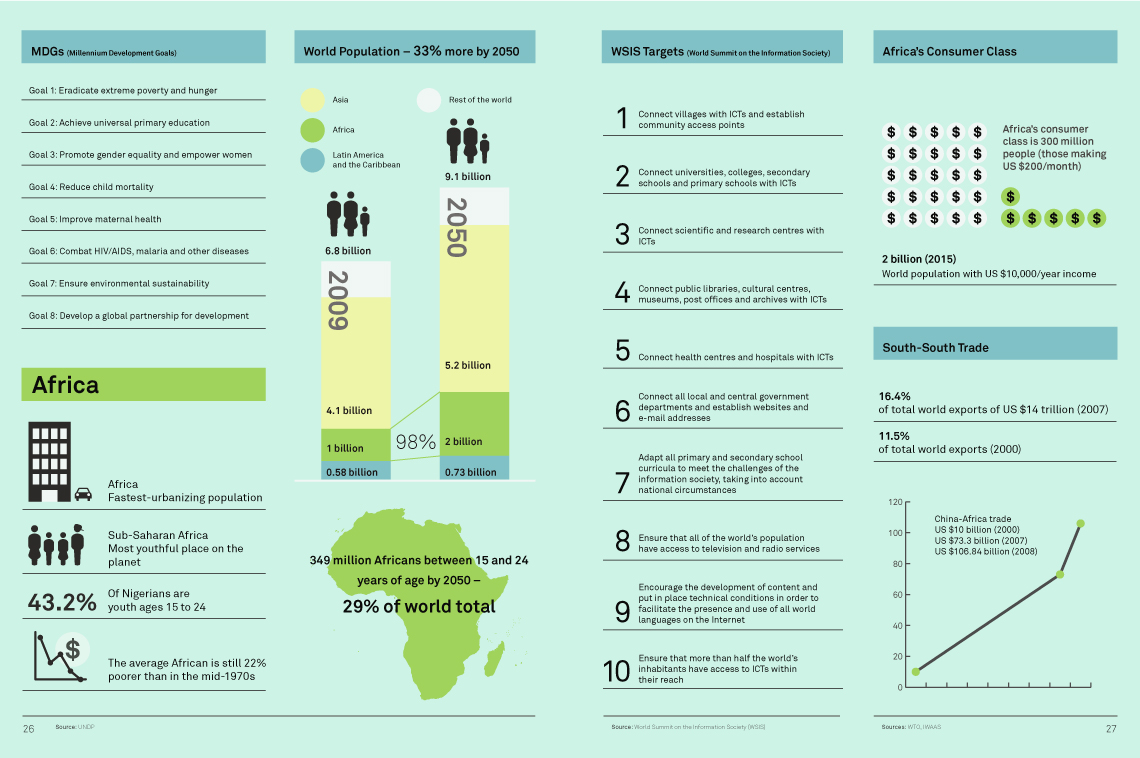
What is at stake is the future of Africa, as the continent has the lowest life expectancies in the world. With just 15 percent of the world’s population, Africa carries a high disease burden, for example it has 60 percent of the global HIV/AIDS-infected population. Access to clean water is poor, with only 58 percent of people living in sub-Saharan Africa having access to safe water supplies (WHO). This leaves people exposed to water-borne parasites like Schistosoma (http://en.wikipedia.org/wiki/Schistosoma), which infects hundreds of millions and is the most crucial parasitic disease to tackle after malaria.

Africa’s biggest killers in order of severity are HIV/AIDS, diarrhoeal diseases, tuberculosis, malaria, childhood diseases, sexually transmitted diseases, meningitis, tropical diseases, Hepatitis B and C, Japanese encephalitis, intestinal nematode and leprosy.

Health resources are not being proportionately allocated: only 10 percent of financing for global health research is allocated to problems that affect 90 percent of the world’s population. This has been called the 10/90 gap (http://www.globalforumhealth.org/About/10-90-gap).

“The untapped potential of African innovation capacity is enormous,” explains Dr. Éliane Ubalijoro, an adjunct professor of practice for public and private sector partnerships at Canada’s McGill University Institute for the Study of International Development (ISID) (http://www.mcgill.ca/isid). Her research interests focus on innovation in global health and sustainable development.

“Using African biodiversity to produce solutions to local (and global) problems will provide a generous return on investment in an area of the world that is destined for growth.”

Ubalijoro was recently awarded, along with Professor Timothy Geary, director of McGill’s Institute of Parasitology, a Grand Challenges Canada (http://www.grandchallenges.ca)grant of CAD $1 million (US $1.04 million) to address parasitic disease through African biodiversity.

The Grand Challenges Canada grants are “dedicated to improving the health and well-being of people in developing countries by integrating scientific, technological, business and social innovation.”

It’s predicted Africa’s growing population will reach between 1.5 and 2 billion inhabitants before 2050: a lot of people needing affordable remedies and treatments.

Innovators have spotted an opportunity to simultaneously improve public health while also boosting Africa’s income from discovering new drugs. Traditional knowledge can play a critical part in the evolving innovation and commercialisation of Africa’s medicines and treatments.

Turning to these remedies and botanicals needs careful stewardship: Africa has a terrible reputation for counterfeit medicines, which kill and harm many people every year. The medicines also need to be affordable and accessible.

In some Asian and African countries, 80 percent of people use traditional medicines for primary care at some point (WHO). There may be sceptics amongst those used to name-brand medicines but traditional African medicines have a rich cultural heritage and have sustained Africans over the centuries. It is estimated the continent has over 50,000 plants to draw from, with fewer than 10 percent so far investigated to tap their potential medical utility.

From the start, most of the new funding for the McGill project will be spent in Africa. Out of the CAD $1 million dollar grant, more than half the funds will go directly to partners at the University of Cape Town and the University of Botswana. At first, the funds will be used to screen local biodiversity for promising leads. These will then be subjected to chemical testing in the lab to extract their potential utility for treatments.

“This system allows selection of natural product compounds that act on multiple target sites in the parasite,” according to Ubalijoro, “thus reducing the chances of developing resistance to the kinds of novel drugs that we hope to develop based on promising leads derived from this effort.”

The approach being taken by the project hopes to reduce the time it takes to get drugs to market and to shift the power and initiative to local solutions and scientists, rather than waiting for outsiders to come to the rescue.

The project hopes to contribute to not only improving people’s health but to stimulating local economies. This will be done by growing local pharmaceutical industries, retaining local talent which often now leaves the continent and doing rewarding and dynamic science within Africa. In short: making being in Africa attractive.

It is hoped the success of the project will breed more success, as has happened in other places – think Silicon Valley in California, or Bangalore in India.

“Success in this project will diminish the risk for technology-based investments related to health innovation,” said Ubalijoro, “helping to encourage local venture capital to help grow African science entrepreneurs. The overall benefit is improved livelihoods and prosperity locally as well as reduced spread of disease threats locally and internationally as we travel globally. ”

By bringing the science closer to those who need the help, it is hoped the painfully slow process of new drug development will take on a greater urgency.

“Discovery to production of a marketable drug can be a lengthy process,” said Ubalijoro. “But as novel methodologies are used to decrease candidate drug failure through the development and clinical processes, we can decrease the time it takes to bring drugs to market while empowering local innovation systems to lead the process instead of waiting for others to do so.

“The sense of urgency felt by local scientists to solve local problems can stimulate innovation and safe delivery of new medicines for African populations.”

Ubalijoro wants to see greater cooperation across disciplines and for people to come together in “innovation clusters,” that bring together policy, business and technical capability.

“I would like to see local investment in innovation coming from the public, private and NGO sectors,” explained Ubalijoro. “I would also like to see women scientists taking an active role in leadership and in becoming the next generation of innovating African scientists.”

Ubalijoro says that for those with money to invest, this is a vast opportunity waiting to be tapped. And she would like to see a dedicated African Innovation Fund set up for this purpose

“The message for venture capitalists and investors is simple: by cultivating local talent, we can help African scientists and entrepreneurs explore indigenous-based solutions to local health problems while taking advantage of the most advanced technologies available globally to ensure that quality, risk mitigation and profits can grow hand in hand with healing the ailments of African populations.”

Published: May 2011

Resources

1) RISE-AFNNET: African Natural Products Network: RISE-AFNNET works to develop Africa’s rich biodiversity into a natural products industry of social and economic significance. Building on an already active research network of 10 member countries called NAPRECA, RISE-AFNNET expands existing research programs and formalizes educational activities in such natural products (NP) fields as engineering, biochemistry, environmental science, pharmacology, economic development and nutrition. Students work on natural product research projects in the context of poverty alleviation, gender equity, and Millennium Development Goals. Website:http://sites.ias.edu/sig/rise/rise-afnnet

2) GIBEX: The Global Institute for Bioexploration is a global research and development network that promotes ethical, natural product-based pharmacological bio exploration to benefit human health and the environment in developing countries. GIBEX was established by Rutgers, the State University of New Jersey, and the University of Illinois at Urbana-Champaign. Both are leading US universities with strong records of building successful international programs in discovering and developing life-saving medicines. Website: http://www.gibex.org/index.php

3) Screens-to-Nature Training: Scientists Learn New Way of Screening Plants for Pharmaceutical Applications. Website:http://www.gibex.org/article.php?id=132

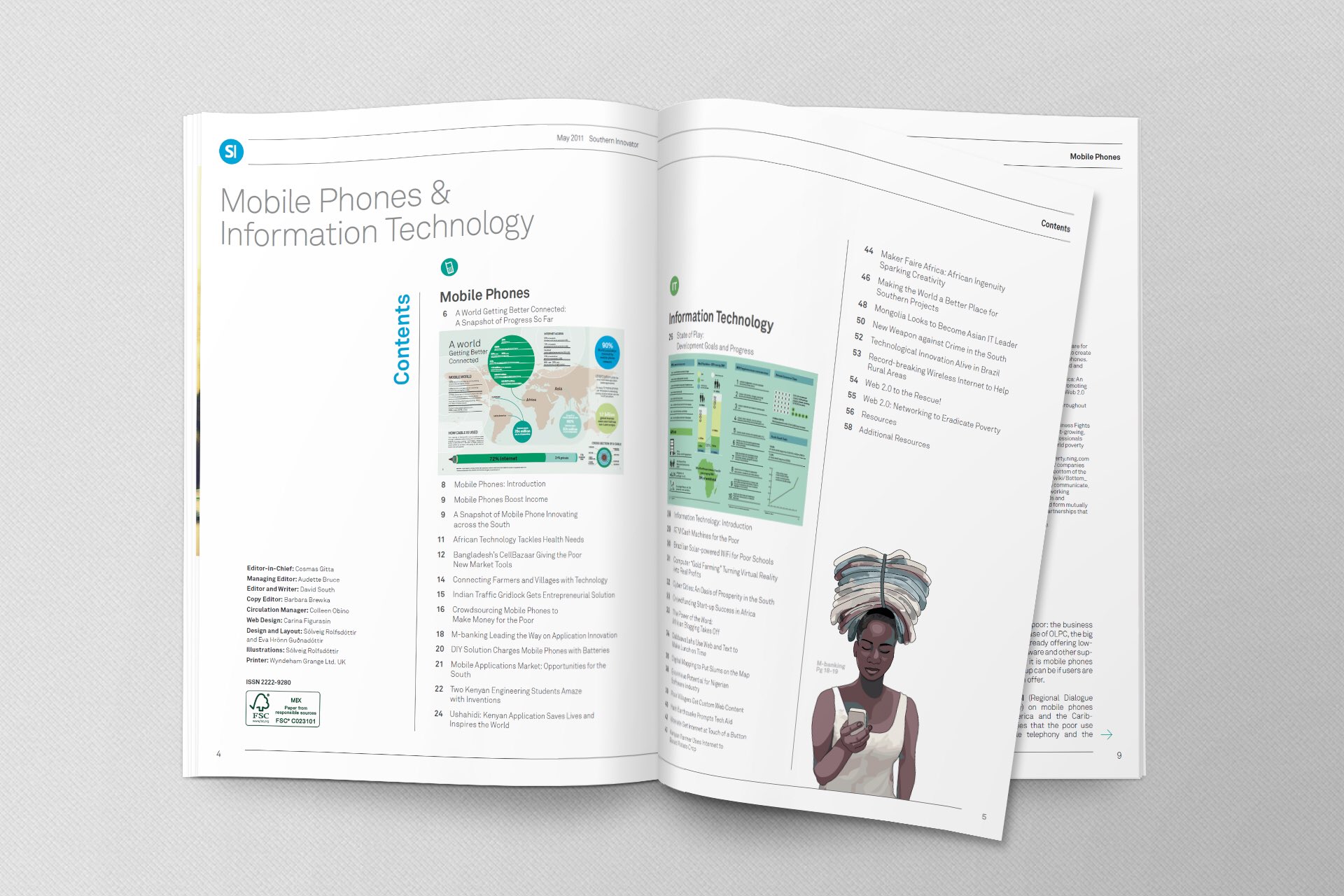
Development Challenges, South-South Solutions was launched as an e-newsletter in 2006 by UNDP’s South-South Cooperation Unit (now the United Nations Office for South-South Cooperation) based in New York, USA. It led on profiling the rise of the global South as an economic powerhouse and was one of the first regular publications to champion the global South’s innovators, entrepreneurs, and pioneers. It tracked the key trends that are now so profoundly reshaping how development is seen and done. This includes the rapid take-up of mobile phones and information technology in the global South (as profiled in the first issue of magazine Southern Innovator), the move to becoming a majority urban world, a growing global innovator culture, and the plethora of solutions being developed in the global South to tackle its problems and improve living conditions and boost human development. The success of the e-newsletter led to the launch of the magazine Southern Innovator. 

Creative Commons License

This work is licensed under a
Creative Commons Attribution-Noncommercial-No Derivative Works 3.0 License.

ORCID iD: https://orcid.org/0000-0001-5311-1052.

© David South Consulting 2023

Categories
Archive Development Challenges, South-South Solutions Newsletters

African Online Supermarket Set to Boost Trade

By David SouthDevelopment Challenges, South-South Solutions

SOUTH-SOUTH CASE STUDY

Online retailing and marketing strategies are revolutionizing how people around the world buy products and services – but so far they have not benefited most of Africa’s small businesses and traders. On a continent where trading for survival is the norm, very few people are reaping the benefits of selling on the Internet.

Not only has limited access to the Internet and the lack of high bandwidth in Africa impeded communication within the continent, it has restricted African businesses from taking advantage of the most profound change in global business for decades: e-retailing (also known as e-tailing or e-commerce).

But the African information technology pioneers of Ghana – a country that has already gained a reputation as an IT leader in West Africa (www.ghanaictawards.com) – are setting out to change this situation, and in turn to change the way people access African goods and services.

Pledging in its motto to reach “every African nook and cranny,” ShopAfrica53 is an online shopping portal similar to famous brands like Amazon or eBay, but focused entirely on giving African traders the ability to sell across the continent and to the world online.

The one-stop shopping site – taking its name from the 53 countries on the continent – can be accessed by Internet users, or better still, by the enormous number of mobile phone users not only in Africa but around the world.

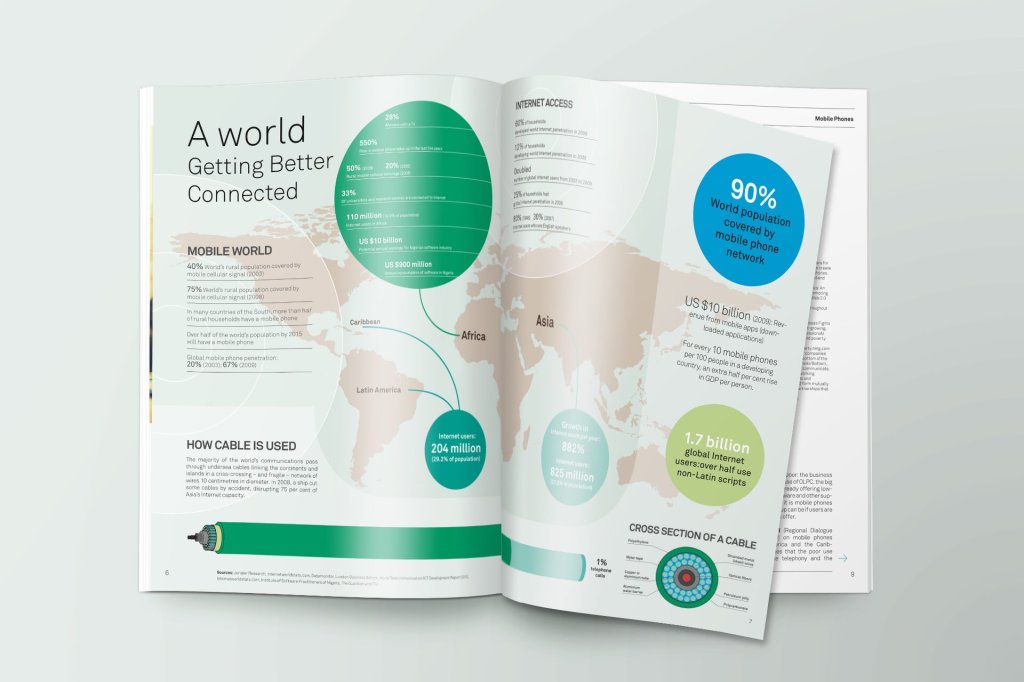
The number of mobile phone subscribers in Africa surpassed 300 million in 2008 (ITU), representing a significant market in their own right. Research group Informa Telecoms and Media estimates mobile networks now cover 90 per cent of the world’s population – 40 per cent of whom are covered but not connected.

ShopAfrica53 works like this: merchants first fill out an online form on the ShopAfrica53 website. They are then contacted by ShopAfrica, and an account is set up.

People wanting to buy goods and services on the website use the African Liberty Card to ensure the transactions are safe and not at risk from hackers and fraudsters. The disposable pre-paid scratch card can be used on mobile phones and the Internet and is purchased from store outlets.

ShopAfrica handles the logistical hassles of shipping to customers around the world, facilitates payment transfers, and helps with record keeping for merchants.

ShopAfrica offers an eclectic selection of goods: apparel and accessories, books and stationery, groceries, handicraft, health and personal care, home and garden, machinery and tools, technology and entertainment. It promises to offer the “best selection of African products, anywhere, worldwide” – everything from building supplies, household items and electronics to processed foods and fabrics.

One Ghanaian merchant, Mohammed Salifu, promises to deliver in two days a “large brown cow for delivery or collection. The size, colour and weight of animal will vary. This merchant provides live goats, sheep, cattle for special occasions and festivities and can also provide a slaughtering service for clients.”

Then there is Vera Ami Kpogli, who is selling a ‘Beyonce’ Electric Blue necklace. Tse-Lee Fashions offers Batik/Tie and Dye Print Shirt in aqua and navy. And for the ‘king’ of the house, Ama Afrique Designs is selling Men’s Royal Rulers, sandals “worn many centuries ago by African kings.”

The potential of this service to boost incomes is considerable: in the United Kingdom, online sales now make up 15 percent of all retail spending, reaching £43.8 billion (US $66.12 billion) in 2008 (IMRG).

As has been seen with other countries of the Global South, trade in high quality goods boosts incomes. South-South trade grew by an average of 13 percent per year between 1995 and 2007. By 2007, South-South trade made up 20 percent of world trade. And over a third of South-South commerce is in high-skill manufacturing. Making finished goods, rather than just selling raw materials, improves workers’ skill levels and increases the return on trade.

The rapid changes to African countries – the tilt to being more urban than rural, and being home to a larger urban population than North America, with 25 of the world’s fastest growing cities (International Institute for Environment and Development) – means there is an urgent need to boost incomes and better connect traders and manufacturers to the global economy.

ShopAfrica53 could be the start of a very big thing for African trade.

Published: May 2009

Resources

  • The red dot logo stands for belonging to the best in design and business. The red dot is an internationally recognised quality label for excellent design that is aimed at all those who would like to improve their business activities with the help of design.
    Website: www.red-dot.de
  • BOP Source is a platform for companies and individuals at the BOP (bottom of the pyramid) to directly communicate, ultimately fostering close working relationships, and for NGOs and companies to dialogue and form mutually valuable public-private partnerships that serve the BOP.
    Website: http://bopsource.ning.com/
  • Business Fights Poverty: Business Fights Poverty is the free-to-join, fast-growing, international network for professionals passionate about fighting world poverty through good business.
    Website: businessfightspoverty.ning.com
  • Dutch Design in Development: As a matchmaker, DDiD puts together European clients, Dutch designers and small and medium-sized enterprises in developing countries. The designers share their knowledge of European consumer tastes, product development, design and quality standards
    Website: www.ddid.nl
  • Afriville is a Web 2.0 service and an African Caribbean social network. Afriville is a community website along the lines of the famous MySpace. Users are free to message and post profiles. The difference is that the user is able to choose how closed or open the networks are. The site features a state of the art music management system which allows African and Caribbean artists to get straight in touch with their fans.
    Website: www.afriville.com
  • Business Action for Africa: Business Action for Africa is an international network of businesses and business organisations from Africa and elsewhere, coming together in support of three objectives: to positively influence policies for growth and poverty reduction, to promote a more balanced view of Africa, and to develop and showcase good business practice in Africa
    Website: www.businessactionforafrica.org
  • Interactive Media in Retail Group (IMRG) is a membership community for the e-retail industry, whose vision is to maximise the commercial potential of online shopping
    Website: www.imrg.org

https://davidsouthconsulting.org/2021/03/20/accessing-global-markets-via-design-solutions/

https://davidsouthconsulting.org/2022/06/02/afghanistans-juicy-solution-to-drug-trade/

https://davidsouthconsulting.org/2022/10/26/african-trade-hub-in-china-brings-mutual-profits-2/

https://davidsouthconsulting.org/2021/03/20/carbon-markets-need-to-help-the-poor/

https://davidsouthconsulting.org/2022/11/21/chinese-trade-in-angola-helps-recovery/

https://davidsouthconsulting.org/2021/03/20/computer-gold-farming-turning-virtual-reality-into-real-profits/

https://davidsouthconsulting.org/2022/04/12/djibouti-re-shapes-itself-as-african-trade-hub/

https://davidsouthconsulting.org/2021/07/19/global-south-trade-boosted-with-increasing-china-africa-trade-in-2013/

https://davidsouthconsulting.org/2020/12/12/mobile-phone-shopping-to-create-efficient-markets-across-borders/

https://davidsouthconsulting.org/2021/12/08/new-media-markets-and-screen-finance/

https://davidsouthconsulting.org/2022/10/26/perfume-of-peace-helps-farmers-switch-from-drug-trade/

https://davidsouthconsulting.org/2022/10/04/popular-chinese-social-media-chase-new-markets/

https://davidsouthconsulting.org/2021/07/19/south-south-trade-helping-countries-during-economic-crisis/

https://davidsouthconsulting.org/2022/11/17/sos-shops-keep-food-affordable-for-poor-unemployed/

https://davidsouthconsulting.org/2022/11/16/thai-organic-supermarkets-seek-to-improve-health/

https://davidsouthconsulting.org/2022/10/20/trade-to-benefit-the-poor-up-in-2006-and-to-grow-in-2007/

https://davidsouthconsulting.org/2020/04/17/virtual-supermarket-shopping-takes-off-in-china/

https://davidsouthconsulting.org/2022/10/05/women-empowered-by-fair-trade-manufacturer/

https://davidsouthconsulting.org/2022/06/16/women-mastering-trade-rules/

Development Challenges, South-South Solutions was launched as an e-newsletter in 2006 by UNDP’s South-South Cooperation Unit (now the United Nations Office for South-South Cooperation) based in New York, USA. It led on profiling the rise of the global South as an economic powerhouse and was one of the first regular publications to champion the global South’s innovators, entrepreneurs, and pioneers. It tracked the key trends that are now so profoundly reshaping how development is seen and done. This includes the rapid take-up of mobile phones and information technology in the global South (as profiled in the first issue of magazine Southern Innovator), the move to becoming a majority urban world, a growing global innovator culture, and the plethora of solutions being developed in the global South to tackle its problems and improve living conditions and boost human development. The success of the e-newsletter led to the launch of the magazine Southern Innovator. 

https://davidsouthconsulting.org/2021/03/05/southern-innovator-issue-2/

Creative Commons License

This work is licensed under a
Creative Commons Attribution-Noncommercial-No Derivative Works 3.0 License.

ORCID iD: https://orcid.org/0000-0001-5311-1052.

© David South Consulting 2023
Categories
Archive

Clay Filters are Simple Solution for Clean Water

By David SouthDevelopment Challenges, South-South Solutions

SOUTH-SOUTH CASE STUDY

Access to clean water is critical to good health. It is a basic human need that when met, leads to the biggest improvements in health and well-being. Dirty water causes diarrhoea (http://en.wikipedia.org/wiki/Diarrhea), cholera and typhoid. Diseases caused by dirty drinking water kill almost 5,000 children a day around the world (WHO).

But millions have benefited from a simple solution using clay filters invented and pioneered in Central America, and now manufactured by 28 small factories in 23 countries – the largest in Ghana and Cambodia. Each factory makes up to several thousand filters a day. They offer an ingenious solution that also creates local jobs and skills.

Looking like 30 centimetre-high flowerpots, the filters designed by Guatemalan chemist Fernando Mazariegos blend local clay and plant husks to create a filter capable of killing 98 percent of the contaminants that cause diarrhoea. The husks are burnt away when the filters are fired in a kiln, creating tiny holes that filter out harmful organisms. A coating of colloidal silver (http://en.wikipedia.org/wiki/Colloidal_silver) is painted on the filters after they have been fired in the kiln.

“Each filter can support a family of six,” said Kaira Wagoner, Coordinator of Ceramic Water Filter Projects with the NGO Potters for Peace (www.pottersforpeace.org). Founded in Nicaragua but now US-based, Potters for Peace has popularized the filters and helps with all the training and support required to establish the workshops and market the filters.

The first filter-making workshop was set up in Managua, Nicaragua after Hurricane Mitch in 1999 (http://en.wikipedia.org/wiki/Hurricane_Mitch). That workshop has made and distributed 40,000 filters through the Red Cross and NGOs such as Medecins Sans Frontieres/Doctors Without Borders. Potters for Peace has now stopped running workshops and factories themselves, and provides others with the training and advice necessary to produce clay filters.

To work, the filters are placed in a plastic bucket, a spigot added, and a cover put on top to prevent contamination. The filters are capable of filtering four litres of water an hour.

The genius behind the filters is the fact they can be made by small, local workshops – making access to clean water available anywhere, and creating jobs. Just three to four people can produce up to 50 filters a day. According to tests by the Family Foundation of the Americas, a Guatemalan NGO, the filters halve the incidence of diarrhoea in households that use them.

“The cost of establishing a workshop varies largely,” said Wagoner, “depending on the factory’s location, desired production – from 50 per day to 1000 per day – and on the equipment already available in the potter’s workshop. Potters for Peace generally tries to work with potters who already have some of the needed equipment, such as a hammer mill and clay mixer.

“Filters are distributed hand in hand with health and sanitation information which highlights practices such as hand washing,” said Wagoner. “Since many individuals would otherwise boil their water, the filter significantly reduces the time many women would spend gathering firewood. This gives them time for other things such as school and income generating activities, and is better for the environment, especially in locations where problems with deforestation are significant.”

Experience has found marketing is key to the successful adoption of the filters by communities.

“It is very difficult to create a market in a region of poverty,” said Beverly Pillars, also from Potters for Peace, “and to gain acceptance of a new product that the community will want to purchase to keep a workshop sustainable. NGOs may distribute the ceramic water filters, but for the community to fully accept the idea of seeking out clean, safe drinking water on their own, we urge the local owners of the factory to be innovative in marketing.

“Our best approach has been to select partners in developing areas that have some experience such as a potter or brick maker, and help them to find methods that work in their communities to distribute as many of the ceramic water filters as possible, such as a distribution link through local health centres and small corner markets, adds in Yellow Pages, road signs.”

To get a workshop up and running, they need to have a machine to press the clay filters, a kiln to fire them, and a pyrometer (http://en.wikipedia.org/wiki/Pyrometer) to measure the temperature of the kiln. It usually takes between three and six weeks of training to become proficient at making the filters. Trainers help with acquiring the proper equipment, building the kiln, the clay filter formula, quality control procedures, and marketing techniques and materials.

“My advice to people wanting to start making filters is to look for local craftspeople to partner with,” said Pillars. “Look at local access to brick, clay and sawdust. Be prepared for hard and rewarding work to bring safe, clean drinking water to developing populations.

“Every location is a best location, because the demand for safe, clean drinking water worldwide is so great. The beauty of the ceramic water filter technology is that it uses very few resources: clay, sawdust or other burnout material available and bricks for a kiln. We have found these resources to be present worldwide.”

The filter has been cited by the United Nations’ Appropriate Technology Handbook, and is used by the International Red Cross and the Nobel Prize winning medical relief organization Doctors Without Borders. There are plans to start more filter factories in Cote d’Ivoire, Bolivia and Somaliland.

Published: December 2008

Resources

Development Challenges, South-South Solutions was launched as an e-newsletter in 2006 by UNDP’s South-South Cooperation Unit (now the United Nations Office for South-South Cooperation) based in New York, USA. It led on profiling the rise of the global South as an economic powerhouse and was one of the first regular publications to champion the global South’s innovators, entrepreneurs, and pioneers. It tracked the key trends that are now so profoundly reshaping how development is seen and done. This includes the rapid take-up of mobile phones and information technology in the global South (as profiled in the first issue of magazine Southern Innovator), the move to becoming a majority urban world, a growing global innovator culture, and the plethora of solutions being developed in the global South to tackle its problems and improve living conditions and boost human development. The success of the e-newsletter led to the launch of the magazine Southern Innovator. 

Creative Commons License

This work is licensed under a
Creative Commons Attribution-Noncommercial-No Derivative Works 3.0 License.

ORCID iD: https://orcid.org/0000-0001-5311-1052.

© David South Consulting 2022

Categories
Archive Development Challenges, South-South Solutions Newsletters

New Journal Celebrates Vibrancy of Modern Africa

By David SouthDevelopment Challenges, South-South Solutions

SOUTH-SOUTH CASE STUDY

Africa has seen huge changes to its communications and media in the past five years. The rise and rise of mobile phones, the expansion of the Internet and the explosion in African blogging and social media, on top of flourishing print and broadcast media, all bring an increasing range of options for telling African stories and increasing dialogue.

With all this new media creating new communications channels – and all the turmoil and change affecting millions as economies and countries change – people need the ability to make sense of it all. One magazine is trying to play that role.

An entrepreneur and multimedia innovator has created a unique publication that is capturing the spirit, ideas and stories of modern Africa. It is a high-quality product, has gathered together talented writers and photographers and is gaining a growing global audience. Chimurenga Magazine (http://www.chimurenga.co.za/) based in Cape Town, South Africa, calls itself a “pan African publication of writing, art and politics.” Named for the Zimbabwean Shona word for “revolutionary struggle,” it is published three times a year. Editor Ntone Edjabe is from Cameroon and came to Cape Town in the 1990s after the end of South Africa’s racist Apartheid regime.

With more than 100 contributors, the magazine offers insight into contemporary Africa, what occupies people’s thoughts and how their lives are actually lived.

It is involved in a wide range of other activities, including co-curating a Global South Dialogue Series. And its readership is truly diverse.

“We have readers who are long-term prisoners at Pretoria Central Prison, who have subscriptions that they get to us in coins, and readers who are successful businessmen,” Edjabe said to The Financial Times Magazine.

Chimurenga is out to challenge perceptions of Africa. Practicing the art of long-form journalism more associated with established high-end publications like The New Yorker (newyorker.com), the magazine sets out to challenge perceptions about Africa.

“Discourse on Africa is geared towards simplicity,” Edjabe told CNN. “Everything must be simple – ‘he’s a poor black man, he’s a victim’ – like there has to be a simple story, in a way this is what signifies Africa and global consciousness.

“The moment you bring a degree of complexity to it, it kind of throws people off, they just don’t know where to look anymore. It’s like, ‘what’s going on?’ So Chimurenga in a way does not try to maintain the superficiality of this narrative – we engage with life, we try to present life as complex as it really is.”

Stories in the journal include Billy Kahora writing on the decay of a neighbourhood in Nairobi, Kenya, Michael Abrahams writing about his time in the Cape Town mental hospital after a suicide attempt, and Sean O’Toole following a Zimbabwean immigrant on his journey into South Africa.

The magazine’s website carries back issues of the journal, along with a shop selling magazines, books and t-shirts and the “Chimurenga Library,” an archive of pan-African, independent periodicals. There’s also live online streaming of music – “from ancient techno to future roots” – through the Pan African Space Station radio station, there is a biennial publication of urban life it calls “Africa-style,” and the writings of 14 African writers who visited 14 African cities to check-up on life in urban areas.

As an example of the creativity of Chimurenga’s talent, a special issue of the magazine tried to better understand the impact of violence in South Africa in May 2008 that led to the deaths of 62 people. It did this by creating a fictitious newspaper called The Chimurenga Chronic (http://www.chimurenga.co.za/chimurenga-magazine/current-issue) set during the violence.

The writers are a mix of Anglophones and Francophones, all based in Africa. Common subjects focus on the world of lower-middle class Africa. Examples of past issues show the variety of its content: Conversations With Poets Who Refuse To Speak, Futbol, Politricks & Ostentatious Cripples, Conversations in Luanda and Other Graphic Stories, *We’re all Nigerian!

Well-travelled editor Edjabe has studied and lived in Lagos, Nigeria and Johannesburg, South Africa. He has worked as a disc jockey, music writer and basketball coach. He launched Chimurenga in 2002. He told The Financial Times Magazine “I printed 1,000 copies, which I carried around in my bag. I sold it mainly to friends.”

It was supposed to be a one-off publication but became a journal, initially written mostly by his friends.

“I found out later that this is how most journals actually begin,” he said. “At the time I thought it was unique.”

He aspired to get Africans writing about the Africa they saw and lived in. The challenge was changing the dynamic he found of writers only considering something worth writing about if it had been featured in non-African media.

Edjabe had already made his mark with an innovative initiative to show the diversity of what Africa has to offer. Three years after arriving in South Africa he started the Pan African Market (PAM) in Cape Town. An African cultural centre, it began as a craft market with various traders able to run their individual businesses and leasing stall space from the market. PAM became very successful because it brought together Africans from across the continent and offered a vibrant mix of artists, small businesses and food. It now has 33 stores and stalls from 14 countries of Africa. Shoppers can find arts and crafts, hair dressing, tailoring, holistic healing and catering.

Hard copies of Chimurenga are distributed around Africa and sent to Europe, the United States and India.

“There’s a feeling about writing something, sharing something that is beautiful and truthful from one’s perspective,” Edjabe told CNN.

Published: June 2012

Resources

1) How to Start a Magazine: Simple online advice on starting and running a magazine. Website: http://www.ehow.com/how_16579_start-magazine.html

2) Venture Capital for Africa: VC4Africa is the largest online community of investors, angels and entrepreneurs working to build businesses on the continent. Website: http://vc4africa.biz/landing/?redir_to=%2F

https://davidsouthconsulting.org/2022/10/21/african-media-changing-to-reach-growing-middle-class/

https://davidsouthconsulting.org/2021/01/05/development-challenges-south-south-solutions-newsletter/

https://davidsouthconsulting.org/2021/07/14/freedom-of-expression-introducing-investigative-journalism-to-local-media-in-mongolia-1999-25-january-2016/

https://davidsouthconsulting.org/2021/05/25/ger-mongolias-first-web-magazine-and-a-pioneering-web-project-for-the-united-nations-12-january-2016/

https://davidsouthconsulting.org/2022/11/01/indian-newspapers-thrive-with-economy/

https://davidsouthconsulting.org/2022/10/04/popular-chinese-social-media-chase-new-markets/

https://davidsouthconsulting.org/2022/11/01/southern-innovator-magazine-2010-2014/

Development Challenges, South-South Solutions was launched as an e-newsletter in 2006 by UNDP’s South-South Cooperation Unit (now the United Nations Office for South-South Cooperation) based in New York, USA. It led on profiling the rise of the global South as an economic powerhouse and was one of the first regular publications to champion the global South’s innovators, entrepreneurs, and pioneers. It tracked the key trends that are now so profoundly reshaping how development is seen and done. This includes the rapid take-up of mobile phones and information technology in the global South (as profiled in the first issue of magazine Southern Innovator), the move to becoming a majority urban world, a growing global innovator culture, and the plethora of solutions being developed in the global South to tackle its problems and improve living conditions and boost human development. The success of the e-newsletter led to the launch of the magazine Southern Innovator. 

https://davidsouthconsulting.org/2021/03/05/southern-innovator-issue-1/

Creative Commons License

This work is licensed under a
Creative Commons Attribution-Noncommercial-No Derivative Works 3.0 License.

ORCID iD: https://orcid.org/0000-0001-5311-1052.

© David South Consulting 2022