Tag: Southern Innovator

  • Global South Eco-cities Show How the Future Can Be

    Global South Eco-cities Show How the Future Can Be

    By David SouthDevelopment Challenges, South-South Solutions

    SOUTH-SOUTH CASE STUDY

    The world is currently undergoing a high-stress transition on a scale not seen since the great industrial revolution that swept Europe in the 19th and 20th centuries. Today’s urban and industrial transition involves many more people and is taking place on a greater proportion of the planet. With rapid urbanization comes a demand for middle class lifestyles, with their high-energy usage and high consumption of raw materials.

    This is stretching the planet’s resources to breaking point. And as many have pointed out, if the world’s population is to continue past today’s 7 billion to reach 9 billion and beyond, new ways of living are urgently required. Radical thinking will be necessary to match the contradictory goals of raising global living standards for the world’s poor with pressured resources and environmental conditions.

    But there are innovative projects already under development to build a new generation of 21st-century cities that use less energy while offering their inhabitants a modern, high quality of life. Two examples are in China and the Middle East.

    Both projects are seen as a way to earn income and establish viable business models to build the eco-cities of the future. Each project is seeking to develop the expertise and intellectual capacity to build functioning eco-cities elsewhere. In the case of the Masdar City project in the United Arab Emirates, international businesses are being encouraged to set up in Masdar City and to develop technologies that can be sold to other countries and cities – in short, to create a green technology hub akin to California’s hi-technology hub ‘Silicon Valley’. Masdar City is also being built in stages as investors are found to help with funding. Both projects hope to prove there is money to be made in being green and sustainable.

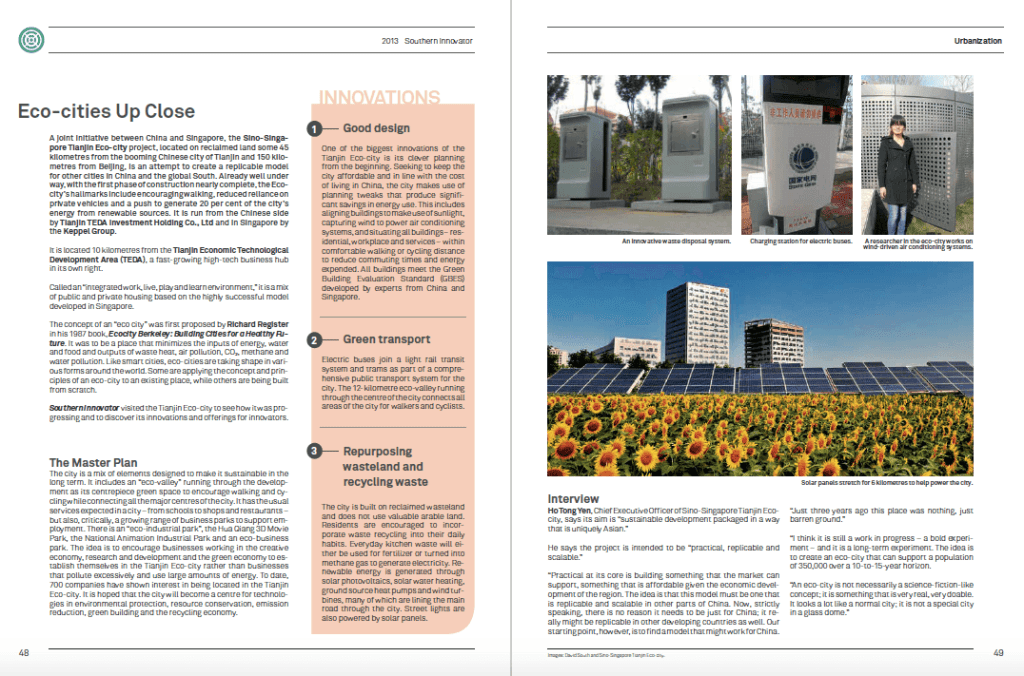
    The Tianjin Eco-city (tianjinecocity.gov.sg) project is a joint venture between China and Singapore to build a 30 square kilometre city to house 350,000 residents.

    Tianjin (http://en.wikipedia.org/wiki/Tianjin) is a large industrial city southeast of China’s capital, Beijing. It is a place that wears the effects of its industrial expansion on the outside. Air pollution is significant and the city has a grimy layer of soot on most outdoor infrastructure.

    China has received a fair bit of criticism for its polluted cities as the country has rapidly modernized in the past two decades. This sprint to be one of the world’s top economic powers has come at a cost to the environment. In this respect, China is not unusual or alone. Industrialization can be brutal and polluting, as Europe found out during its earlier industrial revolution.

    But China is recognizing this can’t go on forever and is already piloting many initiatives to forge a more sustainable future and bring development and high living standards back in line with what the environment can handle.

    Sino-Singapore Tianjin Eco-city is the second large-scale collaboration between the Chinese government and Singapore. The first was the Suzhou Industrial Park (http://www.sipac.gov.cn/english/).The Tianjin project came up in 2007 as both countries contemplated the challenges of rapid urbanization and sustainable development.

    The project’s vision, according to its website, is to be “a thriving city which is socially harmonious, environmentally-friendly and resource-efficient – a model for sustainable development.”

    The philosophy behind the project is to find a way of living that is in harmony, with the environment, society and the economy. It is also about creating something that could be replicated elsewhere and be scaled up to a larger size.

    The city is being built 40 kilometres from Tianjin centre and 150 kilometres from Beijing. It is located in the Tianjin Binhai New Area, considered one of the fastest growing places in China.

    Construction is well underway and can be followed on the project’s website (http://www.tianjinecocity.gov.sg/gal.htm). It will be completed in 2020.

    This year, the commercial street was completed and is ready for residents to move in.

    Residents will be encouraged to avoid motorized transport and to either use public transport or people-powered transport such as bicycles and walking.

    An eco-valley runs down the centre of the city and is meant to be a place for pedestrians and cyclists to enjoy.

    The basic building block of the Eco-city – its version of a city block – is called the Eco Cell. Each Eco Cell measures 400 metres by 400 metres, a comfortable walking distance. Four Eco Cells make a neighbourhood. Several Eco Neighbourhoods make an Eco District and there are four Eco Districts in the Eco-city. It is a structure with two ideas in mind: to keep development always on a walkable, human scale and also to provide a formula for scaling up the size of the Eco-city as the number of residents increases.

    It is a logical approach and seeks to address one of the most common problems with conventional cities: sprawling and unmanageable growth that quickly loses sight of human need.

    Agreement was also reached on the standards that should be achieved for a wide variety of criteria, from air and water quality to vegetation, green building standards, and how much public space there should be per person.

    An ambitious project in the United Arab Emirates is trying to become both the world’s top centre for eco cities and a living research centre for renewable energy. Masdar City (http://www.masdarcity.ae/en/)is planned to be a city for 40,000 people. It is billed as a high-density, pedestrian-friendly development where current and future renewable energy and clean technologies will be “marketed, researched, developed, tested and implemented.”

    The city hopes to become home to hundreds of businesses, a research university and technology clusters.

    This version of an eco-city is being built in three layers in the desert, 17 kilometres from the Emirati capital Abu Dhabi. The goal is to make a city with zero carbon emissions, powered entirely by renewable energy. It is an ambitious goal but there are examples in the world of cities that use significant renewable energy for their power, such as Reykjavik, Iceland in Northern Europe, which draws much of its energy from renewables and geothermal sources.

    Masdar City is designed by world-famous British architect Norman Foster (fosterandpartners.com) and will be 6.5 square kilometres in size.

    The design is highly innovative. The city will be erected on 6 metre high stilts to increase air circulation and reduce the heat coming from the desert floor. The city will be built on three levels or decks, to make a complete separation between transport and residential and public spaces.

    The lowest deck will have a transportation system based on Personal Rapid Transport Pods. These look like insect eyes and are automated, controlled by touch screens, using magnetic sensors for propulsion. On top of this transport network will be the pedestrian streets, with businesses, shops and homes. No vehicles will be allowed there, and people will only be able to use bicycles or Segway (segway.com) people movers to get around. An overhead light railway system will run through the city centre, all the way to Abu Dhabi City.

    “By layering the city, we can make the transport system super-efficient and the street level a much better experience,” Gerard Evenden, senior partner at Foster + Partners, told The Sunday Times. “There will be no car pollution, it will be safer and have more open spaces. Nobody has attempted anything like this.”

    Masdar City is being built in stages as funding comes, with the goal of completion by 2016. It hopes to achieve its aspiration to be the most technologically advanced and environmentally friendly city in the world. As for water supplies in the desert, there is a plan: dew collected in the night and morning and a solar-powered desalination plant turning salt water into drinking water.

    Electricity will come from a variety of sources. Solar panels will be on every roof and double as shade on alleyways. Non-organic waste will be recycled, while organic waste will be turned into fuel for power plants. Dirty water will be cleaned and then used to irrigate green spaces. Because of the design, the planners hope the city will just use a quarter of the energy of a conventional city.

    To keep the city smart and the project on top of developments in renewable energy, the Masdar Institute of Science and Technology (http://www.masdar.ac.ae/) will specialize in renewable energy technology.

    The cost for the city was pegged at US $22 billion in 2009.

    The chief executive of Masdar – Abu Dhabi’s renewable-energy company – is Sultan Al Jaber. He sees the city as a beacon to show the way for the rest of the Emirate to convert from a highly inefficient consumer of energy to a pioneer in green technology.

    “The problem with the renewable-energy industry is that it is too fragmented,” he told The Sunday Times. “This is where the idea for Masdar City came from. We said, ‘Let’s bring it all together within the same boundaries, like the Silicon Valley model (in California, USA).’”

    The project needs to gather much of its funding as it progresses. The United Nations’ Clean Development Mechanism (http://cdm.unfccc.int/) is helping with financing. Companies can earn carbon credits if they help fund a low-carbon scheme in the global South. The sultan is ambitious and sees this as a “blueprint for the cities of the future.” It has been able to bring on board General Electric (GE) and the Massachusetts Institute of Technology (MIT) to sponsor the university.

    It is possible to visit Masdar City and take a tour (http://www.masdarcity.ae/en/105/visit-masdar-city/) and it is also possible to view online what has been built so far (http://www.masdarcity.ae/en/32/built-environment/).

    Published: June 2012

    Resources

    1) Center for Innovation, Testing and Evaluation (CITE): Located in Texas, USA, CITE is a fully functioning city with no residents to test new technologies before they are rolled out in real cities. Website: http://www.pegasusglobalholdings.com/test-center.html

    2) Digital Cities of the Future: In Digital Cities, people will arrive just in time for their public transportation as exact information is provided to their device. The Citizen-Centric Cities (CCC) is a new paradigm, allowing governments and municipalities to introduce new policies. Website: http://eit.ictlabs.eu/action-lines/digital-cities-of-the-future/

    3) Eco-city Administrative Committee: Website: http://www.eco-city.gov.cn/

    4) Sino-Singapore Tianjin Eco-city, Investment and Development Co., Ltd. Website: tianjineco-city.com

    5) ‘The Future Build’ initiative, a new green building materials portal from Masdar City. Website: thefuturebuild.com

    6) UNHABITAT: The United Nations Human Settlements Programme is the UN agency mandated to promote socially and environmentally sustainable towns and cities with the goal of providing adequate shelter for all. Website: http://www.unhabitat.org

    Creative Commons License

    This work is licensed under a
    Creative Commons Attribution-Noncommercial-No Derivative Works 3.0 License.

    ORCID iD: https://orcid.org/0000-0001-5311-1052.

    © David South Consulting 2022
  • African Manufacturing Pioneers Proving it is Possible to Thrive

    African Manufacturing Pioneers Proving it is Possible to Thrive

    By David SouthDevelopment Challenges, South-South Solutions

    SOUTH-SOUTH CASE STUDY

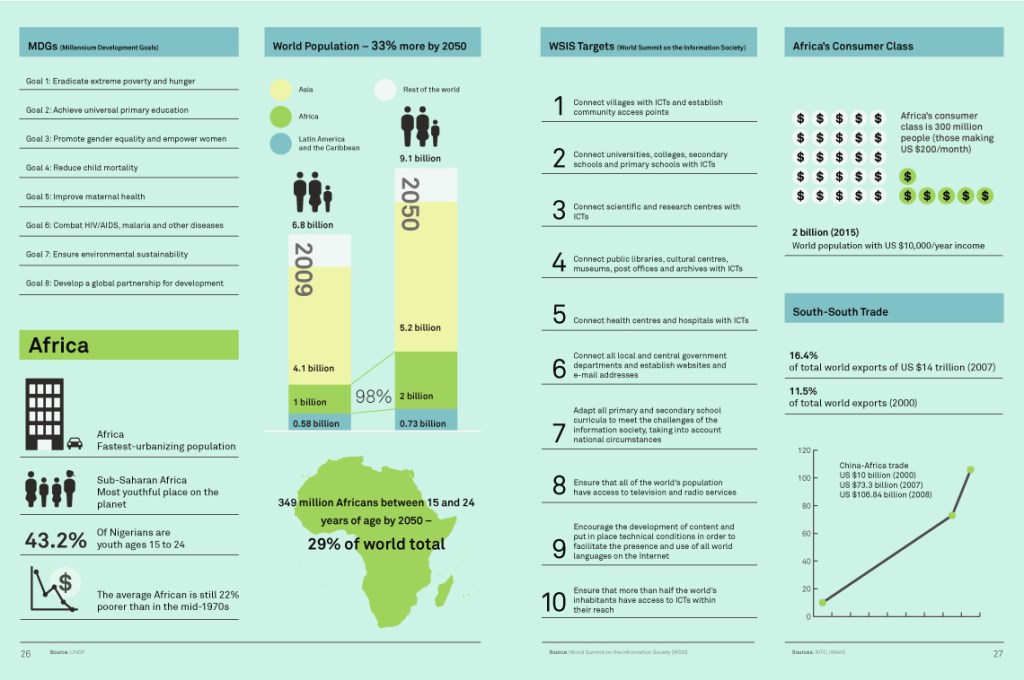
    Africa’s paradox is that it is home to the greatest share of the world’s unexploited resources, yet has some of the world’s lowest per capita incomes. History has shown that exploiting the continent’s resources alone for export markets does little to improve incomes and living conditions in Africa, which in turn does nothing to improve human development. The key to resolving this paradox is made-in-Africa jobs, in particular high-value jobs that make products.

    Africa still mostly makes its income from exporting raw commodities, from minerals to fuel to food. In the 1990s, Asian countries exported five times more manufactured goods, as share of GDP, than sub-Saharan Africa. Things changed in the 2000s. African manufactured output has roughly doubled over the last 10 years. And those goods are going more to the emerging economies than to the traditional powers (African Economic Outlook).

    African Economic Outlook points out that by 2009 “trade between African countries and emerging powers equalled that between Africa and its traditional partners.”

    “South-based manufacturing enhances the welfare of African consumers via prices and functionality,” the report says.

    “For instance, generic Indian pharmaceuticals are cheaper than brands from traditional partners.”

    Small and medium enterprises (SMEs) have been identified as a key part of Africa’s future prosperity and key to its ability to reduce poverty and achieve development objectives like the Millennium Development Goals (MDGs) (www.un.org/millenniumgoals).

    The sector is large but its economic power is inefficiently used. Telling the Wall Street Journal, Mthuli Ncube, chief economist at the African Development Bank Group, estimated one-quarter of Africa’s gross domestic product — about US $450 billion — comes from 65 million small and medium-sized enterprises.

    Manufacturing has been difficult to measure because so many businesses are just tiny cottage industries.

    Obstacles to growth include poor infrastructure, unreliable power supplies, unscaleable business models, low quality standards and poor quality branding and design.

    Access to funding is often weak and fragmented and many programmes run by international donors and banks targeting SMEs are uncoordinated and duplicate resources. The global economic crisis has not made these factors any easier.

    But things are changing in many areas. The booming technology, consumer goods and resource sectors offer hope for a manufacturing renaissance.

    There are examples from Africa defying the sceptics and showing it is possible to expand and export manufactured, finished goods that meet international standards.

    What they have in common is a sophisticated product offering and an ability to meet international export standards. They also have overcome obstacles that scare away more timid international rivals.

    Nigerian shoe and garment maker Fut Conceptus (www.futconceptus.com) has been taking raw Nigerian leather that was once just sent overseas for export, and instead is turning out high-quality shoes and bags made in Nigerian factories. These shoes – made in African, Spanish and Italian styles – meet international standards and are exported aroundAfrica. It has also established operations in Spain and the United Kingdom.

    Started in 2008, the company got off to a good start by seeking out the best expertise to train its staff. Shoe-making experts fromSpainwere brought in to do the training. The company also imported top-quality machinery fromItalyandSpainto make sure its operations were modern and efficient.

    These first, smart moves have meant the company is able to run an efficient and high-skilled operation inNigeriawhile also making its products to international standards. This is critical for a start-up business: the better the quality of the product in the beginning, the better the chance for accessing lucrative export markets. And the better and more efficient the manufacturing processes, the better chance a company will have meeting increasing demand and tight deadlines. It is one thing to make the best shoe in the world, but if you cannot deliver the quantity required for orders, then your reputation will be damaged.

    Fut Conceptus is able to produce 22,000 pairs of sandals and 10,000 pairs of safety boots a day, according to its website.

    Fut Conceptus Manufacturing Nigeria Ltd. also found a way to thrive in the country’s difficult and erratic conditions. To deal with the unreliable power supply, they run four electric generators. This costs them US $500 a day in fuel. This power problem scares off multinational companies, leaving the market open for Fut Conceptus. The company has been able to use this first-mover advantage to build its brand acrossWest Africa. It currently makes men’s moccasins, slippers, law enforcement footwear, safety footwear, and ladies’ sandals.

    Founder Olumide Wole-Madariola is proud of the achievement. “Nobody was ready for what we were doing… Nobody was ready for ‘Made inNigeria,’” he said.

    South African sauce maker Primolitos (www.primolitos.com) has become one of the few African companies able to meet international standards for food exports. It makes a vast range of products (http://www.primolitos.com/index.php?option=com_content&view=article&id=10&Itemid=12), from juices to sauces, spices, pickles, soups and baked goods.

    The company has been around for over a decade and sells 2,000 products. It has also set-up a sister division to specialise in liquid and powdered food sachets. The company also has a clear “Quality Policy”, championing collective decision-making between management and staff, delivering “quality and safe consumer products”, and a system to quickly respond to consumer complaints and recall substandard products. All ingredients for building trust in a business.

    It also has an ISO 20 0002 (www.iso.org/iso/home.html) accredited factory, complete with three testing labs, a training room, test kitchen, care centre for employees’ children, a wellness centre, laundry, high-tech water filtration and purification systems and the latest in hygiene and manufacturing processes. All of this a clear example of the commitment required to build a quality company that can export.

    Over at Good African Coffee, Ugandan entrepreneur Andrew Rugasira is pioneering new ways to process coffee inAfrica. He set upUganda’s first enterprise to make instant coffee two years ago. This is a radical departure from the old practice of exporting the coffee beans to Europe for processing into instant coffee, which would then be exported back toAfrica.

    “For decades, Africans have produced what they do not consume and consumed what they do not produce,” Rugasira told the Wall Street Journal.

    The company has developed unique distribution arrangements for its instant coffee. A recent deal included providing coffee for an American network of 12,000 churches.

    The company’s products are cleverly designed and packaged and are sold in distinct colour-coordinated packets. The company also passionately champions “trade not aid” as the long-term solution toAfrica’s economic growth (http://www.goodafrican.com/index.php/our-story/trade-not-aid.html).

    On the African islandof Madagascar, a company is trying to reverse the practice of exporting Africa’s cocoa beans for manufacturing into chocolate products. The Madecasse Chocolate LLC. (http://madecasse.com) is a collaboration between American entrepreneur Tim McCollum and Madagascan chocolatier Shahin Cassam Chenai. The company is making a range of chocolate and vanilla products for US supermarkets.

    “IfAfricacould sell the world chocolate…it wouldn’t solve all the continent’s problems, but it could make a big dent,” McCollum told the Wall Street Journal.

    Africais believed to produce 60 to 70 percent of the world’s cacao supply. Less than one percent is made inAfricaand most is made into chocolate outside the continent.

    Madecasse’s high-quality chocolate bars sell in the USfor US $6 each. Their market niche is to make “a single-origin chocolate, made entirely in Madagascar, which rivals the flavour of the best European chocolates”, according to its website. Flavours (http://store.madecasse.com) include pink pepper and citrus, cinnamon and sakay (a type of Madagascan hot pepper sauce), exotic pepper, sea salt and nibs, Arabica coffee, and baking chocolate. They also sell the world-famous Madagascan vanilla beans and extract. All are sold in colourful and well-designed packaging and sold on their website.

    Chenai is a self-taught chocolate maker and works with a local team to refine the Madécasse chocolate.

    “Connoisseurs knowMadagascarproduces some of the best cocoa in the world,” maintains Chenai. “My passion is to prove we can produce some of the best chocolate in the world.”

    Published: December 2011

    Resources

    1) SME Toolkit South Africa: A website packed with resources and support for anyone starting a small business in Africa. Website: http://southafrica.smetoolkit.org/sa/en

    2) African Guarantee Fund for Small and Medium-sized Enterprises: The AGF provides guarantees and technical assistance to financial institutions in Africa with the objective of generating enhanced growth in the SME sector and increasing employment opportunities in the economy, particularly for youth. Website: www.afdb.org/en/topics-and-sectors/initiatives-partnerships/african-guarantee-fund-for-small-and-medium-sized-enterprises/

    3) Small and Medium Enterprise Support, East Africa: A blog promoting events and support for SMEs in East Africa. Website: http://smeseastafrica.blogspot.com/

    4) Integrating Developing Countries’ SMEs into Global Value Chains: A paper from UNCTAD (2010). Website:http://www.unctad.org/en/docs/diaeed20095_en.pdf

    Creative Commons License

    This work is licensed under a
    Creative Commons Attribution-Noncommercial-No Derivative Works 3.0 License.

    ORCID iD: https://orcid.org/0000-0001-5311-1052.

    © David South Consulting 2023

  • Press Release 3 | Southern Innovator

    Press Release 3 | Southern Innovator

    Press Release for General Distribution

    Southern Innovator’s Fifth Issue Profiles Innovators in Waste and Recycling

    United Nations, New York, USA, 28 April 2014

    • Fifth issue of Southern Innovator tackles ways to improve human development in a world with finite resources
    • 60-page color magazine offers a snapshot of our fast-changing world

    The fifth issue of Southern Innovator (SI) magazine is out now. It explores how innovation can tackle the challenges of improving human development on a planet with finite resources.

    SI researchers identified innovative, low-polluting options to the world’s energy needs. They found that it is possible to alter the way that things are made to reduce or eliminate waste and toxic pollutants harming human health and damaging the environment. And not only that: they also discovered that there are sustainable incomes to be made from the economy of waste reduction and recycling – an opportunity that has yet to be fully realized. The innovations shared here demonstrate that raising living standards in the global South and responsible use of the world’s resources are not necessarily incompatible.

    Some innovators are transforming attitudes towards fashion, proving that it does not have to be a wasteful industry. Others are turning commonly found waste – food waste, or human or animal excrement – into fuel for heating. The link between good design and the efficient use of resources is apparent in many of the innovators’ solutions. If a new, green economy is to work, then it must appeal to people’s aspirations and be something that they want in their lives and are willing to work to achieve.

    Southern Innovator (southerninnovator.org) champions a 21st-century global innovator culture. It is based on intensive research and produced by the United Nations Office for South-South Cooperation in (UNOSSC) in UNDP. UNOSSC also organizes the annual Global South-South Development Expo (southsouthexpo.org), a traveling celebration bringing together Southern innovators, with previous venues in New York, Washington, D.C., Geneva, Rome,Vienna, Nairobi and Doha.

    We hope that you enjoy the magazine and find its content interesting and illuminating, a snapshot of a fast-changing world awash with innovators, creators and doers making their world a better place.

    For information on sponsoring issues of the magazine, either through helping to fund its print run, or through an insert relating to an issue’s theme with pertinent content for our readers, contact Cosmas Gitta at cosmas.gitta@undp.org.

    Online archives: southerninnovator.org; http://www.scribd.com/SouthernInnovator. Follow us @SouthSouth1

    Press Release 2

    Press Release 1

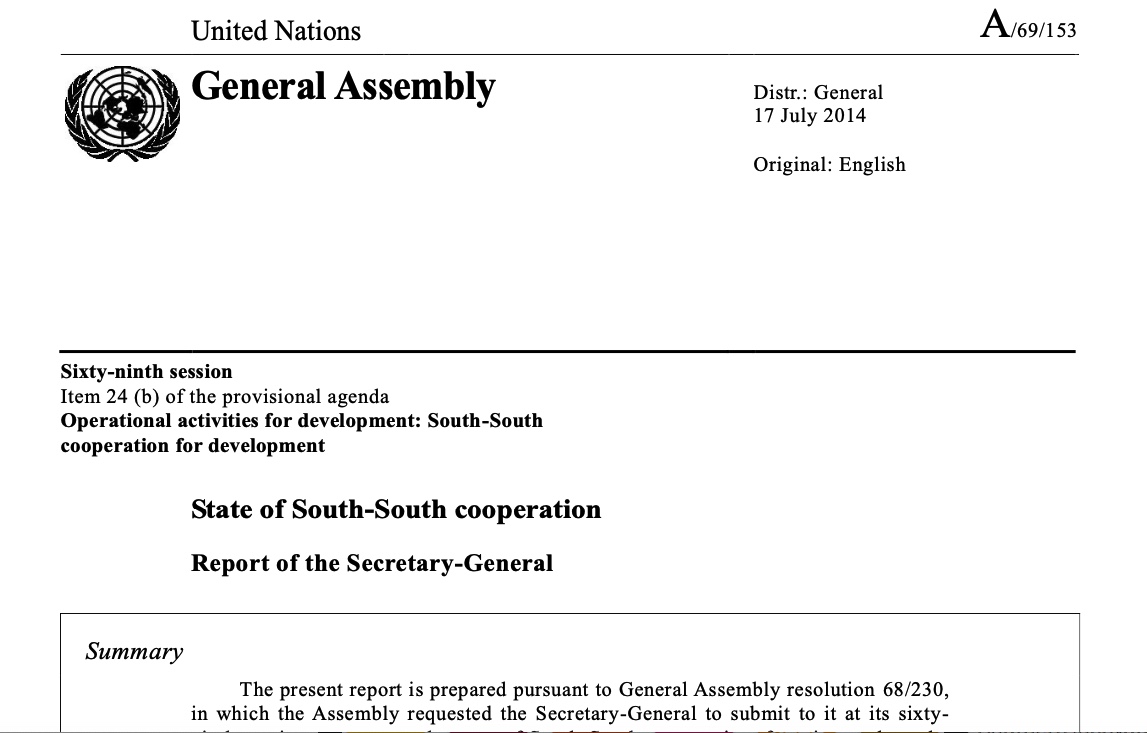
    United Nations General Assembly: Sixty-ninth session, Item 24 (b) of the provisional agenda, Operational activities for development: South-South cooperation for development, 17 July 2014.
    The research informing Southern Innovator Magazine played a part in the formulation of the UN’s post-2015 development agenda, including the Sustainable Development Goals (SDGs).

    https://davidsouthconsulting.org/southern-innovator-scale-up-fundraiser/

    ORCID iD: https://orcid.org/0000-0001-5311-1052.

    © David South Consulting 2022

  • Press Release 2 | Southern Innovator

    Press Release 2 | Southern Innovator

    Press Release for General Distribution

    Fourth Issue of UNDP Magazine Southern Innovator Launches at Expo

    United Nations, Nairobi, Kenya, 31 October 2013

    • Fourth issue of Southern Innovator launched at Global South-South Development Expo 2013 in Nairobi, Kenya
    • 60-page color magazine gives snapshot of fast-changing world

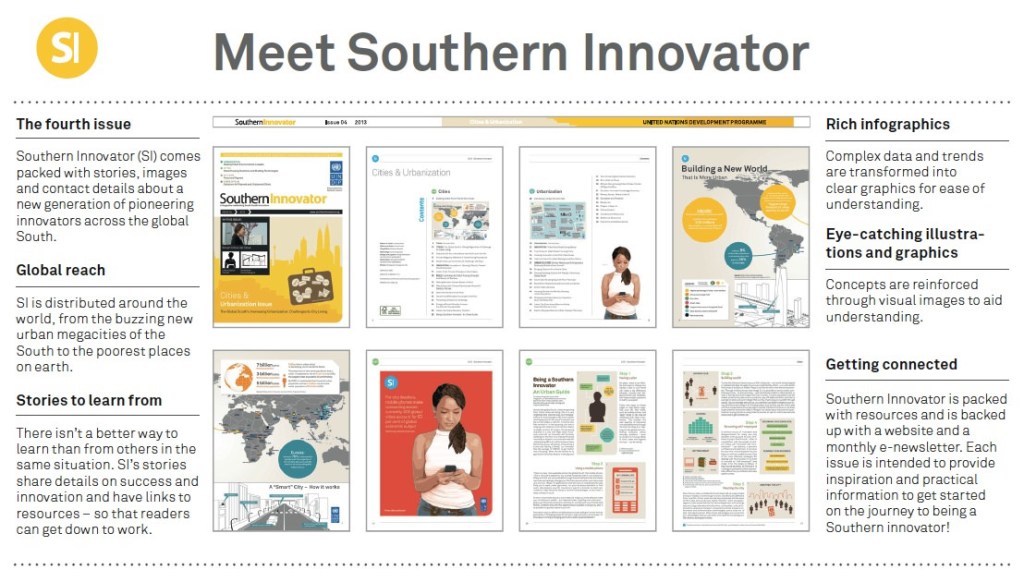
    The fourth issue of Southern Innovator magazine has launched at the Global South-South Development Expo 2013 in Nairobi, Kenya. Southern Innovator Issue 4 visits the new cities being built to tackle the challenges of a rapidly urbanizing 21st-century world. The magazine also highlights some of the solutions being devised to the challenges people face as the world becomes a majority urban place.

    Some innovators are building new cities from scratch, applying the latest thinking and hard-wiring in cutting-edge information technologies and innovative environmental measures to create ‘smart’ cities and eco-cities. Architects are designing and refining homes that are beautiful and functional, easy to build, affordable and conserve energy. Social entrepreneurs are innovating ways to create liveable and socially inclusive urban areas, often in places where planning has been scant and where incomes are very low. All those featured in the magazine were chosen for their focus on improving human development and their ingenuity and fresh thinking.

    Southern Innovator champions a 21st-century global innovator culture. The magazine profiles and celebrates the innovators across the global South finding new ways to tackle poverty, create wealth and improve human development and achieve the Millennium Development Goals (MDGs). In its first issue in September 2011, Southern Innovator featured the people who are re-shaping new information technologies – from mobile phone apps to Internet technologies. Many of the innovators profiled in that first issue came from Kenya.

    SI (southerninnovator.org) is based on intensive research and produced by the United Nations Office for South-South Cooperation in UNDP (UNOSSC) (formerly the Special Unit for South-South Cooperation in UNDP). UNOSSC organizes an annual Global South-South Development Expo (southsouthexpo.org), a roaming celebration and gathering of Southern innovators previously held in New York, Washington, D.C., Geneva, Rome and Vienna. This year’s Expo is being held in Nairobi, Kenya (28 October to 1 November 2013) and is hosted by the UN Environment Programme (unep.org).

    SI is being distributed through the United Nations’ network and partners and reaches some of the world’s poorest and remotest places, as well as the vibrant but stressed growing global megacities. It is hoped the magazine will inspire budding innovators with its mix of stories, essential information, facts and figures, images and graphics.

    We hope you enjoy the magazine and find its content interesting and illuminating: a snapshot of a fast-changing world awash, as we found out, with
    innovators, creators and do-ers making their world a better place. It is possible to sponsor issues of the magazine, either through helping to fund its print run, or through sponsored inserts covering that issue’s theme with relevant content for our readers.

    For more information on Southern Innovator, contact Cosmas Gitta at
    cosmas.gitta@undp.org.

    Press Release 1

    Press Release 3

    Online archives: southerninnovator.orghttp://www.scribd.com/SouthernInnovator. Follow @SouthSouth1

    United Nations General Assembly: Sixty-ninth session, Item 24 (b) of the provisional agenda, Operational activities for development: South-South cooperation for development, 17 July 2014.
    The research informing Southern Innovator Magazine played a part in the formulation of the UN’s post-2015 development agenda, including the Sustainable Development Goals (SDGs).

    https://davidsouthconsulting.org/southern-innovator-scale-up-fundraiser/

    ORCID iD: https://orcid.org/0000-0001-5311-1052.

    © David South Consulting 2022