Categories
Archive Blogroll Development Challenges, South-South Solutions Newsletters Southern Innovator magazine

Dynamic Growth in African ICT is Unlocking Secrets of SME Treasure Trove

By David SouthDevelopment Challenges, South-South Solutions

SOUTH-SOUTH CASE STUDY

A newly released survey of 14 African countries in 2006 has documented the impact of Information and Communication Technology (ICT) on private sector development and how it is contributing to developing a vibrant Small Medium Enterprise (SME) sector in Africa. It discovered how dynamic the SME sector is, how it has rapidly adopted mobile phone technology (96 percent have it), and how if used properly in concert with this new technology, extraordinary economic growth is possible.

The survey – Towards An African e-Index: SME e-Access and Usage in 14 African Countries – covered only businesses employing fewer than 50 people and took in the vast informal sector in the countries. It investigated if they had access to ICTs, how they are using them and if it was making them more productive. SMEs were especially interesting because they do not waste money (most people are just trying to survive) and they only use what is really useful to them to increase income. In the informal sector this has become the mobile phone.

The countries surveyed included Botswana, Cameroon, Ethiopia, Ghana, Kenya, Mozambique, Namibia, Nigeria, Rwanda, South Africa, Tanzania, Uganda, Zambia and Zimbabwe. With most of the continent’s poor working in the SME sector, little was actually known about the impact of ICT and its link to profitability and labour productivity. And surveying only formal businesses would be telling half the story since about two-thirds of non-resource driven GDP generation is derived from SMEs, and a large share of that from informal ones.

“This is a sector that has no access to formal finance,” said Dr. Christopher Stork, a senior researcher at the Witwatersrand University in South Africa. “The mobile phones present an opportunity to tap into this market and offer finance, banking services, cash transfers – we see this already in Kenya – without the risks of other services. These informal businesses can build up a history, learn how to better control their businesses, and receive loans. Where the financial system is dysfunctional or overpriced, airtime credits can be the new cash form.”

Africa has a high proportion of entrepreneurs because people have next to no social supports to fall back on and need to do business to survive. Most fall into the informal sector where they can avoid paying tax, pay low wages, and keep overheads down. According to Stork, if governments are serious about dealing with poverty, then the best approach is to acknowledge this sector, and rather than crush it, draw it in to become more sophisticated and efficient. He sees the mobile phones as key to this strategy.

“Innovative technology can help these entrepreneurs to acquire the tools they need to do business better. There is a lack of skills in all areas, a lack of accounting skills, a lack of basic financial management. This is where ICT can overcome this. SMEs can get a monthly statement with all their business transactions, making it easier to manage things. This would be a great way to distribute micro-finance. Savings clubs could store cash on the phones.”

The e-Index also noted the trend for mobile phone providers to consolidate and offer common regional services. This could fuel an explosion in cross-border trade as it becomes cheaper and easier to communicate via mobile phone for business. The e-Index also found the ever-growing importance of internet cafes remains. They continue to evolve into multi-purpose business centres offering a wide range of services, from post to word processing. At present they still remain the main means of accessing the internet. And with broadband still minimal and very expensive, it falls on mobile phones to offer internet access, though this will remain mainly in the continent’s capitals.

The survey’s sponsor, Research ICT Africa! (RIA!) network, seeks to build an African knowledge base in support of ICT policy and regulatory design. The network emerged out of a growing need for hard data and analysis to help the continent join the information age. Throughout 2007 it is conducting household surveys on e-access and e-usage and will present the findings in 2008.

You can download for free the entire report Towards An African e-Index: SME e-Access and Usage in 14 African Countries here: Click

Published: February 2007

https://davidsouthconsulting.org/2022/11/21/africa/

https://davidsouthconsulting.org/2022/10/26/africa-to-get-own-internet-domain/

https://davidsouthconsulting.org/2022/11/11/african-botanicals-to-be-used-to-boost-fight-against-parasites/

https://davidsouthconsulting.org/2022/11/11/african-breakthroughs-to-make-life-better/

https://davidsouthconsulting.org/2022/11/19/african-culture-as-big-business/

https://davidsouthconsulting.org/2022/11/17/african-ingenuity-attracting-interest/

https://davidsouthconsulting.org/2022/11/15/african-innovators-celebrated-in-prize/

https://davidsouthconsulting.org/2022/10/21/african-media-changing-to-reach-growing-middle-class/

https://davidsouthconsulting.org/2022/11/02/african-online-supermarket-set-to-boost-trade/

https://davidsouthconsulting.org/2022/10/26/african-trade-hub-in-china-brings-mutual-profits-2/

https://davidsouthconsulting.org/2022/10/26/africas-consumer-market-in-spotlight-for-2011/

https://davidsouthconsulting.org/2022/10/20/africas-tourism-sector-can-learn-from-asian-experience/

https://davidsouthconsulting.org/2022/10/24/made-in-africa-fashion-brand-pioneers-aim-for-global-success/

https://davidsouthconsulting.org/2022/10/25/many-positive-trends-for-africa-in-2010/

https://davidsouthconsulting.org/2022/10/21/a-new-african-beer-helps-smallholder-farmers/

https://davidsouthconsulting.org/2022/11/01/new-journal-celebrates-vibrancy-of-modern-africa/

https://davidsouthconsulting.org/2022/10/26/shopping-and-flying-in-africas-boom-towns/

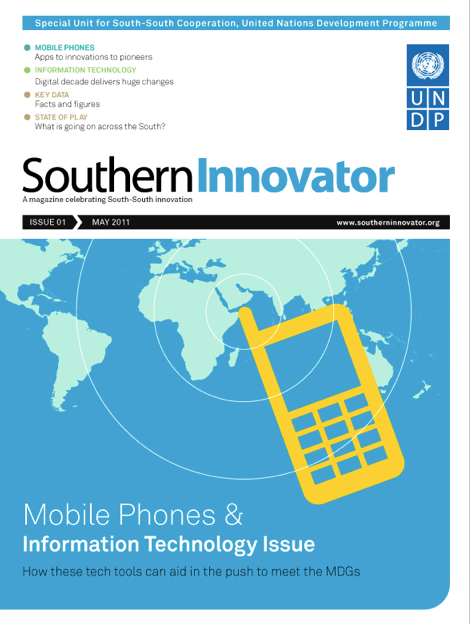
Development Challenges, South-South Solutions was launched as an e-newsletter in 2006 by UNDP’s South-South Cooperation Unit (now the United Nations Office for South-South Cooperation) based in New York, USA. It led on profiling the rise of the global South as an economic powerhouse and was one of the first regular publications to champion the global South’s innovators, entrepreneurs, and pioneers. It tracked the key trends that are now so profoundly reshaping how development is seen and done. This includes the rapid take-up of mobile phones and information technology in the global South (as profiled in the first issue of magazine Southern Innovator), the move to becoming a majority urban world, a growing global innovator culture, and the plethora of solutions being developed in the global South to tackle its problems and improve living conditions and boost human development. The success of the e-newsletter led to the launch of the magazine Southern Innovator.

https://davidsouthconsulting.org/2022/11/01/southern-innovator-magazine-2010-2014/

Creative Commons License

This work is licensed under a
Creative Commons Attribution-Noncommercial-No Derivative Works 3.0 License.

ORCID iD: https://orcid.org/0000-0001-5311-1052.

© David South Consulting 2023
Categories
Archive data Development Challenges, South-South Solutions Newsletters Southern Innovator magazine

Computing in Africa is Set to Get a Big Boost

By David SouthDevelopment Challenges, South-South Solutions

SOUTH-SOUTH CASE STUDY

The image of Africa as a technological laggard is set to be seriously challenged as a number of developments converge in 2007. Alongside the booming African mobile phone market – itself now getting global attention for innovation – the African computer scene will soon have both the software and hardware that acknowledge the continent’s unique needs while being affordable. Further challenging stereotypes, the continent’s burgeoning and dynamic open source software movement is the subject of a new film by a Danish filmmaker, and the African-made Ubuntu, Linux-based operating system now has a new user manual to help it attract new adherents.

African technological innovation rarely makes headlines in the West. But a Danish filmmaker is changing these perceptions with his film showing the dynamism and enthusiasm behind the open source software movement in Africa. The yet-untitled film, directed by David Madie, is from Eighty Days Productions and is due for release in the spring of 2007. It follows a young computer entrepreneur, Wire Lunghabo James, from Uganda’s Linux Solutions in Africa, who has been instrumental in building the Web’s presence in the country and in East Africa.

“This film will show the characters fighting for what they believe in. This happens to be Open Source, which I think is an important agenda,” director Madie told Tactical Technology Collective ( www.tacticaltech.org), a website “demystifying technology for non-profits.”

Unlike off-the-shelf software, open source software has many advantages. It is free, and no licence fee is required, so as many copies as necessary can be made. It is fully customisable, so local languages and cultural conditions can be taken into consideration. It is a universal language (the most popular is Linux) and thus it is easier to understand how a specific application works. For developing countries, it has the advantage of empowering local programmers and dymistifying computer programming, removing it from the domain of private companies and large government agencies. In 2005 the New Partnership for African Development (NEPAD) urged African countries to embrace open source software to encourage the growth of indigenous software development.

“I think he (James) is also a role model in the sense that he combines doing a business, with doing social work. To him these things are not opposites: these are things that can perfectly work well together. You can do business in a social manner,” Madie said.

The Ubuntu software programme is a complete, free operating system that emphasizes community, support, and ease of use while refusing to compromise on speed, power, and flexibility. Ubuntu is an ancient African word meaning humanity to others, and its software version is described as Linux for human beings – designed for everyone from computer novices to experts. Ubuntu is the most in-demand Linux system in Africa, and the official guide is aimed at NGOs, home users or small businesses.

One Laptop Per Child Project (OLPC)

In another development, the One Laptop Per Child project (OLPC) has announced the release for general sale of its durable bright green and yellow laptops ready loaded with Linux-based operating systems. Customers in wealthy countries will have to buy two laptops, with the second going to a developing country. Five million will be delivered to the developing world over the summer of 2007. The eventual aim is to sell the machine to developing countries for US $100, but the current cost of the machine is about US $150. The OLPC laptop’s software has been designed to work specifically in an educational context. It has built-in wireless networking and video conferencing so that groups of children can work together. The OLPC project is working with the search engine Google, who will act as “the glue to bind all these kids together”. Google will also help the children publish their work on the internet.

The One Laptop Per Child project (http://wiki.laptop.org/go/Home) has struck its first deal with Rwanda’s president Paul Kagame to provide every school pupil with a laptop computer within the next five years. The laptops and all the support costs will be covered by OLPC.

Published: January 2007

Resources 

https://davidsouthconsulting.org/2022/02/09/african-health-data-revolution/

https://davidsouthconsulting.org/2021/02/20/african-supercomputers-to-power-next-phase-of-development/

https://davidsouthconsulting.org/2022/10/06/african-technology-tackles-health-needs/

https://davidsouthconsulting.org/2020/12/04/big-data-can-transform-the-global-souths-growing-cities/

https://davidsouthconsulting.org/2020/12/04/data-surge-across-global-south-promises-to-re-shape-the-internet/

https://davidsouthconsulting.org/2022/10/20/the-e-reader-battle-reaches-india/

https://davidsouthconsulting.org/2021/02/18/what-is-the-un-doing-with-your-data/

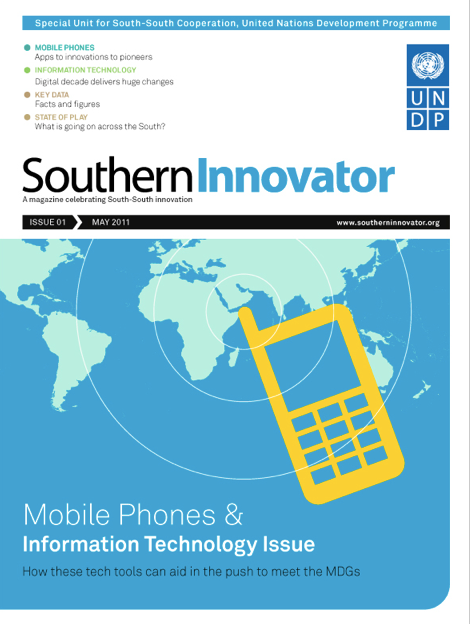
Development Challenges, South-South Solutions was launched as an e-newsletter in 2006 by UNDP’s South-South Cooperation Unit (now the United Nations Office for South-South Cooperation) based in New York, USA. It led on profiling the rise of the global South as an economic powerhouse and was one of the first regular publications to champion the global South’s innovators, entrepreneurs, and pioneers. It tracked the key trends that are now so profoundly reshaping how development is seen and done. This includes the rapid take-up of mobile phones and information technology in the global South (as profiled in the first issue of magazine Southern Innovator), the move to becoming a majority urban world, a growing global innovator culture, and the plethora of solutions being developed in the global South to tackle its problems and improve living conditions and boost human development. The success of the e-newsletter led to the launch of the magazine Southern Innovator. 

https://davidsouthconsulting.org/2021/03/05/southern-innovator-issue-1/

Creative Commons License

This work is licensed under a
Creative Commons Attribution-Noncommercial-No Derivative Works 3.0 License.

ORCID iD: https://orcid.org/0000-0001-5311-1052.

© David South Consulting 2023

Categories
Archive Development Challenges, South-South Solutions Newsletters Southern Innovator magazine

Two-stroke Engine Pollution Solution

By David SouthDevelopment Challenges, South-South Solutions

SOUTH-SOUTH CASE STUDY

Cities across the South choke on the pollution made by the small two-stroke engines (http://www.howstuffworks.com/two-stroke.htm) powering motor scooters, motorcycles, auto rickshaws, tuk-tuks and other vehicles. People choose these vehicles to get around because they are cheap, powerful and easy to fix. But the environment – and human health – suffers as a result. And as cities balloon and populations grow, the number of journeys and two-stroke engines grows with it.

In large cities across Asia, 1 million three-wheeled auto-rickshaws form an important means of daily transportation, and a source of income for their drivers. And the Asian Development Bank estimates there are over 100 million vehicles using two-stroke engines in Southeast Asia. But these vehicles cause serious air pollution and emissions of carbon dioxide (CO2), which contributes to global warming.

Because two-stroke engines burn an oil-gasoline mixture, they also emit more smoke, carbon monoxide, hydrocarbons and particulate matter than the gas-only, four-stroke engines found in newer vehicles.

In the Philippines, auto rickshaw drivers are pioneering specially adapted two-stroke engines that reduce particulate emissions by 70 percent and carbon dioxide emissions by 76 percent.

Tim Bauer, the 31-year-old American mechanical engineer who developed the technology, said auto rickshaws “play an essential role in the social and economic fabric. But their impact on public health is disastrous.”

Motorized tricycles produce an astonishing amount of pollution: each one is equivalent to 50 cars. In Bangkok, Thailand, two-stroke engines contribute 47 percent of pollution particulates in the air.

The World Health Organization (www.who.org) ranks urban outdoor air pollution as the 13th greatest contributor to disease burden and death worldwide. It has been estimated that the air pollution leads to the deaths of more than half a million people a year. About two-thirds of the residents of Delhi and Calcutta suffer from respiratory symptoms such as common cold and dry and wet cough, much of this caused by two-stroke engine emissions.

Two-stroke engines are highly inefficient users of fuel: up to 40 percent of the fuel and oil goes out of the exhaust pipe unburned. This exhaust is packed with oxides of carbon, nitrogen, sulphur, hydrocarbons and fine dust – all toxic contributors to air pollution.

But the attraction of these engines remains strong. “They are powerful, simple, reliable and robust,” said Bauer, “and spare parts are easy to find. They also have a long lifetime.”

Bauer faced some strict constraints in developing the technology.

“It had to substantially reduce emissions without impairing the engine’s performance. It had to be installed without machining the engine crankcase, and with only a basic tool set. Of course, it also had to be affordable for Filipino drivers.”

Using off-the-shelf components, Bauer developed a kit that turns two-stroke engines into fuel-injection machines. This adjustment reduced particulate emissions by 70 percent and carbon dioxide emissions by 76 percent. He now sells the kits through Envirofit, a non-profit organization (http://www.envirofit.org/). It has been pilot tested at two Filipino holiday resorts, Vigan and Puerto Princesa.

Auto-rickshaw drivers tend to be poor and earn on average US $3 to US $4 a day. The cost of fitting vehicles with Bauer’s new technology is met by microcredit.

“Drivers earn money daily, so it’s easy for them to pay back their loan, and 90 percent of them do it in less than a year,” he said. Over 260 taxi drivers have already installed the new kit.

“These drivers are at the base of the economic pyramid and these tricycles are a testament to their ingenuity and work ethic. At the end of the day, we can improve their lives with a cylinder head, a few brackets and, of course, hard work.”

Bauer pioneered his solution while working on fuel injection in snowmobiles at the Engines and Energy Conservation Lab at Colorado State University. He started to market the solution in Asia in 2004. Bauer has won a Rolex Award for Enterprise to pay for the distribution of the kits throughout Asia.

There is, of course, another solution: an outright ban or measures to push the vehicles off the road. In the Philippines’ San Fernando City, economic incentives were what drove the transition from two-stroke to four-stroke (less polluting) tricycles. In 2001, three-quarters of the city’s 1,600 registered tricycles ran on two-stroke engines. But after a city council mandate to totally phase out the vehicles by 2004, and offers of interest-free loans for down-payments on four-stroke models, more than 400 four-stroke tricycles had replaced the older two-stroke models.

When Bangkok toughened up vehicle inspections and emissions standards in 2000, two-wheelers made up over 96 percent of the city’s traffic. But by March 2004, they made up only 40 percent, according to Supat Wangwongwatana, deputy director general of Thailand’s Pollution Control Department.

Published: December 2008

Resources

  • Tukshop is a website selling auto rickshaws and tuk-tuks.  Website:http://www.tukshop.biz/
  • A wide range of auto rickshaws for sale.  Website: http://www.auto-rickshaw.com/ 
  • The Hybrid Tuk Tuk Battle is a competition to come up with less polluting auto rickshaws, clean up the air in Asian cities, and improve the economic conditions for auto rickshaw drivers. 
    Website:http://hybridtuktuk.com/
  • The Clean Air Initiative for Asian Cities promotes and demonstrates innovative ways to improve the air quality of Asian cities through partnerships and sharing experiences. It is run by the Asian Development Bank together with the World Bank and the US Agency for International Development. 
    Website: http://www.cleanairnet.org/

https://davidsouthconsulting.org/2023/02/03/environmental-public-awareness-handbook-case-studies-and-lessons-learned-in-mongolia/

https://davidsouthconsulting.org/2021/01/02/a-undp-success-story-grassroots-environmental-campaign-mobilizes-thousands-in-mongolia-1998/

https://davidsouthconsulting.org/2022/10/26/tackling-chinas-air-pollution-crisis-an-innovative-solution/

Creative Commons License

This work is licensed under a
Creative Commons Attribution-Noncommercial-No Derivative Works 3.0 License.

A new book launched in April 2019 by journalist Beth Gardiner (@Gardiner_Beth), “Choked: The Age of Air Pollution and the Fight for a Cleaner Future” (Granta) (University of Chicago Press), explores today’s global air pollution crisis in the world’s cities. Gardiner is an environmental journalist who writes for The New York Times, The Guardian and other publications (bethgardiner.com).  

Called “One of the Guardian’s Best Books of 2019“. The UK cover for Choked: The Age of Air Pollution and the Fight for a Cleaner Future (Granta, 2019).
Creative Commons License

This work is licensed under a
Creative Commons Attribution-Noncommercial-No Derivative Works 3.0 License.

ORCID iD: https://orcid.org/0000-0001-5311-1052.

© David South Consulting 2022

Categories
Archive Blogroll Development Challenges, South-South Solutions Newsletters

China Pushing Frontiers of Medical Research

By David SouthDevelopment Challenges, South-South Solutions

SOUTH-SOUTH CASE STUDY

Cutting-edge medical research in China is promising to boost human health and development. Futuristic science is being conducted on a large scale and it is hoped this will increase the pace of discovery.

Around the world, rapid progress is being made in understanding the role played by genes and how they affect our overall health and susceptibility to diseases. Other developments are leading to the possibility of creating replacements for organs and other body parts that have been damaged through accidents, disease or genetic faults – without the need for organ donors.

Medical advances straight out of science fiction could be closer than many believe. By using machines and gene therapy, radical new methods will emerge to deal with damage done to human bodies as a result of accidents or disease. These solutions will become, in time, quicker, smaller and cheaper and will be available to more and more countries. They will spread outwards around the global South just as mobile phones and computing electronics have done.

In China, the government is investing heavily in this cutting-edge research and attracting investment and projects from around the world to increase the pace of progress in these areas.

In September 2013, Reuters reported that a 22-year-old man named Xiaolian in Fuzhou, China had a new nose grown on his forehead to replace his original nose that had been damaged in a car accident. Conventional reconstructive surgery was not possible, so this radical new approach was taken.

The advantages of growing a nose on the patient include a reduced chance of rejection by the body when the new organ is attached. Transplants of body parts from other people come with a high risk of rejection and require many drugs to prevent it. Using skin near where the transplant is to take place, on the face, improves the chances of success and the blood vessels in the forehead offer nourishment to grow the new nose.

The procedure works like this: tissue expanders are placed on the patient’s forehead. As it grows, the doctors cut the mass of tissue into the shape of a nose and cartilage from the patient’s ribs is placed inside to give the nose shape. The new proboscis (http://en.wikipedia.org/wiki/Proboscis) grows under the skin until it is the right size and then transplanted onto the patient’s face where their old nose was.

Many believe this is just the beginning and that in the future replacement organs will be also grown in a lab. And this is where the new medical technology of 3D bioprinting comes into play.

3D printing machines (http://www.k8200.eu/), or fabricators, can create 3D objects based on a design sent from a computer. This concept is now also being applied to biological materials with 3D bioprinters.

Hangzhou Dianzi University of Electronic Science and Technology (hdu.edu.cn) in China launched the Regenovo 3D Bio-printer in August 2013. It prints living tissue and looks like a silver metal frame with various nozzles situated above a platform for printing the tissue. Its makers claim it can print a liver in 40 minutes to an hour or an ear in 50 minutes.

A sheet of hydrogel is placed on the platform and then the bioprinter deposits cells into the hydrogel. As the process is repeated over and over again, layer after layer, a 3D biological structure emerges.

Unique Technology (sinounic.com) in Qingdao, Shandong province has also launched a 3D printer called “Re-human”. It is capable of printing at 15 microns and can operate in temperatures of between 0 and 300 degrees Celsius. Scientists there are working on clinical trials of 3D-printed tissue scaffolds and bones.

China is very advanced in the development of 3D manufacturing technology, and is home to the world’s largest 3D printers, developed by Dalian University of Technology (http://www.dlut.edu.cn/en/). Another Chinese company pioneering this technology is Shaanxi Hengtong Intelligent Machines (http://www.china-rpm.com/english/), which sells various laser-using rapid prototyping machines and 3D machines.

Around the world, bioprinting is currently being pioneered for printing heart valves, ears, artificial bones, joints, vascular tubes, and skin for grafts.

The number of scientific papers mentioning bioprinting tripled between 2008 and 2011 according to Popular Science. But why is this happening? Three things are occurring at once: sophisticated 3D printers are now available, there are significant advances in regenerative medicine, and CAD (computer-aided design) (http://en.wikipedia.org/wiki/Computer-aided_design) software continues to become more advanced.

San Diego, California’s Organovo (organovo.com), a company that designs and creates functional human tissues using 3D bioprinting, has big ambitions for the technology.

“Getting to a whole organ-in-a-box that’s plug-and-play and ready to go, I believe that could happen in my lifetime,” its chief technology officer, Sharon Presnell, told Popular Science.

In the field of gene science, China is also investing significant resources to make rapid progress. China is working to make its genetic research industry into one of the country’s pillar industries.

Beijing Genomics Institute (BGI) (http://www.genomics.cn/en/index) is the world’s largest genome-mapping institute, with more than 1,000 biological analysis devices working with top-of-the-line genome-sequencing machines. What makes BGI different is scale: it can handle data in vast quantities and industrialize its research, according to China Daily.

The China National Genebank in Shenzhen (http://www.nationalgenebank.org/en/index.html), associated with BGI and its Cognitive Genetics Project, is one of the largest gene banks in the world. It has collected the DNA (http://www.biologycorner.com/bio1/DNA.html) samples of some of the world’s smartest people to sequence their genomes and work out which alleles (http://www.sciencedaily.com/articles/a/allele.htm) determine human intelligence.

But what will they do with this information? By doing embryo screening, it will be possible to pick the brightest zygote (http://en.wikipedia.org/wiki/Zygote) and ensure an entire generation’s intelligence is increased by five to 15 IQ (intelligence quotient) points. This could have a significant impact on the country’s economic performance, the researchers believe, and help in the country making more rapid economic and development gains. This line of research is also seen globally as being fraught with ethical dilemmas and is controversial.

But the Chinese researchers believe the country’s economic productivity, business success, international competitiveness and the amount of innovation in the economy could all increase with an IQ boost.

The eggs are fertilized in the lab with the father’s sperm and the embryos are tested until they find the smartest one.

Embryo analysis could take place on a large scale in a few years. But it is not just better brains that are possible with this technique: choices can be made about hair and eye colors, and physical attributes such as body shape.

This level of research is benefiting from vast investments in higher education in China.

And it isn’t just human beings receiving the vast investment in gene research.

To help agriculture and agribusiness, the National Center for Gene Research (NCGR) (ncgr.ac.cn) is mapping and sequencing the rice genome, and genomes of other organisms. Since 2007, it has been using the latest generation sequencing technology to map the rice genome to identify common genetic factors. It has 50 million base pairs of rice genomic DNA sequences in its public database. It is hoped this will lead to more robust rice varieties that can withstand disease and climate fluctuations and help meet the food needs of a growing global population.

Published: November 2013

Resources

1) Wake Forest Institute for Regenerative Medicine: Wake Forest Innovations was created in 2012 as a new operating division of Wake Forest Baptist Medical Center. As the Medical Center’s technology commercialization arm, Wake Forest Innovations supports scholarship, investing in the innovative potential of academic and clinical communities and helping translate ideas and discoveries into valuable commercial products and services. Website: http://www.wakehealth.edu/WFIRM/

2) DEKA Research & Development: DEKA Research and Development Corporation is an established company focused on the development of radical new healthcare technologies that span a diverse set of applications. Website: http://www.dekaresearch.com/index.shtml

3) Organovo: Organovo design and create functional human tissues using proprietary three-dimensional bioprinting technology. The goal is to build living human tissues that are proven to function like native tissues. Website: http://www.organovo.com/

Project Cyborg: A web-based platform geared toward nanoscale molecular modeling and simulations for cellular biology. Website: http://www.autodeskresearch.com/projects/cyborg
Make your own bioprinter: DIYBioPrinter: Step by step construction of a bioprinter from an old HP 5150 inkjet printer. Website: http://www.instructables.com/id/DIY-BioPrinter/

6) Autodesk is working on CAD software for bioprinting. Website: autodesk.co.uk

7) BGI Cognitive Genetics Project: BGI Cognitive Genomics is an interdisciplinary research group at BGI, one of the largest genomics institutes in the world. The focus is human cognition, with emphasis on the use of tools made available by rapid advances in DNA sequencing technology. Website: https://www.cog-genomics.org/

8) Institute of Genetics and Developmental Biology Chinese Academy of Sciences: The mission of the institute is to address fundamental questions in genetics and developmental biology and to develop new technologies for the uses in health care and agriculture sciences as well as to meet the nation’s strategic needs in science and technology. Scientists in the institute use both plant and animal models to address fundamental questions in life sciences, such as genetic control of growth and development, gene expression, signal transduction, structural and functional genomics, biotech and molecular breeding, bioinformatics and systems biology. As China owns the biggest agricultural market in the world, researchers in the Institute have also made significant efforts on water saving agriculture and agronomic studies, focusing on the improvement of crop productivity and quality as well as bio-safety. Website: http://english.genetics.cas.cn/au/

https://davidsouthconsulting.org/2021/06/04/an-innovators-big-chicken-agenda-for-africa/

https://davidsouthconsulting.org/2022/07/25/award-winning-research-on-history-of-eugenics-reaps-honours/

https://davidsouthconsulting.org/2021/06/02/case-study-5-gosh-ich-child-health-portal-2001-2003/

https://davidsouthconsulting.org/2021/03/08/the-dawn-of-the-genetics-revolution-2001-2003/

https://davidsouthconsulting.org/2017/10/18/hannah-institute-for-the-history-of-medicine-1992-1994/

https://davidsouthconsulting.org/2021/10/20/research-reviews-2001-2002/

Development Challenges, South-South Solutions was launched as an e-newsletter in 2006 by UNDP’s South-South Cooperation Unit (now the United Nations Office for South-South Cooperation) based in New York, USA. It led on profiling the rise of the global South as an economic powerhouse and was one of the first regular publications to champion the global South’s innovators, entrepreneurs, and pioneers. It tracked the key trends that are now so profoundly reshaping how development is seen and done. This includes the rapid take-up of mobile phones and information technology in the global South (as profiled in the first issue of magazine Southern Innovator), the move to becoming a majority urban world, a growing global innovator culture, and the plethora of solutions being developed in the global South to tackle its problems and improve living conditions and boost human development. The success of the e-newsletter led to the launch of the magazine Southern Innovator.  

Follow @SouthSouth1

Google Books: https://books.google.co.uk/books?id=2fdcAwAAQBAJ&dq=development+challenges+november+2013&source=gbs_navlinks_s

Slideshare: http://www.slideshare.net/DavidSouth1/development-challenges-november-2013-issue

Southern Innovator Issue 1: https://books.google.co.uk/books?id=Q1O54YSE2BgC&dq=southern+innovator&source=gbs_navlinks_s

Southern Innovator Issue 2: https://books.google.co.uk/books?id=Ty0N969dcssC&dq=southern+innovator&source=gbs_navlinks_s

Southern Innovator Issue 3: https://books.google.co.uk/books?id=AQNt4YmhZagC&dq=southern+innovator&source=gbs_navlinks_s

Southern Innovator Issue 4: https://books.google.co.uk/books?id=9T_n2tA7l4EC&dq=southern+innovator&source=gbs_navlinks_s

Southern Innovator Issue 5: https://books.google.co.uk/books?id=6ILdAgAAQBAJ&dq=southern+innovator&source=gbs_navlinks_s

Creative Commons License
This work is licensed under a
Creative Commons Attribution-Noncommercial-No Derivative Works 3.0 License.

ORCID iD: https://orcid.org/0000-0001-5311-1052.

© David South Consulting 2023