Categories
Archive Development Challenges, South-South Solutions Newsletters

Thai Organic Supermarkets Seek to Improve Health

By David SouthDevelopment Challenges, South-South Solutions

SOUTH-SOUTH CASE STUDY

A Thai business is working hard to expand access to organic food in the country. It sees this as part of a wider campaign to improve health in the country – and its success has caught the attention of the government, which wants to turn Thailand into a global health destination.

The Lemon Farm chain run by Suwanna Langnamsank (http://www.lemonfarm.com/lmf/) was started 13 years ago and has grown to nine organic supermarkets in the capital, Bangkok. Lemon Farm works with 200 organic farms in Thailand and employs 160 people.

Organic food (http://en.wikipedia.org/wiki/Organic_food) – grown without chemicals and artificial fertilizers and not irradiated or subjected to other tampering – is believed by many to be healthier because it avoids the harmful effects of accumulating chemicals. It is also thought to be richer in vitamins and minerals because of the use of non-chemical fertilizers on the soil.

Lemon Farm sells made-in-Thailand organic vegetables and fruit, natural gift sets, soap and tea. There are also macrobiotic cafes in the supermarkets called Be Organic.  A macrobiotic diet avoids foods containing toxins (http://www.cancerresearchuk.org/cancer-help/about-cancer/treatment/complementary-alternative/therapies/macrobiotic-diet).

The supermarkets use eye-pleasing modern design to set themselves apart from more conventional supermarkets.

According to Lemon Farm’s website, it is a social enterprise and practices fair trade. It is using market-driven solutions to increase the availability of healthy food in the country. It seeks to support small-scale farmers and champion change in farming methods, encouraging a move away from dependence on harmful chemicals that damage human health and the environment and promoting “agricultural and economic self-sufficiency”.

The macrobiotic restaurant operates to six values, among them using fresh vegetables and only using produce from associated farms. The restaurants do not use added sugar, they cook using a pressure cooker, and use natural ingredients such as sea salt, ginger, fermented soy sauce and natural miso. They do not use any artificial preservatives or flavour enhancers such as monosodium glutamate (MSG), a common practice in Asian cooking.

Lemon Farm’s success as an organic food pioneer has caught the attention of the Thai government. The Ministry of Commerce (http://www2.moc.go.th/main.php?filename=index_design4_en) has contracted Lemon Farm to join its campaign to offer organic food in schools and hospitals.

By promoting organic food, the government is hoping to boost farmers’ incomes while improving health in the country and bolstering the country’s thriving medical services industry serving foreign patients.

“We need to promote healthy food and a healthy environment,” Piramol Charoenpao, deputy permanent secretary at the Ministry of Commerce, told Monocle magazine. “Thailand is a medical hub. The idea is to have retreat-style hospitals serving organic food. We’re increasing organic food production and educating people about it.”

Thailand has already built a good reputation with its medical and health services. More than 1.6 million non-Thais are treated in Thai hospitals annually, with an estimated 500,000 travelling specifically for medical treatment (The Guardian).

Former Thai Prime Minister Thaksin Shinawatra mooted the idea of making the country an international leader in medical tourism in 2003. It is expected providing medical services to overseas patients will make the country US $3.3 billion by 2015 (The Guardian).
 
It is hoped that offering organic food in hospitals and health facilities will boost the attractiveness and effectiveness of using health services in Thailand.

Medical tourism is considered one of the fastest-growing sectors in the world. Estimates place it as a market worth US $100 billion. Three countries that compete in this market by offering medical services in the English language include India, Singapore and Thailand. They compete by offering services comparable to wealthier countries but at considerably less cost.

Lemon Farm says it is on a mission to develop the marketplace for organic food in Thailand by educating consumers and producing “innovative natural food”.  It looks like it has already made a big impact.

Published: February 2013

Resources

1) Whole Foods Market: The world’s leader in natural and organic foods, with more than 340 stores in North America and the United Kingdom. Website: wholefoodsmarket.com

2) Conscious Capitalism: A book by Co-CEO of Whole Foods Market, John Mackey. Website:http://consciouscapitalism.org/resources/538

3) Live Plan: A step-by-step online resource for creating a business plan for an organic supermarket. Website:http://www.bplans.com/organic_food_store_business_plan/company_summary_fc.php

4) Start your own: Health food store: Advice and business tips on starting a health food store. Website:http://www.startups.co.uk/health-food-store.html

Southern Innovator logo

London Edit

31 July 2013

Google Books: https://books.google.co.uk/books?id=hvRcAwAAQBAJ&dq=development+challenges+february+2013&source=gbs_navlinks_s

Slideshare: http://www.slideshare.net/DavidSouth1/development-challenges-february-2013-issue

Southern Innovator Issue 1: https://books.google.co.uk/books?id=Q1O54YSE2BgC&dq=southern+innovator&source=gbs_navlinks_s
Southern Innovator Issue 2:https://books.google.co.uk/books?id=Ty0N969dcssC&dq=southern+innovator&source=gbs_navlinks_s

Southern Innovator Issue 3:https://books.google.co.uk/books?id=AQNt4YmhZagC&dq=southern+innovator&source=gbs_navlinks_s
Southern Innovator Issue 4: https://books.google.co.uk/books?id=9T_n2tA7l4EC&dq=southern+innovator&source=gbs_navlinks_s

Southern Innovator Issue 5:https://books.google.co.uk/books?id=6ILdAgAAQBAJ&dq=southern+innovator&source=gbs_navlinks_s


Development Challenges, South-South Solutions was launched as an e-newsletter in 2006 by UNDP’s South-South Cooperation Unit (now the United Nations Office for South-South Cooperation) based in New York, USA. It led on profiling the rise of the global South as an economic powerhouse and was one of the first regular publications to champion the global South’s innovators, entrepreneurs, and pioneers. It tracked the key trends that are now so profoundly reshaping how development is seen and done. This includes the rapid take-up of mobile phones and information technology in the global South (as profiled in the first issue of magazine Southern Innovator), the move to becoming a majority urban world, a growing global innovator culture, and the plethora of solutions being developed in the global South to tackle its problems and improve living conditions and boost human development. The success of the e-newsletter led to the launch of the magazine Southern Innovator. 

Creative Commons License

This work is licensed under a
Creative Commons Attribution-Noncommercial-No Derivative Works 3.0 License.

ORCID iD: https://orcid.org/0000-0001-5311-1052.

© David South Consulting 2022

Categories
Archive Development Challenges, South-South Solutions Newsletters

Building an Interactive Radio Network for Farmers in Nigeria

By David SouthDevelopment Challenges, South-South Solutions

SOUTH-SOUTH CASE STUDY

As solar power technology has improved, new pioneers have emerged to exploit this innovation. Several decades ago, solar power was seen as too expensive for wide-scale roll out in poor countries and communities. But today, an army of solar technology pioneers has fanned out across the world to show the new wave of innovations and how they make solar power affordable.

More than 1.7 billion people around the world have no domestic electricity supply, of whom more than 500 million live in sub-Saharan Africa (World Bank). Without access to domestic electricity, these people need to fall back on expensive, battery-powered devices or use gas generators and lamps: a cost that eats into their income.  

More than 90 percent of Nigeria’s estimated 155 million people (US Census Bureau) live on just US $2 a day. Many of them are small farmers in remote areas. Access to information is very poor, especially critical information that can improve farming methods and boost incomes.

One of the most effective ways to communicate to a large number of people over a large territory is through radio.

A clever use of solar-powered battery radios has enabled the building of a low-cost, two-way communications network for rural farmers. The Smallholders Farmers Rural Radio (http://smallholdersfoundation.org) network broadcasts to 250,000 listeners with 10 hours of daily programming. The communications network reaches 3.5 million farmers in around 5,000 villages in Imo State (www.imostate.gov.ng), southeast Nigeria. The programming tackles issues from sustainable farming practices to HIV/AIDS and how to open a bank account . The clever part is the two-way dialogue between the listeners and the radio station. This is done through mobile radios known as AIR devices. They are small, solar-powered radios that let listeners send voice messages to the radio station. The message is stored on the radio station’s computers and later broadcast during a programme, allowing farmers to share their experiences, ask questions and receive answers in their own language.

The slim, hand-held silver-coloured radios have a small antenna and dials.

The network was created by Nnaemeka Ikegwuonu, who won a 2010 Rolex Laureate award (http://young.rolexawards.com/laureates/nnaemeka_ikegwuonu). The awards seek to foster innovation in the next generation. Launched in 2009, it looks for “visionary young men and women at a critical juncture in their careers, enabling them to implement inventive ideas that tackle the world’s most pressing issues in five areas: science and health, applied technology, exploration, the environment and cultural preservation.”  

Ikegwuonu hopes to bring the service to other parts of Nigeria.

His radio studio is the height of simplicity and sophistication: a laptop computer, a microphone, a headset and a small control board to manage the sound levels. The radio signal is broadcast through a 30-metre-high antenna.

Solar power is being creatively used in many countries to tackle energy poverty. This ranges from lamps and lights to cookers to small power packs for electronic devices, all the way to large hardware to power homes and communities.

In India, whole villages are already using solar energy and improving their standard of living. Various companies and projects are selling inexpensive solar appliances – from cooking stoves to lanterns and power generators – across the country.

A report by the International Finance Corporation called the sub-Saharan solar market the largest in the world – a market of 65 million potential customers, who could access off-grid lighting over the next five years (IFC). The report anticipated high growth rates of 40 to 50 percent for anyone entering the market, with less than one percent of the market currently being served.

With a billion Africans using just four percent of the world’s electricity (The Economist), energy poverty is already harming further economic growth and development gains. As Africa’s population is expected to double to 2 billion by 2050, the gap between people’s needs and the power available will be stark: in Nigeria, out of 79 power stations, only 17 are working (The Economist). It will take innovators like Ikegwuonu to bring hope to this situation and transform lives despite the obstacles.

Published: December 2011

Resources

1) ToughStuff has developed a modular range of affordable solar powered energy solutions to the three main power needs of poor consumers in the developing world – lighting, mobile phones and radios. Website:www.toughstuffonline.com

2) Solar Power Answers is a one-stop-shop for everything to do with solar power. It has a design manual and guides to the complex world of solar power equipment. Website:www.solar-power-answers.co.uk/index.php

3) How We Made It Africa: A website detailing success stories on businesses investing in Africa and how people are making the most of opportunities on the continent. Website:www.howwemadeitinafrica.com

4) Solar Sister: A clever way to sell solar lamps and torches using a network of women. Website: www.solarsister.org

5) D.light Design: Their lights use LEDs (light emitting diodes) (http://en.wikipedia.org/wiki/LED_lamp) and are four times brighter than a kerosene lantern according to D.Light Design. Website: www.dlightdesign.com

6) Lighting Africa: Lighting Africa, a joint IFC and World Bank program, is helping develop commercial off-grid lighting markets in Sub-Saharan Africa as part of the World Bank Group’s wider efforts to improve access to energy. Lighting Africa is mobilizing the private sector to build sustainable markets to provide safe, affordable, and modern off-grid lighting to 2.5 million people in Africaby 2012 and to 250 million people by 2030. Website: www.lightingafrica.org

7) A list of Nigerian companies selling solar-powered equipment and devices. Website: http://posharp.com/solar-energy-service-companies-in-nigeria-in-alphabetic-order_renewable.aspx?ptype=solar&btype=service&gtype=country_NG&xtype=ntype

Development Challenges, South-South Solutions was launched as an e-newsletter in 2006 by UNDP’s South-South Cooperation Unit (now the United Nations Office for South-South Cooperation) based in New York, USA. It led on profiling the rise of the global South as an economic powerhouse and was one of the first regular publications to champion the global South’s innovators, entrepreneurs, and pioneers. It tracked the key trends that are now so profoundly reshaping how development is seen and done. This includes the rapid take-up of mobile phones and information technology in the global South (as profiled in the first issue of magazine Southern Innovator), the move to becoming a majority urban world, a growing global innovator culture, and the plethora of solutions being developed in the global South to tackle its problems and improve living conditions and boost human development. The success of the e-newsletter led to the launch of the magazine Southern Innovator. 

Creative Commons License

This work is licensed under a
Creative Commons Attribution-Noncommercial-No Derivative Works 3.0 License.

ORCID iD: https://orcid.org/0000-0001-5311-1052.

© David South Consulting 2023

Categories
Archive Development Challenges, South-South Solutions Newsletters Southern Innovator magazine

Brazilian Restaurant Serves Amazonian Treats

By David SouthDevelopment Challenges, South-South Solutions

SOUTH-SOUTH CASE STUDY

The vast Amazon rainforest has inspired a cuisine pioneer in Brazil. Combining the sensual pleasures of fine dining and the joy of tasting new flavours with a pursuit of sustainable and profitable local farming, a chef is inventing a new Brazilian cuisine and showing the way to create sustainable incomes.

The kitchens of chef Alex Atala are as much a laboratory of food experimentation as a place to cook meals. He applies French and Italian cooking styles to traditional Brazilian dishes and ingredients. Since opening his restaurant D.O.M in 1999 in Sao Paulo, Atala has relentlessly pursued – through adventurous journeys around Brazil and into the Amazon rainforest – new flavours, foods and cuisines native to the country. When he started out, he was surprised to discover the lack of knowledge about native Brazilian ingredients, both within the country and outside. He has turned himself into a champion for local communities, helping them turn local foods into sources of income.

Brazil, home to the largest portion of the Amazon rainforest, is hoping to become the world’s biggest food producer – it is currently second after the United States – addressing a major global problem and providing income for Brazil’s farmers.

The challenge is to increase food production – providing income for Brazil’s farmers and helping address a major global problem – without destroying the Amazon’s complex ecosystem.

Amazonia, the region that takes in the mighty Amazon River and the vast Amazon rainforest, is home to the most diverse range of plant and animal species in the world (http://en.wikipedia.org/wiki/Amazon_Rainforest).
Brazil is currently debating legislation to ease restrictions on how small farmers can use land in the Amazon rainforest. It would loosen regulations on farming near river banks and hilltops. Many working in Brazil’s agricultural industry believe the country is not living up to its potential. They say Brazil could surpass the United States as an agricultural producer if allowed to use all its arable land.

This is a crucial debate not only for the future of the environment, but also for humanity. World demand for food keeps rising as populations increase and living standards rise in many countries, such as China. Another trend at work is increasing global urbanization, where more people are leaving agriculture as a business to live in cities and peri-urban areas to pursue a better quality of life. These growing megacities will need vast amounts of food to feed their populations.

Brazil has, in recent years, increased the amount of territory designated as a protected area in the Amazon forest.

The National Institute for Space Research in Brazil (http://www.inpe.br/ingles/index.php) has satellite photographs showing deforestation in the Amazon at its slowest pace for two decades. But more recent reports show deforestation accelerating again in 2011.

Sao Paulo’s D.O.M. Restaurante (http://www.domrestaurante.com.br) – the name is an acronym for the Latin phrase “God, the best and greatest” – has used the rainforest’s rich harvest of foods to create an award-winning destination restaurant that prioritises sustainable sources. It was ranked seventh in this year’s S. Pellegrino World’s 50 Best Restaurants list.

Atala says on his website he “is bringing a new sustainable Brazilian cuisine to the world’s attention.” His motto is “It is necessary to cook and eat as a citizen.”

The restaurant celebrates small-scale producers when sourcing food products (http://www.domrestaurante.com.br/#/en-us/menu/ingredientes).  One pioneering food producer Atala works with is DRO Ervas e Flores (herbs and flowers) (http://www.droervaseflores.com). Located in the city of Cequilho, it grows edible herbs and flowers for restaurants. The flowers cultivated by DRO serve mainly to decorate plates, but can also be eaten. At the company farm, the flowers produced include violas, begonias, borago, monks cress, chrysanthemums, pumpkin flowers, coriander flowers, sweet alyssum, mini roses, basil flowers, roses, rockets and violets.

One notable success has been the Amazonian root priprioca. Once it was used only for cosmetics, but Atala has turned it into an essence for cooking. He has conducted original research into uses for the root, which is produced by small communities in the Amazon.

Other Brazilian foods he champions include black rice, an unusual variety sought after for its health benefits. It has 30 percent more fibre and 20 percent more protein than white rice, and less fat and calories than brown rice. The black rice used at D.O.M is produced in the Paraiba Valley in Sao Paulo state by Chicao Ruzene (http://www.arrozpreto.com.br), who researches new varieties on the rice farm.

Jambu, a herb from the Amazon, gives an electrical sensation when it is chewed. Tucupi, a yellowish liquid from pressed wild manioc tuber, is used to season typical Amazonian dishes made with fish, fowl and ducks.

Already well known in his native Brazil, Atala has become the country’s first internationally known celebrity chef and standard-bearer for the “New Brazilian Gastronomy.”

His origins are inspiring: a former DJ and punk, he sold his records and went on a trip backpacking in Europe when he was 18. He made a living as a painter and dishwasher until a friend convinced him to go to catering school. Upon graduation, he worked in some of the top restaurants in Italy and France. This apprenticeship left Atala skilled in the techniques of French cuisine – considered one of the most disciplined and methodical in the world – and he returned in 1994 to Brazil.

The restaurant has ultra-modern design and the sleek kitchen is home to a collection of Amazonian art. Atala acts as an ambassador for the country’s cuisine and flavours to the world. He opened a second restaurant in 2009, Dalva e Dito (http://www.dalvaedito.com.br), which celebrates home cooking by mothers and grandmothers and features only local produce.

Atala’s inclusion of ‘wild’ ingredients has inspired other chefs. His expeditions into the Amazon continue to discover and study the biodiversity of the rainforest and the culinary culture of its inhabitants.

His long-term agenda is to boost local farmers and food production and to increase the availability of ‘wild’ foods in the nation’s supermarkets. If he gets his way, people around the world will be eating the Brazilian way.

“French, Italian, Spanish and Japanese chefs, for example, have their own cuisine and give value to their terroir (local) produce,” Atala explained his passion to The World’s 50 Best Restaurants. “We have to do the same in Brazil! Our ingredients are exotic now, but can become popular in the near future.”

Published: June 2011

Resources

1) Brazilian Exporters and Importers website. Website:http://www.brazilianexportersandimporters.com/index.aspx

2) Por uma Gastronomia Brasileira by Alex Atala – ISBN 8586518352 Website:http://www.submarino.com.br/produto/1/220365/por+uma+gastronomia+brasileira

3) Winner of a UN Habitat award, the Brazilian farmer’s cooperative Cooperhaf: Cooperativa de Habitacao dos Agricultores Familiares has put together what it calls a “social technology” combining housing and farm diversification to support family farmers. Website:http://www.cooperhaf.org.br

4) Eat Smart in Brazil: How to Decipher the Menu, Know the Market Foods and Embark on a Tasting Adventure by Joan Peterson, Publisher: Ginko Press. Website:http://www.ginkgopress.com/

https://davidsouthconsulting.org/2022/11/21/agribusiness-food-security/

https://davidsouthconsulting.org/2021/01/26/aid-organization-gives-overseas-hungry-diet-food-diet-giant-slim-fast-gets-tax-write-off-for-donating-products/

https://davidsouthconsulting.org/2022/09/27/avoiding-wasting-food-and-human-potential-with-icts/

https://davidsouthconsulting.org/2022/08/14/brazil-preserves-family-farms-keeping-food-local/

https://davidsouthconsulting.org/2022/10/05/cool-food-for-the-poor/

https://davidsouthconsulting.org/2021/03/04/food-diplomacy-next-front-for-souths-nations/

https://davidsouthconsulting.org/2022/11/11/havanas-restaurant-boom-augers-in-new-age-of-entrepreneurs/

https://davidsouthconsulting.org/2022/11/01/indonesian-food-company-helps-itself-by-making-farmers-more-efficient/

https://davidsouthconsulting.org/2022/05/04/insects-can-help-in-food-crisis/

https://davidsouthconsulting.org/2022/11/21/latin-america/

https://davidsouthconsulting.org/2022/10/24/latin-american-food-renaissance-excites-diners/

https://davidsouthconsulting.org/2022/11/17/sos-shops-keep-food-affordable-for-poor-unemployed/

https://davidsouthconsulting.org/2021/03/05/southern-innovator-issue-3/

https://davidsouthconsulting.org/2022/10/14/staple-foods-are-becoming-more-secure-in-the-south/

https://davidsouthconsulting.org/2021/03/20/texting-for-cheaper-marketplace-food-with-sokotext/

https://davidsouthconsulting.org/2022/11/11/urban-farming-to-tackle-global-food-crisis/

https://davidsouthconsulting.org/2022/11/11/woman-restaurant-entrepreneur-embraces-brand-driven-growth/

Development Challenges, South-South Solutions was launched as an e-newsletter in 2006 by UNDP’s South-South Cooperation Unit (now the United Nations Office for South-South Cooperation) based in New York, USA. It led on profiling the rise of the global South as an economic powerhouse and was one of the first regular publications to champion the global South’s innovators, entrepreneurs, and pioneers. It tracked the key trends that are now so profoundly reshaping how development is seen and done. This includes the rapid take-up of mobile phones and information technology in the global South (as profiled in the first issue of magazine Southern Innovator), the move to becoming a majority urban world, a growing global innovator culture, and the plethora of solutions being developed in the global South to tackle its problems and improve living conditions and boost human development. The success of the e-newsletter led to the launch of the magazine Southern Innovator. 

Creative Commons License

This work is licensed under a
Creative Commons Attribution-Noncommercial-No Derivative Works 3.0 License.

ORCID iD: https://orcid.org/0000-0001-5311-1052.

© David South Consulting 2023

Categories
Archive Development Challenges, South-South Solutions Newsletters

Indonesian Food Company Helps Itself by Making Farmers More Efficient

By David SouthDevelopment Challenges, South-South Solutions

SOUTH-SOUTH CASE STUDY

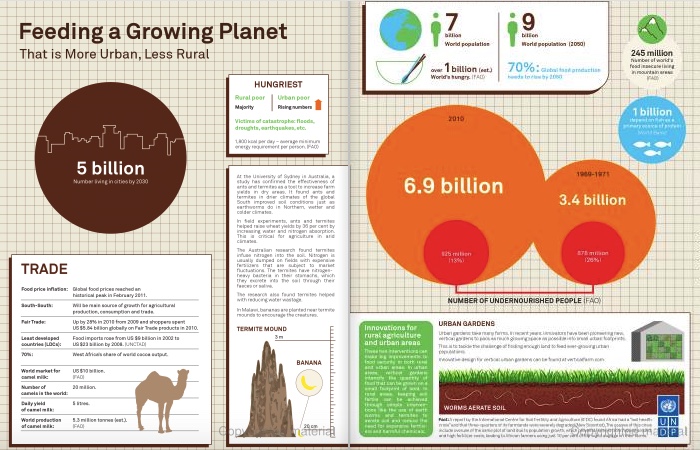
The current global economic crisis is taking place at the same time as a global food crisis. Food inflation took off at the beginning of 2011. This is having a devastating affect on countries dependent on food imports and experiencing decreasing domestic production capabilities. The least developed countries (LDCs) saw food imports rise from US $9 billion in 2002, to US $23 billion by 2008 (UNCTAD), prompting Supachai Panitchpakdi, secretary general of UNCTAD, to say “the import dependence has become quite devastating.”

Garuda Food (www.garudafood.com), one of Indonesia’s leading snack food and drink manufacturers, has been boosting its own productivity by investing in improving the productivity of domestic small-scale farmers. This led to a doubling of crop purchases from peanut farmers between 2007 and 2009. By stabilising the market for peanuts and better guaranteeing income, it has attracted more people into becoming peanut farmers in the region.

This is crucial for the future of feeding the planet: we need more farmers.

Indonesia is the world’s fourth most populous country, with a population of over 238 million, spread out over a network of islands. Peanut farmers in West Nusa Tenggara (http://en.wikipedia.org/wiki/West_Nusa_Tenggara) (one of Indonesia’s poorest places) are a key part of the region’s wealth. Peanuts are the area’s third largest crop after rice, maize and soybeans, and the region supplies six percent of the country’s peanut production and 10 percent of Garuda Food’s needs.

Garuda Food says investing in farmers has raised its own productivity by a third. Turning past practices on its head, this large agri-food company is supporting small-scale farmers and helping them to boost their productivity and incomes. Conventional wisdom had been to view small-scale farmers as an inefficient hold-over from the past – the quicker they were driven out of business, the better.

The Indonesian peanut farmers were using traditional farming methods and local seeds. Knowledge of more sustainable farming methods and land management techniques was poor. The farmers were also beholden to the whims of local buyers and fluctuating market prices.

Then Garuda Food stepped in. The company’s field staff offer the farmers training, and through its subsidiary PT Bumi Mekar Tani, it spreads knowledge about new agricultural practices and provides the farmers with quality seeds and farming equipment.

The company buys crops directly from the farmers, rather than from middlemen, increasing the amount the farmer makes. A premium is also paid if the farmer achieves better quality for their crop.

“We receive substantial supply from peanut farmers in NTB (West Nusa Tenggara) and we hope the arrangement will continue,” Garuda Food’s managing director Hartono Atmadja told the Enchanting Lombok website.

Garuda Food’s initiative, with support from the World Bank’s International Finance Corporation and AusAID, through the Australia Indonesia Partnership, has raised the productivity for 8,000 small-scale farmers by 30 percent: an income boost for the farmers of 3.9 million Indonesian rupiah (US $456) per hectare annually.

Peanut farmer H. Sajidin told the IFC (International Finance Corporation): “My farm’s productivity doubled, my income improved significantly, and I can sleep peacefully at night knowing that Garuda Food will buy my crops at agreed prices.”

Raj Patel, author of Stuffed and Starved: Markets, Power and the Hidden Battle for the World Food System (http://stuffedandstarved.org/drupal/frontpage), has grappled with the conundrum of how to feed a rapidly growing planet. He finds the world is not lacking in food, but distributes its bounty very poorly and wastefully, leaving a planet where some people are literally ‘stuffed’ with too much food (the well-documented global obesity crisis) and others left to starve.

He finds the solution is often local.

“It turns out that if you’re keen to make the world’s poorest people better off, it’s smarter to invest in their farms and workplaces than to send them packing to the cities,” Patel wrote recently in Foreign Policy. “In its 2008 World Development Report, the World Bank found that, indeed, investment in peasants was among the most efficient and effective ways of raising people out of poverty and hunger.”

Patel uses the example of the southern African nation of Malawi, where “according to one estimate, the marginal cost of importing a ton of food-aid maize is $400, versus $200 a ton to import it commercially, and only $50 to source it domestically using fertilizers.”

Published: May 2011

Resources

1) Emprapa: The Brazilian Agricultural Research Corporation’s mission is to provide feasible solutions for the sustainable development of Brazilian agribusiness through knowledge and technology generation and transfer. Website: http://www.embrapa.br/english

2) Divine Chocolate: The highly successful global chocolate brand from the Kuapa Kokoo farmers’ cooperative in Ghana, West Africa. Website: http://www.divinechocolateshop.com

3) Olam: The highly successful global food product supplier brand which got its start in Nigeria, West Africa. Website: http://www.olamonline.com

4) Insects as food: Tapping the world’s vast insect population offers many ways to supplement world food sources. Website: http://ssc.undp.org/other/e-news/newsletters/april-2008/

5) Cooperhaf: The Brazilian farmers’ cooperative Cooperhaf: Cooperativa de Habitacao dos Agricultores Familiares, has put together what it calls a “social technology”, combining housing and farm diversification to support family farmers. Website: http://www.cooperhaf.org.br

Development Challenges, South-South Solutions was launched as an e-newsletter in 2006 by UNDP’s South-South Cooperation Unit (now the United Nations Office for South-South Cooperation) based in New York, USA. It led on profiling the rise of the global South as an economic powerhouse and was one of the first regular publications to champion the global South’s innovators, entrepreneurs, and pioneers. It tracked the key trends that are now so profoundly reshaping how development is seen and done. This includes the rapid take-up of mobile phones and information technology in the global South (as profiled in the first issue of magazine Southern Innovator), the move to becoming a majority urban world, a growing global innovator culture, and the plethora of solutions being developed in the global South to tackle its problems and improve living conditions and boost human development. The success of the e-newsletter led to the launch of the magazine Southern Innovator. 

Creative Commons License

This work is licensed under a
Creative Commons Attribution-Noncommercial-No Derivative Works 3.0 License.

ORCID iD: https://orcid.org/0000-0001-5311-1052.

© David South Consulting 2023