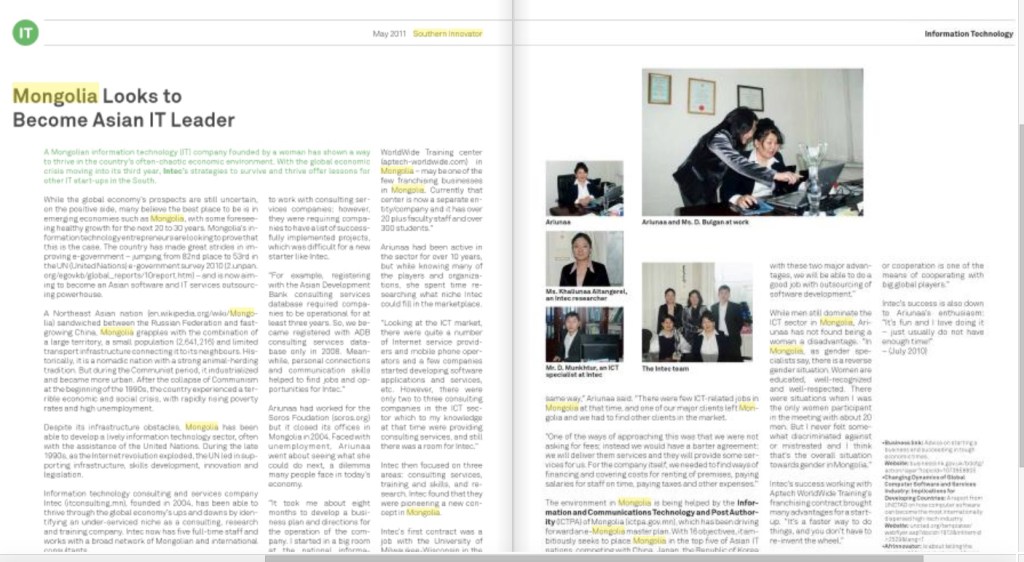
A Mongolian information technology company founded by a woman has shown a way to thrive in the country’s often-chaotic economic environment. With the global economic crisis moving into its third year, Intec’s strategies to survive and thrive offer lessons for other IT start-ups in the South.
While the global economy’s prospects are still uncertain, on the positive side, many believe the best place to be is in emerging economies like Mongolia, with some foreseeing healthy growth for the next 20 to 30 years. Mongolia’s information technology entrepreneurs are looking to prove this is the case. The country has made great strides in improving e-government – jumping from 82nd place to 53rd in the UN e-government survey 2010 (http://www2.unpan.org/egovkb/global_reports/10report.htm) – and is now aiming to become an Asian software and IT services outsourcing powerhouse.
A Northeast Asian nation (http://en.wikipedia.org/wiki/Mongolia) sandwiched between Russia and fast-growing China, Mongolia grapples with the combination of a large territory, a small population (2,641,216) and limited transport infrastructure connecting it to its neighbours. Historically, it is a nomadic nation with a strong animal herding tradition. But during the Communist period, it industrialized and became more urban. After the collapse of Communism at the beginning of the 1990s, the country experienced a terrible economic and social crisis, with rapidly rising poverty rates and high unemployment.
Despite its infrastructure obstacles, Mongolia has been able to develop a lively information technology sector, often with the assistance of the United Nations. During the late 1990s, as the internet revolution exploded, the UN led on supporting infrastructure, skills development, innovation and legislation.
Information technology consulting and services company Intec (www.itconsulting.mn) , founded in 2004, has been able to thrive through the global economy’s ups and downs by identifying an under-serviced niche as a consulting, research and training company. Intec now has five full-time staff and works with a broad network of Mongolian and international consultants.
As is often the case with new businesses, Intec initially found that many doors were closed to start-up enterprises.
“The major challenges which I faced were to make people understand about the consulting services,” said Intec’s founder, Lkhagvasuren Ariunaa. “The consulting services concept was new to Mongolia and Mongolians at that time and not many organizations were willing to work with consulting services. The international and donor organizations were keen to work with consulting services companies; however, they were requiring companies to have a list of successfully implemented projects, which was difficult for a new starter like Intec.
“For example, registering with the Asian Development Bank consulting services database required companies to be operational for at least three years. So, we got registered with ADB consulting services database only in 2008. Meanwhile, personal connections and communication skills helped to find jobs and opportunities for Intec.”
Ariunaa had worked for the Soros Foundation (http://www.soros.org/) but it closed its offices in Mongolia in 2004. Faced with unemployment, Ariunaa went about seeing what she could do next: a dilemma many people face in today’s economy.
“It took me about eight months to develop a business plan and directions of operation of the company. I started in a big room at the national information technology park building with one table, chair and computer.
“It has been quite challenging years for bringing a company to the market and finding niches for us. We have franchised the Indian Aptech WorldWide Training center (http://www.aptech-worldwide.com) in Mongolia – may be one of the few franchising businesses in Mongolia. Currently that center is now a separate entity/company and it has over 20 plus faculty staff and over 300 students.”
Ariunaa had been active in the sector for over 10 years, but while knowing many of the players and organizations, she spent time researching what niche Intec could fill in the marketplace.
“Looking at the ICT market, there were quite a number of internet service providers, mobile phone operators, a few companies started developing software applications, and services etc. However, there were only two to three consulting companies in the ICT sector which to my knowledge at that time were providing consulting services, and still there was a room for Intec.”
Intec then focused on three areas: consulting services, training and skills, and research. Intec found they were pioneering a new concept in Mongolia.
Intec’s first contract was a job with the University of Milwaukee-Wisconsin in the United States to organize a three week course for American students to learn about the digital divide in Mongolia. But the global economic crisis hit Mongolia hard in 2009.
“It was challenging to survive and continue working the same way,” Ariunaa said. “There were few ICT-related jobs in Mongolia at that time, and one of our major clients left Mongolia and we had to find other clients in the market.
“One of the ways of approaching this was that we were not asking for fees, instead we would have a barter agreement – we will deliver them services and they will provide some services for us. For the company itself, we needed to find ways of financing and covering costs for renting of premises, paying salaries for staff on time, paying taxes and other expenses.”
The environment in Mongolia is being helped by the Information and Communications Technology and Post Authority (ICTPA) of Mongolia (http://www.ictpa.gov.mn) , which has been driving forward an e-Mongolia master plan. With 16 objectives, it ambitiously seeks to place Mongolia in the top five of Asian IT nations, competing with South Korea, Singapore, Japan and China.
Ariunaa believes Mongolia has many competitive advantages. “Mongolia is known for a high-literacy rate and math-oriented training and education, and ICT specialists are targeting to become a software outsourcing country for other countries. Another advantage of Mongolians is that they can easily learn other languages: we are fluent in Russian, English, Japanese, Korean, German and we believe that with these two major advantages, we will be able to do a good job with outsourcing of software development.”
While men still dominate the ICT sector in Mongolia, Ariunaa has not found being a woman a disadvantage. “In Mongolia, as gender specialists say, there is a reverse gender situation. Women are educated, well-recognized and well-respected. There were situations, when I was the only women participant in the meeting with about 20 men. But I never felt somewhat discriminated or mis-treated and I think that’s the overall situation towards gender in Mongolia.”
Intec’s success working with Aptech WorldWide Training’s franchising contract brought many advantages for a start-up. “It’s a faster way to do things, and you don’t have to re-invent the wheel.”
As a Mongolian company, Intec has found it best to play to its local strengths. “National companies have knowledge, expertise and experience of local situations, know players and understand about legal, regulatory matters. … partnership or cooperation are one of the means of cooperating with big global players.”
Intec’s success is also down to Ariunaa’s enthusiasm: “It’s fun and I love doing it – just usually do not have enough time!”
2) Changing Dynamics of Global Computer Software and Services Industry: Implications for Developing Countries: A report from UNCTAD on how computer software can become the most internationally dispersed high-tech industry. Website:http://www.unctad.org/templates/webflyer.asp?docid=1913&intitemid=2529&lang=1
3) Afrinnovator: Is about telling the stories of African start-ups, African innovation, African made technology, African tech entrepreneurship and entrepreneurs. Their mission is to ‘Put Africa on the Map’ by covering these kinds of stories from all over Africa. As their website says, “if we don’t tell our own story, who will tell it for us?” Website:http://afrinnovator.com
4) TechMasai: Pan-African start-up news and reviews. Website: www.techmasai.com
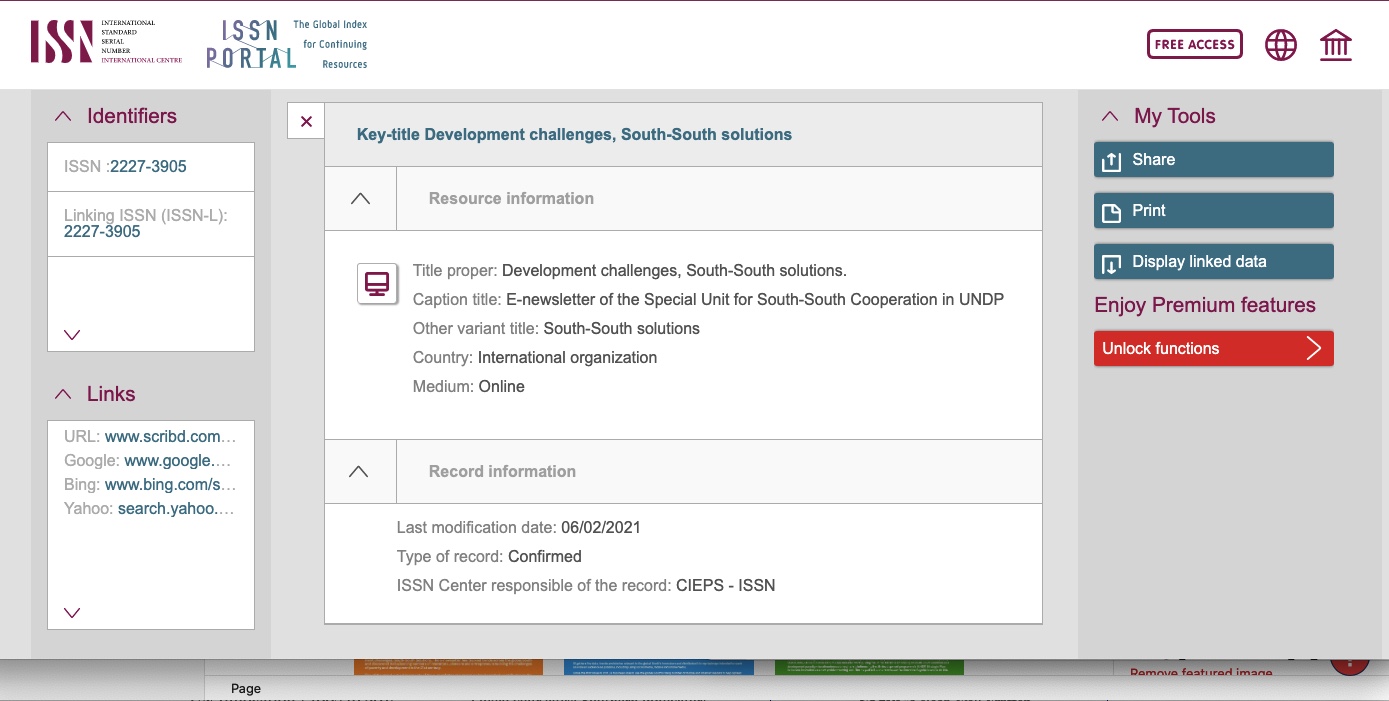
Development Challenges, South-South Solutions was launched as an e-newsletter in 2006 by UNDP’s South-South Cooperation Unit (now the United Nations Office for South-South Cooperation) based in New York, USA. It led on profiling the rise of the global South as an economic powerhouse and was one of the first regular publications to champion the global South’s innovators, entrepreneurs, and pioneers. It tracked the key trends that are now so profoundly reshaping how development is seen and done. This includes the rapid take-up of mobile phones and information technology in the global South (as profiled in the first issue of magazine Southern Innovator), the move to becoming a majority urban world, a growing global innovator culture, and the plethora of solutions being developed in the global South to tackle its problems and improve living conditions and boost human development. The success of the e-newsletter led to the launch of the magazine Southern Innovator.
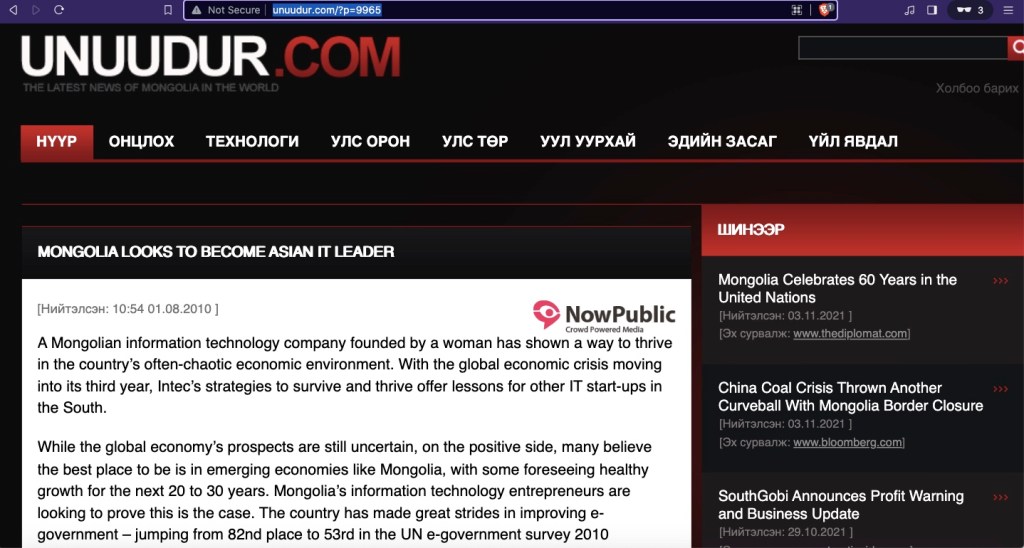
Launched in 1997 in a major crisis, the UN Mongolia Development Portal (www.un-mongolia.mn) became the country’s largest online bilingual publisher and an award-winning pioneer of web content. It proved Mongolia had the potential to innovate in digital.Story featured in the UN E-Government Knowledgebase and E-Government Survey in Media.Posted in 2010 on the Unuudur.com (“The latest news of Mongolia in the world”) website.
Making Bamboo Houses Easier to BuildDevelopment Challenges: More than 1 billion people around the world lack decent shelter. Of these, the majority live in urban areas, usually in slums and informal settlements (UN-HABITAT). Latin America has a serious shortage of adequate housing: in Colombia, 43 percent of the population needs decent housing; in Brazil, 45 percent; Peru, 53 percent.
Two-stroke Engine Pollution SolutionDevelopment Challenges: Cities across the South choke on the pollution made by the small two-stroke engines (http://www.howstuffworks.com/two-stroke.htm) powering motor scooters, motorcycles, auto rickshaws, tuk-tuks and other vehicles. People choose these vehicles to get around because they are cheap, powerful and easy to fix. But the environment – and human health – suffers as a result. And as cities balloon and populations grow, the number of journeys and two-stroke engines grows with it.
Rammed-Earth Houses: China Shows how to Improve and Respect Traditional Homes Development Challenges: The pace of change across the South has been blistering. Over the past decade, the overall population has moved from being primarily rural to majority urban. In the process, rural communities have suffered, as they have seen their young and ambitious leave in droves seeking a better life in cities.More than 200 million Chinese farmers have moved to cities in recent years. It’s easy to see why. Chinese farms are tiny, with the average rural household farming just 0.6 hectares. And incomes are low compared to the cost of living: average annual income was just US$606 in 2007, a third of city salaries.
Clay Filters are Simple Solution for Clean WaterDevelopment Challenges:Access to clean water is critical to good health. It is a basic human need that when met, leads to the biggest improvements in health and well-being. Dirty water causes diarrhoea (http://en.wikipedia.org/wiki/Diarrhea),cholera and typhoid. Diseases caused by dirty drinking water kill almost 5,000 children a day around the world (WHO).
Brazil Preserves Family Farms and Keeps Food Local and Healthy Development Challenges: Today’s global food crisis sparked by a toxic mix of events – high oil and commodity prices, food scarcity, growing populations, and environmental catastrophes – has woken many up to the urgent need to secure food supplies and help those who grow the world’s food. More and more countries are turning to local and small farms – or family farms – to offer food security when times get rough.
November
Riverwood: Kenyan Super-fast, Super-cheap FilmmakingDevelopment Challenges: The African film-making success story of Nigeria’s Nollywood has been joined by another fast-rising star: Kenya’s Riverwood. Both are beneficiaries of the digital revolution in filmmaking over the last decade, and both are using low-cost digital filmmaking and editing to tell local stories — in the process making money and creating thousands of jobs.
Model Indian Villages to Keep Rural Relevant Development Challenges:The world’s rush to urban centres is the great challenge of the 21st century. In 2007, the world became a majority urban place. The consequences of this shift can be seen in the blight of urban poverty, with its slums and squalor, environmental degradation, and rising social tensions. But there are people working on keeping rural areas relevant and pleasant places to live. These rural advocates see a vibrant countryside as part of the solution to the world’s plethora of crises.
Brazilian Solar-powered WiFi for Poor SchoolsDevelopment Challenges:There is a pressing need to spread access to the internet to the world’s poor – but also many obstacles. Often it is something as basic as a lack of electricity that brings progress to a halt. But a Brazilian innovator has come up with a solar power supply that is helping to bring internet access to schools serving the poor.
Web 2.0: Networking to Eradicate Poverty Development Challenges: The internet phenomenon of Web 2.0 (http://en.wikipedia.org/wiki/Web_2.0) – the name given to the wave of internet businesses and websites such asYouTube(www.youtube.com), Facebook and MySpace transforming the way people interact with the ‘Net – has also given birth to two new development-themed social networking websites.
October
Local Fashions Pay Off for Southern Designers Development Challenges:Fashion earns big money around the world: The global clothing industry is estimated to be worth US $900 billion a year. For many decades, strong American brands have been the desired commodity for those looking to be cool and contemporary. People were willing to pay high premium prices to get the cache of American cool that the brands conveyed.
Rats a Solution in Food Crisis Development Challenges: The global food crisis continues to fuel food price inflation and send many into hunger and despair. Around the world, solutions are being sought to the urgent need for more and cheaper food. Right now there are 862 million undernourished people around the world (FAO), and U.N. Secretary General Ban Ki-moon has called for food production to increase 50 percent by 2030 just to meet rising demand.
Mobile Phones: New Market Tools for the PoorDevelopment Challenges:Bangladesh’s poor can now buy and sell goods and services with their mobile phones, thanks to a Bangladeshi company’s pioneering mobile phone marketplace. The company, CellBazaar, serves as a useful role model for other Southern entrepreneurs and companies looking to develop and market mobile phone applications for the poor that really help them.
Picking Money from the Baobab TreeDevelopment Challenges: The fruit of the highly revered African baobab tree is being seen as a great new opportunity for the poor, after a recent decision by the European Commission to allow its importation. According to one study, gathering the fruit has the potential to earn an extra US $1 billion a year for Africa, and bring work and income to 2.5 million households, most of them African bush dwellers (Britain’s Natural Resources Institute).
September
Solar Power Bringing Light and Opportunity to the Poor Development Challenges: Meeting the South’s energy needs will be crucial to achieving radical improvements in quality of life and human development. It is estimated that 1.7 billion people around the world lack electricity (World Bank), of whom more than 500 million live in sub-Saharan Africa.
Computer ‘Gold Farming’ Turning Virtual Reality into Real Profits Development Challenges: The rapid spread of the internet around the global South is bringing with it new forms of work. One of these trends is so-called “gold farming”: making money in the virtual world of computer gaming by trading in virtual money, prizes and goods for busy gamers who don’t have time to do it themselves. This work now employs 400,000 people – mostly men and mostly in China, but also elsewhere in the South, according to a new report.
Farmers Weather Fertilizer Crisis by Going OrganicDevelopment Challenges: Around the world, large-scale agriculture relies on the use of chemical fertilizers. But increasing expense and decreasing supply of fertilizer is driving up the cost of food, and in turn contributing to the overall food crisis.
Urban Farmers Gain from Waste Water Development Challenges: The global food crisis continues to fuel food price inflation and send many into hunger and despair. Around the world, solutions are being sought to the urgent need for more food and cheaper food. U.N. Secretary General Ban Ki-moon has called for food production to increase 50 percent by 2030 just to meet rising demand – and right now there are 862 million people undernourished (FAO).
August
Cash Machines for the Poor Development Challenges: Access to basic banking services for the poor is weak at the best of times. Many are openly discriminated against as a ‘bad risk’ by banks, and denied the sort of banking services middle and higher income people take for granted. Yet it is a myth that the poor do not have money or do not wish to save and invest for their future or for business.
Milk Co-operatives Help Hungry Haiti Development Challenges: The global food crisis has hit the impoverished Caribbean country of Haiti especially hard. Already suffering from decades of food crises brought on by the collapse of domestic farming, the country has become notorious for its people being reduced to eating cakes made of mud to stave off hunger pains. It is the poorest country of Latin America and the Caribbean and one of the poorest in the world.
Traditional Healers can Heal the Mind, as well as BodyDevelopment Challenges:Mental healthcare is critical to physical health and overall wellbeing, yet it is seriously neglected around the world – and especially in poorer countries.
Fashion Recycling: How Southern Designers are Re-using and Making Money Development Challenges: With the rising awareness of the importance of doing fashion in an ethical and sustainable way, more and more fashion designers in the South are getting very creative. Fashion earns big money around the world: The global clothing industry is estimated to be worth US $900 billion a year.
July
Pay for Pee Keeps Indian Town CleanDevelopment Challenges: The task is huge: 2.6 billion people, or 41 percent of the world’s population, is without access to basic sanitation. As a result, most have to make do and defecate or urinate wherever they can. In crowded urban areas, the result is an unpleasant source of disease and filth that fouls living spaces and sickens or kills many people.
Sex Workers’ Savings Help Make a Better Life Development Challenges:Prostitution is called the world’s oldest profession, and can be found in one form or another in every country and society. And where poverty is rife and women have few economic choices, it flourishes. But it also flourishes in societies and economies undergoing rapid change, and where people move around more and more, as in the South’s fast-growing cities.
Urban Youth: A Great Source of Untapped GrowthDevelopment Challenges: The world’s growing urbanization means that a whole generation of youth will have a dramatically different life than their parents. The world’s 3.3 billion urbanites now outnumber rural residents for the first time (UNFPA’s State of the World Population 2007 Report). And the vast majority live in slums or periurban areas, places of sprawl, where public services are poor and housing conditions unhealthy.
Innovative Mobile Phone Applications Storm SouthDevelopment Challenges: The pace of change in information technology in the South is impressive, and nowhere has it been more rapid than in the take-up of mobile phones. In the past three years China has become the world’s largest exporter of information and communications technology (ICT), and home to the same number of mobile-phone users (500 million) as the whole of Europe. According to India’s telecoms regulator, half of all urban dwellers now have mobile- or fixed-telephone subscriptions and the number is growing by eight million a month.
Small-scale Farmers Can Fight Malaria BattleDevelopment Challenges:Malaria is one of Africa’s biggest killers. Each year globally 300 to 500 million people are infected, and around 1 million die from the disease (theglobalfund). Ninety percent of malaria deaths occur in sub-Saharan Africa – mostly to children under the age of five. The disease costs African countries US$12 billion a year in lost gross domestic product.
June
Urban Farming to Tackle Global Food Crisis Development Challenges: The world’s population is becoming more urban by the day. By 2030, some five billion people around the world will live in cities. This year is the tipping point: urban dwellers (3.3 billion people) now outnumber rural residents for the first time (UNFPA’s State of the World Population 2007 Report).
Connoisseur Chocolate from the South Gets a Higher PriceDevelopment Challenges: Like coffee beans, cocoa beans are grown around the world and are a major commodity, highly prized in wealthy countries. West Africa accounts for 70 percent of the world’s output, with the rest grown either in Indonesia and Brazil (20 percent), or on a smaller scale in countries across the South, from Belize to Madagascar.
Agricultural Waste Generating ElectricityDevelopment Challenges:Agriculture around the world produces a great deal of waste as a by-product. It can be animal faeces, or the discarded plant husks thrown away when rice, grains or maize are harvested. When this waste meets the urgent need for electricity, something special can happen.
The Disabled in the South can Make Money, Restore Dignity Development Challenges: The South’s disabled are a large population and often suffer more than even the poorest residents. It is estimated that there are 500 million disabled people in the world, with either mental, physical or sensory impairment. As many as 80 percent of all disabled people live in isolated rural areas in developing countries, and in some countries more than 20 percent of the population is classed as disabled (UN).
May
Women Mastering Trade Rules Development Challenges: Market trading is a vital lifeline for most people in the South. Plenty of delights usually await people in the market, where live animals, herbs and spices, fresh fruits and vegetables, and life’s necessities compete for customers’ money. The formal and informal food sector plays a crucial role in empowering women and providing food to the poor.
Combating Counterfeit Drugs Development Challenges: Access to good quality drugs is a serious problem across the South. The International Narcotics Control Boardestimates that up to 15 per cent of all drugs sold around the world are fake or counterfeit, and in parts of Africa and Asia this figure jumps to 50 per cent. The US Food and Drug Administration estimates counterfeit drugs make up 10 per cent of the global medicine market.
Rainforest Rubbers Save LivesDevelopment Challenges: Two development goals are being achieved with one innovative business in Brazil. By using natural rubber tapped from trees in the Amazon rainforest to make condoms, Brazil is able to afford the cost of distributing condoms to tackle its HIV/AIDS crisis. Brazil currently imports more than 120 million condoms every year from China, Republic of Korea and Thailand, making it the world’s biggest single buyer of condoms.
New Weapon Against Crime in the SouthDevelopment Challenges: Crime in the South’s fast-growing cities has a negative affect on economic development and social and community harmony. In Africa, with one fifth of the world’s population, for example, data is very poor on crime and its victims. The absence of good data means prevention and detection of crime is poor, and resources to fight it can’t be allocated effectively.
April
Tapping the Power of Child Play Development Challenges: Children are an amazing source of energy. Each generation fizzes with the restlessness and optimism of youth. But all that energy is expended in the playground, leaving behind nothing but the sound of laughter. What if that energy could actually be harnessed and turned into electricity? And electricity to power the cash-strapped school the children need to attend to get a good head start in life?
Illiterate Get Internet at the Touch of a Button Development Challenges:Quick access to information is crucial for development. The remarkable spread of information around the world via the internet has been one of the greatest achievements of the 21st century. The astounding take-up of mobile phones is another. For those who can afford it or get access to a computer and electricity, the new technology is a powerful tool for economic and social advancement. But what about people who are caught in the technology gap, or who are illiterate?
The South has a Good Story to Tell Development Challenges: The fast-changing modern world is raising the living standards of billions in the South – China alone has lifted 400 million people out of poverty since the 1980s – but it is also risking the loss of many rich cultural traditions. One of them is storytelling. Oral storytelling is a critical tool for passing on history, while teaching morals and ethics, especially in societies with low rates of literacy and little formal education. But with the rise of modern media and advertising, few traditional storytellers – many of whom are old – stand a chance.
Insects Can Help in a Food CrisisDevelopment Challenges: For many years it was a given that the world’s problem was not a lack of food, but that it was unfairly shared. But as the switch to biofuels gathers pace, farmland is being diverted away from growing food for people, to food for fuel. On top of this, growing prosperity in many countries in the South has boosted demand for better quality food, including grain-devouring meat diets – it takes 10 kilograms of grain to get one kilogram of meat from a cow. The crisis has deeply alarmed the UN’s World Food Programme and the World Bank. In the economic battle for food, the poor are the most vulnerable.
March
From Warriors to Tour GuidesDevelopment Challenges: In the wake of conflict, demobilizing combatants is as critical as ending the fighting if there is hope for the peace to last. When conflict ends, former fighters usually find themselves unemployed. But tourism is proving a viable way to deal with the social and political dangers of neglecting former fighters post-conflict.
Carbon Markets Need to Help the PoorDevelopment Challenges: The global carbon credit trading schemes emanating from the Kyoto Protocolhave created a multi-billion dollar market – the global carbon market was worth US $30 billion in 2007 (World Bank) – and represents one of the fastest growing business opportunities in the world. The bulk of this trading is with the European Union’s emissions trading scheme, some US $25 billion. But the big problem to date has been most of this investment is enriching stock brokers, and not the poor.
Nollywood: Booming Nigerian Film IndustryDevelopment Challenges: Thedigital revolution in filmmaking over the last decade has given birth to an African success story: Nollywood – Nigeria’s answer to Hollywood, uses low-cost digital filmmaking and editing to tell local stories — in the process making money and creating thousands of jobs.
Innovative Stoves to Help the PoorDevelopment Challenges: Half of the world’s population cook with a fuel-burning stove, and this figure rises to 80 per cent of households in rural areas in developing countries. Typical fuels burned include wood, coal, crop leftovers and animal dung. The indoor pollution from smoke and carbon monoxide is a top health hazard in the developing world, ranking just behind dirty water, poor sanitation and malnutrition. The World Health Organization (WHO) estimates that 1.6 million people die each year as a result of toxic indoor air.
February
Cashing in on Old Wisdom Development Challenges: India’s traditional weavers, heirs to a 2,000-year-old textile industry, are turning to the ancient practice of ayurvedic medicine to make their products more appealing and boost sales. Drawing on recipes once used by weavers to the Indian royal courts, clothes are woven and infused with ayurvedic, herb-and-spice medicinal recipes to address various health problems. Strange as it may sound, the health-giving properties of the clothes have been backed up by clinical trials at the Government Ayurveda College in Thiruvanathapuram, southern India.
Prisons with Green Solutions Development Challenges: An ingenious solution is helping Rwanda reduce the cost of running its bursting prisons, while improving conditions for the prisoners and helping protect the environment.
Envisioning Better Slums Development Challenges: More than 900 million people – almost a sixth of the world’s population – now live in urban slums (UN). Improving conditions for these people is a critical Millennium Development Goal target. And the scale of the problem is vast: this year half the world’s population will live in cities, and already in developing countries 43 per cent of urban dwellers live in slums. In the least-developed countries the figure is 78 per cent.
Mobile Phone Peacekeeping Development Challenges: Last month UN secretary-general Ban Ki-moon pointed out the urgent need for interesting and relevant content to attract Africans to the internet. Official statistics can make for grim reading: the continent has less bandwidth than Ireland (World Economic Forum). While it is true Africa is restricted by serious technological and economic disadvantages, African ingenuity, creativity and hard work are bypassing these impediments to get things done nonetheless. While word has got out about the impressive take-up of mobile phones in Africa, the new world of Web 2.0 is also spawning a new generation of inspiring African technology whizzes transforming perceptions and grabbing the world’s attention.
January
Putting Worms to Work Development Challenges: Overuse of pesticides is now acknowledged as one of the gravest mistakes of the Green Revolution, launched in the 1970s to dramatically increase food production in the developing world. Pesticides have polluted the environment, poisoned fertile soil, contaminated ground water and damaged human health.
Cyber Cities in the South: An Oasis of Opportunity Development Challenges: The future is arriving in the South even faster than many think: so-called “cyber cities” are being created to become this century’s new Silicon Valleys. Well-known ‘cyber cities’ like India’s Hyderabad and Bangalore have been joined by many other cities across the global South. But two places are set to make big waves with their ambition and drive in 2008: Mauritius and China.
Decent and Affordable Housing for the Poor Development Challenges:Urban populations across the South are growing fast: by 2030, some 5 billion people around the world will live in cities. This year will be the first year in which urban dwellers (3.3 billion people) will outnumber rural residents for the first time (United Nations Population Fund [UNFPA]). Africa now has a larger urban population than North America and 25 of the world’s fastest growing big cities. Asia and Africa’s cities are growing by an incredible 1 million people a week, with 72 per cent of the population in sub-Saharan Africa living in slum conditions.
Development Challenges, South-South Solutions was launched as an e-newsletter in 2006 by UNDP’s South-South Cooperation Unit (now the United Nations Office for South-South Cooperation) based in New York, USA. It led on profiling the rise of the global South as an economic powerhouse and was one of the first regular publications to champion the global South’s innovators, entrepreneurs, and pioneers. It tracked the key trends that are now so profoundly reshaping how development is seen and done. This includes the rapid take-up of mobile phones and information technology in the global South (as profiled in the first issue of magazine Southern Innovator), the move to becoming a majority urban world, a growing global innovator culture, and the plethora of solutions being developed in the global South to tackle its problems and improve living conditions and boost human development. The success of the e-newsletter led to the launch of the magazine Southern Innovator.
Dabbawallahs Use Web and Text to Make Lunch on Time Development Challenges:The developing world’s rapidly growing cities are bringing with them whole new ways of living and working. One rapidly expanding category of citizen is the office worker. A symbol of growing prosperity, the office worker also tends to be a time-poor person who often must commute large distances between home and workplace.
Flurry of Anti-poverty Innovations Development Challenges: Innovation is key to transforming the lives of the world’s four billion poor. And it is at the core of much of the new thinking these days. While the world’s poor can’t rely on political developments, or wider macro-economic events to go their way, they can harness the power of invention, innovation and self-reliance to make big changes in the quality of their lives and increase income – and so can those who want to help them.
Local Animation: A Way Out of Poverty Development Challenges: One of the more remarkable creative developments since 2000 has been the explosion in animation production in the developing world, in particular Asia. Once seen as frivolous or unnecessary, animation is now acknowledged as a high-growth area and a critical component in the emerging economies being shaped by information technology.
Mobile Phones Bring the Next Wave of New Ideas from the South Development Challenges: The rapid growth in take-up has made mobile phones the big success story of the 21st century. With such reach, finding new applications for mobile phones that are relevant to the world’s poor and to developing countries is a huge growth area. It is estimated that by 2015, the global mobile phone content market could be worth over US $1 trillion: relegating basic voice phone calls to just 10 per cent of how people use mobile phones.
November
Mountain People: Innovative Ways to Help the World’s Most Vulnerable Development Challenges: Physically isolated and socially and politically marginalized, mountain dwellers are among the most vulnerable in the world, according to the Food and Agriculture Organization. A disproportionate number of the world’s 840 million chronically undernourished people live in highland areas — about 270 million mountain people lack food security, with 135 million suffering chronic hunger. Large numbers of additional people in lowland areas also depend on mountains.
Saving the Amazon Forest While Making a Living Development Challenges: The vast Amazon rainforest straddles Brazil (over half is there), and stretches over many countries, including Peru, Ecuador and Bolivia. It holds more than 2,500 tree species and 30 per cent of all known plant species – 30,000 in all. It contains the world’s largest tropical forest national park, Brazil’s Tumucumaque Mountains National Park(http://www.amazon-rainforest.org/places-of-interest.html).
Africa’s Fast-Growing Cities: A New Frontier of Opportunities Development Challenges: According to a new report by the International Institute for Environment and Development, Africa now has a larger urban population than North America and 25 of the world’s fastest growing big cities. Europe’s share of the world’s 100 largest cities has fallen to under 10 percent in the past century.
Turning Street Children into Entrepreneurs Development Challenges: The UN estimates that 500 million people around the world are homeless, and UNICEF estimates India alone has 11 million homeless children on its streets (though it is difficult to pin down the figure). In order to survive another day, these children will work in one way or another.
October
African Culture as Big Business Development Challenges: In the last decade the world’s creative industries (including crafts, fashion and design) have gained greater respect for being the spark that drives economic development and entrepreneurship. They are seen as fast growers and good job creators, and importantly, the lynch pin in cultural identity and cultural diversity.
Next Generation of Innovation for the Grassroots Development Challenges: Taking inspiration from science fiction sagas like the TV show Star Trek, the next generation of innovation is already taking shape in the South. A group of innovative facilities called Fab Labs (short for Fabrication Laboratory) in Ghana, India, Kenya, South Africa and Costa Rica are applying cutting-edge technology to address the everyday needs of people.
Ecotourism to Heal the Scars of the Past Development Challenges: The legacy of underdevelopment during the communist era in parts of Eastern Europe is now being seen as an advantage in the global tourism trade. Well off the beaten path for tourists, areas as diverse as Chechnya and Romania are working to turn their rustic rural hinterlands into a strategic advantage in grabbing the market for ecotourists.
Popular Characters Re-invent Traditional Carving Development Challenges: The popular cartoon characters from the long-running series The Simpsons are breathing new life into traditional African stone carvings.
September
African Breakthroughs To Make Life Better Development Challenges: In the last 50 years, the domestication of high technology – bringing cheaper access to everything from personal computers to digital cameras and applications like global positioning systems (GPS) – has transformed millions of lives and the way business is done. In the next 50 years, biotechnology is set to do the same.
Traditional Medicine is now a Proven Remedy Development Challenges: Once dismissed as old fashioned, ineffective and unscientific, traditional medicine is now seen as a key tool in bringing healthcare and healing to poor people bypassed by existing public and private health measures.
Mobile Phones: Engineering South’s Next Generation of Entrepreneurs Development Challenges: Technology is fuelling unprecedented growth in productivity in Asia, with sub-Saharan Africa languishing behind (International Labour Organization). But the growth in mobile phones could help close this gap, as home-grown entrepreneurs are stepping up to exploit this new opportunity.
Saving Water to Make Money Development Challenges: The world’s water supplies are running low, and according to the World Health Organisation (WHO), four out of every 10 people are already affected. But despite the gloomy reality of this problem, entrepreneurs in the South are rising to the challenge to save water.
August
Social Franchising Models Proving Poor Bring Profits Development Challenges: The four billion people in the world who live on less than US $2 a day have been described as the bottom of the economic pyramid, or BOP for short. In his book The Fortune at the Bottom of the Pyramid, Indian business consultant and professor CK Prahalad argues that this attitude must be turned on its head: rather than seeing the world’s poor as a burden, only worthy of charity, Prahalad sees nothing but opportunity and unmet needs that business can address.
Cooking up a Recipe to End Poverty Development Challenges: Like music, food has a powerful ability to jump across cultural and regional barriers and unite people in the sheer pleasure of the meal. Tapping the rich vein of regional culinary heritages is also a great way to make money. Promoting local recipes and foods has other benefits: as the global obesity (or globesity as WHO calls it) epidemic reaches into the urban areas of cities in the developing world, anything that pulls people away from fast food and high-fat foods is a good thing. Doctors have found home cooking keeps people thin and is better for them.
The Power of the Word: African Blogging and Books Development Challenges: “Culture is not a luxury … Culture is the spiritual backbone of society”: with these words Jan Kees van de Werk, the Dutch poet and long-standing advocate of African literature, summed up the importance of culture to Africa’s development. Two trends could significantly alter the prospects for African writers in 2007: the new wave of African bloggers and websites that are now emerging, and the increasing awareness of African literature.
Online Free Knowledge Sharing Development Challenges: UNESCO’s Kronberg Declaration on the Future of Knowledge Acquisition and Sharing is blunt: the future of learning will increasingly be mediated by technology, and traditional educational processes will be revolutionized. Acquiring factual knowledge will decrease and instead people will need to find their way around complex systems and be able to judge, organize and creatively use relevant information.
July
Banning of Plastic Bags and Containers Brings New Opportunities Development Challenges: This month, Uganda bans plastic bags, outlawing their import, manufacture and use and joining a growing list of African countries seeking to sweep cities of this menace. Uganda’s ban follows similar moves in Kenya and in Tanzania, where even plastic drinks containers will soon be banished.
Record-breaking Wireless Internet to Help Rural Areas Development Challenges: Many initiatives seek to bring inexpensive access to the internet to rural and remote regions around the world. One of the most successful ways to rapidly expand access is to offer wireless internet so that anyone can use a laptop computer, a PC or a mobile phone to quickly access the Net. Access to wireless internet is being rolled out in cities around the world with so-called ‘hot spots’, but the thornier issue of improving access in rural or remote regions could get better, thanks to a Venezuelan team.
A New House Kit for Slum Dwellers that is Safe and Easy to Build Develoment Challenges: By 2030, some 5 billion people around the world will live in cities. Next year, 2008, is predicted to be the tipping point, when urban dwellers (3.3 billion people) will outnumber rural residents for the first time. These are the conclusions of UNFPA’s State of the World Population 2007 Report. Even more strikingly, the cities of Africa and Asia are growing by a million people a week. And 72 percent of the population in sub-Saharan Africa live in slum conditions.
Afro Coffee: Blending Good Design and Coffee Development Challenges: The importance of good design and a strong brand in the success of a business cannot be emphasised enough. That extra effort and thought can take a business from local success to regional and even global success. As consultants KPMG make clear, “For many businesses, the strength of their brands is a key driver of profitability and cash flow “. Yet the majority of small businesses fail to think about their brand values or how design will improve their product or service.
June
African Entrepreneur Wants to Bring Order to Urban Chaos Development Challenges: All over the global South, urban and semi-urban areas are growing at a furious pace. Great swathes of mega-regions – places where large cities blend seamlessly into smaller towns and villages creating a giant economic hub – are becoming key economic and opportunity drivers in developing countries.
Entrepreneurs Use Mobiles and IT to Tackle Indian Traffic Gridlock Development Challenges: Around the world, traffic congestion is often accepted as the price paid for rapid development and economic dynamism. But as anyone who lives in a large city knows, a tipping point is soon reached where the congestion begins to harm economic activity by wasting people’s time in lengthy and aggravating commuting, and leaving them frazzled and burned out by the whole experience.
Web 2.0 to the Rescue! Using Web and Text to Beat Shortages in Africa Development Challenges: The beep-beep of a received text on a mobile phone is now becoming a much-needed lifeline to Africans. Zimbabweans, who continue to struggle every day with inflation that has shot to 3,731 percent (Zimbabwe Central Statistical Office), have usd African ingenuity and 21st century technology to survive another day.
Bio-ethanol From Sturdy and Once-Unwanted Indian Plant Development Challenges: With awareness of global warming at an all-time high – and governments seeking real-world solutions to solve this enormous problem – bioethanol fuel has risen up the agenda as a replacement for conventional fuel sources. At present, most bioethanol fuel is produced from either corn or sugar but a less known plant jatropha could be the real solution. Brazil has been a pioneer in producing bioethanol fuel from sugar, while the United States has focused on its substantial corn crop as a source, and both contribute more than half the world’s supply.
May
Youth Surge in the South A Great Business Opportunity Development Challenges: The world’s youth population (those between the ages of 12 and 24) has now reached a historical high of 1.5 billion – 1.3 billion of whom are in developing countries (World Development Report 2007). Nearly half of the world’s unemployed are youth, and the Middle East and North Africa alone must create 100 million jobs by 2020 to meet demand for work.
Old Adage Gets New Life Development Challenges: Education is recognized as critical for development and improving people’s lives. Universal primary education is a Millennium Development Goal and countries are now allocating more funds for primary education across the global South. However, the options available to youth after primary education are often very limited.
Safe Healthcare is Good Business and Good Health Development Challenges: Many people have been shocked by recent stories about the proliferation of counterfeit drugs and the rate at which they are killing and harming people in Nigeria. The International Narcotics Control Board found that up to 50 percent of medicines in developing countries are counterfeit. This has driven home the point that without the presence of legitimate players in the African drug market, the illegal sharks will step in to make large profits – and a literal killing.
April
Creative and Inventive Ways to Aid the Global Poor Development Challenges: As the saying goes, “necessity is the mother of invention”. Poverty can be a major spur to invention, and invention a route out of poverty – but only if the poor in the developing world can get the recognition, capital and support for navigating the legal and bureaucratic hurdles that will inevitably stand in their way. Thankfully many new initiatives acknowledge this.
Kiva: New Gateway of Loans for the PoorDevelopment Challenges: The rise of social networking websites has created new opportunities for the poor to gain access to much needed credit. Kiva.org is pioneering a new way for entrepreneurs in the South to obtain for their businesses unsecured, no-interest financing from lenders worldwide. By just a click of the mouse a person anywhere in the world can lend as little as $25 or more to aspiring entrepreneurs in developing countries.
Innovation from the Global South Development Challenges: A major study has documented a rising tide of scientific innovation coming from Asia’s fast-developing countries, especially India and China. Conducted over 18 months by UK-based think tank Demos, it challenges the conventional wisdom that scientific ideas come from the top universities and research laboratories of large companies based in Europe or the US. It found ideas emerging in unexpected places, flowing around the world conveyed by a mobile diaspora of knowledge workers from the South.
Creative Use of Wi-Fi to Reach the Poor Development Challenges: In 2003 former UN Secretary-General Kofi Annan called for greater access to wi-fi, or wireless internet networks, as a mechanism to help poorer regions catch up with the pace of technological change in developed countries. Wireless networks remove the need to lay costly wires and can quickly bring fast and convenient internet access to large populations currently denied access. By removing the need to lay lots of cables to get communities online, wireless could help poorer nations narrow the digital divide and catch up with countries where the technology has already taken hold. Social entrepreneurs are stepping in to fill the gap between the promise of wi-fi and the reality.
March
Trade to Benefit the Poor Up in 2006 and to Grow in 2007 Development Challenges: The global fair trade market – in which goods and services are traded under the Fairtrade logo, guaranteeing a minimum fair price to producers experienced unprecedented growth in 2006. In the UK alone, 2006 sales totalled £290 million – a jump of 46 percent from 2005. The Fairtrade Foundation predicts sales will reach UK £300 million in 2007.
Business as a Tool to Do Good Development Challenges: The United States’ fast-paced and highly inventive technology sector is re-shaping philanthropy and proving it is possible to do good and make money at the same time. The approach taken by these philanthropists is flavoured by their experiences in the cut-throat world of technology, where innovation is a necessity and where re-invention and risk are de rigeur. They share many of these qualities, counter intuitively, with millions of the world’s poor as they struggle day in and day out to survive and get ahead.
Social Networking Websites: A Way Out of Poverty Development Challenges: Social networking websites also known as, Web 2.0 – the name given to the new wave of internet businesses and websites such as YouTube and MySpace that are transforming the way people interact with the Web – has been dubbed the social web for its power to bring people together.
Fashion Closes Gap Between Catwalk and Crafts Development Challenges: The notion of doing right with fashion has been getting a make-over in the past few years. In the West, non-sweatshop clothing and crafts from developing countries have long been confined to a small niche in the marketplace. They were seen at best as garments for the eccentric or unconventional, and at worst as a poor substitute for clothing and accessories peddled by the major manufacturers. Organic or ethically produced products were often stigmatized as unfashionable and frumpy.
February
Dynamic Growth in African ICT is Unlocking Secrets of SME Treasure Trove Development Challenges: A newly released survey of 14 African countries in 2006 has documented the impact of Information and Communication Technology (ICT) on private sector development and how it is contributing to developing a vibrant Small Medium Enterprise (SME) sector in Africa. It discovered how dynamic the SME sector is, how it has rapidly adopted mobile phone technology (96 percent have it), and how if used properly in concert with this new technology, extraordinary economic growth is possible.
Grassroots Entrepreneurs Now Have Many Ways to Fund their EnterprisesDevelopment Challenges: In the past, African entrepreneurs were extremely limited in the options for funding their plans. They had to rely on often ineffective national banks or local networks based on political, tribal or family connections to secure funding for enterprises. That has now changed, and there is an explosion in new thinking on business start-ups and how best to help grassroots entrepreneurs.
African Tourism Leads the World and Brings New Opportunities Development Challenges: Tourism around the world is growing rapidly again after the setbacks caused by the September 11, 2001 terrorist attacks. Tourism is also finally acknowledging Africa – home to 888 million people (2005, UN) – and where 46 percent of sub-Saharan Africa’s people live on less than US$1 a day. Led by Kenya and South Africa, the continent has come out on top in world tourism growth according to the United Nations World Tourism Organisation (UNWTO) (http://www.unwto.org/). While global tourism is forecast to grow by four percent in 2007, Africa as a whole enjoyed growth of 10.6 percent in 2006.
Securing Land Rights for the Poor Now Reaping Rewards Development Challenges:The hotly debated issue of land rights for the poor has never been more relevant. There is mounting evidence that access to land rights can catapult the poor out of poverty and spur growth for the economy. Experience in India and China is now showing the economic power unleashed when the poor gain full legal rights over their land.
January
New Battery Back-up Technology Targeting Developing Countries and Remote Regions Development Challenges: Africa’s greater global engagement and economic growth in the past few years has started to draw attention back towards the continent’s dearth of reliable power sources and inadequate power infrastructure. While demand grows at a fast pace, sadly political instability and lack of security in many countries scares off foreign investors and multinational companies who could help to expand capacity.
Computing in Africa is Set to Get a Big Boost Development Challenges: The image of Africa as a technological laggard is set to be seriously challenged as a number of developments converge in 2007. Alongside the booming African mobile phone market – itself now getting global attention for innovation – the African computer scene will soon have both the software and hardware that acknowledge the continent’s unique needs while being affordable.
Ring Tones and Mobile Phone Downloads are Generating Income for Local Musicians in Africa Development Challenges: African musicians hoping to support themselves through their recordings have always had to contend with the added burden of poor copyright control over their work. While musicians in the West are supported by a highly regulated regime of copyright protection – ensuring some to become the richest people in their respective countries – most African musicians have had to stand back and watch their work being copied, sold and exchanged with little chance of seeing any royalties.
Carbon Credits Can Benefit African Farmers Thanks to New System Development Challenges: The global carbon credit trading schemes emanating from the Kyoto Protocol are now creating a multi-billion dollar market – the European carbon market was worth €14.6 billion in 2006 – and represents one of the fastest growing business opportunities in the world. Being green has finally come of age. Yet all the benefits of this are largely bypassing Africa despite more than 70 percent of the continent’s inhabitants earning a living off the land.
Development Challenges, South-South Solutions was launched as an e-newsletter in 2006 by UNDP’s South-South Cooperation Unit (now the United Nations Office for South-South Cooperation) based in New York, USA. It led on profiling the rise of the global South as an economic powerhouse and was one of the first regular publications to champion the global South’s innovators, entrepreneurs, and pioneers. It tracked the key trends that are now so profoundly reshaping how development is seen and done. This includes the rapid take-up of mobile phones and information technology in the global South (as profiled in the first issue of magazine Southern Innovator), the move to becoming a majority urban world, a growing global innovator culture, and the plethora of solutions being developed in the global South to tackle its problems and improve living conditions and boost human development. The success of the e-newsletter led to the launch of the magazine Southern Innovator.
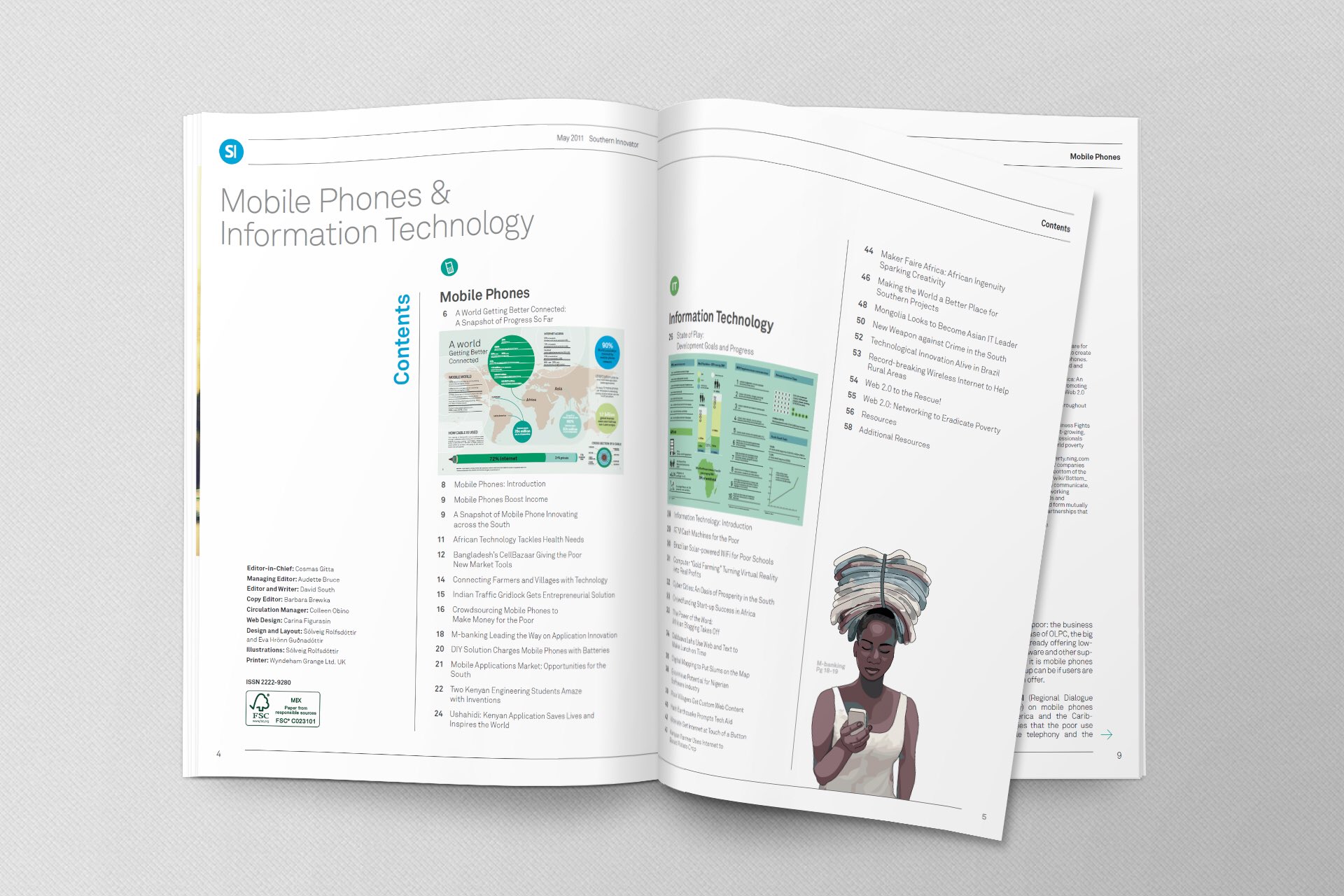
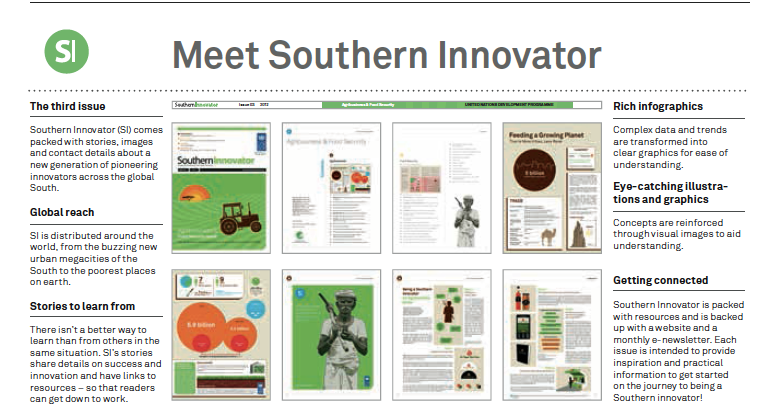
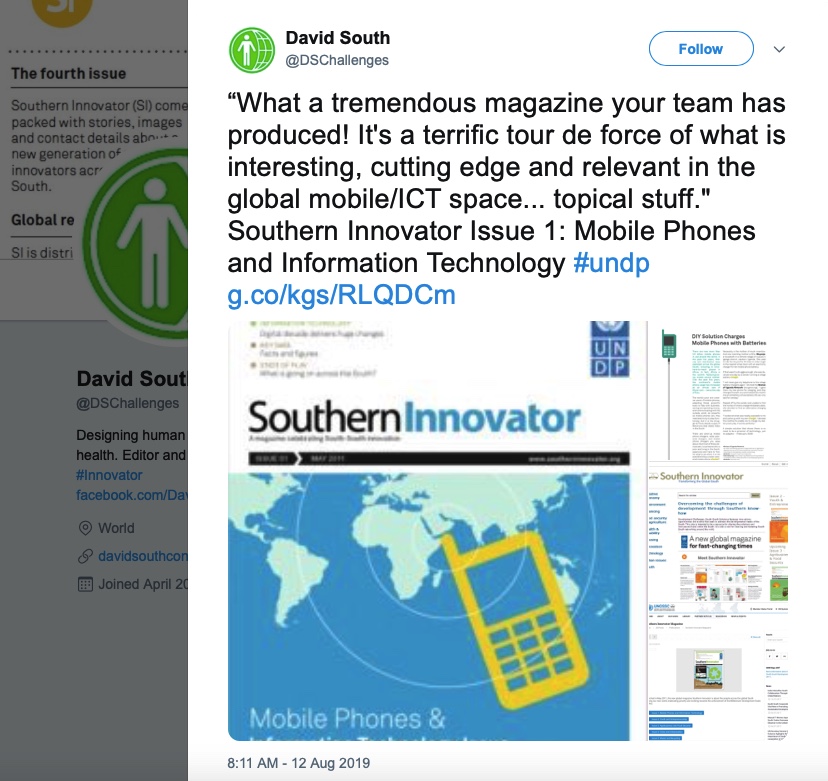
Launched in 2011, Southern Innovator’s first issue on mobile phones and information technology proved highly influential, profiling the work of a new generation of innovators. It has been cited in books, papers and strategic plans.
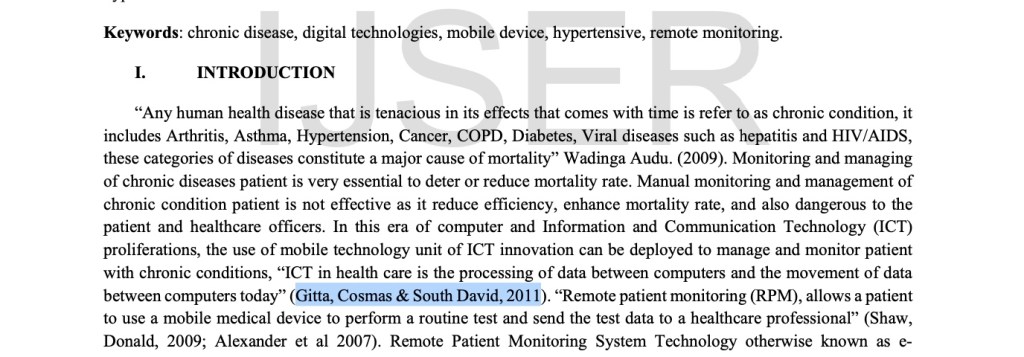
Southern Innovator Magazine Issue 1: Mobile Phones and Information TechnologyCitation in Using Mobile-Enabled Devices for Engagement and Monitoring of Patient with Chronic Disease: Hypertensive Case in the International Journal of Scientific & Engineering Research Volume 10, Issue 4, April 2019 (ISSN 2229-5518).









 David South Consulting
You must be logged in to post a comment.