Tag: Southern Innovator issue 1

  • Arab World Domain Name Opportunity Huge Economic Help

    Arab World Domain Name Opportunity Huge Economic Help

    By David SouthDevelopment Challenges, South-South Solutions

    SOUTH-SOUTH CASE STUDY

    With the so-called Arab Spring still unfolding across much of the Arabic-speaking world, it is easy to miss a rising new economic opportunity: The introduction of an Arabic domain name system for the Internet.

    The explosion in mobile phones in the Arab world has dramatically increased the number of people who can now access the Internet. One Arabic financial website put the number of people who can now access the Internet in one way or another in the Arab world as 75 million (www.nuqudy.com). As highlighted in the 2003 Arab Human Development Report (AHDR), Arabic-speaking countries have been at a knowledge disadvantage for some time: more than 270 million citizens have access to fewer books than other languages, slower growth economies, and greater illiteracy than the faster-growing emerging economies. At the time, the AHDR found there were just 18 computers per 1,000 people compared to a global average of 78. And just 1.6 percent of Arabs had Internet access, one of the lowest ratios in the world (AHDR 2003).

    Since the dawn of the Internet, Latin script has been used exclusively for top-level web domain names, the addresses that end .com, .org and so on. That has been a big obstacle for users of non-Latin script languages like Arabic. It is estimated just 10 percent of people in the Arab world speak English. Many of the resources on the Internet and its utility have been lost to these people. But by using Arabic domain names, there will be a consistency and no more guesswork.

    A typical problem in Latin transliterations of Arabic is the conundrum as to either using El or Al as the prefix to a word. This problem is eliminated when Arabic is used.

    The Arab world is also very mixed, including the resource-rich, cash-rich Gulf States – Kuwait, Qatar, United Arab Emirates, Saudi Arabia, Oman and Bahrain – and states with high rates of poverty such as Egypt, Djibouti and Yemen.

    The protests and uprisings this year in Tunisia, Egypt and elsewhere – with their Facebook pages and Twitter streams – have shown that a growing group of highly Internet-savvy young people is emerging in the Arab world. But for many without the education or the resources, access to knowledge still remains weak. But armed with Internet-capable mobile phones and Arabic language domain names, rapid change is now possible.

    The number of books published in Arabic is notoriously relatively low, and print runs are small. Arabic language books make up just 1.1 percent of world production.

    The AHDR reports have called this knowledge deficit a direct obstacle to human development in Arab countries.

    But things are changing and the rise of Arabic domain names offers the potential for an explosion in Arabic language Internet content.

    In May 2010 ICANN, the world’s Internet domain authority, decided to allow top-level domains in non-Latin script. For Arabic speakers, it started this program in Egypt, Saudi Arabia and the United Arab Emirates.

    As a sign of the importance of Arabic participation in future growth of the Internet, this year’s World Summit for the Information Society (WSIS) held in Geneva, Switzerland in May 2011 was sponsored by the United Arab Emirates (UAE).

    A catchy domain name has many advantages. For Arabic speakers, this means they can type in Arabic domain names for websites and even do it right to left, as they do in print.

    In 2009, the first Arabic domain name was grabbed by Egypt. As the Internet naming authority, the Internet Corporation for Assigned Names and Numbers (ICANN) (www.icann.org), started to allow the registering of non-Latin script names. The domain was for the Arabic word for Egypt or “.masr”.

    As an early adopter, Egypt sees it as an important part of bringing more Arabic speakers online. George Victor, from the Egyptian National Telecom Regulatory Authority, told the BBC: “We believe that this is a great step that will open new horizons for many e-services in Egypt, and it will have its direct impact, enlarging the number of online users.”

    Victor believes using Arabic builds trust.

    “Having a domain name in your own language is a point of having a local identity,” he said.

    “When talking about Arabic domain names, we are talking about having users which are not online now. People with languages disabilities – people who are having language as a barrier to connect online.”

    From now on Internet address names will be able to end with almost any word in any language, offering organizations around the world the opportunity to market their brand, products, community or cause in new and innovative ways.

    The advantages of registering an Arabic domain name are numerous. They include clear improvements to business and trade: an ability to protect a trademark, better communication with Arabic customers, better Arabic-language advertising opportunities, better memorability for Arabic domain names because they will be in the Arabic language, and greater access to Arabic customers.

    But there are also significant improvements to how the Internet functions in the Arabic world. Search results on Arabic search engines will be more precise with Arabic domain names; catchy, memorable domain names will be a spur to the advertising and marketing industries; and a more Arab-friendly Internet will draw in more Arabic-speaking Internet users, helping them to enjoy the fruits of this great technological advance just as speakers of other languages have.

    In March 2011, the Gulf state of Qatar enthusiastically started to offer Arabic domain names.

    “The launch of Qatar’s Arabic top-level domain names is a major milestone as we work to build a more digitally inclusive society,” said Dr. Hessa Al Jaber, Secretary General of the Supreme Council of Information and Communication Technology, which will manage Qatar’s Internet domain names through the Qatar Domains Registry.

    “As more organizations and individuals begin adopting Arabic domain names, the Internet will literally be opened up to broad new audiences. The Arab world represents a region with enormous potential for growth both in terms of usage and the creation of new digital content, especially Arabic content.”

    ICANN’s President and Chief Executive, Rod Beckstrom, sees this as a new phase for the Internet: “ICANN has opened the Internet’s naming system to unleash the global human imagination. Today’s decision respects the rights of groups to create new Top Level Domains in any language or script. We hope this allows the domain system to better serve all of mankind.”

    Published: July 2011

    Resources

    1) Watch the ICANN educational video “Get Ready for the Next Big Thing”, explaining how domain names work and what the changes mean. Website: http://www.icann.org

    https://davidsouthconsulting.org/2022/10/26/africa-to-get-own-internet-domain/

    https://davidsouthconsulting.org/2022/11/11/berber-hip-hop-helps-re-ignite-culture-and-economy/

    https://davidsouthconsulting.org/2020/12/04/data-surge-across-global-south-promises-to-re-shape-the-internet/

    https://davidsouthconsulting.org/2022/02/11/egyptian-youth-turns-plastic-waste-into-fuel/

    https://davidsouthconsulting.org/2022/11/11/innovation-cairos-green-technology-pioneers/

    https://davidsouthconsulting.org/2022/10/29/new-apps-make-driving-and-travelling-in-egypt-easier-safer/

    https://davidsouthconsulting.org/2022/10/21/preserving-beekeeping-livelihoods-in-morocco/

    https://davidsouthconsulting.org/2022/10/21/social-networking-websites-a-way-out-of-poverty/

    Development Challenges, South-South Solutions was launched as an e-newsletter in 2006 by UNDP’s South-South Cooperation Unit (now the United Nations Office for South-South Cooperation) based in New York, USA. It led on profiling the rise of the global South as an economic powerhouse and was one of the first regular publications to champion the global South’s innovators, entrepreneurs, and pioneers. It tracked the key trends that are now so profoundly reshaping how development is seen and done. This includes the rapid take-up of mobile phones and information technology in the global South (as profiled in the first issue of magazine Southern Innovator), the move to becoming a majority urban world, a growing global innovator culture, and the plethora of solutions being developed in the global South to tackle its problems and improve living conditions and boost human development. The success of the e-newsletter led to the launch of the magazine Southern Innovator. 

    Creative Commons License

    This work is licensed under a
    Creative Commons Attribution-Noncommercial-No Derivative Works 3.0 License.

    ORCID iD: https://orcid.org/0000-0001-5311-1052.

    © David South Consulting 2023

  • Africa to Get Own Internet Domain

    Africa to Get Own Internet Domain

    By David SouthDevelopment Challenges, South-South Solutions

    SOUTH-SOUTH CASE STUDY

    Africa is in the midst of an Internet revolution that is set only to accelerate. The continent is one of the last places to experience the information technology revolution that has swept the world in the past two decades.

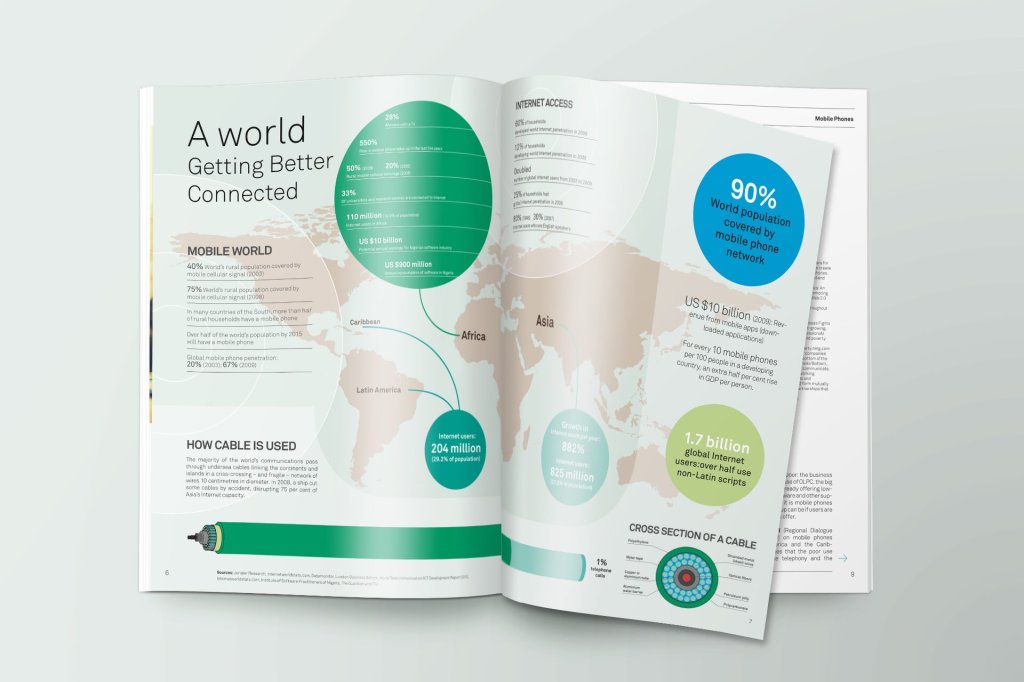
    Africa has been at a disadvantage for several reasons, the most basic of which has been the lack of bandwidth capacity available from the undersea cables that connect other continents to the Internet. A map showing the world’s undersea cable links says it all: the majority of traffic goes between Europe and the United States (http://www.telegeography.com/telecom-resources/telegeography-infographics/submarine-cable-map/).

    But this is changing: a glance at recent developments with the launching of the Seacom, EASSy, MainOne and other cables shows a continent getting better connected by the year (http://manypossibilities.net/african-undersea-cables/).

    With seven out of the 10 fastest-growing economies in the world between 2011 and 2015 projected to be in sub-Saharan Africa, the conditions are ripe to grow African Internet businesses. For example, Ghana, with its booming information technology sector, boasted 13 percent economic growth last year, among the fastest in the world.

    In eight of the past 10 years, sub-Saharan Africa has grown faster than Asia (The Globe and Mail).

    While Africa has come late to the Internet party, the continent can benefit from two decades of experience elsewhere to avoid making the mistakes others have. Africa can upload tried and tested Internet platforms and can also create new, Africa-specific platforms that tackle the continent’s own needs and challenges.

    One of the ways to make the most of the opportunities presented by the Internet is to have an Africa-specific Internet domain name. A domain name (http://en.wikipedia.org/wiki/Domain_name) is the suffix placed after the period in Internet URL (uniform resource locator) (http://en.wikipedia.org/wiki/Uniform_resource_locator) addresses. Common ones familiar to most people who use the Internet include .com (for commercial websites), .org (for non-profit websites and organizations), .co.uk (for British businesses) or .ca (for Canadian organizations).

    The dot Africa (.africa) domain name will be available in the next 15 months according to the Internet Corporation for Assigned Names and Numbers (ICANN) (http://www.icann.org/). It is currently reviewing 500 African organizations that have expressed interest in managing the domain name registrations, and will choose one at the beginning of 2013.

    Countries such as Kenya and South Africa – two places in Africa with booming information technology sectors – are hoping to make the most of the new dot Africa domain name.

    The idea is to use the dot Africa domain name to build a stronger brand for the continent’s Internet that will be bigger than the individual country domain names. Sophia Bekele, executive director of DotConnectAfrica, told CNN the suffixes for individual African countries had proven unpopular during the decade since their introduction.

    Her organization found that 80 per cent of African domain name registrants had opted for “.com” or “.org” suffixes, which were price competitive, reliable to register and had wide recognition.

    The country-level domain names suffered from being “usually owned by governments, and governments are typically not very good at marketing,” she told CNN.

    Bekele’s research found young developers involved in creating local content felt a stronger affinity with the “.africa” suffix than to the “.com” domains. And the new suffix will let companies unify their presence across the continent under a single online brand.

    A major benefit of the “.africa” domain will be that proceeds from African domain registrations remain on the continent, rather than flowing offshore. DotConnectAfrica says it plans to reinvest surpluses into developing the African Internet sector.

    The African Union Commission (http://www.au.int/en/commission) is also looking to register the .afrique (French language websites) and .afriqia (Arabic language websites).

    The AUC’s head of information society, Moctar Yedaly, told CNN the commission’s vision for the .africa domain is not just commercial.

    “It may well be a very good business in terms of money generating. If it may generate some revenue we can use for the development of ICT in Africa, then that is all very good, but that’s not my primary goal,” he told CNN. “My primary goal is to ensure the identity of Africa, the image, the culture are well-maintained.”

    Published: October 2012

    Resources

    1) The Wikipedia page on the .africa initiative. Website: http://en.wikipedia.org/wiki/.africa

    2) ICANN: To reach another person on the Internet you have to type an address into your computer — a name or a number. That address must be unique so computers know where to find each other. ICANN coordinates these unique identifiers across the world.  Website: http://www.icann.org/

    3) DotConnectAfrica, a non-profit organization registered in Mauritius, is one of the is trying win the right to manage the dot africa name space for businesses and individuals across the continent. Website: http://www.dotconnectafrica.org/

    4) Dot.Africa: Dot.Africa is specialised in realising internet access for international organisations with sites in Africa. Website: http://www.dotafrica.com/about/index.html 

    https://davidsouthconsulting.org/2022/11/21/africa/

    https://davidsouthconsulting.org/2022/11/11/african-breakthroughs-to-make-life-better/

    https://davidsouthconsulting.org/2022/11/19/african-culture-as-big-business/

    https://davidsouthconsulting.org/2022/10/26/arab-world-domain-name-opportunity-huge-economic-help/

    https://davidsouthconsulting.org/2022/10/04/the-brck-kenyan-developed-solution-to-boost-internet-access/

    https://davidsouthconsulting.org/2022/11/23/kenyan-farmer-uses-internet-to-boost-potato-farm/

    https://davidsouthconsulting.org/2022/10/17/mapping-to-protect-kenyas-environment-the-emazingira-solution/

    https://davidsouthconsulting.org/2020/11/30/nollywood-booming-nigerian-film-industry/

    https://davidsouthconsulting.org/2021/03/09/the-power-of-the-word-african-blogging-and-books/

    https://davidsouthconsulting.org/2022/03/30/riverwood-kenyan-super-fast-super-cheap-filmmaking/

    https://davidsouthconsulting.org/2022/10/10/wireless-internet-culture-helping-zimbabwe-economy-recover/

    Development Challenges, South-South Solutions was launched as an e-newsletter in 2006 by UNDP’s South-South Cooperation Unit (now the United Nations Office for South-South Cooperation) based in New York, USA. It led on profiling the rise of the global South as an economic powerhouse and was one of the first regular publications to champion the global South’s innovators, entrepreneurs, and pioneers. It tracked the key trends that are now so profoundly reshaping how development is seen and done. This includes the rapid take-up of mobile phones and information technology in the global South (as profiled in the first issue of magazine Southern Innovator), the move to becoming a majority urban world, a growing global innovator culture, and the plethora of solutions being developed in the global South to tackle its problems and improve living conditions and boost human development. The success of the e-newsletter led to the launch of the magazine Southern Innovator. 
    Creative Commons License

    This work is licensed under a
    Creative Commons Attribution-Noncommercial-No Derivative Works 3.0 License.

    ORCID iD: https://orcid.org/0000-0001-5311-1052.

    © David South Consulting 2023

  • Flurry of Anti-poverty Innovations

    Flurry of Anti-poverty Innovations

    By David SouthDevelopment Challenges, South-South Solutions

    SOUTH-SOUTH CASE STUDY

    Innovation is key to transforming the lives of the world’s four billion poor. And it is at the core of much of the new thinking these days. While the world’s poor can’t rely on political developments, or wider macro-economic events to go their way, they can harness the power of invention, innovation and self-reliance to make big changes in the quality of their lives and increase income – and so can those who want to help them. New York Times journalist and author Thomas Friedman put it like this: “Africa needs many things, but most of all it needs capitalists who can start and run legal companies. More Bill Gateses, fewer foundations. People grow out of poverty when they create small businesses that employ their neighbours. Nothing else lasts.”

    In the 1940s, Austrian economist Joseph Schumpeter wrote that “the function of entrepreneurs is to reform or revolutionise the pattern of production.” Schumpeter’s definition remains at the core of an entrepreneurial approach that focuses on innovation and enterprise as a means of addressing social needs. “Social innovators” are pragmatic and embrace innovation to tackle social problems through both for-profit and non-profit models.

    International Development Enterprises India (IDEI) is a non-profit that uses product invention to transform the lives of the poor and tackle hunger and malnutrition. Its approach is to take existing technologies and adapt them, reducing costs and improving effectiveness. By constantly evolving the design, they can focus in on making it cheap and relevant.

    One innovation is the Treadle Pump: a foot operated, water pump for small plots of land. It enables crops to be grown in winter and summer – no need to rely on rain. And since women are key to farm life, it is physically easy for women to use. So far more than 350,000 small farms are using it. It has been calculated the pump increases household incomes by a minimum of US $100/year.

    Another of their innovations is the Affordable Drip Irrigation Technology Intervention. While drip irrigation systems have been for sale in India for the past 15 years, they were not relevant or affordable for small and marginal farms. IDEI adapted these technologies during trials from 1997 to 2000. Existing technologies suffer from two drawbacks: they are complicated to maintain and they are expensive to buy. A big challenge was demystifying the idea that crop irrigation methods were for only the big orchards. The irrigation systems are sold as kits and are scalable so that farmers can expand their systems if they want. IDEI has sold over 85,000 of the various irrigation kits.

    Both inventions are designed to mimic traditional technologies and are inexpensive, thus maximising take-up by small farmers, who can recover the cost within one season of crops.

    They not only do the research and development and product design and manufacturing, but also set up the vertically integrated marketing and sales network and make it viable for the private sector to step up and sell the kits.

    Paul Polak, the founder of the global International Development Enterprises, believes progress is only possible if products are sold at a fair market price. “When you give things away, you lack discipline in how you design them because you don’t have to get feedback from the customer,” he said.

    In the village of Otse, Botswana in southern Africa, the Godisa Technologies Trust has brought affordable solar-powered hearing aids to the poor. Most of the employees are deaf, and as a non-profit social enterprise, its battery chargers – and its branded Solar Aid digital behind-the-ear (BTE) hearing aid – are all for use in developing countries. It is estimated over 600 million people suffer from some form of hearing impairment. According to the World Health Organization, 278 million people in the world are affected by moderate hearing loss. Yet the global production of hearing aids does not come anywhere close to meeting the need.

    The Solar Aid needs only six to eight hours of sunlight to recharge for a full week. And it is fully compliant with WHO guidelines. Conventional hearing aids and batteries are very expensive and often not locally available. Solar Aid batteries can take 400 charges before being replaced.

    The Solar Aid hearing aid was developed through field testing, funds were raised for further design improvements, and it went on to win several awards. But it initially failed to earn back its production costs and so the Godisa Technologies Trust was established to sweat the details on making it sustainable. It was developed in partnership with the Botswana Technology Centre,

    “I want to help other deaf people to have access to education training and employment. I would like to use my skills and opportunities to help other deaf people achieve their goals,” said one of Godisa’s technicians, Sarah Phiri. So successful are these hearing aids, there is interest around the world, including in Canada.

    Adequate street lighting has been proven to cut down muggings and improve public safety, reduce traffic accidents, and boost business confidence in neighbourhoods because people feel safe going there. StarSight’s street lamps combine solar-powered street lighting and internet access in a wireless configuration, freeing up the lighting poles from needing to access the main power and telephone grids. Each one contains VoIP, wi-fi broadband, CCTV and are being rolled out in Istanbul.

    StarSight street lamp poles, designed in Turkey, are also being rolled out in Martinique, Republic of Congo, Cameroon, and Cote d-Ivoire. StarSight’s goal is to install 70,000 street lamps by 2011. Malaysia and Indonesia are next.

    d.light design is a social enterprise targeting the 1.6 billion people who rely on kerosene oil to light their lanterns, or use candles. There is an ambitious goal behind this business: they want to replace all the kerosene lanterns in the world with their lights within the next ten years. They use light emitting diode (LED) technology and are about commercializing light and power solutions for families living without electricity in emerging markets.

    Better lighting has many benefits, including helping children and adults to study and learn during dark hours. Importantly, it will make the air inside dwellings cleaner and the environment safer without the risk of fire. Indoor air pollution is one of the biggest killers of children under five in India. UNDP has found that families with improved lighting see a 30 per cent increase in their income because they can keep doing things at night.

    On high beam, the lights last five hours; on low beam, they last for 200 hours without a charge. It can be re-charged by solar panels or by normal electric outlet. They promise consumers can expect to save $150 over five years. They have received additional support from the Acumen Fund to enter the peri-urban and, later, the rural market in India.

    Published: December 2007

    Resources

    • Rockefeller Foundation Innovation for Development Initiative: It will “spur the development of solutions to the challenges facing poor or vulnerable people around the world.”
      Team leader: Maria Blair, email: Innovation_dev@rockfound.org
    • Pratt Design Incubator for Sustainable Innovation: It brings together the entrepreneurial talents of designers, artists and architects with one goal: to link the social entrepreneur with the business of design. Budding social entrepreneurs get start-up support, design help and connection to mentors.
    • E and Co: An investor providing seed funding to energy entrepreneurs in developing countries.
    • SEAF (Small Enterprise Assistance Fund): A global investment firm focused on helping small companies and entrepreneurs in emerging markets, and those underserved by traditional sources of capital.
    • Microplace: An online marketplace to connect retail investors (anybody looking to invest US $100 or more) with microfinance organisations looking for funds.

    https://davidsouthconsulting.org/2022/02/17/african-digital-laser-breakthrough-promises-future-innovation/

    https://davidsouthconsulting.org/2022/10/05/african-innovation-eco-system-taking-shape/

    https://davidsouthconsulting.org/2021/05/18/african-innovation-helps-make-banking-transactions-safer/

    https://davidsouthconsulting.org/2022/10/10/bringing-the-invention-and-innovation-mindset-to-young-kenyans/

    https://davidsouthconsulting.org/2020/04/25/china-looking-to-lead-on-robot-innovation/

    https://davidsouthconsulting.org/2021/03/24/frugal-innovation-trend-meets-global-souths-innovation-culture/

    https://davidsouthconsulting.org/2022/11/16/housing-innovation-in-souths-urban-areas/

    https://davidsouthconsulting.org/2017/10/18/innovation-agenda-and-timeline-2007-2015/

    https://davidsouthconsulting.org/2022/11/11/innovation-cairos-green-technology-pioneers/

    https://davidsouthconsulting.org/2020/12/14/innovation-in-growing-cities-to-prevent-social-exclusion/

    https://davidsouthconsulting.org/2022/04/28/innovation-in-the-slums-can-bring-peace-and-prosperity/

    https://davidsouthconsulting.org/2020/04/27/innovation-from-the-global-south/

    https://davidsouthconsulting.org/2021/03/04/innovation-villages-tackling-mdgs/

    https://davidsouthconsulting.org/2021/10/22/innovations-in-green-economy-top-three-agenda/

    https://davidsouthconsulting.org/2022/10/27/kenyan-mobile-phone-innovations/

    https://davidsouthconsulting.org/2021/03/02/new-3d-technology-makes-innovation-breakthrough-and-puts-mind-over-matter/

    https://davidsouthconsulting.org/2022/10/09/next-generation-of-innovation-for-the-grassroots/

    https://davidsouthconsulting.org/2022/04/08/technological-innovation-alive-in-brazil/

    Development Challenges, South-South Solutions was launched as an e-newsletter in 2006 by UNDP’s South-South Cooperation Unit (now the United Nations Office for South-South Cooperation) based in New York, USA. It led on profiling the rise of the global South as an economic powerhouse and was one of the first regular publications to champion the global South’s innovators, entrepreneurs, and pioneers. It tracked the key trends that are now so profoundly reshaping how development is seen and done. This includes the rapid take-up of mobile phones and information technology in the global South (as profiled in the first issue of magazine Southern Innovator), the move to becoming a majority urban world, a growing global innovator culture, and the plethora of solutions being developed in the global South to tackle its problems and improve living conditions and boost human development. The success of the e-newsletter led to the launch of the magazine Southern Innovator. 

    https://davidsouthconsulting.org/2022/11/01/southern-innovator-magazine-2010-2014/

    Creative Commons License

    This work is licensed under a
    Creative Commons Attribution-Noncommercial-No Derivative Works 3.0 License.

    ORCID iD: https://orcid.org/0000-0001-5311-1052.

    © David South Consulting 2023

  • Social Networking Websites: A Way Out of Poverty

    Social Networking Websites: A Way Out of Poverty

    By David SouthDevelopment Challenges, South-South Solutions

    SOUTH-SOUTH CASE STUDY

    Social networking websites also known as, Web 2.0 – the name given to the new wave of internet businesses and websites such as YouTube and MySpace that are transforming the way people interact with the Web – has been dubbed the social web for its power to bring people together. The label has been derided as a marketing gimmick by some, but many argue there are a number of characteristics to Web 2.0 that make it something different and a valuable tool for entrepreneurs seeking ways out of poverty.

    The new Web 2.0 applications offer many free software tools stored online, from accounting and business related tools, to new multimedia ways to communicate for free. Unlike Web 1.0 sites, which offered information to passive users, Web 2.0 sites allow interaction and comment. These qualities have meant Web 2.0 can be used to build communities and social and business networks. By being able to store vast quantities of information online, it becomes faster to work and reduces the painful delays brought on by slow connections.

    All these new tools are making it easier and easier for entrepreneurs to work from home, in internet centres, or anywhere there is a wireless connection, and is slashing the costs of managing a business. All the applications are online so there is no need to be hidebound by one operating system or hardware capability. The number of internet centres has increased significantly all over Asia and Africa, bringing the power of Web 2.0 to millions more people.

    Linking mobile phones and the internet is also remarkable. It is becoming more and more possible in Africa to send messages to weblogs via text messaging, to post photos and videos, or to stay connected with a community, advocacy or business group via messaging to its website.

    “Web 2.0 is a pre-occupation of ours that can be beneficial in fighting poverty,” said Tobias Eigan, founder and co-executive director of Kabissa.org, a web portal dedicated to promoting Web 2.0 in Africa. “It is really relevant for Africa. It makes the internet a read and write function, it is more user-friendly – that dynamic is going to make a big difference. It is so much easier to upload content with Web 2.0. It will build the capacity of local institutions and society and that will improve the lives of people – it will be much easier to fight poverty with this connectivity.”

    Two other champions of the Web 2.0 way out of poverty are Waleed al-Shobakky, science and technology reporter for alJazeera.net, and Jack Imsdahl, a consultant and technology commentator. While they admit subsistence farmers and the illiterate will not directly benefit, those who are students or are working in proximity to computers will definitely benefit. They point out how rapidly mobile phones have been taken up by the poor and that this is being driven by the new services they offer.

    There are still profound obstacles to more rapid take-up, however. Internet connection speeds will have to get better and more will need to be invested in this area. Web 2.0 tools will also need to be adapted to local languages if they hope to get past those who speak major web languages like English.

    Entrepreneurs in the global South can now easily sign up to a vast array of e-newsletters that are sent to email accounts and keep on top of trends and innovations in their field. The relative anonymity of these email lists mean subscribers are less likely to be judged on their physical circumstances.

    Published: March 2007

    Resources

    Afriville is a Web 2.0 service and an African Caribbean social network started by two Nigerian web entrepreneurs in their twenties, Folabi Ogunkoya and Lawrence Bassey-Oden.

    Afriville is a community website along the lines of the famous MySpace. Users are free to message and post profiles. The difference is that the user is able to choose how closed or open the networks are. The site features a state of the art music management system which allows African and Caribbean artists to get straight in touch with their fans.

    “We have created a solid app(lication) with features that will give the big players a run for their money,” said Ogunkoya.

    African entrepreneurs have already stepped in with other Web 2.0 offerings. These include: Mooziko.com (an African YouTube), Afribian.com (news sharing), Afriqueka.com (social networking), Yesnomayb (online dating).

    Both Yahoo! And Google offer extensive free online tools for entrepreneurs and businesses that integrate seamlessly with their email services.

    Kabissa: Space for Change in Africa: An online African web community promoting and supporting the transition to Web 2.0 services in Africa. Offers lots of opportunities to meet people throughout Africa and learn more.

    Alexa: Here can be found a detailed break down by country in Africa of web use and site popularity and trends.

    Digital Divide Network: A website linking together initiatives and offering opportunities to debate current issues and problems.

    Global Voices: An initiative from the Reuters news agency to aggregate the global conversation online from countries outside the US and Western Europe.

    Free Web 2.0 tools for entrepreneurs:

    Wikis: Here is a detailed article on wikis – collaborative websites that allow authorised users to rapidly and easily change the content of pages – and a detailed list of free or low-cost wiki services.

    >> Blogging (an online diary):

    Blogger.com – A free, easy-to-use, online service owned by Google.

    BlogPlanet.net – Blog from your mobile phone, free.

    Blogsome.com – An easy-to-use, free service with good support for photos.

    Movable Type – An open-source, free, easy to use, online publishing system popular with bloggers.

    WordPress – Another easy, free, and popular online publishing system popular with bloggers.

    >> Aggregators (these are programmes that gather links and resources off the web):

    AmphetaDesk – One of the first news aggregators to really catch on, it’s still popular.

    Bloglines – Allows bloggers and webmasters to search, subscribe to, publish, and share RSS news feeds online.

    Del.icio.us – Aggregate content from your favorite Web sites and share them with others.

    Feed Demon – The news you want delivered to your desktop.

    Technorati – A real-time search engine that keeps track of what is happening in the world of blogs.

    Techsoup.org is an excellent resource for all the latest developments in Web 2.0 and how to access free or low-cost resources. Being based in the US, it gets the inside scoop on cutting edge developments in Silicon Valley.

    Development Challenges, South-South Solutions was launched as an e-newsletter in 2006 by UNDP’s South-South Cooperation Unit (now the United Nations Office for South-South Cooperation) based in New York, USA. It led on profiling the rise of the global South as an economic powerhouse and was one of the first regular publications to champion the global South’s innovators, entrepreneurs, and pioneers. It tracked the key trends that are now so profoundly reshaping how development is seen and done. This includes the rapid take-up of mobile phones and information technology in the global South (as profiled in the first issue of magazine Southern Innovator), the move to becoming a majority urban world, a growing global innovator culture, and the plethora of solutions being developed in the global South to tackle its problems and improve living conditions and boost human development. The success of the e-newsletter led to the launch of the magazine Southern Innovator. 

    Creative Commons License

    This work is licensed under a
    Creative Commons Attribution-Noncommercial-No Derivative Works 3.0 License.

    ORCID iD: https://orcid.org/0000-0001-5311-1052.

    © David South Consulting 2023