Gowda, Krishna (2023) “Impact of Information Technology (IT) on Society,” ShodhKosh: Journal of Visual and Performing Arts, July-December 2023 4(2), 3513-3517.
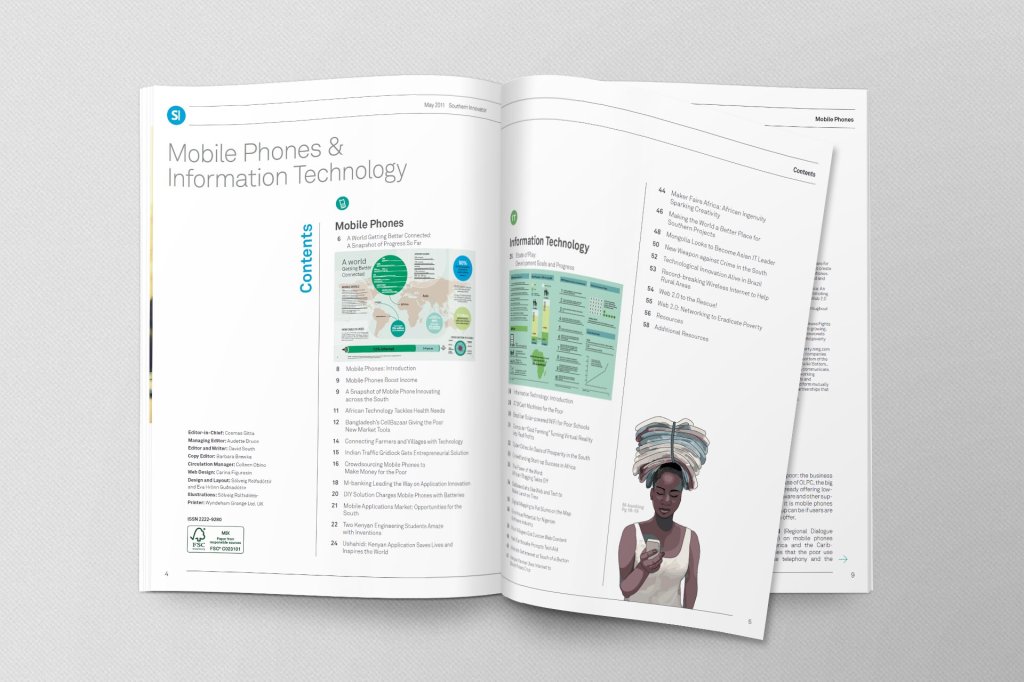
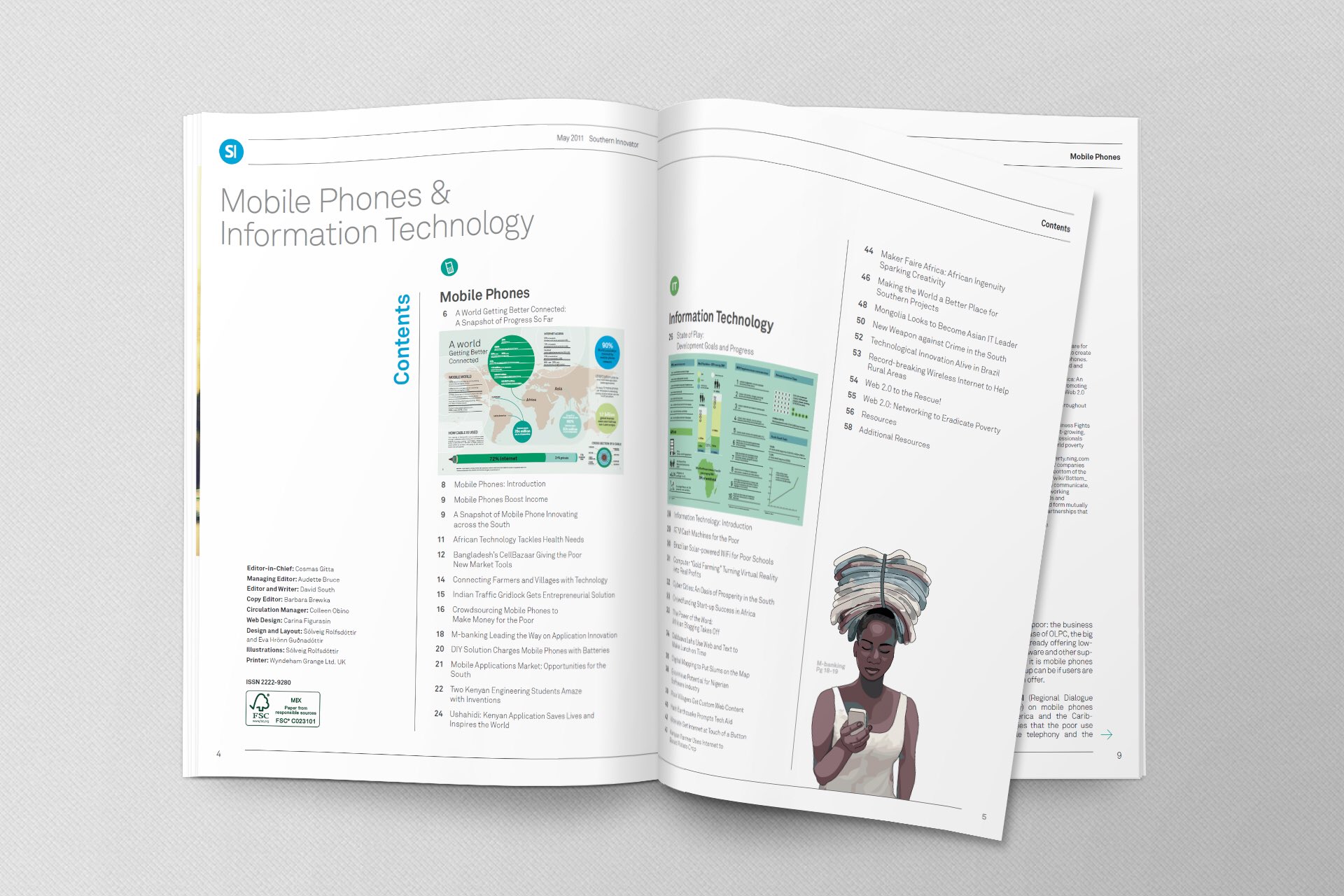
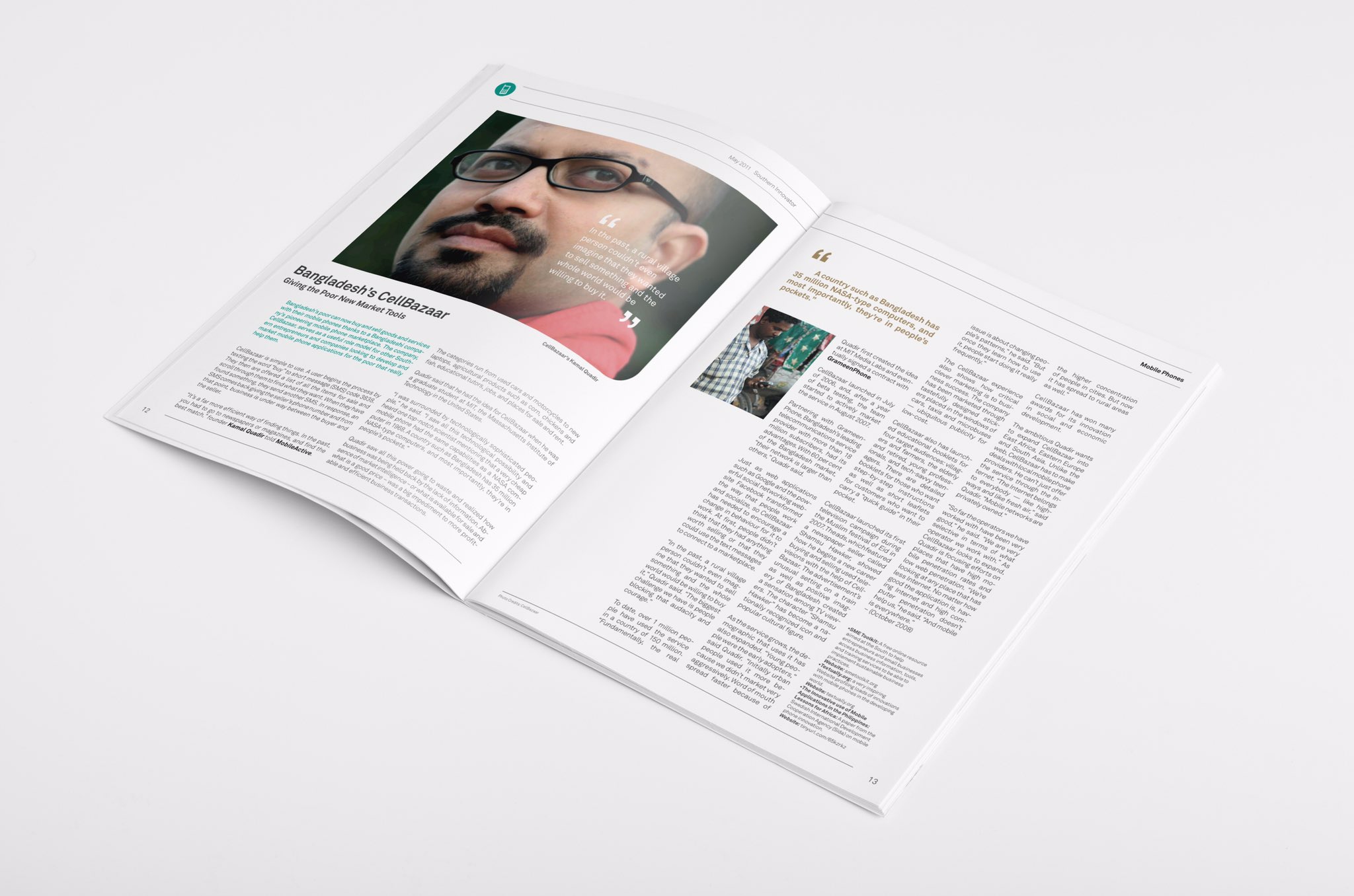
Launched in 2011, Southern Innovator’s first issue on mobile phones and information technology proved highly influential, profiling the work of a new generation of innovators. It has been cited in books, papers and strategic plans.
“What a tremendous magazine your team has produced! It’s a terrific tour de force of what is interesting, cutting edge and relevant in the global mobile/ICT space… Really looking forward to what you produce in issues #2 and #3. This is great, engaging, relevant and topical stuff.”
Rose Shuman, Founder & CEO, Open Mind and Question Box
I had the pleasure of visiting the printing plant to witness the presses rolling with the first issue of new global magazine, Southern Innovator. The magazine has been in careful development and saw its name evolve from Creative Sparks to Southern Innovator. As Shakespeare noted in his play Romeo and Juliet, “What’s in a name? That which we call a rose, by any other name would smell as sweet.” And it is what Southern Innovator is that counts the most.
This first issue is just the beginning of a process, a back-and-forth dialogue with our readers as we refine and improve the magazine to boost its impact. The first issue’s theme – mobile phones and information technology – was chosen because of the sheer dynamism of this area and some jaw-dropping achievements: the growth of mobile phone usage in Africa represents an unprecedented take-up of a new technology, often in some of the poorest places on the planet. That impresses and it seemed right to share information about the amazing people behind this phenomenon and the lessons they learned along the way. It has also become clear in the research behind the monthly e-newsletter Development Challenges, South-South Solutions (published since 2006), that significant future development gains will not happen without the aid of mobile phones and information technology, and, important to note, will need these tools to raise living standards for all the world’s people in an environment of increasing competition and pressure for resources.
Used right, mobile phones and information technology allow the efficient use of resources. But, as anyone who has worked with technology knows, this isn’t a given. Vast sums of money and time can be squandered if technology is not used intelligently, or lessons not learned from past failures. It is hoped Southern Innovator‘s first issue can contribute to a better use of resources, and by taking a broad look at what is happening out there, enlighten readers to new ideas, people and concepts.
Southern Innovator is designed in Iceland by Graphic Designer and Illustrator Solveig Rolfsdottir.
“Question Box was featured in Southern Innovator, a new publication of UNDP that profiles some of the most innovative ideas coming out of the global South. We were pleased to see many friends in the sector profiled as well, such as Ushahidi, Medic Mobile, and TxtEagle. Take a look at the magazine, as it is a great primer on ICT and mobile innovation from around the globe.”
Southern Innovator made its way to the annual Global South-South Development Expo (GSSD Expo), which was held this year in Rome, Italy and was hosted by the Food and Agriculture Organization (FAO) of the United Nations. It was great to meet many of the people presenting their work at the Expo and to catch up with the team at the Special Unit for South-South Cooperation.
Southern Innovator Issue 1 called a “tour de force of what is interesting, cutting edge and relevant in the global mobile/ICT space…”
The rise of social networking websites (http://en.wikipedia.org/wiki/List_of_social_networking_websites) during the past few years has swept across the internet. The popular Facebook (www.facebook.com) site alone has over 350 million users worldwide. In Africa, there are more than 67 million people with access to the internet – just over 6 percent of the population (http://www.internetworldstats.com/stats1.htm). And this phenomenon has even begun to penetrate and influence life in poor places with weak internet infrastructure. A farmer in Kenya, Zack Matere, has boosted his potato crop by turning to Facebook for help.
On his farm in Seregeya near Eldoret, Kenya, Matere used the internet to find a cure for his ailing potato crop.
“I cycled 10 kilometres to the local cyber café, Googled (www.google.com) ‘potato disease,’ he told the BBC, “and discovered that ants were eating the potato stems.
“I checked again and found that one of the solutions was to sprinkle wood ash on the crop.”
Matere also used the internet to find a buyer for his rescued crop, and has been able to triple the price he gets for tree seedlings he sells.
Zack believes he is a bit of pioneer: “I think I am the only farmer in the area who uses the internet.”
He uses his mobile phone to access the internet and it costs him about US 0.66cents a day to do it.
This is a lot of money for small-scale farmers so Zack has a plan to tackle the cost. He will share the information he uncovers on the internet with other farmers in the community by posting it on local community notice boards.
He has noticed some important realities about how people he knows interact with the mobile web. He has found most people do much more with the Net than surfing the mobile web alone at home.
“The internet is quite an individual pursuit. But a notice board is more of a group thing.
“So if I post an item on a notice board on potato disease, for example, the community can read it, talk together and come to a decision.”
One example of the kind of intelligence Matere is able to glean from the internet is reports of cartels deceiving farmers by buying potatoes in over-large 130 kg bags instead of 110 kg bags. Matere takes this information and translates it into Swahili and posts it on community notice boards.
Matere also has to fend off other people looking to use his community’s water supply, which he has done by photographing interlopers with his mobile phone and then posting the photographs on Facebook.
“When they came before, I took photos of what they were doing, posted them on my Facebook page and was able to get assistance,” he said.
“I got in touch with Forest Action Network (http://www.fankenya.org/) and they came back to me quickly saying they would help me protect the catchment area.”
He has also discovered there are more profitable ways to make money for farmers.
“There is a lot of money in tree seedlings or bee hives. So if we can get these young people to use the land in an environmentally (friendly) way, they can get even more money than through farming.”
“I have 400 Facebook friends and I think some of them can buy the honey.”
Matere is philosophical about the future: “I am now seeing the practicality of the internet here in rural Kenya. The problem is I am the only one. That is why the notice board is important. All we need is a bit of relevant information to help us.”
“Once it is made simpler and is more in the local language with more local content, people are going to access the internet here,” he predicts.
Development Challenges, South-South Solutions was launched as an e-newsletter in 2006 by UNDP’s South-South Cooperation Unit (now the United Nations Office for South-South Cooperation) based in New York, USA. It led on profiling the rise of the global South as an economic powerhouse and was one of the first regular publications to champion the global South’s innovators, entrepreneurs, and pioneers. It tracked the key trends that are now so profoundly reshaping how development is seen and done. This includes the rapid take-up of mobile phones and information technology in the global South (as profiled in the first issue of magazine Southern Innovator), the move to becoming a majority urban world, a growing global innovator culture, and the plethora of solutions being developed in the global South to tackle its problems and improve living conditions and boost human development. The success of the e-newsletter led to the launch of the magazine Southern Innovator.




 Southern Innovator is designed in Iceland by Graphic Designer and Illustrator Solveig Rolfsdottir.







 David South Consulting
You must be logged in to post a comment.