An innovative social enterprise is using design to create an energy-efficient cookstove for Kenya. By turning to an experienced Swedish architecture and design firm, the people behind the Baker cookstove wanted to make sure the stove’s design was as efficient as possible and relevant to the customers’ needs, while also making sure it is visually appealing and something a person would proudly want in their home.
The Baker cookstove (bakerproduct.com) has been designed to be a high-quality and desirable product that also accomplishes the goal of saving money for the user. This unique product is being developed and made at the company’s factory in Nairobi, Kenya.
Baker’s owner is Top Third Ventures Global (topthirdventures.com), a social-impact company registered in Kenya and founded in 2011 by American Lucas Belenky and Björn Hammar, a Swedish/Finnish entrepreneur. Their goal is to make sure that everyone in the developing world has access to an affordable, high-quality efficient cookstove.
While cooking is a daily necessity for billions of people, it is also costly and polluting. By switching to energy-efficient cookstoves, families can reduce the cost of cooking daily meals and, if the stove is designed right, cut the amount of pollution generated. One of the great obstacles to the take-up of energy-efficient cookstoves to date has been the absence of sustainable business models to sell and distribute them.
The Baker cookstove, designed as an aspirational product and backed up with a seven-year guarantee, hopes to change this dynamic. If things go to plan, the company hopes to significantly scale up its production based on customers wanting to have a Baker cookstove proudly on display in their home.
The Baker cookstove is the product of a deliberate attempt to use design and a well-thought-out production life cycle to create an item that is eye-catching, effective, and manufactured consistently to a high standard.
Designed by Claesson Koivisto Rune (http://www.ckr.se/), a Swedish architecture and design firm, the Baker cookstove is a sleek, round, modern stove and comes in eye-catching colors such as orange. It could easily fit in with other kitchen products in a high-end design shop. And that is the point: they want people to want the Baker cookstove.
Quality is key, and engineering and design teams constantly monitor the product and make adjustments to the cookstove as they receive feedback from customers.
The Baker cookstove is benefiting from new financing being made available through carbon credits, which its founders believe will bring big changes to the energy-efficient cookstove market over the next 10 years.
Baker’s chief executive, Lucas Belenky, told Southern Innovator magazine – this newsletter’s sister publication – about the thinking behind the Baker cookstove.
SI: What role does design play in the Baker cookstove social enterprise? At what stage did Top Third Ventures start to think through the production life cycle for the Baker cookstove? What did you feel was missing in the other cookstove models currently available on the market?
The Baker cookstove is the cornerstone of the social enterprise. Top Third Ventures is at its core a product company. There are different aspects to the business model to make it work (i.e. carbon credits and big data) but everything depends on the success of the Baker product. We started thinking through the production life cycle from the day the company was founded in late 2011. The Baker is designed for usability, aspirational value, and performance, prioritized in that order. The most important thing is that the Baker is easy to use and does not require its users to change their daily routines or cooking habits. Cooking cultures vary greatly across the developing world so it is important to understand exactly who your customer is and focus on meeting their requirements. When you have a product that is easy to use it needs to be desirable as well. Beyond the service provided, the product should make the customer feel good about themselves. Finally, the Baker cooks the same food with half the fuel and much less smoke.
The priorities seem reversed for other cookstove models on the market. Efficiency comes first, then the aesthetic design, and cultural conformity is last. Hyper-efficient cookstoves are great for health and the environment on paper but the benefits are not realized because widespread adoption isn’t achieved. Most products are imposed through a top-down approach instead of starting with the customer and designing the stove around them.
SI: Why did you choose to have the Baker cookstove designed by Claesson Koivisto Rune, a Swedish architecture and design firm? What were some of the challenges encountered when designing the product and the production life cycle? What advice do you have for other social enterprises looking to offer an appealing product to low-income households?
We wanted the Baker cookstove to be an aspirational product that you use as much because of the performance (less fuel and less smoke) as because it is beautiful. Claesson Koivisto Rune believed in our vision at a very early stage and I doubt we could have gotten where we are today without them. Challenges around the design mainly involve keeping the costs down. Our customers do not have a lot of disposable income so balancing affordability with performance and world-class design is tough.
For other entrepreneurs selling to low-income households my advice is identify your customer, listen to them, and never stop listening. This is obvious to most businesses but for social enterprises sometimes the grant organizations or other dispersers of donor funding become the customer without you noticing.
Finally, often just because the consumer is in a developing country, enterprises neglect aesthetic appeal and branding. Do not do this. Your consumer behaves for the most part like their counterpart in the developed world. They want products that look nice and make them feel good.
SI: What role is information technology playing in the Baker cookstove’s development? How do mobile phones help with reaching customers in Africa? How does offering software products such as Top3Tracker help Baker cookstoves?
Information technology has a huge impact in decentralized areas because it enables cheap flow of information. For Top Third Ventures it allows us to track our sales in real-time, communicate with current and future customers instantly, and gain valuable insights about how to improve the sales pitch and marketing strategy. The Baker cookstoves also depends on carbon finance, which requires a dialogue with current customers to ensure the usage of the cookstove is accurately measured. Information technology such as our Top3 Tracker significantly reduces the cost of accessing carbon finance.
SI: It is said an innovator is somebody who disrupts existing products and ways of doing things. How is Top Third Ventures innovating and disrupting the current approach to energy-efficient cookstove distribution?
We hope to change the way products for low-income households are designed, marketed, and sold. Top Third Ventures’ Baker cookstove embodies our conviction that these products should be customer-centric, have aspirational value, and conform to local cultures. The success of our product will show that consumers in the developing world want the same thing as their counterparts in developed countries.
Top Third is a partner of the Global Alliance for Clean Cookstoves (cleancookstoves.org).
Published: December 2013
Resources
1) Baker cookstove: The website details how the cookstove was developed. Website: bakerproduct.com
2) Top Third Ventures: The company designs, manufactures, and sells its own unique efficient cookstoves made to fit the local cultures and traditions of their customers, supported by a strong brand and world-class customer communication. In addition, Top Third Ventures works with existing manufacturers and distributors to secure carbon financing for their activities through their programmatic CDM activity and electronic data management system. Website: topthirdventures.com
3) Global Alliance for Clean Cookstoves: The Global Alliance for Clean Cookstoves calls for 100 million homes to adopt clean and efficient stoves and fuels by 2020. Website: cleancookstoves.org
Like our content? Help contribute to the costs of keeping it online.
Information technology developments in Africa have long lagged behind those in other parts of the world. But the transformation being brought about by the widespread adoption and use of mobile phones – each one a mini-computer – and the expansion of undersea fibre optic cable connections to Africa are creating the conditions for an exciting new phase of computing growth on the continent.
Despite the global economic crisis, Africa is on course to see annual consumer spending reach US $1.4 trillion by 2020, nearly double the US $860 billion in 2008 (McKinsey). On top of this, by 2050, a projected 63 per cent of Africa’s population will be urban dwellers. With Africa’s middle class the fastest-growing in the world – doubling in less than 20 years – matching computing power with this consuming urban population could unleash a treasure trove of opportunity for information technology entrepreneurs.
These developments are creating the conditions for game-changing computing in the next years. And this is encouraging the creation of a new supercomputer (http://en.wikipedia.org/wiki/Supercomputer) for Africa in Kenya that will double the total number of supercomputers in Africa. Hugely powerful compared to personal or commercial computers, supercomputers use cutting-edge technology to carry out high-speed calculations involving vast quantities of data.
Expanded supercomputing power brings numerous advantages to both economic and human development. It will radically alter what can be accomplished in Africa – allowing mass data processing to be done, highly complex and data dense applications to be run, and very large research projects to be conducted on the continent rather than overseas.
Increasing computing power in Africa will bring in its wake, it is hoped, a surge in economic and research opportunities.
It will help African researchers and scientists to undertake globally competitive projects, rather than seeing this work done overseas. It will also open up a vast range of possibilities for African entrepreneurs and businesses to do complex data processing, modelling and research and will enable them to become more sophisticated operations.
The new supercomputer, the iHub Cluster, is being built in the Kenyan capital by one of Africa’s pioneering information technology hubs – iHub Nairobi (http://ihub.co.ke/pages/home.php) – in partnership with Internet products and services company Google and microchip maker Intel Corporation.
Africa’s first supercomputer is located in South Africa and is ranked 497 in terms of computing power on the list of 500 supercomputers in the world (http://www.top500.org/).
It is located in the “Tsessebe cluster” in Cape Town’s Centre for High Performance Computing (http://www.chpc.ac.za/).
“With mobile devices coming in multiple cores, it is important for developers to be exposed to higher performance computing; we are hoping to debut at a higher level than ‘Tsessebe cluster’,” Jimmy Gitonga, the project team leader for the iHub cluster, told Computer World.
Africa suffers from poor supercomputer capacity and this has had a knock-on affect on everything to do with economic development. The iHub supercomputer hopes to help universities and colleges to gain competitive edge and be able to undertake more complex research in the fields of media, pharmaceuticals and biomedical engineering.
“In Africa, we need to be on top of the mobile scene, its our widest used device,” Gitonga told Computer World.
Some of the practical applications for the iHub supercomputer in East Africa and the Horn of Africa include improving weather forecasting and drought prediction, increasing the ability to give advance warning of droughts and famines in the region.
“Most of the United Nations agencies and international agencies operating in the region have extensive field research on how to tackle natural disasters in the region. Imagine if they had affordable space where they can meet with developers and test resource-hungry applications,” Gitonga said.
The iHub also wants to offer the services of the supercomputer to researchers and organizations who have had to go abroad to have their data processed. The iHub supercomputer hopes to be used by mobile phone developers, gamers, universities and research institutions.
In the last two years, China had pushed the United States out of the number one spot for supercomputers. The Tianhe-1A located at the National Supercomputing Center in Tianjin (http://www.nscc-tj.gov.cn/en/), China, was the fastest computer in the world from October 2010 to June 2011.
For those looking to see how they can make the most of the growing supercomputer capability in Africa, examples from other countries offer a good idea. Supercomputers can be used for weather forecasting, climate research, oil and gas exploration, physical simulations like when testing aircraft, complex modelling for medical research, processing complex social data necessary for delivering effective social programmes or running modern health care systems.
It has been a year since the May 12, 2008 Sichuan earthquake in China that killed more than 70,000 people.
China’s strongest earthquake for more than half a century, with a magnitude of 8.0 (en.wikipedia.org), it devastated large parts of the province of Sichuan. More than 10 million people were made homeless, most of them poor and elderly villagers (cities were not badly damaged).
Getting Sichuan back to normal is critical for not only the province’s people, but for all of China. Sichuan is China’s rice bowl, growing more food than any other province. But despite the abundance of food, Sichuan remains poor and has seen its working age population move away for work. If it is to have a viable future then its communities need to get back to normal as fast as possible – and its farming economy back to full production.
The unprecedented media coverage of the disaster meant people across China saw the scenes of devastation and have since contributed large donations to help with the reconstruction. The Chinese government has pledged to spend US $151 billion on reconstruction projects.
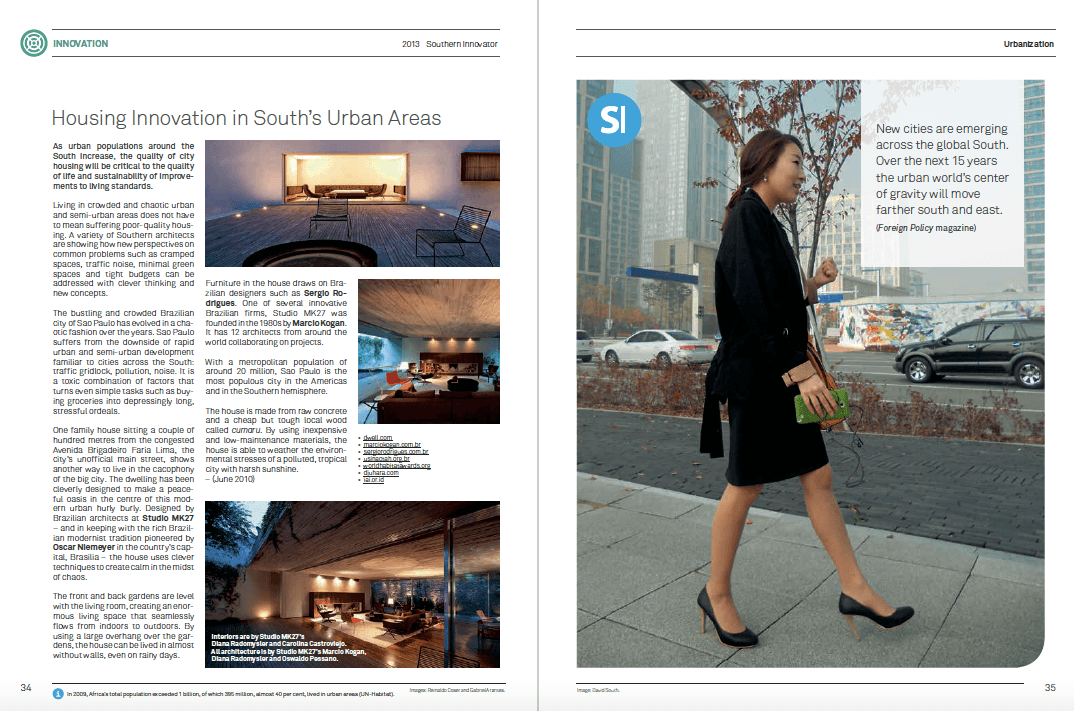
Finding ways to re-house people after large disasters has become an urgent issue over the last five years. From the Asian tsunami to Hurricane Katrina in the United States and multiple hurricane disasters in the Caribbean, restoring communities is critical for the health of the people and the economies they rely on. Experience has shown that temporary shelters have many drawbacks, being usually of poor quality for long-term habitation and a source of health problems.
The temporary shelters erected for the Sichuan homeless are unsuitable for long-term housing: the 12 square metre grey boxes – two sheets of aluminium sandwiching a polystyrene core for insulation – have no heating. The occupants roast inside in the summer and freeze in the winter. They are also located away from the main source of income: the farms.
The dilemma is how to build new, long-term houses that will not cost too much. Inflation has increased the costs of conventional building materials: bricks, cement and steel.
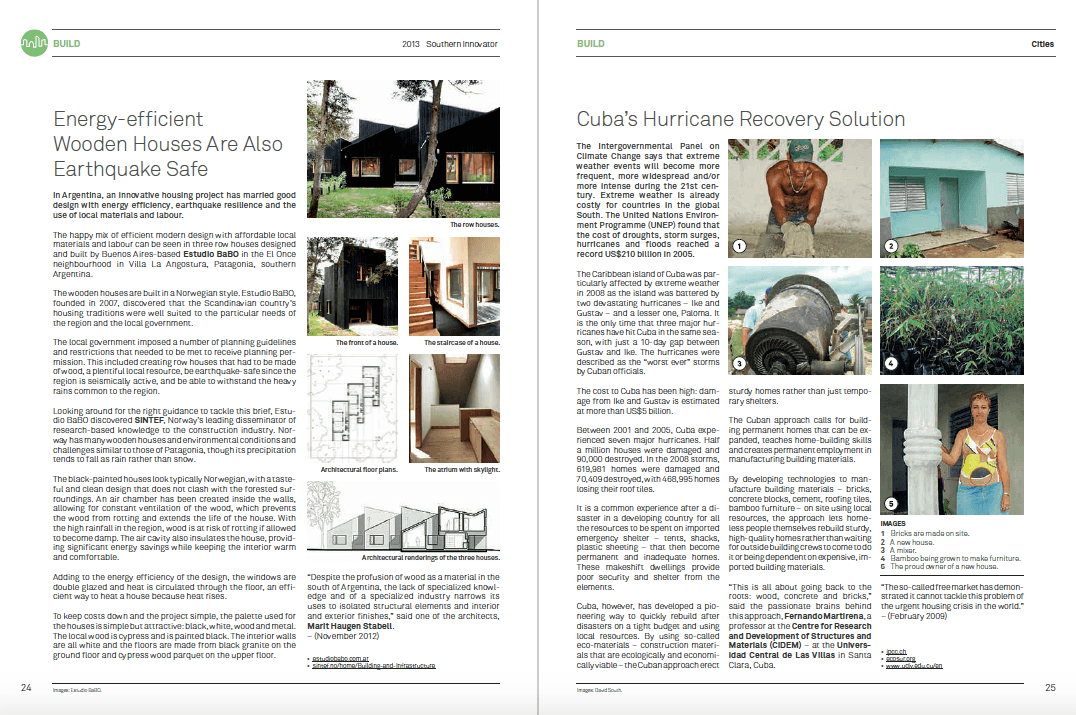
But the use of traditional building materials and home designs offers an alternative. By drawing on the abundant bamboo and wood in Sichuan and by building to traditional designs, cheaper but sturdy and beautiful homes can be built.
An average home now costs around 80,000 yuan (US $11,688). The Chinese government estimates the price is now 820 yuan per square meter for a new home: bamboo homes cost between 300 and 400 yuan per square meter. Government compensation is between 16,000 yuan (US $2,337) and 23,000 yuan (US $3,360) per family. The bamboo houses range in size from 75 to 200 square metres, and in cost from 22,500 yuan to 80,000 yuan for a very large home.
In Daping village, Pengzhou Town, original homes destroyed by the earthquake sit at the edge of a forested hill. Their frames are more or less intact, but the walls and roofs have collapsed. The new houses replacing them are large, two stories high and have solid grey clay tile roofs. The beauty of the designs stands out and sits in stark contrast to the temporary shelters and concrete buildings.
“There are 43 houses and two public buildings being rebuilt in this project,” says team member Hu Rong Rong of the Green Building Research Centre of Xi’an University of Architecture and Technology. “The design and the main building material are based on the ecological and sustainable habitat idea. The place (Sichuan) is rich in bamboo and wood. These natural materials are cheap and friendly to the environment. In some buildings we use light steel which can be also recycled.”
The new homes are built to earthquake resistance standards. Led by Professor LiuJiaping, a team of 15 people from the research centre and two from a design institute developed the home designs and supervised the training of local people. They were joined by 10 people from an NGO called Global Village of Beijing, who managed the project to completion.
“All the designs were discussed with the local people,” continues Hu. “We trained a local construction team, which means the local people would build their own houses by themselves. Both our research center and the local people were involved in developing the home design.
“To get the trust from the local people is a challenge in the project. We resolved it by showing our respect to the local people. Before we started our design we discussed with the local people many times to know what kind of house they like. We built the first house to make them believe us.”
Hu believes it is possible to replicate the homes across Sichuan.
“The design is suitable for other villages in Sichuan which have a similar climate and culture with this village. To rebuild sustainable houses after a disaster we should know well about the local life, environment and culture – try to find the useful technique which was used in their traditional houses and upgrade the traditional house to meet the need of their modern life.”
Others have not been as lucky as these villagers. In the village of Yuan Bao, Chen Jingzhong, 66, has had to build a makeshift shack: “They wanted to get us to build our own houses but they didn’t give us enough money,” Chen told the Telegraph Magazine. “All we could afford was this shack, which we built ourselves, with our own hands and without any help from anyone.”
Published: May 2009
Resources
Architecture for Humanity: By tapping a network of more than 40,000 professionals willing to lend time and expertise to help those who would not otherwise be able to afford their services, they bring design, construction and development services where they are most critically needed. Website: www.architectureforhumanity.org
Chinese Red Cross: The Red Cross Society of China is accepting donations for disaster reconstruction and is coordinating rebuilding efforts in Sichuan Website: http://www.redcross.org.cn/ywzd/
Gerd Niemoeller has developed flat pack, cardboard homes that can be deployed quickly after a disaster and can become permanent homes.Website: http://tinyurl.com/6t6jtf and the company Website: http://www.wall.de/en/home
Global Greenhouse Warming is a website that tracks extreme weather events around the world: drought, flooding, severe storms, severe winter, tropical cyclone, wildfires, and extreme heat waves.Website: www.global-greenhouse-warming.com
The Building and Social Housing Foundation: An independent research organization promoting sustainable development and innovation in housing through collaborative research and knowledge transfer. Website: www.bshf.org
Development Challenges, South-South Solutions was launched as an e-newsletter in 2006 by UNDP’s South-South Cooperation Unit (now the United Nations Office for South-South Cooperation) based in New York, USA. It led on profiling the rise of the global South as an economic powerhouse and was one of the first regular publications to champion the global South’s innovators, entrepreneurs, and pioneers. It tracked the key trends that are now so profoundly reshaping how development is seen and done. This includes the rapid take-up of mobile phones and information technology in the global South (as profiled in the first issue of magazine Southern Innovator), the move to becoming a majority urban world, a growing global innovator culture, and the plethora of solutions being developed in the global South to tackle its problems and improve living conditions and boost human development. The success of the e-newsletter led to the launch of the magazine Southern Innovator.








 David South Consulting
You must be logged in to post a comment.