Tag: South-South Solutions

  • African Bus to Tackle African Roads

    African Bus to Tackle African Roads

    By David SouthDevelopment Challenges, South-South Solutions

    SOUTH-SOUTH CASE STUDY

    Roads in many parts of Africa are rough at best, and hostile to vehicles designed with smooth, flat highways in mind. Even in countries like South Africa, where modern highways are common, a quick turn off the smooth highway to visit many communities will mean tackling makeshift dirt roads. In these conditions, buses imported from Western Europe are at a disadvantage when they hit the bone-jarring reality of potholed roads.

    In the West African country of Ivory Coast, a manufacturer has decided to tackle the problem head on by designing and manufacturing a long-distance passenger bus just for African conditions.

    The engineering arm of the national transport company, Sotra (http://www.sotra.ci/sotraindustries.php) (http://www.sotra.ci/index.php?rub=act), decided it could save money and create a bus better suited to African conditions.

    “We want the transfer of technology in Africa,” Mamadou Coulibaly, Sotra Industries director, told the BBC. “And we want to build our own buses with our specification.

    “In Europe the technology is very sophisticated with lots of electronic devices. In Africa we don’t need this.

    “We just need robust buses because our roads are not very well done like in Europe. This is an African design for Africa.”

    The African bus has fewer seats than European ones, and it can pack 100 people inside. It is a successful formula that has now attracted orders from other African countries.

    Three buses are already in operation and more are in the works on a production line. They are designed and made in the largest city, Abidjan, building on an existing chassis and engine base made by European truck company Iveco. Sotra plans to build 300 buses a year in three models: coach, urban and tourist.

    “I think it’s a good thing,” Isaac Gueu, an Abidjan accountant, told the BBC. “It’ll help students to move about in more comfort.”

    Not only is the accomplishment impressive as an example of made-in-Africa manufacturing, but it was also completed while the country was going through a civil war and political crisis.

    Sotra is an experienced manufacturer, and built its reputation with reliable boat-buses (http://tinyurl.com/bot6fv) that ply the country’s lagoons.

    Africa’s roads lag behind the rest of the world: In 1997, Africa (excluding South Africa) had 171,000 kilometres of paved roads — about 18 percent less than Poland, a country roughly the size of Zimbabwe. As efforts to complete the trans-African highways continue (http://en.wikipedia.org/wiki/Trans-African_Highway_network), the quality of existing roads is deteriorating. In 1992 about 17 percent of sub-Saharan Africa’s primary roads were paved, but by 1998 the figure had fallen to 12 percent (World Bank). More than 80 percent of unpaved roads are only in fair condition and 85 per cent of rural feeder roads are in poor condition and cannot be used during the wet season. In Ethiopia, 70 percent of the population has no access to all-weather roads.

    Africa also has an appalling road accident rate, mainly attributed to the use of minibuses and other makeshift buses. Each year the number of road deaths and disabilities due to road accidents rises. It is estimated if things carry on as they are, the number of yearly traffic deaths across the continent will reach 144,000 by 2020, a 144 percent increase on today’s deaths.

    A properly designed bus is a safer option than trying to pack passengers into a tippy minibus.

    On top of making road passenger travel safer and more comfortable, Sofra is creating jobs in Africa and reducing dependence on imports. Beholden to importing sophisticated goods from outside the continent, Africa’s wealth is spent to the benefit of others, and at the expense of high-value jobs at home.

    Coulibaly is confident Sotra will reach its goal.

    “We have been to school in Europe and we think that we are able today to build our own buses; there are no special difficulties,” he said.

    In Nigeria, Innoson Vehicle Manufacturing Company Limited (INNOVEMCO) (http://innosongroup.com/ ) is, in collaboration with Chinese manufacturers, building a huge auto plant in Nnewi (http://en.wikipedia.org/wiki/Nnewi) where a wide range of commercial and utility vehicles will be produced for the Nigerian market and some countries in West Africa.

    Published: February 2009

    Resources

    • Africar: A South African company making four-wheel drive vehicles. Websites: http://www.africarautomobiles.co.za/africar-home.htm
    • AfriGadget is a website dedicated to showcasing African ingenuity. A team of bloggers and readers contribute their pictures, videos and stories from around the continent. The stories of innovation are inspiring. It is a testament to Africans bending the little they have to their will, using creativity to overcome life’s challenges. Website: http://www.afrigadget.com/

    Development Challenges, South-South Solutions was launched as an e-newsletter in 2006 by UNDP’s South-South Cooperation Unit (now the United Nations Office for South-South Cooperation) based in New York, USA. It led on profiling the rise of the global South as an economic powerhouse and was one of the first regular publications to champion the global South’s innovators, entrepreneurs, and pioneers. It tracked the key trends that are now so profoundly reshaping how development is seen and done. This includes the rapid take-up of mobile phones and information technology in the global South (as profiled in the first issue of magazine Southern Innovator), the move to becoming a majority urban world, a growing global innovator culture, and the plethora of solutions being developed in the global South to tackle its problems and improve living conditions and boost human development. The success of the e-newsletter led to the launch of the magazine Southern Innovator.

    Creative Commons License

    This work is licensed under a
    Creative Commons Attribution-Noncommercial-No Derivative Works 3.0 License.

    ORCID iD: https://orcid.org/0000-0001-5311-1052.

    © David South Consulting 2022
  • Ecotourism to Heal the Scars of the Past

    Ecotourism to Heal the Scars of the Past

    By David SouthDevelopment Challenges, South-South Solutions

    SOUTH-SOUTH CASE STUDY

    The legacy of underdevelopment during the communist era in parts of Eastern Europe is now being seen as an advantage in the global tourism trade. Well off the beaten path for tourists, areas as diverse as Chechnya and Romania are working to turn their rustic rural hinterlands into a strategic advantage in grabbing the market for ecotourists. Ecotourism – tourism that takes people to fragile and beautiful areas – is one of the tourism industry’s fastest growing areas.At stake is the lucrative and ever-growing world tourism market. Global tourist arrivals passed 800 million in 2006, with tourism in the world up by 5.5 per cent (World Tourism Organization), earning US $680 billion globally. In 1993, just seven per cent of travel was nature tourism; that share has now passed 20 per cent.

    Romania, now a member of the European Union, boasts rural countryside like Europe of old: all hillsides are common land and there are no walls or fences to impede the view. Life is heavily dominated by agriculture and the rhythms of farm life.

    Southern Transylvania is a high plateau of wooded hills and valleys and shielded by the Carpathian Mountains.

    “The Carpathians of central and eastern Europe,” said Achim Steiner, head of the UN Environment Programme, “are among the world’s richest regions in terms of biodiversity and pristine landscapes. I have no doubt that the Carpathians, like the Alps, the Himalayas and the Rocky Mountains, will become world famous for walking, hiking, climbing, wildlife watching, photography and similar leisure pursuits.”

    In order to preserve this way of life and generate income, various schemes are encouraging low-key tourism. This takes the form of renovating decaying farm buildings for guesthouses. The guesthouses are kept clean and simple and the focus is on typical local food like hearty stews and soups and pork sausages.

    Much of this has been paid for by the Mihai Emenescu Trust, a charity seeking to preserve the traditions of the Saxon villages.

    Patrick Holden of the Soil Association, a patron of the Mihai Eminescu Trust, thinks the organic agricultural methods of the local farmers could be a model for the rest of Europe.

    Romania is also part of the Organization for Black Sea Economic Cooperation (BSEC), which is taking the lead in promoting ecotourism as an economic development option.

    Ex-communist nation Bulgaria has also turned to ecotourism, launching its “Ecotourism: Naturally Bulgaria” campaign in September.

    Even the once-war-torn Russian republic of Chechnya is trying to radically re-shape people’s perceptions. It is hard to believe, but the former site of a bitter civil war that left the capital Grozny in ruins now wants to be Russia’s Switzerland.

    Shatoy region in southern Chechnya, during Soviet times, saw 20,000 visitors every month to ski, ride horses, and hike in the Caucasus Mountains. The new government plans to spend UK £40 million on new hotels, reconstructing old holiday camps, building spas and health centres. The region’s head of government, Mr Khasukha Demilkhanov, is confident that natural beauty can compete with the West: in the Argun Gorge, he pointed out to the Guardian newspaper, the scene is reminiscent of a 19th century woodcutting. Stone towers litter the hills, alpine meadows are full of wild flowers, the mountains are snow-capped and new roads have been built.

    The Chechens hope to start with Russian holidaymakers and extreme tourists from the West, before moving more into the mainstream market.

    Published: October 2007

    Resources

    • Ecotourism.org: The International Ecotourism Society.
    • Ecotourism Kazakhstan: Kazakhstan has put together a dedicated website on ecotourism.
    • Planeta: one of the first ecotourism resources to go online (since 1994) and still offers plenty of information for those wanting to start a business.

    https://davidsouthconsulting.org/2022/10/20/african-tourism-leads-the-world-and-brings-new-opportunities/

    https://davidsouthconsulting.org/2022/10/20/africas-tourism-sector-can-learn-from-asian-experience/

    https://davidsouthconsulting.org/2022/02/07/boosting-tourism-in-india-with-surfing-culture/

    https://davidsouthconsulting.org/2022/09/27/caribbean-island-st-kitts-goes-green-for-tourism/

    https://davidsouthconsulting.org/2023/02/03/environmental-public-awareness-handbook-case-studies-and-lessons-learned-in-mongolia/

    https://davidsouthconsulting.org/2022/11/21/from-warriors-to-tour-guides/

    https://davidsouthconsulting.org/2022/11/23/kenyan-safari-begins-minutes-from-airport/

    https://davidsouthconsulting.org/2021/08/07/mongolian-green-book/

    https://davidsouthconsulting.org/2022/10/10/a-solution-to-stop-garbage-destroying-tourism/

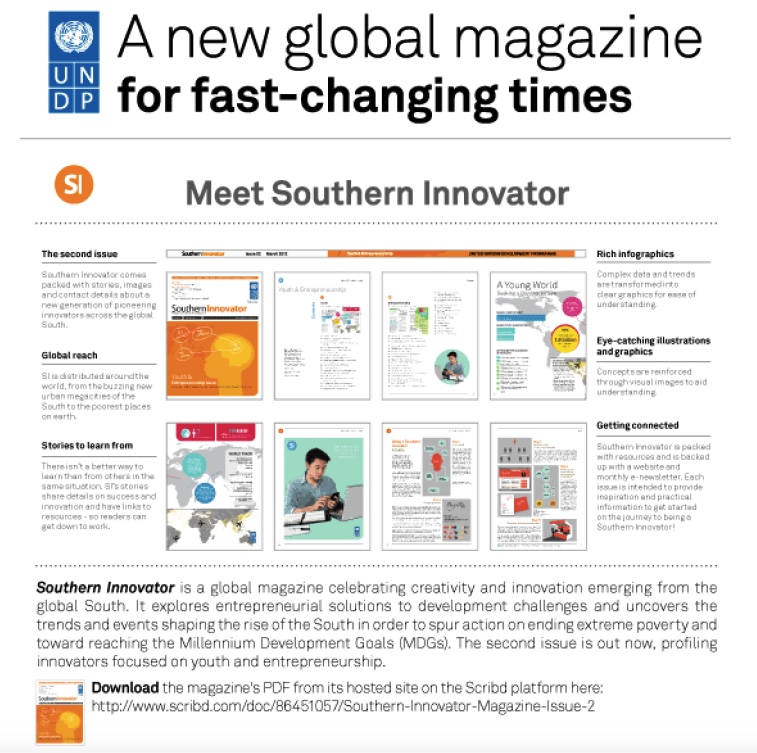
    https://davidsouthconsulting.org/2021/03/05/southern-innovator-issue-2/

    https://davidsouthconsulting.org/2021/03/05/southern-innovator-issue-5/

    https://davidsouthconsulting.org/2023/01/17/war-peace-and-development-may-2018/

    Development Challenges, South-South Solutions was launched as an e-newsletter in 2006 by UNDP’s South-South Cooperation Unit (now the United Nations Office for South-South Cooperation) based in New York, USA. It led on profiling the rise of the global South as an economic powerhouse and was one of the first regular publications to champion the global South’s innovators, entrepreneurs, and pioneers. It tracked the key trends that are now so profoundly reshaping how development is seen and done. This includes the rapid take-up of mobile phones and information technology in the global South (as profiled in the first issue of magazine Southern Innovator), the move to becoming a majority urban world, a growing global innovator culture, and the plethora of solutions being developed in the global South to tackle its problems and improve living conditions and boost human development. The success of the e-newsletter led to the launch of the magazine Southern Innovator.

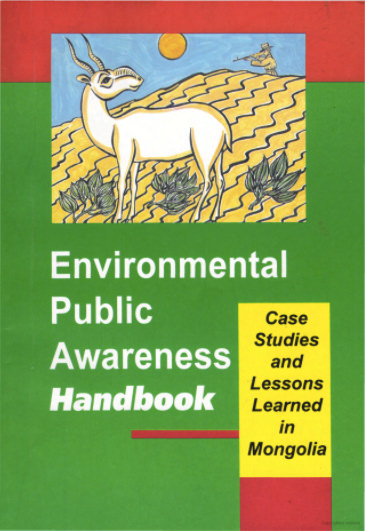
    Environmental Public Awareness Handbook: Case Studies and Lessons Learned in Mongolia by Robert Ferguson.
    Environmental Public Awareness Handbook: Case Studies and Lessons Learned in Mongolia by Robert Ferguson.
    Creative Commons License

    This work is licensed under a
    Creative Commons Attribution-Noncommercial-No Derivative Works 3.0 License.

    ORCID iD: https://orcid.org/0000-0001-5311-1052.

    © David South Consulting 2023

  • Session 4: Political Economy Dimensions of Crisis

    Session 4: Political Economy Dimensions of Crisis

    A Report from the UN Conference on the Social and Political Dimensions of the Global Crisis: Implications for Developing Countries (12-13 November 2009)

    Organised by the United Nations Research Institute for Social Development (UNRISD), Geneva, Switzerland. Held at the Palais des Nations.

    Just as now (2021) 2009 was a year in which the questions revolved around receiving a vaccine (for H1N1) and how best to affirm a person’s identity and citizenship.

    Session 4: Political Economy Dimensions of Crisis

    A message of hope came from Bjorn Beckman of Stockholm University. He believed alternatives lie to the neo-liberal orthodoxy elsewhere, not in welfare capitalism but in places where workers are on the rise. They will provide the backbone to popular movements in the future. And this means new alliances have to be re-defined, the face of the balance of forces being massively against the working class and their organisations.

    The ability of trade unions to defend workers’ rights depends on reaching out to the informal economy, where so many now work.

    The impact of the crisis in South Africa has reinforced opposition to neo-liberalism, where auto and garment workers have suffered greatly. This has led to them pressuring government to introduce more reforms.

    Nigeria chose to push with deregulation in the face of the crisis but found serious opposition. With a government that is corrupt and inefficient, the current crisis intensifies contradictions.

    And he concluded that beleaguered unions in the North can only resist if they ally themselves with the South. The current crisis will not deliver change that is more democratic or increase workers’ rights. Instead, it presents more opportunity to suppress and to extort concessions. In short, no changes to the anti-union logic of neo-liberalism.

    Another country to think it would not be severely affected by the crisis is South Africa. Yet, as Seeraj Mohammed of the University of the Witwatersrand pointed out, this is not the case.

    Conventional wisdom in South Africa thought the economy and the country’s financial institutions were not caught up in the bubble mania. Yet, in reality, the dynamic was the same as was happening in the United States.

    South Africa experienced debt-ridden consumption and the wrong kind of growth. There was limited social and infrastructure investment, property bubbles were allowed to happen, and liberalisation supported the financialisation of the economy. There was a casualisation of jobs, tending towards not high skill. For example, cleaning services rather than manufacturing. And the crisis has just made things worse.

    During the crisis to date, 1 million jobs in manufacturing and services have been lost, many connected to the debt-driven economy. Unemployment is estimated to be between 22 percent and 40 percent.

    There was significant growth in household consumption since 2003. Yet the flow of credit into the country went into financial assets, most of it into mortgages and credit cards. It was not invested.

    Emma Allen from the International Labor Organization (ILO) focused on African cooperatives in the crisis. She found coops, by their structure, were both prescient – they had flagged up systemic problems in the economic system as far back as 2004 – and resilient, continuing to grow their memberships. They were not, however, immune to being hurt. In Africa, many members of financial coops had made the mistake of investing their funds in pyramid schemes/scams that then went bust in the crisis.

    Ying Yu from the University of Durham found Chinese workers were withdrawing from the public pension system in the crisis. The vast number of migrant workers within China have learned protests are effective, and are using the internet to mobilise support.

    Yu suggested new responses are required. These include third way localism and building mutual trust, collaboration between public/private sectors, for intellectuals to go local, and to forge specific action plans based on local characteristics.

    A Report from the UN Conference on the Social and Political Dimensions of the Global Crisis: Implications for Developing Countries (12-13 November 2009)

    Session 2: Social Policy: Country and Regional Perspectives

    Session 3: Social Policy: Global Perspective

    Session 4: Political Economy Dimensions of Crisis

    Relevant stories previously covered in Development Challenges, South-South Solutions:

    Making the World a Better Place for Southern Projects (https://davidsouthconsulting.wordpress.com/south-south-case-studies/development-challenges-south-south-solutions/making-the-world-a-better-place-for-southern-projects/)

    Toilet Malls Make Going Better (https://davidsouthconsulting.wordpress.com/south-south-case-studies/development-challenges-south-south-solutions/toilet-malls-make-going-better/)

    SOS Shops Keep Food Affordable for Poor, Unemployed (https://davidsouthconsulting.wordpress.com/south-south-case-studies/development-challenges-south-south-solutions/sos-shops-keep-food-affordable-for-poor-unemployed/)

    Rainforest Gum Gets Global Market (https://davidsouthconsulting.wordpress.com/south-south-case-studies/development-challenges-south-south-solutions/rainforest-gum-gets-global-market/)

    Disabled Congolese Musicians Become World Hit (https://davidsouthconsulting.wordpress.com/south-south-case-studies/development-challenges-south-south-solutions/disabled-congolese-musicians-become-world-hit/)

    Other articles on the Global Crisis:

    “Prepare for Global Collapse”: http://www.telegraph.co.uk/finance/economics/6599281/Societe-Generale-tells-clients-how-to-prepare-for-global-collapse.html

    This work is licensed under a Creative Commons Attribution 4.0 International License.

    ORCID iD: https://orcid.org/0000-0001-5311-1052.

    © David South Consulting 2021

  • Session 3: Social Policy: Global Perspective

    Session 3: Social Policy: Global Perspective

    A Report from the UN Conference on the Social and Political Dimensions of the Global Crisis: Implications for Developing Countries (12-13 November 2009)

    Organised by the United Nations Research Institute for Social Development (UNRISD), Geneva, Switzerland. Held at the Palais des Nations.

    Session 3: Social Policy: Global Perspective

    The third session attempted to capture the overall state-of-play at this juncture in the crisis. The panel found states are competing to reduce the welfare state to pay off debts. The global downturn was being used as an opportunity to reduce the wages of workers. The downturn was being characterised as not a banking failure, but a social one: the message being given is that income inequalities are not caused by economic causes but by social choice.

    The orthodoxy of neo-liberalism is well-prepared and is taking advantage of the crisis, while left alternatives are much more divided. The neo-liberals see this an opportunity to roll forward the neo-liberal agenda, not roll back. As one panellist said: “I wish it was the demise of neo-liberalism, but it is not.” It’s a crisis for the left – capitalism will stagger back onto its feet.

    Ben Fine from London’s School of Oriental and African Studies, drew attention to the fact 200,000 homes could have been built for the cost of bailing out the failed UK lender Northern Rock.

    The “crisis has sharply discredited the model of development we have been under for the past 30 years. But I am afraid it is being resurrected,” concluded Fine.

    The panellists outlined the conditions for a sustainable developmental state. Two things are required: do not have exclusion; and reduce inequalities that affect 60 to 70 percent of people.

    With neo-liberalism far from finished, we do not hear the articulation of an alternative that is strong as we build a new world order, added the panel.

    The global downturn has led to emerging crises: 1) cost will be distributed on to labour, yet it is very difficult for workers to move around, 2) it will be distributed from North to South – example, a reduction in economic aid, 3) youth employment: mostly young workers will suffer with unemployment, and they will live with climate change.

    Any alternative vision put forward will have to resolve these crises.

    Anger was directed towards the two Bretton Woods institutions: the World Bank and the IMF. It was claimed the World Bank is destroying what has been achieved in Vietnam – and they did not recommend any country borrow from the World Bank. Other options include the Asian Development Bank (ADB), which is more progressive.

    Some of the policy options the panel suggested included prices/incomes policy, debates over limiting incomes of the elite, and introducing high taxes on financial transactions.

    The panel noted that hardly anyone has raised questions on global governance, “and the structural failure of the UN system to deliver really depresses me,” concluded one panellist.

    A Report from the UN Conference on the Social and Political Dimensions of the Global Crisis: Implications for Developing Countries (12-13 November 2009)

    Session 2: Social Policy: Country and Regional Perspectives

    Session 3: Social Policy: Global Perspective

    Session 4: Political Economy Dimensions of Crisis

    This work is licensed under a Creative Commons Attribution 4.0 International License.

    ORCID iD: https://orcid.org/0000-0001-5311-1052.

    © David South Consulting 2021