Tag: South-South Solutions

  • SOS Shops Keep Food Affordable for Poor, Unemployed

    SOS Shops Keep Food Affordable for Poor, Unemployed

    By David SouthDevelopment Challenges, South-South Solutions

    SOUTH-SOUTH CASE STUDY

    As the global downturn bears down on country after country, governments around the world are introducing austerity measures to try to keep their economies going. Many countries are now facing financial crisis and the need for loans and support from the International Monetary Fund (IMF).

    Formerly comfortable people are going from regular employment to unemployment or erratic employment, and growing numbers of people are finding it hard even to afford basics such as food.

    In Balkan nation Serbia, trade unions have come up with a solution: they are called SOS Shops and they feature food and other products priced at as much as 70 percent less than regular shops. By cutting back on the profit margin for the products, the store can make drastic cuts in prices.

    In the capital, Belgrade, the shops are run by trade unions in partnership with a local retail chain, Jabuka. The Association of Free and Independent Trade Unions uses Jabuka to run the stores. Anyone with an income below 20,000 dinars (US $280) a month can receive a special card to shop at the SOS stores.

    In Jabuka’s other stores, the profit margin is 20 percent, and in rival stores it can be over 30 percent. Jabuka also makes savings by sourcing locally and suppliers offering discounts of between 15 percent and 25 percent.

    “The prices there are 30 to 50 percent lower than in major supermarkets,” Jabuka manager Milorad Miskovic told IPS. “It’s a hard time for many people, so we decided to lower our margin of profit to only five percent at the SOS shops.

    “SOS shops are intended for the socially handicapped. SOS shops offer goods at lower prices to Serbian citizens earning minimum wages or pensions lower than RSD 20,000, to the unemployed, to the displaced from Kosovo and the citizens on the dole (welfare).”

    Hard hit by the global downturn, Serbia has seen its recent boom times disappear quickly. The country had enjoyed average yearly growth since 2000 of 6.7 percent.

    The country is currently negotiating bridging loans with the IMF (www.imf.org). The conditions for the loan mean severe cuts to public sector wages and tax rises.

    According to the Serbian Statistical Office, Serbia has lost 10,000 jobs a month since the beginning of 2009. The official unemployment rate is 14 percent, and the government believes half a million people now live below the official poverty line, out of a population of 10 million.

    “Many people have lost their jobs and the main problem is that the middle class is now poor. That is the real problem,” Nebojsa Rajkovic of the Association of Independent Trade Unions told the BBC. “The government prepared a social programme to deal with the economic crisis in Serbia, but it was not enough and that is the reason the union devised this project.”

    This month, the Jabuka trade company opened its third SOS shop in Belgrade. The shop, the largest SOS shop so far, will be opened in the Mirijevo neighbourhood of Belgrade, and it will offer a wider range of products.

    The unions plan to open 100 social supermarkets this year. Basic staples like bread, milk and potatoes are the cheapest goods. Unlike other supermarkets, the stores feature local brands and products made in Serbia: a boost to local producers in the economic downturn.

    In order to stop hoarding of the cheap food or people buying a lot and then selling it for a profit, the amount that can be bought on one shopping trip is limited. For example, just three bottles of cooking oil are allowed each time.

    “Most people in Serbia are finding things difficult financially. We only have maybe five or 10 percent of the population who don’t have financial problems,” continued Rajkovic.

    One customer, 26-year-old Milica Marjanovic , found the shops provided much-needed support to her unemployed family. “My mother, my sister and I are unemployed. We don’t get any social benefits,” she said to the BBC.

    “There are a lot of unemployed people in Serbia, life is hard for a lot of people and they can hardly manage.

    “Many families don’t even have what is basic for living. So, these shops are welcome.”

    Published: May 2010

    Resources

    The Co-operative Food: This pioneering network of supermarkets offers both affordable food prices for customers and good prices and terms for suppliers. They are a founding member of the Ethical Trading Initiative (ETI). This is an alliance of companies, trade unions and non-governmental organisations (NGOs) working together to improving working conditions in supply chains.
    Website: http://www.co-operative.coop/food/

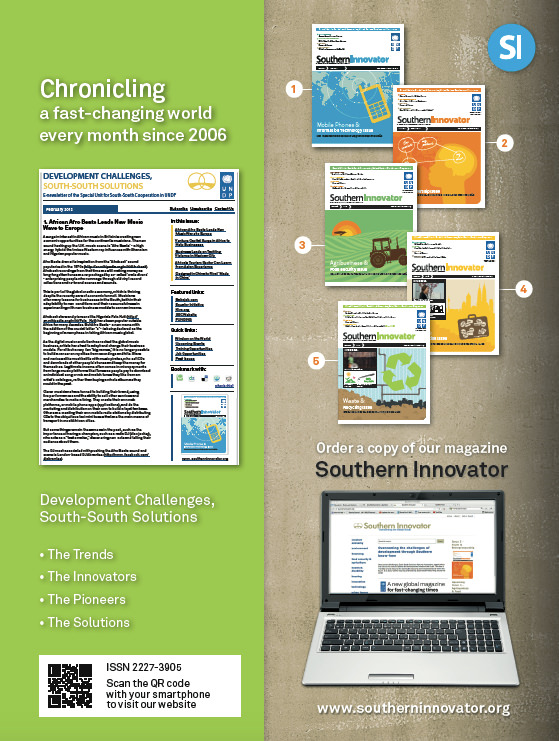
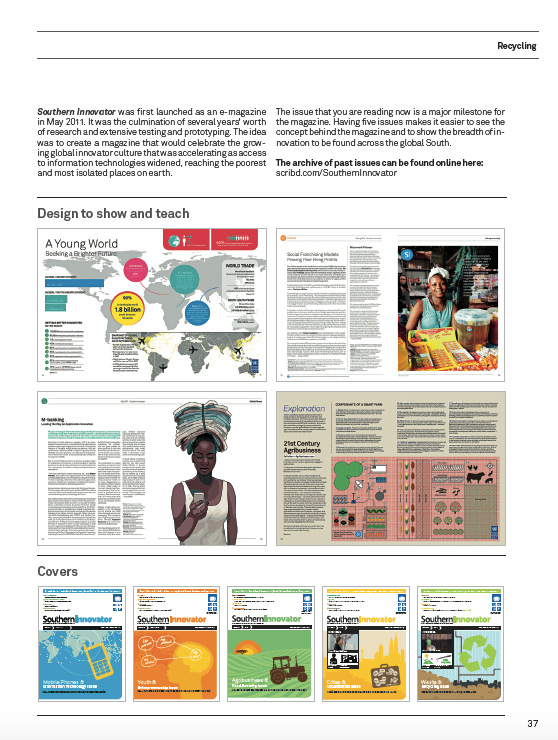
    Development Challenges, South-South Solutions was launched as an e-newsletter in 2006 by UNDP’s South-South Cooperation Unit (now the United Nations Office for South-South Cooperation) based in New York, USA. It led on profiling the rise of the global South as an economic powerhouse and was one of the first regular publications to champion the global South’s innovators, entrepreneurs, and pioneers. It tracked the key trends that are now so profoundly reshaping how development is seen and done. This includes the rapid take-up of mobile phones and information technology in the global South (as profiled in the first issue of magazine Southern Innovator), the move to becoming a majority urban world, a growing global innovator culture, and the plethora of solutions being developed in the global South to tackle its problems and improve living conditions and boost human development. The success of the e-newsletter led to the launch of the magazine Southern Innovator. 

    https://davidsouthconsulting.org/2021/03/05/southern-innovator-issue-3/

    Creative Commons License

    This work is licensed under a
    Creative Commons Attribution-Noncommercial-No Derivative Works 3.0 License.

    ORCID iD: https://orcid.org/0000-0001-5311-1052.

    © David South Consulting 2022

  • Book Boom Rides Growing Economies and Cities

    Book Boom Rides Growing Economies and Cities

    By David SouthDevelopment Challenges, South-South Solutions

    SOUTH-SOUTH CASE STUDY

    Along with growing economies, the global South is seeing growing numbers of readers and a newly flourishing publishing industry. The creative economy – of which book publishing is part – is experiencing a jolt from a combination of expanding economies and urbanizing cities. Just as the first settled cities of ancient Mesopotamia (today’s Iraq) spawned literature and learning, so the rapidly urbanizing South is changing dynamics and creating the space and demand for books.

    The creative economy is seen as the “interface between creativity, culture, economics and technology in a contemporary world dominated by images, sounds, texts and symbols” (UNCTAD). It has been shown to be an effective way for emerging economies to leapfrog into high-growth areas in the 21st century world economy.

    Telling stories about local conditions and people’s rapidly changing lives is proving a commercial success formula. Fast-growing India is forecast to become the largest market for English language books within a decade. India’s economic boom, which saw 6.7 percent growth in 2009, and its expanding middle class are driving demand for books. India saw the number of literate people pass 66 percent by 2007.

    “It is a forward-looking generation,” said Manish Singh, country manager for publisher Harlequin Mills and Boon, to The Guardian newspaper.

    Estimates of India’s book reading market put the number of readers at just 5 million out of a population of over 1 billion people. But according to Anantha Padmanabhan, the director of sales in India for publisher Penguin, “that is set to increase dramatically.”

    A survey by Tehelka (http://www.tehelka.com) found Indians are favouring stories about local conditions and set in the places where they live.

    India’s most popular current writer is Chetan Bhagat, a former investment banker. He has sold more than 3 million books in the last five years. His latest, Two States, sold a million copies in four months.

    Bhagat writes about the country’s aspiring middle class. His publisher, Rupa (http://www.rupapublications.com/Client/home.aspx), believes he appeals to a “pan-Indian, pan-age group.”

    Bhagat puts his success down to the way the stories are written. “This is not like the mature English literature market,” he said. “It needs an English that is highly accessible, simple, and with stories that are still interesting and relevant.”

    Book prices in India have stayed affordable for the middle classes. A book can cost from US $1.85 to US $2.65 for a paperback – still a high cost for the poor, however, who live on a dollar a day.

    In Egypt, around 30 percent of the population is illiterate and book reading has been historically very low: it has been claimed an average literate Egyptian reads a quarter of a page of a novel per year. From this low base, a best seller only needs to sell a few thousand copies.

    However, in Egypt small-scale independent publishers are starting to make an impact. Mohamed Hashem – founder of the Dar Merit publishing house (http://www.zoominfo.com/Search/ReferencesView.aspx?PersonID=1007104230) – has built from scratch in 12 years one of the country’s most critically acclaimed publishers: all from a tiny apartment in a rundown Cairo building.

    “We can’t compete with the big firms in terms of profits,” he told The Guardian, “but the new wave of authors will always be sitting here. Yes, we have poverty and limited resources. But we also have the future.”

    Launched to counter what Hashem felt was an unimaginative book market, his stable of authors have shaken up the Arabic fiction world. The global success of Alaa al-Aswany’s The Yacoubian Building (http://en.wikipedia.org/wiki/The_Yacoubian_Building) is proof Hashem’s gamble on edgy talent was correct: rejected by two government-run publishing houses, the book went on to be a hit in English and Arabic and has been made into a film.

    Hashem is being credited with unleashing a wave of new talented authors that has pushed literature out from being the preserve of a select group.

    One of its successful authors, Hamdi Abu Golayyel – winner of the country’s top literary prize, the Naquib Mahfouz medal – believes “Merit has changed the way pioneering literature emerges in Egypt.”

    “Before, you had the innovative writers – there are normally no more than five or six in a generation – meeting together in mutual isolation, because popular opinion rejected them.”

    Merit “had the drive and ambition to support and distribute new and younger authors properly. Today innovative writing is wanted by the people.”

    Hashem’s secret in attracting talented writers has been more than just business savvy: he also gives them “the freedom to write in my own way,” according to writer Ahmed Alaidy.

    The writers also have a credibility advantage: they are writing about their circumstances rather than just imagining what it would be like. Writer Hani Abdel Mourid comes from Cairo’s traditional garbage-collecting neighbourhood; another author, Mohamed Salah Al Azab, has written a book named after the folding seats on Egypt’s lively minibuses.

    Demographic changes and Cairo’s relentless expansion are being cited as the catalyst for the new writing.

    “The fact that the city has grown the way it has,” says Samia Mehrez, a literature professor in Cairo, “the fact that what we used to call the periphery is now the centre, that is very important.”

    “The year we started, we published five titles and the number of people interested could be counted in the dozens,” he told The Guardian. “Now we have 600 titles under our belt, and thousands are interested. It’s my duty to try and expand that circle. We’re chipping away at a wall, and slowly we’re making progress.”

    Published: May 2010

    Resources

    1) Creative Economy Report 2008. An economic and statistical assessment of creative industries world-wide as well as an overview of how developing countries can benefit from trade in creative products and services produced by UNCTAD and the Special Unit for South-South Cooperation in UNDP. Website: http://www.unctad.org/en/docs/ditc20082cer_en.pdf

    2) Global Creative Economy Convergence Summit 2009: The summit is about the successful and emerging creative technologies and initiatives that are driving economic growth locally, nationally and internationally. Website: http://www.gcecs2009.com/

    3) A directory of Indian publishers. Website: http://www.publishersglobal.com/directory/publishers-by-country.asp?publishers-of=India

    4) Full Circle Publishing: A successful Indian publishing company. Website: http://www.atfullcircle.com/

    5) Jaipur Literature Festival: Described as the ‘greatest literary show on Earth’, the Jaipur Literature Festival is a sumptuous feast of ideas.The past decade has seen it transform into a global literary phenomenon having hosted nearly 2000 speakers and welcoming over a million book lovers from across India and the globe. Website: https://jaipurliteraturefestival.org/

    https://davidsouthconsulting.org/2021/09/23/david-south-consulting-books-1997-2014/

    https://davidsouthconsulting.org/2022/06/15/e-books/

    https://davidsouthconsulting.org/2022/11/23/publications/

    https://davidsouthconsulting.org/2022/10/26/south-gets-reading-bug-with-more-festivals/

    Development Challenges, South-South Solutions was launched as an e-newsletter in 2006 by UNDP’s South-South Cooperation Unit (now the United Nations Office for South-South Cooperation) based in New York, USA. It led on profiling the rise of the global South as an economic powerhouse and was one of the first regular publications to champion the global South’s innovators, entrepreneurs, and pioneers. It tracked the key trends that are now so profoundly reshaping how development is seen and done. This includes the rapid take-up of mobile phones and information technology in the global South (as profiled in the first issue of magazine Southern Innovator), the move to becoming a majority urban world, a growing global innovator culture, and the plethora of solutions being developed in the global South to tackle its problems and improve living conditions and boost human development. The success of the e-newsletter led to the launch of the magazine Southern Innovator. 

    Creative Commons License

    This work is licensed under a
    Creative Commons Attribution-Noncommercial-No Derivative Works 3.0 License.

    ORCID iD: https://orcid.org/0000-0001-5311-1052.

    © David South Consulting 2022

  • Housing Innovation in South’s Urban Areas

    Housing Innovation in South’s Urban Areas

    By David SouthDevelopment Challenges, South-South Solutions

    SOUTH-SOUTH CASE STUDY

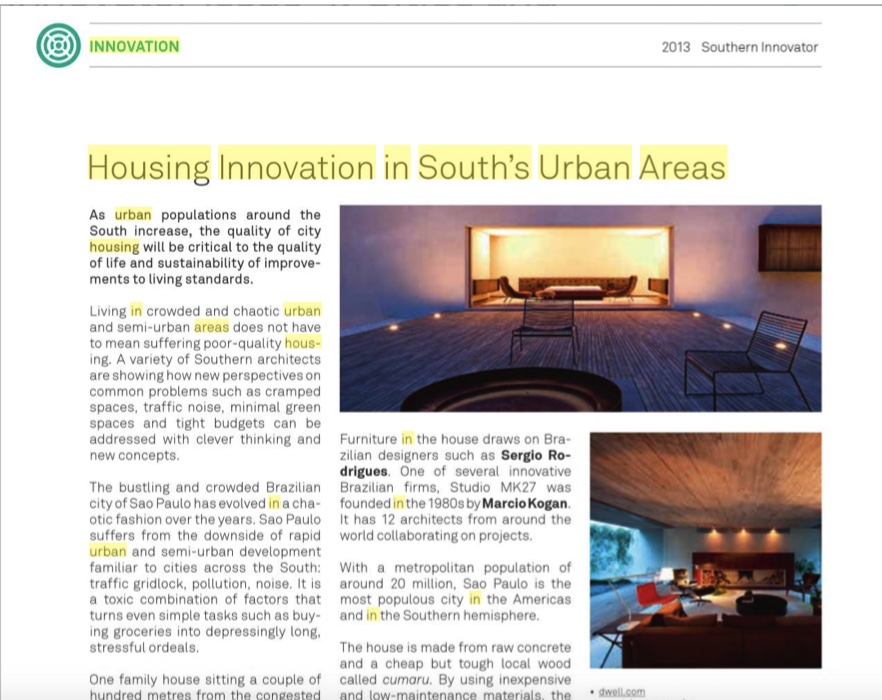
    As urban populations around the South increase, the quality of city housing will be critical to the quality of life and sustainability of improvements to living standards.

    Living in crowded and chaotic urban and semi-urban areas does not have to mean suffering poor quality housing. A variety of Southern architects are showing how new perspectives on common problems like cramped spaces, traffic noise, minimal green spaces and tight budgets can be addressed with clever thinking and new concepts.

    The bustling and crowded Brazilian city of Sao Paulo has evolved in a chaotic fashion over the years. As Brazilian photographer Reinaldo Coser admitted to design and architecture magazine Dwell (www.dwell.com) , in many places it is “very ugly.”

    Sao Paulo suffers from the downside of rapid urban and semi-urban development familiar to cities across the South: traffic gridlock, pollution, noise. It’s a toxic combination of factors that turns even simple tasks like buying groceries into depressingly long, stressful ordeals.

    Coser’s family home sits a couple hundred metres from the congested Avenida Brigadeiro Faria Lima (http://en.wikipedia.org/wiki/Avenida_Brigadeiro_Faria_Lima) , the city’s unofficial main street. Yet the dwelling has been cleverly designed to make living in the centre of this modern urban hurly burly a peaceful and calming oasis. Designed by Brazilian architects Studio MK27 (http://www.marciokogan.com.br) – and in keeping with the rich Brazilian modernist tradition pioneered by Oscar Niemeyer in the country’s capital, Brasilia (http://en.wikipedia.org/wiki/Bras%C3%ADlia) – the home uses clever techniques to build calm into chaos.

    The front and back gardens are level with the living room, creating an enormous living space that seamlessly flows from indoor to outdoor space. By using a large overhang over the gardens, even on rainy days the home can be lived in almost without walls.

    Furniture in the home draws on Brazilian designers like Sergio Rodrigues (http://www.sergiorodrigues.com.br).

    One of several innovative Brazilian firms, Studio MK27 was founded in the 1980s by Marcio Kogan. It has 12 architects from around the world collaborating on projects.

    With a metropolitan population of around 20 million, Sao Paulo (http://en.wikipedia.org/wiki/S%C3%A3o_Paulo) is the most populous city in the Americas, and in the Southern hemisphere.

    While it is easy to point out the downsides of rapid and chaotic urban development, Coser, a professional photographer, lives and loves Sao Paulo nonetheless because, like so many cities across the South, it is a vibrant and dynamic place to be.

    And by choosing a design for his home that is calming, he has been able to introduce balance into his family’s life while benefiting from the economic opportunities of the city.

    “This house has actually changed the rhythm of our lives,” he told Dwell. “We eat at home more. We go to bed earlier. We wake up earlier. We sleep more.”

    And how has the calm helped his two daughters? One is able to play without disturbing the neighbours, and the other can quietly study her books, which was difficult when the family lived in the noise and buzz of a small two-bedroom apartment.

    And – something often overlooked in development plans cooked up by economists and urban planners – the aesthetics of the house are very appealing. “Our house is so pretty,” says his wife, Sophia. “Sometimes I like to just look at it for a long time.”

    This calm home was created out of basic need. The family needed more space with a second daughter on the way, and had become frustrated with the congestion of the city and the lack of green space. Architect Marcio Kogan was consulted for a solution.

    “We wanted a place where we could just shut the door and travel,” says Reinaldo.

    The house is made from raw concrete and a cheap-but-tough local wood called cumaru (http://tinyurl.com/3y8kh8v) . By using inexpensive and low maintenance materials, the home is able to weather the environmental stresses of a polluted, tropical city with harsh sunshine.

    Kogan deployed his previous experience as a filmmaker to make the home feel and look more spacious and open than it is. He calls it “looking at the world through a wide-screen lens.” The design of the home is seen as a “narrative”, leading the occupant from the garden to the living room, up the stairs, past bedrooms to a rooftop deck with panoramic views of the city.

    Another innovative solution in Sao Paulo is USINA (http://www.usinactah.org.br) – a finalist for the World Habitat Awards (http://www.worldhabitatawards.org/about/?lang=00) – which brings people together to build high-density urban housing. It has aided more than 5,000 people to build with their own labour multi-storey buildings. These new apartments are not isolated from other services, but come with community facilities, childcare facilities, professional training courses and other employment-generating activities.

    It is estimated up to 15 percent of the city’s population live in slums. This community organising approach is in contrast to the existing ad-hoc building of homes in the slums – often with no technical assistance – or public housing projects built by developers looking for quick profits while ignoring quality and services. USINA’s approach has led to Sao Paulo being a pioneer in participatory housing policies.

    USINA provides the technical assistance to social movements looking to build housing for the poor. The cost for the buildings is borne by a combination of public funding and the labour of the residents (working 16 hours per week per household). The cost per housing unit tends to be between US $12,000 and US $15,000 (with land usually donated free by public authorities).

    Architectural innovation is also underway in Indonesia, another country that has experienced spurts of rapid economic growth and urbanization, and where a growing middle class is demanding a higher quality of life.

    The country’s capital, Jakarta (http://en.wikipedia.org/wiki/Jakarta) , with a population over 8 million, is a mixed bag of modern skyscrapers, crumbling colonial architecture, suburbs and slums.

    In the Jakarta suburb of Bekasi (population more than 2 million), Nugrohu Wisnu was looking for a little more space for his family.

    At first, the family encountered the downside of poorly designed housing. They bought a house which was infested with termites and was uncomfortable to live in. Frustrated, they began shopping around for something better. And they turned to Indonesian architects Djuhara + Djuhara (http://djuhara.com/home.html).

    “We thought that an all-steel house like the one that Mr. Djuhara had built just down the road would be termite resistant,” Wisnu told Dwell.

    Djuhara is a high-profile architect and chair of the Jakarta chapter of the Indonesian Institute of Architects (http://www.iai.or.id) and helped to modernize the city’s planning regulations.

    The stereotype of young Indonesian architects is that they only work on luxury hotels. But Djuhara was designing and building suburban homes and this grabbed Wisnu’s attention.

    Also against stereotype, Djuhara was actually attracted by a tight budget and the small space for the house. In a crowded city, using every bit of space efficiently is critical. The existing house was torn down and Djuhara set about building a new home. The majority of the building materials were sourced within the immediate area: an easy thing to do in Jakarta since there are many vendors selling building supplies on the streets.

    By buying local like this, shipping costs were eliminated from the cost of the house. The home’s cost, US $20,000, is just 2/3 of what a more conventional Indonesian home would cost.

    Djuhara revelled in the job: “Ad-hocism is my religion,” he told Dwell.

    The split-level design of the home uses the space well. The kitchen opens up into the garden.

    “Family breakfasts are great in here,” says Wisnu. “And the open kitchen encourages the kids to head out into the garden and run and play.”

    There is also a strong environmental component to the design. Airflow cavities in the ceiling are used in the bedrooms to cool them. The house also uses heavy wooden shutters to keep the house cool during the day: “The shutters are unusual, but they are thick and sturdy,” Wisnu explains.

    “They really shade the master bedroom to the extent that it feels mellow and cool. They let us reduce our air-conditioning consumption, even during the height of the day.”

    And Djuhara also has another difference from many other architects: he refuses to patent his design.

    “My friends have asked me why I don’t patent my low-cost houses,” he explains, “but they completely miss the point. I actually want my designs to be copied. I want Indonesian society to rethink its attitudes towards urban architecture.”

    Published: June 2010

    Resources

    https://davidsouthconsulting.org/2021/10/21/cities-for-all-shows-how-the-worlds-poor-are-building-ties-across-the-global-south/

    https://davidsouthconsulting.org/2022/05/23/debt-free-homes-for-the-poor/

    https://davidsouthconsulting.org/2021/11/11/decent-and-affordable-housing-for-the-poor/

    https://davidsouthconsulting.org/2021/11/11/housing-solution-for-worlds-growing-urban-population/

    https://davidsouthconsulting.org/2020/12/14/innovation-in-growing-cities-to-prevent-social-exclusion/

    https://davidsouthconsulting.org/2021/10/22/lima-to-delhi-what-can-be-learned-on-urban-resilience/

    https://davidsouthconsulting.org/2022/11/19/securing-land-rights-for-the-poor-now-reaping-rewards/

    https://davidsouthconsulting.org/2017/11/08/smart-cities-up-close-2013/

    https://davidsouthconsulting.org/2022/05/23/solar-bottle-bulbs-light-up-dark-homes/

    https://davidsouthconsulting.org/2021/10/22/south-south-cooperation-for-cities-in-asia/

    https://davidsouthconsulting.org/2021/03/05/southern-innovator-issue-4/

    https://davidsouthconsulting.org/2021/03/12/southern-innovator-magazine/

    https://davidsouthconsulting.org/2022/11/17/tiny-homes-to-meet-global-housing-crisis/

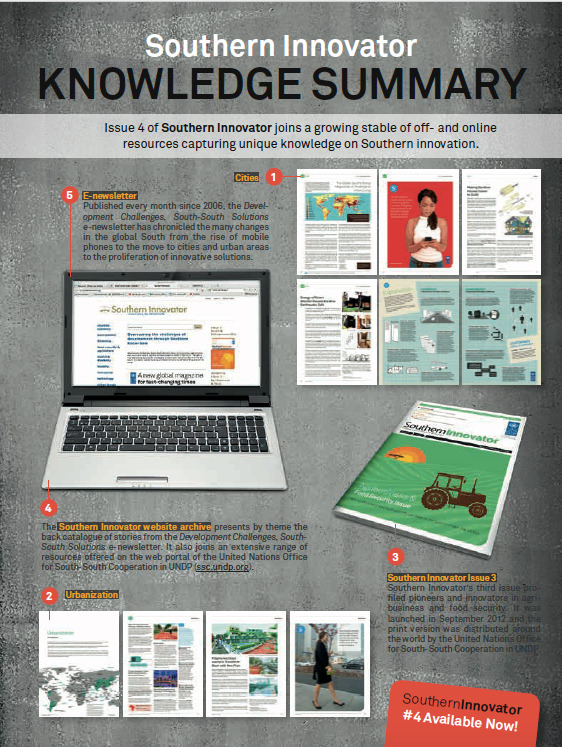
    Development Challenges, South-South Solutions was launched as an e-newsletter in 2006 by UNDP’s South-South Cooperation Unit (now the United Nations Office for South-South Cooperation) based in New York, USA. It led on profiling the rise of the global South as an economic powerhouse and was one of the first regular publications to champion the global South’s innovators, entrepreneurs, and pioneers. It tracked the key trends that are now so profoundly reshaping how development is seen and done. This includes the rapid take-up of mobile phones and information technology in the global South (as profiled in the first issue of magazine Southern Innovator), the move to becoming a majority urban world, a growing global innovator culture, and the plethora of solutions being developed in the global South to tackle its problems and improve living conditions and boost human development. The success of the e-newsletter led to the launch of the magazine Southern Innovator. 
    Creative Commons License

    This work is licensed under a
    Creative Commons Attribution-Noncommercial-No Derivative Works 3.0 License.

    ORCID iD: https://orcid.org/0000-0001-5311-1052.

    © David South Consulting 2023

  • Favela Fashion Brings Women Work

    Favela Fashion Brings Women Work

    By David SouthDevelopment Challenges, South-South Solutions

    SOUTH-SOUTH CASE STUDY

    A highly successful cooperative of women in Brazil has shown that it is possible for outsiders to make it in the fast-paced world of fashion. Despite being based in one of Rio de Janerio’s slums, or favelas (http://en.wikipedia.org/wiki/Favela), the women have developed a reputation for high-quality merchandise and even put on fashion shows.

    Fashion earns big money around the world: The global clothing industry is estimated to be worth more than US $900 billion a year. But fashion also has a reputation for relying on sweat shops, poor pay and poor working conditions. The poor are the most at risk of exploitation in the industry – upwards of 90 percent of sweatshop workers are women (www.feminist.org).

    Yet the COOPA-ROCA cooperative (www.coopa-roca.org.br/en/index_en.html) – or Rocinha Seamstress and Craftwork Co-operative Ltd – has pioneered a way to involve poor women in the business, build their skills while creating high-quality products, and be flexible enough to make time for their families’ needs. It particularly helps single mothers.

    The cooperative was founded by Maria Teresa Leal in Rocinha – the largest favela in Rio, home to over 180,000 people. After visiting her housekeeper’s home in the favela, Leal was impressed by the sewing skills of the women but found they weren’t making any money from their work. She decided to found the cooperative in 1981 and start making quilts and pillows. By the early 1990s, the cooperative had attracted the attention of Rio’s fashion scene. And in 1994, it jumped into making clothes for the fashion catwalks. Fashion designers in turn taught the women advanced production skills and about fashion trends.

    Today, the coop has established a hard-won reputation for quality and sells its clothes to the wealthy elite of Rio. Its success has led to contracts with major clothing stores, including Europe’s C&A.

    “Creativity is an important tool for transforming people and raising their consciousness,” Leal told Vital Voice. “My great passion is beauty. Beauty has the capacity to inspire, to touch individuals in a more subtle way. For this reason, I like to make beautiful things with the artisans of COOPA-ROCA.”

    Leal realized that most small businesses helping the poor fail despite their best intentions. They often make the same mistakes: they fail to produce high quality goods, they fail to do market research and understand who they are selling to, they fail to develop the skills of their workers, and most importantly, they fail to see that they have to compete in a global economy with lots of other enterprises. How many people have seen crafts and knickknacks for sale that nobody really wants?

    Slum dwellers are on the increase across the South. As the world becomes a more urban place – and 70 million people move every year to the world’s cities (UN) – the growing population of poor women and households presents a dilemma: how to provide meaningful work so they do not fall risk to exploitation? Without work opportunities, women can feel pressured to turn to prostitution, or even be trafficked by gangs for work or sex. And women in slums experience greater levels of unemployment than those who live elsewhere (UNHABITAT).

    Women now make up the majority of the world’s poor: 70 percent of the world’s poor are women, as are a majority of the 1.5 billion living on less than US $1 a day (UNESCO).

    Established in 1981 from a recycling project for local children, COOPA-ROCA started with finding ways to use thrown away scraps of cloth to make clothing. It eventually evolved into a cooperative. It focused on improving traditional Brazilian decorative craftwork skills like drawstring appliqué, crochet, knot work and patchwork.

    “COOPA-ROCA works with traditional handicraft techniques that are widely used by women around the world,” explains Leal. “As COOPA-ROCA works with fashion, and fashion is always linked with media, the COOPA-ROCA artisans inspire other women who recognize in themselves the potential to do the kind of work that COOPA-ROCA does.”

    For its first five years, COOPA-ROCA concentrated on building the organization and the skills of the artisans. Once a production structure was in place, quality control workshops were set up to increase the quality of the products so they could compete better in the marketplace.

    “Many social projects believe that money is the only resource required to begin their work. The COOPA-ROCA case proves that social organizations must use a more entrepreneurial vision to understand the concept of resources.”

    The cooperative’s mission statement is to “provide conditions for its members, female residents of Rocinha, to work from home and thereby contribute to their family budget, without having to neglect their childcare and domestic duties.”

    By doing this to a high standard, the profile and reputation of traditional crafts has been raised.

    The COOPA-ROCA hopes the work shows others how they can increase income in poor communities. The cooperative has 150 members and has partners in the wider fashion and decorative design markets.

    The women equally share responsibility for production, administration and publicity. While they work at home, they come to the office to drop off the completed pieces and pick up more fabric.

    The success of the cooperative has led to donations of funds to build a new headquarters designed by architect Joao Mauricio Pegorim.

    Despite the cooperative’s success, it is still not easy to work with partners. “There are many negative preconceptions about Rocinha and the people who live there, both within and outside of Brazil. COOPA-ROCA is consistently rejected when it applies for loans,” Leal said. “Furthermore, the cooperative’s commercial partners usually do not enter the favela themselves, and I must serve as a bridge between the two worlds.”

    But Leal is still ambitious for bigger things: “I envision COOPA-ROCA expanding to include 400 women artisans, producing for commercial partners, selling their own brand in Brazil and abroad, and carrying out fashion and design projects in the new headquarters in Rocinha.”

    Published: March 2010

    Resources

    1) The online service CafePress is a specially designed one-stop shop that lets entrepreneurs upload their designs, and then sell them via their online payment and worldwide shipping service. Website:http://www.cafepress.com/cp/info/sell/

    2) Tips on how to start your own t-shirt business. Website: http://www.pioneerthinking.com/dy_tshirt.html And how to do it online: Website:http://www.ehow.com/how_2135779_start-network-online-tshirt-company.html

    3) Once inspired to get into the global fashion business, check out this business website for all the latest news, jobs and events. Website:http://us.fashionmag.com/news/index.php

    4) iFashion: This web portal run from South Africa has all the latest business news on fashion in Africa and profiles of up-and-coming designers. Website:http://www.ifashion.co.za/index.php?option=com_frontpage&Itemid=1

    5) Kiva: Kiva’s mission is to connect people, through lending, for the sake of alleviating poverty. Website:http://www.kiva.org/

    6) Betterplace: Is another great way to solicit funds for NGOs or businesses in the developing world. Website: http://www.betterplace.org

    7) Viva Favela: The first Internet portal in Brazil. Viva Favela has a team made up of journalists and “community correspondents” – favela residents qualified to act as reporters and photographers. Website:http://www.vivafavela.com.br/publique/cgi/cgilua.exe/sys/start.htm?infoid=40489&sid=74

    8) Women in Poverty: A New Global Underclass by Mayra Buvinic (1998). Website: http://www.onlinewomeninpolitics.org/beijing12/womeninpoverty.pdf

    Development Challenges, South-South Solutions was launched as an e-newsletter in 2006 by UNDP’s South-South Cooperation Unit (now the United Nations Office for South-South Cooperation) based in New York, USA. It led on profiling the rise of the global South as an economic powerhouse and was one of the first regular publications to champion the global South’s innovators, entrepreneurs, and pioneers. It tracked the key trends that are now so profoundly reshaping how development is seen and done. This includes the rapid take-up of mobile phones and information technology in the global South (as profiled in the first issue of magazine Southern Innovator), the move to becoming a majority urban world, a growing global innovator culture, and the plethora of solutions being developed in the global South to tackle its problems and improve living conditions and boost human development. The success of the e-newsletter led to the launch of the magazine Southern Innovator. 

    Creative Commons License

    This work is licensed under a
    Creative Commons Attribution-Noncommercial-No Derivative Works 3.0 License.

    ORCID iD: https://orcid.org/0000-0001-5311-1052.

    © David South Consulting 2023