Dabbawallahs Use Web and Text to Make Lunch on Time Development Challenges:The developing world’s rapidly growing cities are bringing with them whole new ways of living and working. One rapidly expanding category of citizen is the office worker. A symbol of growing prosperity, the office worker also tends to be a time-poor person who often must commute large distances between home and workplace.
Flurry of Anti-poverty Innovations Development Challenges: Innovation is key to transforming the lives of the world’s four billion poor. And it is at the core of much of the new thinking these days. While the world’s poor can’t rely on political developments, or wider macro-economic events to go their way, they can harness the power of invention, innovation and self-reliance to make big changes in the quality of their lives and increase income – and so can those who want to help them.
Local Animation: A Way Out of Poverty Development Challenges: One of the more remarkable creative developments since 2000 has been the explosion in animation production in the developing world, in particular Asia. Once seen as frivolous or unnecessary, animation is now acknowledged as a high-growth area and a critical component in the emerging economies being shaped by information technology.
Mobile Phones Bring the Next Wave of New Ideas from the South Development Challenges: The rapid growth in take-up has made mobile phones the big success story of the 21st century. With such reach, finding new applications for mobile phones that are relevant to the world’s poor and to developing countries is a huge growth area. It is estimated that by 2015, the global mobile phone content market could be worth over US $1 trillion: relegating basic voice phone calls to just 10 per cent of how people use mobile phones.
November
Mountain People: Innovative Ways to Help the World’s Most Vulnerable Development Challenges: Physically isolated and socially and politically marginalized, mountain dwellers are among the most vulnerable in the world, according to the Food and Agriculture Organization. A disproportionate number of the world’s 840 million chronically undernourished people live in highland areas — about 270 million mountain people lack food security, with 135 million suffering chronic hunger. Large numbers of additional people in lowland areas also depend on mountains.
Saving the Amazon Forest While Making a Living Development Challenges: The vast Amazon rainforest straddles Brazil (over half is there), and stretches over many countries, including Peru, Ecuador and Bolivia. It holds more than 2,500 tree species and 30 per cent of all known plant species – 30,000 in all. It contains the world’s largest tropical forest national park, Brazil’s Tumucumaque Mountains National Park(http://www.amazon-rainforest.org/places-of-interest.html).
Africa’s Fast-Growing Cities: A New Frontier of Opportunities Development Challenges: According to a new report by the International Institute for Environment and Development, Africa now has a larger urban population than North America and 25 of the world’s fastest growing big cities. Europe’s share of the world’s 100 largest cities has fallen to under 10 percent in the past century.
Turning Street Children into Entrepreneurs Development Challenges: The UN estimates that 500 million people around the world are homeless, and UNICEF estimates India alone has 11 million homeless children on its streets (though it is difficult to pin down the figure). In order to survive another day, these children will work in one way or another.
October
African Culture as Big Business Development Challenges: In the last decade the world’s creative industries (including crafts, fashion and design) have gained greater respect for being the spark that drives economic development and entrepreneurship. They are seen as fast growers and good job creators, and importantly, the lynch pin in cultural identity and cultural diversity.
Next Generation of Innovation for the Grassroots Development Challenges: Taking inspiration from science fiction sagas like the TV show Star Trek, the next generation of innovation is already taking shape in the South. A group of innovative facilities called Fab Labs (short for Fabrication Laboratory) in Ghana, India, Kenya, South Africa and Costa Rica are applying cutting-edge technology to address the everyday needs of people.
Ecotourism to Heal the Scars of the Past Development Challenges: The legacy of underdevelopment during the communist era in parts of Eastern Europe is now being seen as an advantage in the global tourism trade. Well off the beaten path for tourists, areas as diverse as Chechnya and Romania are working to turn their rustic rural hinterlands into a strategic advantage in grabbing the market for ecotourists.
Popular Characters Re-invent Traditional Carving Development Challenges: The popular cartoon characters from the long-running series The Simpsons are breathing new life into traditional African stone carvings.
September
African Breakthroughs To Make Life Better Development Challenges: In the last 50 years, the domestication of high technology – bringing cheaper access to everything from personal computers to digital cameras and applications like global positioning systems (GPS) – has transformed millions of lives and the way business is done. In the next 50 years, biotechnology is set to do the same.
Traditional Medicine is now a Proven Remedy Development Challenges: Once dismissed as old fashioned, ineffective and unscientific, traditional medicine is now seen as a key tool in bringing healthcare and healing to poor people bypassed by existing public and private health measures.
Mobile Phones: Engineering South’s Next Generation of Entrepreneurs Development Challenges: Technology is fuelling unprecedented growth in productivity in Asia, with sub-Saharan Africa languishing behind (International Labour Organization). But the growth in mobile phones could help close this gap, as home-grown entrepreneurs are stepping up to exploit this new opportunity.
Saving Water to Make Money Development Challenges: The world’s water supplies are running low, and according to the World Health Organisation (WHO), four out of every 10 people are already affected. But despite the gloomy reality of this problem, entrepreneurs in the South are rising to the challenge to save water.
August
Social Franchising Models Proving Poor Bring Profits Development Challenges: The four billion people in the world who live on less than US $2 a day have been described as the bottom of the economic pyramid, or BOP for short. In his book The Fortune at the Bottom of the Pyramid, Indian business consultant and professor CK Prahalad argues that this attitude must be turned on its head: rather than seeing the world’s poor as a burden, only worthy of charity, Prahalad sees nothing but opportunity and unmet needs that business can address.
Cooking up a Recipe to End Poverty Development Challenges: Like music, food has a powerful ability to jump across cultural and regional barriers and unite people in the sheer pleasure of the meal. Tapping the rich vein of regional culinary heritages is also a great way to make money. Promoting local recipes and foods has other benefits: as the global obesity (or globesity as WHO calls it) epidemic reaches into the urban areas of cities in the developing world, anything that pulls people away from fast food and high-fat foods is a good thing. Doctors have found home cooking keeps people thin and is better for them.
The Power of the Word: African Blogging and Books Development Challenges: “Culture is not a luxury … Culture is the spiritual backbone of society”: with these words Jan Kees van de Werk, the Dutch poet and long-standing advocate of African literature, summed up the importance of culture to Africa’s development. Two trends could significantly alter the prospects for African writers in 2007: the new wave of African bloggers and websites that are now emerging, and the increasing awareness of African literature.
Online Free Knowledge Sharing Development Challenges: UNESCO’s Kronberg Declaration on the Future of Knowledge Acquisition and Sharing is blunt: the future of learning will increasingly be mediated by technology, and traditional educational processes will be revolutionized. Acquiring factual knowledge will decrease and instead people will need to find their way around complex systems and be able to judge, organize and creatively use relevant information.
July
Banning of Plastic Bags and Containers Brings New Opportunities Development Challenges: This month, Uganda bans plastic bags, outlawing their import, manufacture and use and joining a growing list of African countries seeking to sweep cities of this menace. Uganda’s ban follows similar moves in Kenya and in Tanzania, where even plastic drinks containers will soon be banished.
Record-breaking Wireless Internet to Help Rural Areas Development Challenges: Many initiatives seek to bring inexpensive access to the internet to rural and remote regions around the world. One of the most successful ways to rapidly expand access is to offer wireless internet so that anyone can use a laptop computer, a PC or a mobile phone to quickly access the Net. Access to wireless internet is being rolled out in cities around the world with so-called ‘hot spots’, but the thornier issue of improving access in rural or remote regions could get better, thanks to a Venezuelan team.
A New House Kit for Slum Dwellers that is Safe and Easy to Build Develoment Challenges: By 2030, some 5 billion people around the world will live in cities. Next year, 2008, is predicted to be the tipping point, when urban dwellers (3.3 billion people) will outnumber rural residents for the first time. These are the conclusions of UNFPA’s State of the World Population 2007 Report. Even more strikingly, the cities of Africa and Asia are growing by a million people a week. And 72 percent of the population in sub-Saharan Africa live in slum conditions.
Afro Coffee: Blending Good Design and Coffee Development Challenges: The importance of good design and a strong brand in the success of a business cannot be emphasised enough. That extra effort and thought can take a business from local success to regional and even global success. As consultants KPMG make clear, “For many businesses, the strength of their brands is a key driver of profitability and cash flow “. Yet the majority of small businesses fail to think about their brand values or how design will improve their product or service.
June
African Entrepreneur Wants to Bring Order to Urban Chaos Development Challenges: All over the global South, urban and semi-urban areas are growing at a furious pace. Great swathes of mega-regions – places where large cities blend seamlessly into smaller towns and villages creating a giant economic hub – are becoming key economic and opportunity drivers in developing countries.
Entrepreneurs Use Mobiles and IT to Tackle Indian Traffic Gridlock Development Challenges: Around the world, traffic congestion is often accepted as the price paid for rapid development and economic dynamism. But as anyone who lives in a large city knows, a tipping point is soon reached where the congestion begins to harm economic activity by wasting people’s time in lengthy and aggravating commuting, and leaving them frazzled and burned out by the whole experience.
Web 2.0 to the Rescue! Using Web and Text to Beat Shortages in Africa Development Challenges: The beep-beep of a received text on a mobile phone is now becoming a much-needed lifeline to Africans. Zimbabweans, who continue to struggle every day with inflation that has shot to 3,731 percent (Zimbabwe Central Statistical Office), have usd African ingenuity and 21st century technology to survive another day.
Bio-ethanol From Sturdy and Once-Unwanted Indian Plant Development Challenges: With awareness of global warming at an all-time high – and governments seeking real-world solutions to solve this enormous problem – bioethanol fuel has risen up the agenda as a replacement for conventional fuel sources. At present, most bioethanol fuel is produced from either corn or sugar but a less known plant jatropha could be the real solution. Brazil has been a pioneer in producing bioethanol fuel from sugar, while the United States has focused on its substantial corn crop as a source, and both contribute more than half the world’s supply.
May
Youth Surge in the South A Great Business Opportunity Development Challenges: The world’s youth population (those between the ages of 12 and 24) has now reached a historical high of 1.5 billion – 1.3 billion of whom are in developing countries (World Development Report 2007). Nearly half of the world’s unemployed are youth, and the Middle East and North Africa alone must create 100 million jobs by 2020 to meet demand for work.
Old Adage Gets New Life Development Challenges: Education is recognized as critical for development and improving people’s lives. Universal primary education is a Millennium Development Goal and countries are now allocating more funds for primary education across the global South. However, the options available to youth after primary education are often very limited.
Safe Healthcare is Good Business and Good Health Development Challenges: Many people have been shocked by recent stories about the proliferation of counterfeit drugs and the rate at which they are killing and harming people in Nigeria. The International Narcotics Control Board found that up to 50 percent of medicines in developing countries are counterfeit. This has driven home the point that without the presence of legitimate players in the African drug market, the illegal sharks will step in to make large profits – and a literal killing.
April
Creative and Inventive Ways to Aid the Global Poor Development Challenges: As the saying goes, “necessity is the mother of invention”. Poverty can be a major spur to invention, and invention a route out of poverty – but only if the poor in the developing world can get the recognition, capital and support for navigating the legal and bureaucratic hurdles that will inevitably stand in their way. Thankfully many new initiatives acknowledge this.
Kiva: New Gateway of Loans for the PoorDevelopment Challenges: The rise of social networking websites has created new opportunities for the poor to gain access to much needed credit. Kiva.org is pioneering a new way for entrepreneurs in the South to obtain for their businesses unsecured, no-interest financing from lenders worldwide. By just a click of the mouse a person anywhere in the world can lend as little as $25 or more to aspiring entrepreneurs in developing countries.
Innovation from the Global South Development Challenges: A major study has documented a rising tide of scientific innovation coming from Asia’s fast-developing countries, especially India and China. Conducted over 18 months by UK-based think tank Demos, it challenges the conventional wisdom that scientific ideas come from the top universities and research laboratories of large companies based in Europe or the US. It found ideas emerging in unexpected places, flowing around the world conveyed by a mobile diaspora of knowledge workers from the South.
Creative Use of Wi-Fi to Reach the Poor Development Challenges: In 2003 former UN Secretary-General Kofi Annan called for greater access to wi-fi, or wireless internet networks, as a mechanism to help poorer regions catch up with the pace of technological change in developed countries. Wireless networks remove the need to lay costly wires and can quickly bring fast and convenient internet access to large populations currently denied access. By removing the need to lay lots of cables to get communities online, wireless could help poorer nations narrow the digital divide and catch up with countries where the technology has already taken hold. Social entrepreneurs are stepping in to fill the gap between the promise of wi-fi and the reality.
March
Trade to Benefit the Poor Up in 2006 and to Grow in 2007 Development Challenges: The global fair trade market – in which goods and services are traded under the Fairtrade logo, guaranteeing a minimum fair price to producers experienced unprecedented growth in 2006. In the UK alone, 2006 sales totalled £290 million – a jump of 46 percent from 2005. The Fairtrade Foundation predicts sales will reach UK £300 million in 2007.
Business as a Tool to Do Good Development Challenges: The United States’ fast-paced and highly inventive technology sector is re-shaping philanthropy and proving it is possible to do good and make money at the same time. The approach taken by these philanthropists is flavoured by their experiences in the cut-throat world of technology, where innovation is a necessity and where re-invention and risk are de rigeur. They share many of these qualities, counter intuitively, with millions of the world’s poor as they struggle day in and day out to survive and get ahead.
Social Networking Websites: A Way Out of Poverty Development Challenges: Social networking websites also known as, Web 2.0 – the name given to the new wave of internet businesses and websites such as YouTube and MySpace that are transforming the way people interact with the Web – has been dubbed the social web for its power to bring people together.
Fashion Closes Gap Between Catwalk and Crafts Development Challenges: The notion of doing right with fashion has been getting a make-over in the past few years. In the West, non-sweatshop clothing and crafts from developing countries have long been confined to a small niche in the marketplace. They were seen at best as garments for the eccentric or unconventional, and at worst as a poor substitute for clothing and accessories peddled by the major manufacturers. Organic or ethically produced products were often stigmatized as unfashionable and frumpy.
February
Dynamic Growth in African ICT is Unlocking Secrets of SME Treasure Trove Development Challenges: A newly released survey of 14 African countries in 2006 has documented the impact of Information and Communication Technology (ICT) on private sector development and how it is contributing to developing a vibrant Small Medium Enterprise (SME) sector in Africa. It discovered how dynamic the SME sector is, how it has rapidly adopted mobile phone technology (96 percent have it), and how if used properly in concert with this new technology, extraordinary economic growth is possible.
Grassroots Entrepreneurs Now Have Many Ways to Fund their EnterprisesDevelopment Challenges: In the past, African entrepreneurs were extremely limited in the options for funding their plans. They had to rely on often ineffective national banks or local networks based on political, tribal or family connections to secure funding for enterprises. That has now changed, and there is an explosion in new thinking on business start-ups and how best to help grassroots entrepreneurs.
African Tourism Leads the World and Brings New Opportunities Development Challenges: Tourism around the world is growing rapidly again after the setbacks caused by the September 11, 2001 terrorist attacks. Tourism is also finally acknowledging Africa – home to 888 million people (2005, UN) – and where 46 percent of sub-Saharan Africa’s people live on less than US$1 a day. Led by Kenya and South Africa, the continent has come out on top in world tourism growth according to the United Nations World Tourism Organisation (UNWTO) (http://www.unwto.org/). While global tourism is forecast to grow by four percent in 2007, Africa as a whole enjoyed growth of 10.6 percent in 2006.
Securing Land Rights for the Poor Now Reaping Rewards Development Challenges:The hotly debated issue of land rights for the poor has never been more relevant. There is mounting evidence that access to land rights can catapult the poor out of poverty and spur growth for the economy. Experience in India and China is now showing the economic power unleashed when the poor gain full legal rights over their land.
January
New Battery Back-up Technology Targeting Developing Countries and Remote Regions Development Challenges: Africa’s greater global engagement and economic growth in the past few years has started to draw attention back towards the continent’s dearth of reliable power sources and inadequate power infrastructure. While demand grows at a fast pace, sadly political instability and lack of security in many countries scares off foreign investors and multinational companies who could help to expand capacity.
Computing in Africa is Set to Get a Big Boost Development Challenges: The image of Africa as a technological laggard is set to be seriously challenged as a number of developments converge in 2007. Alongside the booming African mobile phone market – itself now getting global attention for innovation – the African computer scene will soon have both the software and hardware that acknowledge the continent’s unique needs while being affordable.
Ring Tones and Mobile Phone Downloads are Generating Income for Local Musicians in Africa Development Challenges: African musicians hoping to support themselves through their recordings have always had to contend with the added burden of poor copyright control over their work. While musicians in the West are supported by a highly regulated regime of copyright protection – ensuring some to become the richest people in their respective countries – most African musicians have had to stand back and watch their work being copied, sold and exchanged with little chance of seeing any royalties.
Carbon Credits Can Benefit African Farmers Thanks to New System Development Challenges: The global carbon credit trading schemes emanating from the Kyoto Protocol are now creating a multi-billion dollar market – the European carbon market was worth €14.6 billion in 2006 – and represents one of the fastest growing business opportunities in the world. Being green has finally come of age. Yet all the benefits of this are largely bypassing Africa despite more than 70 percent of the continent’s inhabitants earning a living off the land.
Development Challenges, South-South Solutions was launched as an e-newsletter in 2006 by UNDP’s South-South Cooperation Unit (now the United Nations Office for South-South Cooperation) based in New York, USA. It led on profiling the rise of the global South as an economic powerhouse and was one of the first regular publications to champion the global South’s innovators, entrepreneurs, and pioneers. It tracked the key trends that are now so profoundly reshaping how development is seen and done. This includes the rapid take-up of mobile phones and information technology in the global South (as profiled in the first issue of magazine Southern Innovator), the move to becoming a majority urban world, a growing global innovator culture, and the plethora of solutions being developed in the global South to tackle its problems and improve living conditions and boost human development. The success of the e-newsletter led to the launch of the magazine Southern Innovator.
The proliferation of mobile phones across the global South, reaching even the poorest places on the planet, has given birth to whole new ways of making money. A phenomenon called ‘crowdsourcing’ – in which the power of individuals is harvested to achieve a goal – is now being used to create networks of people earning extra income.
One technology called Txteagle (http://txteagle.com/index.html), works like this: somebody performs small tasks with their mobile phone, such as translating a document into a local language, and in return receives credits or cash, so-called ‘micro-payments.’ By having many people perform these tasks in their spare time or down time at work, a large project can be completed and people can top-up their income. The secret is that the task must be able to be broken up into bite size chunks: the elephant must be eaten with a small fork.
For the poor, or people who are just getting by in a poor country, this can be a much-needed survival top-up in hard economic times. It is also an opportunity for people normally frozen out of formal employment opportunities or living in slum conditions.
Txteagle is being pioneered in Kenya using text messages or a low bandwidth, interactive protocol known as USSD (http://en.wikipedia.org/wiki/USSD) (usually used to check prepaid phone balances).
The rapid growth in take-up has made mobile phones the big success story of the 21st century. With such reach, finding new applications for mobile phones that are relevant to the world’s poor and to developing countries is a huge growth area. It is estimated that by 2015, the global mobile phone content market could be worth over US $1 trillion: relegating basic voice phone calls to just 10 percent of the way people use mobile phones.
The technological success story of mobile phones is impressive: China is home to the same number of mobile-phone users (surpassing 650 million in 2009) as the whole of Europe. According to India’s telecoms regulator (http://www.trai.gov.in/Default.asp), half of all urban dwellers now have mobile – or fixed – telephone subscriptions and the number is growing by eight million a month. In Tanzania, mobile phone use grew by 1,600 percent between 2002 and 2008.
Txteagle is the brainchild of Nathan Eagle of EPROM (Entrepreneurial Programming and Research on Mobiles) (http://eprom.mit.edu/ ). He works on developing new mobile phone applications with computer science departments in 10 Sub-Saharan African countries including: the University of Nairobi (http://www.uonbi.ac.ke/) (Kenya), Makerere University (http://mak.ac.ug/makerere/) (Uganda), GSTIT (http://www.gstit.edu.et/) (Ethiopia), Ashesi University (http://www.ashesi.org/) (Ghana), and the Kigali Institute of Science and Technology (http://www.kist.ac.rw/) (Rwanda).
Eagle has pioneered Txteagle in Nairobi, Kenya with students at the University of Nairobi. Drawing on his experience in East Africa, where he has lived since 2006, Eagle has a powerful message about mobile phones in the South. “This is their technology. The mobile phone is theirs,” he told a conference in March of this year. “It has had a far greater impact on their lives than it has on ours.”
Eagle says typical Txteagle users are “literate people in Nairobi who have significant idle time, like taxi drivers, security guards” or high school students. Like many Southern countries, Kenya has a plethora of languages: 62 in all. It can be laborious and costly to translate into all these languages. But by using crowd-sourcing on mobile phones, mobile phone company Nokia’s (www.nokia.com) phone menus have been translated into 15 local languages.
Already there are more people wanting to earn money this way than there are tasks to do. Eagle has had to cap payments at US $1.50 a day. The service needs to grow, and it is looking to offer people in the United States the opportunity to have easily broken-up tasks done in Kenya. Eagle believes his algorithms (http://en.wikipedia.org/wiki/Algorithm) ensure a 95-percent accuracy rate. One possible market is the US $15 billion medical transcription industry.
Kenya, a nation of 32 million, relies on its small business sector for most employment. In 2005, the government’s Economic Survey (www.cbs.go.ke/) found the small business sector created 437,900 jobs – mostly because of the boom in mobile phones. According to the Massachusetts Institute of Technology (MIT), adding an additional 10 mobile phones per 100 people boosts a typical developing country’s GDP growth by 0.6 percent. The boost comes from the innovative use of mobile phone technology by local entrepreneurs.
Kenya is making significant headway on innovating with mobile phones. Already, 30 percent of Kenyans pay for their electricity with their mobile phones instead of waiting in line.
“We have transformed the majority of phones in East Africa into a platform that people can use to make money,” Eagle told the conference. “There are 15 million Africans ready to start working on their mobile phones.”
Development Challenges, South-South Solutions was launched as an e-newsletter in 2006 by UNDP’s South-South Cooperation Unit (now the United Nations Office for South-South Cooperation) based in New York, USA. It led on profiling the rise of the global South as an economic powerhouse and was one of the first regular publications to champion the global South’s innovators, entrepreneurs, and pioneers. It tracked the key trends that are now so profoundly reshaping how development is seen and done. This includes the rapid take-up of mobile phones and information technology in the global South (as profiled in the first issue of magazine Southern Innovator), the move to becoming a majority urban world, a growing global innovator culture, and the plethora of solutions being developed in the global South to tackle its problems and improve living conditions and boost human development. The success of the e-newsletter led to the launch of the magazine Southern Innovator.
In 2010 the story was cited in Evoke’s Mobiles + Micro-payments = The New Future of Money (April 1, 2010).
A major study has documented a rising tide of scientific innovation coming from Asia’s fast-developing countries, especially India and China. Conducted over 18 months by UK-based think tank Demos, it challenges the conventional wisdom that scientific ideas come from the top universities and research laboratories of large companies based in Europe or the US. It found ideas emerging in unexpected places, flowing around the world conveyed by a mobile diaspora of knowledge workers from the South.
China has seen its spending on research and development jump by 20 percent each year since 1999. India is now producing 260,000 engineers a year and its number of engineering colleges is due to double to 1,000 by 2010. Research and development in India has grown by threefold over the past decade. There is now a global flow of research and development money to the new knowledge centres of Shanghai, Beijing, Hyderabad and Bangalore.
The study found the greater political and economic emphasis being placed on science and technology was paying dividends. These emerging science powers are now investing heavily in research to become world leaders in information technology, biotechnology and nanotechnology within the next ten to fifteen years. This is also producing a flood of scientific papers from China and India to the world’s prestigious scientific journals.
For India, its knowledge-based industries by the end of this year will be a US $57 billion export industry, accounting for 4 million jobs and 7 percent of Indian GDP. Interestingly, the study also found a new wave of change is underway. Where once it was mostly low-wage manufacturing and call centre jobs that were going to China and India, a new wave of research and development jobs is now moving there. Drawn in by technology clusters in Shanghai and Bangalore, “Microsoft began to realize we can’t find all the talented people in the US. Nowhere in this universe has a higher concentration of IQ power (than India),” said Harry Shun, head of Microsoft’s research in Asia.
Published: April 2007
Resources
The Atlas of Ideas is an 18-month study of science and innovation in China, India and South Korea, with a special focus on new opportunities for collaboration with Europe. It is a comprehensive account of the rising tide of Asian innovation. It pinpoints where Asian innovation is coming from and explains where it’s headed. Special reports on China, India and Korea, introducing innovation policy and trends in these countries can be downloaded for free here.
Entrepreneurship Development Institute of India
Innovation China: A website linking all stories on the fast-breaking world of Chinese innovation.
Development Challenges, South-South Solutions was launched as an e-newsletter in 2006 by UNDP’s South-South Cooperation Unit (now the United Nations Office for South-South Cooperation) based in New York, USA. It led on profiling the rise of the global South as an economic powerhouse and was one of the first regular publications to champion the global South’s innovators, entrepreneurs, and pioneers. It tracked the key trends that are now so profoundly reshaping how development is seen and done. This includes the rapid take-up of mobile phones and information technology in the global South (as profiled in the first issue of magazine Southern Innovator), the move to becoming a majority urban world, a growing global innovator culture, and the plethora of solutions being developed in the global South to tackle its problems and improve living conditions and boost human development. The success of the e-newsletter led to the launch of the magazine Southern Innovator.
“We will be asking: is bribery business as usual at the UN?”, US Attorney Preet Bharara, October 2015
“If proven, today’s charges will confirm that the cancer of corruption that plagues too many local and state governments infects the United Nations as well.”, US Attorney Preet Bharara, October 2015
“Corruption at any level of government undermines the rule of law and cannot be tolerated. But corruption is especially corrosive when it occurs at an international body like the United Nations. By paying bribes to two U.N. ambassadors to advance his interest in obtaining formal support for the Macau conference center project, Ng Lap Seng tried to manipulate the functions of the United Nations. The sentence handed down today demonstrates that those who engage in corruption will pay a heavy price and serves as a reminder that no one stands above the law.”, Acting Assistant General John P. Cronan, May 2018
“It is important to send a message, to the people at the UN itself and to other institutions in this country, that perverting the decision-making or attempting to pervert the decision-making through bribes will not be tolerated.”, US District Judge Vernon Broderick, May 2018
It is a story that has it all: the gambling sin-bin of Macau, human and sex trafficking, bribery, corruption, money laundering, spies, and, if they are to be believed, naive UN officials hiding behind their laissez-passer passports who knew nothing about all of this but were happy to take the money for a five-star conference and a trip to China (and a free iPad). How the UN ended up in this quagmire leaves many puzzled and perplexed. Then there is a so-called “21st century” media service that really is a “conduit” for bribery and money laundering (and possibly fake news), and who to this day is still reporting from the United Nations.
High-Level Multi-Stakeholders Strategy Forum 25-26 August 2015, Grand Hyatt Hotel, Macau, China.
May 2018 saw the ending of one chapter in the ongoing corruption saga surrounding the executives of South-South News and their alleged bribery and money laundering conduit targeting the United Nations (UN). On 11 May 2018 Ng Lap Seng was sentenced to 4 years in prison for being the ring leader of an elaborate, multi-year, multinational scheme to bribe UN officials and launder money into the United States.
The US Attorney for the Southern District of New York at the time, Preet Bharara, released a flowchart showing how the alleged bribery scheme targeting the United Nations worked. A series of court trials followed for the various co-conspirators, including senior executives and board members for South-South News, culminating in the 27 July 2017 conviction of the alleged ring leader of the scheme, Macau casino billionaire Ng Lap Seng, on six counts “for his role in a scheme to bribe United Nations ambassadors to obtain support to build a conference center in Macau that would host, among other events, the annual United Nations Global South-South Development Expo“. He used the news service South-South News as a “conduit for bribery and money laundering” at the United Nations, according to the FBI, something admitted to by various co-conspirators in court and under oath.
Logo for New York-based, Ng Lap Seng-funded “South-South News”. The logo mimics the UN’s logo, deploying the laurel wreath used in the UN’s logo and in its centre, the world map. As disclosed by the FBI and the US Department of Justice, this was meant to deceive people into believing South-South News had an official association with the United Nations. As the FBI stated in 2015, South-South News was a “conduit” for bribery and money laundering at the United Nations. Ng Lap Seng had repeatedly tried to bribe the highest levels of the US Government in the 1990s, before successfully bribing the highest levels of the United Nations. Ng Lap Seng was on an Interpol Watch List and was called a “kingpin of the international slave prostitution trade” in a report.
“Corruption at any level of government undermines the rule of law and cannot be tolerated. But corruption is especially corrosive when it occurs at an international body like the United Nations. By paying bribes to two U.N. ambassadors to advance his interest in obtaining formal support for the Macau conference center project, Ng Lap Seng tried to manipulate the functions of the United Nations. The sentence handed down today demonstrates that those who engage in corruption will pay a heavy price and serves as a reminder that no one stands above the law.”, Acting Assistant General John P. Cronan, May 2018In March 2015 UNOSSC Director Yiping Zhou signed a cooperation agreement with the Sun Kian Ip Group of Macau to “set up a multi-partner trust fund to promote the cause of South-South Cooperation” (https://usanewsonline.com/2015/03/07/south-south-cooperation-and-chinese-sun-kian-ip-group-signs-cooperation-agreement/). In April 2015 UNOSSC Deputy Director Inyang Ebong-Harstrup met with the Chairman of the Sun Kian Ip Group, Ng Lap Seng, in Macau (https://www.wsj.com/articles/u-n-team-had-cleared-group-at-center-of-bribery-case-1444432560).
The “21st century” media service South-South News (which still exists) was founded in 2010 by Ng Lap Seng and Ambassador Francis Lorenzo with US $12 million.
Source: OFFSHORE LEAKS DATABASE by The International Consortium of Investigative Journalists.
According to the FBI, Seng did this with the objective of bribing UN officials, laundering money into the United States – bringing US $4.5 million into the US in cash over a period of two years – and lobbying for the building of a new UN facility in Macau for the annual Global South-South Development Expo (GSSD Expo) – a “Geneva of Asia”. The new facility would cost US $3 billion and be built by Ng Lap Seng’s construction company.
One of the co-conspirators in the scheme was former UN General Assembly President John Ashe. He died due to a weightlifting accident a day before he had to testify in a New York court room.
“One of his associates, Ng Lap Seng of the Macau-based San Kin Yip company, has since been identified as the financier of Charlie Trie, who in turn has been indicted in US courts for his involvement in the donor scandal. Both Ng and Wo are allegedly close to local Triads as well as mainland Chinese commercial interests.”
“Cyber-security experts have unveiled one of the biggest computer hacking campaigns to date, releasing a list of 72 organisations whose networks were attacked over a five-year period. Victims include the UN and several governments.
REUTERS – Security experts have discovered the biggest series of cyber attacks to date, involving the infiltration of the networks of 72 organizations including the United Nations, governments and companies around the world. …
In the case of the United Nations, the hackers broke into the computer system of its secretariat in Geneva in 2008, hid there for nearly two years, and quietly combed through reams of secret data, according to McAfee.”
The South-South Awards were attended by Francis Lorenzo, President of South-South News, Yiping Zhou, Director of the UNDP Special Unit for South-South Cooperation, and H.E. Amb. John Ashe, President of the High Level Committee on South-South Cooperation (13 Sept. 2012).
November
“Adam Rogers, Coordinator of the World Alliance of Cities Against Poverty, accepts an award from Yiping Zhou, Director of the UN Office for South-South Cooperation, for WACAP’s ‘Special contribution’”. (Vienna, November 26, 2012)
2013
November
From left to right: Achim Steiner, Head of UNEP, John Ashe, President of the UN General Assembly, Yiping Zhou, Director, UNOSSC.
From left to right: John Ashe, President of the UN General Assembly, Achim Steiner, Head of UNEP, Yiping Zhou, Director of UNOSSC. In 2015 John Ashe was arrested by the FBI and “charged with tax fraud for failure to report or pay income taxes on the over $1 million he received in bribes in 2013 and 2014.” In 2006, the U.S. Senate Committee on Homeland Security and Governmental Affairs heard testimony alleging the awarding of a prize to the Secretary-General secured the post of Head of UNEP. In 2016, a UNDP audit rated the UNOSSC headed by Yiping Zhou “unsatisfactory”. In November 2013 “More than $450 million was pledged between investors, green businesses, governments and other parties at the 2013 Global South-South Development Expo as hundreds of participants exchanged Southern-grown ideas, solutions and technologies throughout the week-long event.” announced jointly by Ashe, Steiner and Zhou in Nairobi, Kenya.
Diplomatic cables released by Wikileaks claimed that the casino and hospitality sector accounted for over 50% of Macau’s GDP but that, “its phenomenal success is based on a formula that facilitates if not encourages money laundering.”
UN General Assembly (UNGA) President John Ashe was arrested by the FBI in New York in 2015 and “charged with tax fraud for failure to report or pay income taxes on the over $1 million he received in bribes in 2013 and 2014.”
BanglaTimes: “South-South Cooperation and Chinese Sun Kian Ip Group signs cooperation agreement
Bapsnews: UN South-South Cooperation signed an agreement here yesterday with the Sun Kian Ip Group, a Macao-based Chinese business conglomerate to set up a multi-partner trust fund to promote the cause of South-South Cooperation.
Permanent Representative of Bangladesh to the United Nations and President of the High-level Committee on South-South Cooperation Dr. A. K. Abdul Momen, UN Secretary General’s Envoy and Director of the UN Office for South-South Cooperation Mr. Yiping Zhou and Chairman of the Sun Kian Ip Group Mr. Ng Lap Seng signed the agreement.
According to the agreement, the Sun Kian Ip Group will contribute five million US dollars for three consecutive years to the UN multi-partner trust fund that will be set up by the UN Office for South-South Cooperation.
South-South cooperation is a broad framework for collaboration among countries of the South in the political, economic, social, cultural, environmental and technical domains. Through the bilateral, regional and sub-regional cooperation efforts, the developing countries share knowledge, skills, expertise and resources to meet their development goals.
Bangladesh, as the present President of the UN High Level Committee on South-South Cooperation, is hosting a high level ministerial meeting on South-South and Triangular Cooperation in Dhaka from 17-18 May 2015. The basic objective of the Dhaka meeting is to have a brainstorming session both from the South and the North on South-South and Triangular cooperation to articulate resource mobilization issues to help implement the post-2015 development agenda in the South.
While discussing with Dr. A. K. Abdul Momen during agreement signing, Mr. Ng Lap Seng, also a member of the National Committee of the Chinese People’s Consultative Committee, has expressed his eagerness to invest in Bangladesh in housing, road and bridge construction projects under PPP program.”
“Macau, SAR, China: 25 August – A High-level Multi-stakeholders Strategy Forum on South-South cooperation for sustainable development got off to a strong start Tuesday, with more than 200 delegates, from 50+ countries. The two-day Forum began with an opening ceremony featuring distinguished and powerful champions of South-South cooperation.
“We have seen a substantial global reduction in the number of poor people living in extreme poverty,” said Prime Minister Roosevelt Skerrit, of Dominica. “However, despite these gains, much more needs to be done. I wholeheartedly believe the path toward the kind of sustainable solutions we need lies through increase global support for south-south cooperation.”
United Nations Secretary-General Ban Ki-moon in his message to the Forum, said, “It is clear that every country of the South has something of value to bring to the table, and that South-South and triangular cooperation will be crucial to ensuring the achievement of the sustainable development goals, shared prosperity and a life of dignity for all, where no one is left behind.”
This Strategy Forum is a timely opportunity to “review, consolidate, and enhance existing instruments and institutional arrangements,” said Ambassador Denis Antoine of Grenada, on behalf of Sam Kutesa of Uganda, President of the 69th Session of the UN General Assembly. “We need to build a more self-sustaining global South-South support architecture that addresses global and regional challenges. As we seek to strengthen support for existing initiatives, it is important to ensure that they are inclusive and their benefits and impacts are equitable.”
Under the leadership of Ambassador Abul Kalam Abdul Momen of Bangladesh, President of the General Assembly High-level Committee on South-South Cooperation, participants reviewed and strategically aligned existing instruments and innovative new approaches with diverse institutional partnerships and networks toward building an institutional alliance of the Global South to address global and regional challenges.
Despite the strong performance of many developing countries, progress across the South has been uneven. Extreme poverty, rampant inequality, malnutrition and vulnerability to climate and weather-related shocks persist.
According to the Multidimensional Poverty Index launched by UNDP this year, 2.2 billion people still live in abject of poverty. About 1.4 billion people, the majority of whom live in the Global South, still have no reliable electricity, 900 million do not have access to clean water and 2.6 billion do not have adequate sanitation.
The High-level Multi-stakeholders Strategy Forum aims to share experiences, perspectives and practical approaches to supporting the Global South to develop its own long-term vision for South-South cooperation and a global institutional arrangement as envisioned by the South Summits.
The outcome of the Forum will comprise a meaningful contribution toward the implementation of the emerging Post-2015 sustainable development goals (SDGs).
The Strategy Forum will also serve as an immediate follow-up to the High-level Meeting on South-South and Triangular Cooperation in the Post-2015 Development Agenda: Financing for Development in the South and Technology Transfer which was held from 17-18 May 2015, in Dhaka, Bangladesh.
Contact information
For more information including a complete list of speakers: http://www.unossc.org/ Media Contacts: Adam Rogers, UNOSSC Geneva: adam.rogers@undp.org, mobile +41 79 849 0679; or Mithre J. Sandrasagra, UNOSSC New York: mithre.sandrasagra@undp.org, mobile +1 646 391 7834″
“US authorities charged a former president of the United Nations General Assembly, a billionaire Macao real estate developer and four others on Tuesday for engaging in a wide-ranging corruption scheme.
John Ashe, a former UN ambassador from Antigua and Barbuda who was general assembly president from 2013 to 2014, was accused in a complaint filed in federal court in New York of taking more than $1.3 million in bribes from businessmen, including developer Ng Lap Seng.”
“The United Nations said Wednesday its office promoting cooperation between developing countries is reviewing a USD1.5 million donation from a foundation controlled by a Macau billionaire who has been linked to an alleged bribery case involving former U.N. General Assembly president John Ashe.
U.N. spokesman Stephane Dujarric said the United Nations Office for South-South Cooperation is undertaking “a very close review” of its relationship with the Sun Kian IP Group Foundation, whose leader Ng Lap Seng has been charged with lying about plans for $4.5 million brought into the United States over several years aboard private jets. Dujarric said the office will look “as deeply as possible into the money, where it went and what it was used for.”
Ashe, a former U.N. ambassador from Antigua and Barbuda who served in the largely ceremonial post as head of the 193-nation assembly from September 2013 to September 2014, faces tax fraud charges in what authorities call a conspiracy with five others including Ng.
The Office for South-South Cooperation said in a statement to The Associated Press late Wednesday that “all elements” of the foundation’s partnership with the office “are currently under review.” It said the $1.5 million, together with support from national governments, U.N. agencies, non-governmental organizations and foundations, was used to organize conferences on South-South cooperation in Bangladesh in May 2015 and in Macau in August 2015.
In addition, the office said the money is being used to support preparations for a ministerial-level South-South Conference on Science and Technology and a summit of the Group of 77 developing countries on South-South Cooperation to be held in 2016. It said money is also going to support the World Alliance of Cities Against Poverty and for a South-South technology exchange.
“The disbursement of funding on these initiatives was carried out in full compliance with U.N. standards and guidelines,” the office said. “All disbursed funds were tracked and accounted for, and there is no evidence that any funds received… were misdirected or misappropriated.”
Dujarric responded to a question asking what the United Nations is doing right now in terms of launching a separate investigation saying “we are continuing to study the complaint.” Edith M. Lederer, AP”
“PARTNER DENIES KNOWLEDGE OF CENTER
William Kuan Vai Lam, a business partner to Ng Lap Seng, has denied any knowledge of the reported “South-South” U.N. –sponsored conference center project in Macau. Kuan, a member of the board of directors of the SKY group, attended a phone-in-program on TDM’s Chinese-language radio channel, and said that the group’s projects would be unaffected by Ng’s arrest. “I have never heard whether or not Macau is going to have a new conference center. Is it likely that a [U.N.] conference center will be built in Macau just because of some work [someone] supposedly did for the United Nations?” Kuan asked. He then went on to explain that Ng’s son, Ng Kei Nin, is the company’s board chairman, and therefore the SKY group is unaffected by the case and detention, especially since the elder Ng “has not directly participated in the company’s operations for the past few years.””
“A federal investigation has begun regarding allegations that Ng Lap Seng bribed U.N. officials. The allegations are part of a larger investigation into bribery by Chinese individuals. Under the investigation, former United Nations General Assembly President John Ashe was arrested.
Mr Ashe is being accused of accepting more than USD1 million in bribes from Ng Lap Seng and other businesspeople. Prosecutors say Ashe accepted payoffs from developer Ng and an associate to help convince the international body to build a multibillion-dollar conference center in Macau.
In a separate scheme, Ashe took bribes to promote Chinese business in Antigua. Ashe also served as the Caribbean country’s representative to the UN. As part of the alleged scheme, the promoters paid to have Antigua’s prime minister flown to the U.S. to accept an award, prosecutors said.
The investigation is being led by the office of Preet Bharara, a U.S. attorney based in Manhattan, along with the FBI.
Ng Lap Seng, who also goes by the name David Ng, is the chairman of the Sun Kian Ip Group, a privately held company largely based in Macau (where it is building the large-scale residential development Windsor Arch) that has a foundation arm in New York City. Mr Ng is also a member of the Chinese People’s Political Consultative Conference (CPPCC) as well as a member of Macau’s Economic Development Committee. According to Bloomberg, he has a personal net worth of about USD1.8 billion.
Both individually and through his foundation (the Sun Kian Ip Group Foundation), Ng Lap Seng has worked with the United Nations Office for South-South Cooperation, an official arm of the U.N. that focuses on partnerships among developing countries.
In August, the U.N. department sponsored a forum on “South-South Cooperation for Sustainable Development” in Macau. More than 200 delegates from 50 countries took part in the event, where the majority argued for the creation of a permanent south-south office in Macau. According to a Wall Street Journal report, public documents, property records and website domain records “show a network of connections between Mr Ng’s foundation and other organizations focused on the developing world as well as the U.N.” It also revealed that based on a search of public records, Mr Ng’s foundation is not registered with major foundation databases, nor does it appear to have public tax filings.
Alex Spiro, a lawyer for Ng, said that his team’s legal stance is that his client has “committed no crime”. Another lawyer for Ng, Kevin Tung, claimed last week that he was not aware of any connection between Mr Ng’s current case and the U.N.
Ng, a 68-year-old Macau real estate developer and billionaire, was detained in New York in September after he failed to comply with U.S. prosecutors in their questions pertaining to an overseas bribery investigation.
He has been held, along with his assistant Jeff C. Yin, in a Manhattan federal jail since their arrest on Sept. 19 on suspicion of lying about the intentions of using the USD4.5 million brought into the U.S. between July 2013 and September 2015. Ng declared that the money was for buying art, antiques or real estate, or would be used for gambling. Ng and his assistant have each been charged with one count of conspiracy. Ng’s name came to light earlier this year as part of a lawsuit against Sheldon Adelson, the 82-year-old billionaire and chairman of Las Vegas Sands Corp. Adelson claimed not to know Ng, and to have had no dealings with him. MDT/Agencies
UN CONNECTIONS DELETED ON WEBSITE
The Sun Kian Ip Group Foundation website was established in August. Last week, the WSJ contacted the person whose email account registered Ng Lap Seng’s foundation’s website and asked about the arrest. After the contact was made, the website began to erase text, contact information and photographs of foundation events featuring U.N. officials. The website designer Christian Batres told the WSJ he had taken pages down while “all this stuff is going on” because he hadn’t communicated with Mr Ng about the best way to proceed.
NG’S WOULD BE LEGACY: A UN CENTER IN MACAU
According to court documents, Ashe used his position to push the U.N. to promote a conference center in Macau being developed by Ng. The UN Macau Conference Center was to be Ng’s legacy and would function as a sort of satellite operation for the world body, according to prosecutors. Some of the bribe money was allegedly used to pay for Ashe’s family vacation and to construct a basketball court at his home in Dobbs Ferry, New York. He opened two bank accounts to receive the funds and then underreported his income by more than USD1.2 million, officials said. The businesspeople flew Ashe, his wife and their two children first-class to New Orleans and put the family up in an $850-a-night hotel room. In all, six people, including another diplomat, Francis Lorenzo from the Dominican Republic, were ensnared in the probe.”
“UNITED NATIONS – Secretary-General Ban Ki-moon ordered an audit Thursday of two foundations whose leaders are linked to an alleged bribery case involving former U.N. General Assembly president John Ashe.
One foundation donated over $1.5 million to the U.N. office promoting cooperation between developing countries and the other’s mission is to support new U.N. development goals.
U.N. spokesman Stephane Dujarric announced the audit of the Sun Kian IP Group Foundation headed by Macau billionaire Ng Lap Seng and the Global Sustainability Foundation whose Chinese-born CEO Sheri Yan served as adviser to Ashe.
A U.S. prosecutor charged Tuesday that Ashe accepted over $1 million in bribes from Ng and other businesspeople including Yan to pave the way for lucrative investments.”
“Ng is charged with paying $500,000 in bribes to former United Nations diplomat John W. Ashe, primarily to get him to push for the construction of a “multibillion dollar” U.N. expo center in Macau for the benefit of Ng’s Sun Kian Ip Group.”
“Statements and briefs filed by the prosecutors indicate Ng’s financial activities in the U.S. surged this year in the weeks before and after an Aug. 25-26 U.N. conference in Macau at which some 200 delegates endorsed the construction of a “South-South Expo” center in the city.”
“Ashe played a prominent role at the Macau meeting both as chairman of the U.N. South-South Steering Committee for Sustainable Development and as co-chairman of Ng’s Sun Kian Ip Group Foundation, which sponsored the event.”
“Francis Lorenzo, who has been charged with acting as a middleman for Ng’s alleged bribes, played a similar range of roles at the Macau meeting. He was there as executive president of the South-South steering committee and the International Organization for South-South Cooperation, president of the Sun Kian Ip Group Foundation and deputy U.N. ambassador for the Dominican Republic. Around 20 U.N. ambassadors attended the meeting.”
“The Sun Kian Ip Group Foundation donated $1.5 million to the U.N. Office for South-South Cooperation to help finance the Macau meeting and another one held in Dhaka in May; the foundation earlier this year offered the U.N. office a further $13.5 million but U.N. officials have said that will not be accepted as the organization has launched multiple reviews of its ties to the foundation following the arrests of Ng and Ashe.”
“Local billionaire Ng Lap Seng made use of five non-government organisations (NGOs) which are all affiliated to his real estate investment firm Sun Kian Ip Group to interact with six departments of the United Nations in various ways – such as sponsoring their events and funding staff travel – discloses the latest published internal audit report by the Office of Internal Oversight Service (OIOS) of the United Nations (UN).
The internal audit report, which was undertaken at the request of the Secretary-General of the UN and was released over the weekend, presents evidence that the local businessman’s attempts to curry favour with the UN could date back to 2008, when one of his NGOs was listed as a participant in the organisation’s Global Compact initiative.
According to OIOS, the five NGOs that Ng was using to interact with UN bodies are the Global Sustainability Foundation, International Organisation for South-South Co-operation, World Harmony Foundation, South-South News and Sun Kian Ip Group Foundation.”
“The UN audit body stated in the report that Sun Kian Ip Group had offered iPads to all participants for a co-sponsored event titled ‘High Level Multi Stakeholder Strategy Forum on South-South and Triangular Co-operation’ in the Special Administrative Region last August.
The local developer contributed US$1.5 million (MOP12 million) to the United Nations Development Programme (UNDP) for the event, which was attended by a number of UN Secretariat staff, OIOS said.
The report reads that the proffered iPads all had 64GB capacity and were engraved with the logo of the organisers on the back.
‘They received the iPads at the registration desk upon arrival, where they were informed that the forum was a ‘paperless event’; all documents relating to its meetings or presentations had been pre-loaded in the device for their use,’ OIOS wrote, adding that ‘there was no attempt by the organisers to take back the iPads’ when the event was concluded.
According to the audit department, three UN staff members who attended the forum only handed over the devices after the commencement of the audit. In particular, one from the Global Compact Office stated to the audit body that he kept the iPad for himself.”
“The UN audit also found that Ng’s self-owned news outlet South-South News had funded travel for a staff member of the UN Department for General Assembly and Conference Management for two seminars in Hong Kong and Macau last April and August, respectively. The two seminars were both on the topic of ‘South-South Co-operation’.
Another staff member of the United Nations Human Settlements Programme (UN-Habitat) was funded by the news company to participate in a high-level meeting in Hong Kong in April 2012. The audit report stated that the UN-Habitat later signed a memorandum with South-South News as a media partner for co-operation on the ‘World Urban Campaign’ in July 2012.
South-South News had actually been accorded media accreditation and provided office space in the UN secretariat by the UN Department of Public Information since 2010, the report claimed.”
“Recent leaks from the Panama Papers have disclosed that such a company of the local businessman was established in the British Virgin Islands in May 2010, indicating the news outlet had sponsored UN events on at least three occasions.”
“In the report, OIOS highly criticised the lack of due diligence checks by UN departments in selecting their partners, allowing the organisation to be involved with parties ‘whose interests may be at odds with those of the UN’.
‘Various resolutions of the General Assembly have recognised the importance of developing partnerships with the private sectors, NGOs and civil society… However, engaging in partnerships requires that a robust due diligence process is established and consistently applied to ensure that the attendant risks are mitigated,’ the audit body said.
‘The above instances of non-compliance with due diligence requirements exposed the organisation to the risk that it could get involved with external parties whose interests may be at odds with those of the United Nations – particularly its integrity, independence and impartiality,’ it concluded.”
“Ng Lap Seng, Macau businessman charged by US authorities with bribing former United Nations leaders – Owned a BVI firm that ran South-South News, which had been granted the right to be stationed in the UN headquarters despite its lack of journalistic track record.”
“Internal controls, government and risk-management processes either not established or not functioning well, audit of Office for South-South Cooperation found.”
“In the report, OIOS highly criticised the lack of due diligence checks by UN departments in selecting their partners, allowing the organisation to be involved with parties ‘whose interests may be at odds with those of the UN’.
‘Various resolutions of the General Assembly have recognised the importance of developing partnerships with the private sectors, NGOs and civil society… However, engaging in partnerships requires that a robust due diligence process is established and consistently applied to ensure that the attendant risks are mitigated,’ the audit body said.
‘The above instances of non-compliance with due diligence requirements exposed the organisation to the risk that it could get involved with external parties whose interests may be at odds with those of the United Nations – particularly its integrity, independence and impartiality,’ it concluded.”
The Audit makes 16 recommendations with the objective of improving UNOSSC’s effectiveness in the areas of: governance; programme and project activities; and operations. Among the recommendations are that UNOSSC should ‘work with UNDP and other partners on clarifying its accountability and reporting lines.’
UNOSSC has initiated this dialogue in line with the management action plan outlined in the Audit. Based on two of the recommendations, UNDP has taken steps to strengthen its oversight of UNOSSC, pertaining specifically to human resources and assessment processes. Both these recommendations have been implemented in line with the management action plan outlined in the Audit. As a member of the International Aid Transparency Initiative (IATI), UNDP takes performance effectiveness, accountability and transparency issues with utmost seriousness and will continue to ensure the highest standards are met in these areas.”
Statement Concerning the United Nations Office for South-South Cooperation (UNOSSC), May 5, 2016.
“The initial reports said the cause of death was a heart attack. But later reports said it was “traumatic asphyxia with laryngeal cartilage fractures” after dropping a barbell on his neck, according to the Westchester County Medical Examiner’s office.
When I first heard the news that Ashe had died, I thought about the stress of uncertainty in his life. He was facing a two count indictment on tax evasion charges, followed by guilty pleas of other conspirators.
The DOJ was reportedly contemplating a superseding indictment based on those guilty pleas.
Pressure was building.
Perhaps Ashe was also working on a plea deal that might have been set at the status hearing on June 27.
Meanwhile the court had to appoint an attorney for Ashe. His former lawyer hadn’t been paid and asked to be dismissed. The judge appointed a new lawyer under the Criminal Justice Act.
“DHARAMSALA, July 8: United States has raised suspicion over China’s alleged involvement in bribing a news outlet focused on United Nations to push positive stories about China.
Chinese officials were involved in developing South-South News, a New York-based English language media outfit focused on the U.N. and development issues, according to court papers filed by federal prosecutors in Manhattan, reports Reuters.com July 7.
Prosecutors have claimed Macau billionaire real estate developer Ng Lap Seng, the founder of South-South News has funneled a portion of $500,000 in bribes he paid to former U.N. General Assembly President John Ashe, the report adds.”
“The former head of the Global Sustainability Foundation has been jailed after admitting passing bribes to a former UN General Assembly president. …
“Sheri Yan, Global Sustainability Foundation’s former chief executive, was sentenced on Friday by US District Judge Vernon Broderick in Manhattan after pleading guilty in January to passing bribes to John Ashe, the former General Assembly president.
Broderick, who also fined her $US12,500 ($A16,650) and ordered her to forfeit $US300,000, said that because of her crimes, “there was substantial damage done to the UN itself and the image of the UN“.
“There’s no question this crime was a serious offence,” he said.”
US District Judge Vernon Broderick: “there was substantial damage done to the UN itself and the image of the UN”.
“Lorenzo testified Ng paid him up to $50,000 monthly to push the ambitious multibillion-dollar project along and funneled another $300,000 to former U.N. General Assembly President John Ashe, who was charged in the case before he died last year in an accident at home.
Over several days, Assistant U.S. Attorney Douglas Zolkind elicited from Lorenzo an unsavory depiction of the ease with which Lorenzo and Ashe accepted and sometimes solicited tens of thousands of dollars to supplement modest salaries as ambassadors.
Within months of meeting Ng in late 2009, Lorenzo testified, he agreed to supplement his $72,000 salary at the U.N. with $20,000 a month as president of Ng’s new not-for-profit, South South News.
“Did you have any experience in media or in news reporting?” Zolkind asked.
Ng Lap Seng, a Chinese billionaire who wanted to build a U.N. facility in China that would be as big as the one in New York, was convicted of bribery, conspiracy and money laundering charges on Thursday.
“She said the 69-year-old Ng paid millions of dollars to two U.N. ambassadors over a five-year period to clear away red tape so he could build a conference center in Macau that would be the “Geneva of Asia,” where tens of thousands of people would spend money at his hotel, a marina, a condominium complex, a heliport and a shopping center.
Echenberg said it was a project that would bring Ng and his family “fame and more fortune.”
“Brick by brick, bribe by bribe, the defendant built the path that he thought would build his legacy,” she said.”
“The political endeavours of Macau tycoon Ng Lap Seng over the years have seen his business empire grow across the continents, but at the ultimate price – behind bars.”
“The trial evidence showed that Ng bribed Ambassador Ashe and Ambassador Lorenzo (together, the “Ambassadors”) in exchange for their agreement to use their official positions to advance Ng’s interest in obtaining formal UN support for the Macau Conference Center. As the evidence demonstrated at trial, Ng paid the Ambassadors in a variety of forms. For example, Ng appointed Ambassador Lorenzo as the President of South-South News, a New York-based organization — funded by Ng — which described itself as a media platform dedicated to advancing the implementation of the UN’s Millennium Development Goals, a set of philanthropic goals. Ng provided bribe payments to Ambassador Lorenzo through South-South News by transmitting payments from Macau to a company in the Dominican Republic affiliated with Ambassador Lorenzo’s brother (the “Dominican Company”). Through South-South News, Ng also made payments to Ambassador Ashe, including to Ambassador Ashe’s wife, who was paid in her capacity as a “consultant” to South-South News, and to an account that Ambassador Ashe had established, purportedly to raise money for his role as President of UNGA.”
“Finally, the S5 Indictment alleged that because of Ng’s bribes, “UNOSSC did not hold a UNOSSC Expo in 2015. Instead, UNOSSC held a ‘forum’ in Macau, China, co-hosted by a foundation in the name of the Macau Real Estate Development Company, in or about late August 2015.”
“The Government identified two specific acts that the Ambassadors obtained from other UN officials: (1) a letter of support for the Macau Conference Center signed by Yiping Zhou (“Zhou”), the then-Director of UNOSSC (together with other letters of support signed by Zhou, the “UNOSSC Support Letters”); and (2) a pro bono agreement with the UNOSSC that identified a foundation associated with Ng’s company as being involved in the next UNOSSC Expo (the “Pro Bono Agreement”). (Id. at 6-7.) Specifically, the Government stated:
In an effort to further [Ng’s] objectives—and to avoid losing the payments that they had been receiving from [Ng]—the Ambassadors pressured and advised other UN officials and diplomats to support the Macau Conference Center. In particular, the defendant wanted the support of UNOSSC, which was the UN office principally responsible for matters involving south-south cooperation, and which ran the annual UNOSSC Expo that the defendant wanted to relocate permanently to the Macau Conference Center. For example, in or about late 2013 and early 2014, the Ambassadors, acting in their official capacities, caused the then-director of UNOSSC to sign a letter expressing his office’s support for the Macau Conference Center. [Ng] used this letter—like he used the revised UN Document—to demonstrate that the Macau Conference Center project had the UN’s support.”
“The defense claims that it “learned for the first time that the government contended that the UNOSSC materials [the UNOSSC Support Letters and the Pro Bono Agreement] and Mr. Yiping Zhou were part of the bribery allegations during the [Government’s] opening statement.”
Former UNOSSC Director Yiping Zhou is pictured left, beside former Deputy Director Inyang Ebong-Harstrup.
“Charming and gregarious, Sheri Yan was once known for hosting soirees around the world where diplomats mingled with millionaire business executives and socialites. But her life changed forever in October 2015, when she was arrested by FBI agents in New York and accused of bribing the former president of the United Nations General Assembly, John Ashe.”
“In 2012, the woman who had left China almost two decades earlier was preparing to launch her own organisation to help the UN reduce global poverty and aid development.
The Global Sustainability Foundation would, according to Yan’s pitch, be backed by ‘political leaders, successful business people, and members of the world’s best-known families.’”
“When Ng set up his UN-affiliated NGO South-South News, the FBI again found evidence that the Communist Party was influencing the organisation and determining the agenda it would push as it hosted conferences and published news stories.”
“In August 2013, South South News, a U.N.-accredited nonprofit bankrolled by Macau casino tycoon Ng Lap Seng, began depositing $20,000 each month into Ashe’s bank account. Ng was already on the radar of U.S. authorities: In the 1990s, Senate investigators identified him as the likely conduit of hundreds of thousands of dollars in illegal donations to the Democratic National Committee and 1996 Clinton re-election campaign.”
“Now almost two decades later, Ng was using South-South News, a small New York-based media outlet that covered development and U.N.-related news, as a front to pay Ashe to get his support for a project to build a U.N. conference center in Macau, according to U.S. prosecutors. In addition to enhancing China’s power and prestige, the establishment of a U.N. conference center in Macau would present China with significant intelligence-gathering and recruitment opportunities, said one former senior U.S. intelligence official.”
“The center never materialized, but court filings say that Ng was secretly being investigated as part of a counter-espionage probe of a suspected Chinese spy, and business associate of Ng’s, named Qin Fei; Ng paid to renovate Qin’s $10 million mansion on New York’s Long Island. The mansion was being converted into a conference center for South-South News, Ng’s U.N. nonprofit, said Ng’s lawyer, Hugh Mo, who denies his client had any connection with Chinese intelligence (though Qin, Mo said, was being wiretapped under the Foreign Intelligence Surveillance Act).”
“Yan, like Ng Lap Seng, created her own U.N. nonprofit, the Global Sustainability Foundation. And like South-South News, it also received U.N. accreditation and championed the U.N’s millennium goals, an ambitious set of voluntary, country-by-country targets aimed at reducing global poverty. Yan also arranged for bribes to Ashe to benefit three other Chinese businessmen, say U.S. court documents.”
“If there are no consequences for the [UN] agencies for failures like these … there will be more breaches.”
“About this investigation: While researching cybersecurity last November, we came across a confidential report about the UN. Networks and databases had been severely compromised – and almost no one we spoke to had heard about it. This article about that attack adds to The New Humanitarian’s previous coverage on humanitarian data. We look at how the UN got hacked and how it handled this breach, raising questions about the UN’s responsibilities in data protection and its diplomatic privileges.“
“Below is a complete list of renowned speakers at the Conference:
• Hj Mohd Rashid HASNON, Deputy Speaker of Parliament of Malaysia • Miwa KATO, Director of Operations in UNODC Headquarters Former UN Women Regional Director of Asia Pacific • Yiping ZHOU, Special Envoy and Special Advisor of the World Women Organization, Former Director of the United Nations Office of South-South Cooperation (UNOSSC), Former Special Envoy of the United Nations Secretary-General for South-South Cooperation”
“Law360 (March 17, 2021, 9:06 PM EDT) — A jailed Chinese real estate developer’s compassionate release over COVID-19 concerns will go ahead after a Manhattan federal judge on Wednesday rejected a last minute objection from prosecutors, who cited the defendant’s initial refusal to be vaccinated last month.
Ng Lap Seng’s four-year-sentence for allegedly bribing United Nations officials will be cut short after all following U.S. District Judge Vernon S. Broderick’s decision not to reverse his Monday order granting release. However, the 72-year-old Ng will remain in custody until he receives his second vaccine dose next week, the judge ruled.
“There’s a certain level of humanity in this situation I’ve decided to exercise and not put Mr. Ng through that sort of whipsaw effect,” the judge said at a telephone conference Wednesday afternoon. “This is a unique situation.”
Prosecutors raised the alarm Tuesday that Ng declined to be vaccinated in early February before changing his mind a few weeks later, arguing that Ng’s behavior “substantially diminishes any otherwise-applicable basis to be considered for early release in light of the pandemic.”
“Ng Lap Seng, a bribery convict who was granted early release from the U.S. prison, was confirmed to return to Macau on April 21 Wednesday, a source who wishes to stay anonymous told the Times.
The Times has contacted the Police Force today (Friday) and waiting for their confirmation about Ng’s current whereabouts.
Considering that Ng has returned to Macau from the U.S., he ought to have observed the mandatory quarantine in one of the designated facilities in Macau for 21 days, and self-health management measures for at least 7 days.
“He was chatting all the time, laughing and complaining all at the same time,” a guest, who had checked into the same quarantine hotel with Ng, revealed the matters to the Times.
Earlier on March 18 (Macau time), a U.S. District Judge Vernon Broderick mandated a permission for Ng to be early released from prison on compassionate grounds due to his deteriorating health.”
“SIDS have also shown critical leadership in the creation of the UN’s Sustainable Development Goals (SDGs).
“In 2014, SIDS helped lead the negotiations, ultimately creating what is known as the SAMOA Pathway, a blueprint to ensure priorities of SIDS were reflected in the final 17 SDGs.
“Before that, John William Ashe skillfully set the stage for the SDGs by working with larger countries to create a process for the SDGs that truly had global buy in.”
“China’s top anti-corruption watchdogs recently released a new anti-bribery Guideline designed to focus on multi-national corporations and individuals that pay bribes in China, as opposed to bribe recipients, the Chinese Communist Party’s traditional focus.”
“Recent decisions also highlight the DOJ’s global reach and the array of federal statutes at its disposal to prosecute bribery occurring entirely abroad. In particular, in United States v. Ng Lap Seng, the same court affirmed the FCPA conviction of a Chinese national and real estate developer for bribes paid to two United Nations ambassadors to induce the U.N. to use his convention center in Macau to host an annual U.N. convention.13”
“Le bureau de la Cooperation Sud-Sud l’a trouve tres ‘humble, tres heureux d’organiser une reunion et d’etre plus proche de l’ONU’, declare Inyang Ebong-Harstrup, une des membres de l’equipe.”
“… a group of Chinese citizens, belonging to the Tiger Head clan, at whose summit was Zhou Yiping.”
One Nation Under Blackmail – Vol. 2: The Sordid Union Between Intelligence and Organized Crime that Gave Rise to Jeffrey Epstein Vol. 2 · Volume 2 by Whitney Alyse Webb , 2022
“Spies and Lies by Alex Joske is a groundbreaking exposé of elite influence operations by China’s little-known Ministry of State Security. Revealing for the first time how the Chinese Communist Party has tasked its spies to deceive the world, it challenges the conventional account of China’s past, present and future.
Mere years ago, Western governments chose to cooperate with China in the hope that it would liberalize, setting aside concerns about human rights abuses, expansionism and espionage. But the axiom of China’s ‘peaceful rise’ has been fundamentally challenged by the Chinese Communist Party’s authoritarian behavior under Xi Jinping.
“Based on the cases he investigated over a period of six years, award-winning Dutch journalist Huib Modderkolk takes the reader on a tour of the corridors and back doors of the globalised digital world. He reconstructs British-American espionage operations and reveals how the power relationships between countries enable intelligence services to share and withhold data from each other. Looking at key players including Edward Snowden, Russian hackers Cozy Bear and Evgeniy Bogachev, ‘the Pablo Escobar of the digital era’, Modderkolk opens our eyes to the dark underbelly of the digital world with the narrative drive of a thriller.”
“On the basis of its audit results, OAI assigns an overall rating for the business unit audited. OAI uses four rating categories: “satisfactory”; “partially satisfactory/some improvement needed”; partially satisfactory/major improvement needed; and “unsatisfactory”. A definition of each audit rating is available below.”
Audit Ratings – Definition
“A rating of “satisfactory” means that the assessed governance arrangements, risk management practices and controls were adequately established and functioning well. Issues identified by the audit, if any, are unlikely to affect the achievement of the objectives of the audited entity/area.
A rating of “partially satisfactory/some improvement needed” means that the assessed governance arrangements, risk management practices and controls were generally established and functioning, but need some improvement. Issues identified by the audit do not significantly affect the achievement of the objectives of the audited entity/area.
A rating of “partially satisfactory/major improvement needed” means that the assessed governance arrangements, risk management practices and controls were established and functioning, but need major improvement. Issues identified by the audit could significantly affect the achievement of the objectives of the audited entity/area.
A rating of “unsatisfactory” means that the assessed governance arrangements, risk management practices and controls were either not adequately established or not functioning well. Issues identified by the audit could seriously compromise the achievement of the objectives of the audited entity/area.”
How to Report Corruption and Bribery at UNDP (United Nations Development Programme)
The Office of Audit and Investigations (OAI) “provides UNDP with effective independent and objective internal oversight that is designed to improve the effectiveness and efficiency of UNDP’s operations in achieving its development goals and objectives through the provision of internal audit and related advisory services, and investigation services.”
They can be directly emailed here: reportmisconduct@undp.org
Espionage: The practice of spying or use of spies, typically by governments to obtain political and military information.
FCPA: The Foreign Corrupt Practices Act of 1977, as amended, 15 U.S.C. §§ 78dd-1, et seq. (“FCPA”), was enacted for the purpose of making it unlawful for certain classes of persons and entities to make payments to foreign government officials to assist in obtaining or retaining business. Specifically, the anti-bribery provisions of the FCPA prohibit the willful use of the mails or any means of instrumentality of interstate commerce corruptly in furtherance of any offer, payment, promise to pay, or authorization of the payment of money or anything of value to any person, while knowing that all or a portion of such money or thing of value will be offered, given or promised, directly or indirectly, to a foreign official to influence the foreign official in his or her official capacity, induce the foreign official to do or omit to do an act in violation of his or her lawful duty, or to secure any improper advantage in order to assist in obtaining or retaining business for or with, or directing business to, any person.
Sustainable Development Goals (SDGs): The Division for Sustainable Development Goals (DSDG) seeks to provide leadership and catalyse action in promoting and coordinating implementation of internationally agreed development goals, including the seventeen Sustainable Development Goals (SDGs).
UN: The United Nations is an international organization founded in 1945. It is currently made up of 193 Member States. The mission and work of the United Nations are guided by the purposes and principles contained in its founding Charter.
UNDP: United Nations Development Programme. On the ground in about 170 countries and territories, UNDP works to eradicate poverty while protecting the planet.
UN Global Compact: A call to companies to align strategies and operations with universal principles on human rights, labour, environment and anti-corruption, and take actions that advance societal goals.
UN General Assembly: The General Assembly is one of the six main organs of the United Nations, the only one in which all Member States have equal representation: one nation, one vote. All 193 Member States of the United Nations are represented in this unique forum to discuss and work together on a wide array of international issues covered by the UN Charter, such as development, peace and security, international law, etc.
UNOSSC: United Nations Office for South-South Cooperation (formerly the Special Unit for South-South Cooperation). The United Nations Office for South-South Cooperation (UNOSSC) is a knowledge hub providing advisory and consulting services to all stakeholders on South-South and triangular cooperation. It enables developing countries to effectively face their development challenges and harness opportunities to address them.
Note: This blog post provides a summary of the unfolding corruption case that targeted the United Nations from 2010 and was revealed in 2015 by US authorities. It is offered as a resource for those interested in the role played by corruption in international development and international institutions, or who are interested in case law and the application of the Foreign Corrupt Practices Act. If anything, the case stands as a brazen act of criminality and corruption, and, with South-South News still based out of the United Nations and still functioning as a news service, maybe proof the UN has a long way to go to walk the talk on fighting corruption.
In future blog posts we will explore what the ongoing trials have revealed about this case and the United Nations and what lessons can be learned.
Update and Summary as of February 2020 | ‘2015 United Nations Bribery Scandal’
“We will be asking: is bribery business as usual at the UN?”, US Attorney Preet Bharara, October 2015
In autumn 2015 arrests by the FBI (Federal Bureau of Investigation) in New York (home of the United Nations headquarters) unveiled a multinational, multi-year scheme to launder money into the US and bribe United Nations (UN) officials, in particular to support the building of a new UN “Geneva of Asia” in Macau, China for the GSSD Expo (Global South-South Development Expo), an annual gathering organised by the UNOSSC (United Nations Office for South-South Cooperation).
“Corruption at any level of government undermines the rule of law and cannot be tolerated. But corruption is especially corrosive when it occurs at an international body like the United Nations. By paying bribes to two U.N. ambassadors to advance his interest in obtaining formal support for the Macau conference center project, Ng Lap Seng tried to manipulate the functions of the United Nations. The sentence handed down today demonstrates that those who engage in corruption will pay a heavy price and serves as a reminder that no one stands above the law.”, Acting Assistant General John P. Cronan, May 2018
The US Attorney for the Southern District of New York at the time, Preet Bharara, released a flowchart showing how the alleged bribery and money laundering scheme targeting the United Nations worked. A series of court trials followed (2015-2018) for the various co-conspirators, including senior executives and board members for South-South News (see below), culminating in the 27 July 2017 conviction of the ring leader of the scheme, Macau casino billionaire Ng Lap Seng, on six counts “for his role in a scheme to bribe United Nations ambassadors to obtain support to build a conference center in Macau that would host, among other events, the annual United Nations Global South-South Development Expo“. He used the news service South-South News as a “conduit for bribery and money laundering” at the United Nations, according to the FBI, something admitted to by various co-conspirators in court and under oath. On 11 May 2018 Ng Lap Seng was sentenced to 4 years in prison.
Two NGOs plus the office of the President of the United Nations General Assembly (UNGA) were used by the co-conspirators to perpetrate the scheme, according to court records and the Department of Justice (DOJ):
1) South-South News: According to the United States Department of Justice, the executives of New York-based South-South News used the “21st century media platform dedicated to covering the stories of global development from the United Nations, governments, the private sector, and civil society” as a “conduit” for bribery and money laundering at the United Nations. South-South News executives were arrested in autumn 2015, along with former UN General Assembly President John Ashe (who was charged with “Filing False Income Tax Returns”). South-South News (which still exists) was founded in 2010 by Ng Lap Seng and Ambassador Francis Lorenzo with US $12 million. According to the FBI, Seng did this with the objective of bribing UN officials, laundering money into the United States – bringing US $4.5 million into the US in cash over a period of two years – and lobbying for the building of a new UN facility in Macau for the annual Global South-South Development Expo (GSSD Expo) – a “Geneva of Asia”. The new facility would cost US $3 billion and be built by Ng Lap Seng’s construction company.
“The Government identified two specific acts that the Ambassadors obtained from other UN officials: (1) a letter of support for the Macau Conference Center signed by Yiping Zhou (“Zhou”), the then-Director of UNOSSC (together with other letters of support signed by Zhou, the “UNOSSC Support Letters”);”
“At various points during the trial, the Government presented evidence that the Ambassadors used their influence over Zhou to obtain the UNOSSC Support Letters and the Pro Bono Agreement. (See, e.g., Tr. 665:4-676:23, 764:10-766:25, 1217:18-1227:16, 1314:11-1316:23, 1345:14-1350:25.) During closing arguments, the Government argued, among other things, that Ng paid bribes to obtain the UNOSSC Support Letters and the Pro Bono Agreement. (See, e.g., Tr. 3934:18-23.) At no point during trial did defense counsel object to the UNOSSC Support Letters or the Pro Bono Agreement or to the Government’s reliance on those documents as evidence of official acts, nor did defense counsel request an adjournment to attempt to call Zhou or anyone else affiliated with the UNOSSC to testify.” (UNITED STATES OF AMERICA, v. NG LAP SENG, et al., United States District Court, S.D. New York. May 9, 2018.)
Executives of South-South News. Launched 2010.
2) Global Sustainability Foundation (GSDF): According to the United States Department of Justice, the executives of the Global Sustainability Foundation, whose mandate was “dedicated to supporting the Millennium Development Goals (MDGs) and the Sustainable Development Goals (SDGs)”, were arrested and charged “for paying more than $800,000 in bribes to John W. Ashe (“Ashe”), the late former Permanent Representative of Antigua and Barbuda (“Antigua”) to the United Nations (“UN”) and 68th President of the UN General Assembly. [Sheri] Yan pled guilty in January 2016, and was sentenced today by U.S. District Judge Vernon S. Broderick.”
U.S. Attorney Bharara stated: “As she admitted in court at her guilty plea, Shiwei [Sheri] Yan bribed the President of the UN General Assembly with hundreds of thousands of dollars to further private business interests. For her role in corrupting the United Nations, Yan will serve time in a federal prison.”
Sheri (Shiwei) Yan’s husband is Roger Uren, a former ASIO (Australian Security Intelligence Organisation) employee. Australia is part of the ‘Five Eyes’ intelligence sharing alliance, along with the United States, the UK, Canada and New Zealand.
UNGA President John Ashe said at the GSDF launch in 2014, “the Foundation is being launched at the ‘sunset of the MDGs era,’ and as the SDGs era approaches. He noted the difficulty in moving from eight goals and 18 targets as under the MDGs, to the 17 goals and 169 proposed for the SDGs, and said this is where the GSDF has an important role to play.”
Executives of the Global Sustainable Development Foundation (GSDF). Launched 2014 (one year before the UN’s launch of the Sustainable Development Goals in 2015, of which UNGA President John Ashe was a key negotiator).
South-South News Executives, Co-conspirators and Charges
Ng Lap Seng, Macau casino owner and founder and funder of South-South News: On 11 May 2018 Ng Lap Seng was sentenced to 4 years in prison for being the ring leader of an elaborate, multi-year, multinational scheme to bribe UN officials and launder money into the United States.
Francis Lorenzo, Deputy Permanent Representative to the UN for the Dominican Republic and co-founder of South-South News: Bribery. Admitted to his role in the bribery scheme but was spared prison because of his cooperation in providing testimony. He was ordered to do community service and to pay US $243,965 in restitution.
Global Sustainability Foundation (GSDF) Executives and Charges
Shiwei (Sheri) Yan, Founder, Vice Chair and CEO for the Global Sustainability Foundation (GSF) (http://sdg.iisd.org/news/global-sustainable-development-foundation-launched-at-un/), whose purpose was “dedicated to supporting the Millennium Development Goals (MDGs) and the Sustainable Development Goals (SDGs)”: Conspiracy to Commit Bribery. Sentenced to 20 months in prison.
Heidi Hong Park (Piao), Finance Director for the GSF: Conspiracy to Commit Bribery.
John Ashe, President of UNGA 68 and Honorary Chairman of GSDF: Filing False Income Tax Returns.
The SDG Knowledge Hub posted an “Editor’s Note” in 2018 stating “In October 2015, Sheri Yan, John Ashe and several other individuals were charged in connection with a multi-year scheme to pay bribes to Ashe. The payments were delivered in part in relation to Ashe’s role as Honorary Chairman of GSDF. In July 2016, Sheri Yan was sentenced in Manhattan federal court to 20 months in prison for paying more than $800,000 in bribes to Ashe. Ashe died before he was sentenced in the case.”
President of the UN General Assembly and Charges
John W. Ashe, President of UN General Assembly: Filing False Income Tax Returns
Macau: World Centre for Money Laundering, Sex Trafficking (Sources: UNODC and US Department of State)
According to the UNODC’s (United Nations Office on Drugs and Crime) Regional Representative Jeremy Douglas, “Macau has for a long time been seen as a place to launder money and for organized crime to do business, and while times and methods have changed it still [is] unfortunately seen this way by many,” he told Macau Business.
The money comes from drugs, counterfeit goods and medicines, people-smuggling, trafficking of wildlife and timber, and sex trafficking.
According to the United States Department of State Trafficking in Persons Report 2019, Macau is a centre for sex trafficking.
Ng Lap Seng’s Sun Kian Ip Group was barred from the UN’s Global Compact, according to The Wall Street Journal, and Seng was flagged up as a person not to do business with, including by Interpol, “The International Criminal Police Organization”. Despite this track record and multiple warning signs, both South-South News and the United Nations took money from Ng Lap Seng.
Ng Lap Seng, in a 2010 assessment by International Risk Ltd., was found to be “characterized in the media as a ‘Macau Crime Lord’ and kingpin of the international slave prostitution trade”. He is associated with the Wo On Lok triad (a triad believed by police to be heavily involved in global sex trafficking) (https://www.wsj.com/articles/SB888439204883313500).
Globalization in Mongolia: Cultural Evidence from the UB Post by Mei-hua Lan found Mongolia’s UB Post newspaper had numerous reports on the trafficking of women to work as prostitutes in Macau’s casinos, including against their will. Why senior UN officials Yiping Zhou, Inyang Ebong-Harstrup and Adam Rogers would be so interested in collaborating with a known sex trafficker has never been publicly disclosed by the United Nations. It does, however, seem to clash with the UN’s overall mandate and stated policies.
UNOSSC
In 2015 the United Nations Office for South-South Cooperation (UNOSSC) was headed by Director Yiping Zhou and Deputy Director Inyang Ebong-Harstrup. In 2016 an audit conducted by UNDP’s Office of Audit and Investigation (OAI) found it “unsatisfactory” – the lowest rating – “A rating of ‘unsatisfactory’ means that the assessed governance arrangements, risk management practices and controls were either not adequately established or not functioning well. Issues identified by the audit could seriously compromise the achievement of the objectives of the audited entity/area.” (https://www.undp.org/content/undp/en/home/presscenter/pressreleases/2016/05/05/statement-concerning-the-united-nations-office-for-south-south-cooperation.html).
The complexities of UN-associated media outlets receiving funding from wealthy benefactors is not isolated to South-South News. Is it okay to use UN themed or associated news services to launder money into the United States and/or to donate illegally obtained funds from the countries of the global South? Whilst US authorities do not think so (thus the many court cases and prosecutions), the UN itself has not been leading on exposing these activities. In fact, the UN continues to pump out messaging on anti-corruption and ethics in development when these activities are both unethical and illegal and occuring in its name and on its premises.
“Late in 2014, just over a month before its financial relationship with the United Nations was set to expire, the humanitarian news agency IRIN found a new benefactor.
The Hong Kong-based Jynwel Charitable Foundation seemed to appear out of thin air. It did so in the form of its founder and director, Jho Taek Low, a young Malaysian financier and member of Prime Minister Najib Razak’s inner circle. Low joined U.N. officials and IRIN’s management team at a U.N. press conference to announce a gift that would secure IRIN’s future: $25 million from Jynwel to the news agency, to be delivered to IRIN over 15 years. The donation allowed the well-regarded news outlet, whose future had been in doubt, to spin off from the U.N. and relaunch as an independent, nonprofit organization.
Known for hosting lavish parties, buying luxury real estate and collecting expensive works of art, Low, through the Jynwel Charitable Foundation, has reoriented his public image around global development’s social calendar and attracted attention as an emerging-market donor and partner to high-profile development groups.
Low’s foundation sponsored the Social Good Summit in 2014 and 2015 and has given away millions of dollars, including to the United Nations Foundation, Panthera — which works to save big cats — and Keep A Child Alive, the AIDS-fighting organization co-founded by pop star Alicia Keys.”
“DHARAMSALA, July 8: United States has raised suspicion over China’s alleged involvement in bribing a news outlet focused on United Nations to push positive stories about China.
Chinese officials were involved in developing South-South News, a New York-based English language media outfit focused on the U.N. and development issues, according to court papers filed by federal prosecutors in Manhattan, reports Reuters.com July 7.
Prosecutors have claimed Macau billionaire real estate developer Ng Lap Seng, the founder of South-South News has funneled a portion of $500,000 in bribes he paid to former U.N. General Assembly President John Ashe, the report adds.”
“The U.S. returned to Malaysia another $300 million that was recovered as part of the Justice Department’s forfeiture lawsuits targeting assets that fugitive financier Low Taek Jho and his associates bought with funds allegedly stolen from the country’s 1MDB investment fund.
With the latest repatriation, the U.S. has sent $600 million back to Malaysia as part of the continuing effort to seize and liquidate the assets, including real estate, business investments, art work and jewelry, that Low, commonly known as Jho Low, his family and his cronies acquired with the money they are accused of siphoning from the state fund after it was set up in 2009.”
“People suspected of acting as foreign agents have sought the assistance of U.S. lawyers — and in some cases, the same lawyer who has represented top Trump administration officials during the course of the Russian inquiry.
The big picture: The phenomenon underscores the web of lobbying, money and court cases that have resulted from the Chinese government’s efforts to influence U.S. decision-making.
Context: The U.S. government has been pursuing more investigations into Chinese government-directed operations to influence politics and institutions.
Driving the news: Hawaii-based consultant Nickie Mali Lum Davis recently pleaded guilty to illegally lobbying the Trump administration on behalf of the Chinese government.
Background: There’s a bit of family history here. Lum Davis’s parents, Gene and Nora Lum, pleaded guilty in 1997 to an illegal campaign fundraising scheme that benefited Democrats.
A 1998 Senate report identified a Macao billionaire named Ng Lap Seng as the source of hundreds of thousands of dollars that were illegally channeled to the Democratic National Convention as part of the same scandal. U.S. officials suspected at the time that Ng had “high-level” Chinese government connections and was “protected.”
In 2017, Ng was convicted in connection with a bribery and influence case at the United Nations. U.S. officials suspected that Ng’s main contact with Chinese intelligence was through a Chinese national named Qin Fei.
Abbe Lowell, a high-powered lawyer known for representing Jared Kushner and Ivanka Trump during the Russia inquiry, represented both Lum Davis in her recent case and also Qin Fei amid the UN bribery investigation.”
What is the FCPA? “The Foreign Corrupt Practices Act of 1977, as amended, 15 U.S.C. §§ 78dd-1, et seq. (“FCPA”), was enacted for the purpose of making it unlawful for certain classes of persons and entities to make payments to foreign government officials to assist in obtaining or retaining business. Specifically, the anti-bribery provisions of the FCPA prohibit the willful use of the mails or any means of instrumentality of interstate commerce corruptly in furtherance of any offer, payment, promise to pay, or authorization of the payment of money or anything of value to any person, while knowing that all or a portion of such money or thing of value will be offered, given or promised, directly or indirectly, to a foreign official to influence the foreign official in his or her official capacity, induce the foreign official to do or omit to do an act in violation of his or her lawful duty, or to secure any improper advantage in order to assist in obtaining or retaining business for or with, or directing business to, any person.”
The Docket
Navigating the Foreign Corrupt Practices Act: The Increasing Cost of Overseas Bribery
“… corrupt payments to officers and employees of public international organizations are prohibited by the FCPA’s anti-bribery provisions. Public international organizations covered by the FCPA include, among others: the United Nations, International Monetary Fund, World Bank, African Development Bank, Asian Development Bank, European Bank for Reconstruction and Development,Inter-American Development Bank,International Maritime Organizations, International Bank for Reconstruction and Development, International Finance Corporation, Multilateral Investment Guarantee Organization,Organization for African Unity,and the Organization of American States.” (Navigating the Foreign Corrupt Practices Act: The Increasing Cost of Overseas Bribery by Robert C. Blume and J. Taylor McConkie)
Instead of looking outward, perhaps the United Nations should look more inward as several Foreign Corrupt Practices Act enforcement actions … have involved U.N. officials or U.N. programs.”
One said the ruling might be “the tip of the iceberg” that heralds more individuals challenging FCPA enforcement.
We rarely get appellate court rulings on the scope of the FCPA, so the case spurred numerous headlines. One said the ruling might be “the tip of the iceberg” that heralds more individuals challenging FCPA enforcement.
For corporate compliance officers running entire programs, however, the case is just more of the same blizzard you’ve been enduring for years – trying to find a steady path forward.
The case itself, U.S. v. Ng Lap Seng, is straightforward. A Chinese national, David Ng, was a wealthy real estate developer in Macau. In the early 2010s he bribed two United Nations officials by giving them sham consulting contracts worth hundreds of thousands of dollars, in exchange for them trying to convince other U.N. officials to declare one of Ng’s convention centers the permanent home for a lucrative annual development conference.
Eventually the scheme unraveled, and in 2017 a jury convicted Ng in federal district court of violating the FCPA.
Ng appealed. He argued that any bribery prosecution must meet the high standards of an “official act” as spelled out in McDonnell v. U.S. — a U.S. Supreme Court ruling from 2016 that addresses cases of domestic bribery of U.S. government officials. Ng wanted that same standard to apply to FCPA cases involving bribery of foreign government officials.
Um, no. The 2nd Circuit Court of Appeals ruled against Ng on Aug. 9, noting that the text of the FCPA defines the quid pro quo of bribery much more expansively than other parts of U.S. law that address domestic bribery. Therefore, the narrow standards of McDonnell don’t apply for FCPA prosecution.”
How to Report Corruption and Bribery at UNDP (United Nations Development Programme)
The Office of Audit and Investigations (OAI) “provides UNDP with effective independent and objective internal oversight that is designed to improve the effectiveness and efficiency of UNDP’s operations in achieving its development goals and objectives through the provision of internal audit and related advisory services, and investigation services.”
Explore what this bribery and money laundering network means for global order and the hegemony of the post-WWII American international settlement (Bretton Woods institutions etc.) here: ‘Jacked! | The Taking of the American Order
There is a fascinating cyber security back story to this story as well. We now live in the surveillance age and any criminal activity will be accompanied by a digital cyber trail. Read more here on the ongoing cyber security breaches at the United Nations and what this means for data protection and event shaping by bad actors: What is the UN doing with your data?




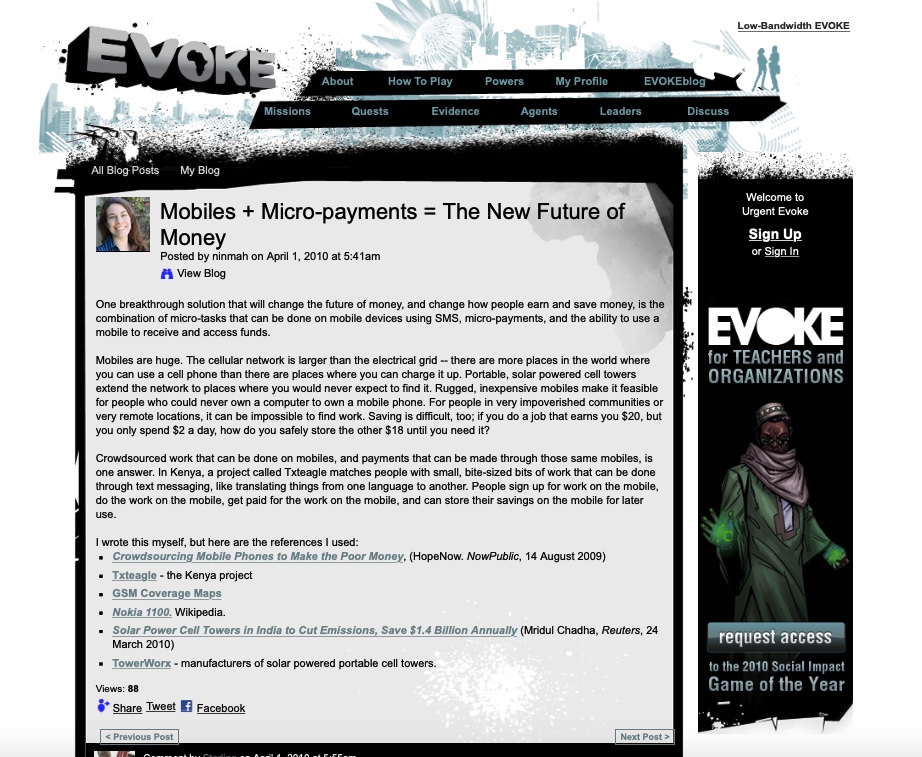
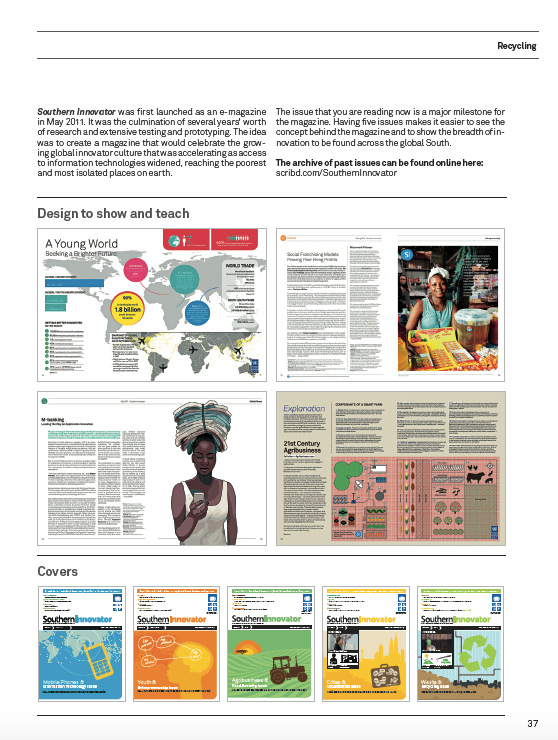



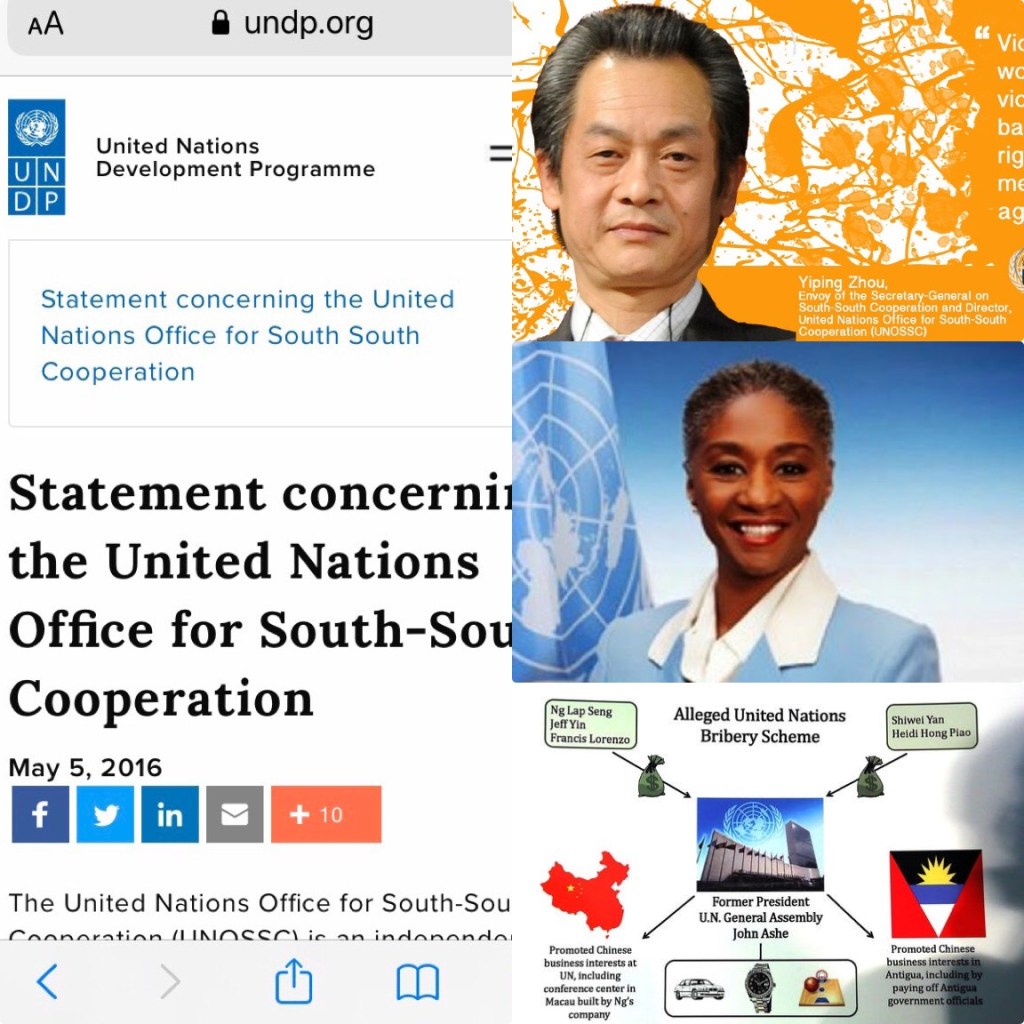


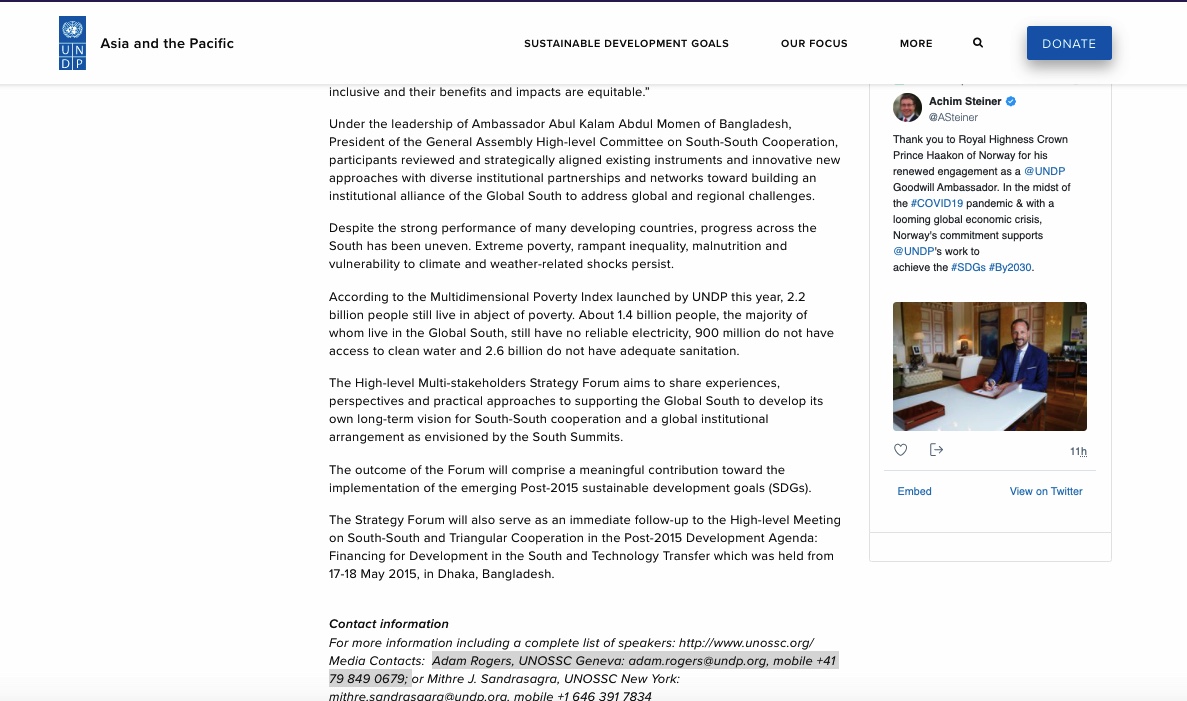

 UNOSSC Director Yiping Zhou retires.



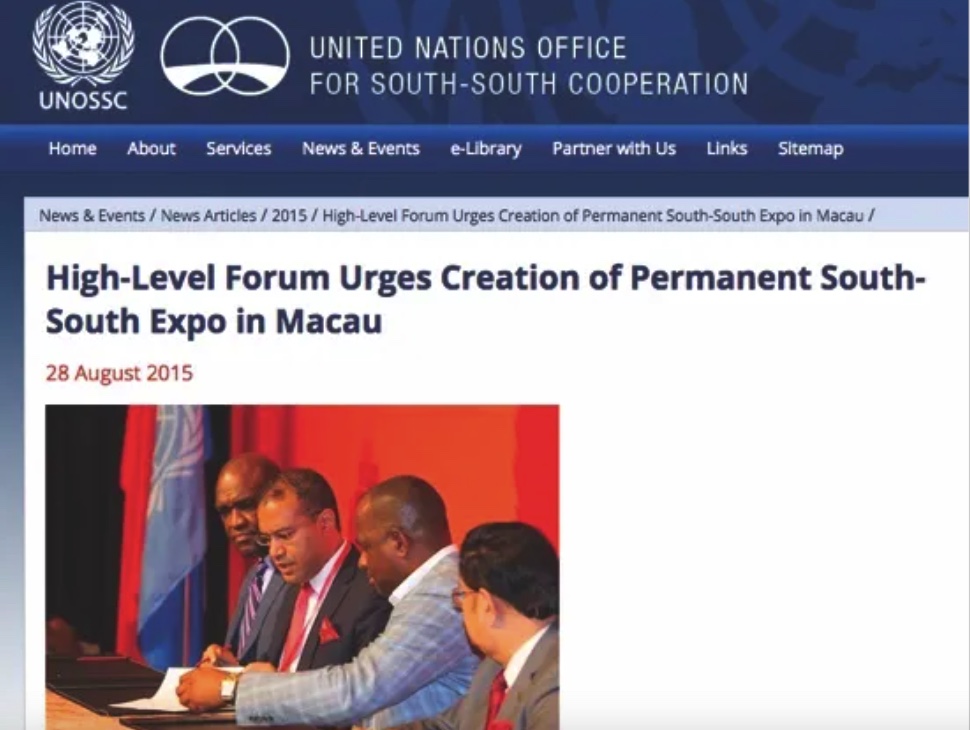




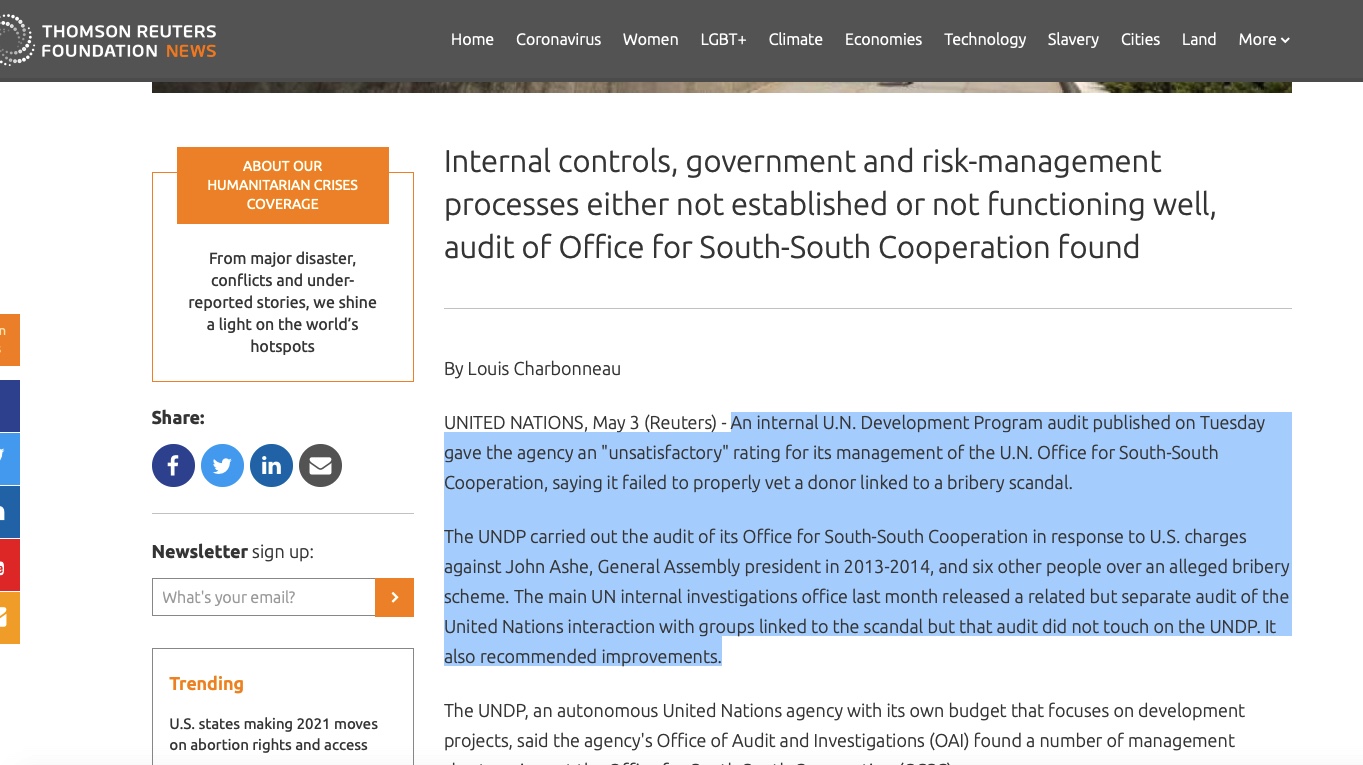


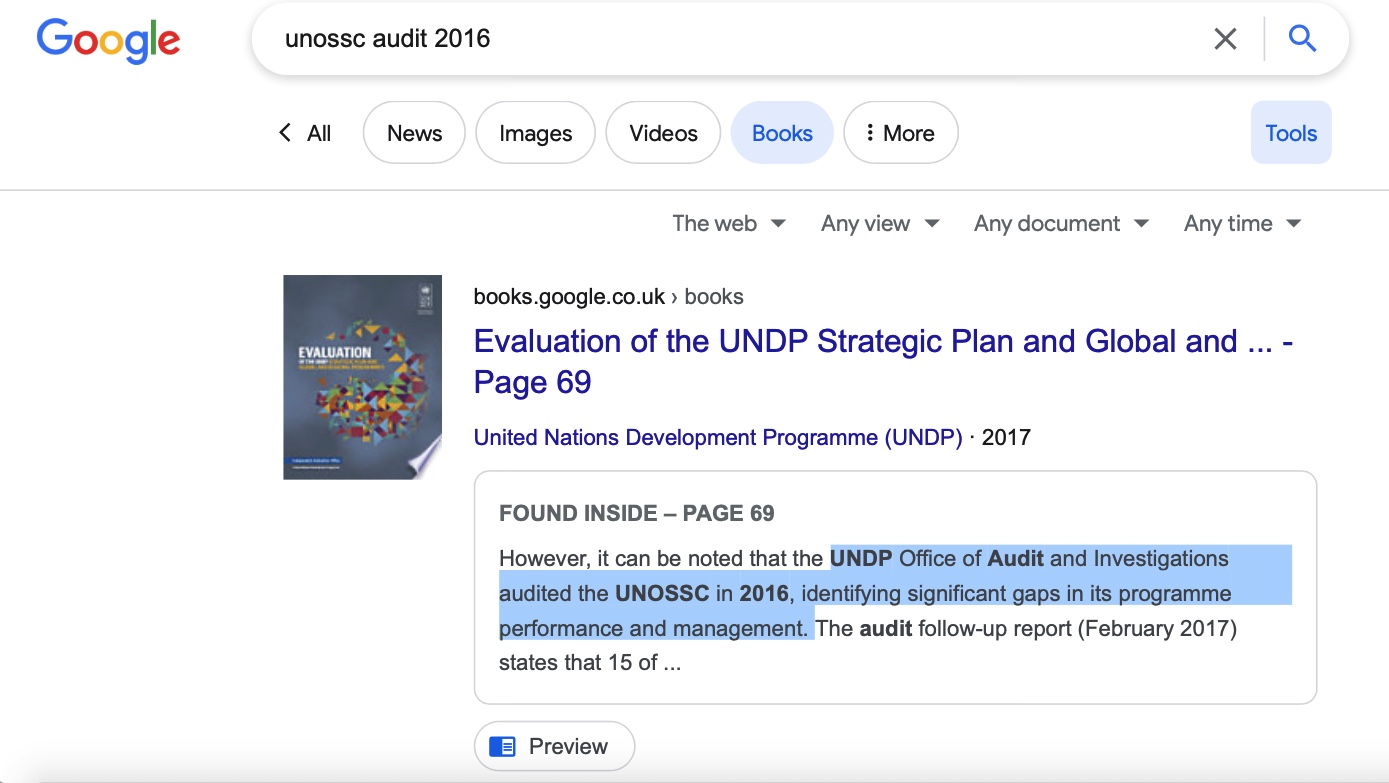


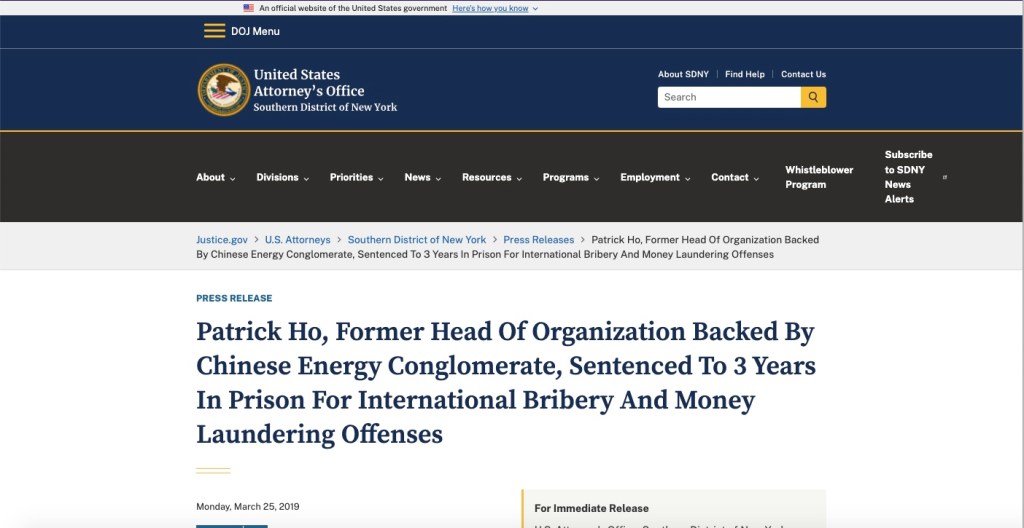








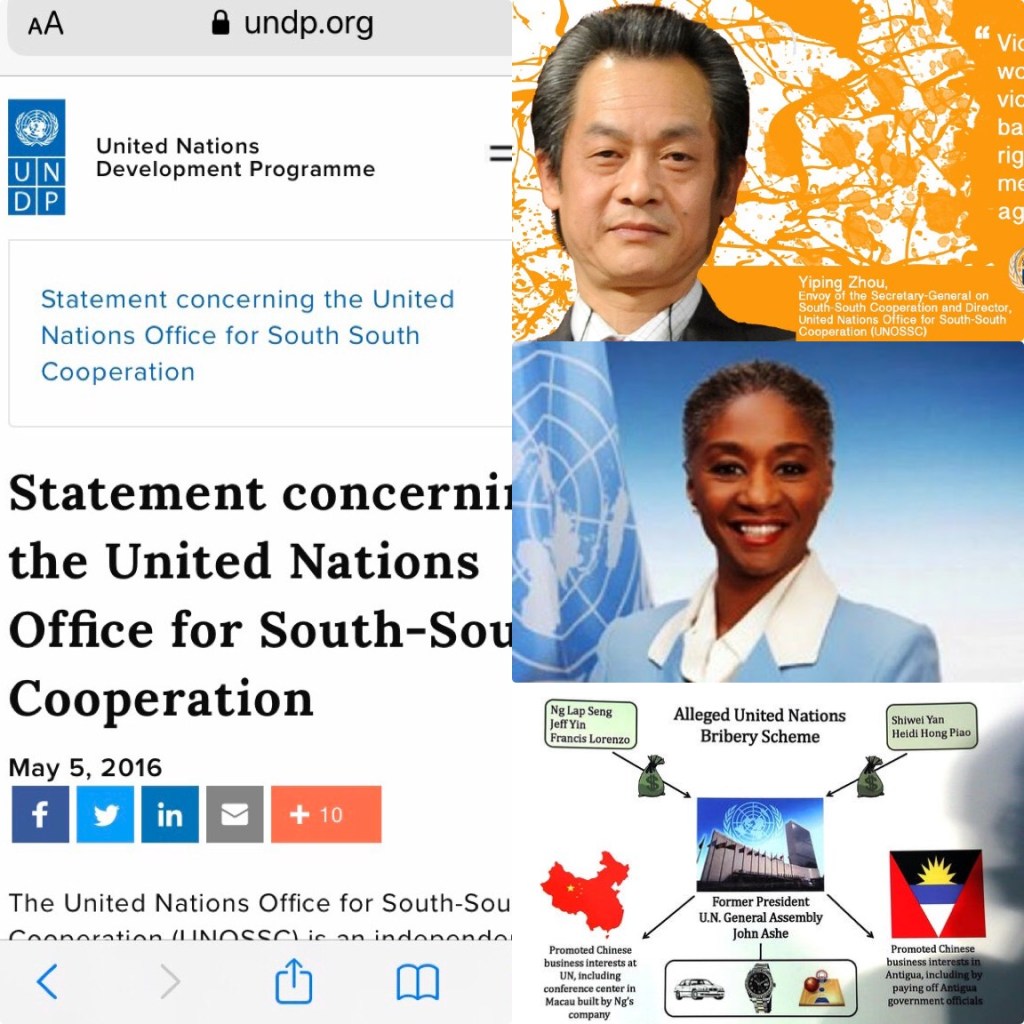

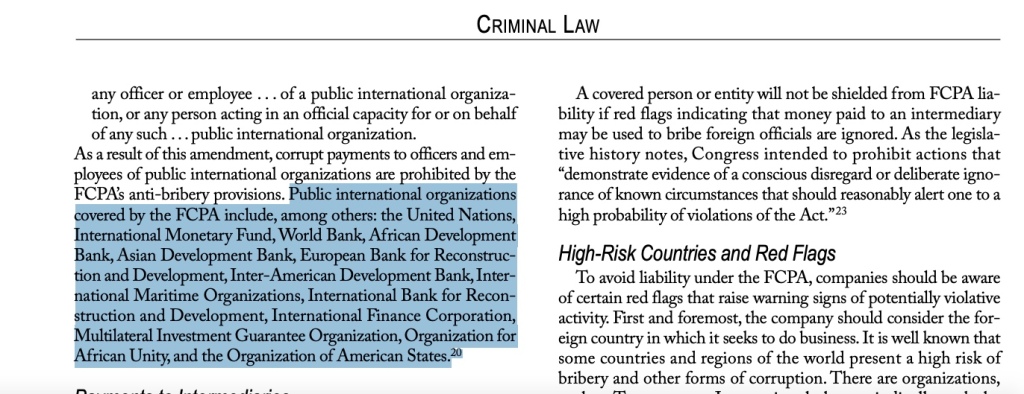


 David South Consulting
You must be logged in to post a comment.