Categories
Archive Development Challenges, South-South Solutions Newsletters

The South has a Good Story to Tell

By David SouthDevelopment Challenges, South-South Solutions

SOUTH-SOUTH CASE STUDY

The fast-changing modern world is raising the living standards of billions in the South – China alone has lifted 400 million people out of poverty since the 1980s – but it is also risking the loss of many rich cultural traditions. One of them is storytelling.

Oral storytelling is a critical tool for passing on history, while teaching morals and ethics, especially in societies with low rates of literacy and little formal education. But with the rise of modern media and advertising, few traditional storytellers – many of whom are old – stand a chance. Populations are on the move like never before. As more and more people end up in sprawling cities, many are becoming disconnected from their roots.

Yet across the South, people are finding ways to re-invent story telling — and also to make money, preserve cultural pride and feed the appetite for novelty in hungry, modern media and business.

In 1997, storytelling was acknowledged by UNESCO, which pledged to back humanity’s oral and immaterial heritage, and to protect a vast number of oral and musical traditions, crafts and knowledge – plus the “living human treasures” who possess them. It backed this up in 2003 with the Convention for the Safeguarding of Intangible Cultural Heritage. It supports storytelling through its International Programme for the Development of Communication.

But what about the young – the most important generation for storytelling to have a future? In Bogota, Colombia, students have started a movement of urban storytellers. Aged between 17 and 35, they draw on the things they have learned in university. They eschew linear narration and instead adopt the popular language of films and advertising. Inspired by one television commercial, a story revolves around a drop of tomato sauce falling from a high-rise building, sparking a gun battle. The staccato narrative takes inspiration from post-modern authors like Italo Calvino. It is also the perfect narrative to capture modern, urban audiences who live in a world saturated with media.

By blending together ancestral and post-modern tales, these student storytellers are luring Latin Americans back to listening to stories. Live storytelling, when done well, has an ability to connect with other people like no other medium. This new generation also is helping make Colombia a gathering place for storytellers in Latin America, expressed in events like the Hay Festival Cartegena, a literary event that draws authors from around the world.

But is there any money in storytelling? Tale-spinners like Argentinian Juan Moreno say yes. Moreno quit teaching 17 years ago to tell stories for money in theatres, bars, universities and libraries, tapping into a contemporary marketplace for storytelling.

In fact, it is better paid than acting in the theatre, he claims, and if you are good, it comes with lots of travel. There is a global round of congresses, festivals and seminars to keep storytellers connected, inspired – and paid.

Moreno now makes money teaching many professions how to use stories to be more powerful communicators. He told the UNESCO Courier, “the value of the spoken word, words that heal and restore, that can give life but also take it away,” are key to many fields, like law and social work.

The world centres of storytelling are very much focused on the South. The International Congress of Oral Storytelling, part of the Buenos Aires Book Fair, has been running every year since 1995. At the Congress, tips are exchanged over the subtle tricks of timing and voice, gestures and facial expressions. Other Southern cities with storytelling events, include Bucaramanga, Colombia, Monterrey, Mexico and Agüimes, in the Canary Islands.

While young people are breathing new life into storytelling, Morocco’s legendary storytellers have been facing a common dilemma seen across the developing and developed world: how can they compete with flashier and more distracting pastimes like computer games and TV?

Illiteracy in Morocco affects 40 per cent of the population, so telling stories is an excellent way to reach this non-reading group. Stories and parables have long been seen as a great way to convey ideas, values and philosophies.

But Morocco’s storytelling sages, or halakis, are using their heads and turning to computers to get their stories told, and prevent their thousand-year tradition from dying out. With the help of UNESCO, the halakis have created a digital archive of their stories in audio and video.

Based in Marrakesh’s famous main square, Jemaa al-Fna, they compete in a hury burly of street entertainers and aromatic foods; it is a place where men with monkeys vie with snake charmers for your attention. Morocco’s storytellers would set up in the public squares of the cities of Fes, Meknes and Marrakesh to entertain crowds and educate about morality. These would include the ethical values of kindness, honour and chivalry. But Marrakesh is now the only place where a half dozen old men (there used to be 20 in Marrakesh) still practice this ancient art form.

UNESCO declared the square in 2001 part of the world’s “Oral and Intangible Heritage of Humanity.” Video recorders have been documenting the storytellers and chronicling them on the internet.

Spanish writer Juan Goytisolo, who spends part of his year in Marrakesh, has championed the halakis in his book, Marrakesh Tales, and in bringing UNESCO in to help them. He has defended their corner against the plans of city planners and developers.

Seventy-one-year-old Moulay Mohammed is blunt about the current state of storytelling: “Young Moroccans would rather watch TV soap operas than listen to a storyteller, much less become one themselves,” he told the BBC. Mohammed’s stock-in-trade is the Old Testament and all of A Thousand and One Nights: both tales of sultans, thieves, wise men and fools, mystics, genies, viziers and belly dancers. And he has been telling these tales for 45 years.

In South Africa, digital technology is also breathing new life into storytelling – and infusing the stories with urgent, contemporary issues like HIV, and domestic and sexual violence. South African women are using digital technology to preserve traditional storytelling: A collection of 15 digital stories – called “I Have Listened, I Have Heard” – made in 2006 are being distributed along with books. They assembled the stories using audio recorders and made movies of the readings with digital cameras. It was funded by the Foundation for Human Rights and made at the Women’s Net Computer Training Centre in Johannesburg.

The storytellers worked together on each script, taking a day. They would tell the group a story focusing on particular experiences or meaningful moments in their lives. The group would comment and draw out the best bits of the story. The whole process helps the story teller to flesh out the story with metaphors, narrative techniques and milestones.

Published: April 2008

Resources

  • The basics of story telling are answered in this webpage: www.timsheppard.co.uk
  • Singapore International Story Telling Festival 2008: This year’s festival also includes a new addition: Asian Digital Storytelling Festival
  • International Congress of Oral Storytelling: Held from 2-4 May 2008 in Buenos Aires, Argentina. Website: www.el-libro.org.ar
  • Folk Tales: Online project where Pakistani students and their teachers share folklore and fables with students around the world. Website: www.edutopia.org
  • Thirsty-Fish: Story and Strategy: A consultancy that helps businesses build their brands based on age-old practices of storytelling. Website: www.thirsty-fish.com

“I think you [David South] and the designer [Solveig Rolfsdottir] do great work and I enjoy Southern Innovator very much!” Ines Tofalo, Programme Specialist, United Nations Office for South-South Cooperation

Creative Commons License

This work is licensed under a
Creative Commons Attribution-Noncommercial-No Derivative Works 3.0 License.

ORCID iD: https://orcid.org/0000-0001-5311-1052.

© David South Consulting 2023

Categories
Archive data Development Challenges, South-South Solutions Newsletters Southern Innovator magazine

Dabbawallahs Use Web and Text to Make Lunch on Time

By David SouthDevelopment Challenges, South-South Solutions

SOUTH-SOUTH CASE STUDY

The developing world’s rapidly growing cities are bringing with them whole new ways of living and working. One rapidly expanding category of citizen is the office worker. A symbol of growing prosperity, the office worker also tends to be a time-poor person who often must commute large distances between home and workplace.

These long commutes mean that many workers have lost the old ability to go home for lunch. This has led to an expanding new field of business: catering to all these office workers’ appetites.

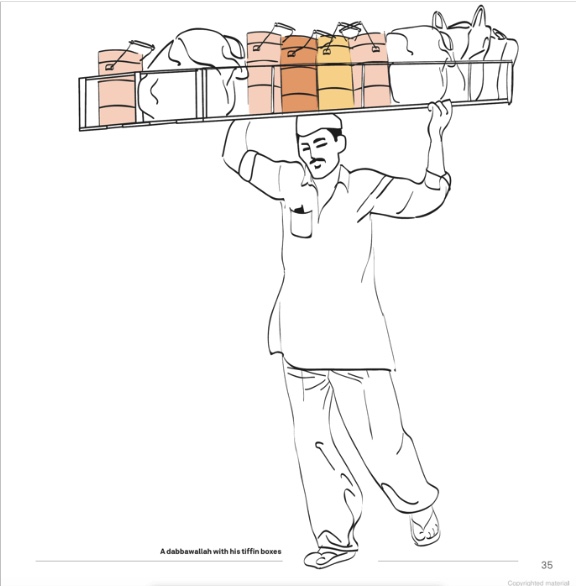
Every morning Mumbai’s legendary dabbawallahs (it means “box-carrier” or “lunchpail man”) fan out across the city to collect freshly prepared lunches from people’s homes and restaurants. They then efficiently use the transport network to quickly deliver lunches to the customers’ workplaces. Once just for the elite, the dabbawallah lunch has become the norm for Mumbai’s middle class office workers. Lunches are packed into small, metal tiffin boxes, ingeniously organized so each component of the meal is sealed in its own section and kept warm.

With a plethora of religious and cultural practices, Indians are particular about what they eat. In Mumbai there are 200,000 office workers receiving cooked lunches every day delivered straight to their desks. This is done by an army of 5,000 dabbawallahs. While their delivery accuracy was already impressive – only six deliveries in a million go astray – they realized they had to adapt to the city’s rapid changes. In addition to their network using trains, hand-carts and bicycles to get the lunches to desks, they have turned to the internet and mobile phone SMS text messaging to take orders.

It is a 125-year old industry that has grown at the rate of five to ten per cent a year and all are paid the same no matter what their function in the business.

With foreign direct investment into developing countries surging – according to the United Nations Conference on Trade and Development (UNCTAD), it rose by 12 per cent from 2005 to 2006 – the number of office workers is on the rise too.

The trend is especially pronounced in India, which is on track to overtake the United Kingdom as the world’s fifth largest economy by 2010, according to investment bankers Goldman Sachs.

India’s cities are booming. Mumbai is one of the top five global megacities as well as the world’s most crowded metropolis. The dabbawallahs are an excellent example of how a business can move with the times.

A key component in India’s new-found success has been a willingness to do things better and become more efficient; the key to this is often information technology. The new technology for the dabbawllahs has been built for them by software engineer Manish Tripathi – he has even been adopted as an honorary tiffinwallah.

“When people move to Mumbai for work, and need a lunchbox carrier, who do they ask?” he said. “They ask their friends, or their neighbour. Now, they just need to go to the website and they can find out how to get in touch with us. They can also get in touch with us via SMS.”

The move online has been a great success said Tripathi: “We get 10 to 15 enquiries more a day via SMS and the website.”

Raghunath Medge from the dabbawallahs cooperative said they are also making money by selling advertising on table mats. They have also turned to being a health service: they distribute health advice, beginning with this year’s World AIDS Day. An “AIDS kit”, comprising a car calendar and fliers on testing and counselling tied neatly with a red ribbon, was distributed ahead of World AIDS Day December 1.

“The kit was attached to empty lunch boxes and delivered to about 100,000 clients’ homes,” said Raghunath Megde,

Targeting hungry office workers is a goldmine for others too: in Saigon, Vietnam, the Ben Thann restaurant capitalised on its proximity to an area with a fast-growing office worker population to increase its profits. “Since our restaurant began serving lunch for office workers our business has increased by 60 per cent. This increase in number of guests enjoying the new menu was the main reason for Ben Thanh’s decision to introduce a buffet lunch,” said Nguyen Thi Thu Thao, deputy manager of Ben Thanh Restaurant.

In the past, the dabbawallahs were visited by Prince Charles and British entrepreneur multimillionaire Richard Branson, to study their working methods. It looks like this next round of innovation will equally grab the world’s attention.

Published: December 2007

Resources 

  • The New York Times has an excellent slideshow of the dabbawallahs at work: Click here to view 
  • The official website of the dabbawallahs: http://www.mydabbawala.com/

“I think you [David South] and the designer [Solveig Rolfsdottir] do great work and I enjoy Southern Innovator very much!” 

Ines Tofalo, Programme Specialist, United Nations Office for South-South Cooperation
Creative Commons License

This work is licensed under a
Creative Commons Attribution-Noncommercial-No Derivative Works 3.0 License.

ORCID iD: https://orcid.org/0000-0001-5311-1052.

© David South Consulting 2023

Categories
Archive Development Challenges, South-South Solutions Newsletters

Innovative Ways to Collect Water from Air

By David SouthDevelopment Challenges, South-South Solutions

SOUTH-SOUTH CASE STUDY

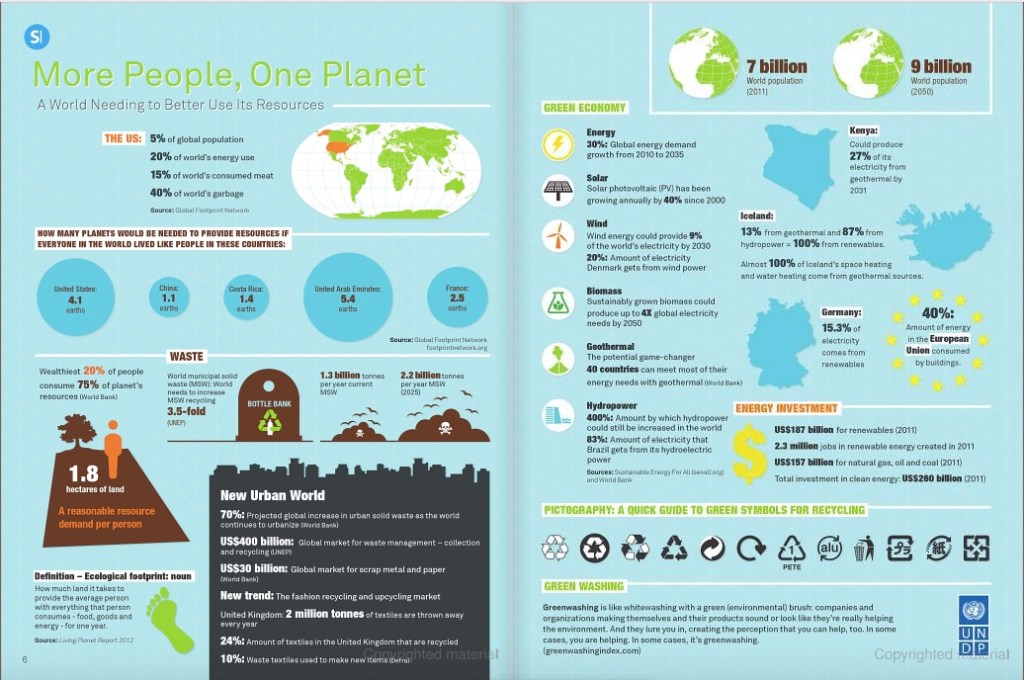
 World water resources are being depleted quickly as populations grow, urbanize and demand better living standards. Many scientists believe we are reaching peak water – the point at which fresh water is consumed faster than it is replenished.

According to Ensia (ensia.com), a magazine showcasing environmental solutions in action, 70 per cent of the earth’s fresh water reserves are locked up in snow or ice, and are expensive to tap and bring to the world’s water-stressed places. Of the remainder, most is in groundwater, soil moisture, swamps or permafrost, while just 0.3 per cent is easy to access in freshwater lakes and rivers.

By far the biggest user of water in the world – accounting for 69 per cent of the total – is farm irrigation. That’s a serious concern when considering the world will need to grow more food to feed an increasing population. Just 1 per cent of water is used for livestock, while 15 per cent is used for electricity generation and 7 per cent for manufacturing. More water is currently being pumped from underground resources than is being replaced from underground aquifers.

The average person needs to consume 0.6 to 1.3 gallons (2.72 liters to 6 liters) of water per day to survive in a moderate climate. For drinking, cooking, bathing and sanitation, an individual needs 13 gallons (59 liters) a day (Ensia).

In many places, obtaining water requires a long trek to a well or stream. But non-desert climates have water as a resource readily available all around – trapped in the air. The clue to this resource’s existence is in the air’s humidity levels, the most visible sign of which is the dew that is found covering the grass and leaves every morning when people wake up. The trick is to extract that water from the air and create a steady supply of this essential resource.

Italian architect and designer Arturo Vittori (http://www.vittori-lab.com/team/arturo-vittori), a lecturer on aerospace architecture, technology transfer and sustainability, believes he has an answer.

Wired magazine (http://www.wired.com/2014/03/warka-water-africa/) reported that Vittori was inspired by a trip to Ethiopia, where he observed the daily struggle to get water. Access to water in northeastern Ethiopia often requires a long walk, which reduces the amount of time left in the day to do other things. Parents often take along their children, meaning the children cannot go to school. The time consumed by gathering water leaves people poorer and unable to dedicate more of their day to income-earning activities.

And there is no guarantee the water is safe to drink or free of chemical contaminants. This situation left Vittori pondering ways of coming up with an inexpensive solution that would eliminate the daily hassle of finding water and guarantee its quality.

The answer was a WarkaWater Tower (http://www.architectureandvision.com/projects/chronological/84-projects/art/492-073-warkawater-2012?showall=&start=1). The bamboo structure – which looks like an upended, latticework funnel – captures the dew and moisture in the air and collects it in a basket at the bottom.

The water collector is inspired by the Warka tree, or Ficus vasta (http://en.wikipedia.org/wiki/Ficus_vasta). Native to Ethiopia, it is known for providing shade and as a rendezvous point for traditional gatherings.

A WarkaWater Tower stands 8 meters in height and is made from either bamboo or reeds. Inside, a mesh traps humidity from the air and the water drips down into a basket. One tower can gather around 94 liters of water a day. The water is right there in the community and not kilometers away, meaning time and energy saved for income-generating tasks.

A WarkaWater Tower is constructed in sections, which are assembled and then stacked on top of each other. The construction does not need special scaffolding or special machinery. Once the tower is in place, it can also be used as a solar-power generator.

The tower is still a prototype and Vittori plans to build two towers for a launch in 2015.

In Peru, reports the Latin American Herald Tribune (http://www.laht.com/article.asp?ArticleId=700400&CategoryId=14095), another innovative solution to the water crisis has been developed by students at the University of Engineering and Technology (UTEC) (http://www.utec.edu.pe/Utec.aspx). The students have developed a highway advertising billboard that can draw drinking water out of the air. Inspired by a campaign called “Ingenuity in Action”, the students teamed up with a local advertising agency to design the billboard. It is capable of extracting water from the air and processing it through a filtration system as it flows down to a series of taps at the bottom.

The water-making billboard is at the 89.5 kilometer distance marker of the Pan-American Highway and has five electric-powered tanks that can hold a total of 96 liters of drinkable water. It is capable of providing enough water for hundreds of families. A true sign of our times!

Published: July 2014

Resources

1) How to Build a Rainwater Collection System. Website: http://www.wikihow.com/Build-a-Rainwater-Collection-System

2) The geopolitical difficulties of access to water covered in The Devil and the Disappearing Sea: A True Story about the Aral Sea Catastrophe by Robert Ferguson. Website: amazon.com

3) “Earth may have underground ‘ocean’ three times that on surface” from The Guardian. Website: http://www.theguardian.com/science/2014/jun/13/earth-may-have-underground-ocean-three-times-that-on-surface

An article on the impact of the water crisis on food supplies. Website: http://www.theguardian.com/lifeandstyle/2014/jul/09/enjoy-your-coffee-you-may-soon-not-be-able-to-afford-it

5) How to Make Water in the Desert. Website: http://www.wikihow.com/Make-Water-in-the-Desert


Development Challenges, South-South Solutions was launched as an e-newsletter in 2006 by UNDP’s South-South Cooperation Unit (now the United Nations Office for South-South Cooperation) based in New York, USA. It led on profiling the rise of the global South as an economic powerhouse and was one of the first regular publications to champion the global South’s innovators, entrepreneurs, and pioneers. It tracked the key trends that are now so profoundly reshaping how development is seen and done. This includes the rapid take-up of mobile phones and information technology in the global South (as profiled in the first issue of magazine Southern Innovator), the move to becoming a majority urban world, a growing global innovator culture, and the plethora of solutions being developed in the global South to tackle its problems and improve living conditions and boost human development. The success of the e-newsletter led to the launch of the magazine Southern Innovator.  

https://davidsouthconsulting.org/2022/11/02/clay-filters-are-simple-solution-for-clean-water/

https://davidsouthconsulting.org/2023/01/16/hip-driven-pump-brings-water-to-parched-fields/

https://davidsouthconsulting.org/2022/11/19/saving-water-to-make-money/

https://davidsouthconsulting.org/2021/03/05/southern-innovator-issue-5/

https://davidsouthconsulting.org/2022/02/10/urban-farmers-gain-from-waste-water/

https://davidsouthconsulting.org/2022/10/17/the-water-free-south-african-bathing-solution/

Follow @SouthSouth1

Google Books: https://books.google.co.uk/books?id=waeXBgAAQBAJ&dq=Development+Challenges+February+2008&source=gbs_navlinks_s

Slideshare: http://www.slideshare.net/DavidSouth1/development-challengessouthsouthsolutionsfebruary2008issue

Southern Innovator Issue 1: https://books.google.co.uk/books?id=Q1O54YSE2BgC&dq=southern+innovator&source=gbs_navlinks_s

Southern Innovator Issue 2: https://books.google.co.uk/books?id=Ty0N969dcssC&dq=southern+innovator&source=gbs_navlinks_s

Southern Innovator Issue 3: https://books.google.co.uk/books?id=AQNt4YmhZagC&dq=southern+innovator&source=gbs_navlinks_s

Southern Innovator Issue 4: https://books.google.co.uk/books?id=9T_n2tA7l4EC&dq=southern+innovator&source=gbs_navlinks_s

Southern Innovator Issue 5: https://books.google.co.uk/books?id=6ILdAgAAQBAJ&dq=southern+innovator&source=gbs_navlinks_s

Creative Commons License

This work is licensed under a
Creative Commons Attribution-Noncommercial-No Derivative Works 3.0 License.

ORCID iD: https://orcid.org/0000-0001-5311-1052.

© David South Consulting 2023

Categories
Archive

Help is at Hand for India’s Beleaguered Bus-riders

By David South, Development Challenges, South-South Solutions

SOUTH-SOUTH CASE STUDY

The website is a simple affair: a distinctive logo sits above a lean-looking booking system that allows users to enter their journey start and end destination, date and then click for available buses and prices. Its simplicity is deceptive: redBus is a smart technological solution to a very complicated problem in India: booking and buying a bus ticket. The service it offers – relief from a chaotic, frustrating and time-consuming task – is transforming the experience of travel in India.

Based in India’s technology hub of Bangalore (http://en.wikipedia.org/wiki/Bangalore), redBus (redbus.in) is a web start-up begun by young whizzes from technology companies who decided to take a risk and venture out and do something new.

Back in 2005, redBus’ three founders, all graduates of one of India’s top engineering schools, were working in Bangalore for well-known information technology companies such as IBM, Texas Instruments and Honeywell.

As they tell the story on their website, it was the difficulty of getting a bus home during the Hindu religious festival of Diwali that prompted the inspiration. The trip was a last-minute decision, and buying bus tickets proved far from easy. On top of failing to get a ticket from various travel agents, journeying around Bangalore meant encountering the city’s traffic gridlock.

This experience led to the idea of developing a service to book bus tickets over the Internet.

RedBus quickly evolved into an innovative service offering multiple options to customers. They can call a phone number and speak to a customer service representative or use a mobile phone to book a ticket. RedBus claims to have sold more than 8,000,000 tickets to date.

Tickets are also delivered to customers in major cities in advance of their travel. Even more conveniently, redBus developed a service called mTicket. It sends the ticket by SMS (mobile phone text message) straight away when a customer makes a booking. The mTicket appears on the display screen of the mobile phone and the customer just has to show their mTicket to the driver to board the bus.

RedBus uses partnerships to expand their distribution network, and this means redBus tickets can be purchased at more than 75,000 outlets. The company now works with more than 350 bus operators, allowing customers to book tickets on more than 4,500 routes across India.

The service set out to achieve two goals: create a one-stop shop for ticket purchases, and to make it possible for customers to get tickets when they needed them and not be told they have been sold out.

Indians were already having success with booking airline tickets online. But nobody else had thought of doing central, online sales for bus tickets before.

Research was behind redBus’ success. The founders interviewed bus operators, consumers and venture capitalists before setting up the business.

They then set about writing the code for the Internet service and put together a business plan and presented it to The Indus Entrepreneurs (TiE) (tie.org) – a network of mentors who help young entrepreneurs. With the support in place, they were able to leave their well-paying, secure jobs to start redBus.

Among the many challenges they faced was changing the mindset of bus operators used to dealing only with travel agents working out of sales offices.

It also took time for the concept to take off. But as word-of-mouth got around, more people started to use the website. The young team grew from just three to 50 within nine months.

Their business success, as they describe it, is the result of listening to, and soliciting feedback from their customers. They say it has helped them identify what is going wrong and fix it, and describe their business culture as “learn, implement, grow.” They also have a culture of sharing ideas and mistakes to encourage learning. It seems it is this buzzy, youthful and always-learning business culture that is behind redBus’ success.

Resources

1) IDiscoverIndia: A website detailing how to explore India’s vast bus network.Website: http://www.idiscoverindia.com/Travel_Info/india_travel_bus.html

2) TiE: Fostering Entrepreneurship Globally: The Indus Entrepreneurs (TiE),was founded in 1992 in Silicon Valley by a group of successful entrepreneurs, corporate executives, and senior professionals with roots in the Indus region. TiE’s mission is to foster entrepreneurship globally through mentoring, networking, and education. Dedicated to the virtuous cycle of wealth creation and giving back to the community, TiE’s focus is on generating and nurturing our next generation of entrepreneurs. Website: tie.org

Creative Commons License

This work is licensed under a
Creative Commons Attribution-Noncommercial-No Derivative Works 3.0 License.

ORCID iD: https://orcid.org/0000-0001-5311-1052.

© David South Consulting 2021