Categories
Archive Development Challenges, South-South Solutions Newsletters Southern Innovator magazine

Local Animation: A Way Out of Poverty

By David SouthDevelopment Challenges, South-South Solutions

SOUTH-SOUTH CASE STUDY

One of the more remarkable creative developments since 2000 has been the explosion in animation production in the developing world, in particular Asia. Once seen as frivolous or unnecessary, animation is now acknowledged as a high-growth area and a critical component in the emerging economies being shaped by information technology.

The demand for more animation is being fuelled by several trends. Lucrative outsourcing contracts with major global film studios like Walt Disney and Warner Brothers get much of the attention. But even more importantly for small entrepreneurs, the rapid growth of information technology and mobile phones is fuelling demand for animation with a local flavour, which is an excellent way to make applications more attractive to users. As computers and animation software become cheaper, it is easier for entrepreneurs to compete with the bigger studios. It all started with the popularity of Japanese anime animation, which kicked the door open in the West, sparking an appetite for fresh, new styles unseen before.

The animation leaders in Asia are Japan, Republic of Korea, Philippines and Taiwan Province of China, with India rising quickly. As animation production is very lucrative and a labor-intensive business (labor takes up 70 to 80 percent of business costs), other Asian countries such as India, China, Vietnam, Malaysia and Singapore have recently started their own industries.

The National Association of Software and Service Companies (NASSCOM) has forecast the Indian animation sector to gross overall turnover of US $950 million in 2009, while its gaming industry will reach US $300 million in 2009 (from US $30 million in 2005). The global industry is huge: it is estimated that games will gross US $11 billion and animation US $35 billion by 2009. In the Philippines, growth has been 25 per cent a year since 2005 (National Statistics Office), and the government has been heavily promoting animation as a viable career and business opportunity. China was able to make US $604 million in 2005. The AWN’s Animation Industry Database lists 48 studios operating in the Philippines alone. Others benefiting are Thailand, Taiwan Province of China and Republic of Korea. And even in Africa, there have been attempts to get things going.

Ambitiously, China hopes to raise its home-made share of the animation pie from 10 per cent and to increase its overall animation programming from 5,000 hours/year to 16, 7000/year. In 2004, the Chinese government set up four animation schools: Communication University of China, Beijing Film Academy, China Academy of Art, and Tianjin Sorun Digital Media School. More than 200 animated films were produced in 2004.

Indian animation feature productions have exploded in the past few years. In 2005, animated feature Jai Hanuman started the current boom. Its quality marked a departure from past Indian productions and heralded in a new era. Importantly, it out-grossed any Disney film in India, and proved films featuring local topics could be commercially successful. It is a difficult market with 14 official languages and 1,400 dialects. At present, the huge Indian market has little locally produced animation to feed its needs. But by 2007, 71 Indian animation films were announced to be in production.

Productions in development draw heavily on India’s culture and love of gods. They include Epiphany Films’ The Dream Blanket, a Tibetan fairy tale, and Graphiti studios’ Action Hero BC, a teenager who fights evil.

The world’s animation producers scour India for talent to outsource. Global films with some Indian production in them include Finding Nemo, The Lion King and The Adventures of Tenali Raman. Toonz Animation Studio based at the Technopark in Kerala, was called by Animation Magazine one of the top ten studios in the world.

In Africa, South Africa has by far the most dynamic and sophisticated animation sector. Ten years after the birth of democracy, hundreds of production companies and several 2D animation houses were established. In turn, South Africa advertises itself as a cheaper place to produce animation.

The highly successful South African 3D animated series Magic Cellar by Morula Pictures – the first of its kind based on African culture – was successfully sold to the US Home Box Office channel this year. Based on 20 folk tales, the stories were collected through interviews with elders in African villages. Mfundi Vundla, 58, who owns Johannesburg’s Morula Pictures, South Africa’s largest black-led studio, said his productions are meant to counter the perception of “Africans as unsophisticated, superstitious idiots who visited witch doctors to solve problems.” It employs 60 people and dozens of actors.

In 2004, UNESCO’s Africa Animated! was launched, with East Africa’s first animation project. The participants undertook animation, drawing techniques, scriptwriting for animation and storyboarding. The project was launched to assemble resources and expertise for the production of culturally relevant children’s animated cartoons and programmes in Africa. It sought to create a high-quality “African branded” training and production model, in order to make African animation competitive for regional organizations to produce animated TV series, Public Service Announcements (PSA) and short films.

The Nairobi office is seeking to establish a Regional Training and Production Centre for Animation in Kenya in 2008.

Moustapha Alassane of Niger and one of Africa’s film pioneers, said: “The good thing about animation is that you can do it on a shoe-string budget. With the computer, animation is getting easier and anyone can do it now. I want to encourage young Africans to use new technologies for animation.”

Published: December 2007

Resources

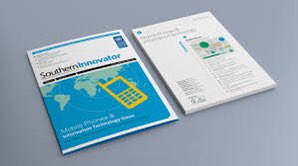
Development Challenges, South-South Solutions was launched as an e-newsletter in 2006 by UNDP’s South-South Cooperation Unit (now the United Nations Office for South-South Cooperation) based in New York, USA. It led on profiling the rise of the global South as an economic powerhouse and was one of the first regular publications to champion the global South’s innovators, entrepreneurs, and pioneers. It tracked the key trends that are now so profoundly reshaping how development is seen and done. This includes the rapid take-up of mobile phones and information technology in the global South (as profiled in the first issue of magazine Southern Innovator), the move to becoming a majority urban world, a growing global innovator culture, and the plethora of solutions being developed in the global South to tackle its problems and improve living conditions and boost human development. The success of the e-newsletter led to the launch of the magazine Southern Innovator. 

Creative Commons License

This work is licensed under a
Creative Commons Attribution-Noncommercial-No Derivative Works 3.0 License.

ORCID iD: https://orcid.org/0000-0001-5311-1052.

© David South Consulting 2023

Categories
Archive Development Challenges, South-South Solutions Newsletters

Global South’s Middle Class is Increasing Prosperity

By David SouthDevelopment Challenges, South-South Solutions

SOUTH-SOUTH CASE STUDY

The global middle class is on the rise – and this is creating both challenges and opportunities. As poverty rates have come down across the global South, many countries have seen a rise in the proportion of their population categorized as “middle class”. Globally, being middle class is defined as a person able to consume between US $4 a day and US $13 a day (ILO).

According to the Organization for Economic Cooperation and Development (OECD), most of this growth will be in Asia and the region will soon make up 66 per cent of the world’s middle class. Historical experience shows that members of the middle class quickly become absorbed in spending their accumulated capital on housing, equipment, industry and business, health and education. In countries with a growing middle class, policy makers need to show a strong interest in creating stable economic conditions to encourage this expanding consumption and domestic demand, the OECD advises.

Growth of the world’s middle class took off after 2001, with an additional 400 million workers joining this group. The McKinsey group of consultants found the total number reached 2 billion in a dozen “emerging nations” in 2010, collectively spending US $6.9 trillion every year (McKinsey).

Forecasters predict a further increase in the middle class across the global South will bring with it a surge in consumption (a combination of spending and demand). Areas being highlighted by various studies and reports include China’s small and mid-size cities, other areas of East Asia and Africa.

Middle class spending in these dozen emerging nations could reach US $20 trillion during the next decade – twice the amount of consumption occurring in the United States right now (McKinsey).

The result is a re-shaping of populations, with growing numbers of people now neither rich nor desperately poor, but landing in the middle of the income distribution.

And local competitors in the global South are fighting hard for these consumers on their own turf.

The Hangzhou Wahaha (http://en.wahaha.com.cn/) beverage maker in China has been able to compete against multinationals such as Coca-Cola and PepsiCo, according to McKinsey. It has turned itself into a US $5.2 billion business using a multi-pronged strategy: targeting rural areas, catering to local needs, keeping costs low and positioning itself as the patriotic choice.

And this change is also occurring in Africa, where a growing middle class is fuelling sales of refrigerators, television sets, mobile phones, motors and automobiles across the continent, according to the OECD. In Ghana, for example, car and motorcycle ownership has risen by 81 per cent since 2006.

According to the African Development Bank (AfDB), Africa’s middle class has reached 34 per cent of the population, or 350 million people. In 1980, it was 126 million people, or 27 per cent of the population.

Countries with the largest middle classes in Africa include Tunisia and Morocco, while Liberia and Burundi have the smallest number of people in the middle class.

The economic growth that is fuelling this middle-class surge is coming from a combination of increasing investment in the services sector, the tapping of the natural resource sector and better economic policies in the past two decades. Africa’s middle class is driving growth in the private sector and boosting demand for goods and services, most often also provided by the private sector.

“The liberalization of African economies has resulted in improved efficiencies and led to a rapid growth in the service sector, which has spurred the growth of the middle class,” Lawrence Bategeka, a principal researcher at the Uganda-based Economic Policy Research Centre, told The East African newspaper.

How important the middle class is to increasing consumption levels can be seen in the cases of Brazil and South Korea.

According to the OECD, both countries had similar income levels and growth rates in the 1960s. But by the 1980s, high income inequality in Brazil capped the middle class at 29 per cent of the population. In South Korea in the 1980s, the middle class population reached 53 per cent. This larger middle class population enabled South Korea to switch from an export-driven growth strategy to domestic consumption.

While Brazil wasn’t able to do this at the time, it has since made impressive gains in reducing poverty – from 40 per cent of the population in 2001 to 25 per cent in 2009. This has seen the middle class grow to 52 per cent of the population and boosted domestic consumption.

While a rising middle class in the global South is good news for improving human development and living standards, the OECD found much of the new middle class was vulnerable and could easily slip out of that category. They also often lacked enough income to purchase more expensive durable goods such as automobiles (OECD Yearbook 2012).

The success of this fragile but growing middle class will be key to how well the global economy fares in the coming years.

A new report by the UN’s International Labour Organization (ILO) argues that the global South’s growing middle classes are just the thing to spur growth across the wider world economy.

“Over time, this emerging middle-class could give a much needed push to more balanced global growth by boosting consumption, particularly in poorer parts of the developing world,” said Steven Kapsos, one of the authors of the report.

In Indonesia, an example of the economic impact of the middle class trend in action can be seen in the surging life insurance business.

Association of Indonesian Life Insurance Companies (AAJI) chairman Hendrisman Rahim believes the growing middle class are potential customers for the country’s thriving life insurance industry.

“They are the ones who have the need to be insured and can afford to purchase a policy. Extremely rich people are financially capable [of buying], but may not have the need. Extremely poor people have the need, but require financial assistance to be insured,” he said to the Jakarta Post.

As the Indonesian middle class increases, the life insurance industry is expecting to see revenue rise by 30 per cent in 2013.

Published: February 2013

Resources

1) The $10 Trillion Dollar Prize by Michael J. Silverstein. Website: amazon.com

2) The Middle of the Pyramid: Dynamics of the Middle Class in Africa. Website: http://www.afdb.org/en/blogs/afdb-championing-inclusive-growth-across-africa/post/the-african-consumer-market-8901/

3) McKinsey Quarterly: Capturing the world’s emerging middle class. Website:http://www.mckinseyquarterly.com/Capturing_the_worlds_emerging_middle_class_2639

4) OECD Observer: An emerging middle class by Mario Pezzini. Website:http://www.oecdobserver.org/news/fullstory.php/aid/3681/An_emerging_middle_class.html

Southern Innovator logo

London Edit

31 July 2013

Development Challenges, South-South Solutions was launched as an e-newsletter in 2006 by UNDP’s South-South Cooperation Unit (now the United Nations Office for South-South Cooperation) based in New York, USA. It led on profiling the rise of the global South as an economic powerhouse and was one of the first regular publications to champion the global South’s innovators, entrepreneurs, and pioneers. It tracked the key trends that are now so profoundly reshaping how development is seen and done. This includes the rapid take-up of mobile phones and information technology in the global South (as profiled in the first issue of magazine Southern Innovator), the move to becoming a majority urban world, a growing global innovator culture, and the plethora of solutions being developed in the global South to tackle its problems and improve living conditions and boost human development. The success of the e-newsletter led to the launch of the magazine Southern Innovator. 
Creative Commons License

This work is licensed under a
Creative Commons Attribution-Noncommercial-No Derivative Works 3.0 License.

ORCID iD: https://orcid.org/0000-0001-5311-1052.

© David South Consulting 2023

Categories
Archive Development Challenges, South-South Solutions Newsletters

Safe Healthcare is Good Business and Good Health

By David SouthDevelopment Challenges, South-South Solutions

SOUTH-SOUTH CASE STUDY

Many people have been shocked by recent stories about the proliferation of counterfeit drugs and the rate at which they are killing and harming people in Nigeria. The International Narcotics Control Board found that up to 50 percent of medicines in developing countries are counterfeit. This has driven home the point that without the presence of legitimate players in the African drug market, the illegal sharks will step in to make large profits – and a literal killing.

To counter this negative trend, what is most needed is support for reliable Africa-based companies: businesses that are long-term, sustainable and not living from one grant to the next. But as experience has shown around the world, nurturing businesses requires certain fundamentals: they must work to be profitable, they must find a market and exploit it, and they need cash infusions that are timed to the company’s growth, not to the cycle of international donors. This role, often served in developed countries by venture capitalists, who want a fast return of 35 percent – is too onerous a burden for most African businesses. What African companies need is a more conservative, long-term approach; one that expects returns of between five and 10 percent.

Kenyan company Advanced Bio-Extracts (ABE) is one good example. Only 18 months old and based in Nairobi, the company produces one of a new generation of low-cost anti-malarials known as artemisinin-based combination therapies (ACTs). The drug is produced from the green leafy plant Artemisia, or sweet wormwood. The company is the first in Africa to make this drug, and employs 7,000 local farmers in Kenya, Tanzania and Uganda, as well as scientists.

ABE has received two infusions of cash from non-profit social venture capitalists Acumen, as well as investment from Swiss drug giant Novartis. Acumen has so far invested US $9.6 million in 11 active investments focused on a diverse set of health challenges, including basic healthcare access in rural areas and treatment for malaria and HIV/AIDS.

“We are commercializing a product that had never been commercialized,” said ABE’s owner, Doug Henfrey, to the New York Times. “Those little windows of support make these things happen. We could not have done it otherwise.”

Acumen’s Kenya country director, Nthenya Mule, said “there are positive things happening in Africa, but they are not happening overnight, and some are happening quietly. ABE is exemplary. You will not see it as front-page news, but in 18 months they set up a factory with 160 people interfacing with 7,000 farmers and supplying one of the major pharma companies in the world.”

Stimulating private sector solutions to African healthcare problems is receiving an additional boost from a new fund established by the World Bank’s private sector arm, the International Finance Corporation. To be launched later in 2007, it will offer cash and loans totaling US $500 million to commercial healthcare projects in Africa. According to its own statistics, 60 percent of health expenditure in sub-Saharan Africa is privately funded, and the market, excluding South Africa, is worth US $19 billion.

Published: May 2007

Resources

  • Roll Back Malaria Partnership: Launched in 1998 by the World Health Organization. UNICEF, UNDP and the World Bank to coordinate the global campaign, to fight malaria.
  • Malaria Atlas Project (MAP): An online map showing up-to-date information on high-risk areas for malaria.
  • A paper on the global threat of counterfeit drugs: Click here

Development Challenges, South-South Solutions was launched as an e-newsletter in 2006 by UNDP’s South-South Cooperation Unit (now the United Nations Office for South-South Cooperation) based in New York, USA. It led on profiling the rise of the global South as an economic powerhouse and was one of the first regular publications to champion the global South’s innovators, entrepreneurs, and pioneers. It tracked the key trends that are now so profoundly reshaping how development is seen and done. This includes the rapid take-up of mobile phones and information technology in the global South (as profiled in the first issue of magazine Southern Innovator), the move to becoming a majority urban world, a growing global innovator culture, and the plethora of solutions being developed in the global South to tackle its problems and improve living conditions and boost human development. The success of the e-newsletter led to the launch of the magazine Southern Innovator. 
Creative Commons License

This work is licensed under a
Creative Commons Attribution-Noncommercial-No Derivative Works 3.0 License.

ORCID iD: https://orcid.org/0000-0001-5311-1052.

© David South Consulting 2023

Categories
Archive Development Challenges, South-South Solutions Newsletters

Venture Capital Surge in Africa to Help Businesses

By David SouthDevelopment Challenges, South-South Solutions

SOUTH-SOUTH CASE STUDY

Africa’s potential economic powerhouse lies in its small and medium enterprises (SMEs). Foreign direct investment (FDI) into Africa ebbs and flows based on the state of the global economy – and most of it is directed towards large enterprises and multinational companies.

Finding ways to support grassroots SMEs has the potential to truly build in sustainable prosperity for the continent and construct stable middle class jobs.

But building a continent-wide network of investors, and directing that investment at the grassroots business entrepreneurs who employ the majority of Africans, is not easy.

Foreign direct investment to Africa rose fivefold from 2000, peaking at US $72 billion in 2008 (African Economic Outlook). A surge in raw material prices fed this boom. FDI is, however, unevenly distributed and much of it goes to extractive industries like mining and oil and gas in a handful of countries. When the global economic crisis hit, FDI inflows to African countries fell by 20 per cent, to US $59 billion in 2009.

Venture Capital for Africa: Connecting Entrepreneurs and Investors (http://vc4africa.biz), is a free service trying to nurture the SME sector and help entrepreneurs overcome the challenges of funding start-ups in Africa. Members are expected to contribute, collaborate and show their seriousness, bringing resources or their ideas and enthusiasm.

It has a detailed website with a mix of resources available. People can register and connect with others, check out venture ideas and the most popular ones in the past day to month, read about featured entrepreneurs, register as an investor looking for investees, and meet-up with others in their city. This includes expatriate communities in places like Oslo, Norway.

VC4Africa believes its mission is to champion entrepreneurship, and particularly SMEs, as the main driver of Africa’s economic growth. These businesses provide the majority of the continent’s employment and income. And as it says on its website, they offer “hope for a better future.” It is estimated SMEs contribute two thirds of national income for many African countries and are a major source of middle class jobs.

VC4Africa believes “that the most meaningful impact will still come from grass roots level i.e. entrepreneurs bold enough to start potentially great companies. It aims to connect these individuals with the additional network,knowledge and capital they need to realize their potential.”

VC4Africa started from a group on the social media and connecting platform Linkedin in 2008. It claims to be the largest online community “dedicated to entrepreneurs and investors building companies on the continent.” It is a free service and was founded by “serial entrepreneurs” Bill Zimmerman, formerly of Microsoft in the USA, and Ben White, founding member of AfriLabs (afrilabs.com), a network of technology incubators. Both have extensive experience founding and investing in technology initiatives in Africa.

VC4Africa is sponsored by a long list of well-known names in supporting African entrepreneurs: Acumen Fund (acumenfund.org), Afribiz (afribiz.info), AfricaNews.com, How We Made It In Africa.com, iHub Nairobi (ihub.co.ke), and others.

Consulting firm McKinsey (mckinsey.com) believes Africa’s more than 1 billion citizens should be seen as consumers and says the continent’s growing number of middle-income consumers now outstrips India’s. It boldly claims consumer spending will reach US $1.4 trillion in Africa by 2020, up from US $860 billion in 2008. Ventures that target these consumers could do very well indeed.

The future is looking good for the venture capital model if VC4Africa continues with its successes. Two of VC4Africa’s ventures – BongoLive and Njorku – were hailed by Forbes Africa magazine in February 2012 as top start-ups in Africa.

Founded in 2010, BongoLive is a mobile and SMS services company in Tanzania. Njorku, founded in 2011, is a Cameroonian career and recruitment services platform focused on Africa.

A long and impressive list of African ventures is being supported by the VC4Africa network. Not all will succeed, and they are in very different stages of development, from embryonic to established. The failure rate for start-ups anywhere is always high. But this doesn’t have to be a bad thing. What tends to happen from experience in other countries is this: a buzz is generated as like-minded people gather around a tech scene. They feed off each others’ideas and when one idea dies, it is often feasted on – like a lion on a wildebeest – and becomes the meal for another start-up. Or, the idea is taken on board by a more established outfit.

The dynamic around tech start-ups can seem strange to more traditional business cultures. Tech start-ups tend to be more forgiving of failure and more willing to see all their labour as part of a bigger thing. It is accepted that some ideas will fly, and others will die. It is not a culture heavily laden with the shame that can be associated with more traditional business failures.

Some of the ventures supported by VC4Africa include:

MXit – Founded in 2003, MXit was one of the first Mobile Instant messaging services in the world and in Africa, and has a user base of about 45 million. (South Africa)

Dropifi – Founded in 2011, Dropifi helps businesses better respond to incoming messages via their websites, and also includes analytics for website owners. (Ghana)

FloCash – Founded in 2010, FloCash allows anyone with an email address and mobile number to send and receive money across Africa simply and easily. (UK)

Bandeka – Founded in 2011, Bandeka is an exclusive social network for building relationships/dating. (Ghana and Nigeria)

Motribe – Founded in 2011, Motribe is a mobile platform enabling users, brands, agencies and publishers across the world to build and manage their own mobile social communities. (South Africa)

Hummba – Founded in 2011, Hummba is a social and travel networking website that lets users download free audio travel guides and share travel experiences directly from mobile phones.

10Layer – Founded in 2011, 10Layer is a CMS (content management) system targeted specifically at newsrooms. (South Africa)

Published: February 2012

Resources

1) African Venture Capital Association is a not-for-profit entity founded to promote, develop and stimulate private equity and venture capital in Africa. AVCA is committed to promoting high ethical standards of business conduct and professional competence in the private equity and venture capital industries. Website: avcanet.com

2) Venture Capital Investment for SMEs: Africa Report explores what venture capitalists look for in African businesses.Website: http://www.africareport.com/latest-business-news/2010/10/22/venture-capital-investment-for-smes

3) New book: Africa’s Future: Darkness to Destiny: How the past is shaping Africa’s economic evolution by Duncan Clarke.Website: http://www.amazon.co.uk/Africas-Future-Darkness-economic-evolution/dp/1846685699

4) The Co-Creation Hub Nigeria, a technology innovations center in Lagos, is working to start 30 profitable social tech ventures in the next two years. “The thinking behind CcHub is that the techies should not believe that they can just stay in a corner and create solutions for the market”, says Bosun Tijani, CEO of CcHub Nigeria. “You need to engage the market in the creation process and that is where co-creation comes into play.” Website: cchubnigeria.com

https://davidsouthconsulting.org/2022/11/21/africa/

https://davidsouthconsulting.org/2022/10/20/african-hotel-boom-bringing-in-new-investment-and-creating-jobs/

https://davidsouthconsulting.org/2021/05/18/african-innovation-helps-make-banking-transactions-safer/

https://davidsouthconsulting.org/2022/10/05/african-innovation-eco-system-taking-shape/

https://davidsouthconsulting.org/2022/10/26/africas-consumer-market-in-spotlight-for-2011/

https://davidsouthconsulting.org/2022/10/04/the-brck-kenyan-developed-solution-to-boost-internet-access/

https://davidsouthconsulting.org/2022/10/25/business-as-a-tool-to-do-good/

https://davidsouthconsulting.org/2020/10/19/buying-into-capitalism/

https://davidsouthconsulting.org/2022/10/14/cash-machines-for-the-poor/

https://davidsouthconsulting.org/2022/10/10/crowdfunding-technology-start-up-success-in-africa/

https://davidsouthconsulting.org/2020/12/15/development-challenges-south-south-solutions-newsletter-2011-2014-2/

https://davidsouthconsulting.org/2022/11/17/diaspora-bonds-to-help-build-up-infrastructure/

https://davidsouthconsulting.org/2017/10/18/innovation-agenda-and-timeline-2007-2015/

https://davidsouthconsulting.org/regions/

https://davidsouthconsulting.org/2022/10/19/safe-healthcare-is-good-business-and-good-health/

https://davidsouthconsulting.org/2022/10/26/shopping-and-flying-in-africas-boom-towns/

https://davidsouthconsulting.org/2021/03/05/southern-innovator-issue-2/

https://davidsouthconsulting.org/2021/02/04/us-450-million-pledged-for-green-economy-investments-at-kenyan-gssd-expo/

Development Challenges, South-South Solutions was launched as an e-newsletter in 2006 by UNDP’s South-South Cooperation Unit (now the United Nations Office for South-South Cooperation) based in New York, USA. It led on profiling the rise of the global South as an economic powerhouse and was one of the first regular publications to champion the global South’s innovators, entrepreneurs, and pioneers. It tracked the key trends that are now so profoundly reshaping how development is seen and done. This includes the rapid take-up of mobile phones and information technology in the global South (as profiled in the first issue of magazine Southern Innovator), the move to becoming a majority urban world, a growing global innovator culture, and the plethora of solutions being developed in the global South to tackle its problems and improve living conditions and boost human development. The success of the e-newsletter led to the launch of the magazine Southern Innovator. 

Creative Commons License

This work is licensed under a
Creative Commons Attribution-Noncommercial-No Derivative Works 3.0 License.

ORCID iD: https://orcid.org/0000-0001-5311-1052.

© David South Consulting 2023