Tag: South-South Case Study

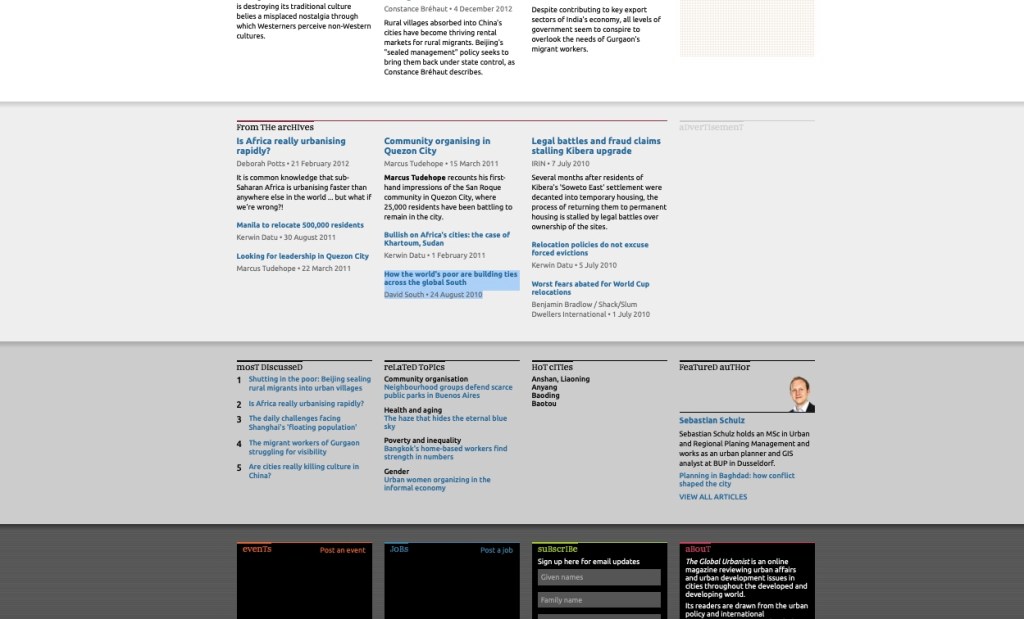
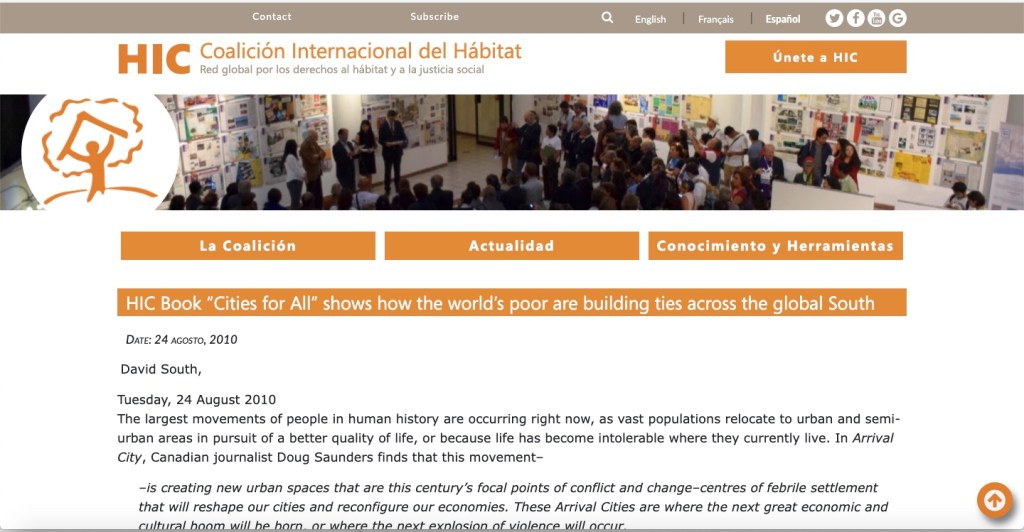
  • Cities For All Shows How The World’s Poor Are Building Ties Across The Global South

    Cities For All Shows How The World’s Poor Are Building Ties Across The Global South

    By David SouthDevelopment Challenges, South-South Solutions

    SOUTH-SOUTH CASE STUDY

    Cities for All, recently published by Habitat International Coalition, draws together thinkers and innovators in a compilation of case studies addressing the challenges of inclusive cities in the global South. The book seeks to articulate experiences of South-South cooperation and enhance the links between different regions. David South interviews the co-editor, Charlotte Mathivet.

    Published: 24 August 2010

    Global Urbanist (http://globalurbanist.com/2010/08/24/cities-for-all-shows-how-the-worlds-poor-are-building-ties-across-the-global-south)

    The largest movements of people in human history are occurring right now, as vast populations relocate to urban and semi-urban areas in pursuit of a better quality of life, or because life has become intolerable where they currently live. In Arrival City, Canadian journalist Doug Saunders finds that this movement —

    — is creating new urban spaces that are this century’s focal points of conflict and change — centres of febrile settlement that will reshape our cities and reconfigure our economies. These Arrival Cities are where the next great economic and cultural boom will be born, or where the next explosion of violence will occur.

    For most, this process is chaotic, unplanned, and fraught with risk, hardship, poverty and stress; yet, because so many are also able to dramatically improve their life chances, many millions will continue to follow this path.

    The speed of urbanisation makes the question of how to build liveable cities increasingly urgent. A new book hopes to help people get closer to solutions to these vexing problems.

    Cities for All: proposals and experiences towards the right to the city, published by Habitat International Coalition (HIC) in Santiago, Chile, and co-edited by HIC’s Ana Sugranyes and Charlotte Mathivet, was launched during this year’s World Urban Forum in Rio de Janeiro, and highlights ways in which urban residents across the South are defining how they would like their cities to evolve, refusing to accept social exclusion and demanding a “right to the city”.

    The book is published in three languages — EnglishSpanish and Portuguese.

    “A lot of social initiatives based on the right to the city are coming from these ‘new cities of the South’”, says Mathivet. “The book highlights original social initiatives: protests and organising of the urban poor, such as the pavement dwellers’ movements in Mumbai where people with nothing, living on the pavements of a very big city, organise themselves to struggle for their collective rights, just as the park dwellers did in Osaka.”

    “Another innovative experience came from the children’s workshops in Santiago, aimed at including children in urban planning in order to make a children-friendly city.”

    The cities of Africa and Asia are growing by a million peole a week. If current trends continue, mega-cities and sprawling slums will be the hallmarks of this majority urban world. In sub-Saharan Africa, 72 per cent of the population lives in slum conditions. And by 2015, there will be 332 million slum-dwellers in Africa, with slums growing at twice the speed of cities.

    “The consequences have produced a deeper gap between the city and countryside, and also within the city between the rich and poor,” said Mathivet.

    Cities for All details African experiences from Nigeria, Cameroon, Ghana and South Africa. Mathivet believes “one common topic affecting these countries is the problem of forced evictions, due to the rural exodus and growing urbanisation. It is therefore very important for the right to the city to include a perspective of linking the struggle between rural and urban movements, because problems in cities and the countryside are closely connected, especially in Africa.”

    And the current surge to cities in Africa raises the issue of what type of development will occur. The book argues that cities aren’t automatically a solution to the plight of the poor. Cities need to be worked on, and many of the problems faced by the South’s fast-growing cities stem from a power imbalance.

    “A very important thing to realise is that a city life is not a synonym for a better life or a miracle solution for poor people, nor for the ‘capitalist’ way of life,” says Mathivet. “African nations and their people have to find effective solutions on their own to overcome poverty — which they are doing — without copying development models from the North.”

    “In my understanding, urban growth is not haphazard or poorly planned in ‘developing’ countries. Rather, I think that urban ‘planning’ or lack of planning is done with a goal of generating more benefits for powerful interests and fewer benefits for poor people.”

    The book argues for a two-way relationship with the people who make up the majority of these fast-growing cities. And it says each city will have to customise its solutions.

    “It is very difficult to apply social innovations to other countries without understanding the history and the social, economic, cultural and political context,” says Mathivet.

    “Hope comes from learning of different experiences. For example, if a social movement in South Africa succsesfully avoided an eviction from a slum, it may help another social movement in Brazil to strengthen its own strategy. One of the book’s goals was to articulate the various South-South experiences and enhance the links between different regions.”

    In one chapter, contributor David Harvey argues that “the right to the city is not simply the right to what already exists in the city; it is also the right to transform the city into something radically different.”

    “The right to the city itself will not stop the over-whelming phenomenon of urban growth,” believes Mathivet. “The consequences produced by implementing this collective right would rather change people’s daily lives by achieving more equality in cities as well as in the relationship between the city and coutnryside in regards to growing urban populations.”

    Cities for All highlights the existence of ‘cities without citizens’: the vast numbers of slum dwellers and the poor who live mostly ignored by authorities (unless they are in the way of commercial development).

    “The expression ‘cities without citizens’ means the exact opposite of the right to the city proposal,” Mathivet says. “This alternative to the present global paradigm proposes to allow people to participate in the process of creating the city in terms of urban planning, decision-making, budget, public policies, etc. It is possible for people to influence their own lives and the community.”

    “There is no miracle solution, and the right to the city is a banner around which people can organise themselves to articulate their struggles and demand social justice.”

    The book concludes by arguing for the advantages of a ‘slow city’ approach. But how does this work in fast-growing urban areas where people are looking to quickly escape poverty, or are seeking rapid improvements to their quality oflife? Would they not find a slow city approach frustrating?

    Mathivet believes a leap of imagination is required: “Cities for All is not intended to be a recipe book. The slow city experience was chosen as a conclusion to the book in order to present a different approach, but not to propose a clear solution to follow. Concluding with the slow city experience, which is radically different and difficult to apply in African and Asian cities, where the spread of urbanisation is uncontrollable and leads to major problems, emphasises that the fight for the right to the city involves imagination and the desire for another possible city …

    “Moreover, slow city experiences have been developed otuside of wealthy European countries, for example in some small Argentine and South Korean cities.”

    And with the coming decade unfolding, what will cities in the South be like? Are we on the cusp of a new, dark age akin to the misery of Europe’s cities during the industrial revolution?

    Mathivet acknowledges that “we can see a dark future where the interests of the most vulnerable will not be the priority. However, looking at the experiences by and for the people, we cannot consider them poor, but rich of knowledge, cognitive capital, and with courage to change their lives and their communities, through self-management and autonomy.

    Cities for All aimed to show this richness … the challenges are for civil society to deepen links between different movements to build a stronger global strategy, during events like the next World Social Forum in Dakar, February 2011.”

    David South is an international development consultant and writer. He writes the Development Challenges: South-South solutions e-newsletter for UNDP’s Special Unit for South-South Cooperation. He led the Communications Office for the UN in Ulaanbaatar from 1997 to 1999 and has worked for the UN in South Africa, Turkmenistan and Ukraine.

    The Special Unit for South-South Cooperation is mandated to promote, coordinate and support South-South and triangular cooperation on a global and UN-systemwide basis.

    This story is adapted from a piece in the July 2010 edition of Development Challenges.

    http://globalurbanist.com/2010/08/24/cities-for-all-shows-how-the-worlds-poor-are-building-ties-across-the-global-south

    https://www.hic-net.org/es/hic-book-cities-for-all-shows-how-the-worlds-poor-are-building-ties-across-the-global-south/

    Development Challenges, South-South Solutions was launched as an e-newsletter in 2006 by UNDP’s South-South Cooperation Unit (now the United Nations Office for South-South Cooperation) based in New York, USA. It led on profiling the rise of the global South as an economic powerhouse and was one of the first regular publications to champion the global South’s innovators, entrepreneurs, and pioneers. It tracked the key trends that are now so profoundly reshaping how development is seen and done. This includes the rapid take-up of mobile phones and information technology in the global South (as profiled in the first issue of magazine Southern Innovator), the move to becoming a majority urban world, a growing global innovator culture, and the plethora of solutions being developed in the global South to tackle its problems and improve living conditions and boost human development. The success of the e-newsletter led to the launch of the magazine Southern Innovator. 

    Creative Commons License

    This work is licensed under a
    Creative Commons Attribution-Noncommercial-No Derivative Works 3.0 License.

    ORCID iD: https://orcid.org/0000-0001-5311-1052.

    © David South Consulting 2021

  • Southern Innovator As A Knowledge And Learning Tool | November 2017

    Southern Innovator As A Knowledge And Learning Tool | November 2017

    Why even bother printing (on paper) Southern Innovator as a magazine? “What about the trees and we live in the digital age!”, some might say.

    There is evidence and science supporting the need to always publish Southern Innovator in print as well as online. First, a study of the World Bank’s online publications came to a shocking conclusion: A survey in 2014 found a third of World Bank publications are never downloaded, 40 per cent were downloaded just 100 times, and only 13 per cent were downloaded more than 250 times in their lifetime (The Washington Post). As The Washington Post pointed out, these are publicly funded publications with the intention of contributing to policy debates and providing solutions to the world’s problems. So, if nobody is reading them, or just a handful are, that actually does matter if you care about positive change in the world.

    Secondly, a Norwegian study in 2014 from the Stavanger University (part of Europe-wide research into the impact of digitisation on the reading experience), found “… that paper readers did report higher on measures having to do with empathy and transportation and immersion, and narrative coherence, than iPad readers,” according to lead researcher Anne Mangen (The Guardian).

    An earlier study the researchers did also found “students who read texts in print scored significantly better on the reading comprehension test than students who read the texts digitally” and that “Studies with students, for instance, have shown that they often prefer to read on paper”, continued Mangen in The Guardian.   

    Another issue is Internet shutdowns, outages and censorship. All of these have been on the increase, especially in Africa (africanews.com). To put it simply, you cannot electronically shutdown a piece of paper. 

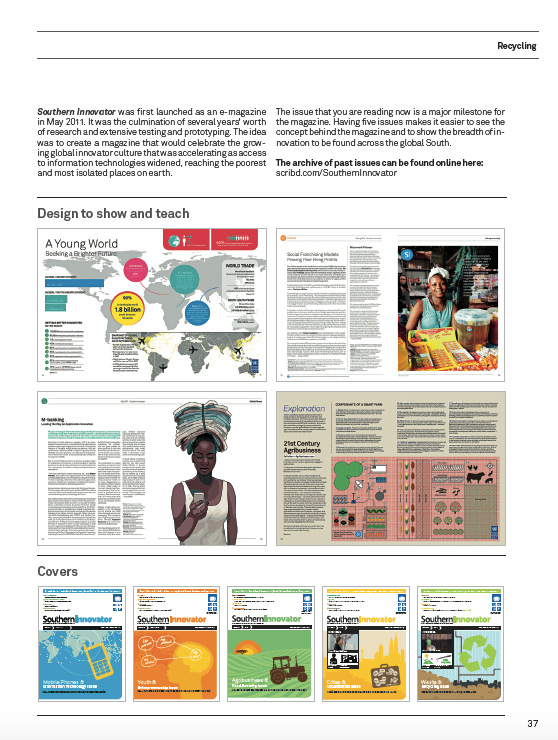
    Design to show and teach.
    Innovations Summary.
    Innovations Summary.
    A fast-changing world.
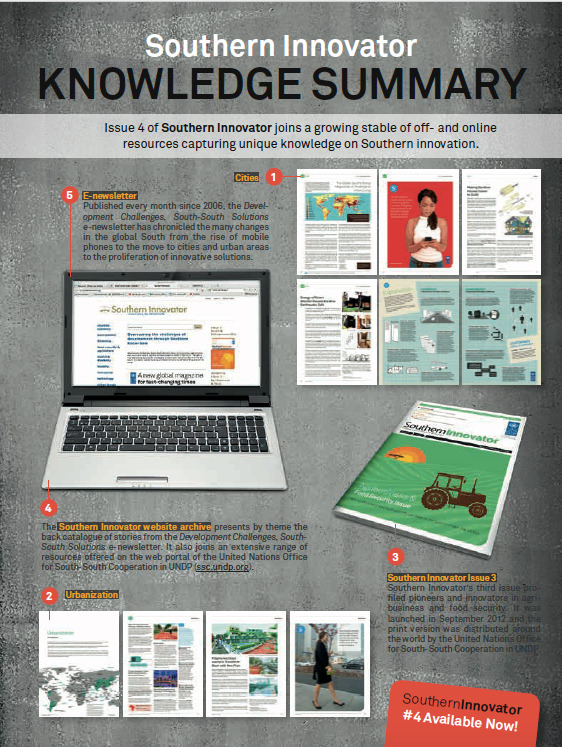
    Knowledge Summary.
    Knowledge Summary.
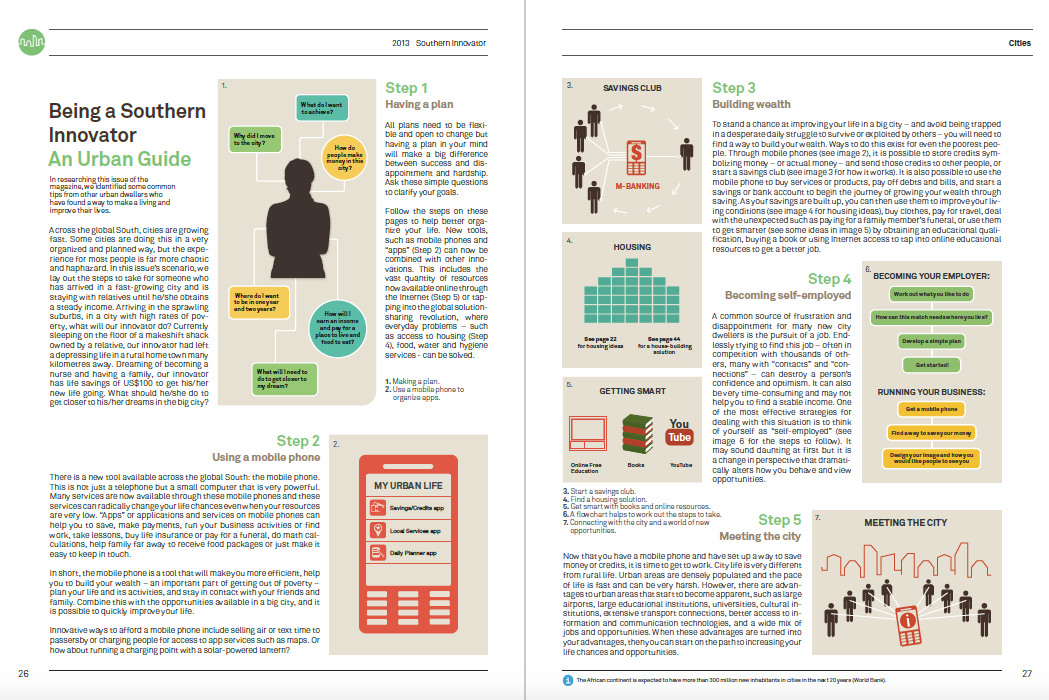
    Being a Southern Innovator: An Urban Guide.
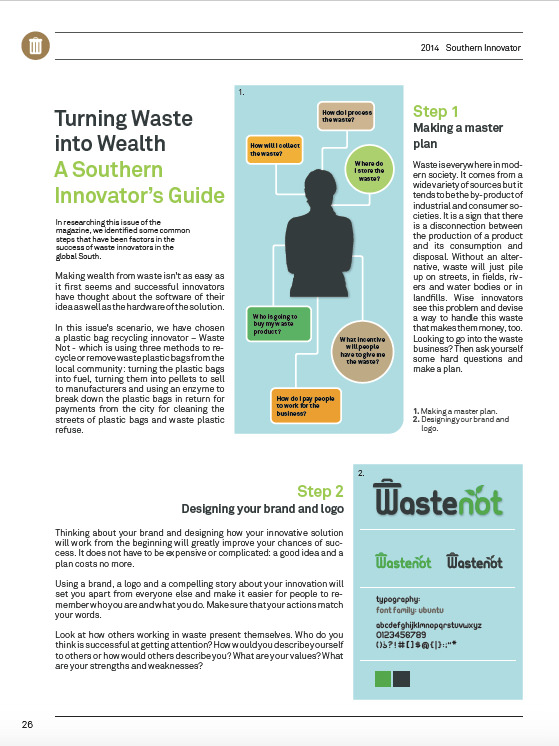
    Turning Waste into Wealth: A Southern Innovator’s Guide.
    Managing the workflow: Getting things done.

    This work is licensed under a Creative Commons Attribution 4.0 International License.

    ORCID iD: https://orcid.org/0000-0001-5311-1052.

    © David South Consulting 2017

  • Disaster Recovery, Ten Years After: The Gujarat, India Experience

    Disaster Recovery, Ten Years After: The Gujarat, India Experience

    By David SouthDevelopment Challenges, South-South Solutions

    SOUTH-SOUTH CASE STUDY

    In the past decade, there have been many devastating natural disasters, from Iran’s 2003 Bam earthquake and the Asian tsunami of 2004 to Hurricane Katrina in the United States in 2005 and the earthquakes in Chile and Haiti in 2010. All of these events received extensive media attention and drew a large aid response. Those who track natural disasters have noticed a serious increase in frequency over the past decade (http://www.marketoracle.co.uk/Article26290.html).

    But rapid aid and media attention do not necessarily lead to long-term recovery. More than a year after the earthquake in Haiti, pace of recovery remains slow. Numerous media stories highlighted the lack of progress.

    For the people caught up in these tragedies, quickly returning to a normal life is paramount for psychological and physical health. But this is often the hardest part. Some countries do this well and others do not.

    On January 26, 2001, an earthquake laid waste to a large region of the Indian state of Gujarat (http://en.wikipedia.org/wiki/2001_Gujarat_earthquake). Ten years later there is a remarkable recovery that has taken place. So how did they do it?

    The 7.9-magnitude quake killed an estimated 20,000 people, injured 150,000, made a million homeless, and destroyed around 8,000 villages. It devastated the Kutch district capital, Bhuj, and other major towns.

    In the decade since the earthquake, the state has averaged double-digit growth. Despite having only five percent of the country’s population, Gujarat racks up impressive economic achievements: it has a fifth of India’s exports and a sixth of its industrial production. It has a long-standing entrepreneurial culture based on trade. It can draw on a well-connected global diaspora that ensures a steady inflow of new thinking and investment. Members of this diaspora also contributed to the US $130 million in aid that poured into the region after the quake.

    One of the factors contributing to the successful recovery is effective government action.

    The disaster has been turned into an opportunity to jolt the region out of the “Middle Ages and into the modern world,” NGO worker Navin Prasad told the BBC.

    All the media attention, support and cash at the time forced the Indian government to pay attention to a region it had ignored in the past.

    The army came in to help with the emergency and the Indian government allocated US $2 billion to the reconstruction that followed.

    Aid was used well and in the first two years many of the damaged villages were rebuilt. And not just rebuilt to what they were, but completely modernized. New houses were constructed to high standards, with more rooms and lots of light. They also came with running water and a toilet. New facilities like medical centres and communal areas were put in place.

    The district capital of Bhuj was levelled in the earthquake. But new plans for the city were drafted in the following years. Now Bhuj has two new ring roads, a new airport, parks and shops. Streets were widened and new water and sewage works installed.

    But along with the new infrastructure and plenty of cash, came something more important for the region’s long-term recovery: economic growth. The Indian government created tax-free zones drawing in private investment. An astonishing US $10 billion in private investment has come in with US $7 billion more to come, according to the BBC.

    One miraculous turnaround is in the former tiny fishing port of Mundra. Prior to the earthquake, it sat in the middle of a salt marsh. It is now India’s largest private port and rivals Mumbai with its Mundra Port and Special Economic Zone (http://www.portofmundra.com/), incorporated in 2003. The Adani Group, a very large Indian private company with global interests (http://www.adanigroup.com/index.html), owns the port now worth US $7 billion, hiring many people once dependent on aid agencies for income.

    The head of the Adani Foundation the charitable wing of the Adani Group, Sushma Oza, told the BBC how the company is spending its profits on further developing the area: “Our own budget for social development in this region is $6m a year, so you can imagine how we are trying to change the lives of people to live in a better way,” she said.

    In the western portion of the state, in the administrative district of Kutch which is home to Bhuj, around 300 businesses have been established, including the Welspun towel factory (http://www.welspun.com/content.asp?Link=Y&SubmenuID=24). The biggest towel factory in the world, it was built in just nine months and makes 250,000 towels a day. An ambitious firm, it bought the British company Christy (http://www.christy-towels.com/), maker of the official Wimbledon Lawn Tennis Championship towels.

    So why towels in Kutch? Welspun chairman Balkrishan Goenka laid down the incentives to the BBC: “There were no local taxes for the first five years and no excise duties. Nor were there indirect taxes to government – they were exempted for five years.”

    “Those were the primary benefits,” he said. “More than that there was huge support from the local government so industry can come faster.”

    Since the earthquake, 110,000 jobs have been created in Kutch alone. More importantly for the area’s future, it is has gone from neglected backwater to a significant pillar of the Indian economy.

    Another driver of recovery was the growth of the dairy industry. The Bhuj dairy plant collapsed in the earthquake and was then rebuilt by the National Dairy Development Board (http://www.nddb.org/). The plant can now process 50,000 litres of milk a day and is run by the Gujarat Cooperative Milk Marketing Federation (http://www.amul.com/organisation.html), India’s largest food products marketing organization. It has 2.9 million producer members and represents 15,322 village societies.

    Not everyone has turned their lives around, however. Aid workers estimate thousands are still living in temporary shelters. They defecate in the open and few have clean water. Just getting two meals a day is a problem.

    There are complaints about the landless and tenants not receiving the same help.

    “Many are tribal, others are low-caste communities, some are Muslims – but they all have one thing in common: poverty,” Bharat Parmer, program coordinator for ActionAid International in Kutch, told Alertnet.

    “A large number of these people were tenants and did not own land and so it has been much harder for them to claim their rights as rehabilitation was very much focused on home and land owners.”

    But local authorities say rehabilitation schemes have been comprehensive, covering all those who were hit by the quake.

    “I don’t think that there are people who did not get what they were due – there may be a rare case here and there but we have rehabilitated all that were in need,” said Gunvant Vaghela, the second-most senior civil servant in Kutch district.

    Published: February 2011

    Resources

    1) How to activate support from the global technology community in a disaster. Website: http://crisiscommons.org/

    2) UNICEF: Community-Based Disaster Preparedness Projects (CBDPs) in India have been helping communities restructure to survive when disaster strikes. Website: http://www.unicef.org.uk/campaigns

    3) The US Government has extensive resources online on how to prepare for a wide variety of natural and man-made disasters. Website: http://www.fema.gov/areyouready/

    4) The magazine Popular Mechanics has excellent resources on how anyone can prepare their family and community for disasters. Website: http://www.popularmechanics.com/survival/

    5)  Telecoms Sans Frontiers: Focuses on providing communications in the first days after an emergency. Website: http://www.tsfi.org/

    Associated Press

    On the ground reporting from the Associated Press (AP) Archive: India: Earthquake Aftermath Update 

    Development Challenges, South-South Solutions was launched as an e-newsletter in 2006 by UNDP’s South-South Cooperation Unit (now the United Nations Office for South-South Cooperation) based in New York, USA. It led on profiling the rise of the global South as an economic powerhouse and was one of the first regular publications to champion the global South’s innovators, entrepreneurs, and pioneers. It tracked the key trends that are now so profoundly reshaping how development is seen and done. This includes the rapid take-up of mobile phones and information technology in the global South (as profiled in the first issue of magazine Southern Innovator), the move to becoming a majority urban world, a growing global innovator culture, and the plethora of solutions being developed in the global South to tackle its problems and improve living conditions and boost human development. The success of the e-newsletter led to the launch of the magazine Southern Innovator.  

    Follow @SouthSouth1

    Google Books: https://books.google.co.uk/books?id=p03–n51i44C&dq=development+challenges+april+2008&source=gbs_navlinks_s

    Slideshare: http://www.slideshare.net/DavidSouth1/development-challengessouthsouthsolutionsapril2008issue

    Southern Innovator Issue 1: https://books.google.co.uk/books?id=Q1O54YSE2BgC&dq=southern+innovator&source=gbs_navlinks_s

    Southern Innovator Issue 2: https://books.google.co.uk/books?id=Ty0N969dcssC&dq=southern+innovator&source=gbs_navlinks_s

    Southern Innovator Issue 3: https://books.google.co.uk/books?id=AQNt4YmhZagC&dq=southern+innovator&source=gbs_navlinks_s

    Southern Innovator Issue 4: https://books.google.co.uk/books?id=9T_n2tA7l4EC&dq=southern+innovator&source=gbs_navlinks_s

    Southern Innovator Issue 5: https://books.google.co.uk/books?id=6ILdAgAAQBAJ&dq=southern+innovator&source=gbs_navlinks_s

    More on disaster resilience here:

    From southasiadisasters.net:

    Southern Innovator in Southasiadisasters.net

    https://davidsouthconsulting.org/2021/02/23/southern-innovator-in-southasiadisasters-net/

    Innovations In Green Economy: Top Three Agenda

    https://davidsouthconsulting.org/2021/10/22/innovations-in-green-economy-top-three-agenda/

    Lima To Delhi: What Can Be Learned On Urban Resilience?

    https://davidsouthconsulting.org/2021/10/22/lima-to-delhi-what-can-be-learned-on-urban-resilience/

    South–South Cooperation For Cities In Asia

    https://davidsouthconsulting.org/2021/10/22/south-south-cooperation-for-cities-in-asia/

    A New House Kit for Slum Dwellers that is Safe and Easy to Build

    https://davidsouthconsulting.org/2021/10/03/a-new-house-kit-for-slum-dwellers-that-is-safe-and-easy-to-build/

    Haiti Earthquake Prompts Tech Aid

    https://davidsouthconsulting.org/2021/09/01/haiti-earthquake-prompts-tech-aid/

    Rebuilding After Chinese Earthquake: Beautiful Bamboo Homes

    https://davidsouthconsulting.org/2021/02/12/rebuilding-after-chinese-earthquake-beautiful-bamboo-homes/

    Creative Commons License

    This work is licensed under a
    Creative Commons Attribution-Noncommercial-No Derivative Works 3.0 License.

    ORCID iD: https://orcid.org/0000-0001-5311-1052.

    © David South Consulting 2022

  • Indian Business Model Makes Green Energy Affordable

    Indian Business Model Makes Green Energy Affordable

    By David SouthDevelopment Challenges, South-South Solutions

    SOUTH-SOUTH CASE STUDY

    The technology already exists to provide renewable energy and electricity to all the world’s poor. The trick is finding a way to pay for it and to make it sustainable. Many innovators are experimenting with business models to reach the so-called Bottom of the Pyramid (BOP) cohort, and the 1.2 billion poorest people in the world who do not have access to electricity (World Bank) (http://tinyurl.com/n9p3f5x). A further 2.8 billion have to rely on wood or other biomass materials to cook and heat their homes.

    The International Energy Agency (iea.org) believes US $48 trillion of investment will be needed between now and 2035 to make sure energy capacity matches rapid population growth.

    In the influential book The Fortune at the Bottom of the Pyramid (http://www.amazon.co.uk/Fortune-Bottom-Pyramid-Eradicating-Poverty/dp/8177587765), the late professor C.K. Prahalad (http://en.wikipedia.org/wiki/C._K._Prahalad) advocated seeing the poor as people with needs and assets: consumers who just need the right goods and services designed for them. It was a change from thinking only of the world’s wealthier populations as consumers, and revealed a market worth billions waiting to be tapped.

    Energy is key to development and improvements to living standards. Yet energy poverty plagues much of the global South, especially in Africa and particularly in rural areas.

    The World Bank has identified 20 countries in developing Asia and sub-Saharan Africa which will require a massive effort to expand access to electricity and safe cooking methods for poor households.

    Around 80 per cent of the people without modern energy live in rural areas. While progress has been made since 1990 in expanding access to energy, it has failed to keep pace with population growth. According to the World Bank, the pace of expansion will have to double to meet the 100 percent access target set for 2030.

    To avoid increasing global carbon emissions while achieving this goal, many are looking to renewable energy sources and technologies to reach these last groups of people.

    As pointed out by the Institute of Development Studies (http://www.ids.ac.uk/news/can-renewable-electricity-reduce-poverty), “The global threat posed by climate change means that we also face the pressing need to use less carbon in existing energy systems. Making progress on both energy poverty and decarbonization requires a sharp increase in renewable electricity production, both on and off-grid.”

    The institute identified four necessary factors for access to renewable energy to benefit poor people.

    1.         Once electricity is generated, it needs to be reliably fed into the system.
    2.         This additional supply must be made accessible, and affordable, for poor people.
    3.         Increased electricity consumption then needs to translate into poverty reduction.
    4.         Increased electricity supply can indirectly reduce poverty by boosting economic growth.

    India’s Simpa Networks (simpanetworks.com), started in 2011, has a business model it believes will do the trick. Simpa has developed a clever way to increase access to home solar power systems for the poor, by allowing customers to purchase the system in gradual “rental” payments over time. The customers eventually come to own the power system outright, and from then on to generate electricity for free. Since the payments are small and incremental, it suddenly becomes within the realm of poor households to afford modern solar energy systems.

    This is called the “Progressive Purchase Pricing Model” – similar to “prepaid”, “pay as you go” and “installment plan” models. Under this model, customers make a 10 percent down payment and receive the home solar system. The customer then buys a time-specific amount of energy for between US $1 and US $10 with their mobile phone. The orange lock box on the power system has a keypad on the front. When a code is punched in, it releases electricity (http://simpanetworks.com/our-solution/).

    In increments, while the customer purchases energy for home use they also eat away at the cost of the system, until eventually it is paid off, usually at a total of US $300. Systems have an expected life span of 10 years.

    With few cash resources, poor households usually are not capable of saving enough cash to purchase a full energy system for their home. Instead, they rely on buying kerosene for lamps or using battery-powered torches and lamps when they can afford it.

    In 2012, Simpa teamed up with SELCO India (http://www.selco-india.com/) – a social enterprise providing sustainable energy solutions and services to households – to sell 1,000 home solar power systems, expanding to 5,000 systems in 2013, according to a case study from not-for-profit Synergie pour l’Echange et la Valorisation des Entrepreneurs d’Avenir (SEVEA) (sevea-asso.org). The goal is to reach 25,000 units sold by the end of 2014, proving this business model can scale. Ultimately, Simpa wishes to mega-scale its approach and reach 1 million households over the next five years.

    Simpa believes take-up will be quick because this model reduces risk, both for the seller and for the bank that may loan the cash for the 10 per cent down payment. Simpa acts as a go-between for the system sellers such as SELCO and the banks. Simpa believe this business model reduces the risk of non-payment or loan default and has the right incentives in place to encourage the customer to hang in and keep making payments until they own the system outright. Customers enjoy the benefits of clean energy 24/7 from day one and can see clearly the connection between the energy they receive and the small payments they make. For those who default from paying, the system is taken from their home.

    When the system was piloted in Karnataka, India, all loans were successfully repaid.

    Simpa Networks is a venture capital-backed technology company. It hopes its approach will attract investors, particularly social investors, seeking a low-risk investment in helping expand energy access.

    Published: June 2014

    Development Challenges, South-South Solutions was launched as an e-newsletter in 2006 by UNDP’s South-South Cooperation Unit (now the United Nations Office for South-South Cooperation) based in New York, USA. It led on profiling the rise of the global South as an economic powerhouse and was one of the first regular publications to champion the global South’s innovators, entrepreneurs, and pioneers. It tracked the key trends that are now so profoundly reshaping how development is seen and done. This includes the rapid take-up of mobile phones and information technology in the global South (as profiled in the first issue of magazine Southern Innovator), the move to becoming a majority urban world, a growing global innovator culture, and the plethora of solutions being developed in the global South to tackle its problems and improve living conditions and boost human development. The success of the e-newsletter led to the launch of the magazine Southern Innovator.  

    Follow @SouthSouth1

    Google Books: https://books.google.co.uk/books?id=XhU9BQAAQBAJ&dq=development+challenges+june+2014&source=gbs_navlinks_s

    Slideshare: http://www.slideshare.net/DavidSouth1/development-challenges-june-2014-published?qid=be364432-b16e-4e07-a9a5-afee35205b96&v=default&b=&from_search=1

    Southern Innovator Issue 1: https://books.google.co.uk/books?id=Q1O54YSE2BgC&dq=southern+innovator&source=gbs_navlinks_s

    Southern Innovator Issue 2: https://books.google.co.uk/books?id=Ty0N969dcssC&dq=southern+innovator&source=gbs_navlinks_s

    Southern Innovator Issue 3: https://books.google.co.uk/books?id=AQNt4YmhZagC&dq=southern+innovator&source=gbs_navlinks_s

    Southern Innovator Issue 4: https://books.google.co.uk/books?id=9T_n2tA7l4EC&dq=southern+innovator&source=gbs_navlinks_s

    Southern Innovator Issue 5: https://books.google.co.uk/books?id=6ILdAgAAQBAJ&dq=southern+innovator&source=gbs_navlinks_s

    Creative Commons License
    This work is licensed under a
    Creative Commons Attribution-Noncommercial-No Derivative Works 3.0 License.

    ORCID iD: https://orcid.org/0000-0001-5311-1052.

    © David South Consulting 2023