Tag: slums

  • Envisioning Better Slums

    Envisioning Better Slums

    By David SouthDevelopment Challenges, South-South Solutions

    SOUTH-SOUTH CASE STUDY

    More than 900 million people – almost a sixth of the world’s population – now live in urban slums (UN). Improving conditions for these people is a critical Millennium Development Goal target. And the scale of the problem is vast: this year half the world’s population will live in cities, and already in developing countries 43 per cent of urban dwellers live in slums. In the least-developed countries the figure is 78 per cent.

    The UN has estimated it will take US$18 billion a year to improve living conditions for these people – and most of it will have to come from the residents themselves.

    An essential route to improving the situation is to give people living in slums the dignity and respect they deserve as human beings. Initiatives across the South seek to do this and turn the situation on its head: seeing slum dwellers as a valuable asset, not an urban blight.

    The concept of ‘slum networking’ has been developed by Indian engineer Himanshu Parikh of Ahmedabad , a winner of the Aga Khan award for architecture. He starts from the point of believing there is no need for slum conditions to exist in India, but that slums do not need to be moved, just upgraded; and that good change can happen quickly. He also sees the residents’ involvement and financial contribution as critical to the sustainability of any improvements. His approach has already helped one million people overall, including 8,703 families (43,515 people) in Ahmedabad in 41 slum communities.

    Slum networking does not depend on aid funds but is a self-reliant approach, in which residents make a partnership with private suppliers to get access to the most important services first: clean water and hygiene and sanitation.

    Parikh’s approach involves providing channels for sewage, water supply and roadways in existing slum areas by exploiting the natural topography and pattern of development to provide the new infrastructure.

    Parikh makes a detailed survey plan of the existing houses and divides them into groups based on the quality of construction. If they are of reasonable quality, they are left in place. Where possible, slum dwellers are allowed to buy the land they are squatting on. By buying the land, the owner now has a direct stake in its development.

    “Working inside out, i.e. starting with quality infrastructure in the poor areas and working outwards to produce larger networks for the city or village, not only integrates the two levels, but actually produces far cheaper infrastructure at both levels,” Parikh told Architecture Week magazine.

    In the Indian city of Indore, 181 slums were networked, giving the city 360 kilometres of new roads, 300 kilometres of new sewer lines, 240 kilometres of new water lines, 120 community halls and 120,000 trees. This transformed the two local rivers from open sewers back to water. According to the World Bank, the incidence of fatal water diseases fell by 90 per cent.

    “No project for their rehabilitation could be successful until they were involved as the capital partners,” Parikh told India’s The Tribune. Upgrading “the civic amenities, including sewerage, roads and water supply, was the need of the hour for better living conditions of the slum dwellers.”

    Another initiative in Bangladesh is bringing first-rate healthcare to the country’s water-logged slum dwellers. They live in areas called ‘chars’ — effectively stranded islands surrounded by rivers, plagued by frequent flooding and physically cut-off from the country’s transport and infrastructure networks. Located in northern Bangladesh’s Jamuna river regions of Gaibandha, Kurigram and Jamalpu, these areas are very poor and overlooked by most government and foreign aid programmes. The fact the islands shift around has made it difficult for much help to reach the people.

    Bangladesh also has a severe shortage of doctors: there are 12,500 people per doctor, compared to 2,000 in Pakistan.

    But a hospital ship run by the Friendship NGO (funded by private companies and NGOs) now brings healthcare to 4 million people, treating everything from cataracts to skin infections. It sees between 200 to 250 patients a day aboard a converted former river barge. Called the Lifebuoy Friendship Hospital because of its sponsorship by Lever Brothers Bangladesh Ltd. — makers of Lifebuoy soap — it cruises the river Brammaptura, helping 172,000 people since it set sail six years ago.

    “People of the area look forward eagerly to our arrival,” said Dr Feroza Khatun, a doctor on the hospital ship. Other doctors and surgeons are provided by NGOs from Sweden, the Netherlands and France.

    The ship carries a team of two doctors and four nurses, who live on board. It provides a range of services, from basic healthcare and immunisations to minor surgery. The ship is fully equipped with modern facilities, including clinics, a pharmacy, a treatment room and an operating theatre. There is also a four-bed ward for short-term care, a pathology lab and store, x-ray unit and dark room and an electrocardiogram (ECG).

    Stays in the individual ‘chars’ are usually from three weeks to two months. When it leaves, a satellite clinic continues to provide care until the next visit. “In our satellite programmes, we bring in professionals for health and rural social education, provide paramedical care, give special treatment for mother and child health, family planning and pregnancy hazards, child nutrition and identify the needs for secondary care interventions,” said executive director Runa Khan to Bangladesh’s Star Weekend Magazine

    Started as a trial in 2001, the ship began full operations in 2002. It has been so successful, it is currently expanding by building new ships paid for by the Emirates Airline Foundation.

    Published: February 2012

    Resources

    • Shelter Associates: established by Indian architect Pratima Joshi, an NGO working on slum rehabilitation.
    • SPARC: one of the largest Indian NGOs working on housing and infrastructure issues for slum dwellers.
    • Improving the Lives of Slum Dwellers: published by the Millennium Project.
    • Slum TV: Based deep inside Nairobi’s largest slum, Mathare, they have been seeking out the stories of hope where international media only see violence and gloom.
    Creative Commons License

    This work is licensed under a
    Creative Commons Attribution-Noncommercial-No Derivative Works 3.0 License.

    ORCID iD: https://orcid.org/0000-0001-5311-1052.

    © David South Consulting 2023

  • Kenyan Eco-Village Being Built by Slum-Dwellers

    Kenyan Eco-Village Being Built by Slum-Dwellers

    By David SouthDevelopment Challenges, South-South Solutions

    SOUTH-SOUTH CASE STUDY

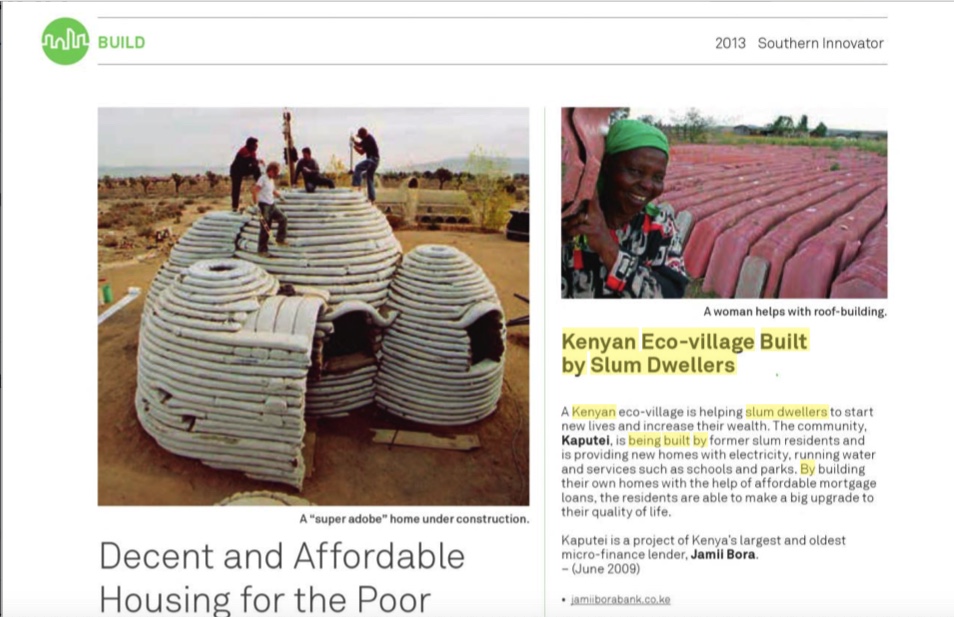
    A Kenyan eco-village is helping slum dwellers to start new lives and increase their wealth. The community, Kaputei, is being built by former slum residents – some of whom used to beg to survive – and is providing new homes with electricity, running water and services like schools and parks. By building their own homes, with the help of affordable mortgage loans, the residents are able to make a big upgrade to their quality of life while acquiring real wealth.

    More than 900 million people – almost a sixth of the world’s population – now live in urban slums (UN). This number will double by 2030 as a result of rapid urbanization in developing countries. Already in developing countries 43 per cent of urban dwellers live in slums, and the figure leaps to 78 per cent in the least-developed countries. The UN estimates it will take US $18 billion a year to improve living conditions for these people – and most of it will have to come from the residents themselves.

    Kaputei is a project of Kenya’s largest and oldest micro-finance lender, Jamii Bora (www.jamiibora.org). Having enjoyed significant success in making loans to over 225,000 people – after starting out in 1999 with loans to just 50 beggars – it realized something on a larger scale was necessary to permanently transform the lives of poor Kenyans.

    Jamii Bora’s founder, Ingrid Munro, saw the whole atmosphere of the slums as the biggest impediment to long-term life changes. “As long as you are living in the slums, you will never climb out of poverty,” she told The Independent newspaper. “Families of course need economic opportunities to rise out of poverty, but what good are they if you are still living in hell?”

    Jamii Bora came up with the idea of building an entire community from scratch, and doing it in way that was affordable, ecological and sustainable, while building the wealth of the residents. Since 2007, the project has provided homes for 50 families; the target is to have homes for 2,000.

    One former beggar who has built her own home is Clarice Adhiambo. An early client of Jamii Bora, she started to learn how to save, reaching her first goal of saving 1,000 Kenyan shillings (US $12.81). With Jamii Bora’s encouragement, she plowed this money back into buying some fish and selling it in the markets. Over time, she was able to grow her efforts until she was a regular market trader, and was borrowing as much as US $1,900 to fund various slum businesses.

    Then came the Kaputei project. It has helped Adhiambo move from a 3 meter by 3 meter tin shack in the Nairobi slum of Soweto to her own home with running water: “So much water,” she told The Independent.

    The new home is 50 square metres with two bedrooms, a sitting room and a bathroom.

    Adhiambo pays US $36 a month for her mortgage — more than most people, because she wants to pay it off quickly. That compares to about US $20 a month in rent paid by many slum dwellers to live in squalor with poor services and quality of life.

    Kaputei is a clever community project. Unlike attempts to build housing for the poor in isolation, Kaputei is based on neighbourhoods of 250 families each, with common community centres, playgrounds, parks and church halls. There is a town centre, and zones for commercial and industrial enterprises. The project was approved by the Kenyan government in 2004 and has planning permission for 119 hectares. Trees are being planted to provide protection from wind, add beauty, and, in time, to be a source of income or firewood. A wetland is being used to recycle waste water and is being run in partnership with Kenyan universities.

    Each house costs US $1,875 to build. The homes are so cheap because the building materials are assembled in a factory on site, and the families help with the building.

    Three house models are available and the families – from the Kamba, Kikuyu, Luo and Maasai peoples – choose the one they like by viewing show homes on site. Each home has access to roads, water and sewage.

    It’s estimated the entire community of 2,000 families will cost US $3,750,000 for the homes, and another US $3,750,000 for infrastructure. Mortgages are offered at between 8.5 percent and 10 percent interest and are estimated to take 10 to 15 years to repay. The average mortgage is about US $32 a month.

    Published: June 2009

    Resources

    Builders Without Borders: Is an international network of ecological builders who advocate the use of straw, earth and other local, affordable materials in construction. Website: www.builderswithoutborders.org/

    World Hands Project: An NGO specialising in simple building techniques for the poor. Website:www.worldhandsproject.org

    CIDEM and Ecosur specialize in building low-cost community housing using eco-materials. They have projects around the world and are based in Cuba. Website: www.ecosur.org

    The Building and Social Housing Foundation: An independent research organization promoting sustainable development and innovation in housing through collaborative research and knowledge transfer. Website: www.bshf.org

    Slum TV: Based deep inside Nairobi’s largest slum, Mathare, they have been seeking out the stories of hope where international media only see violence and gloom. Website: www.slum-tv.org
    https://davidsouthconsulting.org/2022/10/06/africas-fast-growing-cities-a-new-frontier-of-opportunities/

    https://davidsouthconsulting.org/2022/05/23/debt-free-homes-for-the-poor/

    https://davidsouthconsulting.org/2022/02/17/digital-mapping-to-put-slums-on-the-map/

    https://davidsouthconsulting.org/2022/04/28/envisioning-better-slums/

    https://davidsouthconsulting.org/2022/11/16/favela-fashion-brings-women-work/

    https://davidsouthconsulting.org/2021/11/04/filipino-architect-wants-to-transform-slum-with-new-plan/

    https://davidsouthconsulting.org/2022/11/16/housing-innovation-in-souths-urban-areas/

    https://davidsouthconsulting.org/2022/10/25/indian-city-slum-areas-become-newly-desirable-places-to-live/

    https://davidsouthconsulting.org/2022/04/28/innovation-in-the-slums-can-bring-peace-and-prosperity/

    https://davidsouthconsulting.org/2022/10/31/mapping-beirut-brings-city-to-light/

    https://davidsouthconsulting.org/2021/10/03/a-new-house-kit-for-slum-dwellers-that-is-safe-and-easy-to-build/

    https://davidsouthconsulting.org/2022/11/19/securing-land-rights-for-the-poor-now-reaping-rewards/

    https://davidsouthconsulting.org/2022/11/17/tiny-homes-to-meet-global-housing-crisis/

    https://davidsouthconsulting.org/2022/11/18/toilet-malls-make-going-better/

    https://davidsouthconsulting.org/2022/10/17/the-water-free-south-african-bathing-solution/

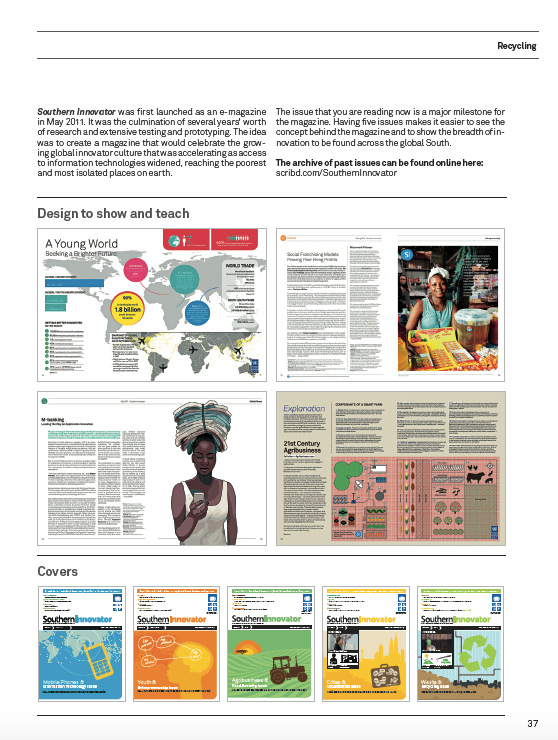
    https://davidsouthconsulting.org/2021/03/05/southern-innovator-issue-4/

    Creative Commons License

    This work is licensed under a
    Creative Commons Attribution-Noncommercial-No Derivative Works 3.0 License.

    2009: Development Challenges, South-South Solutions

    ORCID iD: https://orcid.org/0000-0001-5311-1052.

    © David South Consulting 2023

  • Decent and Affordable Housing for the Poor

    Decent and Affordable Housing for the Poor

    By David SouthDevelopment Challenges, South-South Solutions

    SOUTH-SOUTH CASE STUDY

    Urban populations across the South are growing fast: by 2030, some 5 billion people around the world will live in cities. This year will be the first year in which urban dwellers (3.3 billion people) will outnumber rural residents for the first time (UNFPA).

    Africa now has a larger urban population than North America and 25 of the world’s fastest growing big cities. Asia and Africa’s cities are growing by an incredible 1 million people a week, with 72 per cent of the population in sub-Saharan Africa living in slum conditions.

    How well people dwell is integral to their mental and physical health. Most squatters and slum dwellers – a category that includes half the urban population of Africa, a third in Asia and a fourth in Latin America and the Caribbean – live in makeshift homes made from whatever they can get their hands on. These dwellings are usually unsafe and vulnerable to fire, floods, and earthquakes. On top of this, these sprawling slums can be depressingly grim to look at for those living there.

    In Brazil’s Sao Paulo neighbourhood of Heliopolis – the largest of the city’s 400 favelas, or shantytowns – the majority of its dwellings are made from cement and brick. It is stigmatised as the ugliest part of the city, yet a unique initiative has transformed perceptions of the area – and brought pride to its residents. The project offers a model for slum areas looking to make the next leap up the ladder of development. Heliopolis first sprang up in the 1970s, wedged between highways and roads. Plagued by crime, there is a wide spread in incomes and urbanisation among the 120,000 residents packed into the one-and-a-half square mile. Older parts have many services, while newer areas lack basics like plumbing and electricity.

    Well-known Sao Paulo-based Brazilian architect Ruy Ohtake (http://www.geocities.com/capitolhill/3836/saopaulo.html) mobilised the 6,000 residents to use a fixed palette of six colours – from bright yellow to deep purples – to create a look described as akin to an Italian hill town.

    “Ohtake told a newspaper that Heliopolis was the ugliest part of the city, so we went to him and asked him to figure out how to make it beautiful,” Geronino Barbosa, director of the Heliopolis community group UNAS, told the design magazine Dwell.

    Ohtake, famous for his hotel designs and renovating former colonial areas, rose to the challenge: “I believe in beauty as a social function, so what better way to exercise that belief,” he said. To avoid the initiative feeling like something being imposed from on high, the plan did not go ahead until the residents were happy. And to make sure they felt they owned the results, they did all the painting themselves. The result is a river of colour running through a landscape of dreary, unfinished brick homes jammed between streets and factories. The Italian hill town-effect leaves pedestrians experiencing a surprise as they turn through the streets, happening upon hidden plazas and little bars.

    “Our dream is to expand this project to the entire favela,” said Barbosa. “People love their painted houses. One of our participants told me that her house has been transformed into a sort of Carnival parade.”

    “Who doesn’t want to live in a beautiful house?” said UNAS’ head, Joao Miranda, to Dwell. “We want the same things as everyone else.”

    Another architect has tackled the problem of how to create inexpensive but durable and beautiful homes for the poor. Iranian-born architect Nader Khalili (http://www.calearth.org/) has created what he calls ‘super adobe’ dwellings inspired by traditional Iranian rural homes. The cone-shaped homes are made from sandbags piled one on top of the other in a circular pattern. A basic home is three rooms of 400 square feet, and can be built by five people (with only one needing skills), within weeks. Being sandbags, the homes can easily be dismantled and moved or adapted to meet new space needs.

    Khalili first fell in love with the sand adobe homes of Iran in the 1970s. He had been on a journey to find a home design that was both environmentally harmonious and could be built anywhere in the world quickly and cheaply. But while the original Iranian sand adobe is easily destroyed by earthquakes and bad weather, the ‘super adobes’ are earthquake, hurricane and flood resistant. They are now being built across the Americas , Asia and Africa.

    “You can never build one of these that doesn’t look beautiful,” he said. “Just as you have never seen an ugly tree or an ugly flower.”

    Published: January 2008

    Resources

    • Builders Without Borders: Is an international network of ecological builders who advocate the use of straw, earth and other local, affordable materials in construction. Website: http://builderswithoutborders.org/
    • World Hands Project: An NGO specialising in simple building techniques for the poor. Website:http://www.worldhandsproject.org
    • Tsunami-Safe House: A design for Prajnopaya Foundation: a project coordinated by the SENSEable City Laboratory, a new research initiative between the Department of Urban Studies and Planning and the Media Lab at the Massachusetts Institute of Technology in Boston. Website:http://senseable.mit.edu/tsunami-prajnopaya/
    Creative Commons License

    This work is licensed under a
    Creative Commons Attribution-Noncommercial-No Derivative Works 3.0 License.

    ORCID iD: https://orcid.org/0000-0001-5311-1052.

    © David South Consulting 2021

  • Filipino Architect wants to Transform Slum with New Plan

    Filipino Architect wants to Transform Slum with New Plan

    By David SouthDevelopment Challenges, South-South Solutions

    SOUTH-SOUTH CASE STUDY

    A clash is occurring across the global South over the future of urban planning and the ever-growing slums of the world’s megacities. This will be a decisive clash of visions: should cities flatten slums and relocate their residents, or work with slum dwellers, acknowledge the role they play in city economies and improve their lives with better dwellings?

    As the world turned into a majority urban place in the 2000s, cities grew at a phenomenal rate. The cities of Africa and Asia are growing by a million people a week, according to some estimates. Megacities and sprawling slums will be the hallmarks of this new urban world, it seems. In sub-Saharan Africa, 72 percent of the population already lives in slum conditions.

    The danger of building unsafe or makeshift homes can be seen in 2010’s devastating earthquake in Haiti, where many buildings collapsed, killing thousands.

    One of the Philippines’ leading architects and urban planners,
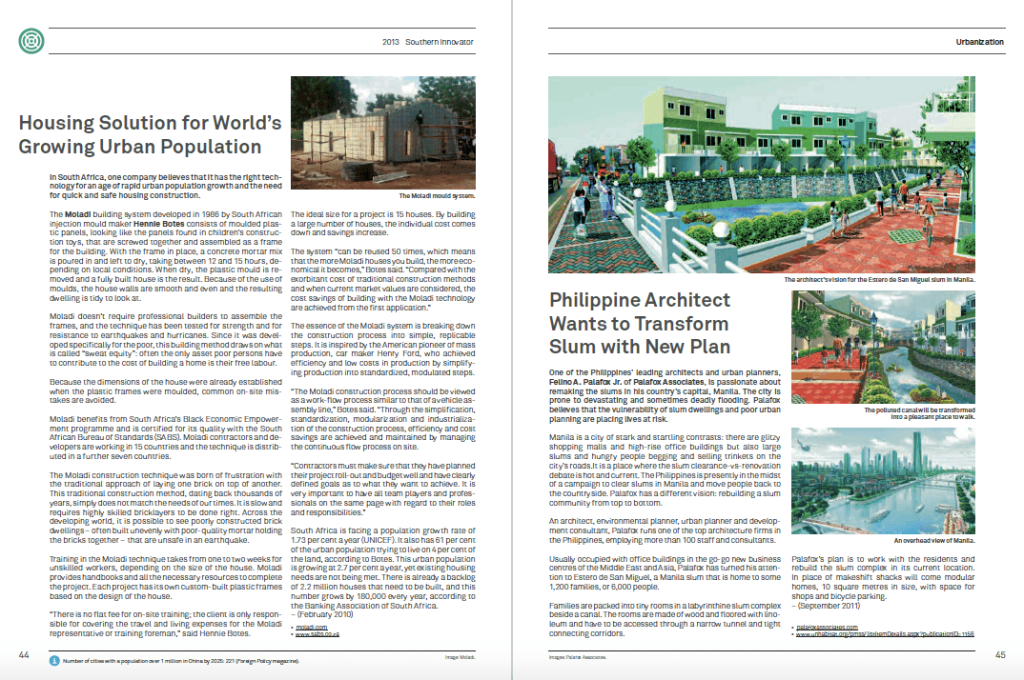
    Felino A. Palafox Jr. of Palafox Associates (www.palafoxassociates.com), is passionate about re-making the slums in his country’s capital, Manila. The city is prone to devastating and sometimes deadly flooding. Palafox believes the vulnerability of slum dwellings and poor urban planning are placing lives at risk.

    “We can’t wait for another tragedy,” Palafox told the Philippine Daily Inquirer in 2010. “We have seen how an unprecedented volume of rainfall like what (storm) Ondoy had brought could prove too much for Metro Manila’s river and drainage system. We have also seen what a massive earthquake could do to an unprepared city like Haiti.

    “While there is nothing that we could do to control the destructive power of these natural phenomena, there are steps that we could take to limit the amount of damage.”

    If the rapid growth in urban populations is to be safe and sustainable, then new dwellings will need to be built that meet high standards of durability.

    The UN Challenge of Slums report from 2003 (www.unhabitat.org/pmss/listItemDetails.aspx?publicationID=1156) broke with past orthodoxy that slums must be cleared, arguing that slums should be seen as positive economic forces, incubators for budding entrepreneurs that offer a gateway to better things for new migrants.

    Muhammad Khadim of UN-Habitat summed up the new thinking:

    “Ten years ago, we used to dream that cities would become slum-free,” he said. But “the approach has changed. People see the positives. The approach now is not to clear them but to improve them gradually (and) regularise land tenure.”

    The arguments behind embracing slums come from the economic changes across developing countries since the 1970s. Growing informal economies combined with fewer social provisions and the shift to urban from rural communities have all contributed to the explosion in slums and informal housing.

    Manila is a city of stark and startling contrasts: there are glitzy shopping malls and high-rise office buildings, but also large slums and hungry people begging and selling trinkets on the city’s roads.

    It’s a place where the slum clearance-vs-renovation debate is hot and current. The Philippines is currently in the midst of a campaign to clear slums in Manila and move people back to the countryside.

    “Many of our people are no longer interested in agriculture, so we need to give them incentives to go back,” Cecilia Alba, head of the national Housing and Urban Development Co-ordinating Council, told the New Statesman magazine. “If we had to rehouse the slum-dwellers inside Manila in medium-rise housing, it would cost a third of the national budget.”

    Palafox has a different vision – rebuilding a slum community from top to bottom.

    An architect, environmental planner, urban planner and development consultant, Palafox runs one of the top architecture firms in the Philippines, employing more than 100 staff and consultants.

    Usually occupied with office buildings in the go-go new business centres of the Middle East and Asia, Palafox has turned his attention to Estero de San Miguel, a Manila slum that is home to some 1,200 families, or 6,000 people.

    Families are packed into tiny rooms in a labyrinthine slum complex beside a canal. The rooms are made of wood and floored with linoleum and have to be accessed through a narrow tunnel and tight connecting corridors.

    Palafox’s plan is to work with the residents and rebuild it in its current location. In place of makeshift shacks will come modular homes, 10 square metres in size with space for shops and bicycle parking.

    The design has the homes extend above a walkway, imitating the way the original slum structures were built.

    Palafox is applying innovative thinking to the problem: taking his design direction from the dwellings slum residents build:  “The slum-dwellers,” he explained to the New Statesman, “are experts at live-work space design. They spontaneously do mixed-use! We just have to learn from them.”

    Re-housing the residents on site means they can continue to play their role in the city’s economy, and do not have to make a long commute to jobs and opportunities.

    Palafox also rebuts complaints about the cost of his plan, arguing the scale of corruption in the Philippines costs just as much.

    “OK, the total cost of rehousing slum-dwellers in situ is 30 per cent of GDP (but) I calculate we lose about 30 per cent of the country’s wealth through corruption. If we didn’t have corruption, we wouldn’t need to tolerate slums.”

    Another passionate advocate of working with slum dwellers is Father Norberto Carcellar from the Homeless People’s Federation (http://sdinet.org/countries/philippines.htm).

    “We have to recognize the value of slum-dwellers to the city,” he said. “These are the ones who drive your car, clean your house and run your store. If these people were cleared from the city, the city would die. Slum-dwellers add social, political and economic value to the city.”

    Even in its current form, Estero de San Miguel is a vibrant place, with an Internet café and a volunteer police force.

    A BBC report found it lively and economically viable because it has educational and communication technologies that improve living conditions. The residents make their living working as cheap labour for the city.

    Oliver Baldera, a carpenter, lives with his wife and four children:

    “We’ve been here more than 10 years,” he told the New Statesman. “There’s no choice.

    “It’s easier to get a job here and I can earn 400 pesos a day. I can send the kids to school and they eat three times a day – but it’s not enough. I need more space.”

    Published: September 2011

    Resources

    1) More Urban, Less Poor: The first textbook to explore urban development and management and challenge the notion unplanned shanty towns without basic services are the inevitable consequence of urbanization. Website:http://www.earthscan.co.uk/?tabid=649
    2) Slum Populations in the Developing World: See a breakdown of the urban/slum population in developing nations. Website: http://news.bbc.co.uk/1/hi/5078654.stm
    3) Architecture for Humanity: An NGO to promote architectural and design solutions to global, social and humanitarian crises. Website:http://architectureforhumanity.org/
    5) Building and Social Housing Foundation: The Building and Social Housing Foundation (BSHF) is an independent research organisation that promotes sustainable development and innovation in housing through collaborative research and knowledge transfer. Website:http://www.bshf.org
    6) NGO called Map Kibera began work on an ambitious project to digitally map Africa’s largest slum, Kibera in Nairobi, Kenya. Website: http://www.mapkibera.org
    7) ArrivalCity: The Final Migration and Our Next World by Doug Saunders. Website: http://www.arrivalcity.net
    8) Slum TV: Based deep inside Nairobi’s largest slum, Mathare, they have been seeking out the stories of hope where international media only see violence and gloom. Website: http://www.slum-tv.org
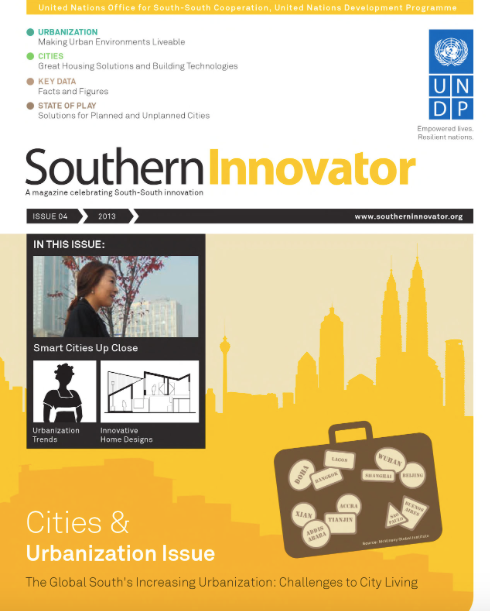
    9) A Kenyan eco-village is helping slum dwellers to start new lives and increase their wealth. The community, Kaputei, is being built by former slum residents – some of whom used to beg to survive – and is providing new homes with electricity, running water and services like schools and parks. By building their own homes, with the help of affordable mortgage loans, the residents are able to make a big upgrade to their quality of life while acquiring real wealth. Website: http://www.jamiibora.org
    8) Cities for All shows how the world’s poor are building ties across the global South. Website:http://globalurbanist.com/2010/08/24/cities-for-all-shows-how-the-worlds-poor-are-building-ties-across-the-global-south.aspx

    https://davidsouthconsulting.org/2021/10/21/cities-for-all-shows-how-the-worlds-poor-are-building-ties-across-the-global-south/

    https://davidsouthconsulting.org/2022/05/23/debt-free-homes-for-the-poor/

    https://davidsouthconsulting.org/2021/11/11/decent-and-affordable-housing-for-the-poor/

    https://davidsouthconsulting.org/2022/02/17/digital-mapping-to-put-slums-on-the-map/

    https://davidsouthconsulting.org/2022/04/28/envisioning-better-slums/

    https://davidsouthconsulting.org/2022/11/16/favela-fashion-brings-women-work/

    https://davidsouthconsulting.org/2022/10/25/indian-city-slum-areas-become-newly-desirable-places-to-live/

    https://davidsouthconsulting.org/2022/10/25/indian-toilet-pioneer-champions-good-ideas/

    https://davidsouthconsulting.org/2022/04/28/innovation-in-the-slums-can-bring-peace-and-prosperity/

    https://davidsouthconsulting.org/2020/12/14/innovation-in-growing-cities-to-prevent-social-exclusion/

    https://davidsouthconsulting.org/2021/11/22/kenyan-eco-village-being-built-by-slum-dwellers/

    https://davidsouthconsulting.org/2021/10/03/a-new-house-kit-for-slum-dwellers-that-is-safe-and-easy-to-build/

    https://davidsouthconsulting.org/2022/11/19/securing-land-rights-for-the-poor-now-reaping-rewards/

    https://davidsouthconsulting.org/2022/10/24/solar-power-bringing-light-and-opportunity-to-the-poor/

    https://davidsouthconsulting.org/2021/03/05/southern-innovator-issue-4/

    https://davidsouthconsulting.org/southern-innovator-scale-up-fundraiser/

    Creative Commons License

    This work is licensed under a
    Creative Commons Attribution-Noncommercial-No Derivative Works 3.0 License.

    ORCID iD: https://orcid.org/0000-0001-5311-1052.

    © David South Consulting 2023