Categories
Archive Development Challenges, South-South Solutions Newsletters

Session 1: Impacts, Coping Strategies and Livelihoods

A Report from the UN Conference on the Social and Political Dimensions of the Global Crisis: Implications for Developing Countries (12-13 November 2009)

Organised by the United Nations Research Institute for Social Development (UNRISD), Geneva, Switzerland. Held at the Palais des Nations.
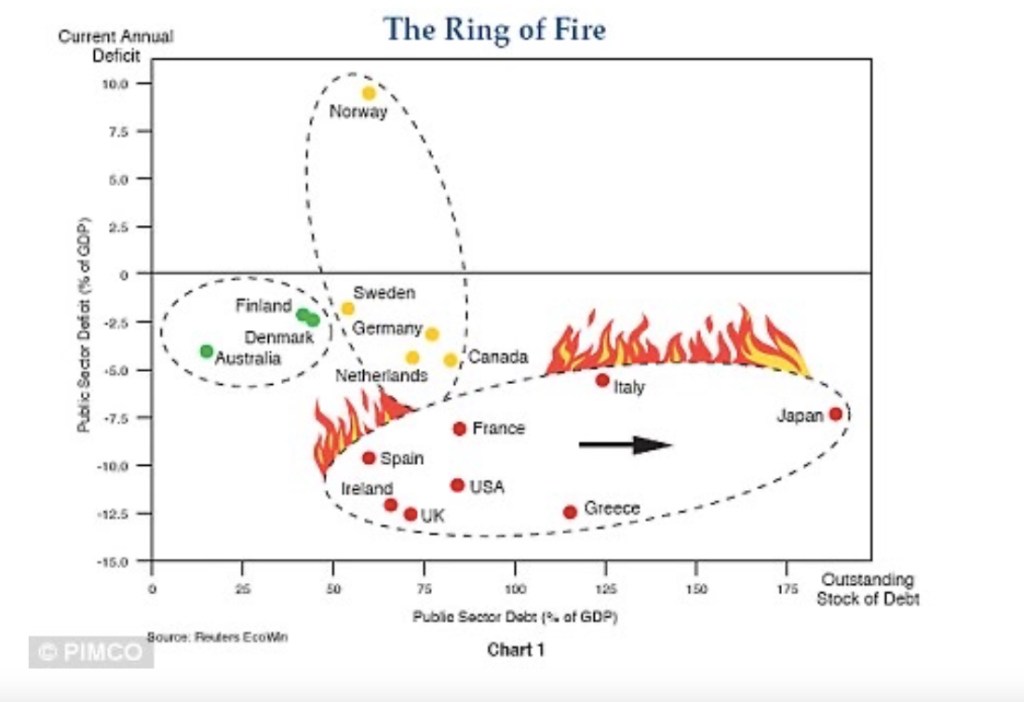
Just as this chart showed at the time of the Global Financial Crisis, the countries in “The Ring of Fire” have experienced exceptional turbulence and turmoil in the years after the crisis. For example, the UK has had austerity budgets, a no-growth economy, Brexit and the ‘shock therapy’ of the COVID-19 pandemic. The US, on the other hand, has clashed with its allies, seen a new cold war emerge with rivals China and Russia, and experienced significant domestic unrest, culminating in the storming of its seat of Government, the Capitol.
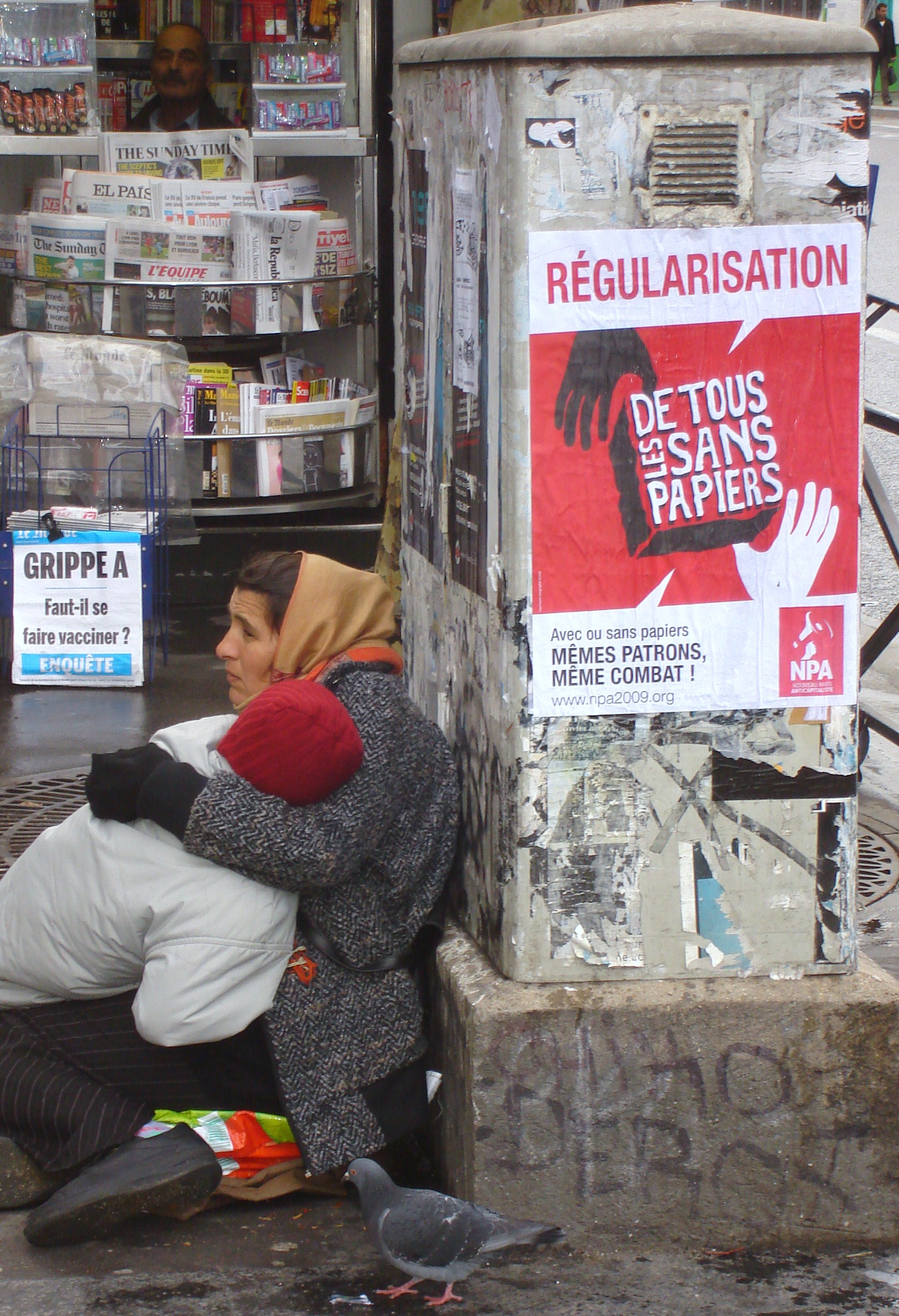
Just as now (2021) 2009 was a year in which the questions revolved around receiving a vaccine (for H1N1) and how best to affirm a person’s identity and citizenship. Photo: David South
Iceland saw its banking system collapse during the Global Financial Crisis, sparking demonstrations (October 2008-2011) and the “Pots and Pans Revolution”. Photo: David South

Session 1: Impacts, Coping Strategies and Livelihoods

The first session addressed one of the seismic shifts of our time: that we are witnessing the largest migration in human history from rural, agricultural communities to megacities. In 2007, the world became a majority urban place, with profound consequences for rural communities. Arindam Banerjee, Centre for Development Studies, pointed out that despite India’s high growth rate over this decade, agriculture experienced a low growth rate. This led to a lack of respect for farmers, who were dealing with falling prices and reduced credit. And when commodity prices do rise, farmers do not benefit under the current system.

The percentage of credit advanced in rural areas in India has been on the decline since 1991. People have now become dependent on informal credit sources with higher interest rates. Banerjee suggested some solutions to this crisis: boosting domestic demand, reducing dependence on exports, price support to growers, strengthening co-op credit services, and more employment programmes like NREGA (http://nrega.nic.in/) (National Rural Employment Guarantee Act) to support purchasing power in the rural sector. India needs to prevent a depression in the rural sector and find a solution to the fact rising prices are not going into producer’s pockets.

And how do people cope in villages when a crisis hits? May Tan-Mullins from the University of Durham compared fisher folk in Indonesia and China and their responses to economic crises in 1997 and now. In the Indonesian village during 1997’s Asian crisis, low-income families lived on US $30 to US $45 a month. In today’s Chinese village of 700 households, low-income families are living on US $300/month. The village also benefits from money made during a yearly fishing festival. Average earnings in the community are relatively good: between US $700 and US $1,000/month.

The Indonesian village during the 1997 crisis saw a big drop in the currency and it didn’t stabilise until 1999. Indonesian government stimulus through a health card scheme came along, but it wasn’t rolled out until 1999. The people were basically left to cope on their own with the crisis.

The current crisis in China in 2009 has had fewer effects on the village. The currency is under control and stable. The government has introduced stimulus packages, and the village is part of a long-term strategy to integrate it into the urban economy. In visits, Tan-Mullins had observed people had not suffered much, but they feared the real impact will come in 2010. The stimulus works out to about 2,000 Yuan (US $292) per household. However, low-income families have not benefited because they can not access formal supports like unemployment insurance.

The Indonesian fishing village survived by turning to informal credit sources. One example was to exchange ice and petrol in return for guaranteed deals for the fish at below market prices. A local mosque offered help with food parcels for 6 months in what was called a “trans-village religious network.” Women moved out of households and started working in the market, while some women made extra money cracking cashew nuts.

The Chinese fishing village has also seen social changes. There has been a cutback on perceived unnecessary education for girls. People are turning to family networks, or to gaunxi (doing favours for friends) (http://en.wikipedia.org/wiki/Guanxi). Marriage, for some fishing men, is seen as a way to use a woman to help out at home. Tan-Mullins concluded Asian communities cope better with downturns because their informal networks kick in. The Chinese are good natural savers: up to 30 to 40 percent of monthly income, which can help families weather the bad times. She called for a better understanding of these complex networks.

In Mexico, the country faces multiple challenges and social trends that were already heading in a negative direction before the crisis erupted. Lourdes Arizpe, from the National Autonomous University of Mexico, gave a sobering account of the extent of Mexico’s social breakdown. She called it “a profligate economy and an orphan society.” She detailed how migrants and drug dealers create new social and economic realities for the country. Mexico’s drug war alone has killed over 6,000 people in recent years. While some segments of the working population are finding their creative side during the downturn, others are turning to destructive behaviour. Mexico is suffering from too much legal and illegal drug use, and the medical costs of diseases of over-consumption (obesity, diabetes). The social breakdown has led to more teenage suicides and youth hooligans. Overall, Arizpe believes “all trends over the past 20 years have become worse.”

This has led to many crises being hidden from the official statistics. For example, the migration from Mexico of women for the global care market is harming Mexican children who are denied a full-time mother. This is causing a care deficit in the Global South. Teenage boys without authority figures are then recruited into drug dealing.

Arizpe’s solutions include recommending the Mexican government have a scheme for the unemployed, which would help take away the incentives to migrate for employment to other countries. She also encourages using the substantial remittance payments sent back to Mexico by migrants to invest in business and capital investment, rather than just homes.

A Report from the UN Conference on the Social and Political Dimensions of the Global Crisis: Implications for Developing Countries (12-13 November 2009)

Session 2: Social Policy: Country and Regional Perspectives

Session 3: Social Policy: Global Perspective

Session 4: Political Economy Dimensions of Crisis

Relevant stories previously covered in Development Challenges, South-South Solutions:

Model Indian Villages to Keep Rural Relevant (https://davidsouthconsulting.wordpress.com/south-south-case-studies/development-challenges-south-south-solutions/model-indian-villages-to-keep-rural-relevant/)
A New House Kit for Slum Dwellers that is Safe and Easy to Build (https://davidsouthconsulting.org/2021/10/03/a-new-house-kit-for-slum-dwellers-that-is-safe-and-easy-to-build/)

This work is licensed under a Creative Commons Attribution 4.0 International License.

ORCID iD: https://orcid.org/0000-0001-5311-1052.

© David South Consulting 2021

Categories
Archive

UNRISD Blog

A Report from the UN Conference on the Social and Political Dimensions of the Global Crisis: Implications for Developing Countries (12-13 November 2009)

Organised by the United Nations Research Institute for Social Development (UNRISD), Geneva, Switzerland. Held at the Palais des Nations.

Just as this chart showed at the time of the Global Financial Crisis, the countries in “The Ring of Fire” have experienced exceptional turbulence and turmoil in the years after the crisis. For example, the UK has had austerity budgets, a no-growth economy, Brexit and the ‘shock therapy’ of the COVID-19 pandemic. The US, on the other hand, has clashed with its allies, seen a new cold war emerge with rivals China and Russia, and experienced significant domestic unrest, culminating in the storming of its seat of Government, the Capitol.
Just as now (2021) 2009 was a year in which the questions revolved around receiving a vaccine (for H1N1) and how best to affirm a person’s identity and citizenship. Photo: David South
Iceland saw its banking system collapse during the Global Financial Crisis, sparking demonstrations (October 2008-2011) and the “Pots and Pans Revolution”. Photo: David South

A conference in Geneva struck a pessimistic note on the current global financial crisis and any hope for a new social and economic order. The conference asked “whether current policy reforms are conducive to a transformative social change or if they only reproduce the status quo.”

A March 2009 IMF report on the downturn’s affect on the Global South and developing countries found that “fluctuating commodity prices, high fuel costs, the rise in food prices in addition to a decrease in remittances, foreign direct investment and aid flow could mean an increase in the financing needs of low-income countries by at least US $25 billion.”

The presenters at the conference painted a picture of a robust neo-liberal economic order that is already in the process of dusting itself off from the crisis and restoring its dominance.

Bob Jessop, from the University of Lancaster, captured the paralysis of opposition to the neo-liberal order by saying “They are busy doing it and we are busy talking about it.”

To paraphrase philosopher Friedrich Nietzsche, that which does not kill us makes us stronger. Neo-liberalism may in fact be strengthened by the crisis, according to presenters. It will evolve and take on new forms, they argued.

The world’s business elites have an enormous capacity to re-shape the rules of the economic game back in their favour. While the massive state support to the banking sector had led some to believe governments were restoring faith in public investments, in fact state support is seen as “timely, targeted and temporary.”

When asked about the future as the crisis passes and countries come out of recession, the presenters believed this was a short-term recovery, and that far worse economic crises would be coming in the next five to 10 years.

Andrew Martin Fischer, from the Institute for Social Studies at Erasmus University, believes the harmful effects of the bailouts will be pushed to the periphery over the next five to 10 years, harming the poor. He also believes a major financial crisis is brewing in China. He called ‘China the fault line in the future.’

The powerful, he pointed out, displaced the costs of their mistakes onto other people. Proponents of different approaches had missed the moment because they were not able to present off-the-shelf strategies that could be deployed in a crisis on short notice. Thus, they had left the field open to neo-liberal solutions.

The global crisis in the short-term has not been worse because of unprecedented global cooperation. Keynsian measures have been used to solve the crisis, but are also used to preserve Wall Street. Also, the enormous contribution of growth in China and India means there are other sources of wealth in the world than just the North.

Getting back to normal should not be what we are doing, the panellists concluded at the conference’s final session. Governments should look at new opportunities for social policy. The panellists were disturbed that the International Monetary Fund (IMF) is seen as part of the solution. This means deep cuts in public expenditure are coming. There will not be a trickle down of wealth and the imbalances from before the crisis will remain. In short, the system was not working before the crisis.

Some policy suggestions put forward included: rural income guarantees, managed migration to support development goals, making a gender perspective critical to development. Governments should take a preventive approach to tackle future crises. Unfortunately, it now seems no money is left to address these problems. Yet business as usual is not an option with so many inequalities and imbalances.

“This conference on the social and political consequences of crisis is a critical subject for debate at this juncture,” said UNRISD’s director, Dr. Sarah Cook. “We are now at a point where many countries, particularly in the North, are emerging out of the severe shock of immediate crisis. Discussions of alternative policies and institutional arrangements at national and global levels may become less urgent; the status quo is reasserting itself and the space for ideas and policies that offer the possibilities of more stable, sustainable and equitable development will quickly shrink.”

Session 1: Impacts, Coping Strategies and Livelihoods

Session 2: Social Policy: Country and Regional Perspectives

Session 3: Social Policy: Global Perspective

Session 4: Political Economy Dimensions of Crisis

Southern Innovator Magazine was developed from 2008-2010 in London, New York and Iceland by the United Nations in response to the Global Financial Crisis and was launched in 2011.

Business Insider has reproduced a fascinating presentation about the crisis put together by the French bank, Societe Generale (SocGen). The presentation can be found here: http://www.businessinsider.com/socgen-prepare-yourself-for-the-worst-case-scenario-2009-11#first-it-starts-with-sky-high-public-debt-1

From 1997 to 1999, I worked as the head of communications for the United Nations mission in Mongolia. The country was already experiencing a severe economic crisis as a result of its transition to free markets and democracy from the Soviet economic system. The scale of the economic collapse following the fall of communism was described at the time as the worst peacetime, post-WWII economic collapse. On top of this challenge, the Asian economic crisis erupted.

You can read the Mongolia Update 1998 book I wrote here: http://www.scribd.com/doc/20864541/Mongolia-Update-1998-Book. It shows how chaotic events are in the middle of a major crisis. Some of the key lessons we learned during this time include: 1) transparency: trust was critical and all our work was done under the full glare of public and media scrutiny, 2) action: with our existing budgets we made sure to keep doing and spending to hire people, 3) strategy: to encourage the growth of businesses and innovation, in particular the take-up of new information technologies.

This work is licensed under a Creative Commons Attribution 4.0 International License.

ORCID iD: https://orcid.org/0000-0001-5311-1052.

© David South Consulting 2021