Tag: sdgssinnovators

  • The Water-Free South African Bathing Solution

    The Water-Free South African Bathing Solution

    By David SouthDevelopment Challenges, South-South Solutions

    SOUTH-SOUTH CASE STUDY

    As the world’s population grows from its current 7 billion to a projected 9 billion in 2050 (UN), competition for access to the Earth’s resources will become fiercer. The most essential resource for life on the planet – and an increasingly precious resource – is water. Water is necessary for the very survival of humans, animals and plants, and is also used in vast quantities by industries and farms.

    As demand increases, water resources will need to be conserved more and more, while clever ways will have to be developed to use less water. And there is also another factor to consider for the world’s poor: many millions live in very constrained conditions in urban and rural areas. For their health and dignity, the ability to wash every day is critical. Being clean is vital to being able to economically advance in life: it is something that sounds obvious but is often not a possibility for many millions of people living in slums.

    Many will face lives where water is an uncertain resource that will be either expensive to purchase or will require lots of labour to obtain.

    Anyone who can come up with a way to help bring the dignity of being clean and healthy while also saving water is onto a winner.

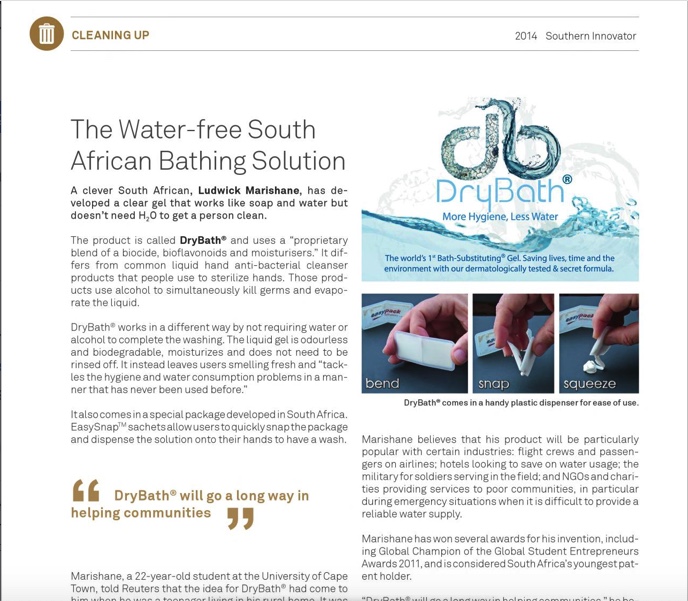
    A clever South African, Ludwick Marishane, has developed a clear gel that works like soap and water but doesn’t need H2O to get a person clean.

    The product is called DryBath (http://headboy.org/drybath/) and uses a “proprietary blend of a biocide, bioflavonoids and moisturisers.” It differs from common liquid hand anti-bacterial cleanser products that people use to sterilize hands. Those products use alcohol to simultaneously sterilize germs and evaporate the liquid.

    DryBath works in a different way by not requiring water or alcohol to complete the washing. The liquid gel is odourless, biodegradable and moisturises and does not need to be rinsed off. It instead leaves users smelling fresh and “tackles the hygiene and water consumption problems in a manner that has never been used before.”

    It also comes in a special package developed in South Africa. EasySnapℱ sachets allow users to quickly snap the package and dispense the solution on to their hands to have a wash. EasySnap is a rectangular sachet that is snapped in the middle to open.

    Marishane, a 22-year-old student at the University of Cape Town, told Reuters that the idea for DryBath came to him when he was a teenager living in his rural home. It was wintertime and his friend didn’t want to bother washing because there was no hot water available.

    “He was lazy and he happened to say, ‘why doesn’t somebody invent something that you can just put on your skin and you don’t have to bathe’,” Marishane said.

    That was when the light bulb went off in his head.

    Intrigued, he started doing research on his web-enabled mobile phone. He trawled through the search engine Google and the online encyclopedia Wikipedia to find what would work as a water-free wash. After six months of research, he came up with the formula for DryBath and acquired a patent.

    Now the strategy of Headboy Industries Inc. (headboy.org) – the company set up by Marishane – is to sell DryBath to corporate clients and in turn donate a free sachet for each sale to DryBath’s global charity partners, who will distribute DryBath to poor communities either for free or at a subsidized cost.

    Marishane believes his product will be particularly popular with certain industries: flight crews and passengers on airlines; hotels looking to save on water usage; the military for soldiers serving in the field; and NGOs and charities providing services to poor communities, in particular during emergency situations when it is difficult to provide a reliable water supply.

    Marishane has won several awards for his invention, including Global Champion of the Global Student Entrepreneurs Awards 2011, and is considered South Africa’s youngest patent holder.

    “DryBath will go a long way in helping communities,” he believes.

    Published: September 2012

    Resources

    1) How to register for a patent in South Africa. Website:https://www.sabs.co.za/index.php?page=patents

    2) SABS Design Institute: The SABS Design Institute promotes the benefits of good design in order to stimulate the economic and technological development of South Africa. Website: https://www.sabs.co.za/index.php?page=designinstitute

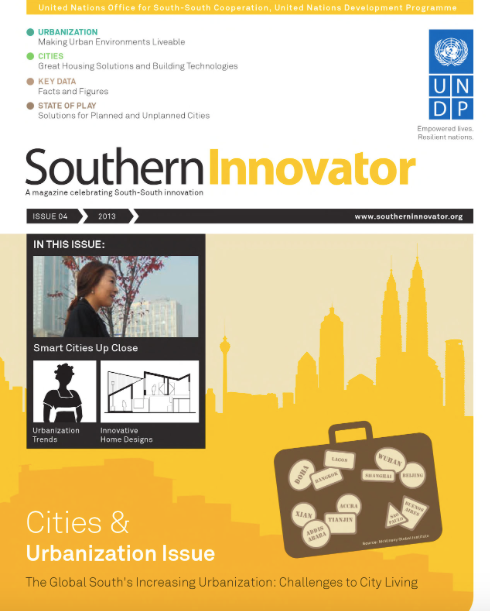
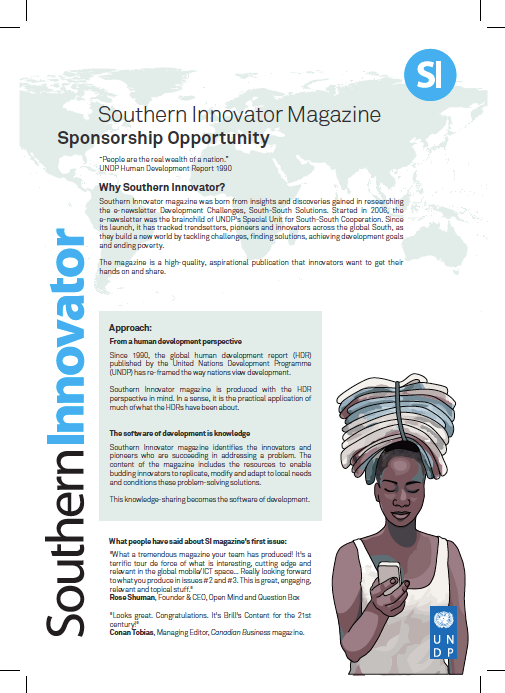
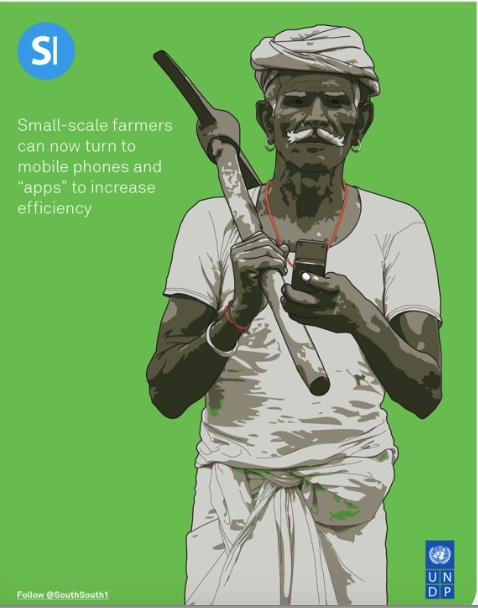
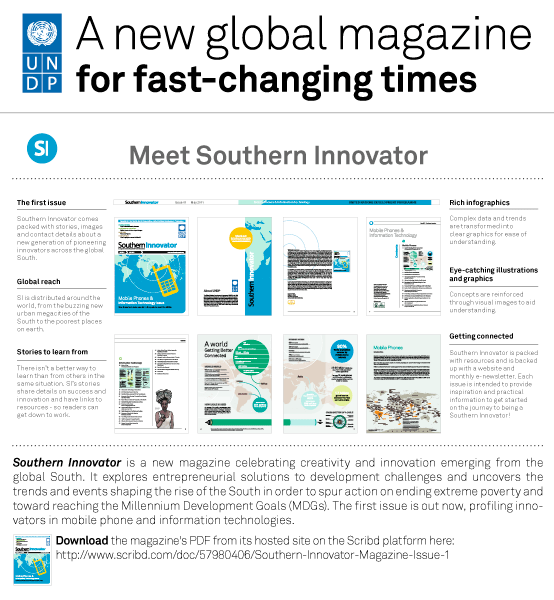
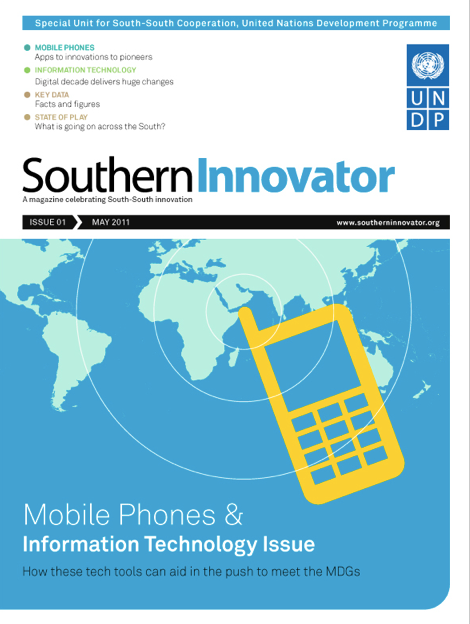
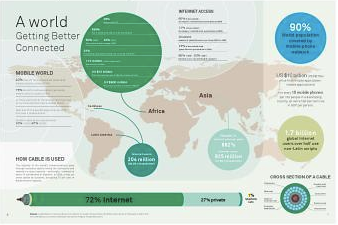
    Development Challenges, South-South Solutions was launched as an e-newsletter in 2006 by UNDP’s South-South Cooperation Unit (now the United Nations Office for South-South Cooperation) based in New York, USA. It led on profiling the rise of the global South as an economic powerhouse and was one of the first regular publications to champion the global South’s innovators, entrepreneurs, and pioneers. It tracked the key trends that are now so profoundly reshaping how development is seen and done. This includes the rapid take-up of mobile phones and information technology in the global South (as profiled in the first issue of magazine Southern Innovator), the move to becoming a majority urban world, a growing global innovator culture, and the plethora of solutions being developed in the global South to tackle its problems and improve living conditions and boost human development. The success of the e-newsletter led to the launch of the magazine Southern Innovator. 

    Creative Commons License

    This work is licensed under a
    Creative Commons Attribution-Noncommercial-No Derivative Works 3.0 License.

    ORCID iD: https://orcid.org/0000-0001-5311-1052.

    © David South Consulting 2023

  • Lagos Traffic Crunch Gets a New Solution

    Lagos Traffic Crunch Gets a New Solution

    By David SouthDevelopment Challenges, South-South Solutions

    SOUTH-SOUTH CASE STUDY

    Around the world, traffic congestion is often accepted as the price paid for rapid development and a dynamic economy. But as anyone who lives in a large city knows, there comes a tipping point where the congestion begins to harm economic activity by wasting people’s time in lengthy and aggravating commuting, and leaving commuters frazzled and burned out by the whole experience.

    According to the World Business Council for Sustainable Development, 95 per cent of congestion growth in the coming years will be in developing countries. Even in developed countries like the United States, in 2000, the average driver experienced 27 hours of delays (up seven hours from 1980) (MIT Press). This balloons to 136 hours in Los Angeles.

    Developing countries are seeing vehicle numbers rise by between 10 and 30 per cent per year (World Bank). In economic hotspots, growth is even faster.

    Lagos, Nigeria, the throbbing business hub of West Africa’s most populous nation, has a network of over 2,700 km of roads with a vehicle density of 740 vehicles per kilometre (E.I. Bello). All those cars consume over 85 per cent of the petroleum products imported into the country – a costly expense for a country that actually imports oil. All this driving is necessary because the city has no rail or sea mass transit system and all movements of people and goods are by road.

    Nigeria suffers from the irony of being a country that makes 95 per cent of its export earnings and 80 per cent of its revenue from oil, yet has to import most of its fuel because its refineries are constantly breaking down.

    The overwhelming majority of mega-cities are now located in developing countries, including sprawling conurbations such as SĂŁo Paulo, Brazil (18.8 million inhabitants in 2007), Delhi, India (15.9 million), and Manila, Philippines (11.1 million). By 2015 Lagos will have 12.8 million inhabitants and by 2025, it is estimated it will have 16.8 million citizens.

    That will be a lot of cars and frustrated people trying to get around.

    One project trying to alleviate the pain of a daily commute in the city is called Traffic (Traffic.com.ng). The computer application, or ‘app’, has a live feed of traffic on its homepage, collecting information from a wide variety of sources: the web, mobile phones and SMS (short message service) text messages sent in by mobile telephone. The service is also looking to extract information from microblogging site Twitter (twitter.com).

    The service says it aims to “reduce stress on Lagos road by providing up-to-the-minute traffic status in the state.”

    It uses the powerful concept of ‘crowdsourcing’, in which a large group of people contributes to solve a problem by combining the technological power of mobile phones and the Internet. These two technologies mean it is possible to solve problems in real time and draw on a very large group of people spread out over a wide geographical area.

    So, how does it work? A user can go to the homepage and click “View Traffic Report From” and see live data streaming in. If the user wants to see traffic conditions in a particular area, they type in the road and area in a box on the page and click to see the report.

    Those who are stuck in a traffic jam and want to alert others can send an SMS message with the keywords to 07026702053.

    The Traffic app came under scrutiny by the anonymous blogger Cherchez la Curl, whose blog is about “celebrating African women and natural hair”: “It’s no Einstein-worthy revelation to say that solving Lagos’ traffic problem (and, more generally, improving Nigeria’s poor transportation network) is one of the keys to sustaining growth and economic development in Nigeria,” the blog said.

    The blog’s author found the service was still in its early days: “While the idea is a fantastic application of modern technology to developing Africa, the only problem I see is that it seems like no-one is sending through traffic alerts! On a recent visit to the site, the alert stream was empty of alerts save for a few tweets. It’s a shame as this service would be extremely handy as a counterpoint/band-aid whilst government sorts out the root cause of the traffic.”

    It sounds like it is still early days for the Traffic app and Lagos residents will be its harshest critics.

    Published: January 2012

    Resources

    1) LagosMet.com: An Internet bulletin board offering rolling updates on Lagos traffic and security reports. Users can also post their reports. Website: http://lagosmet.com

    2) eNowNow: A website offering live updates on Lagos traffic congestion. Website: http://traffic.enownow.com

    3) SENSEable City: A project at the Massachusetts Institute of Technology’s SENSEable City Laboratory to use the new generation of sensors and hand-held electronics to change how cities are understood and navigated. This includes creating real-time maps of cities that can then be used to help with avoiding traffic congestion and other problems. Website: http://senseable.mit.edu

    4) Mobility 2001: World Mobility at the End of the Twentieth Century and its Sustainability published by the World Business Council for Sustainable Development. Website: http://www.wbcsd.org

    5) Lagos Traffic Crowdmap: A mix of user-contributed reports on the traffic conditions in Lagos. Website: https://lagostraffic.crowdmap.com/main

    6) A study of Urban Traffic Management – A Case Study of Lagos State Traffic Management Authority by E. I, Bello et al., 2009. Website: http://www.scientific.net/AMR.62-64.599

    7) Cities for All: An interview on book seeking to find solutions to the congested cities of the South. Website: http://globalurbanist.com/2010/08/24/cities-for-all-shows-how-the-worlds-poor-are-building-tiesacross-the-global-south

    Development Challenges, South-South Solutions was launched as an e-newsletter in 2006 by UNDP’s South-South Cooperation Unit (now the United Nations Office for South-South Cooperation) based in New York, USA. It led on profiling the rise of the global South as an economic powerhouse and was one of the first regular publications to champion the global South’s innovators, entrepreneurs, and pioneers. It tracked the key trends that are now so profoundly reshaping how development is seen and done. This includes the rapid take-up of mobile phones and information technology in the global South (as profiled in the first issue of magazine Southern Innovator), the move to becoming a majority urban world, a growing global innovator culture, and the plethora of solutions being developed in the global South to tackle its problems and improve living conditions and boost human development. The success of the e-newsletter led to the launch of the magazine Southern Innovator. 

    Creative Commons License

    This work is licensed under a
    Creative Commons Attribution-Noncommercial-No Derivative Works 3.0 License.

    ORCID iD: https://orcid.org/0000-0001-5311-1052.

    © David South Consulting 2023

  • Rickshaw Drivers Prosper with New Services

    Rickshaw Drivers Prosper with New Services

    By David SouthDevelopment Challenges, South-South Solutions

    SOUTH-SOUTH CASE STUDY

    The rickshaw is the world’s oldest form of wheeled transportation and forms a significant part of India’s transport infrastructure. In large cities across Asia, 1 million three-wheeled auto-rickshaws form an important means of daily transportation and a vital source of income for their drivers. There are 8 million cycle rickshaws on the streets of India, the government says. They perform many tasks: as taxis, as couriers, as goods movers. And the Indian government promotes cycle rickshaws as a non-polluting alternative.

    But rickshaw drivers in India struggle with a bad image despite being a critical component of the transport infrastructure. They work 12 to 18 hour days, are paid poorly, and are subject to frequent abuse from passengers and other drivers in the crowded and stressful streets.

    Many of the men working as rickshaw drivers have left behind families in villages. Because their main home is elsewhere, many just eat, sleep and live next to the roadside.

    An innovative company is taking this important service into the 21st century, and in turn boosting income and benefits for the drivers and restoring their dignity. Based in Delhi, Sammaan (www.sammaan.org), meaning dignity, has developed a sophisticated business model that offers a wide range of services to rickshaw passengers – drinks for sale, mobile phone chargers, courier collections, music, magazines/newspapers, first aid and outdoor advertising and marketing – along with professional treatment of the drivers, providing them with a uniform, identity card, bank accounts, profit sharing and insurance. The drivers pay a small maintenance fee of 10 rupees a day (US 20 cents) for renting the rickshaws. It is common in the rickshaw industry in India for drivers to rent their vehicles on a daily basis – 95 percent do so.

    Drivers get the full fare from a ride, while they share the profits from the sales of goods with Sammaan (http://uk.youtube.com/watch?v=yUuP16fyTjM).

    Sammaan’s founder, 27-year-old Irfan Alam, from the Indian state of Bihar, had the inspiration for his business idea when he was thirsty and riding in a rickshaw. He knew the rickshaw driver made very little money after he paid his rent for the rickshaw. And so he thought about how drivers could increase their income. Why couldn’t they sell drinks, or newspapers or mobile phone cards, he thought?

    As well, since they travel more than 6 miles a day on average, why not deliver things and host advertisements on the rickshaws?

    Sammaan’s idea is to fully modernize the rickshaw business: an important goal considering it makes up 30 percent of urban transport in India. By turning rickshaws into mobile advertising and marketing vehicles, income is substantially increased, while offering services builds loyalty from passengers.

    In order to improve the quality of life for drivers, Sammaan also offers free evening classes for the drivers and their children.

    Sammaan’s rickshaws are custom designed to allow for ample space to display the paid-for advertisements. This has proved a highly competitive way to do outdoor advertisements: it is 90 percent cheaper than advertising billboards and other campaigns. The fact the rickshaws go everywhere – from urban back streets to rural areas – makes it an effective way to reach all corners of India.

    The rickshaws for the passengers are no more expensive than rickshaws with no services. And passengers are even covered by insurance if there is an accident.

    Sammaan currently has hundreds of rickshaws running in Noida, Ghaziabad , Patna , Agra , Meerut , Gurgaon and Chandigarh .

    The company also is planning to offer phone services in the rickshaws and the ability to pay utility bills while riding inside.

    “We are also in advanced talks with Zandu Pharmaceuticals, Coca Cola and Dabur, and are hopeful of getting advertising contracts from them,” Alam told The Economist magazine. Sammaan expects to make Rs 10,000 to 15,000 (US $204 to US $307) a year from a single rickshaw.
    Alam is part of a new breed in India: he is not from an established business family, but is nonetheless well educated. Many educated Indians are turning to entrepreneurship instead of becoming a corporate drone in a big company. This is being called a revolution in middle-class aspirations.

    India has long-standing entrepreneurial traditions: merchant community the Marwari baniyas (http://en.wikipedia.org/wiki/Marwaris) are famed for their business acumen. But the new entrepreneurs have different aspirations and inspirations. They look to technology pioneers like Infosys (http://www.infosys.com/) and hire people based on merit and professionalism, not family connections.

    The hot areas for this new breed of entrepreneur are technology, entertainment, human resources and education.

    Alam’s rickshaws are made out of fiberglass for tourist towns with paved roads, and a rugged version out of iron for places with poor road conditions.

    Another initiative to modernize the rickshaw business has come from India’s Centre for Scientific and Industrial Research (CSIR) (http://www.csir.res.in/), which has developed a state-of-the-art, solar powered version of the humble cycle-rickshaw.

    The “soleckshaw” is a motorized cycle rickshaw that can be pedalled normally or run on a 36-volt solar battery.

    The makeover includes FM radios and power points for charging mobile phones during rides.

    The “soleckshaw,” which has a top speed of 15 kilometres (9.3 miles) per hour, has a sturdier frame and foam seats for up to three people.

    The fully-charged solar battery will power the rickshaw for 50 to 70 kilometres (30 to 42 miles). Used batteries can be deposited at a centralized solar-powered charging station and replaced for a nominal fee.

    Published: January 2009

    Resources

    • India’s National Entrepreneurship Network (NEN) promotes the spirit of enterprise on the country’s campuses and has a contest to pick the top 30 Indian hot start-ups. Website: http://www.nenonline.org/
    • Indian venture capital firm Helion Ventures invests in start-ups. Website: www.helionvc.com
    • TATA NEN Hottest Startups — India’s first ever people’s choice awards. Hottest Startups will identify, showcase and support the highest-potential young companies in India. Websitehttp://www.hotteststartups.in/http://www.hotteststartups.in/shortlistedStartupsHome.do?        method=fetch&businessFn=shortlistedStartupsHome
    • Tukshop is a website selling auto rickshaws and tuk-tuks. Website: http://www.tukshop.biz/
    • A wide range of auto rickshaws for sale. Website: http://www.auto-rickshaw.com/
    • The Hybrid Tuk Tuk Battle is a competition to come up with less polluting auto rickshaws, clean up the air in Asian cities, and improve the economic conditions for auto rickshaw drivers. Website: http://hybridtuktuk.com/

    Citations:

    As cited in A Sociological Approach to Health Determinants by Toni Schofield (2015).

    https://davidsouthconsulting.org/2022/11/21/asia/

    https://davidsouthconsulting.org/2022/09/29/cheap-indian-tablet-seeks-to-bridge-digital-divide/

    https://davidsouthconsulting.org/2022/02/17/digital-mapping-to-put-slums-on-the-map/

    https://davidsouthconsulting.org/2022/10/20/the-e-reader-battle-reaches-india/

    https://davidsouthconsulting.org/2022/10/09/entrepreneurs-use-mobiles-and-it-to-tackle-indian-traffic-gridlock/

    https://davidsouthconsulting.org/2022/10/12/free-magazine-boosts-income-for-rickshaw-drivers/

    https://davidsouthconsulting.org/2022/06/10/illiterate-get-internet-at-touch-of-a-button/

    https://davidsouthconsulting.org/2022/09/27/india-2-0-can-the-country-make-the-move-to-the-next-level/

    https://davidsouthconsulting.org/2022/10/25/indian-city-slum-areas-become-newly-desirable-places-to-live/

    https://davidsouthconsulting.org/2021/03/04/indian-id-project-is-foundation-for-future-economic-progress/

    https://davidsouthconsulting.org/2022/06/15/indian-mobile-phone-application-innovators-empower-citizens/

    https://davidsouthconsulting.org/2022/11/01/indian-newspapers-thrive-with-economy/

    https://davidsouthconsulting.org/2022/10/06/indian-solar-power-pack-powers-villages/

    https://davidsouthconsulting.org/2022/10/18/indians-fighting-inflation-with-technology/

    https://davidsouthconsulting.org/2022/06/10/info-ladies-and-question-boxes-reaching-out-to-the-poor/

    https://davidsouthconsulting.org/2022/03/29/model-city-to-test-the-new-urbanism-concept-in-india/

    https://davidsouthconsulting.org/2022/10/09/a-new-mobile-phone-aimed-at-the-poor/

    https://davidsouthconsulting.org/2021/03/31/new-weapon-against-crime-in-the-south/

    Development Challenges, South-South Solutions was launched as an e-newsletter in 2006 by UNDP’s South-South Cooperation Unit (now the United Nations Office for South-South Cooperation) based in New York, USA. It led on profiling the rise of the global South as an economic powerhouse and was one of the first regular publications to champion the global South’s innovators, entrepreneurs, and pioneers. It tracked the key trends that are now so profoundly reshaping how development is seen and done. This includes the rapid take-up of mobile phones and information technology in the global South (as profiled in the first issue of magazine Southern Innovator), the move to becoming a majority urban world, a growing global innovator culture, and the plethora of solutions being developed in the global South to tackle its problems and improve living conditions and boost human development. The success of the e-newsletter led to the launch of the magazine Southern Innovator. 
    Creative Commons License

    This work is licensed under a
    Creative Commons Attribution-Noncommercial-No Derivative Works 3.0 License.

    ORCID iD: https://orcid.org/0000-0001-5311-1052.

    © David South Consulting 2023

  • Wireless Internet Culture Helping Zimbabwe Economy Recover

    Wireless Internet Culture Helping Zimbabwe Economy Recover

    By David SouthDevelopment Challenges, South-South Solutions

    SOUTH-SOUTH CASE STUDY

    Zimbabwe’s turbulent descent into hyperinflation at the beginning of the 2000s – and the food crisis it caused as prices soared and purchasing power shrank – captured the world’s attention. From refugees fleeing the country to widespread hunger and poverty, the impact of hyperinflation was stark and distressing. Since the country’s economy stabilized in 2009, various signals are showing that Zimbabwe is slowly making its way back to growth and stability.

    The scale of the hyperinflation is summed up by Zimbabwe’s eye-popping inflation rate. By December 2008, inflation was estimated at 6.5 quindecillion novemdecillion percent (or 65 followed by 107 zeros — 65 million googol) (Forbes Asia).

    One recovery strategy is emerging in Zimbabwe’s booming eating and drinking establishments. It seems the urge to socialize and network has become the source of economic vitality where so much else has been damaged.

    The proliferation of coffee shops with wi-fi (wireless internet access) (http://en.wikipedia.org/wiki/Wi-Fi) has spawned a new, connected business culture that is flexible and entrepreneurial.

    Zimbabwe’s unity government was formed in September 2008. By the beginning of 2009, the government relented on the crippling hyperinflation and allowed business to be conducted in the US dollar. This made it possible to save again and do business with greater predictability. At this time, the country had the world’s highest inflation rate and the central bank printed a 100 trillion Zimbabwe dollar note.

    The economic result of greater stability has been new shopping malls opening and a boom in new eating and drinking establishments.

    During the hyperinflation, eating out was the last thing on most people’s minds. Just surviving was the paramount daily task.

    In the capital, Harare (http://en.wikipedia.org/wiki/Harare), the shopping mall Sam Levy’s Village (http://samlevysvillage.com), in the prosperous Borrowdale area of the northern suburbs, is full of thriving coffee shops, restaurants and pubs.

    Outside of the wealthy enclaves, coffee shops have sprung up in the city’s art gallery, in sports clubs and a local supermarket chain.

    While the coffees are still expensive relative to local wages, the Zimbabwe Online Hotspots (ZOL) (http://www.zol.co.zw) in the coffee shops have proved a big attraction. Most people in Zimbabwe have unreliable or non-existent electricity or, if lucky, poor-quality phone and internet dial-up in their homes.

    ZOL Hotspots typically offer the first half hour of internet use for free. To surf longer, users must buy a voucher.

    The damage done to the economy from hyperinflation and the political crisis means the country is still on the mend. But people have now resorted to what they call “networking,” according to Bryony Rheam in the Daily Telegraph newspaper. The functioning economy is all about making deals. And coffee shops with wi-fi are the perfect place to meet with a potential business partner.

    But while the coffee shops are buzzing with people doing business, the proprietors still need to work out how to make better profits. Sales are still poor as people are mostly fixated on the wi-fi. One owner told the Telegraph: “We need to start charging people who sit here all day surfing the net.”

    It is the restaurants who seem to be enjoying the boost in incomes and better spirits after the economic troubles. Zimbabwe’s black middle class are enjoying big occasions and celebrating with friends and family in restaurants.

    “We went without for so long, that a lot of people almost see it as their right to spend money on eating out,” one patron told the Telegraph.

    More good news has come from outside investors as well: Amstel Securities NV (http://www.amstelsec.com), based in Amsterdam, Netherlands calls Zimbabwe’s economy “the final frontier market in Africa”. It believes the country has the potential to grow its GDP (gross domestic product) to US $12 billion by 2015. The International Monetary Fund says the economy jumped from US $4.4 billion in 2009 to US $9 billion now.

    In Amstel Securities’ report, it pegs the dollarization of the economy as the reason for stability: “These improvements have made Zimbabwe a much more vibrant economy with good further recovery potential.”

    And these good vibes are contagious: it has been reported that the American hamburger chain McDonald’s is revisiting the idea of setting up in Zimbabwe. McDonald’s is currently present in a handful of African countries: South Africa has 132 restaurants.

    Published: September 2010

    Resources

    Development Challenges, South-South Solutions was launched as an e-newsletter in 2006 by UNDP’s South-South Cooperation Unit (now the United Nations Office for South-South Cooperation) based in New York, USA. It led on profiling the rise of the global South as an economic powerhouse and was one of the first regular publications to champion the global South’s innovators, entrepreneurs, and pioneers. It tracked the key trends that are now so profoundly reshaping how development is seen and done. This includes the rapid take-up of mobile phones and information technology in the global South (as profiled in the first issue of magazine Southern Innovator), the move to becoming a majority urban world, a growing global innovator culture, and the plethora of solutions being developed in the global South to tackle its problems and improve living conditions and boost human development. The success of the e-newsletter led to the launch of the magazine Southern Innovator. 

    Creative Commons License

    This work is licensed under a
    Creative Commons Attribution-Noncommercial-No Derivative Works 3.0 License.

    ORCID iD: https://orcid.org/0000-0001-5311-1052.

    © David South Consulting 2023